


My name is Jo, and in 2020 I moved to France with my husband, Brian. From our move to France, to running our B&B, my blog, which you can read below, is a diary of ‘Our French Adventure’. I share short stories about the Champagne region, and its people, and the life we have embraced here.
Montmartre
We were wondering where to head for dinner, we’d decided we would head up to Montmartre and see how far we’d get up the hill.
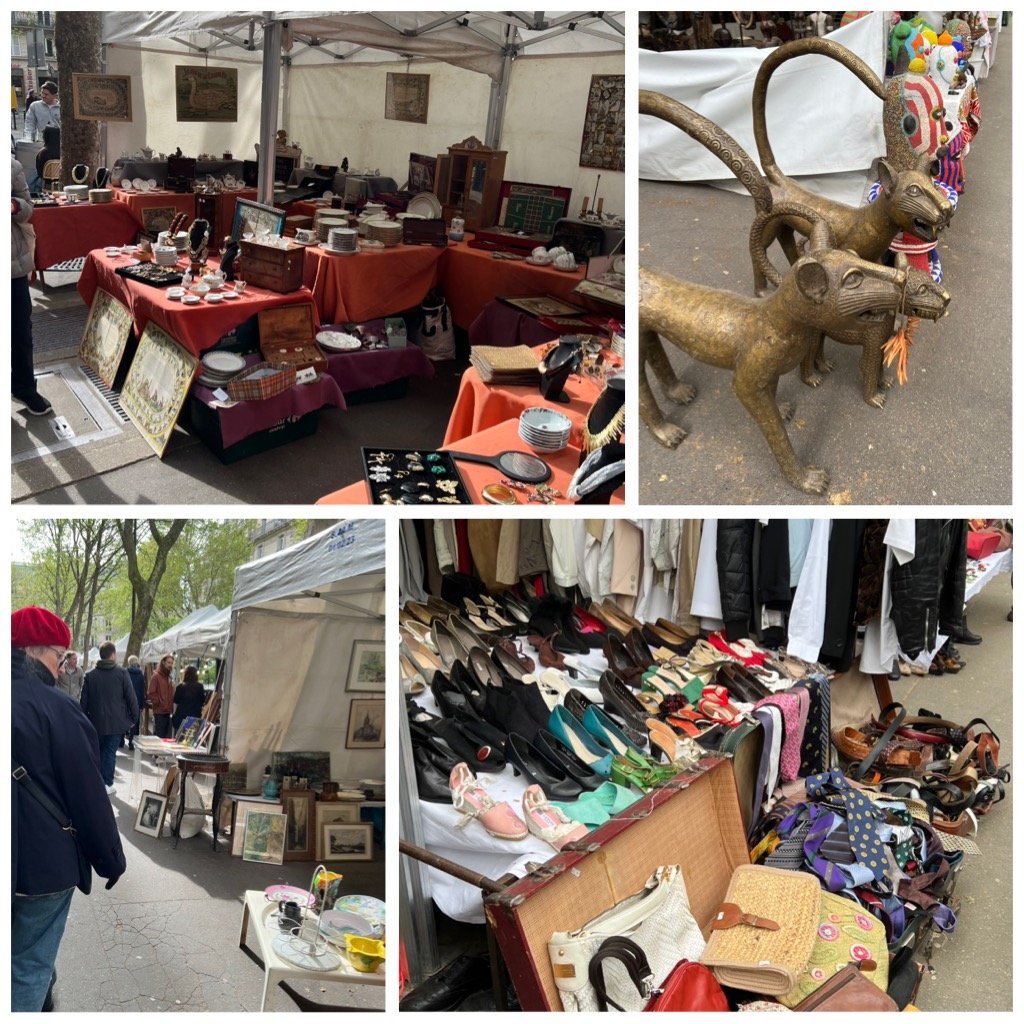
I was delighted to find a little street flea market on the way up. Conscious whatever we bought we would have to carry home, I kept my interest to a minimum.
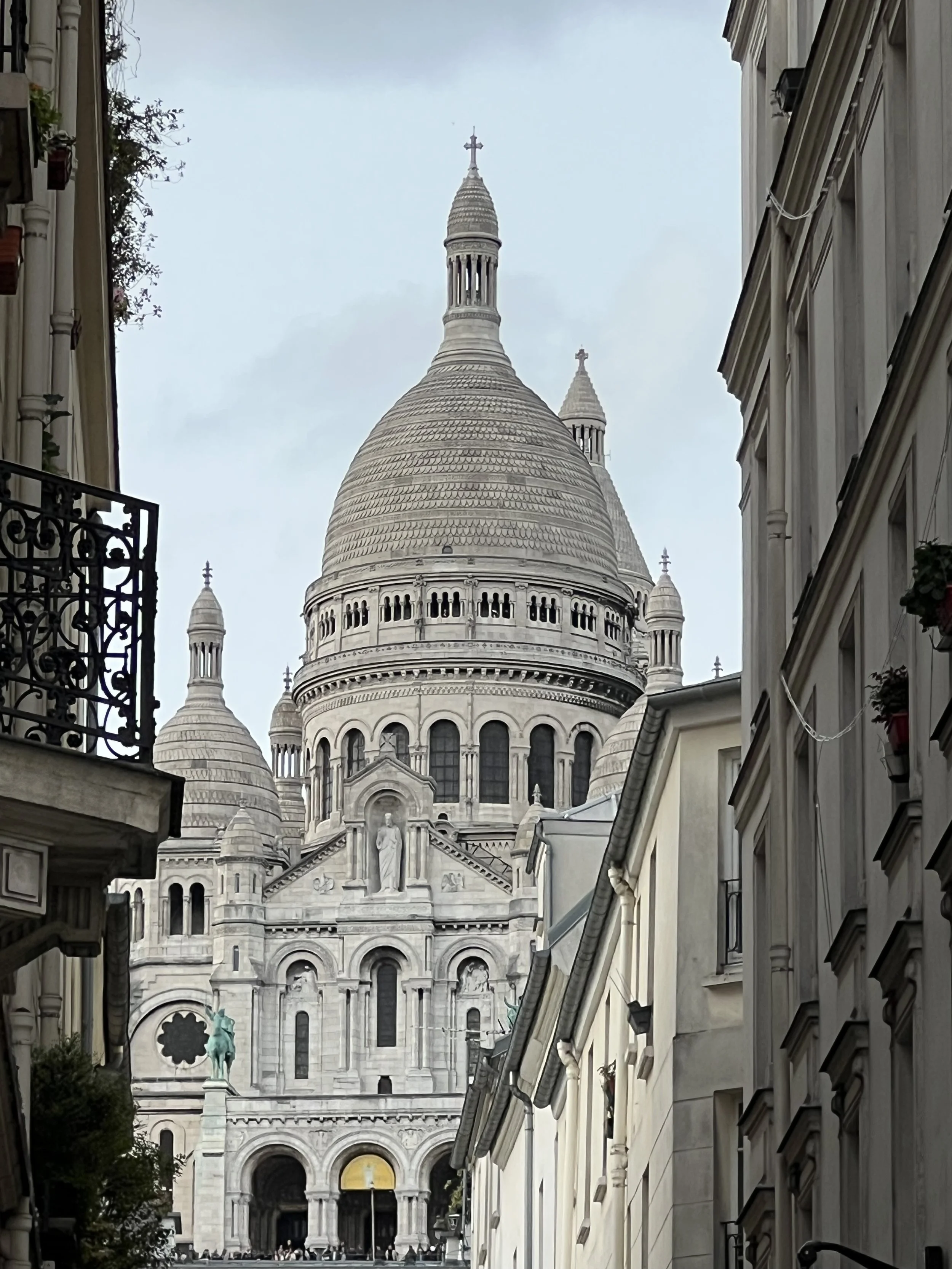
The sight of Sacre Coeur in the distance is always an encouragement to make it up the hill. Although this time we didn’t plan to go in, but we did manage to reach the top.
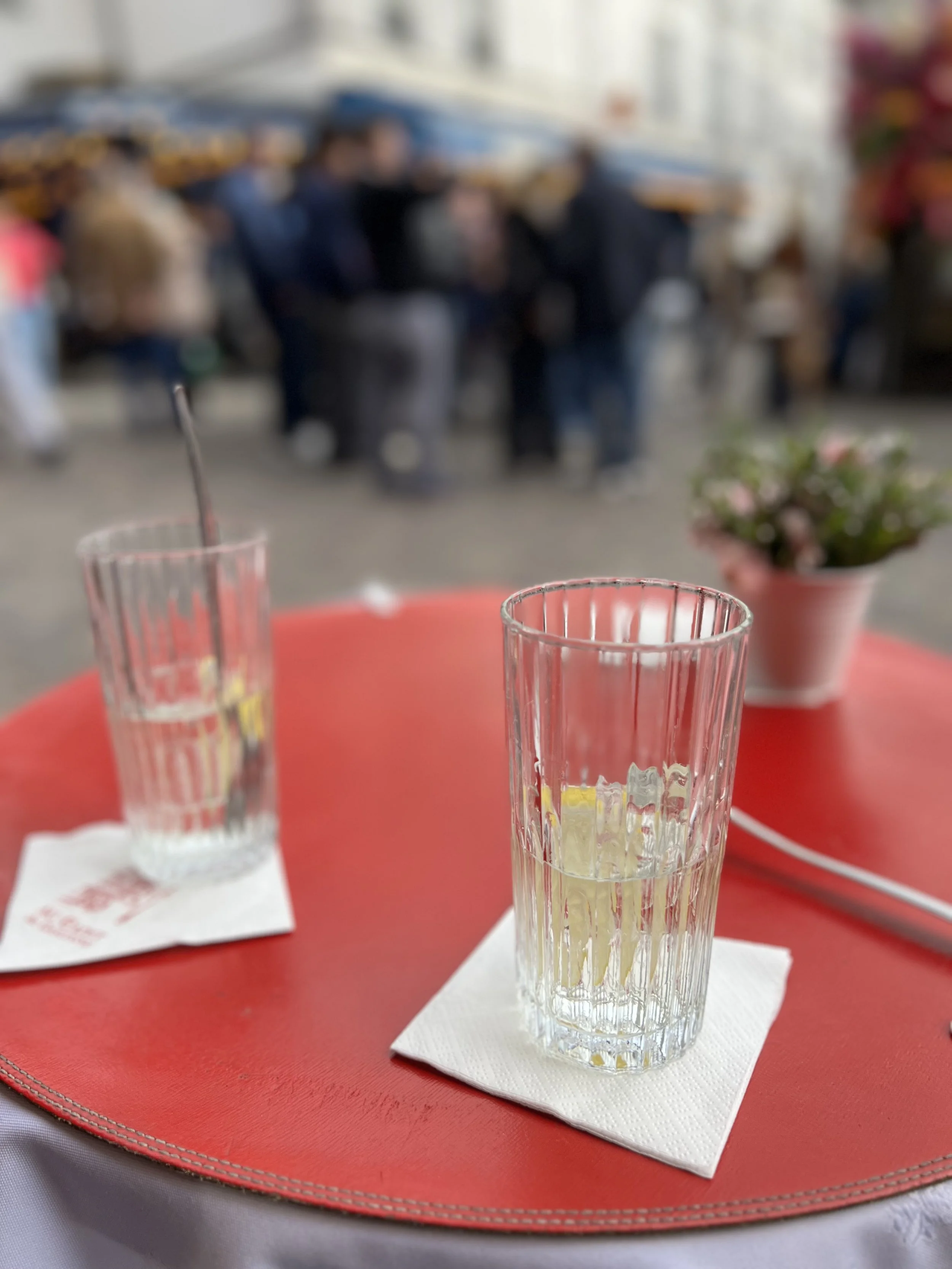
Our plan then was to walk around to the artists quarter and enjoy a little drink before ordering dinner, whilst just watching the world go by.
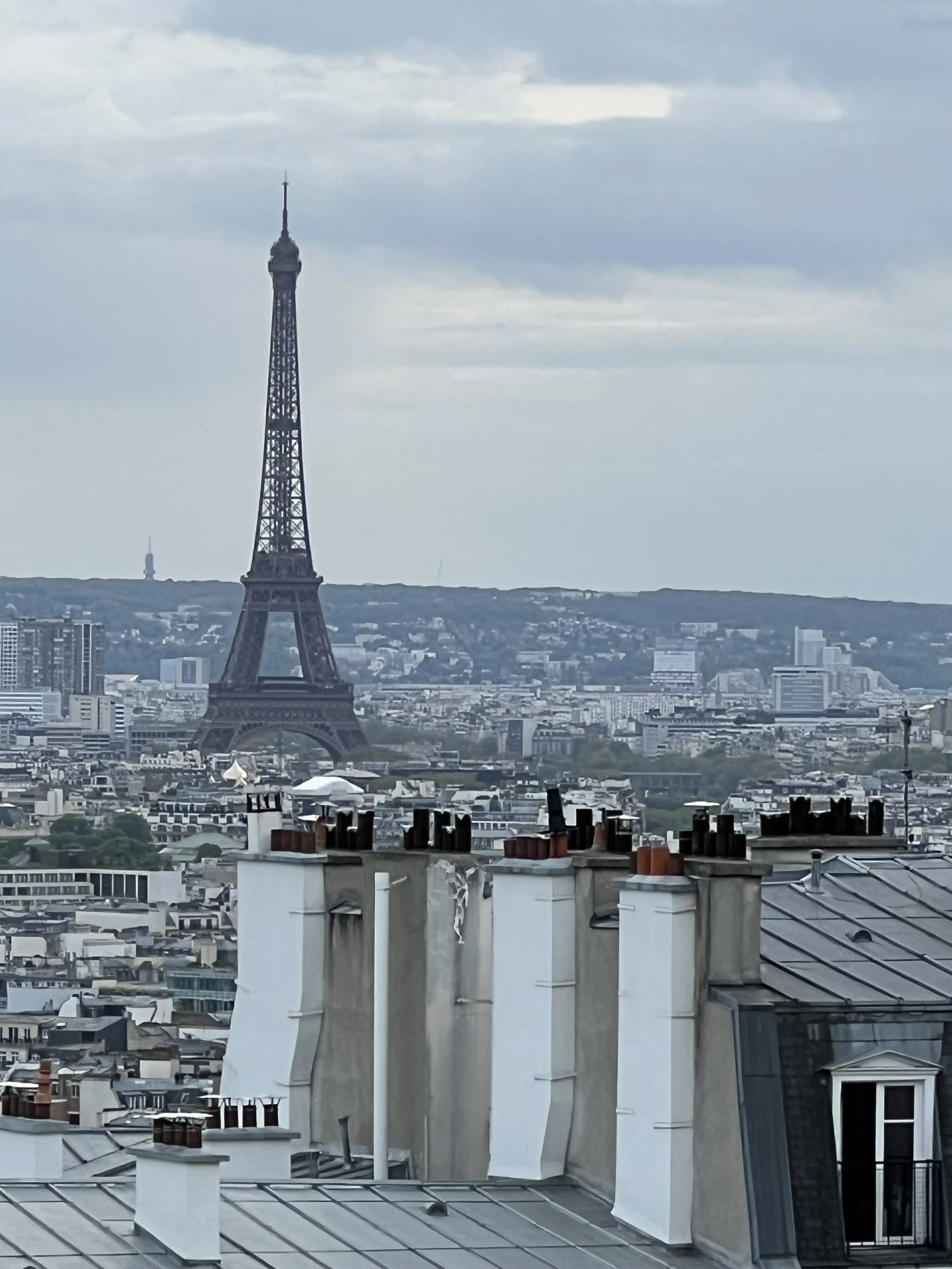
On the walk back down we were rewarded with a spectacular view of the Eiffel Tower.
Musée de la vie romantique
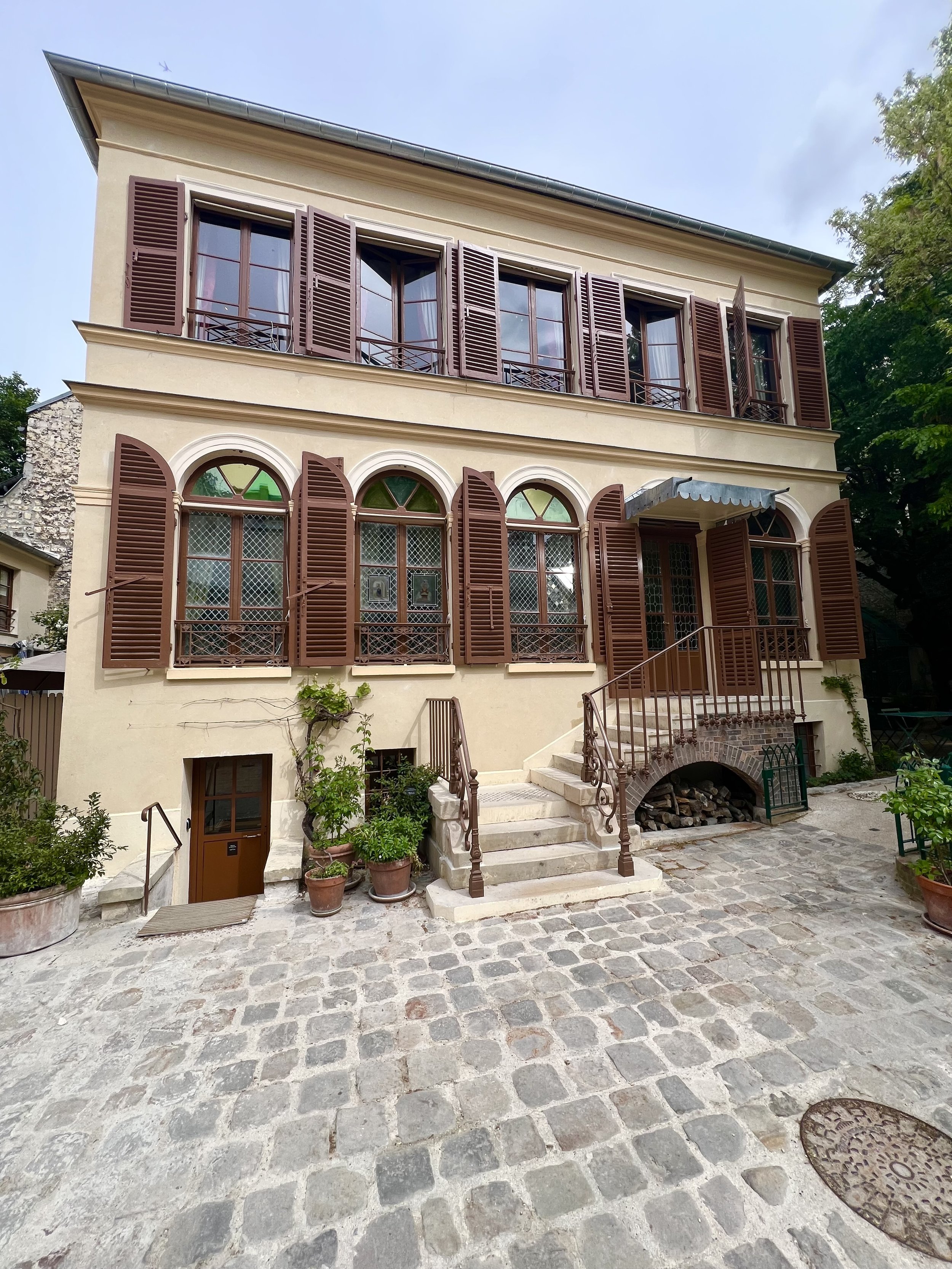
You enter the secluded little courtyard through an anonymous gate, off a quiet Paris street. Passing along a covered, cobbled pathway, you are led to the small, but nicely formed garden. Dappled in shade from the established trees, it houses a pretty little café from its greenhouse. The main house, which is the museum, is free to enter, and the collections are over two floors of rooms that are completely in-keeping with the romantic decor of the time.
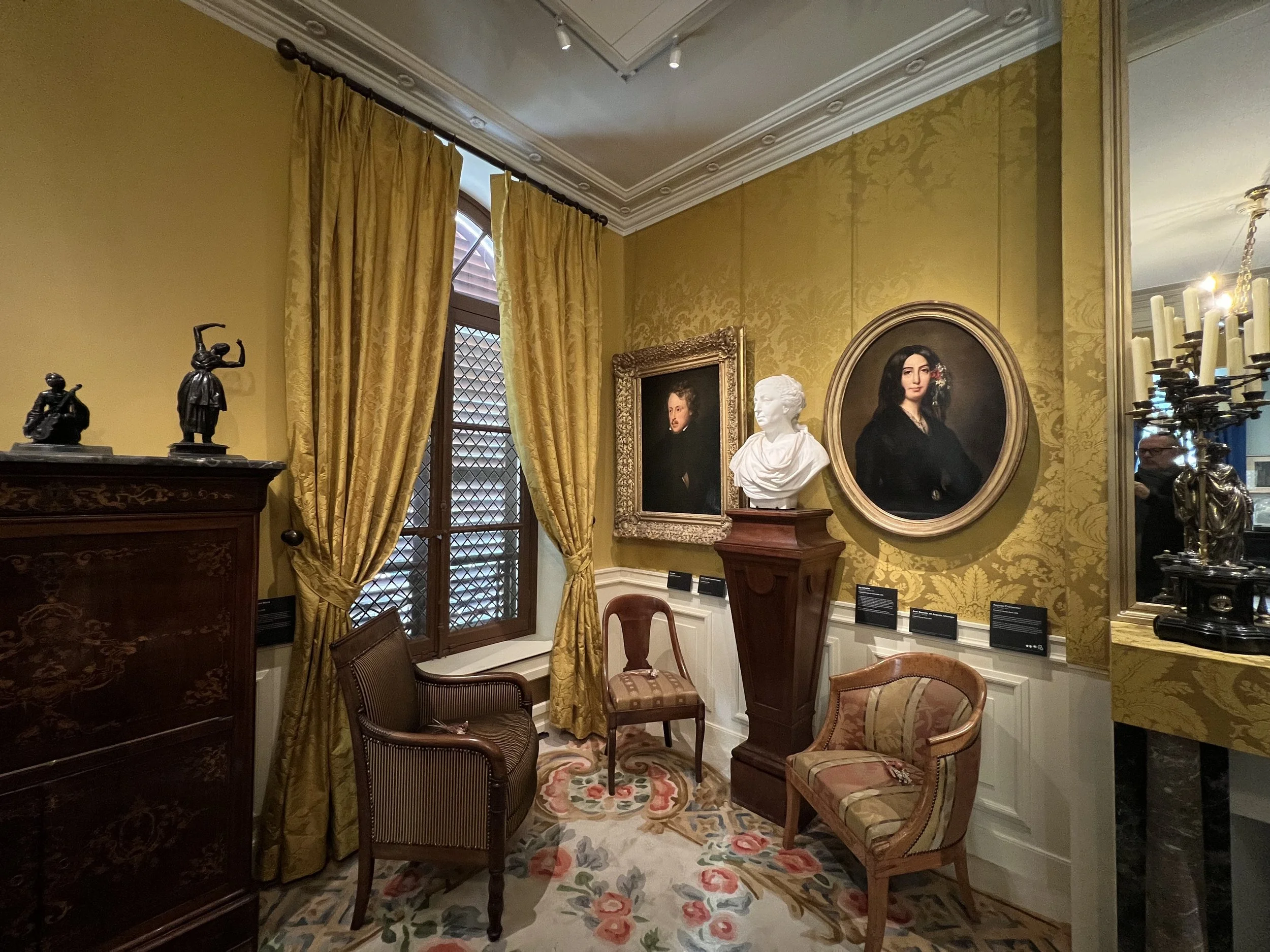
The two main collections in the house are from Ary Scheffer, who once lived at the house, and the writer George Sand, who lived in the neighbourhood.
Ary Scheffer was a Dutch artist, born in 1795, who moved to Paris in 1811 with his mother. He began his artistic career from an early age, and was successful as a painter of literary scenes and portraiture of famous and influential people. Later in life he took on the role as drawing teacher to the children of the Duke of Orleans—Louis-Philippe—and became close to the royal family.
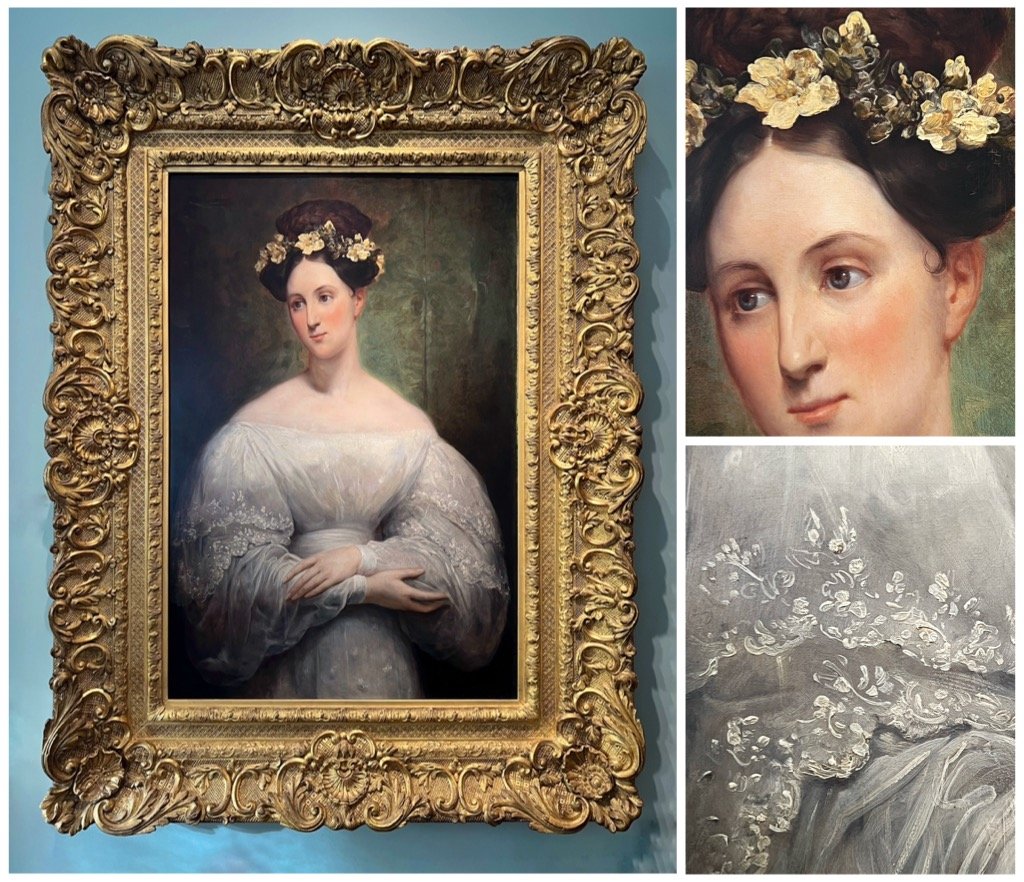
I loved his painting of Princess Marie d'Orléans, who was one of his students. She was a French princess, artist, and sculptor, who lived from 1813 to 1839, and was the daughter of King Louis Philippe I.
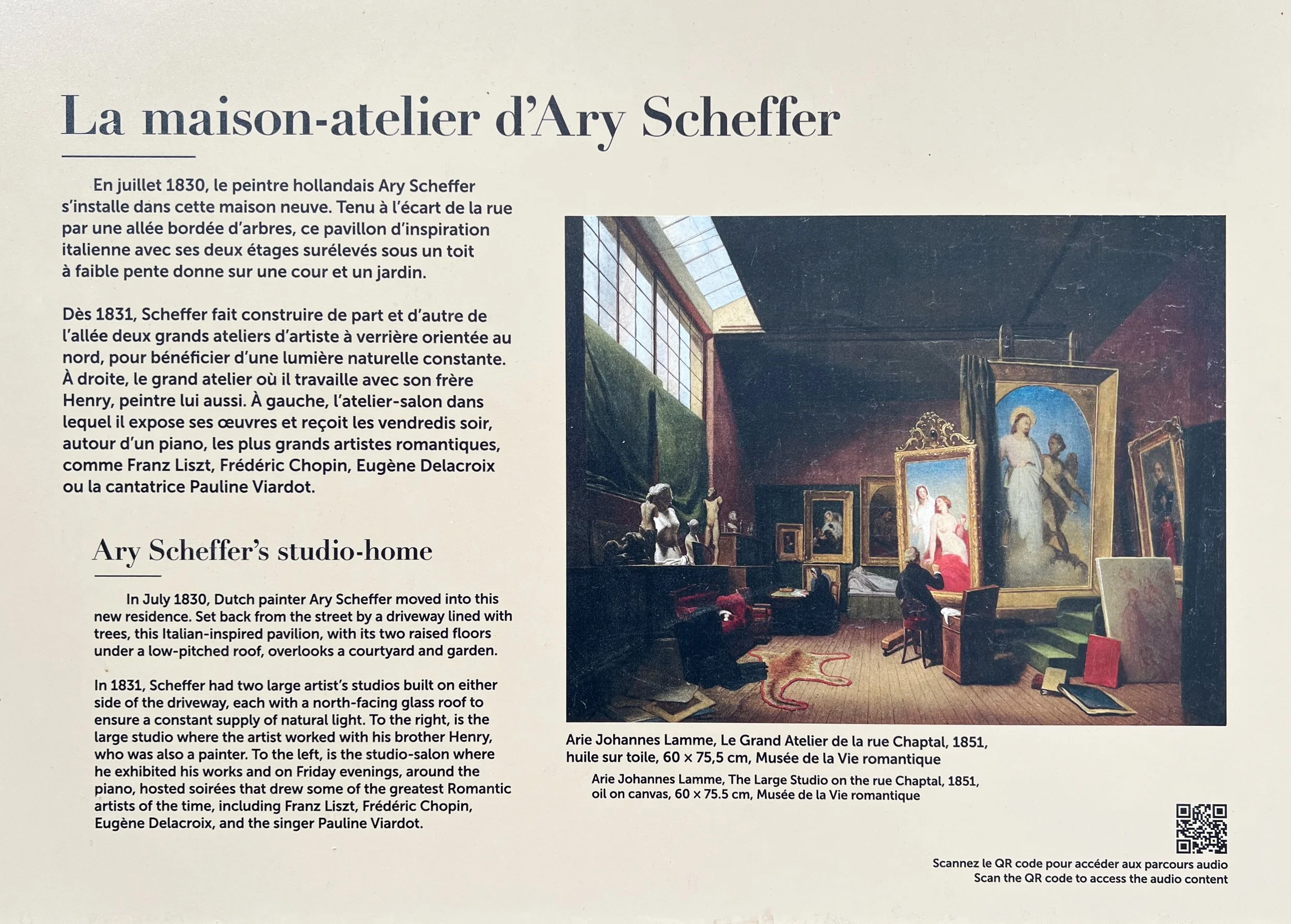
In his later life Ary would often invite other artists and creatives to his house, such as Eugène Delacroix, Paul Delaroche, Théodore Rousse, Frédéric Chopin, Franz Liszt, and George Sand.
George Sand (1804-1876) who gained fame for her love affair with Frederic Chopin, published more than seventy novels, twenty plays and various texts, that made her one of the most prolific writers of the 19th century. Her paintings, jewels, and memories—collected by her granddaughter Aurore Lauth-Sand, and on display here—help evoke the story of her artistic life.
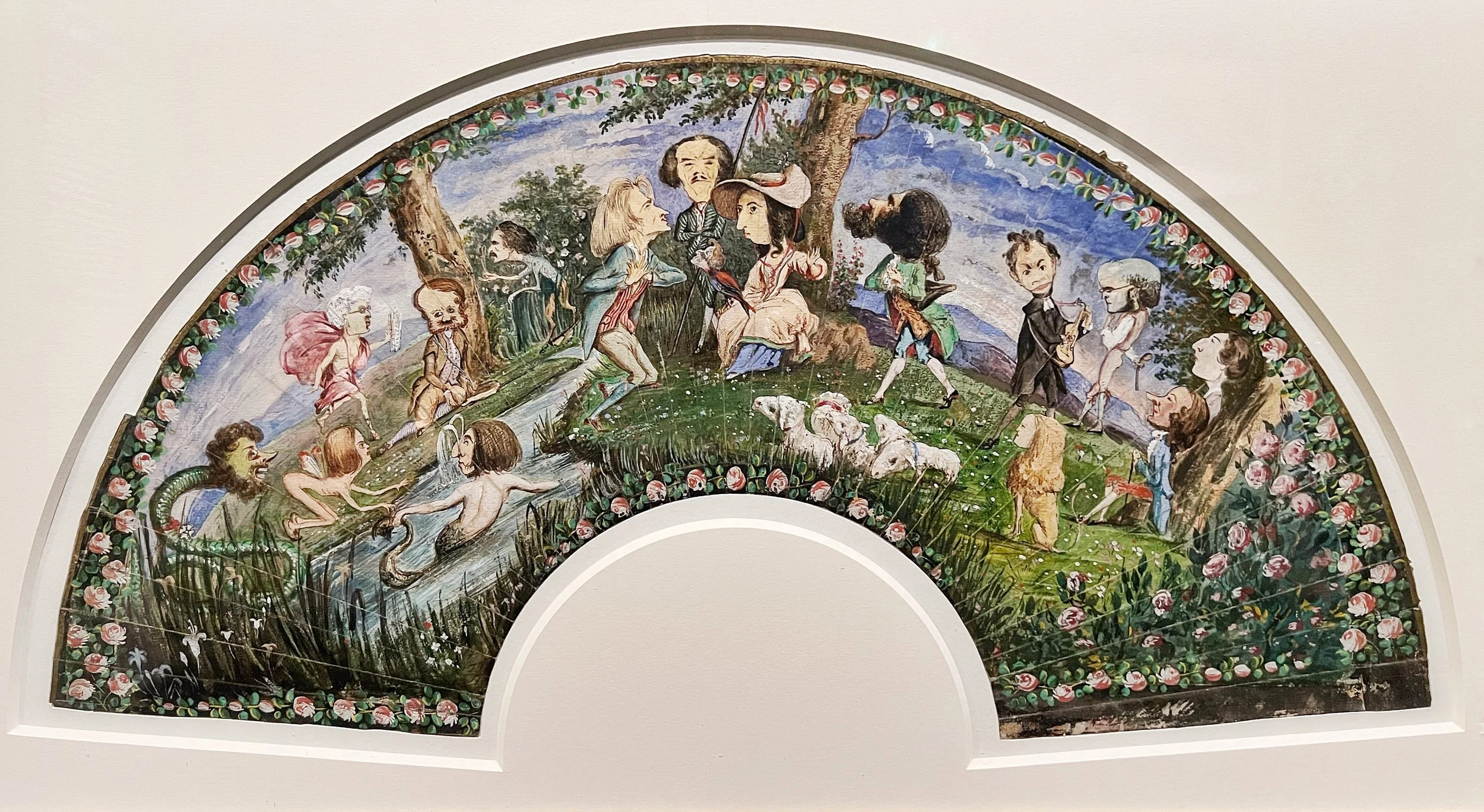
It was a delightful and evocative little museum.
Le Marais
It was our last morning in our hotel in le Marais. However we’d decided to extend our trip, as there were still things we wanted to do. Our first hotel was fully reserved, so we booked a different hotel in the southern side of the Pigalle area. We were in no hurry to move on though, so Brian made us some tea and we sank into our fluffy pillows to enjoy a slow, quiet morning. “What the heck is that?” I exclaimed. “It sounds like a brass band.” Brian got out of bed to investigate, and could see another bunch of runners down on rue de Rivoli, just below our balcony. “More runners:” He said. “But there’s rather a lot of them!” Not thinking any more of it, we drank our tea, got washed and dressed, and packed our bags. “Let’s have one last breakfast here before we get a cab to the other hotel.” I suggested.
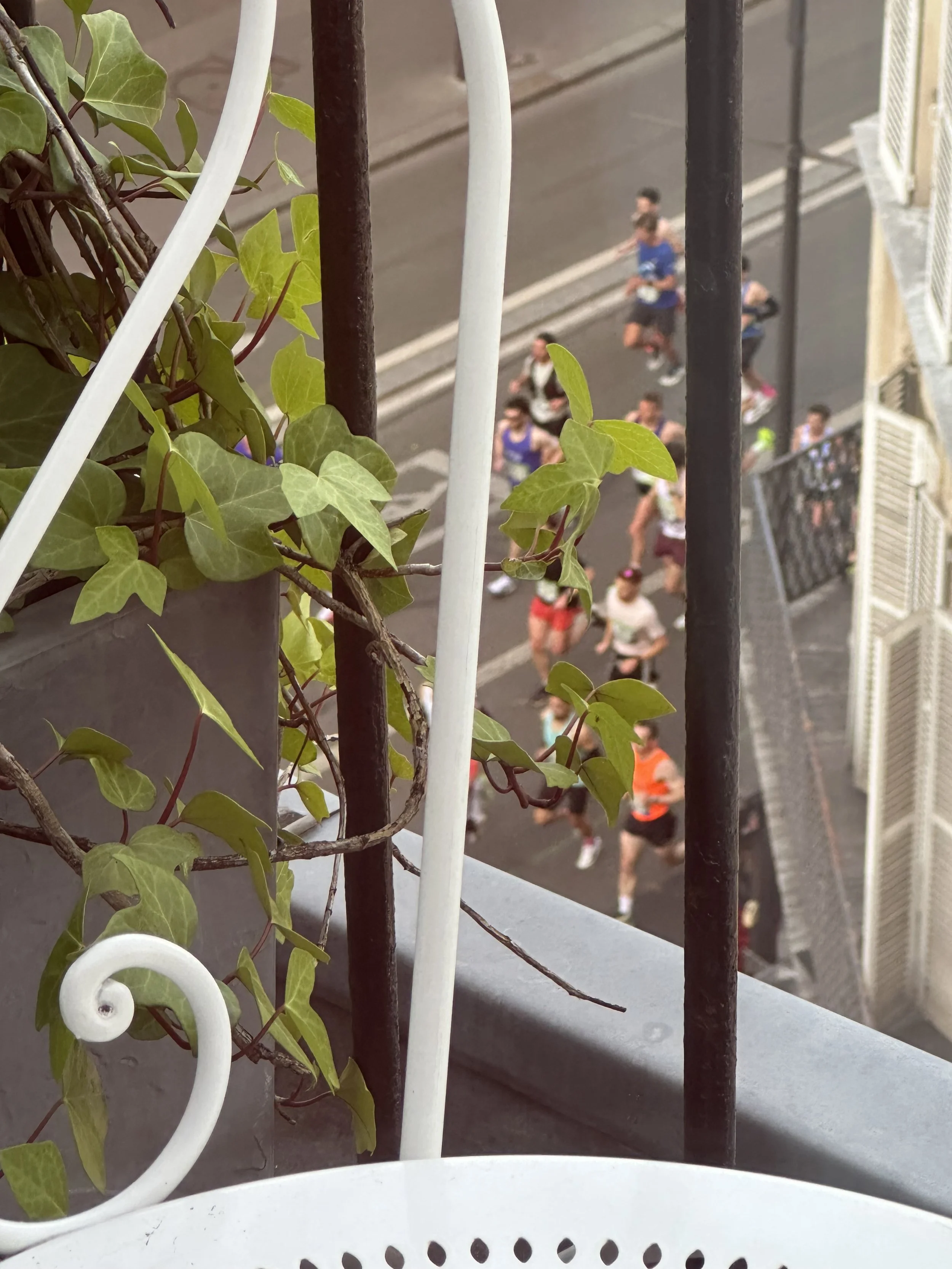
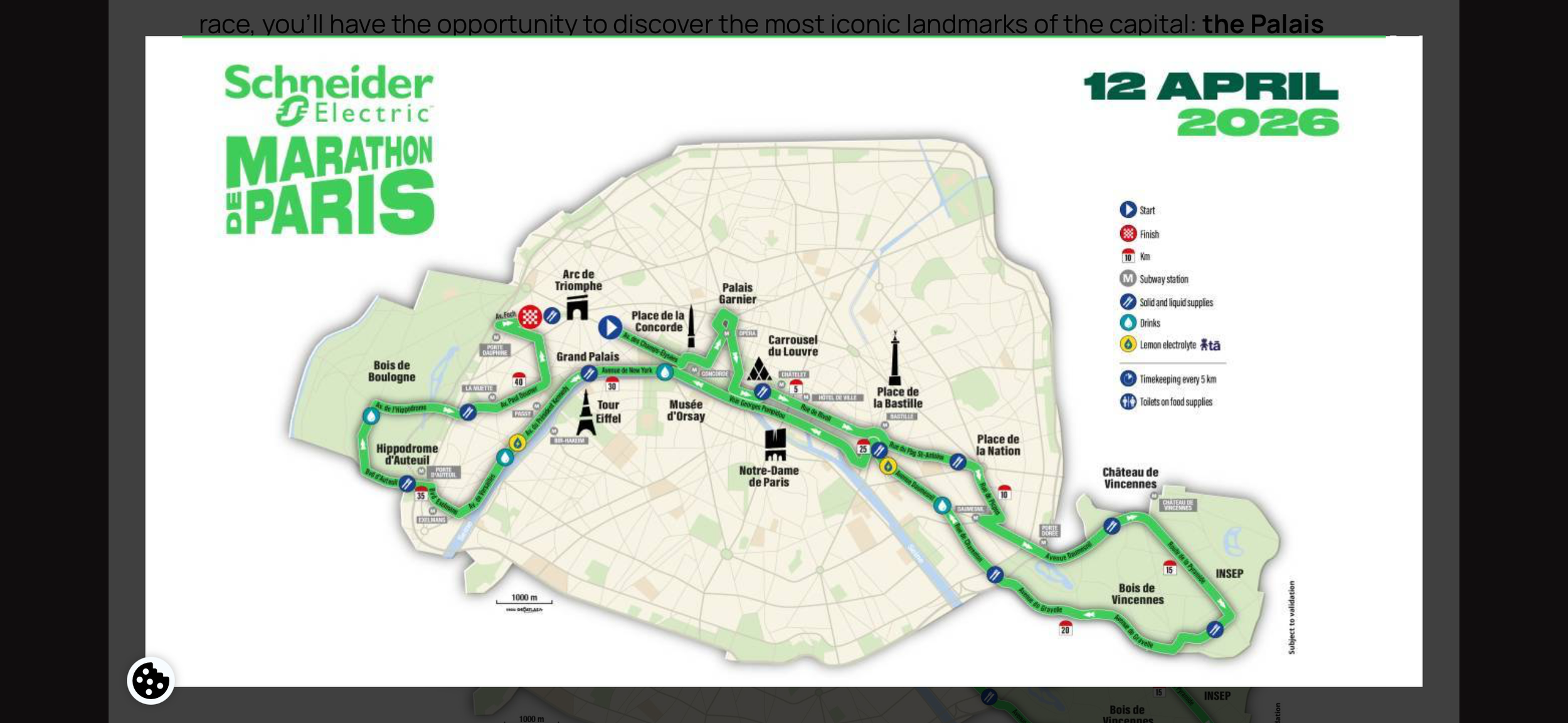
We soon realised though, as we headed to rue de Rivoli, that we were on the route of the Paris marathon 2026, with some 60,000+ runners. We didn’t even know it was happening!
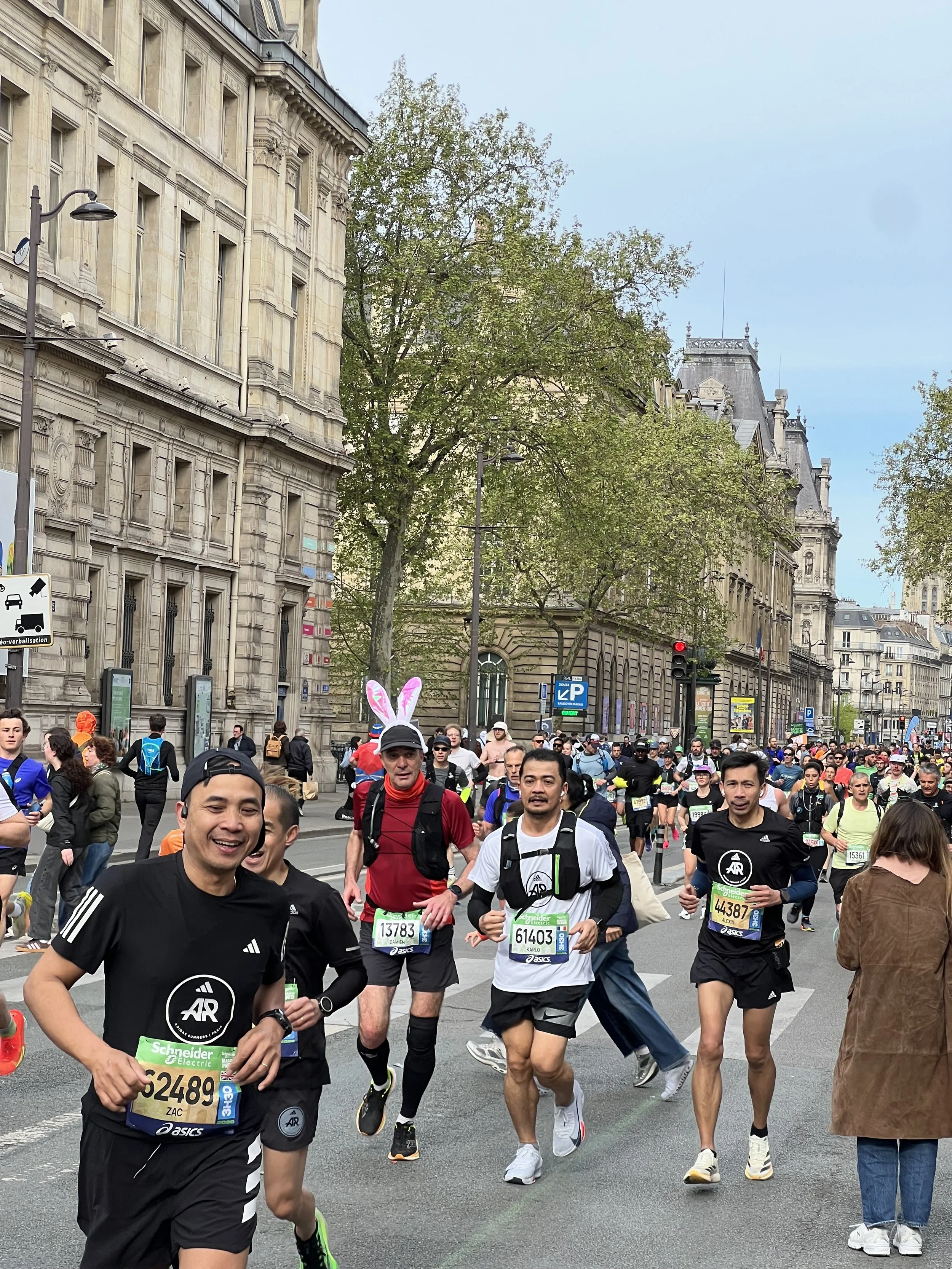
Apparently it’s the first marathon to ban single use cups or bottles. Bunny ears are fine though.
We loved our few days in the Marais district.
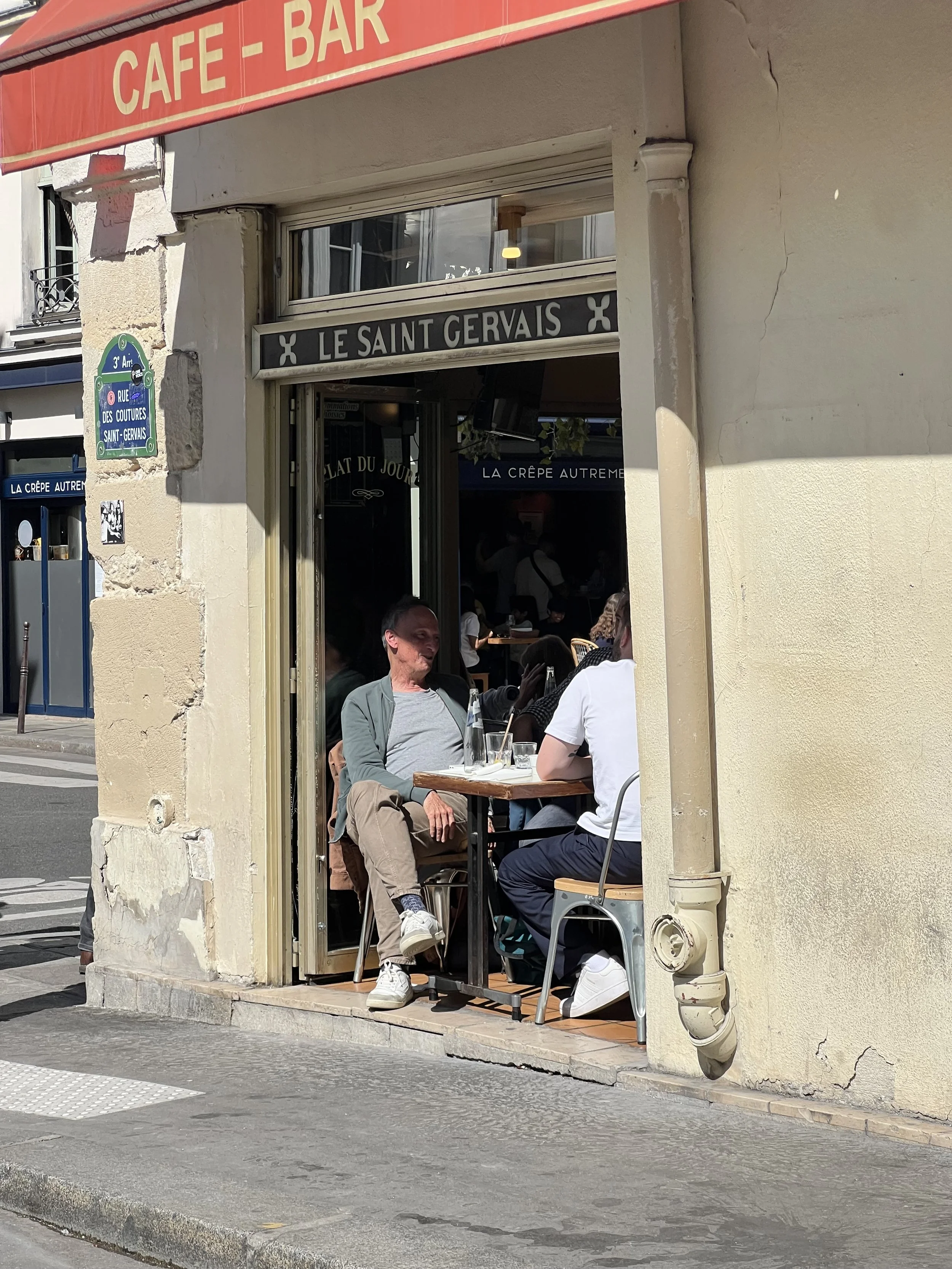
There is so much to see and do, you really don’t need to leave the area at all. It has plenty of bars and restaurants, little boutiques, museums and galleries, everything you need for a relaxing break.
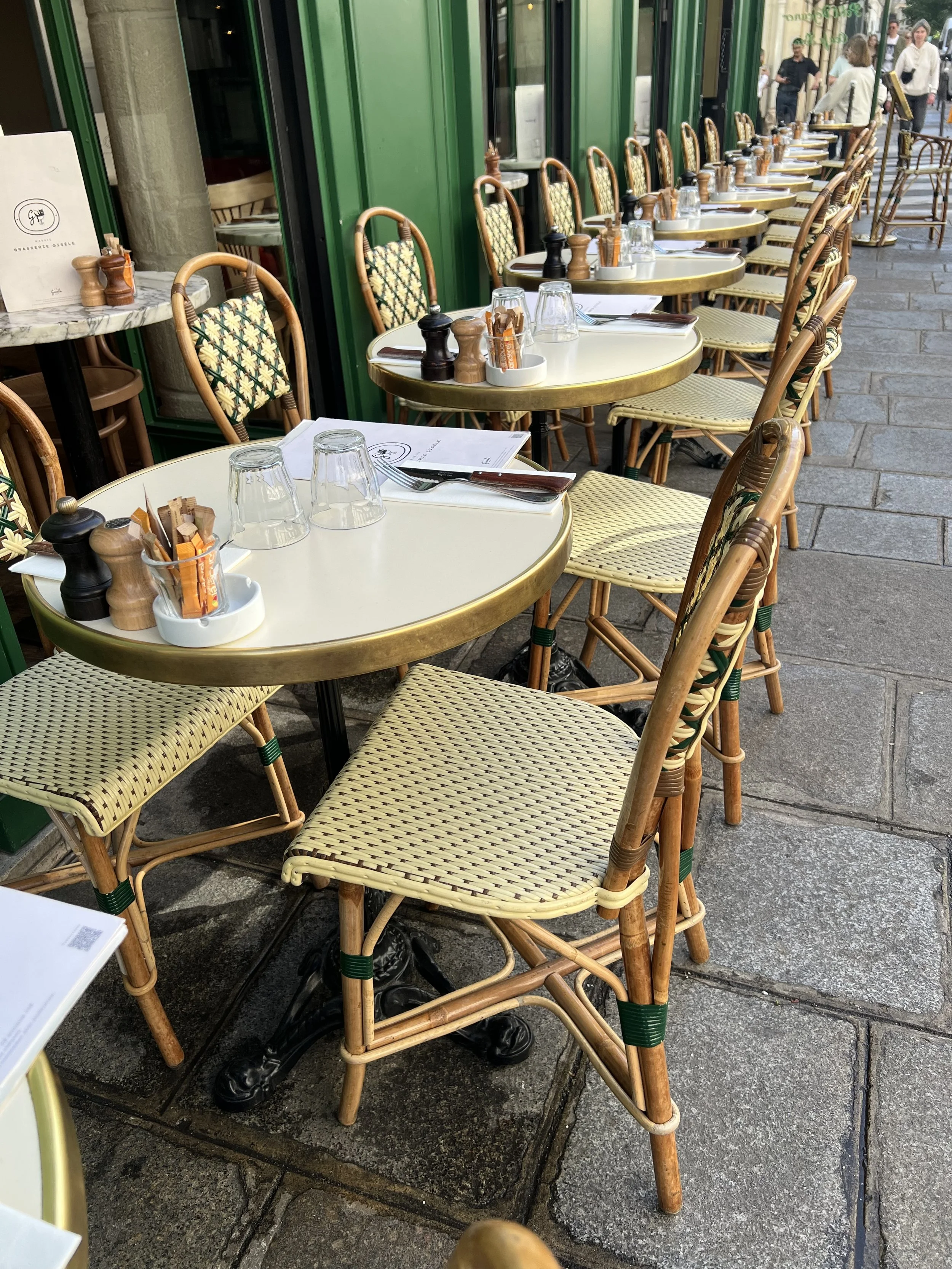
And it’s steeped in history, we just scratched the surface.
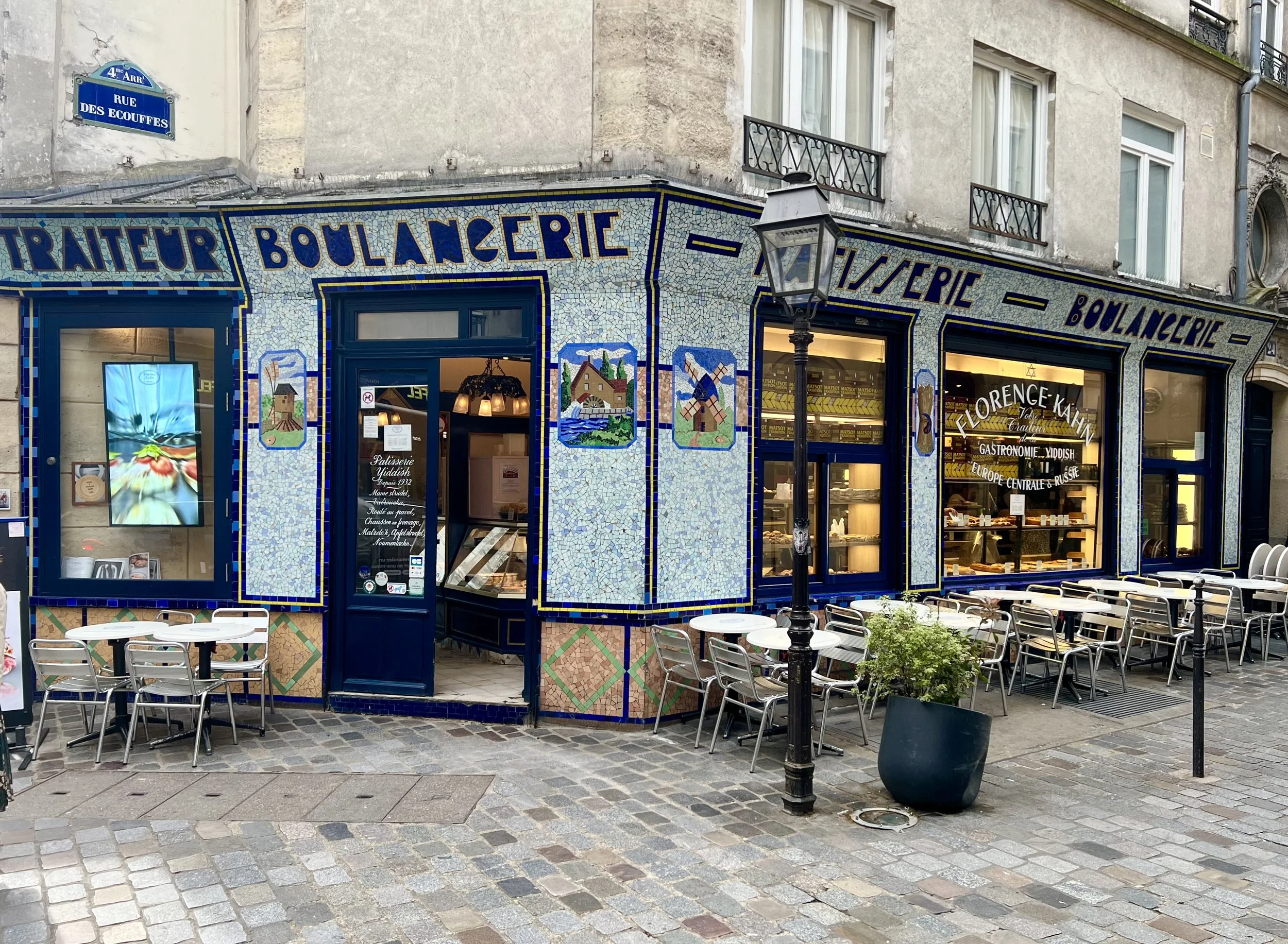
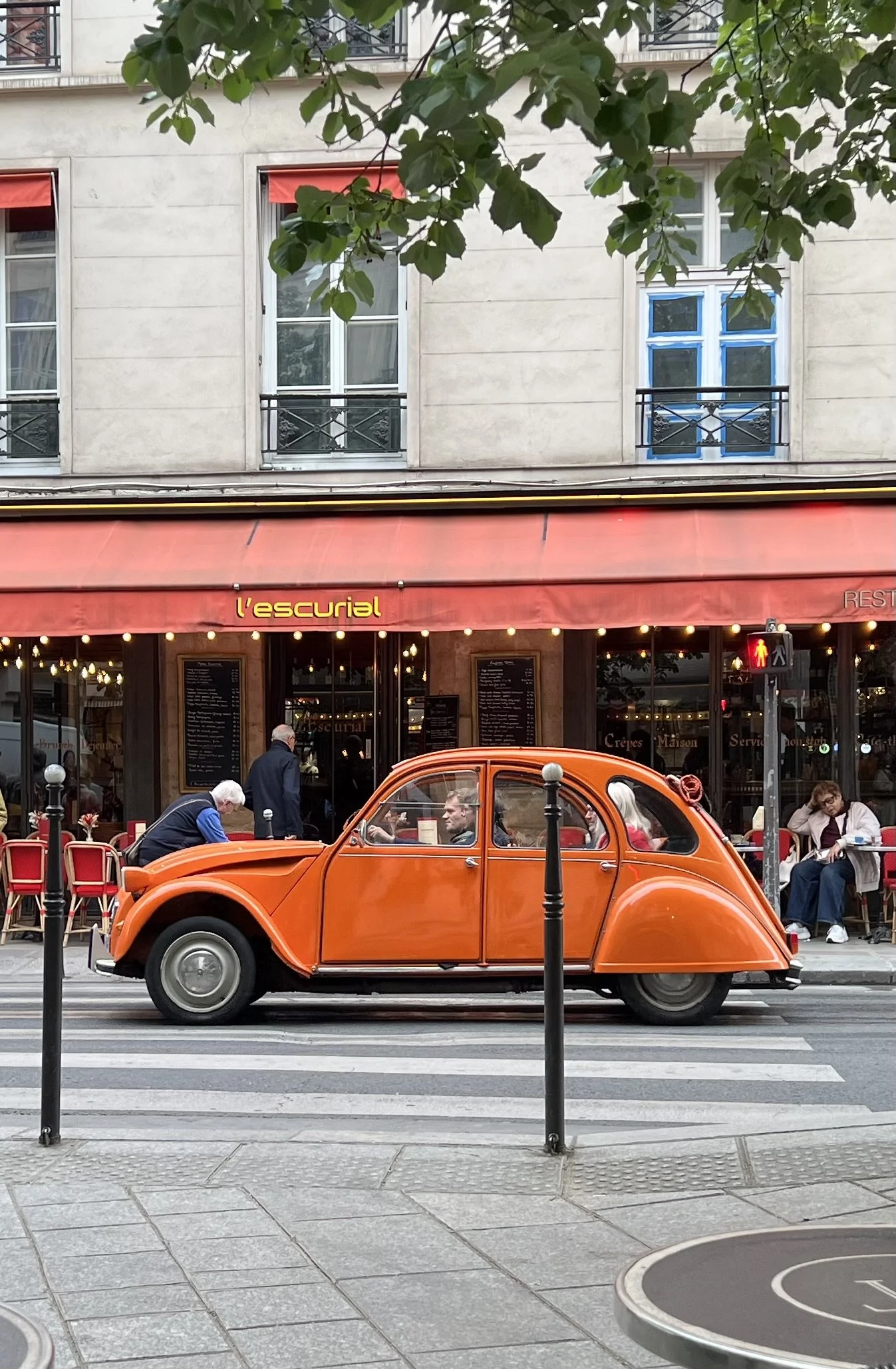
Definitely an area we will come back to, as still lots to see and do.
MAD - musée des arts décoratifs
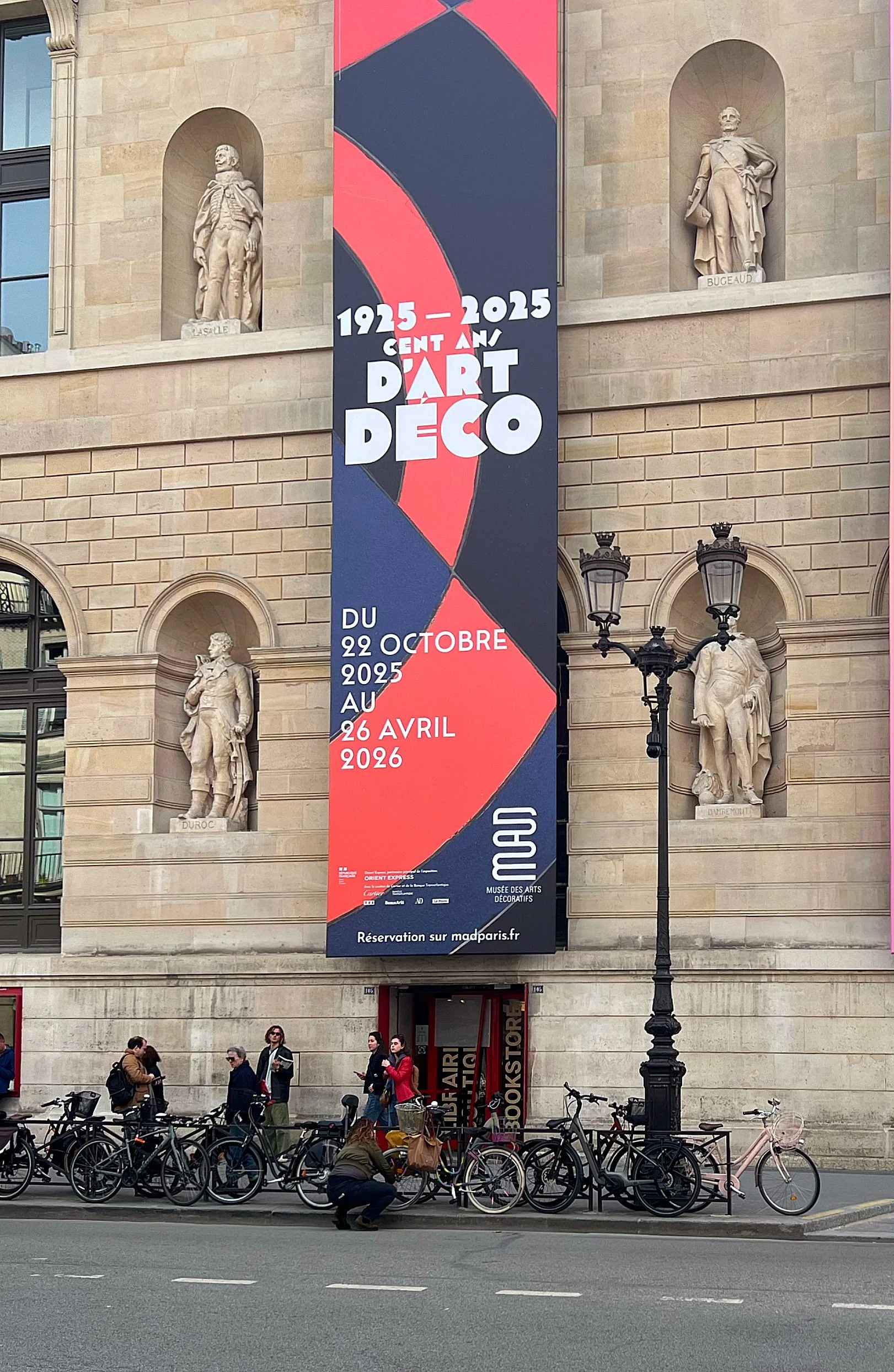
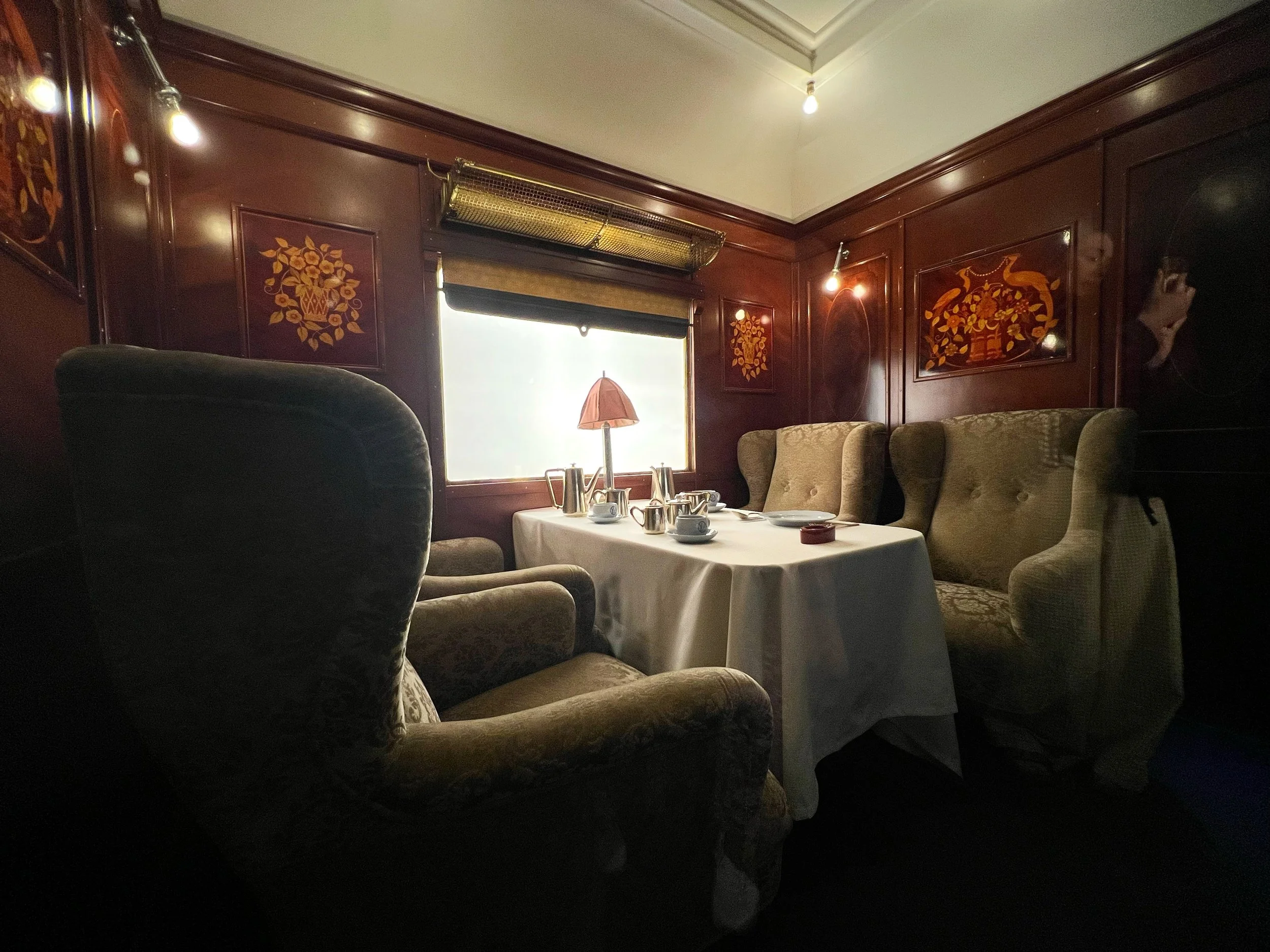
The museum of decorative arts (MAD), situated just along from le Louvre, had not been on our list of things to see, but a friend of ours had recently visited the Art Deco exhibition which is currently on there, and recommended it. It’s a period I love, and I was particularly interested, as it incorporated displays of how they have recently renovated l’Orient express.
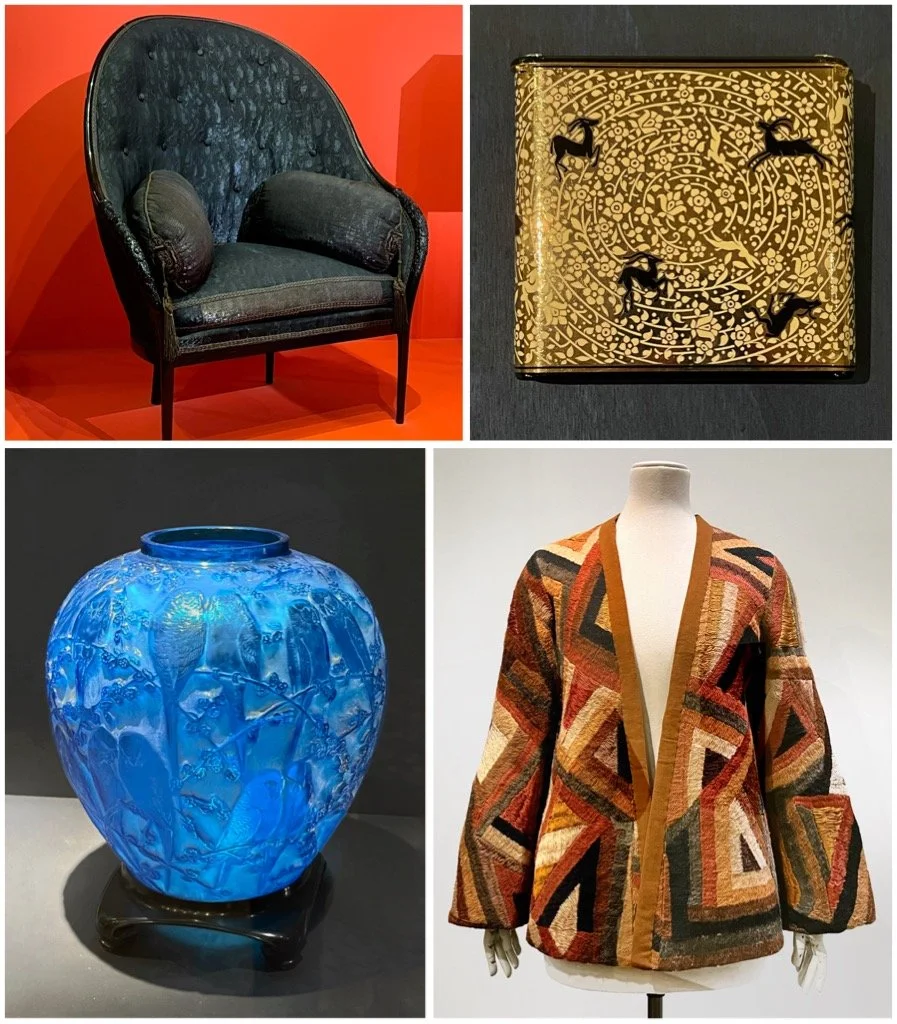
The exhibition started with a display of all manner of period objet d’art, each one demonstrating the importance of bold colour, texture, and pattern. From cigarette cases to chaises longues, the intricacy of pattern and surface texture are key to the luxurious nature of Art Deco. They often used nature to inform their patterns, and to bring its designs to life.
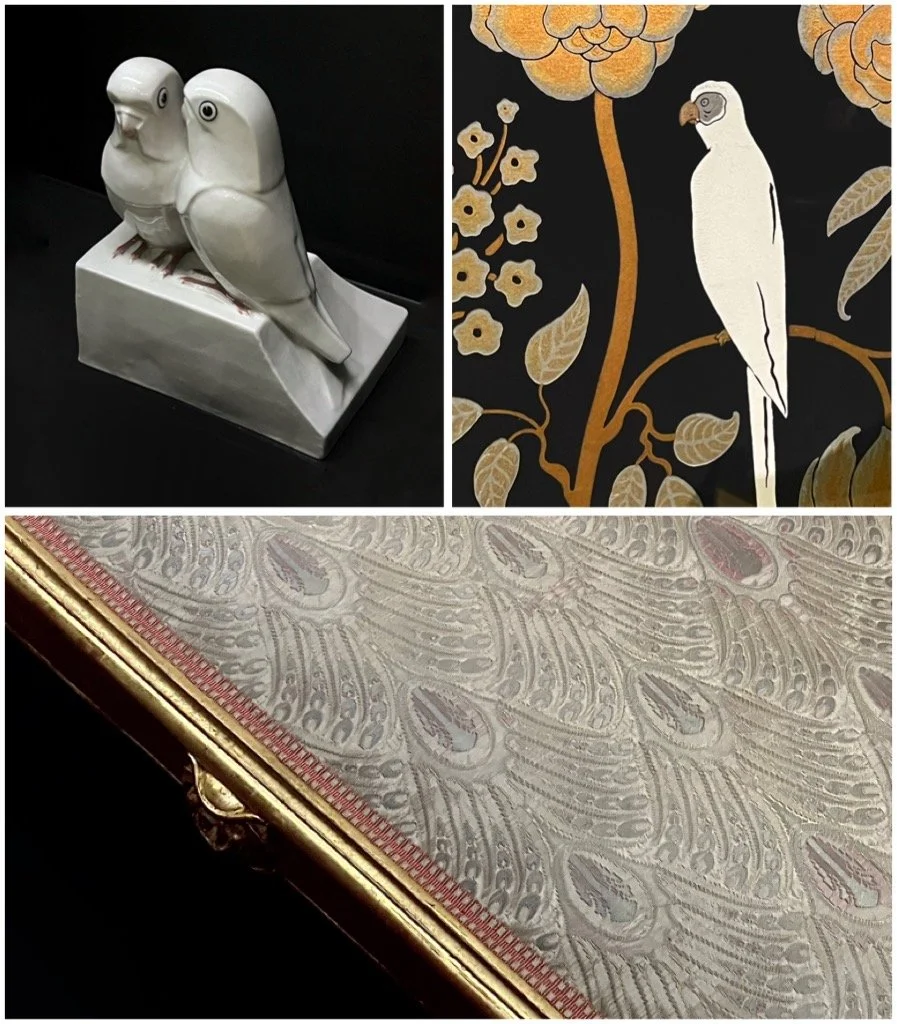
But of course, the movement spanned the whole world of design, and interiors received the same level of reverence, with form, colour, and texture bringing an abundance of richness.
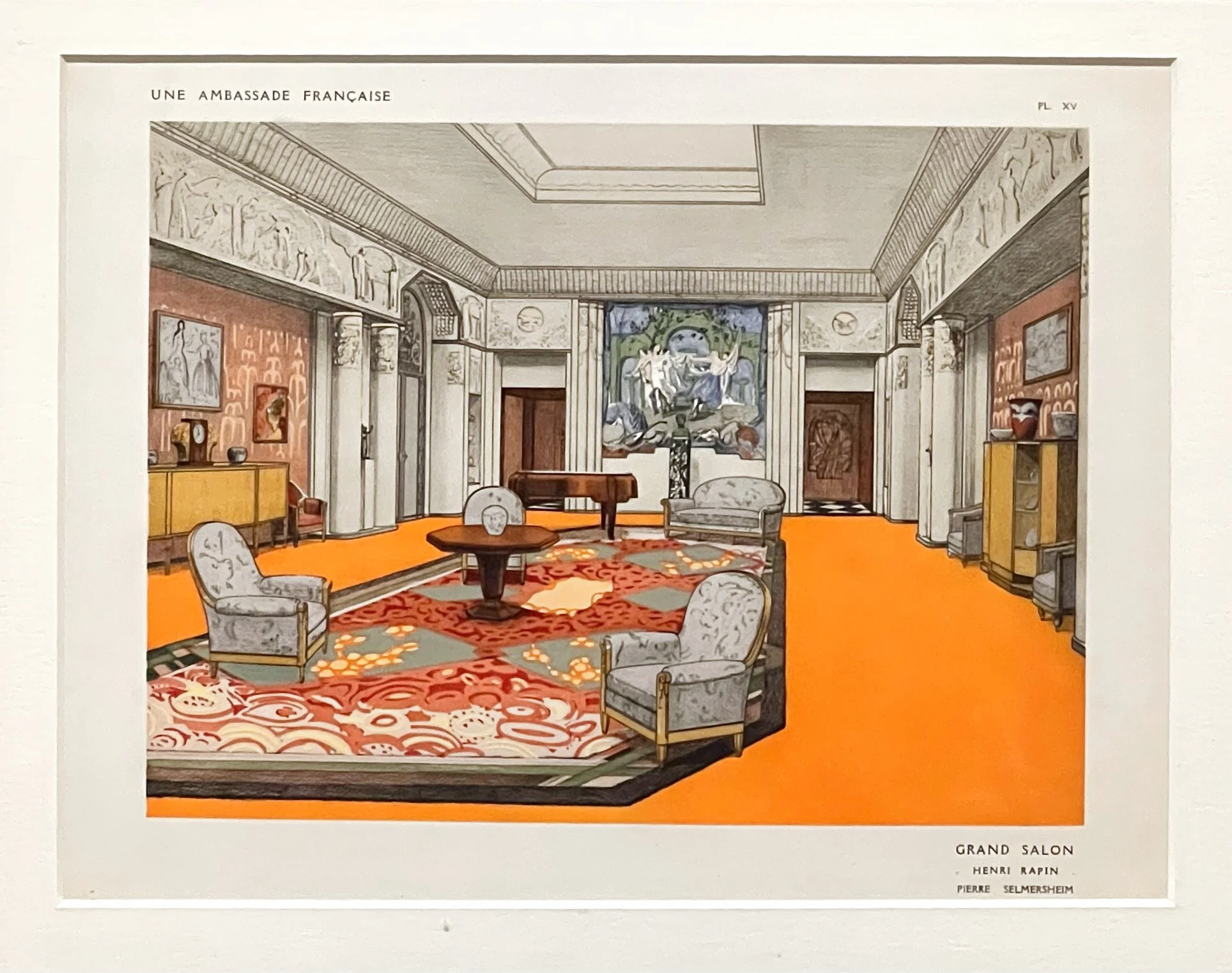
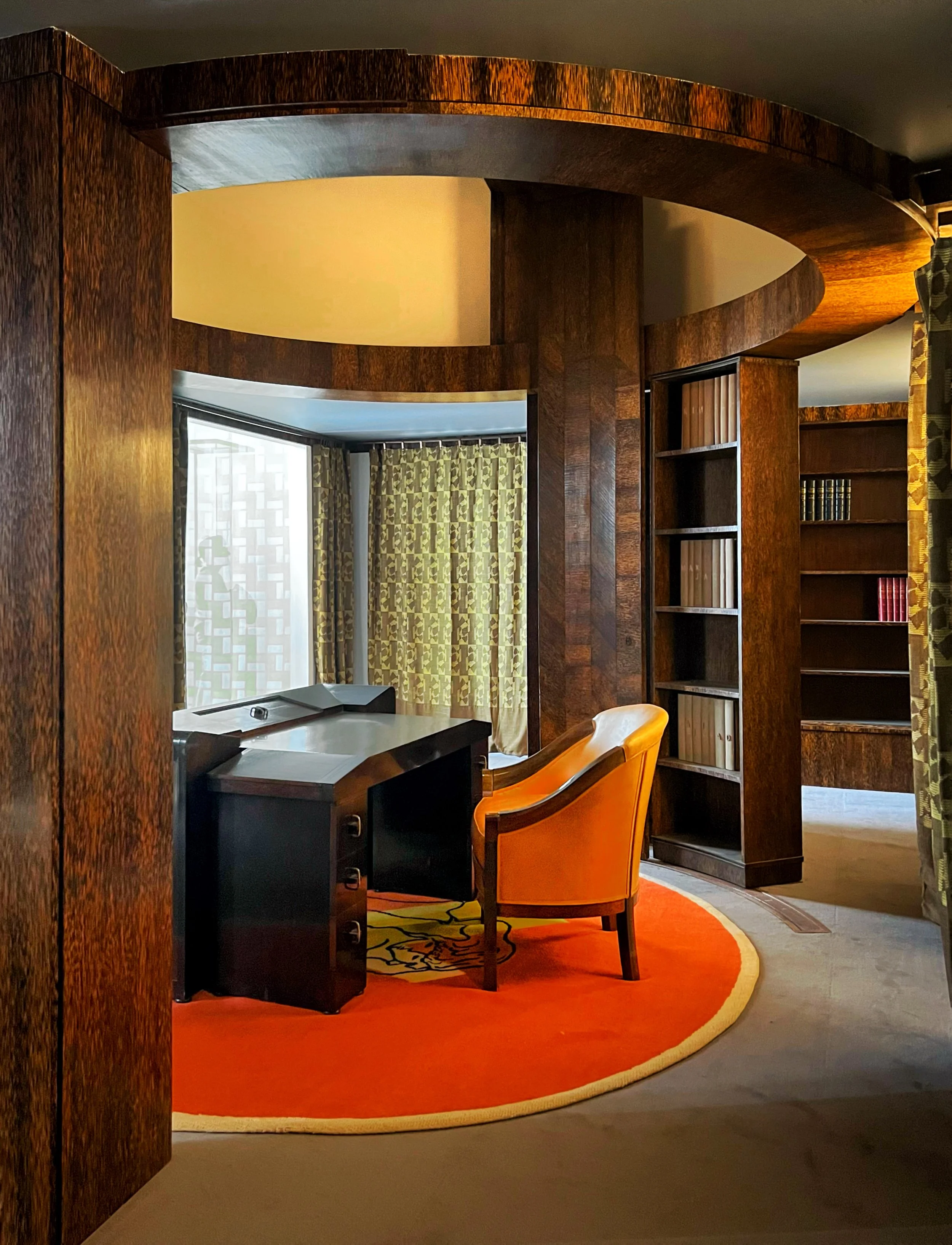
Like this amazing library, designed by Pierre Chareau for the Paris Exhibition of 1925. A dome in the ceiling supports two wooden posts that feature a fan-like structure that allows the amount of light to be adjusted in the room. The dark, masculine library was created for the French ambassador. It was like a room within a room, rather spectacular to be able to view it through windows on all sides as a true 360°.
The interiors were not limited to static structures, even trains of the time were designed to be luxurious. In 1883, the Orient Express became a famous example of this iconic era. It travelled from Paris to Constantinople in 81 hours, via Munich, Vienna, and Bucharest, and in incredible style. What fun and decadence it must have been to travel on it.
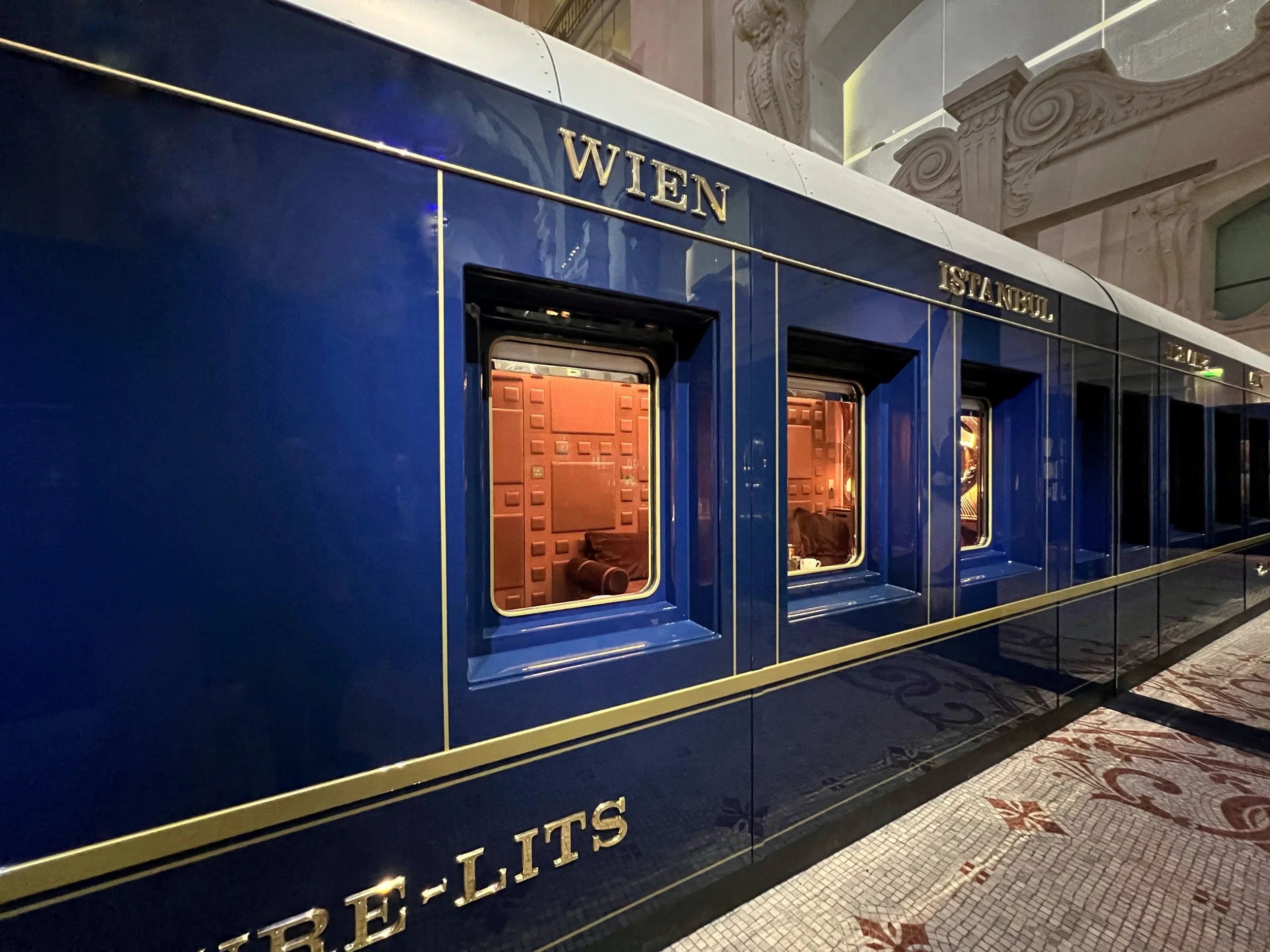
Nowadays, the designers are thinking more of the technical constraints on board a train: insulation, controlling noise and vibration, and the integration of modern comforts (Wi-Fi, air conditioning etc).
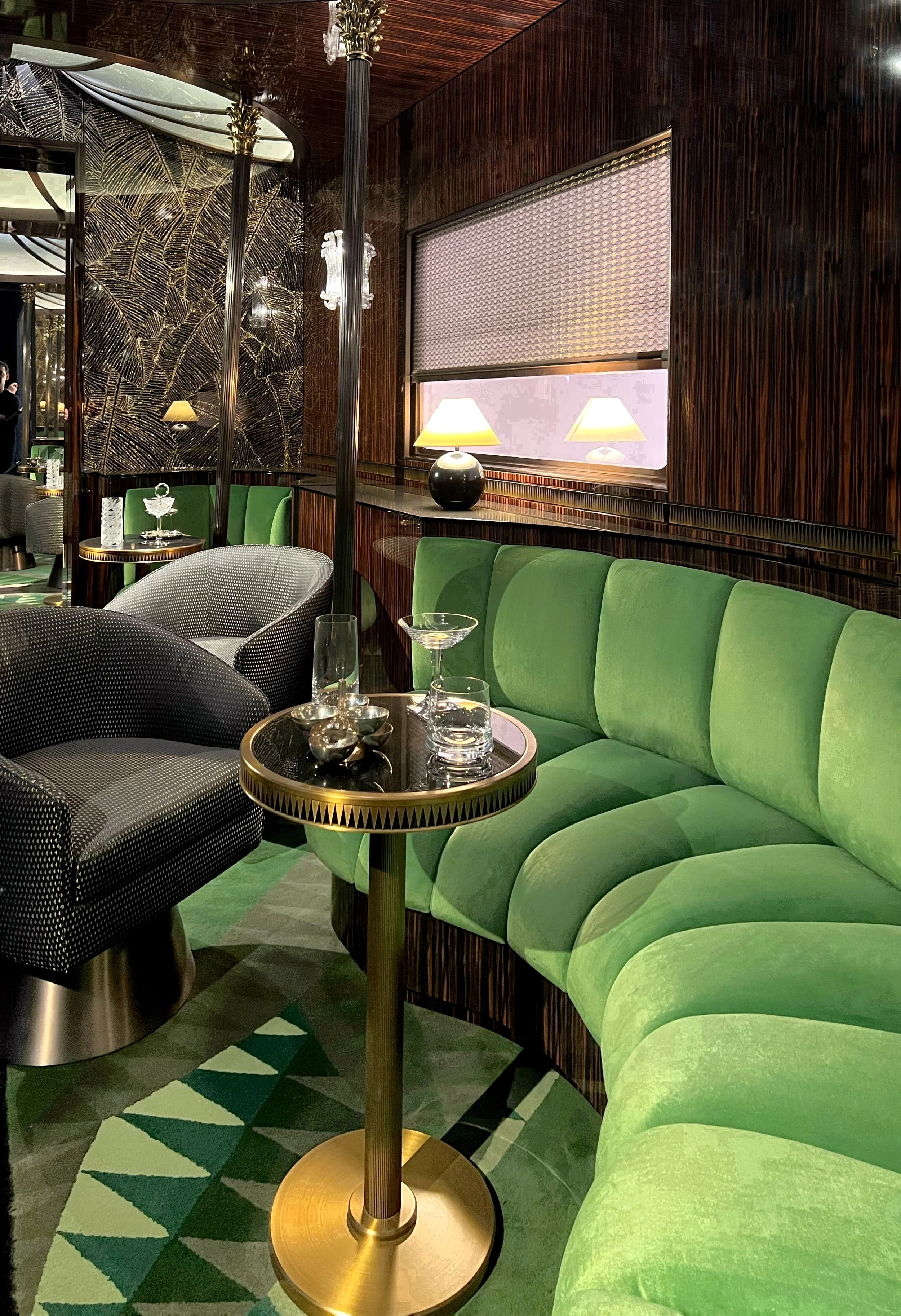
The exhibits show how the revival of the New Orient Express is a major industrial design project, that will be an ambassador for French luxury, so it’s not just about considering the technical challenges, but also the aesthetic ones. It has been a massive undertaking. Maxime d'Angeac is the interior designer, managing thousands of skilled craftspeople from some thirty different trades, all experts in their field, and all contributing to a work of art 350 meters long. It’s so exciting that this has been possible.
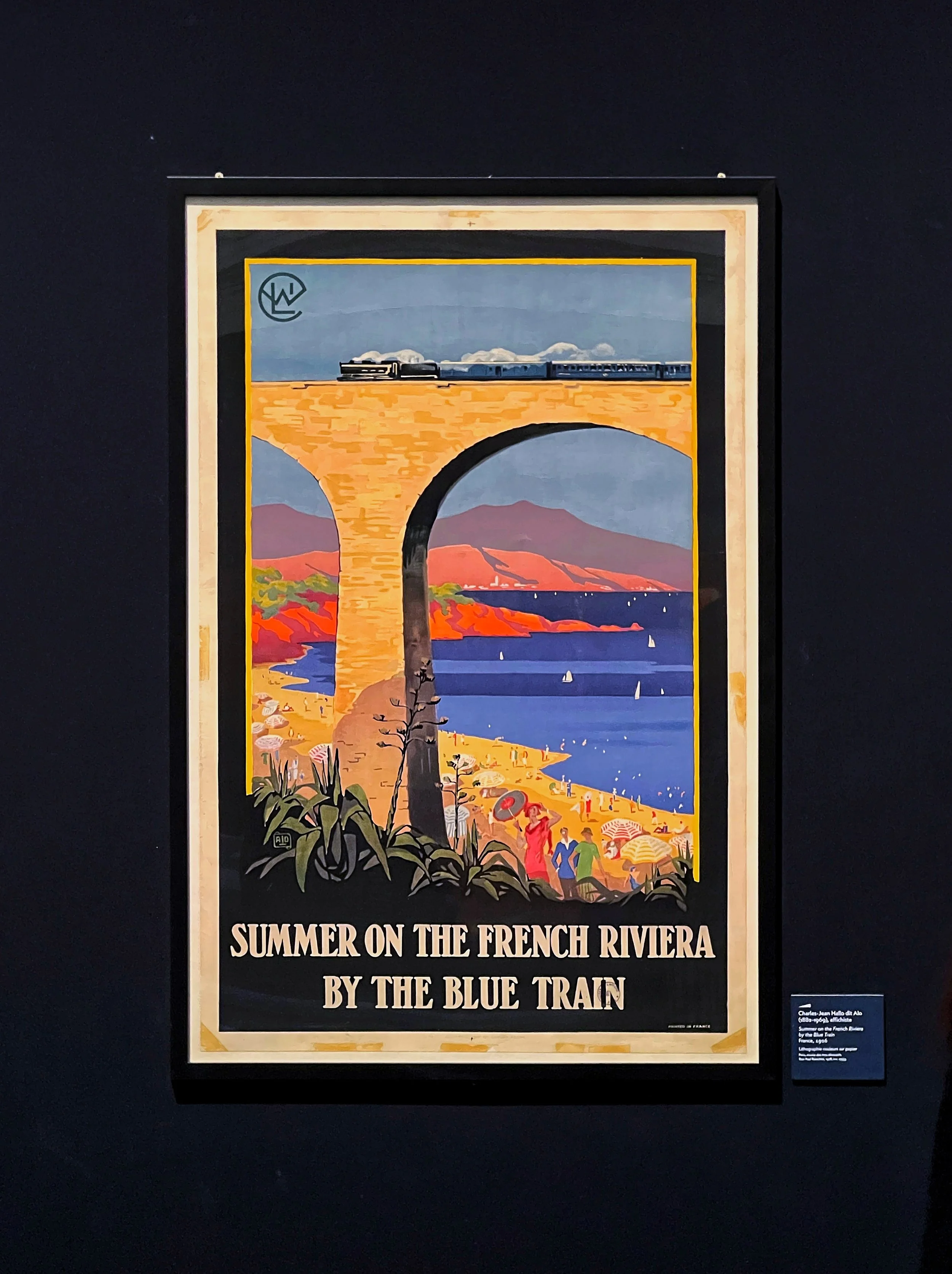
They had displayed old posters on the walls as we were leaving and we both noticed there was a poster for the Blue train, or ‘le train bleu’, which took passengers from Gare de Lyon to the French Riviera. Now there’s a thought…
Victor Hugo museum
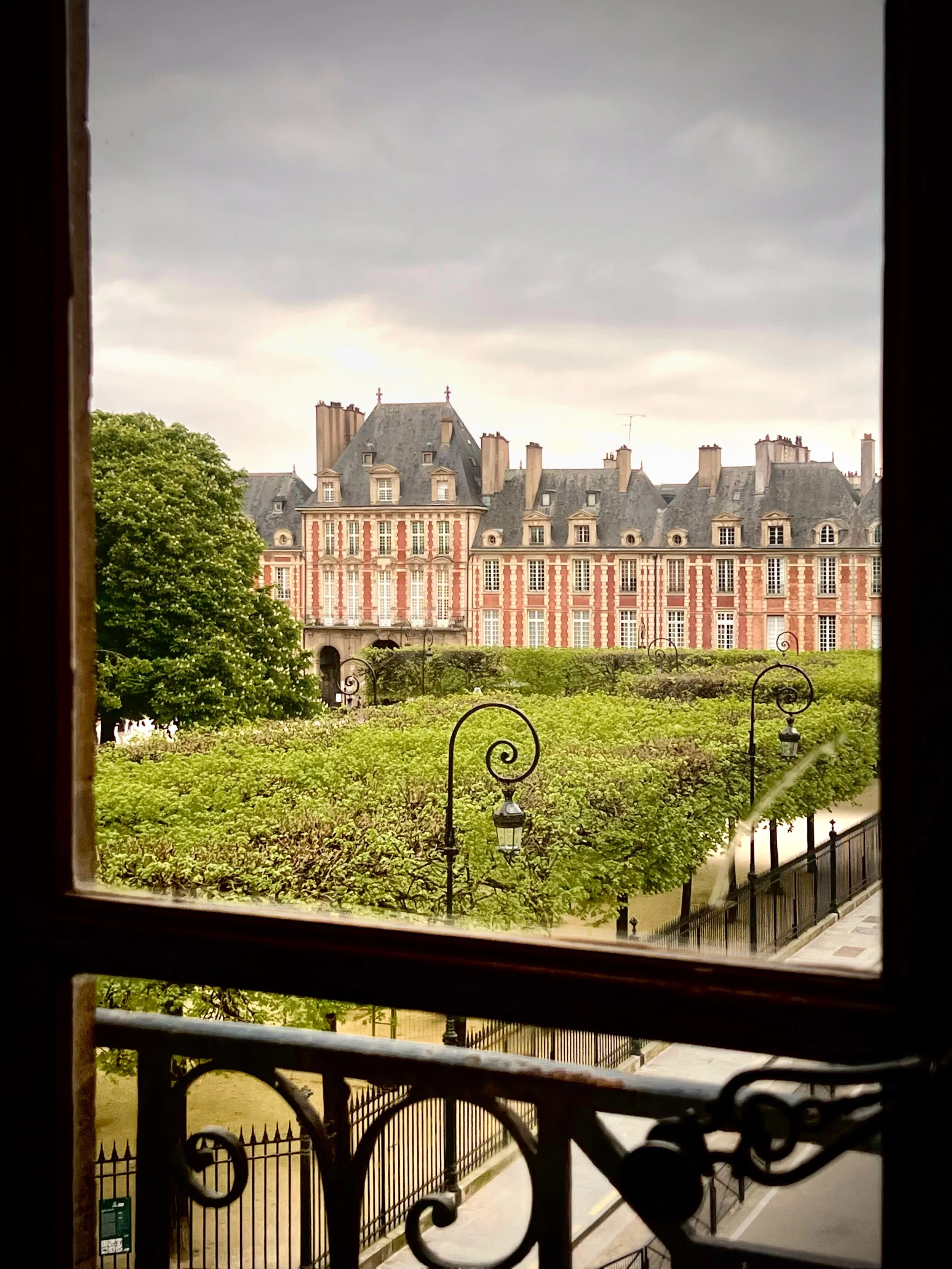
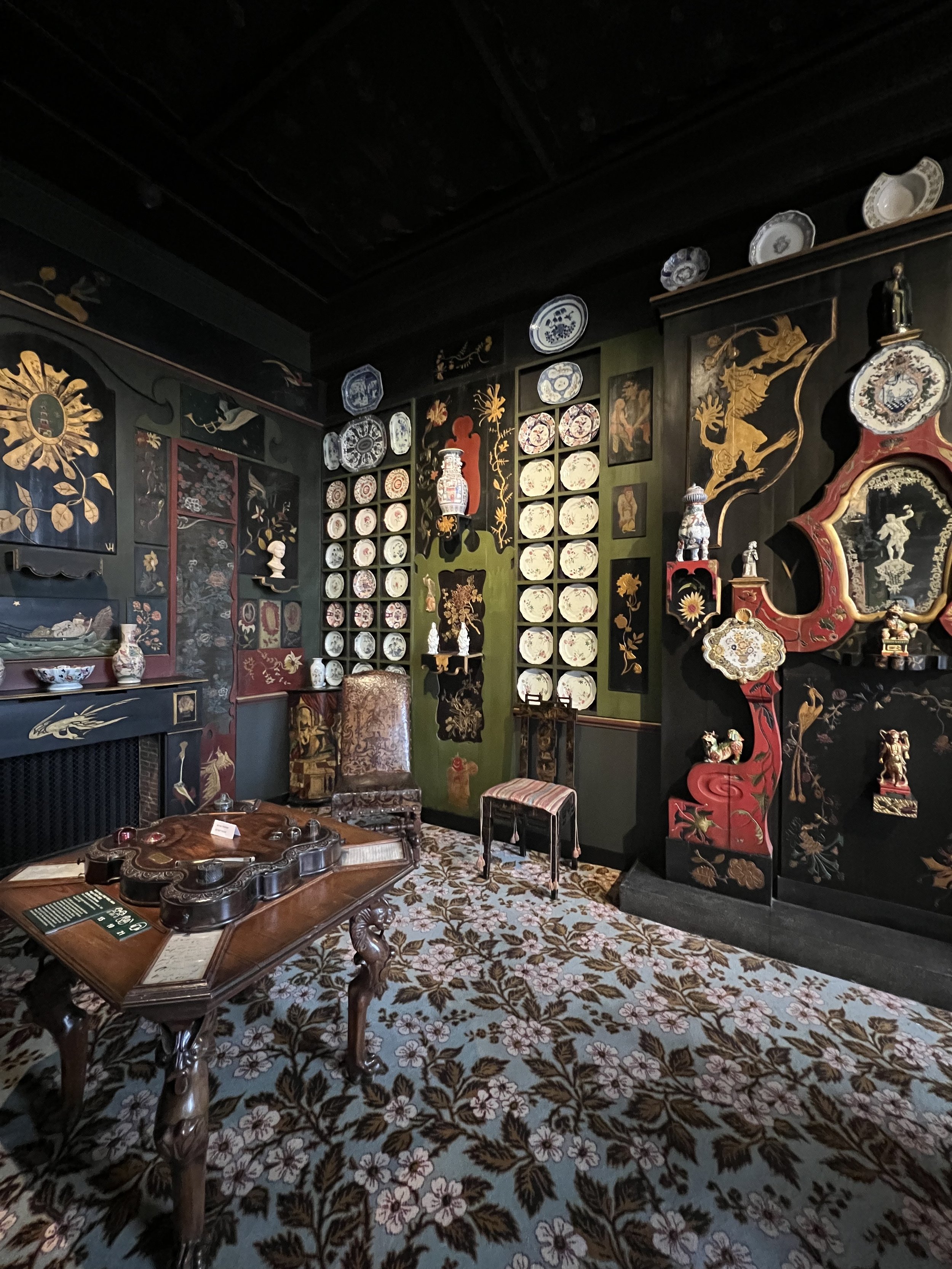
Opened in 1903, the Victor Hugo museum is situated in his former apartment on the Place des Vosges. Victor, born 26 February 1802 and died 22 May 1885, was not only a French romantic writer, poet, and playwright, he was also an artist, a designer, and a decorator. He also upheld strong political views, and was a human rights activist. His views and activities were why he was later exiled from France.
There is a vast collection of his work, which his grandson, Jean Hugo, wanted the museum to become the repository for. The collection exceeds the capacity of the museum, so regular exhibitions and displays are organised to allow the public to discover more of his works. Over time, they plan to digitise them, and make more available online.
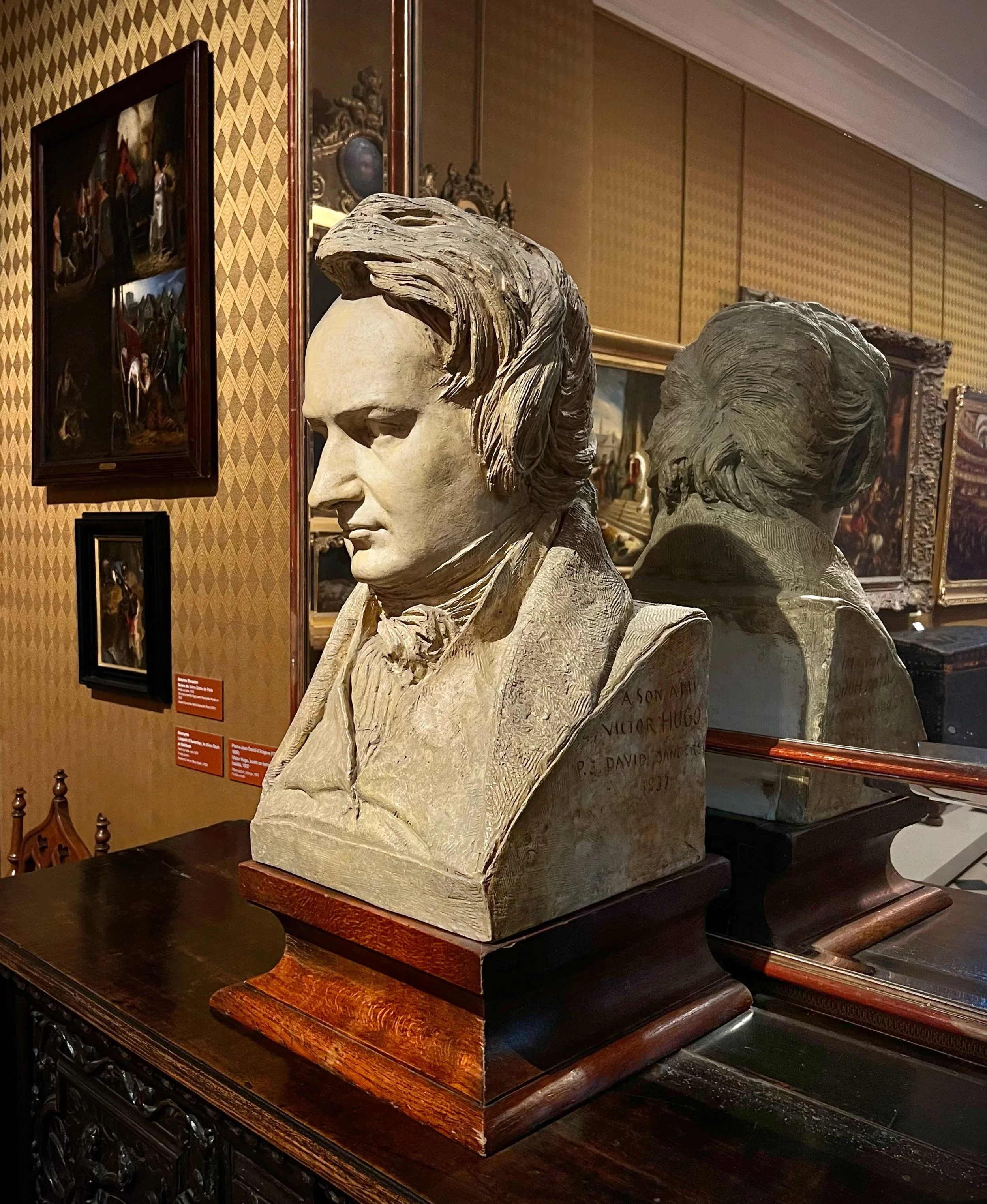
He is probably most famous for the iconic novels ‘Les Misérables’ (1862), and ‘The Hunchback of Notre-Dame’ (1831), neither of which I would say were majorly romantic, rather more tragedies. Not something I would necessarily choose to read, but their fame speaks for itself. I do remember watching the 1931 black & white movie of The Hunchback of Notre-Dame, starring Charles Laughton and Maureen O’Hara.
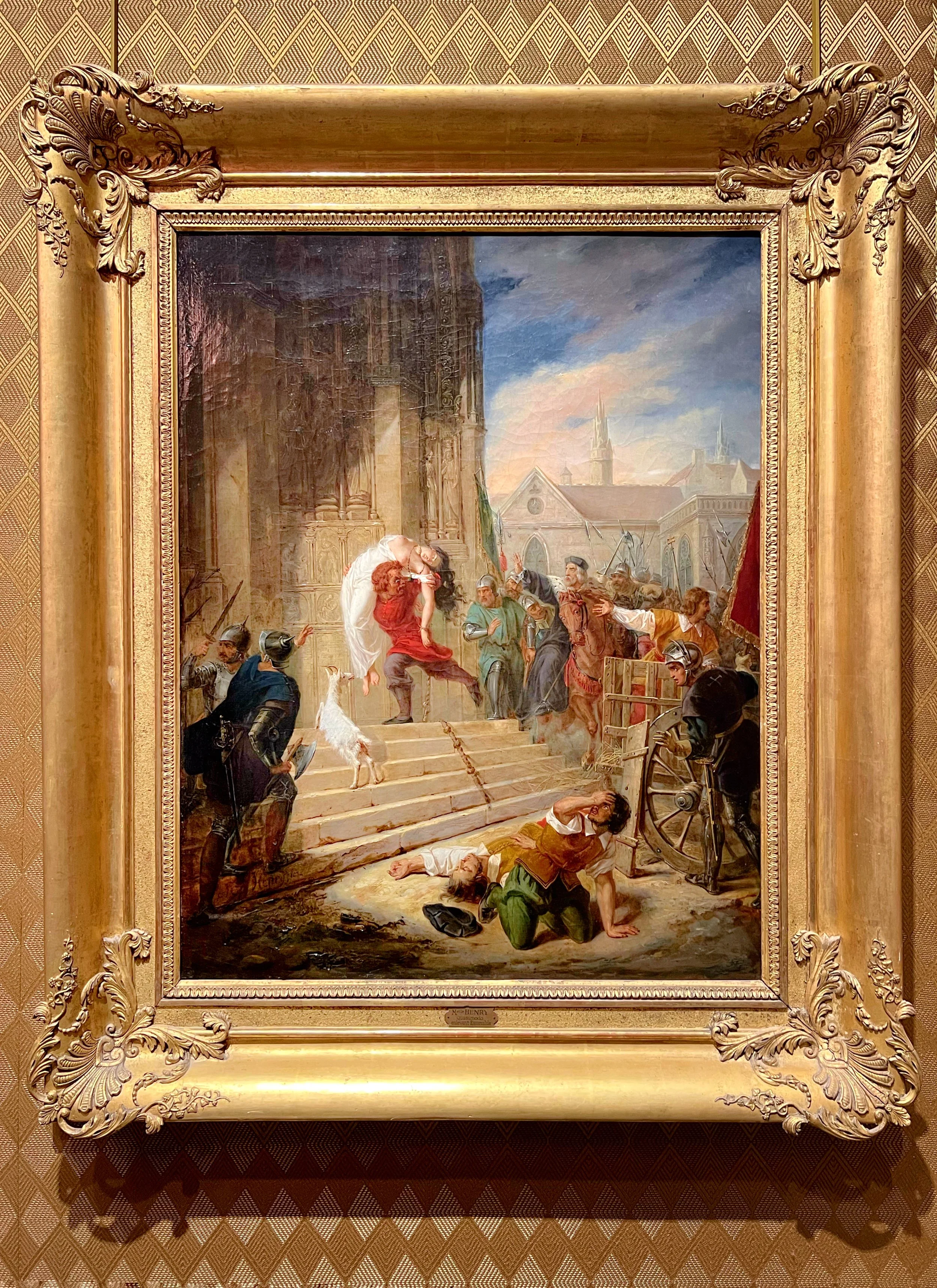
He welcomed many influential people of the time to his appartement in the Place des Vosges, promoting his staunch advocacy for social justice—which included opposing the death penalty—and his dedicated political service to the French.
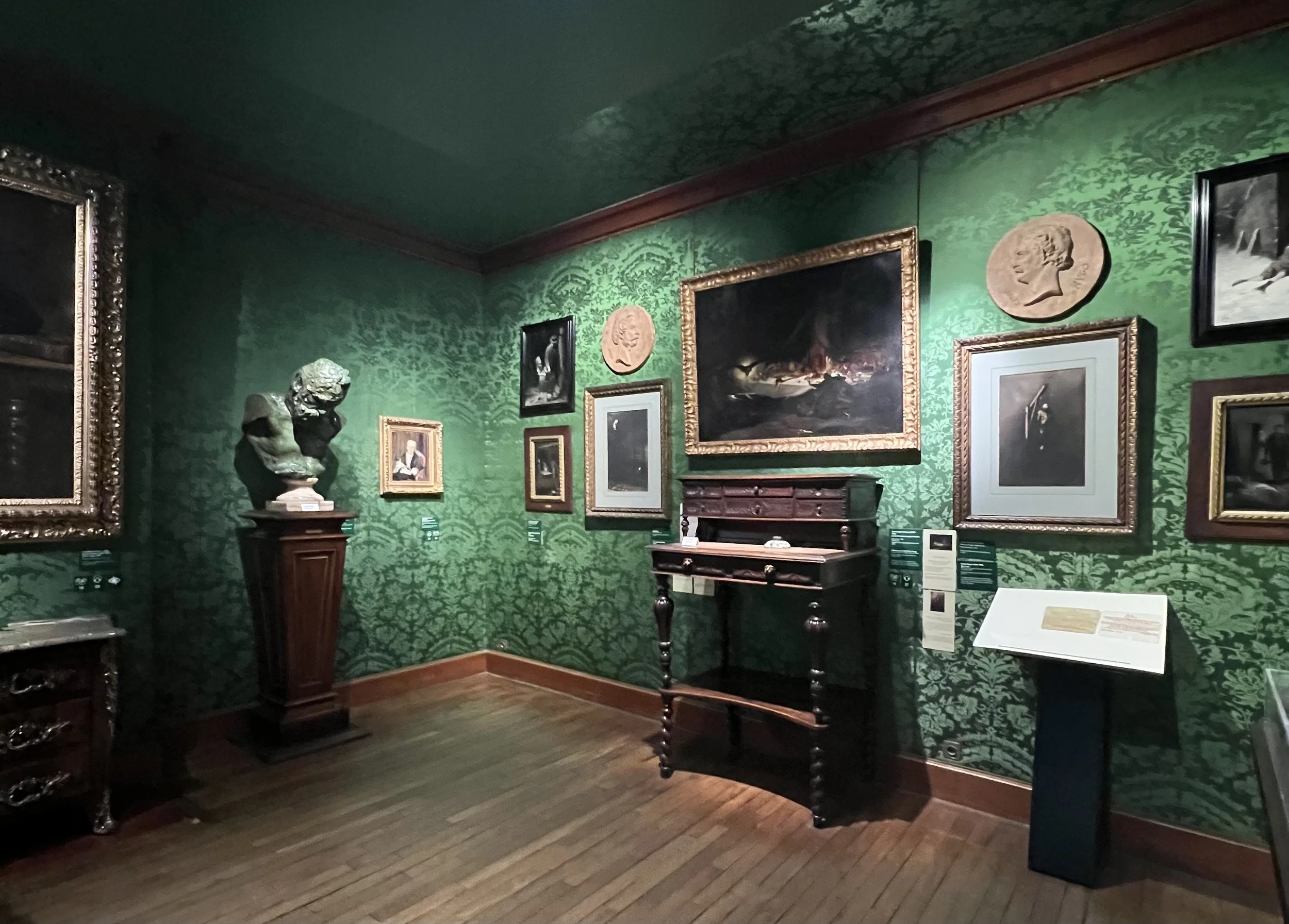
In 1851 he refused to accept the new form of government (enforced by Napoleon III’s coup d'état of that year) and was consequently exiled from France. It didn’t help that he publicly labeled the new leader a “traitor and criminal”.
He spent 19 years in exile before finally returning to France.
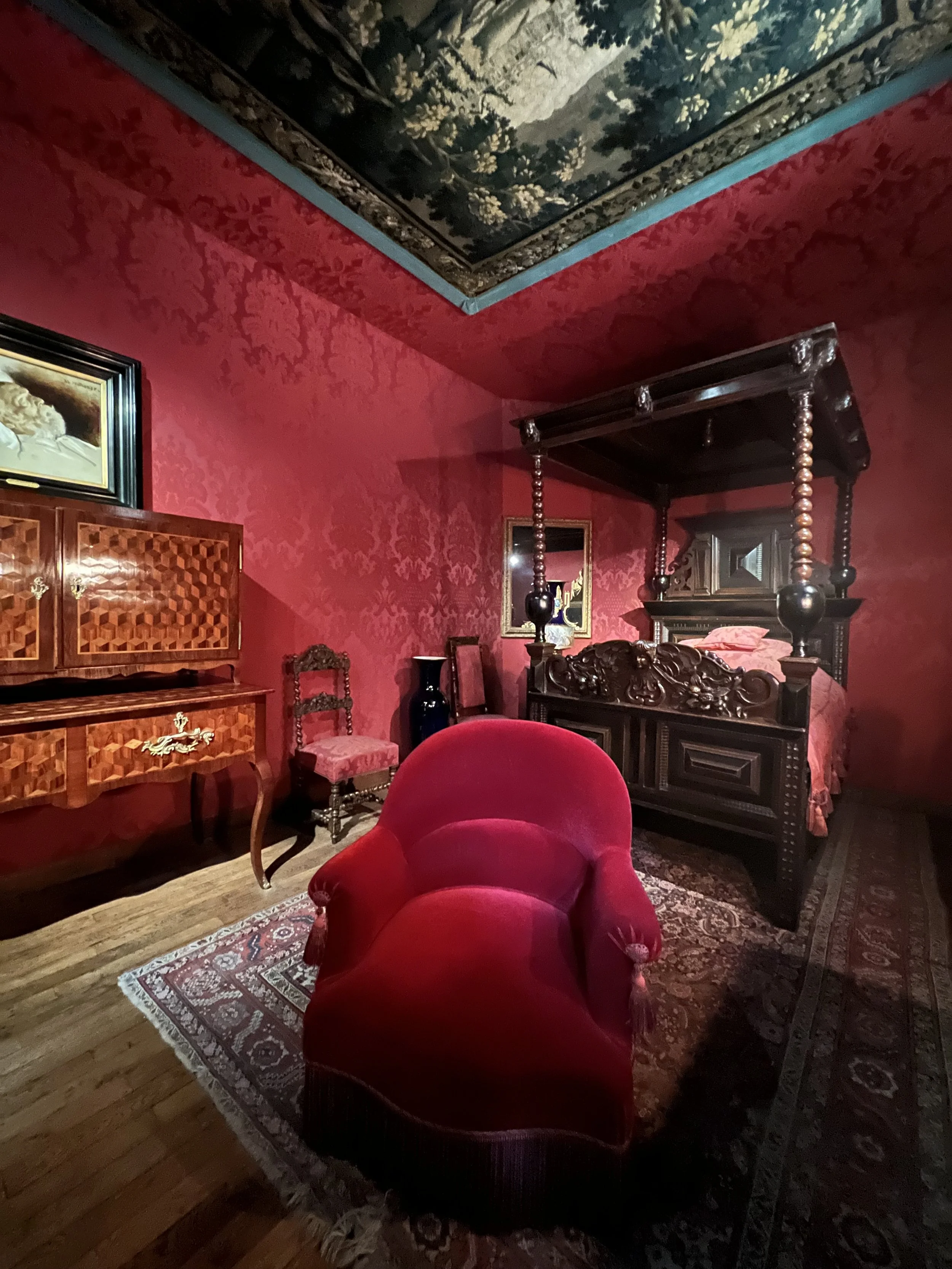
It’s an interesting visit that helps build the image of post revolution France.
Breakfasts
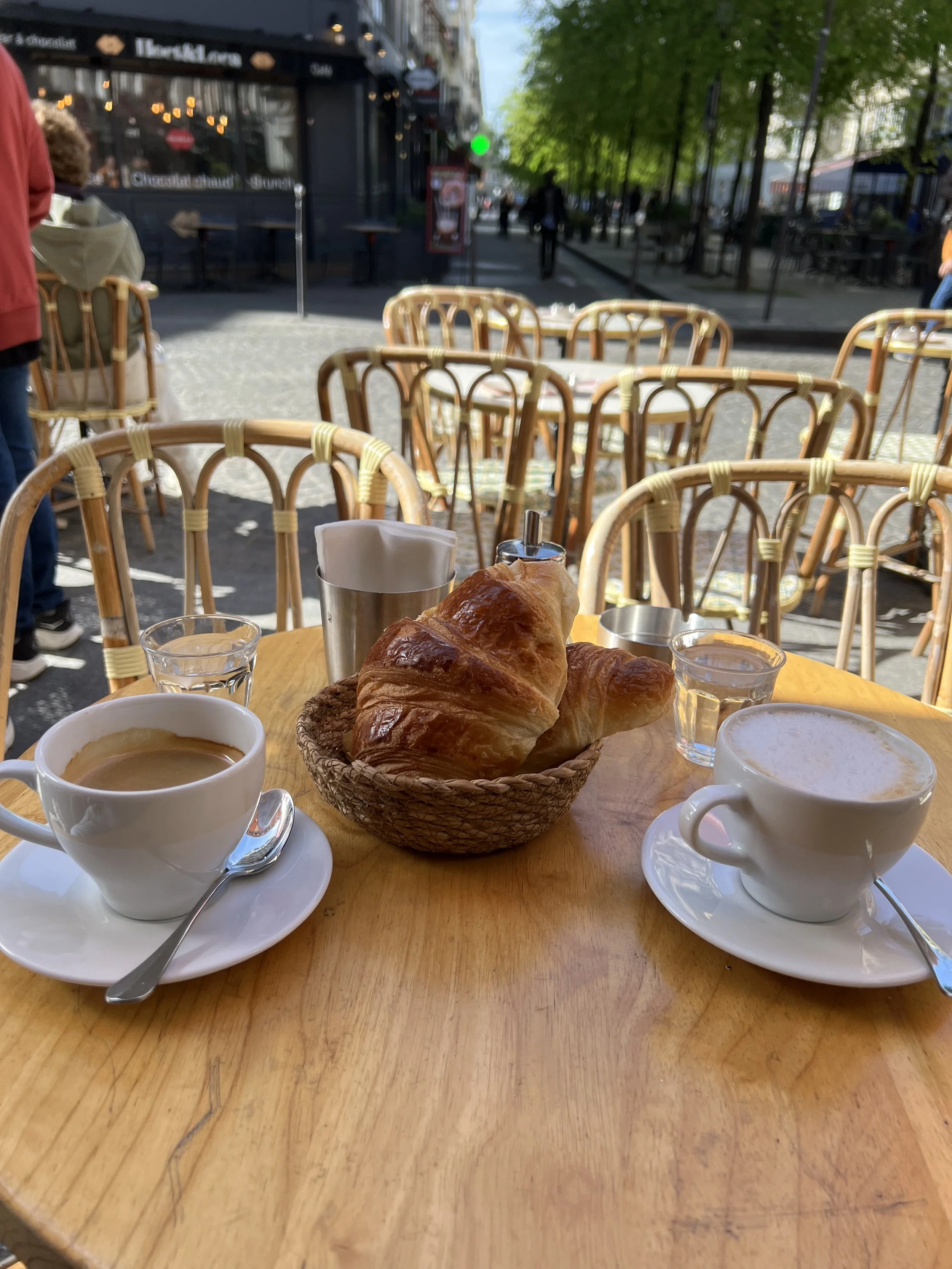
We don’t tend to take breakfast at our hotels where we stay, as we enjoy finding a little street café and sitting down for a quiet coffee, and maybe a croissant or a piece of baguette, to watch the world go by.
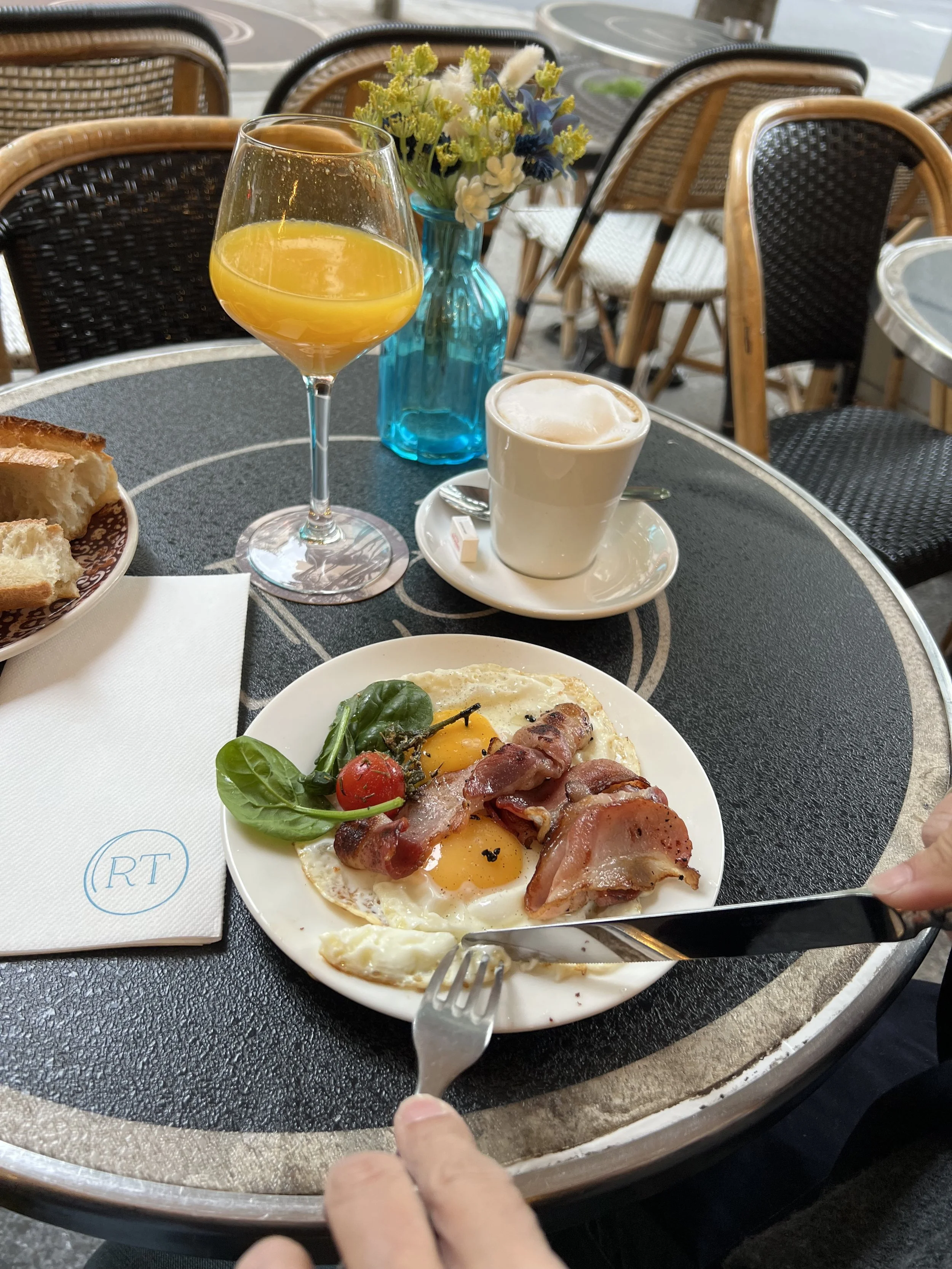
We were particularly surprised to find bacon and eggs, and freshly squeezed orange juice on the menu at this little restaurant, so I couldn’t resist it. What a treat.
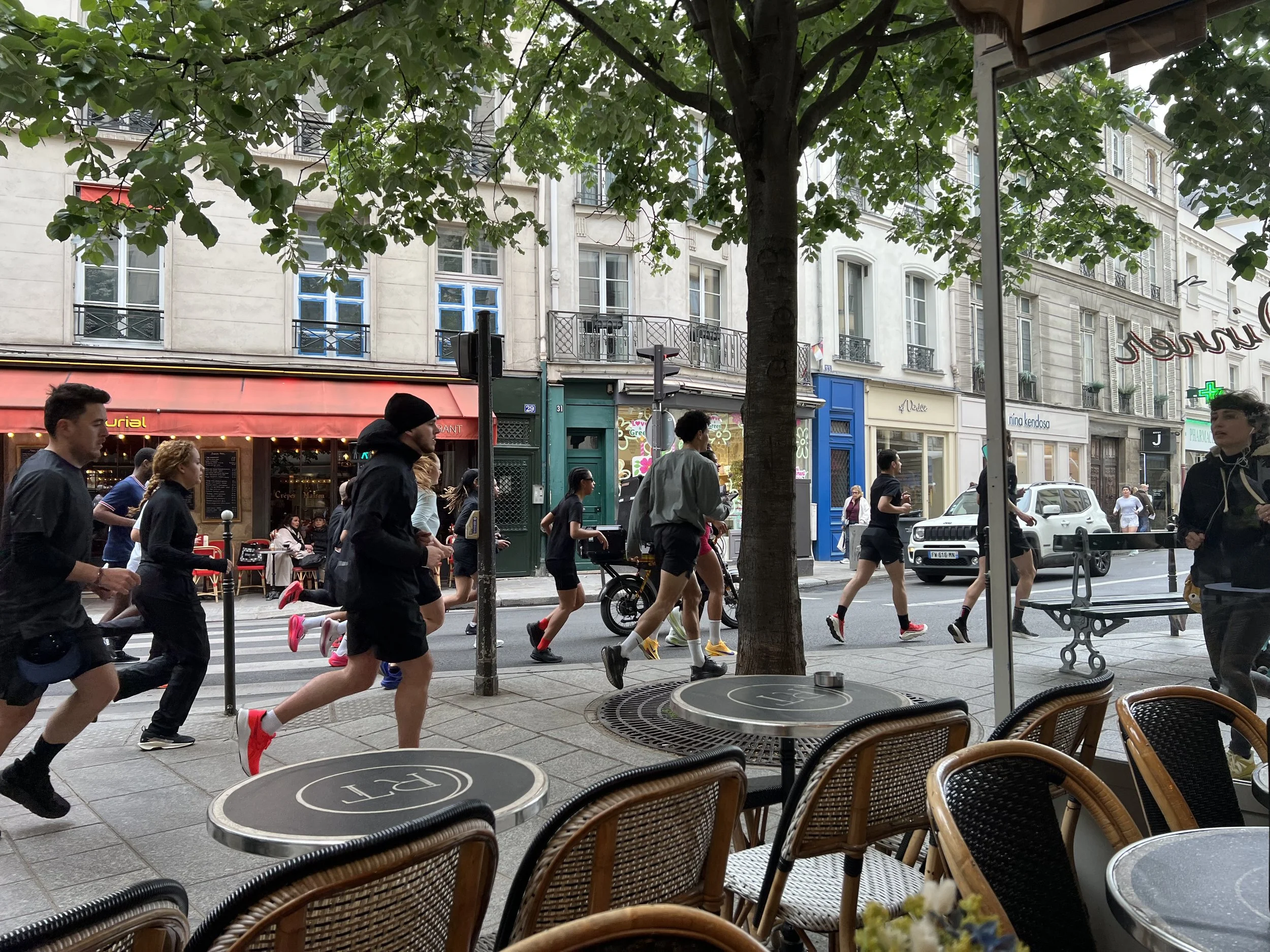
As we were enjoying the ambiance, and the quiet of people’s Saturday morning just getting started, the sound of a beat blasting up the street was heading our way. “Crikey,” I said to Brian, “that’s changing the mood.” At which point a chap on a trike came around the corner pulling a large ghetto blaster on a little trailer and followed by some 50 or so joggers. What a great way to start your day and blast away the cobwebs of your Friday night.
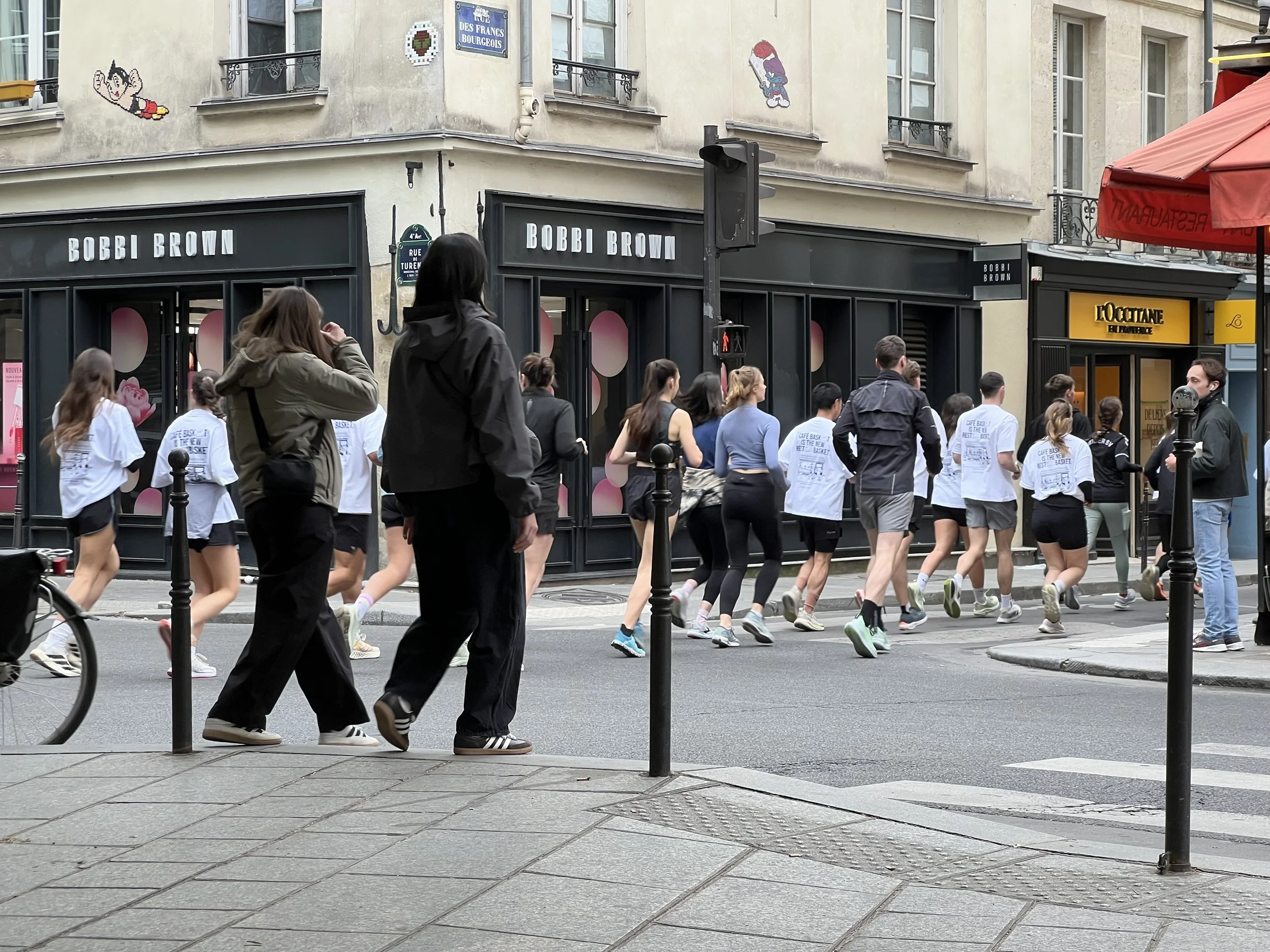
No sooner had they passed but another group headed across the crossroads—just brilliant. It almost made me feel like joining them!
Le Train Bleu
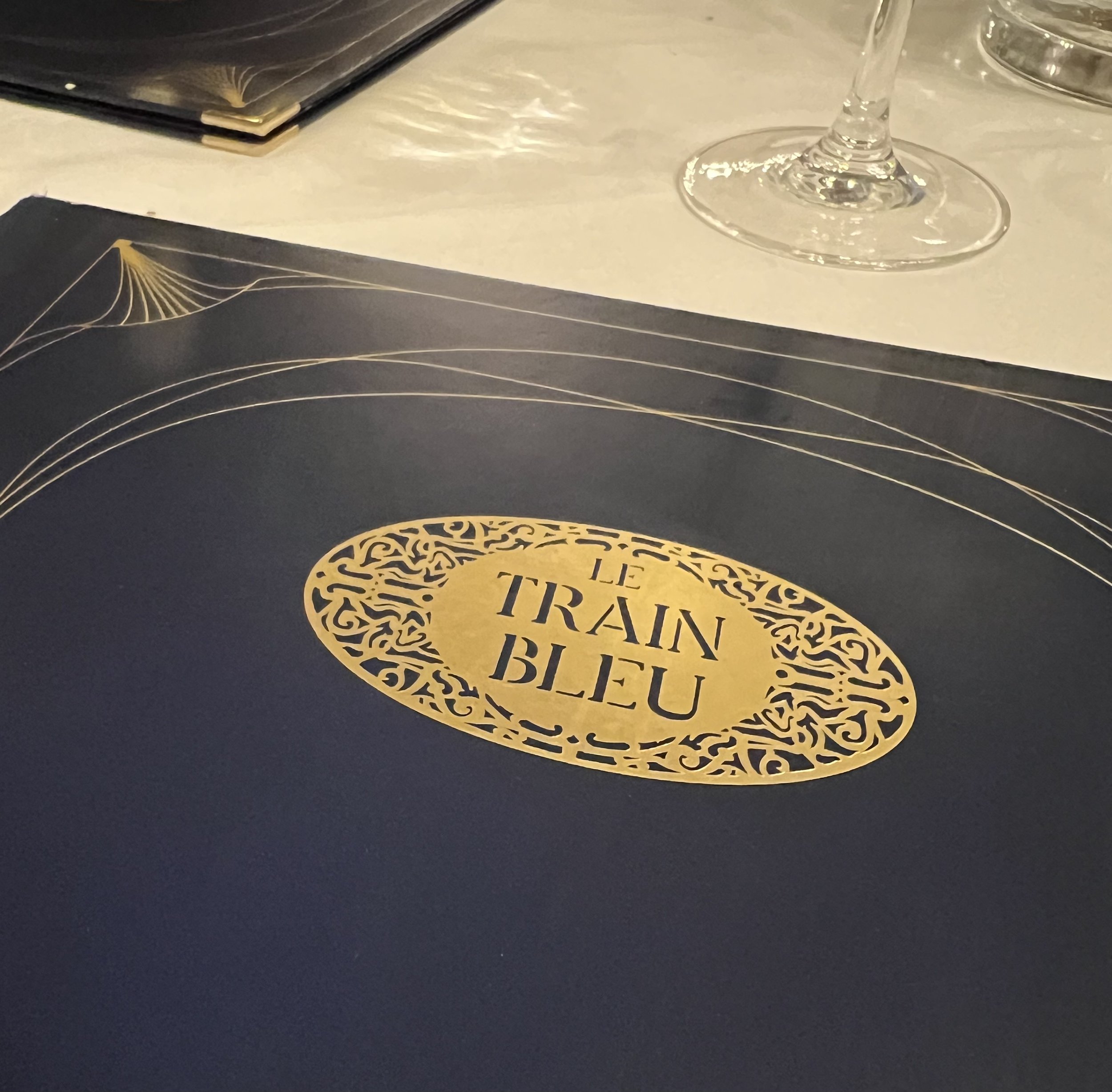
Maybe a strange choice for some, but I’d chosen to go to Le Train Bleu, at the gare de Lyons, for my birthday dinner. It’s a restaurant I’d always wanted to visit, the story of it fascinates me.
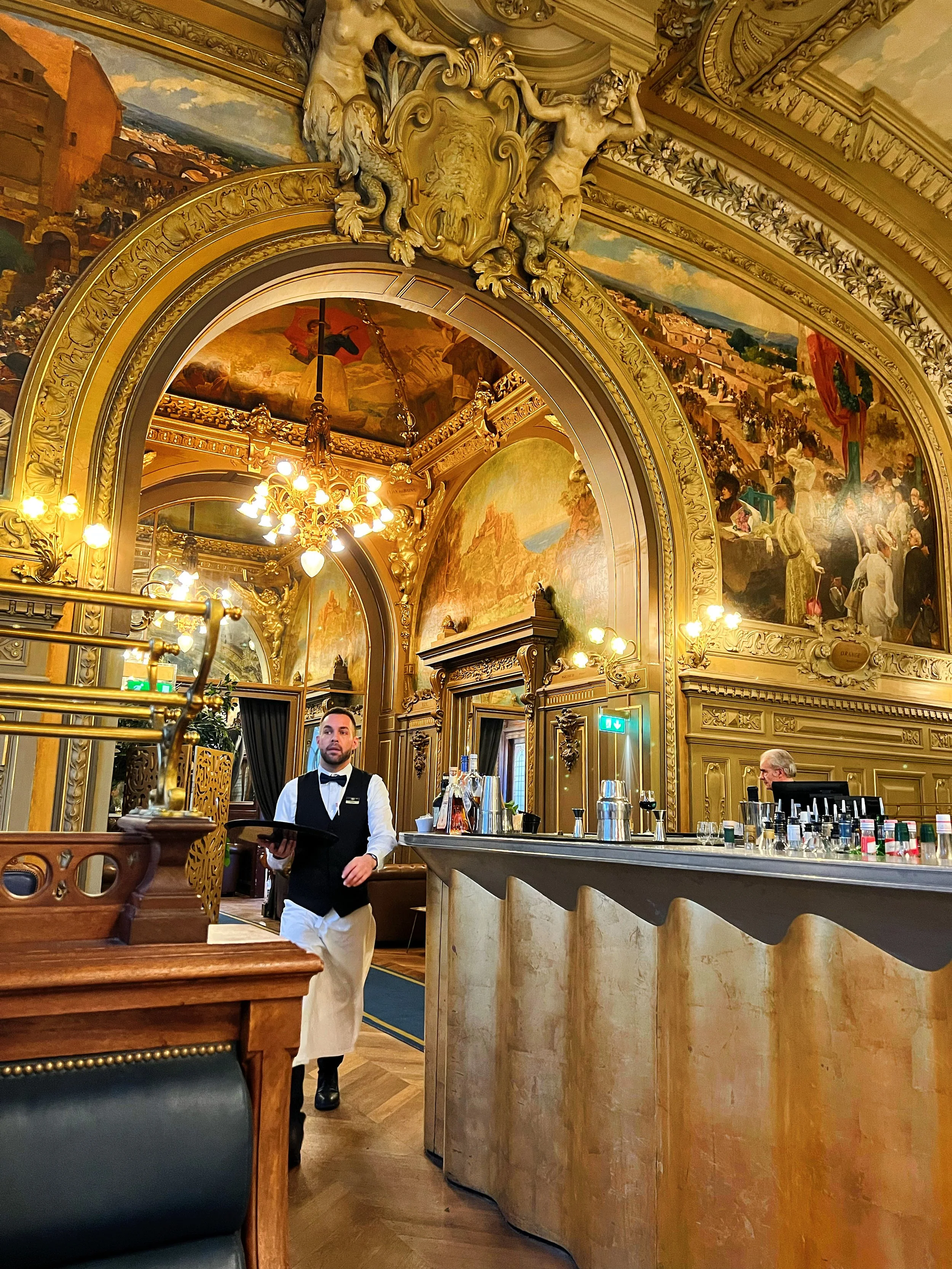
It was opened in 1901, as the Buffet for the train station, providing food for the travellers before or after their journeys. It soon attracted the wealthy, many artists and privileged people of its day.
In 1963, the buffet became "Le Train Bleu", honouring the "Paris-Ventimille" train line dating from 1868. This was a legendary train that served the cities of the Côte d'Azur, along the Mediterranean, hence the blue train.
In 1972, some of the rooms as part of the restaurant were classified as historical monuments. Experiencing the amazing decor and ambiance, you can see why this is a national treasure.
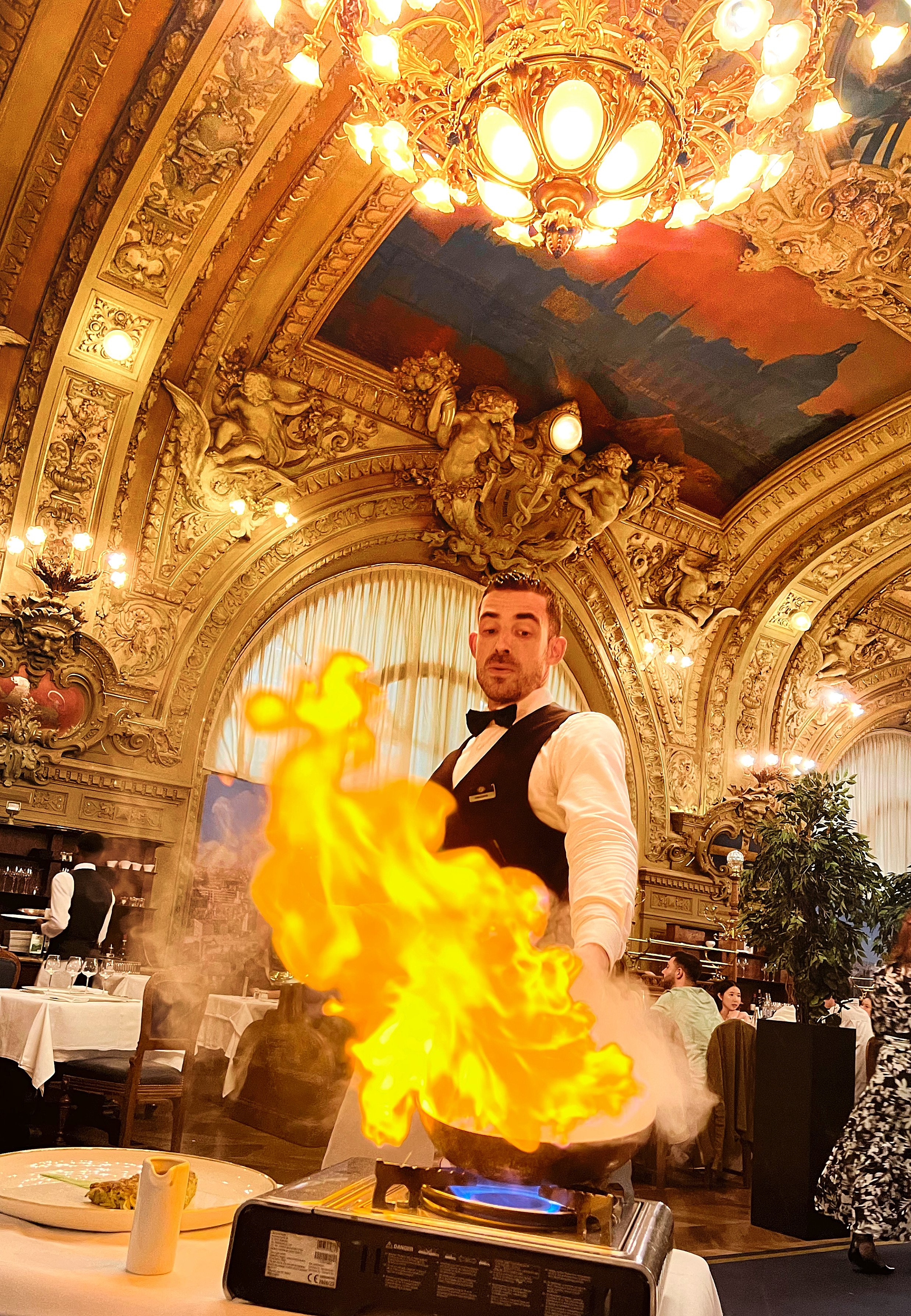
The menu is very traditional offering flamboyant shows in front of the diners. Brian ordered steak, with a rich peppercorn sauce; this was flamed at the table, and my roast lamb was carved in front of me; both done with precision and care by skilled butlers who know their craft. For dessert I chose crepe suzette, which has been such a favourite dessert of mine over the years. Our waiter was delighted I had chosen this, and did not hold back, providing a spectacular show, and a delicious dessert. It was a timeless moment, a proud performer demonstrating skills which are fading with changing fashions. We were captivated by it, and felt very special.
Notre Dame
In April 2019 a terrible fire tore through the cathedral of Notre Dame. I can remember watching the footage on TV, and being left shocked, seeing what seemed like the entire of Paris as they stood in stunned silence watching the disaster unfold; it seemed like the end of something great, a beloved beacon of the Parisian skyline destroyed for all time…but the story wasn’t to end that way.
The cathedral was closed immediately, and just two days later president Emmanuel Macron committed to restoring it within five years. Amazingly the cathedral reopened on 7 December 2024.
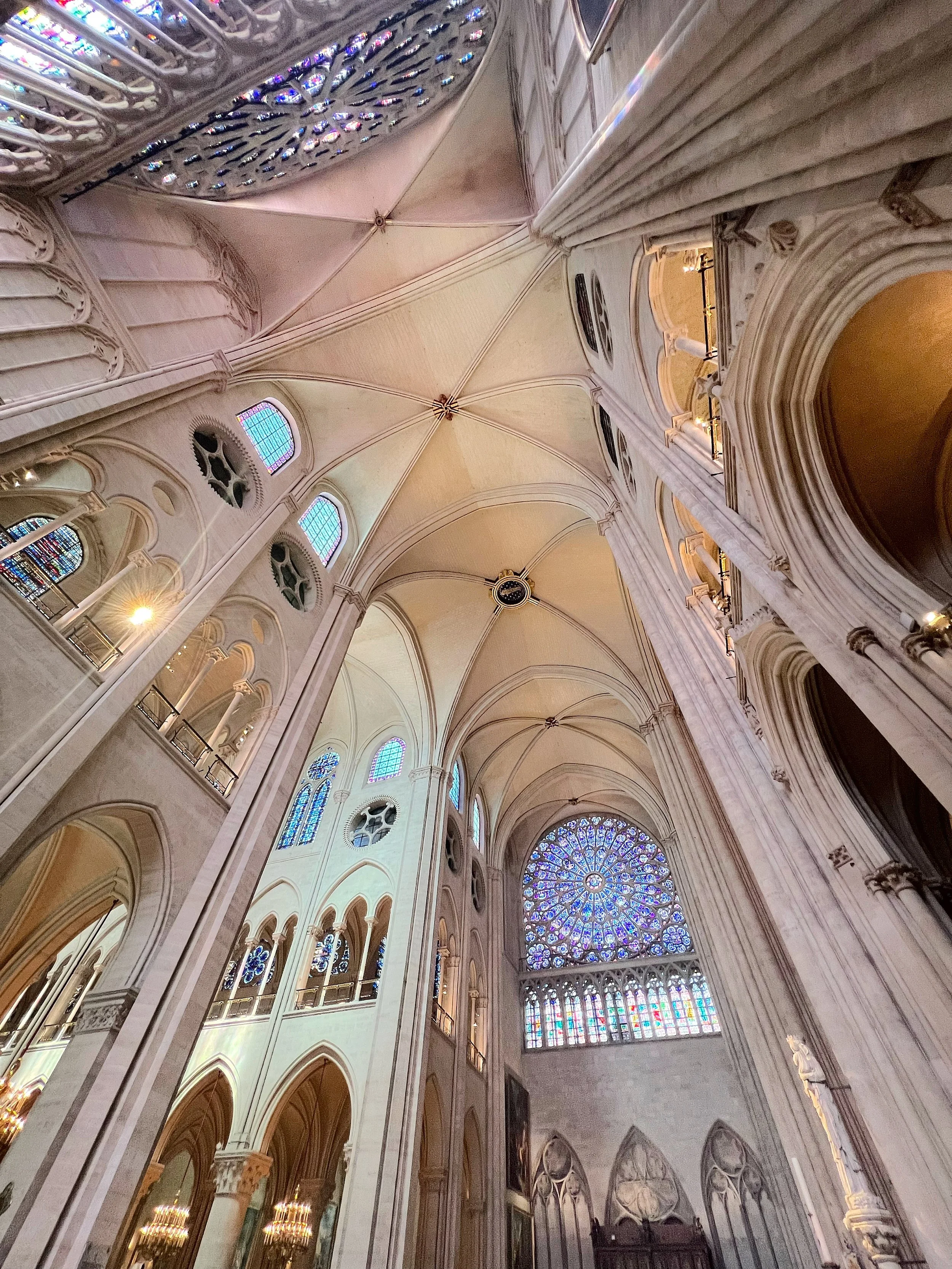
It was a mammoth task, which was achieved by mobilising approximately 2,000 skilled artisans and experts from across France, and also from neighbouring countries such as Germany.
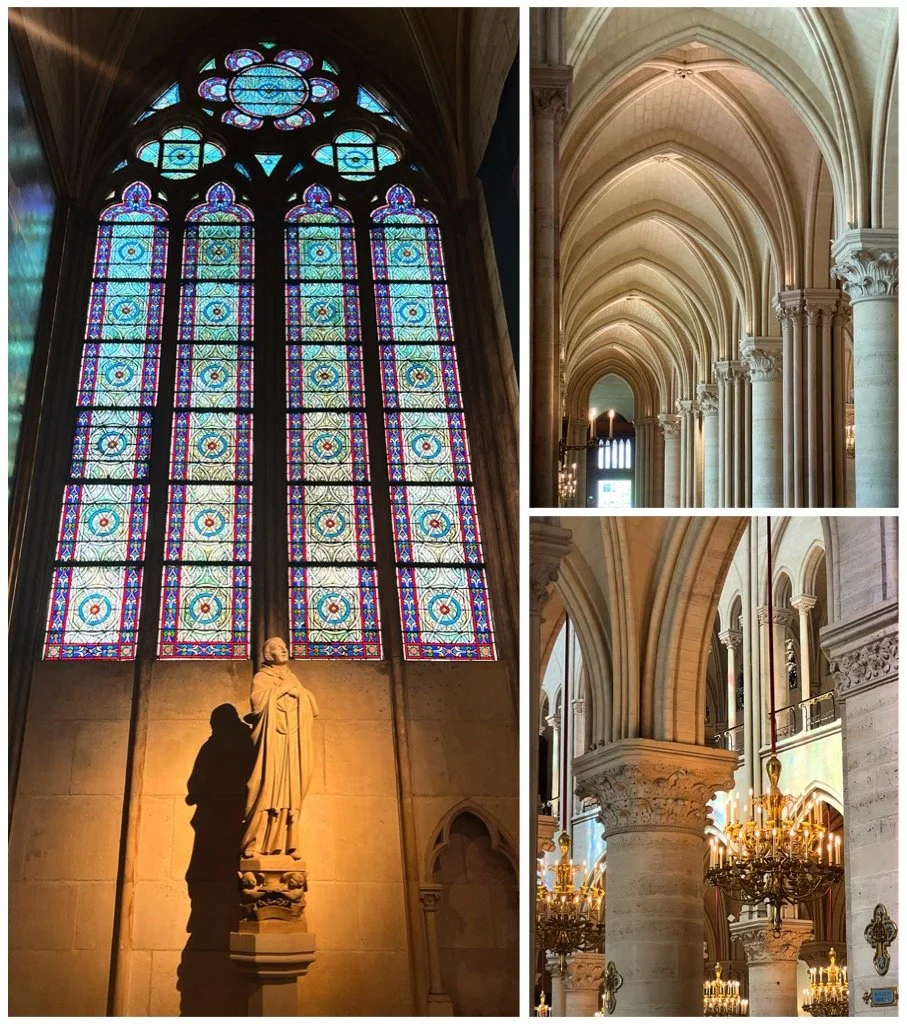
The skills most required were carpenters and stonemasons, as the fire had destroyed the cathedral’s wooden spire and most of the wooden roof. Although It had also severely damaged the cathedral's upper walls, the vaulted stone ceiling remained in place, largely containing the burning roof as it collapsed, preventing extensive damage to the interior. The emergency services and rescue teams managed to move many of the works of art and religious relics to safety, but some did suffer smoke damage, and some of the exterior art was damaged or destroyed. Miraculously the cathedral's altar, two pipe organs, and three 13th century rose windows suffered little or no damage, this was mainly due to the way that the emergency services managed the situation. Not aiming their hoses directly at the stained glass windows for instance meant that the damage to them was mostly from the smoke alone.
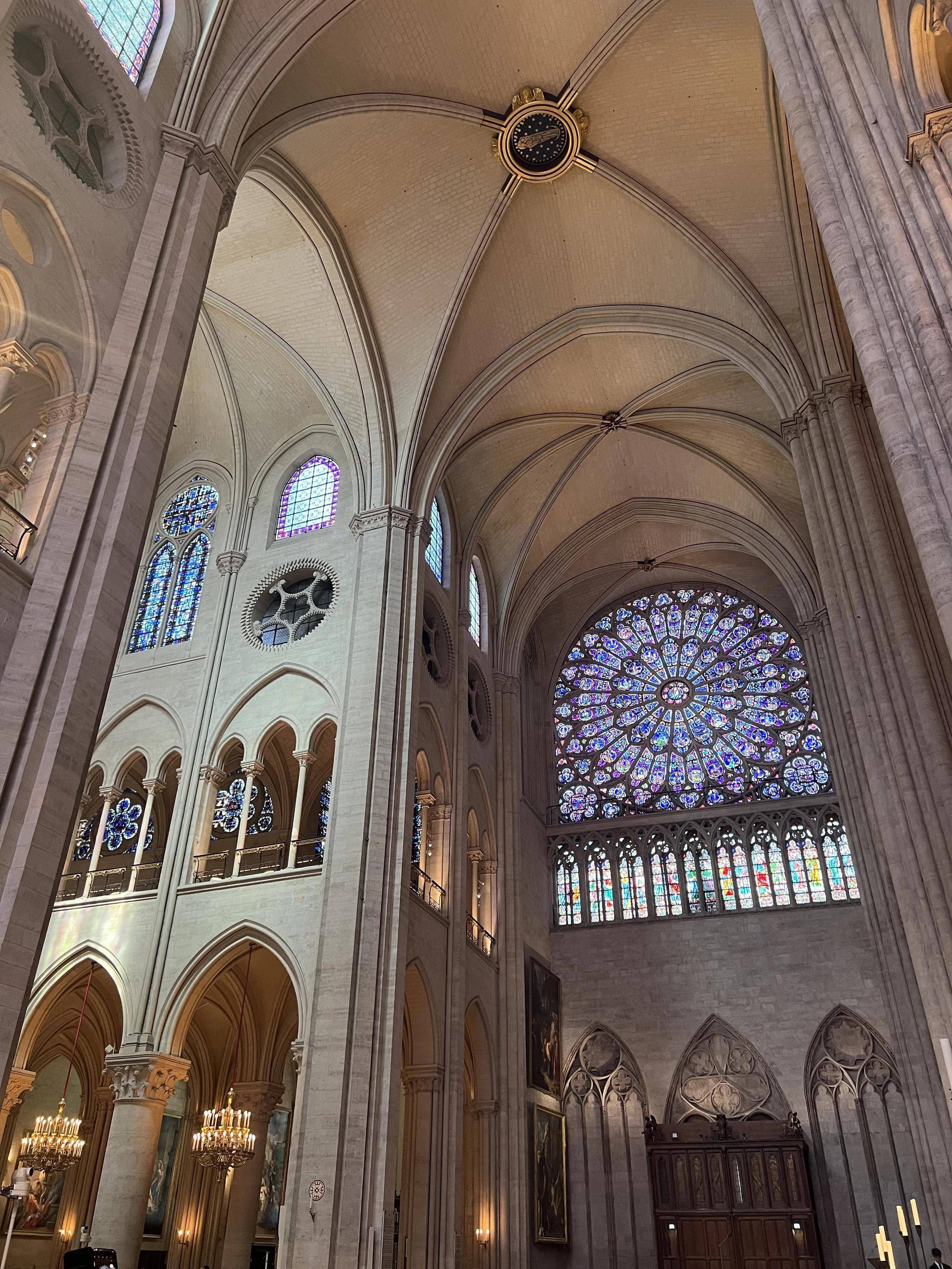
Although we booked a timed slot to visit the cathedral (which you can do for free up to 3 days before your visit) we still needed to queue for about 20 minutes to get in, but the unbooked queue was probably a good hour wait.
The real challenge was the volume of visitors they allowed in at any one time. If you are visiting, be prepared for a lot people, and surprisingly quite a lot of noise.
Picasso museum
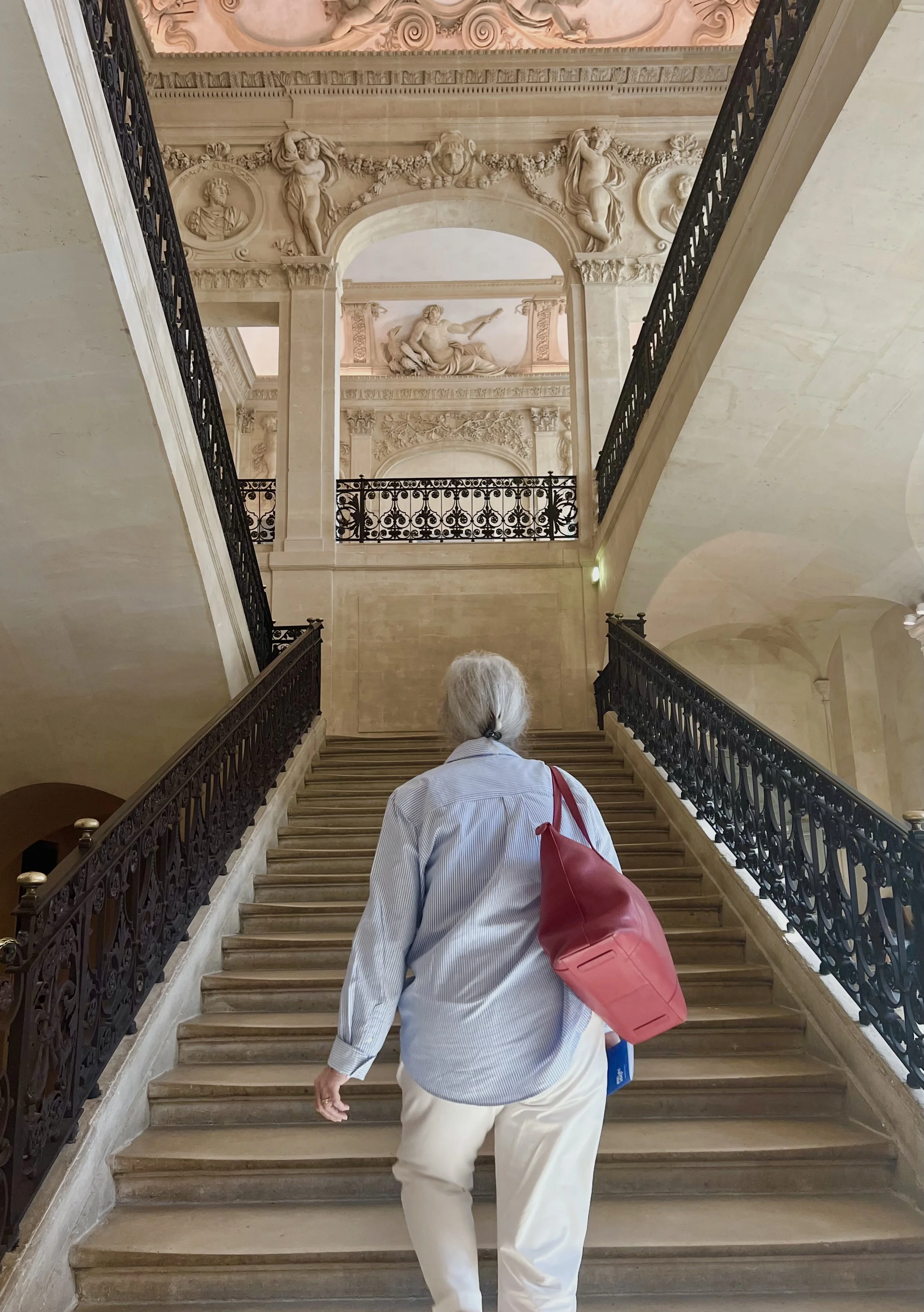
One of the museums we had both been excited to see whilst in Paris was the Picasso Museum. It is situated in the centre of Le Marais, in a rather spectacular building called L’Hotel Salé. It is the greatest collection of Picasso’s work in the world, and in the main has been donated to the museum from his family since his death in 1973.
Pablo Picasso had lived in France from 1900. He permanently lived in Paris from 1904 until the late 1940s, before moving to the South of France, where he lived until his death in Mougins, on April 8, 1973.
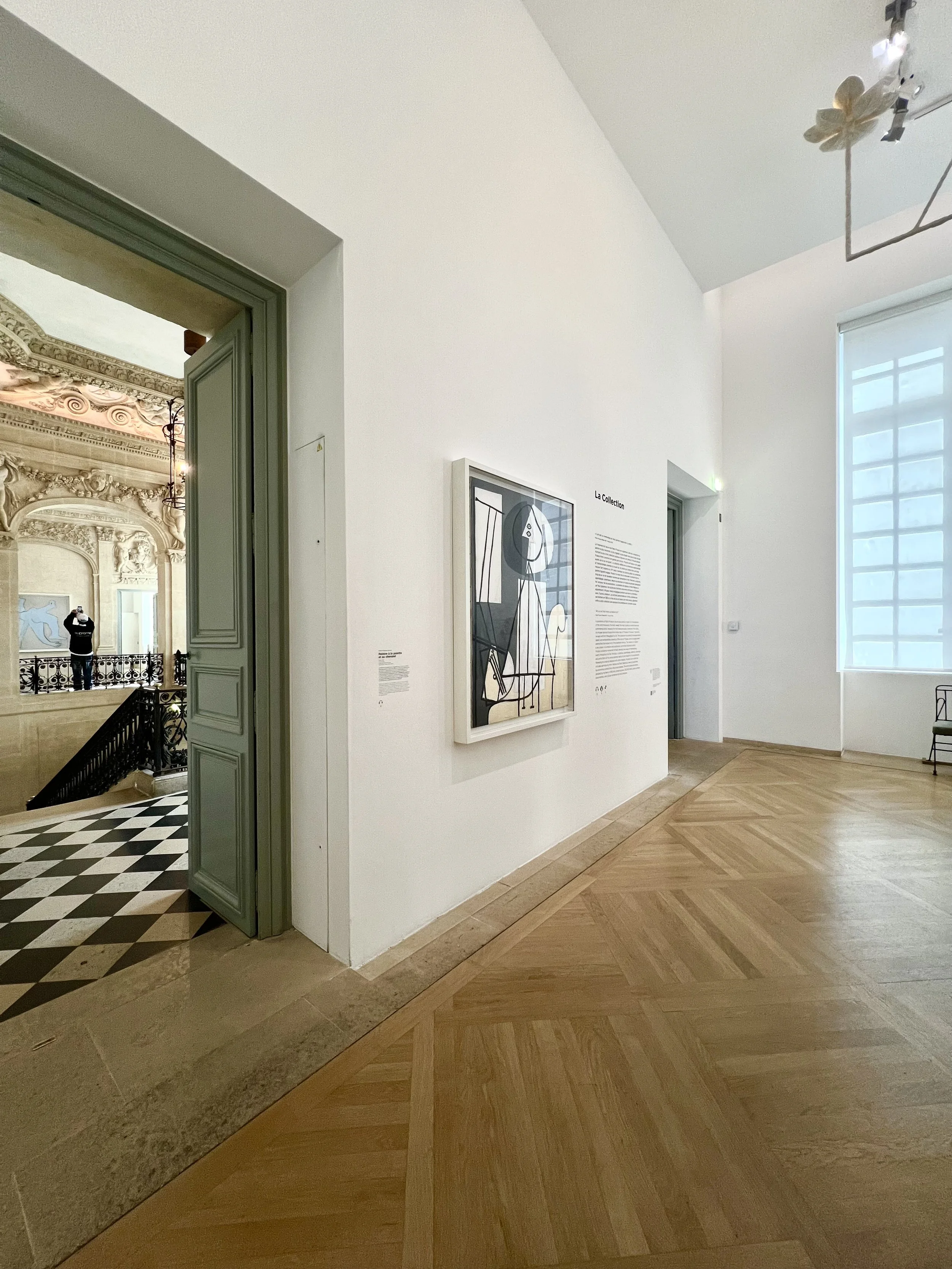
The museum provides a delightful space for displaying his varied works. The impressive entryway is typically ornate 17th century, whilst the interior has been cleverly designed as a modern space. It really sets the scene for the breadth of his style, which I was about to learn a lot more about.
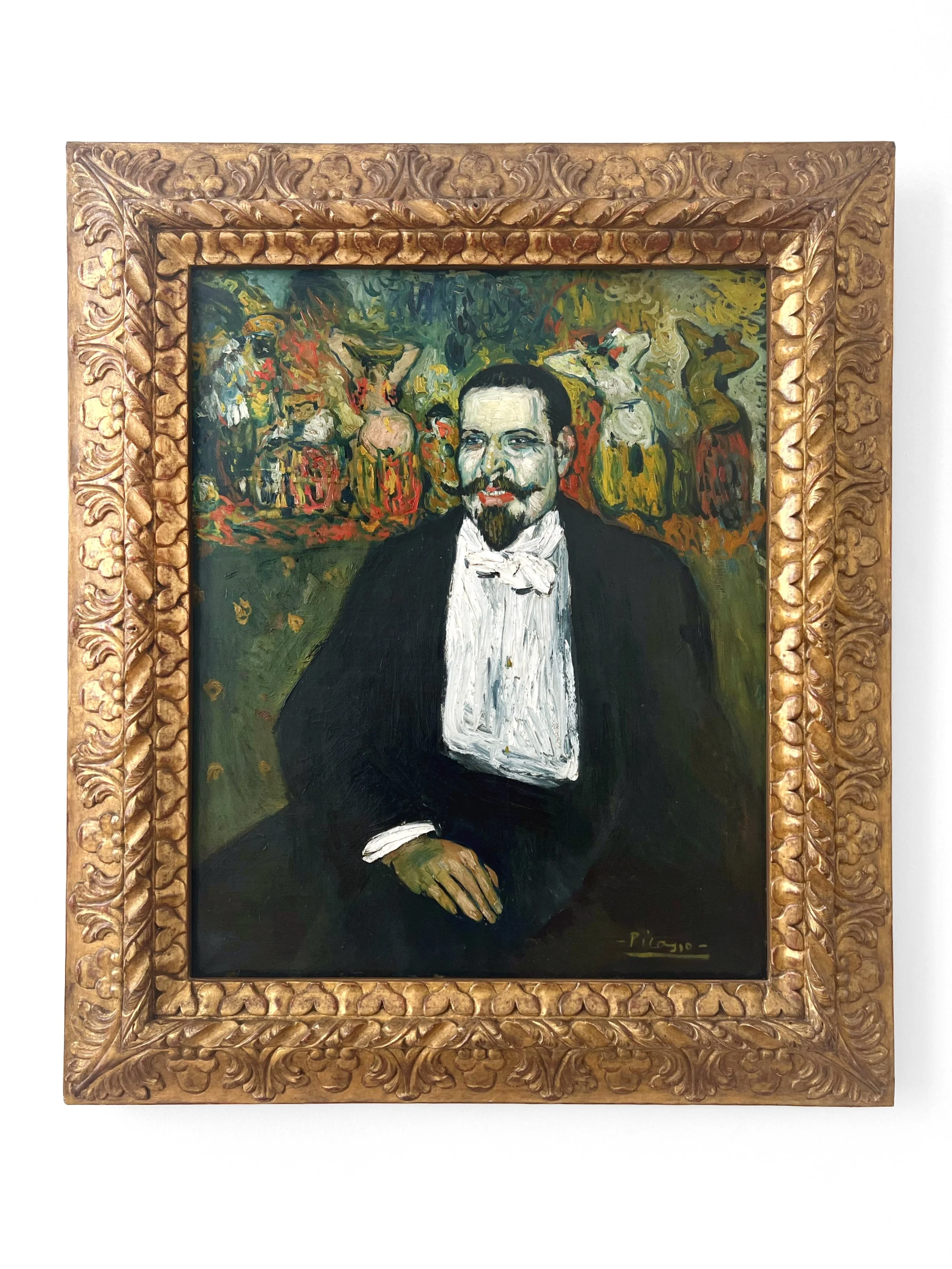
One thing I hadn’t been completely aware of is that Picasso had a classical art training in Barcelona, and that his early paintings of his days in Paris were reminiscent of the work produced by Toulouse-Lautrec, or Degas, in the nightclubs of Montmartre. Degas being my favourite artist.
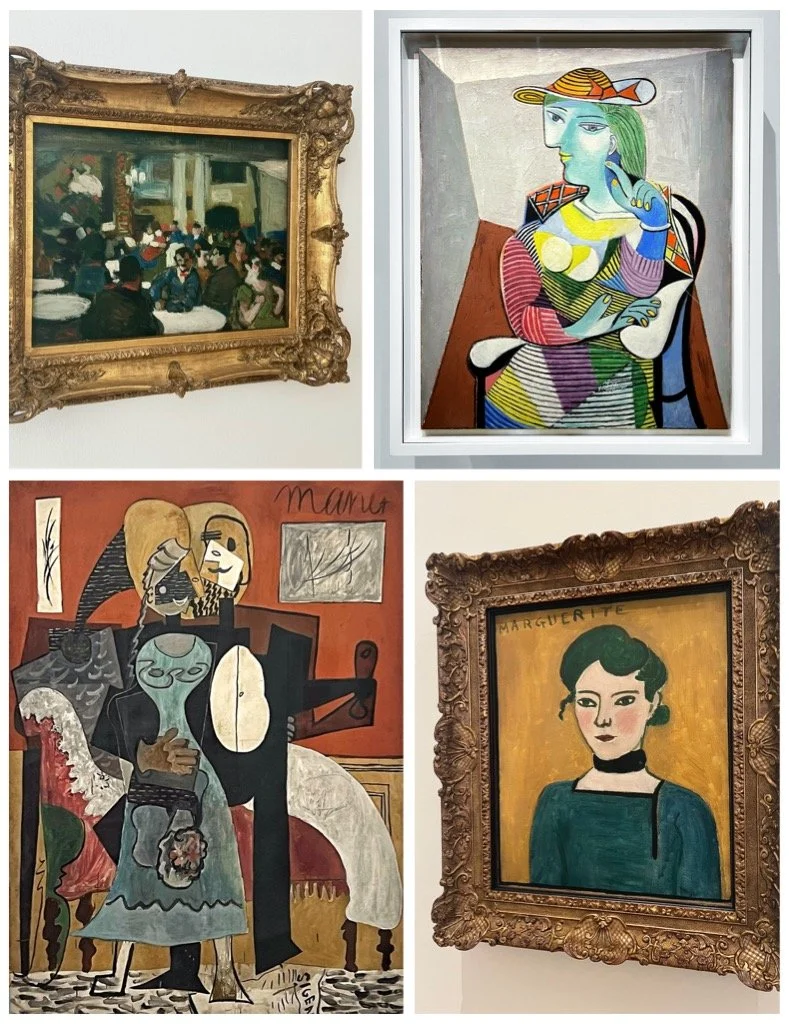
The exhibition has works from all periods of his career, including his cubist paintings and paper sculptures, which I found really interesting, as well as his incredible pottery, which was joyous. There’s works by other artists of the time also, such as Matisse and Braque. It was useful to see these mixed in, to see how the artists influenced each other.
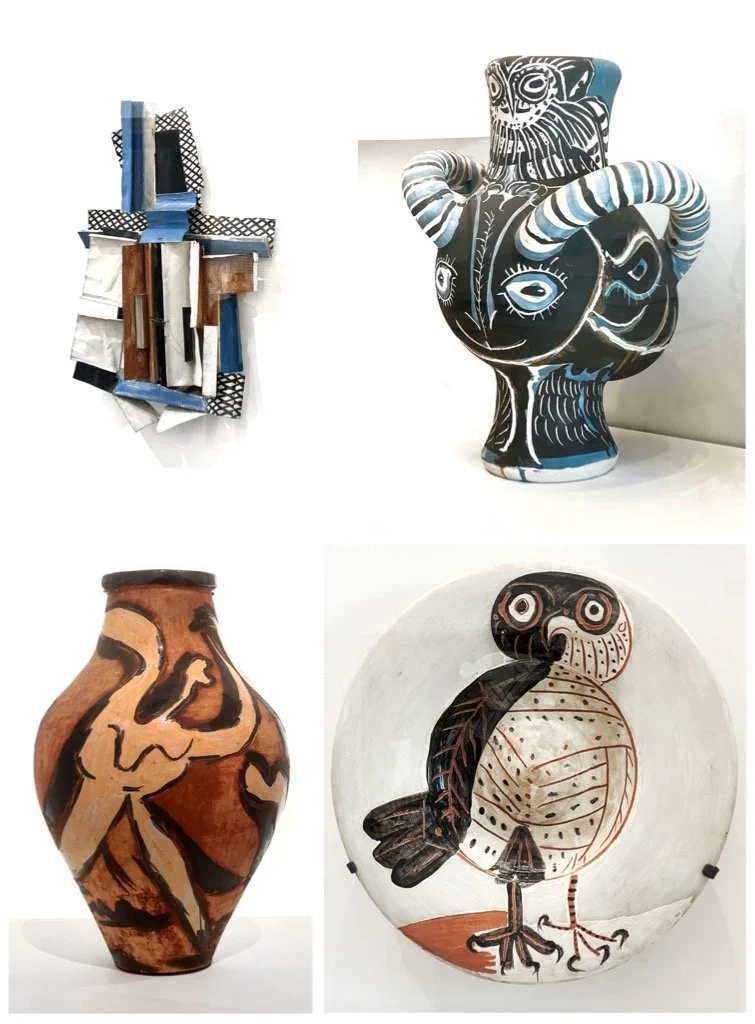
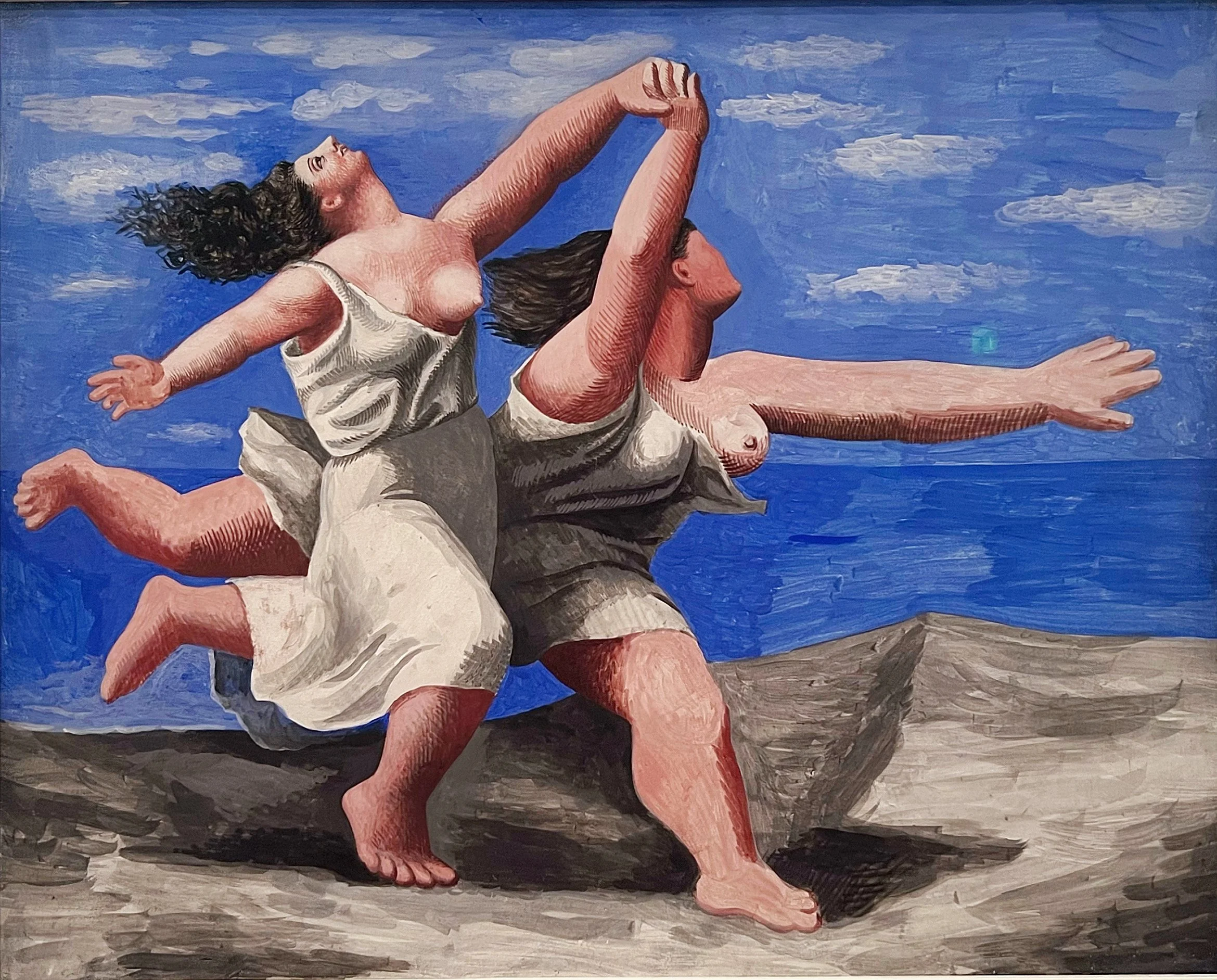
It’s a wonderful collection, and gives a wide view of the artists changing styles.
I’m not even sure whether I would say I liked Picasso before we went in, but now I would say that I certainly love some of his work, especially when he showed his frivolous, lighthearted side.
Place des Vosges
I’d been romanced by the idea of enjoying breakfast at La Carette, a well situated cafe/brasserie on the Place des Vosges, ever since I first read about it.
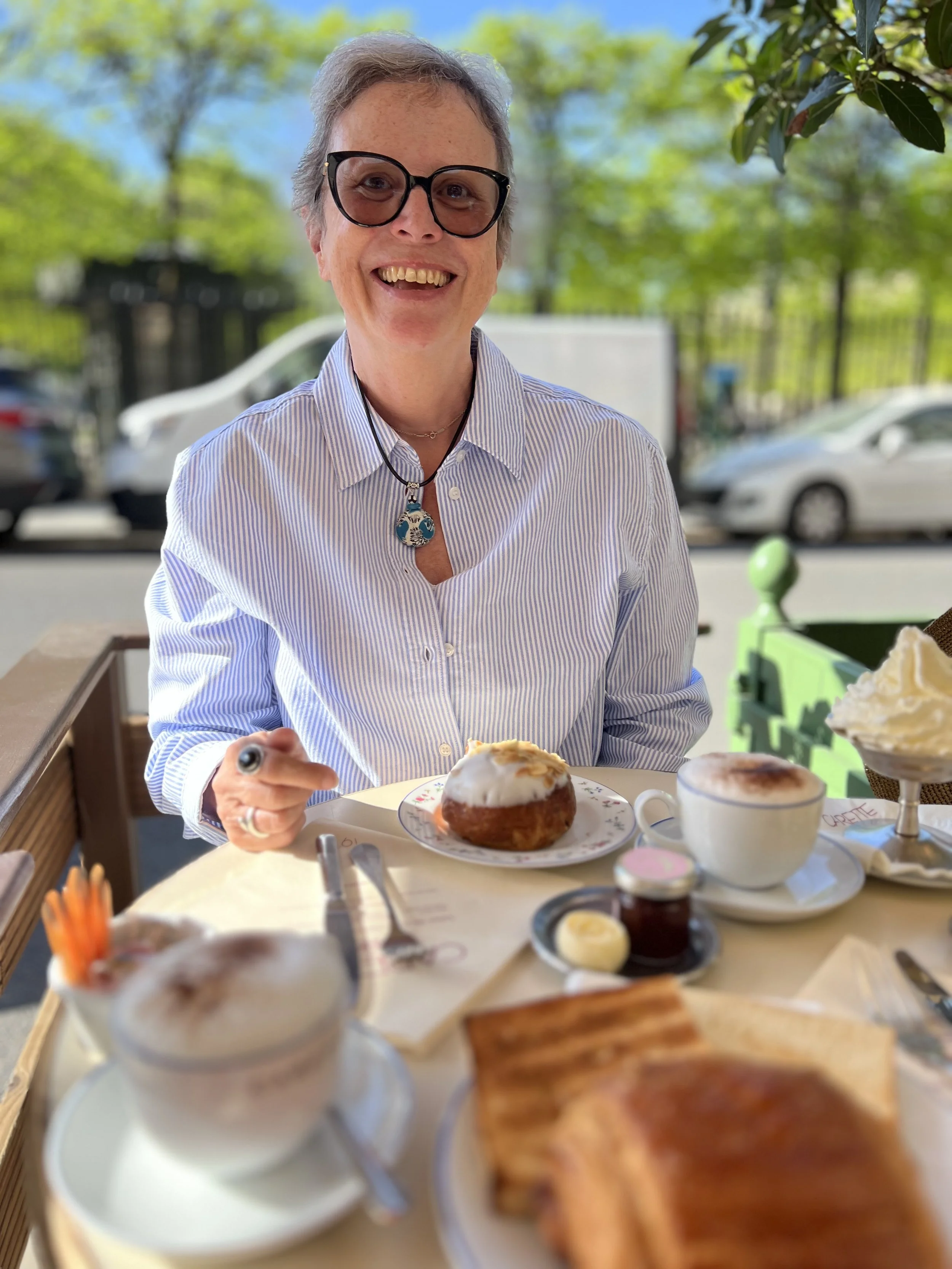
Initially, when we walked by, we were put off by the volume of tourists that had descended. Perhaps being well-instagrammed, and part of the ‘Emily in Paris’ effect, contributed to it seeming like an over-hyped venue. But Brian managed to negotiate us a table for two at the front on the edge of the establishment, quite removed from all the hubbub in the central area—An ideal spot to enjoy my treat.
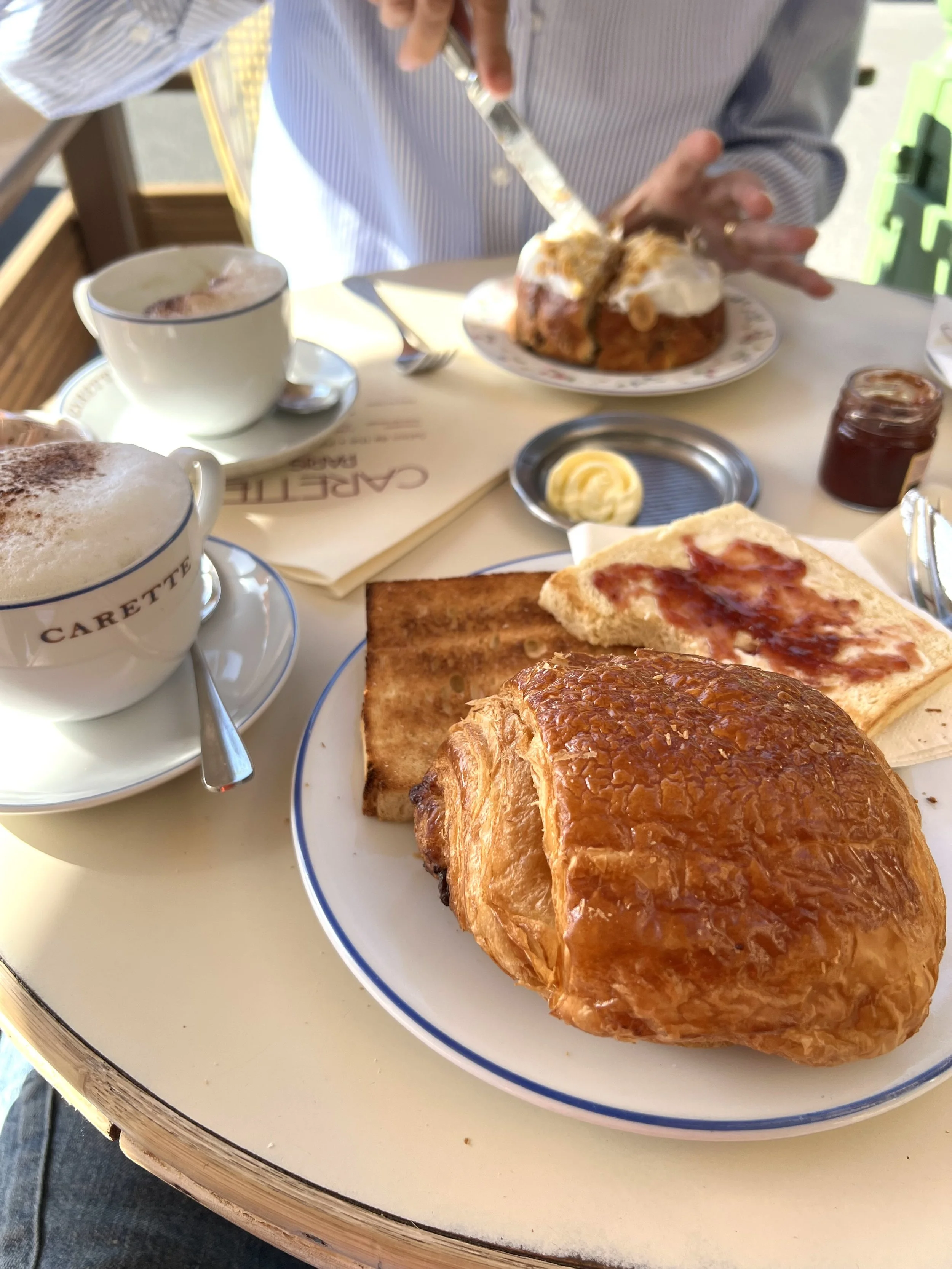
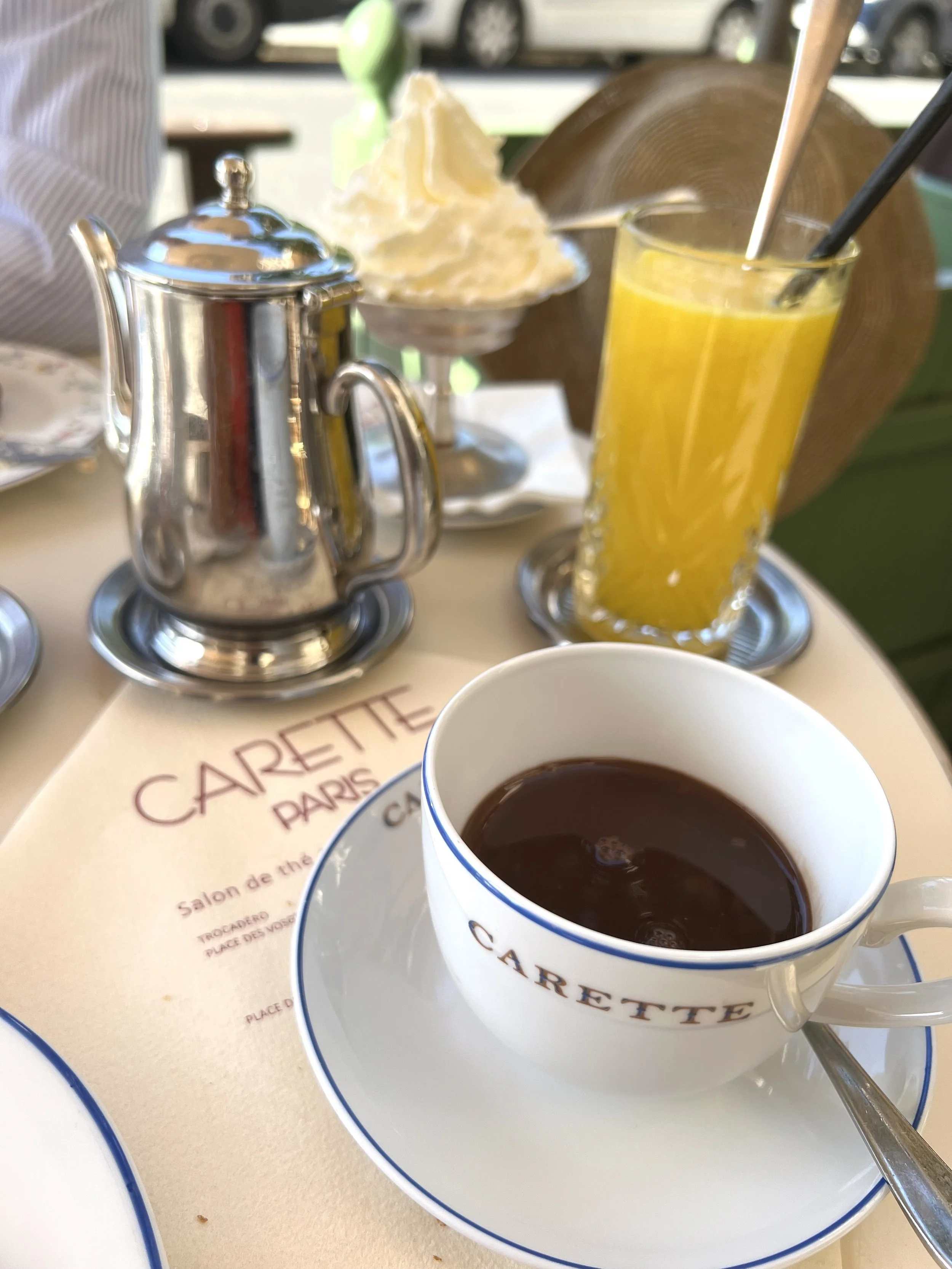
It very quickly became clear that it wasn’t only the publicity that attracted people, the gorgeous sunny spot, and the quality of their offerings, was clearly why it was so popular. It was an incredibly indulgent breakfast.
After our petit-déjeuner we went for a walk around the Place des Vosges. It’s the oldest designed square in Paris.
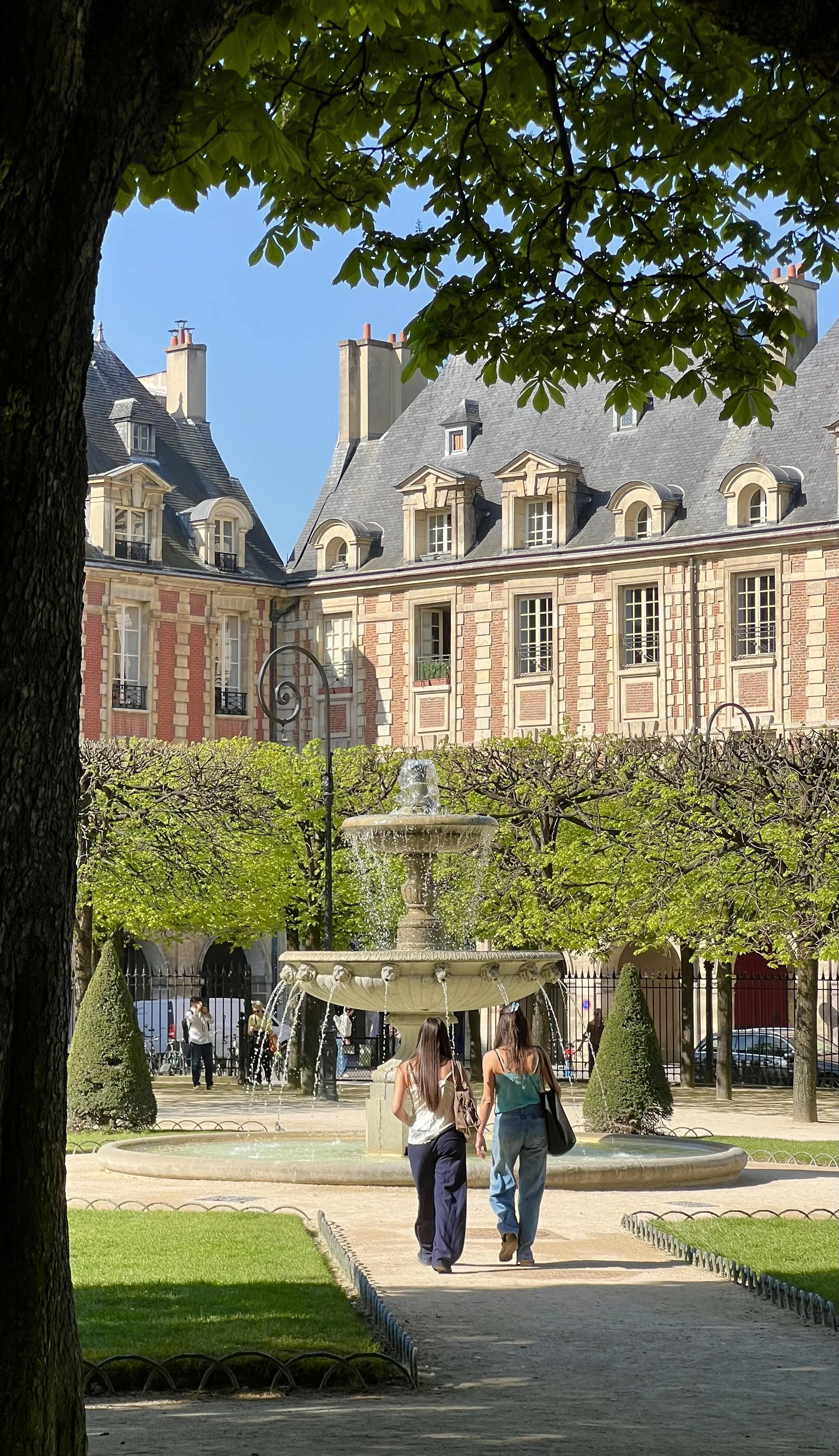
The gardens in the centre are popular to enjoy picnics, take a moment to read a book, or simply take a stroll in the shade of the beautifully clipped Linden trees.
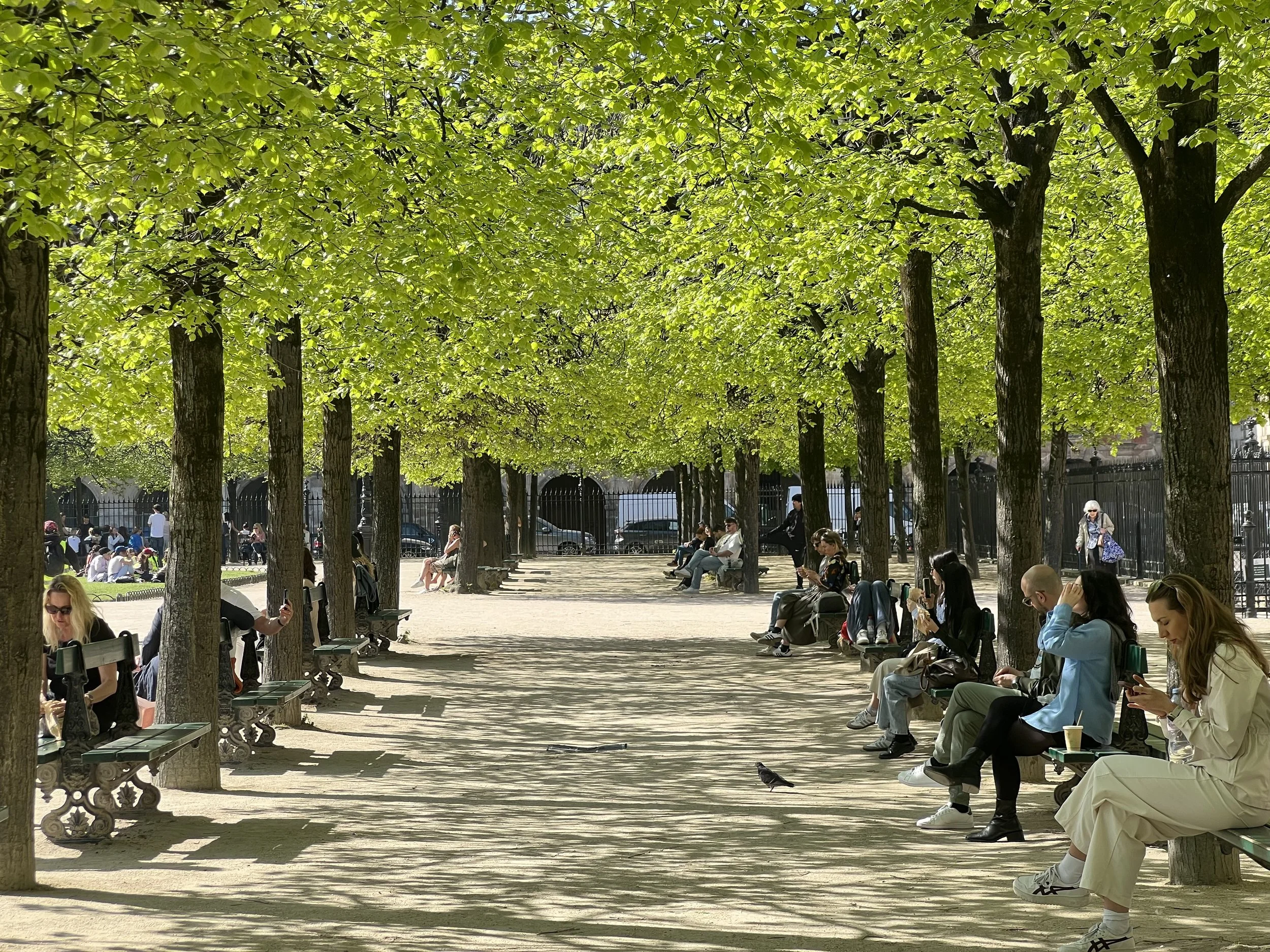
It is famous for its strict, symmetrical, red brick architecture and vaulted arcades, which were built by Henri IV, and inaugurated in 1612. It was known originally as the ‘Place Royale’, but in 1800, after the revolution, it was renamed ‘Place des Vosges’, in honour of the department of the Vosges, which was the first to pay their taxes in support of the revolutionary army campaign.
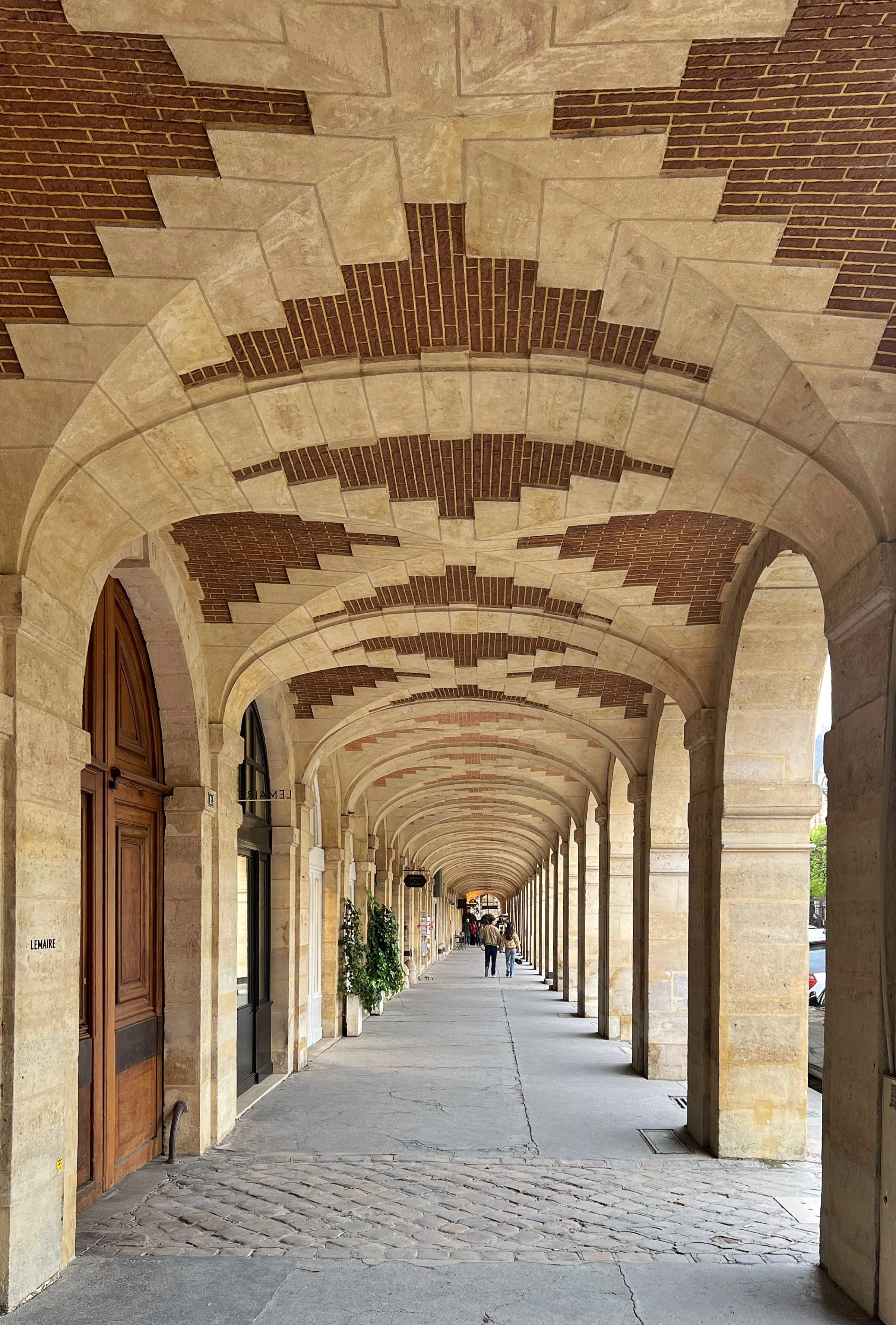
It’s certainly worth a visit.
Platform 2
We are off to Paris today, to enjoy a few days in Le Marais district. We’d decided we’d travel by rail this time, catching a local train from Vendeuvre-sur-Barse station. The journey is approximately two hours into gare de l’Est.
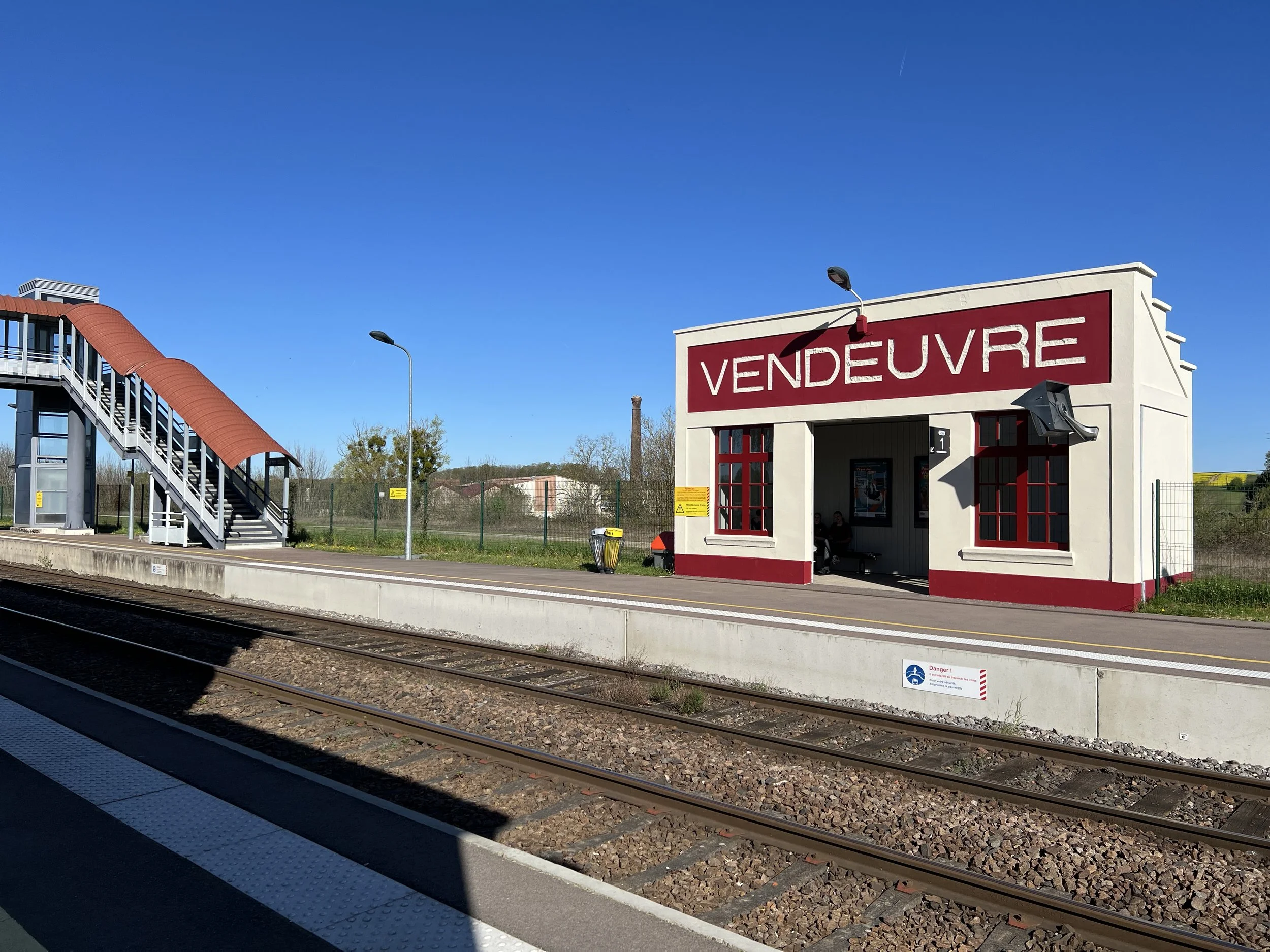
We’ve chosen a small boutique hotel called the Caron de Beaumarchais. It is situated just off the rue de Rivoli on the edge of Le Marais.
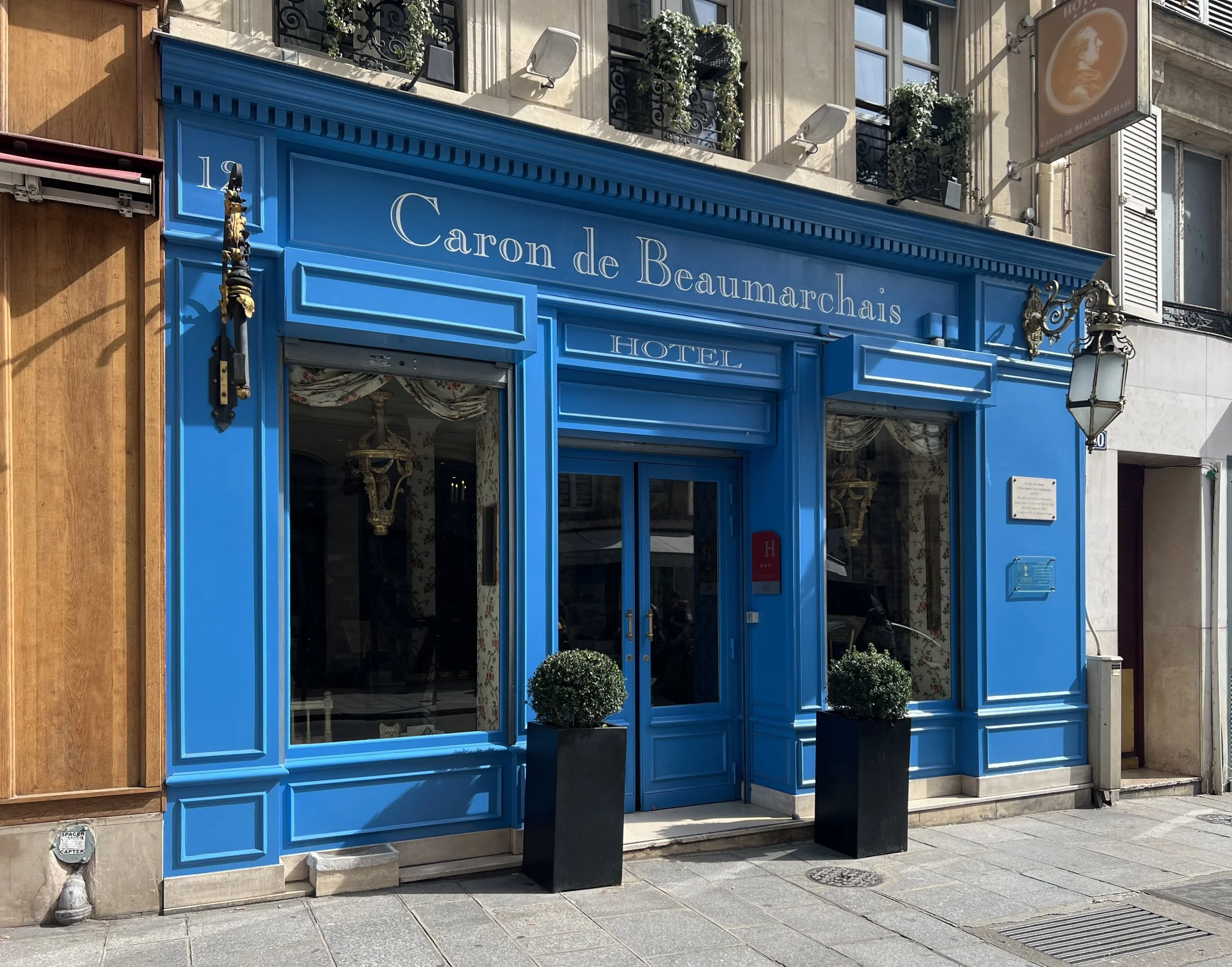
Our room is very quaint, with little antique artefacts adorning the walls. The bathroom is tiny, but the shower is good and strong and the room has everything we need.
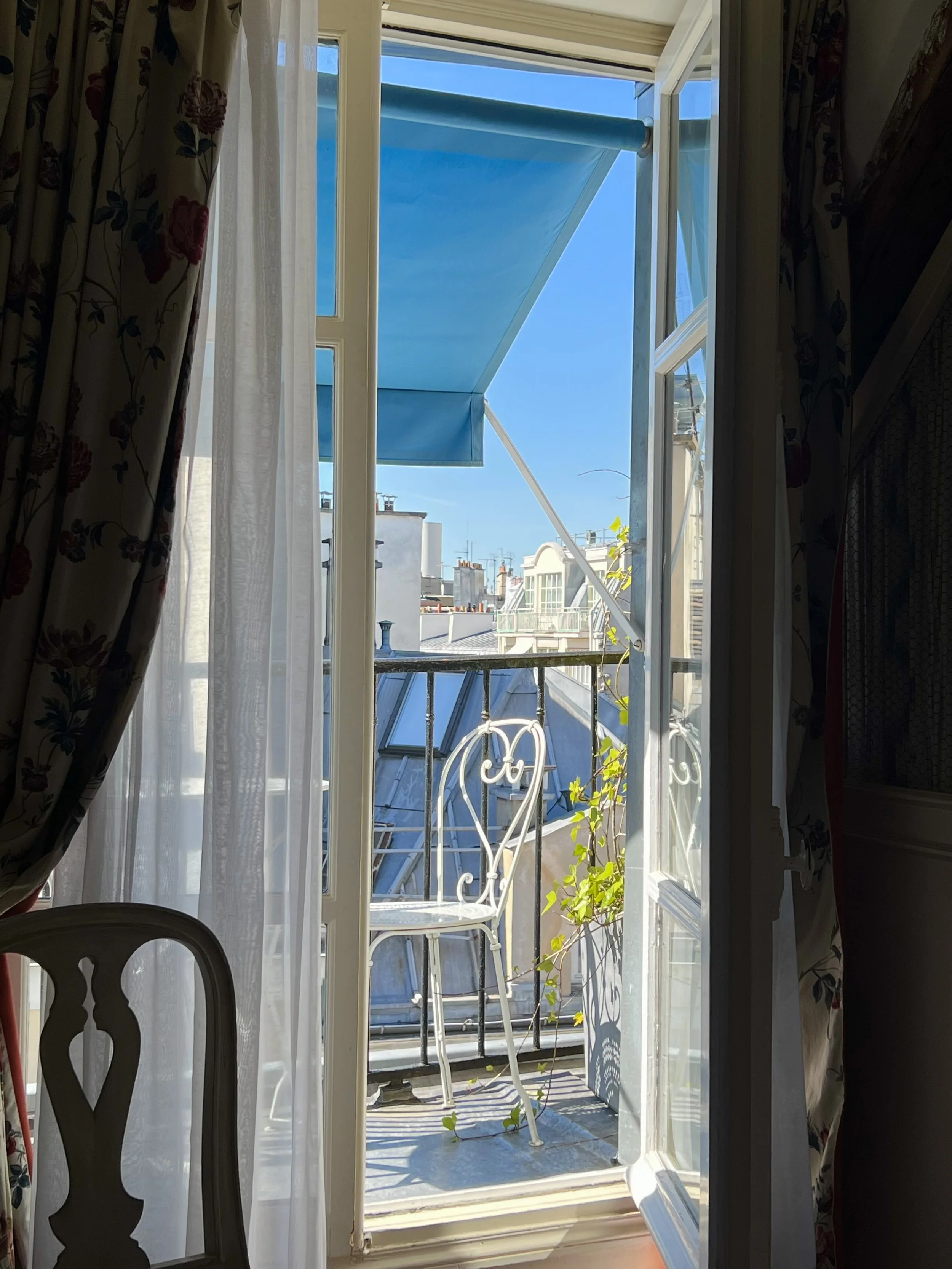
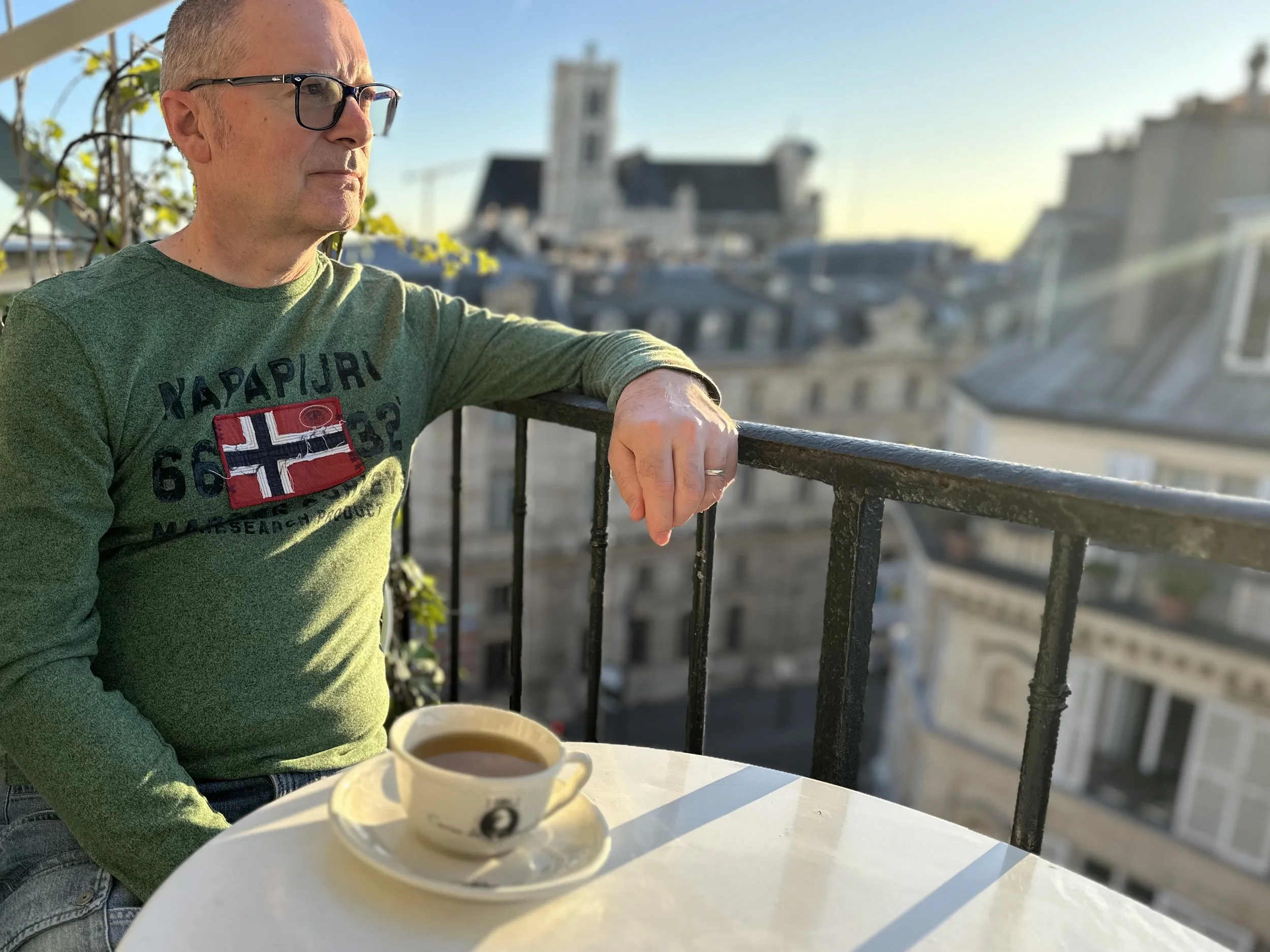
The best thing is that we have a small balcony to enjoy an afternoon cup of tea on. What a treat.
Planting
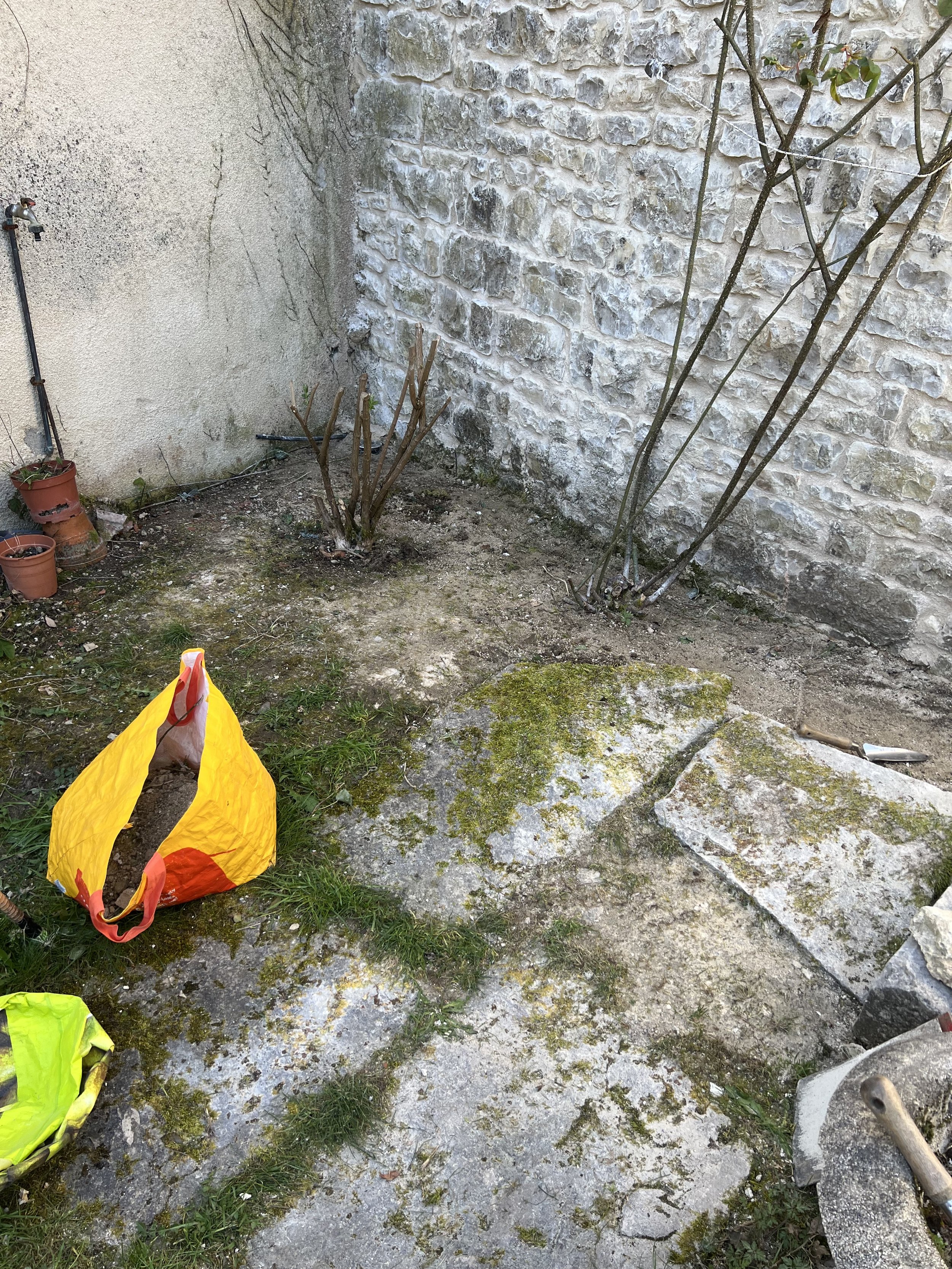
Now that the left wall was looking good, the corner of the right wall also needed some attention. Although Sara and I had tidied up this area already, Chris made a bit of mess doing the chaux in the corner, which was completely expected, but it meant we needed to revisit it.
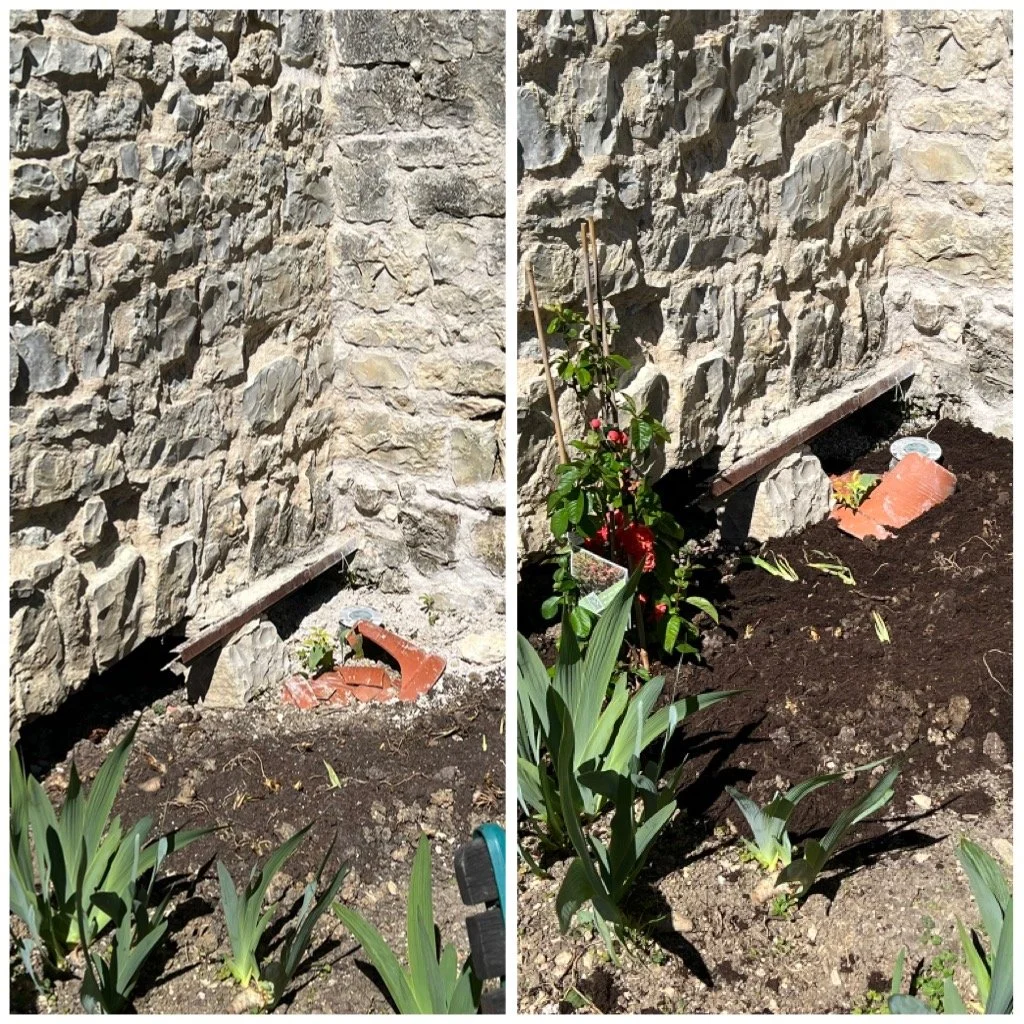
A quick clear up of the chaux, a dig in of some compost, (careful not to damage the little honeysuckle I’d planted there last year) and a replant of some irises and it looked a lot better again. We also planted a Camillia which I’d bought recently. I think the bright pink flowers will look beautiful against the newly chauxed white wall. A white rose grew on this wall, which had to be cut down pretty hard when they chauxed it last year, and it’s showing some strong signs of life, so I’m hopeful it will be okay.
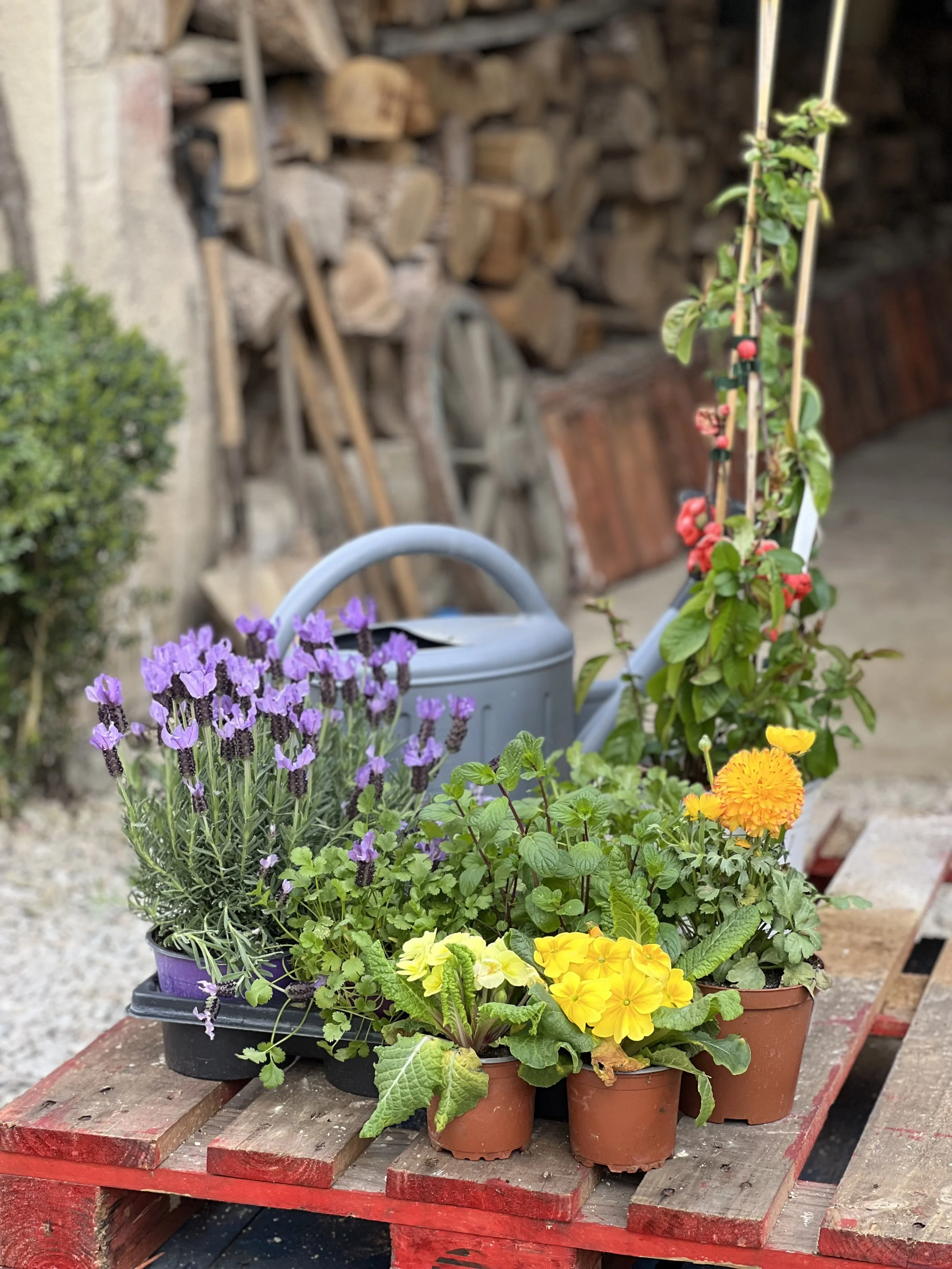
We had a little bit more planting to do in a couple of the beds also; some perennials and some herbs that I’d bought recently.
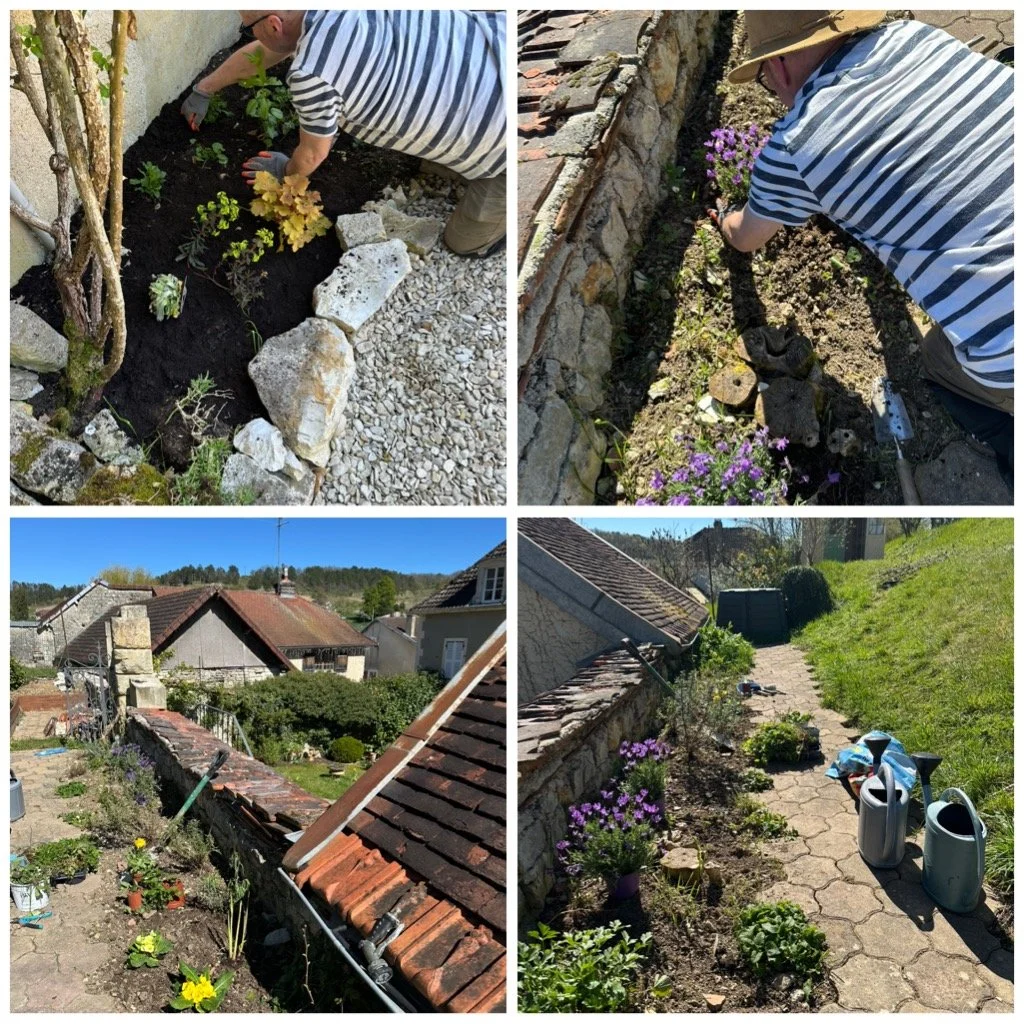
We watered them all in well, as we do have a few sunny days forecast. Hopefully they will enjoy their new environment.
The big breakfast
Fruit juice, scrambled eggs, marmalade on toast and a fresh cup of coffee. Such a great way to start the day. Even better that the mornings are becoming warm enough to enjoy it outside.
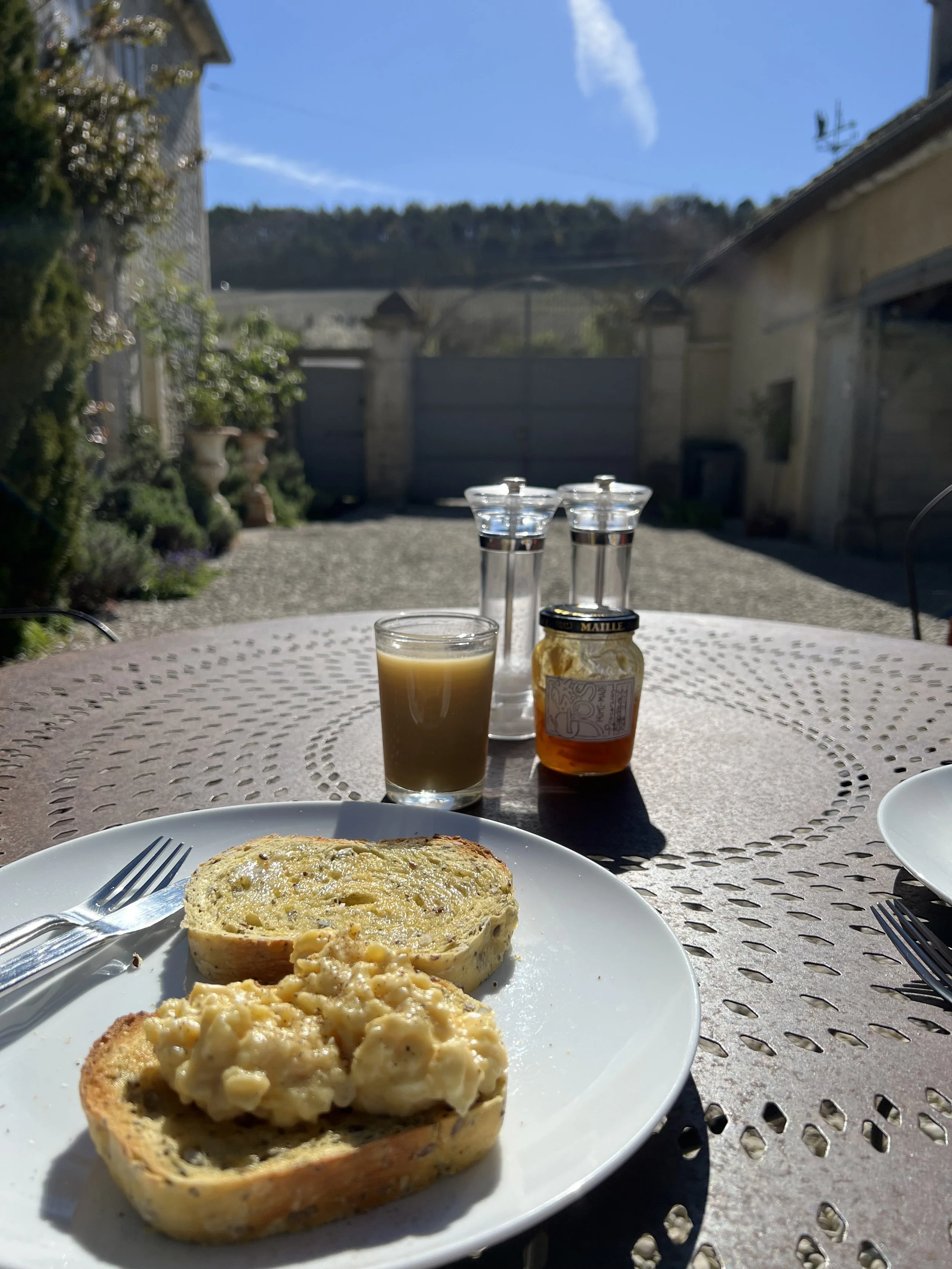
It makes for such a beautiful start to the day, tucking into our breakfast, chatting about what we’d like to do today, and delaying the jobs by playing wordle; seeing just how quick we can crack it.
Delightful.
The big clean up
The thing with using chaux is it gets everywhere, and the plants do not react well to the lime, so I was keen to clear up the dropped chaux along the wall as soon as we could.
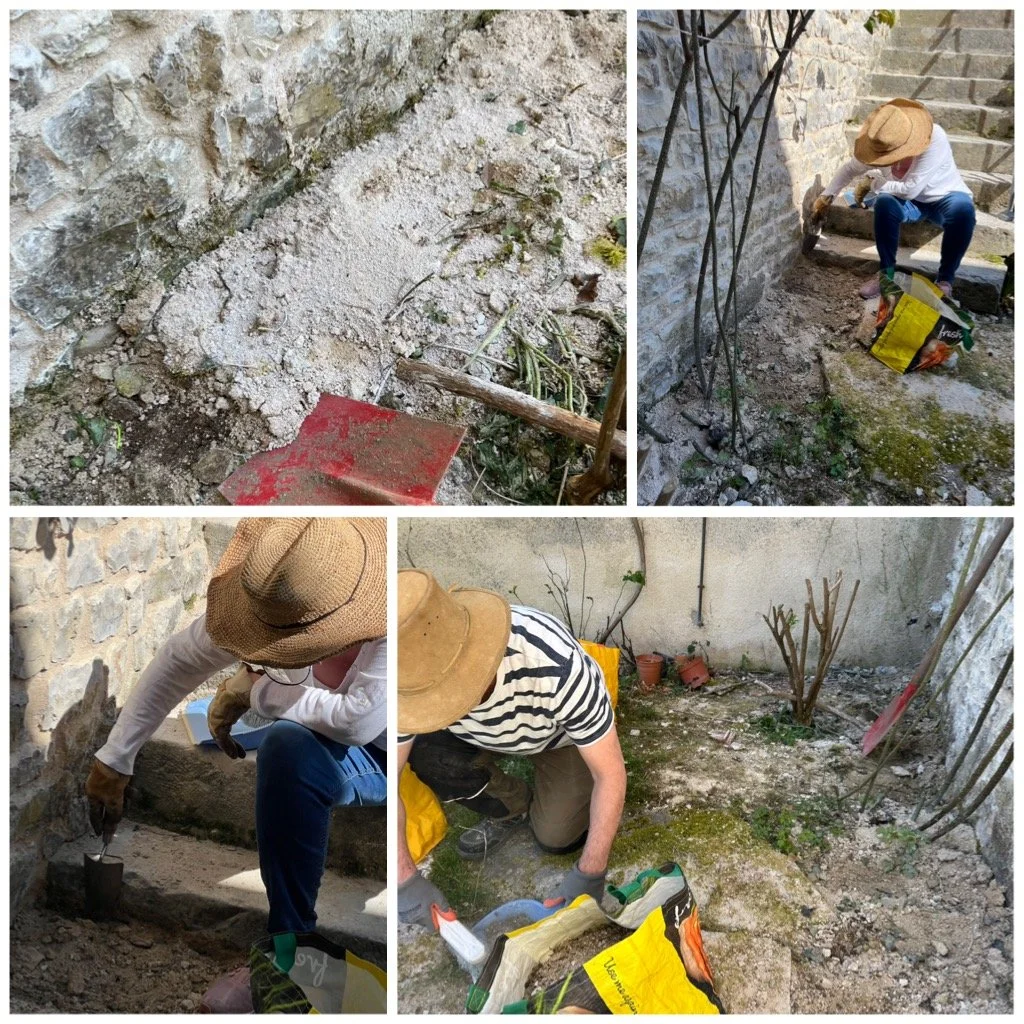
We couldn’t quite believe it created another six bags of debris. I feel another déchèterie trip coming on.
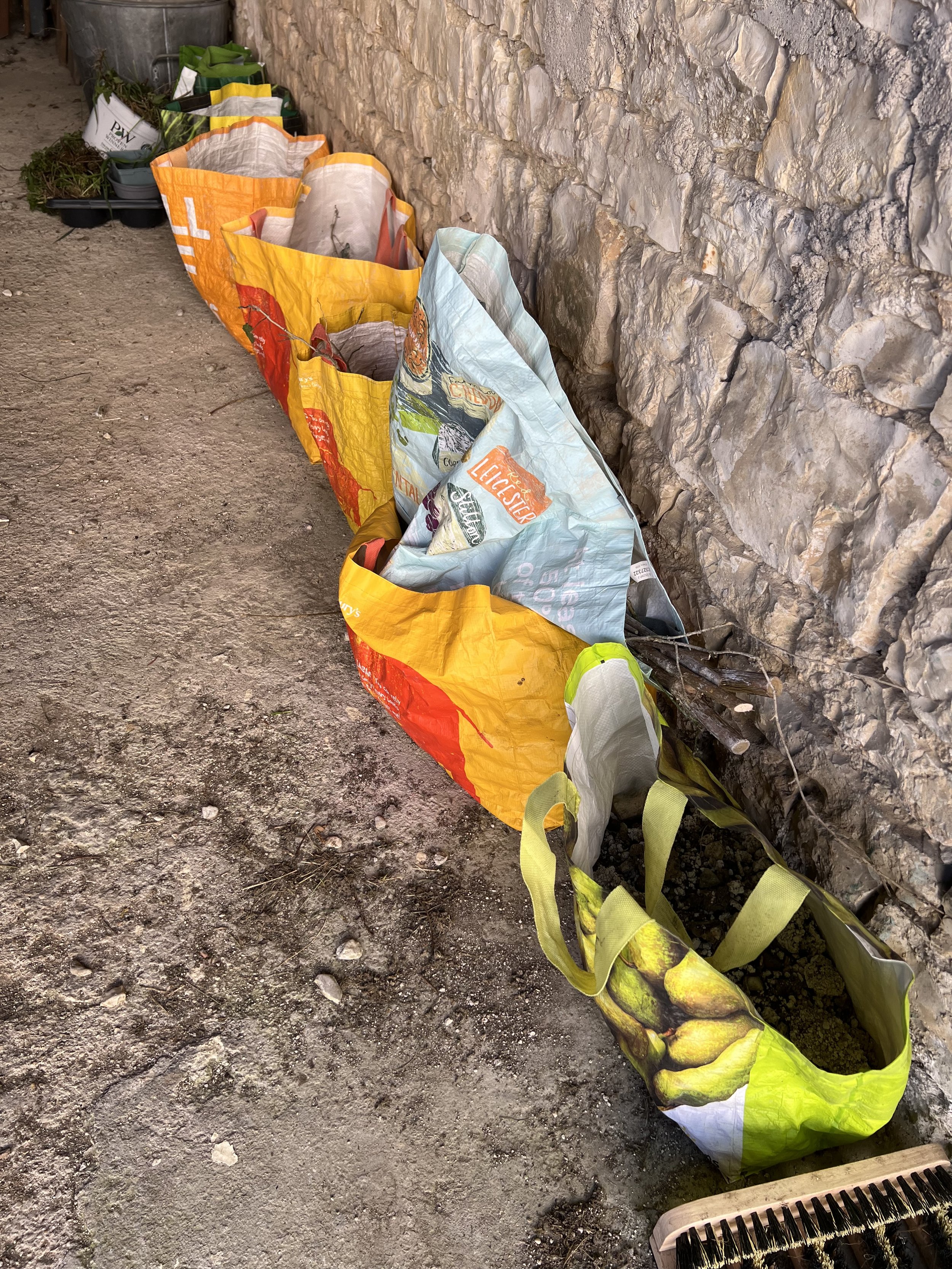
I’m thinking about some plans for planting. First though I need to get some compost dug in, to help nourish the soil after taking all the debris out.
I can smell summer
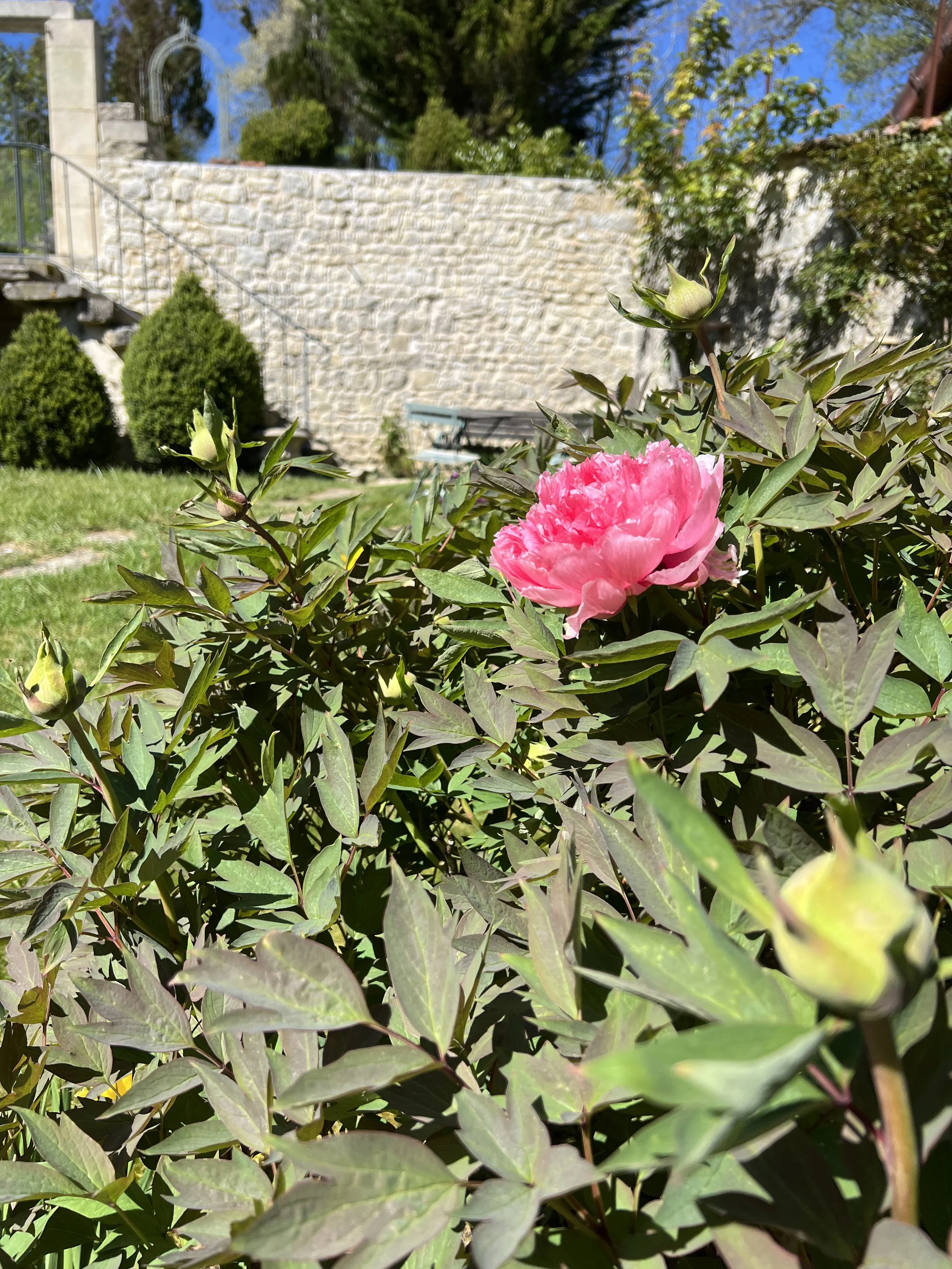
As I walked out into the garden this morning, ready to have a look at what I could easily achieve on my own, I spotted my first peony flower of the year. It was on my tree peony, a gorgeous candy pink.
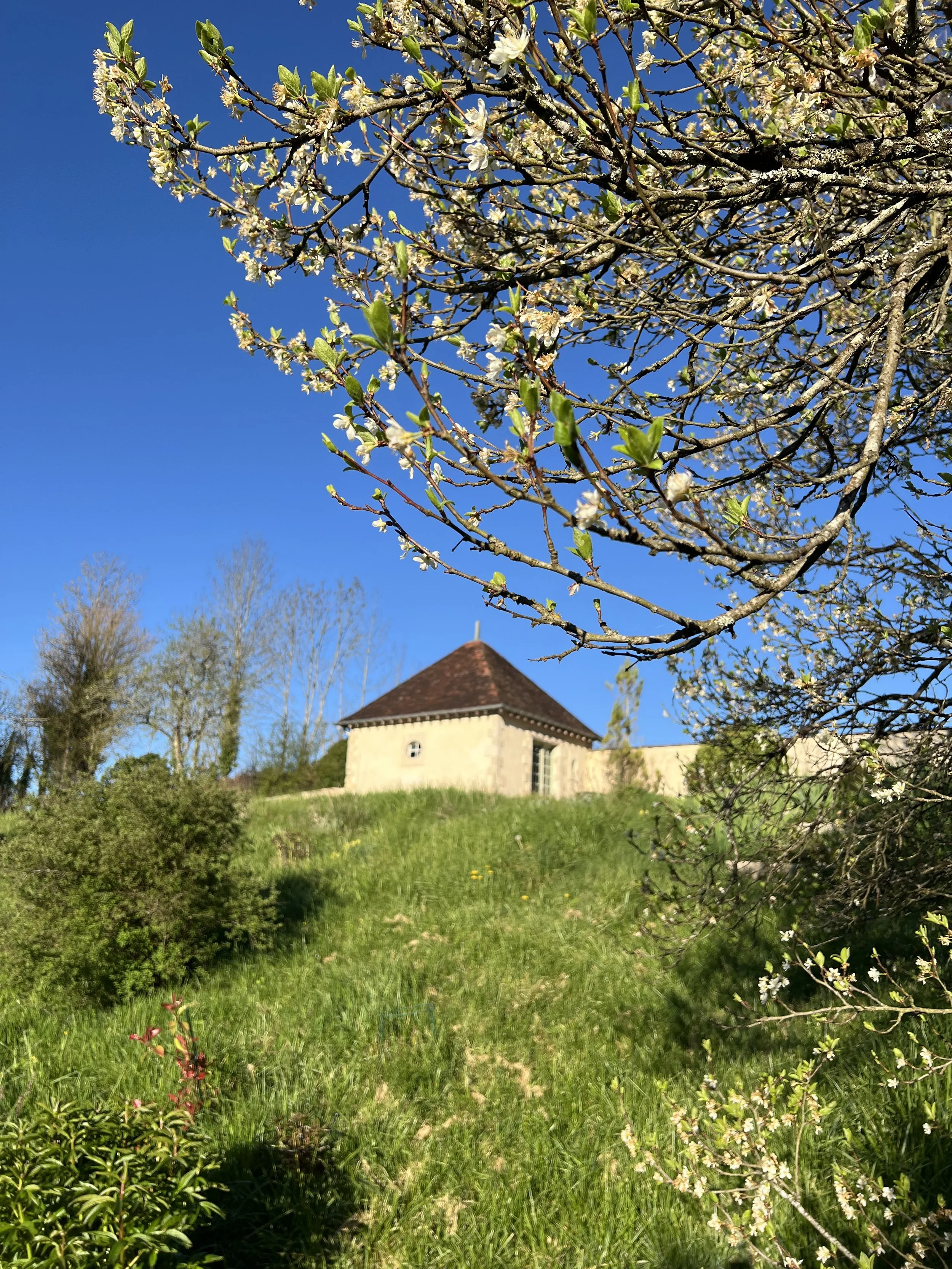
I wandered up the steps towards my dahlia bed, and in the warmth of the air I could smell summer. Sweet and calming. The bees 🐝 are already buzzing around. They’ve woken up now, eager to get out and start collecting the sweet, early pollen from the blossom on the fruit trees, which seems abundant.
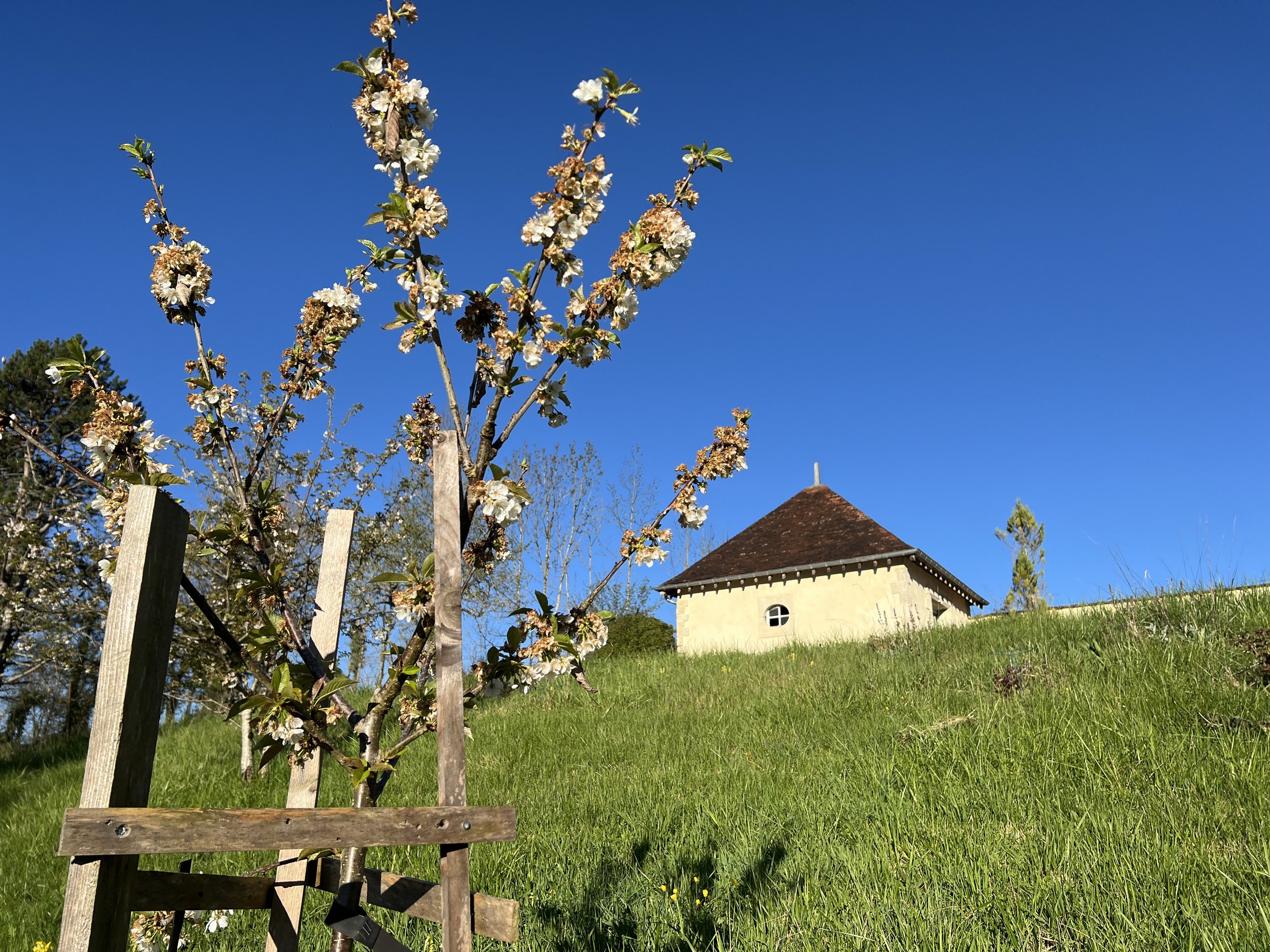
My cherry tree which we’d planted two years ago is starting to strengthen and flourish. I’ll enjoy picking them on the way up to the pool.
Free and organised
We bought some cheap pine shelves from ikea for the shed, and they are ideal for helping me get organised in there. I’d also collected a few old fruit and vegetable trays from the market to use to put things in.
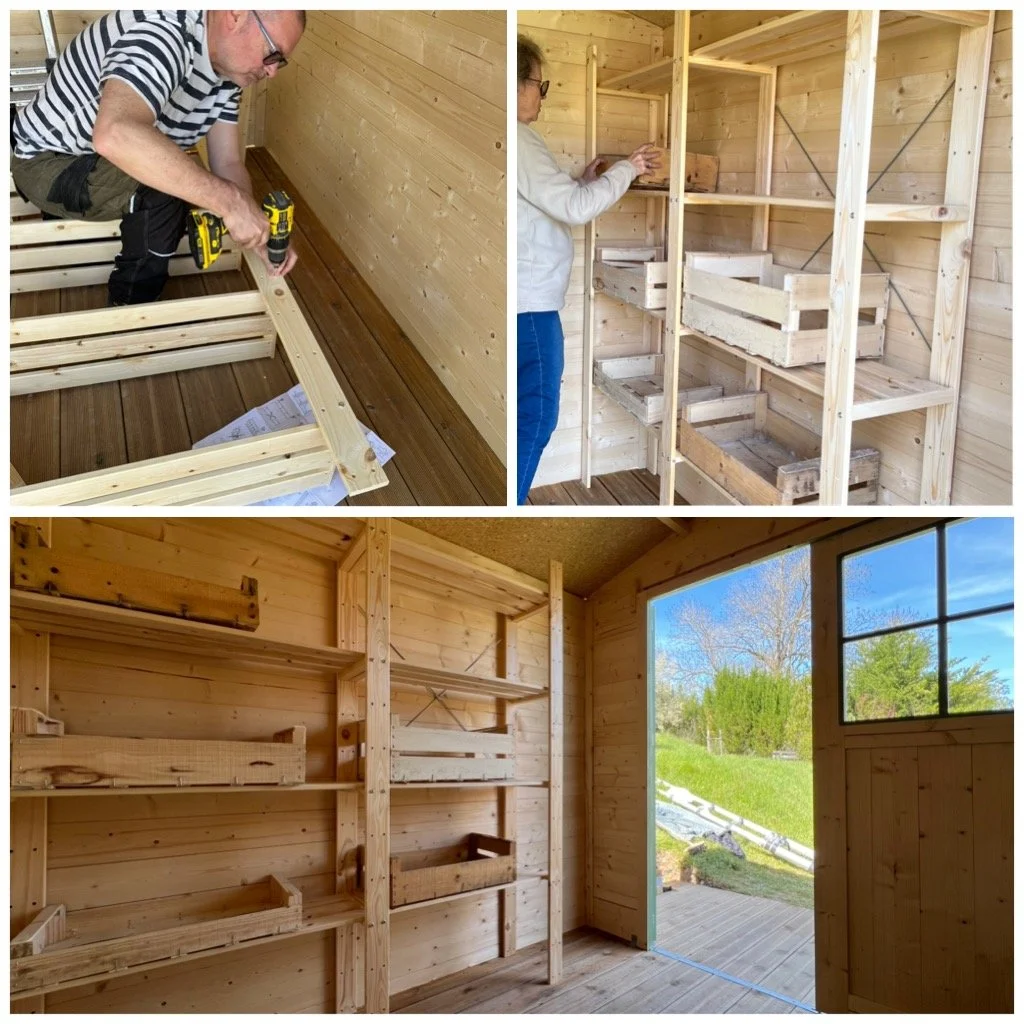
A great way to recycle what’s free, plus they are just the rustic look I was after.
Hang tight
With the latch now fitted correctly, and the windows sealed in with their wooden cross bars, it was time to take the doors up the slope and fit them on the shed.
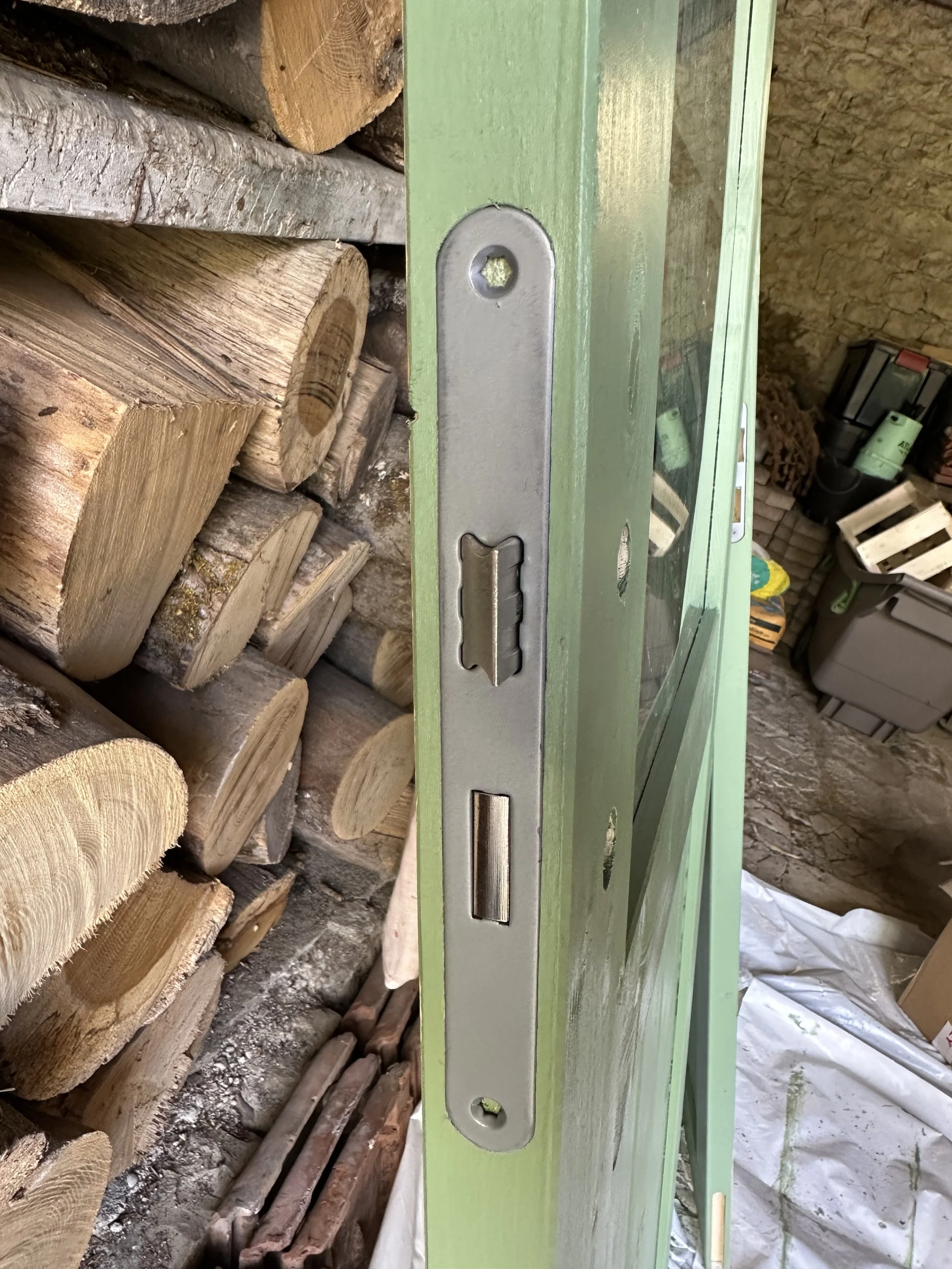
It was another gorgeous day, so we both headed up there, carrying everything we thought we would need to do the job. Brian had already taken the doors up.
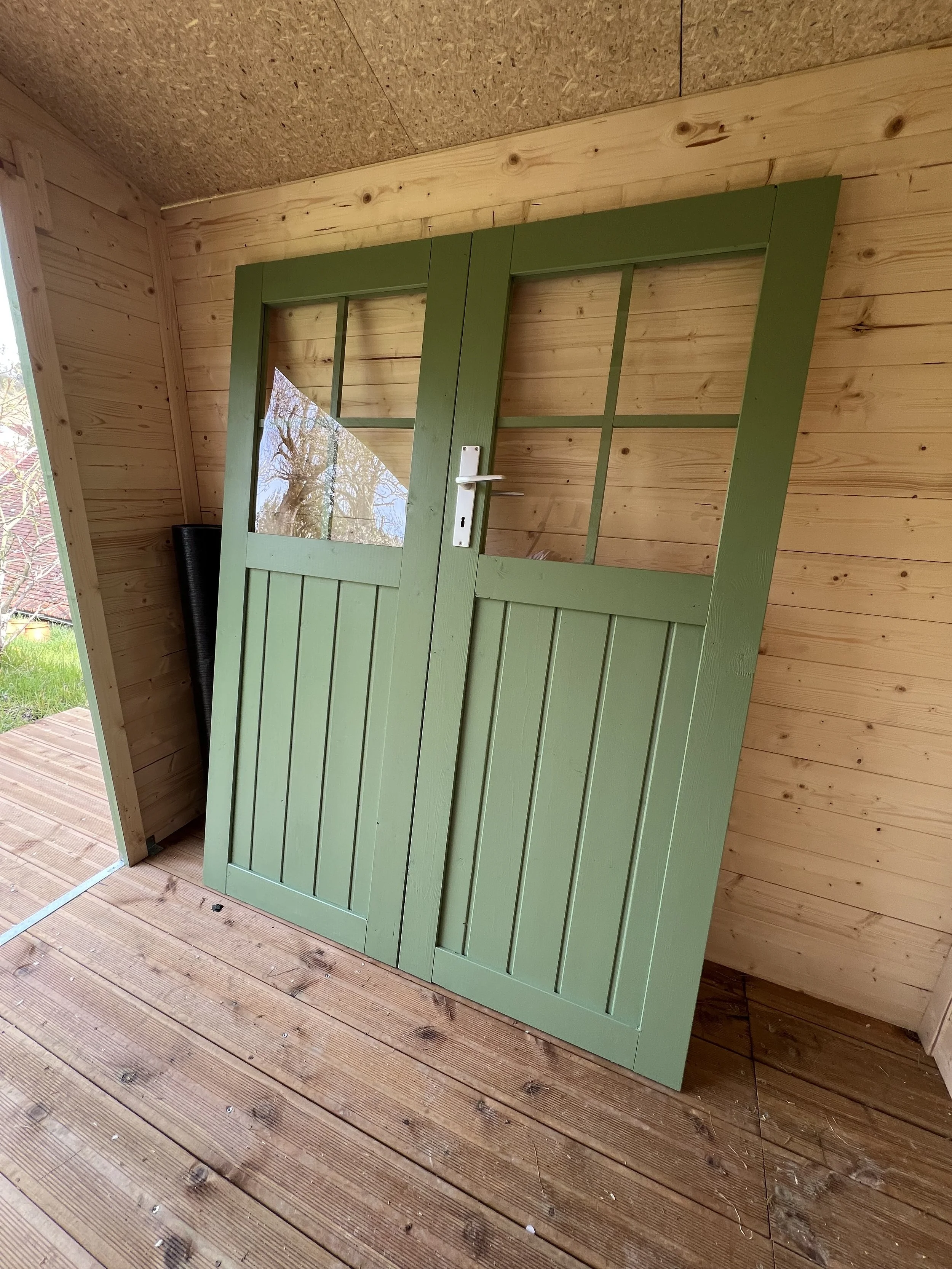
First things first, Brian measured where the hinges were to go and marked them on the door frame.
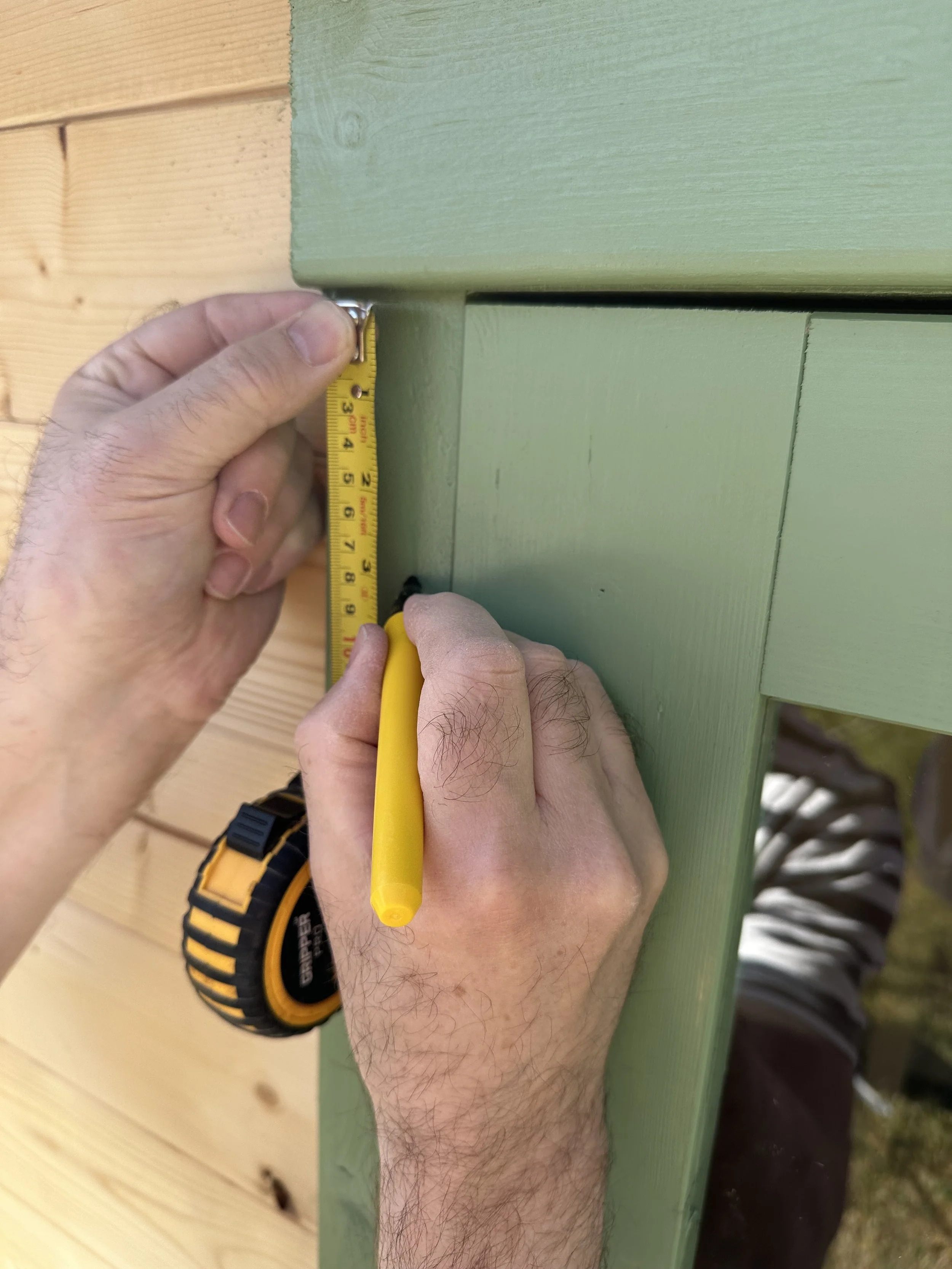
It all looked simple enough, however having to align three hinges was not that simple at all.
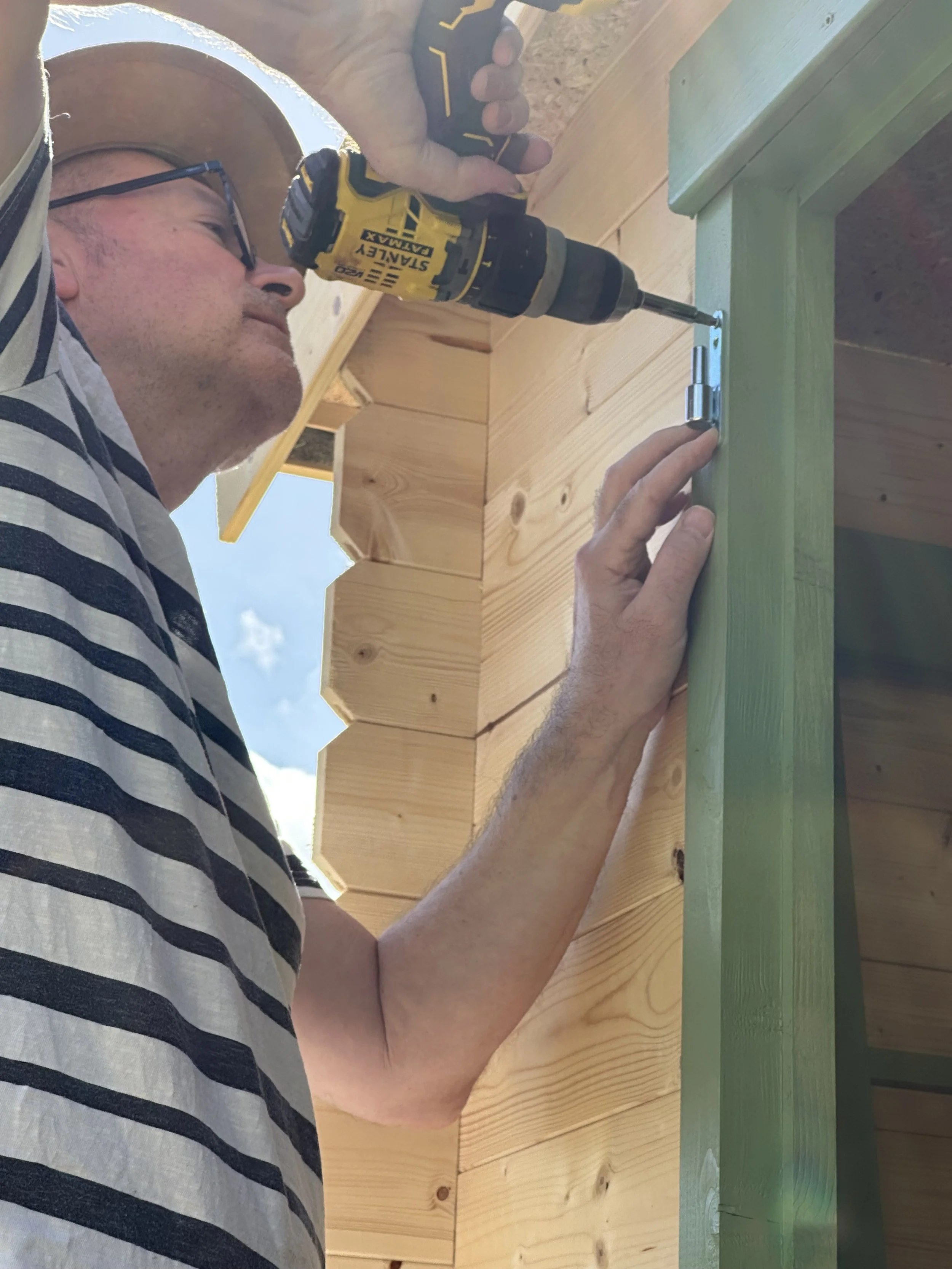
With all the pieces screwed into place we could drop them on. They were not perfectly straight, and we needed the door to hang closer in places. They had a clever little way of turning on a thread though, so that each hinge could be moved closer or further away from the frame. However you needed to take the door off again to perform this, and as it was fiddly, it was not something we wanted to keep doing.
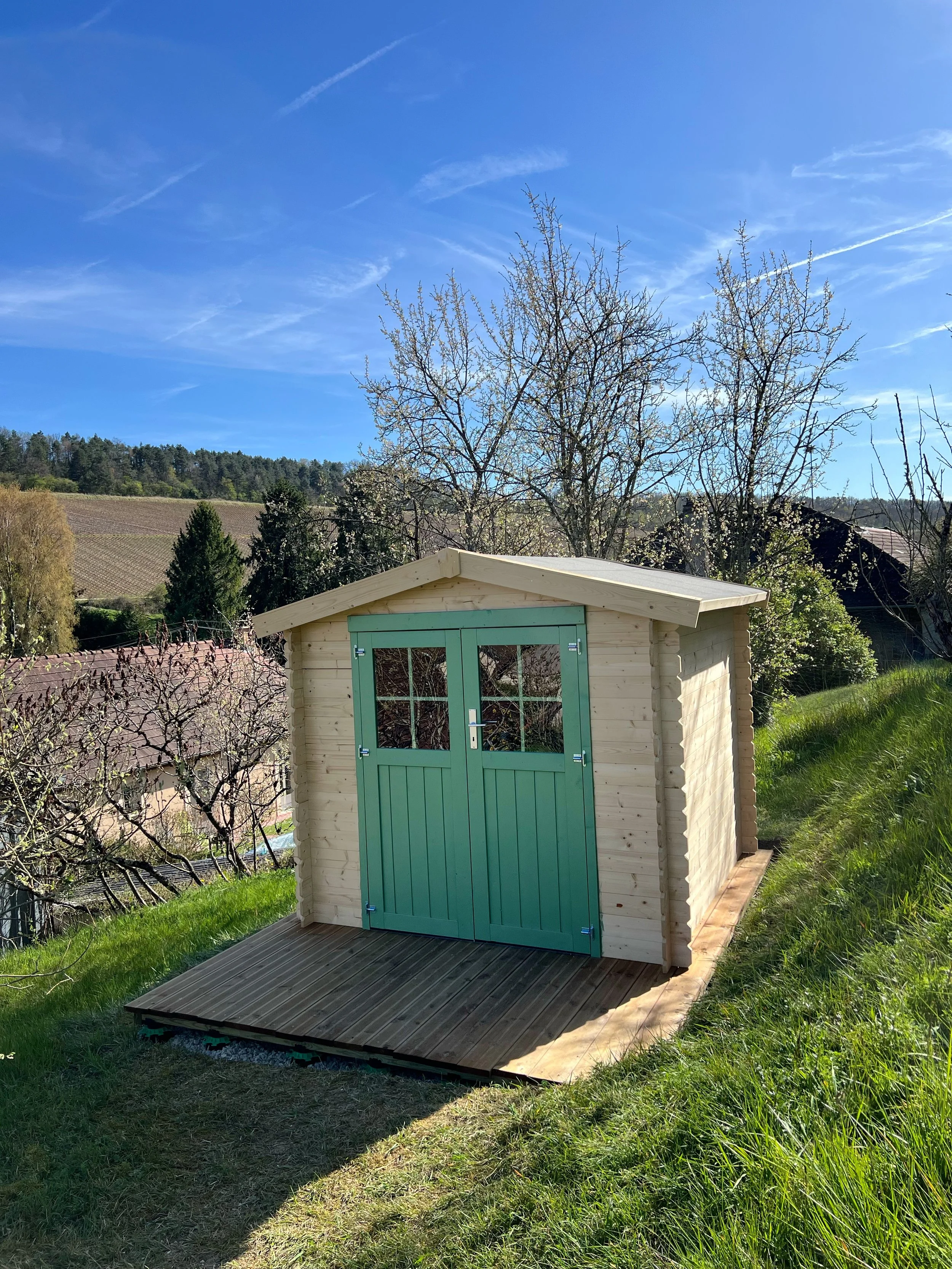
We were both extremely pleased though with the results. I am looking forward to getting the rest of the shed painted, and to start taking some of my garden paraphernalia up there so it will be easier for the summer.
Easter lunch
Our friends Julie and Andrew picked us up to go to Essoyes for an Easter lunch at a restaurant they like; La maison della Mamma. We’ve never been before, so we were looking forward to it.
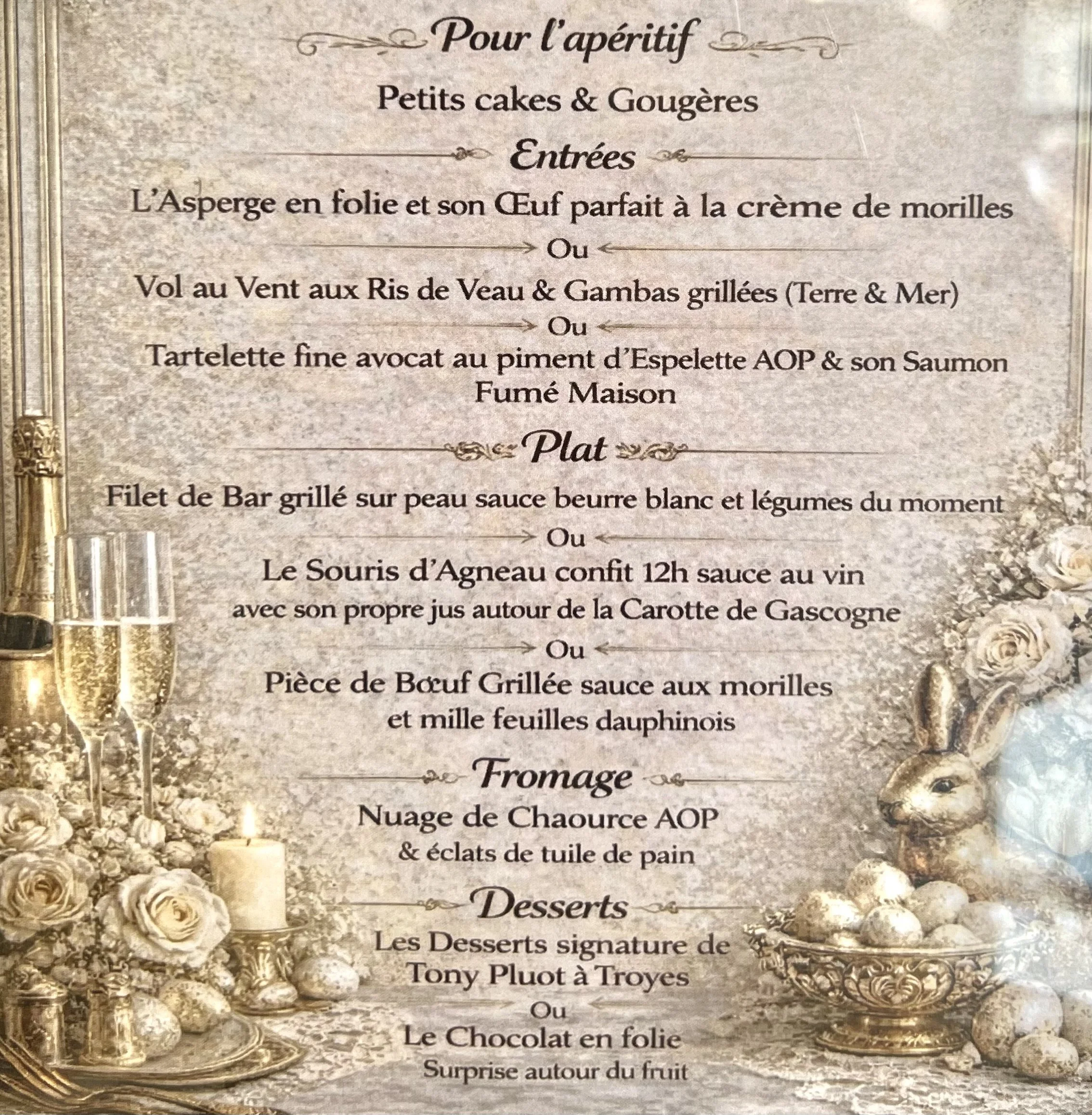
It’s just off the main square, opposite the mairie. The menu looked interesting, with four courses for €38, so we relaxed back with a glass of champagne to kick off our meal.
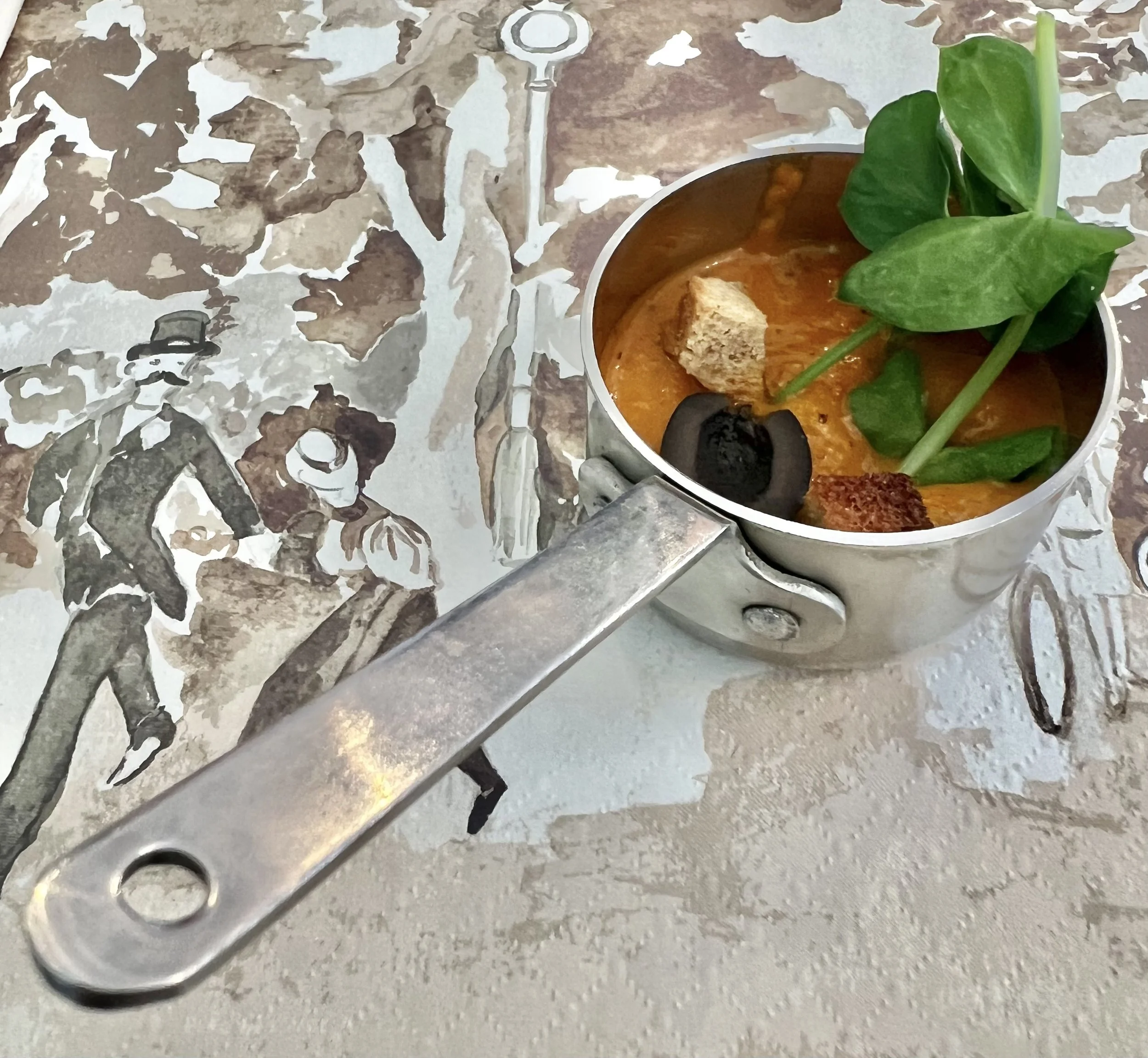
First up was a little amuse bouche: a tomato and pepper gazpacho. Very tasty.
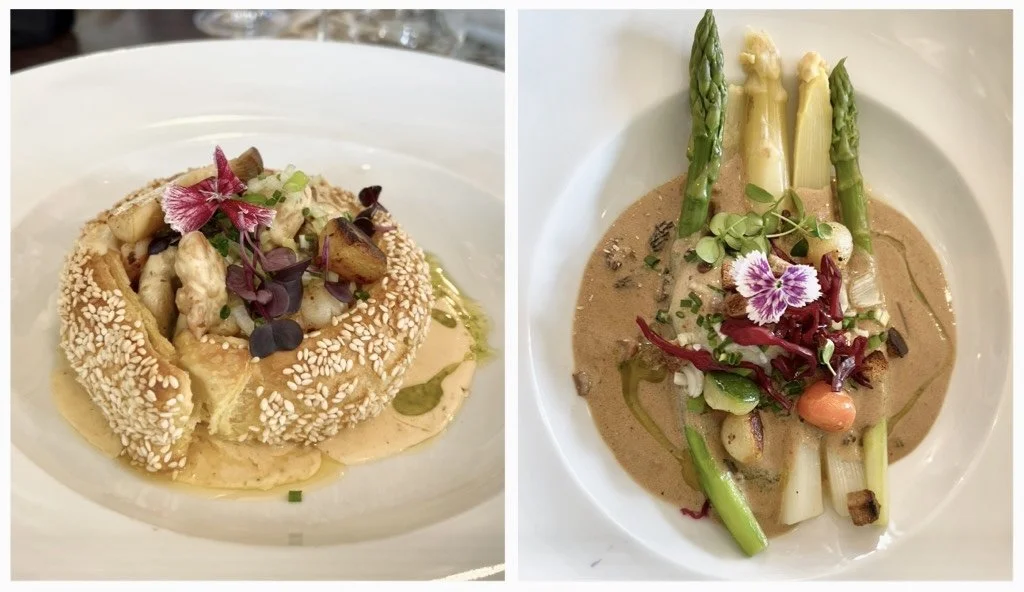
Then came our starters: I had the asparagus in morilles cream, and Brian had the vol au vent with sweetbreads. Both lovely.
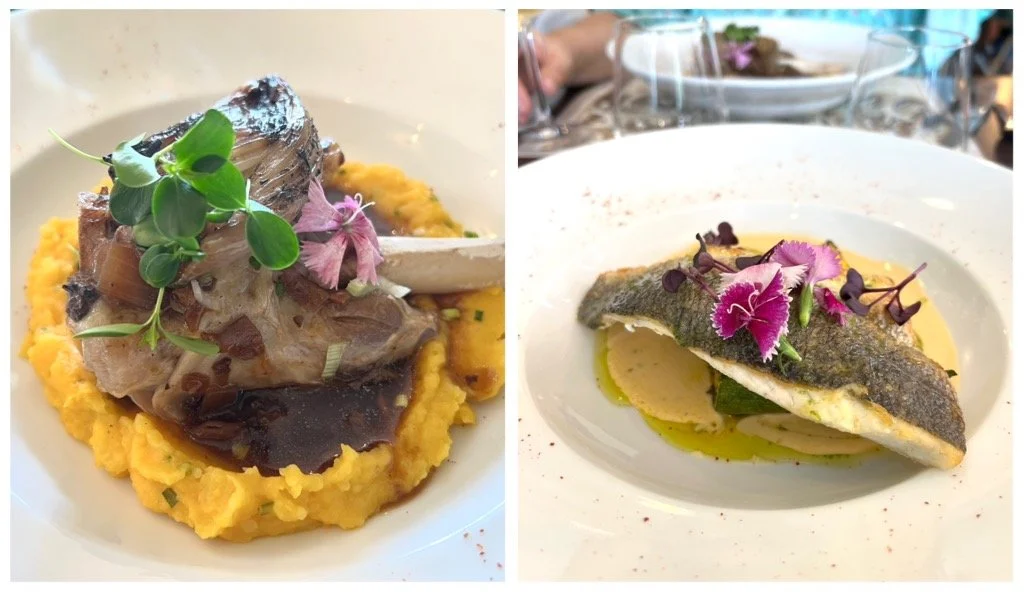
Main for me was lamb, a spring favourite, and Brian chose the fish.
Finally, we both had the same dessert, with coconut and passion fruit.
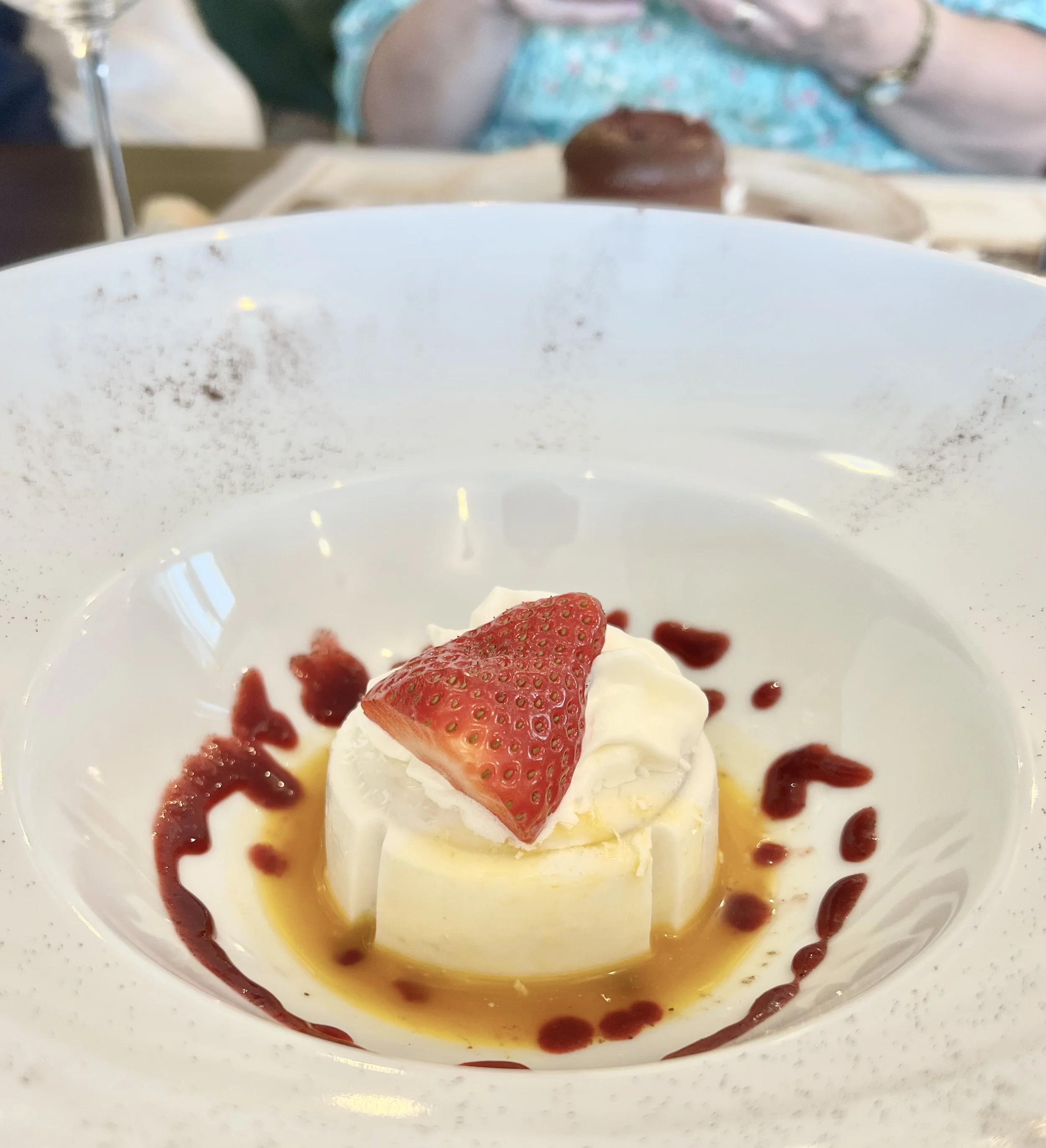
It was all very delicious, and wonderful to spend a relaxing lunch with friends.
Hope you all had a wonderful Easter.
A bit of persuasion
We woke to glorious sunshine, so straight after breakfast Brian was outside putting the second coat on the doors.
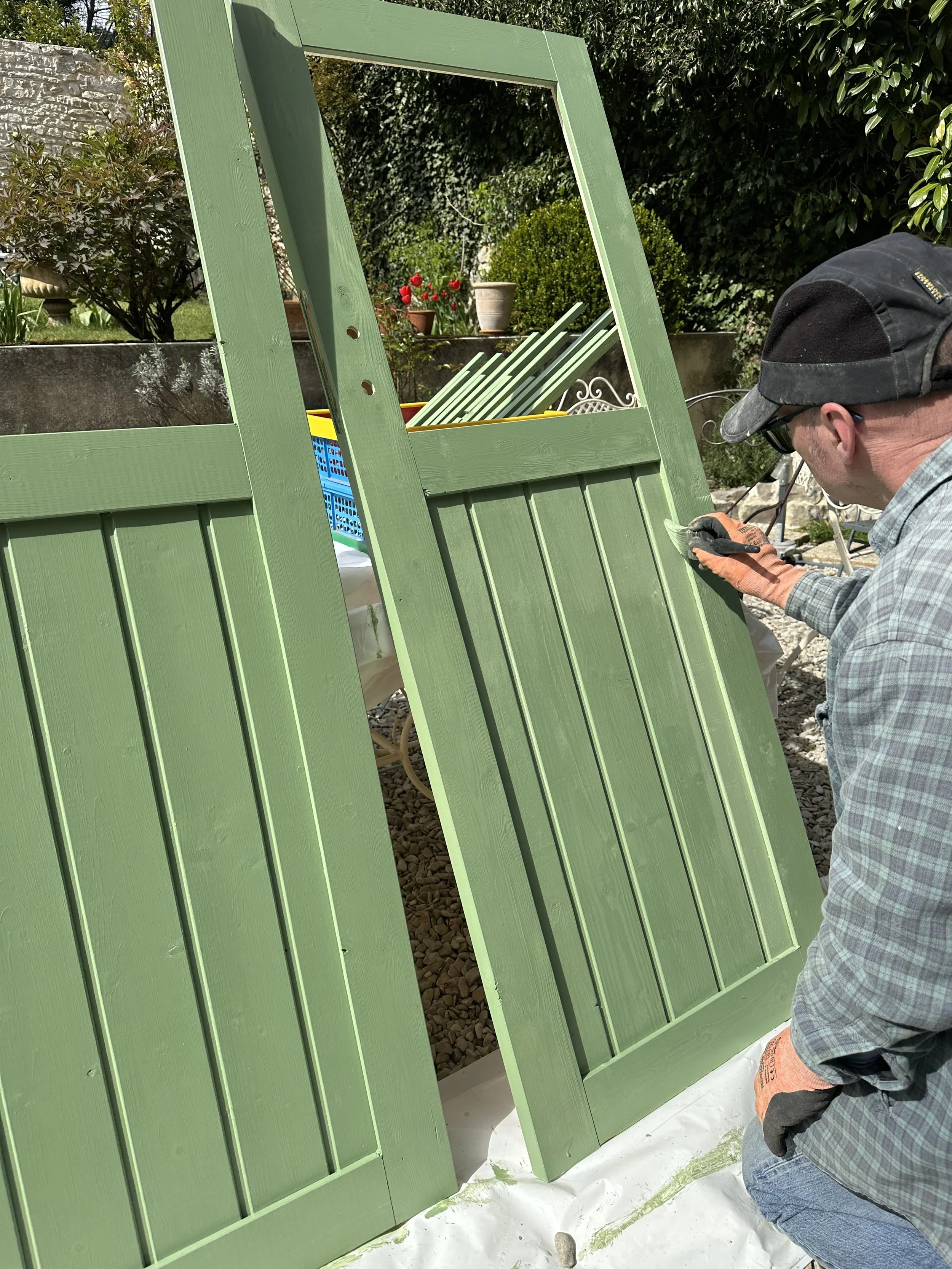
I came out and joined him, and went up to put the second coat on the back wall, whilst he started to understand the fixings for the doors. Which I have to say were not easy.
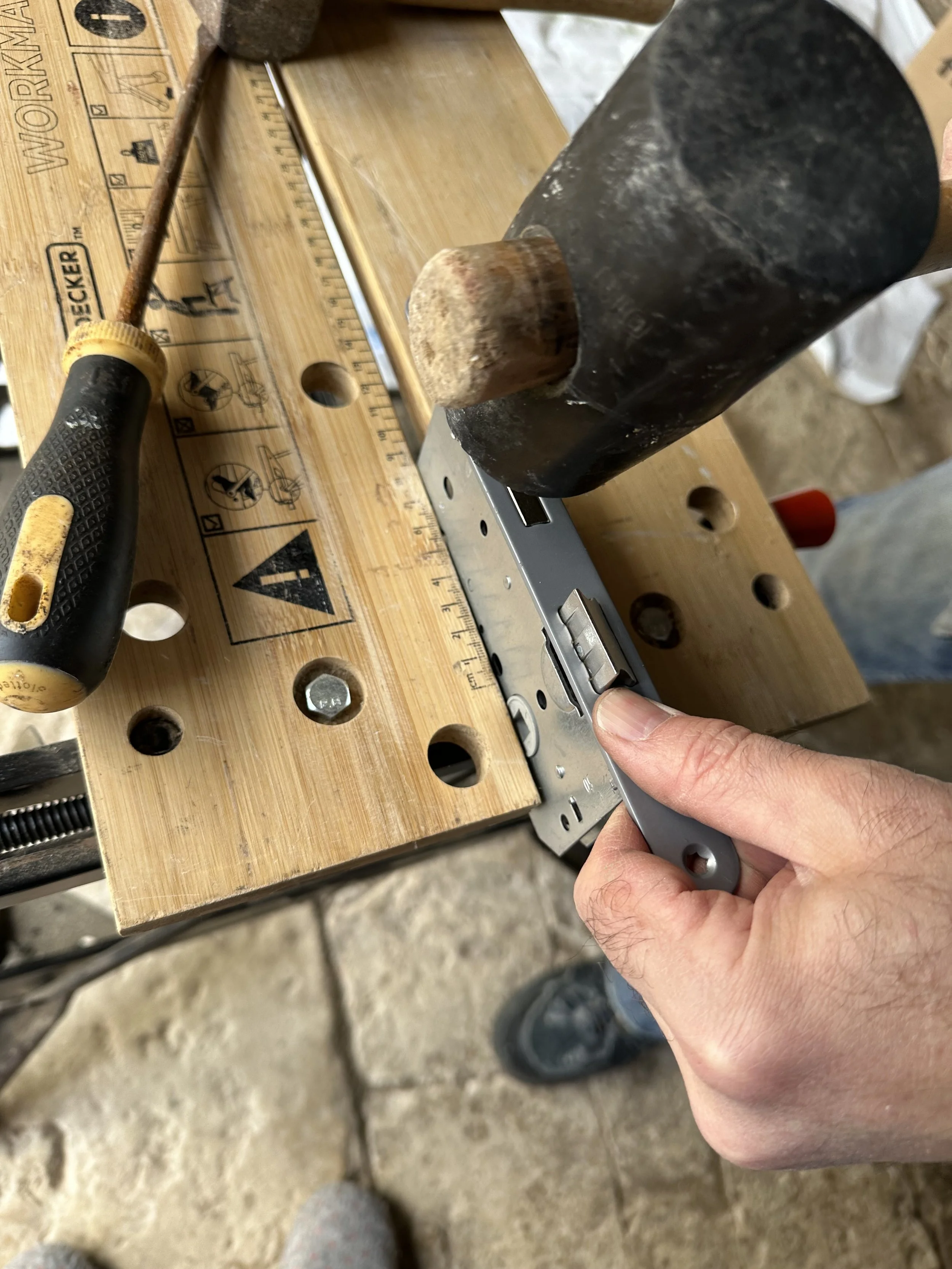
He soon realised that the door handle latch was the wrong way round for the doors. Normally you would find a couple of screws you can unscrew and turn the latch around. But this door handle had tiny clips that had been fixed into place, that were not designed to be removed. This wasn’t going to stop Brian, he got a pair of pliers and proceeded to man handle the lock apart. A few expletives later the lock had given in, and he could swivel the latch to face the other way.
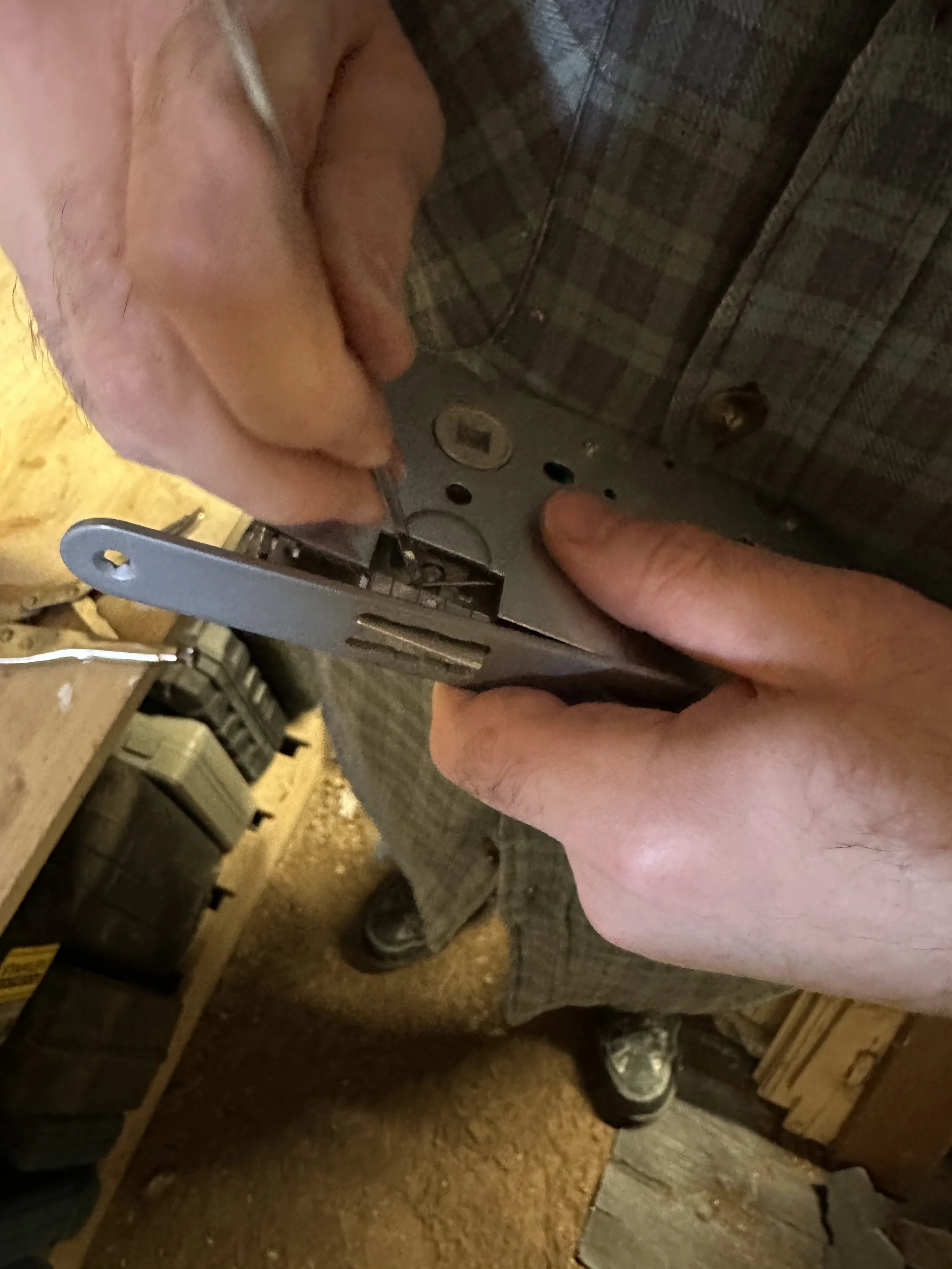
A little bit of persuasion and the lock was back together and ready to use.
Provence vert
The aim today was to get the doors painted with their first coat, so that Brian can finish putting them together, and fit them to the shed.
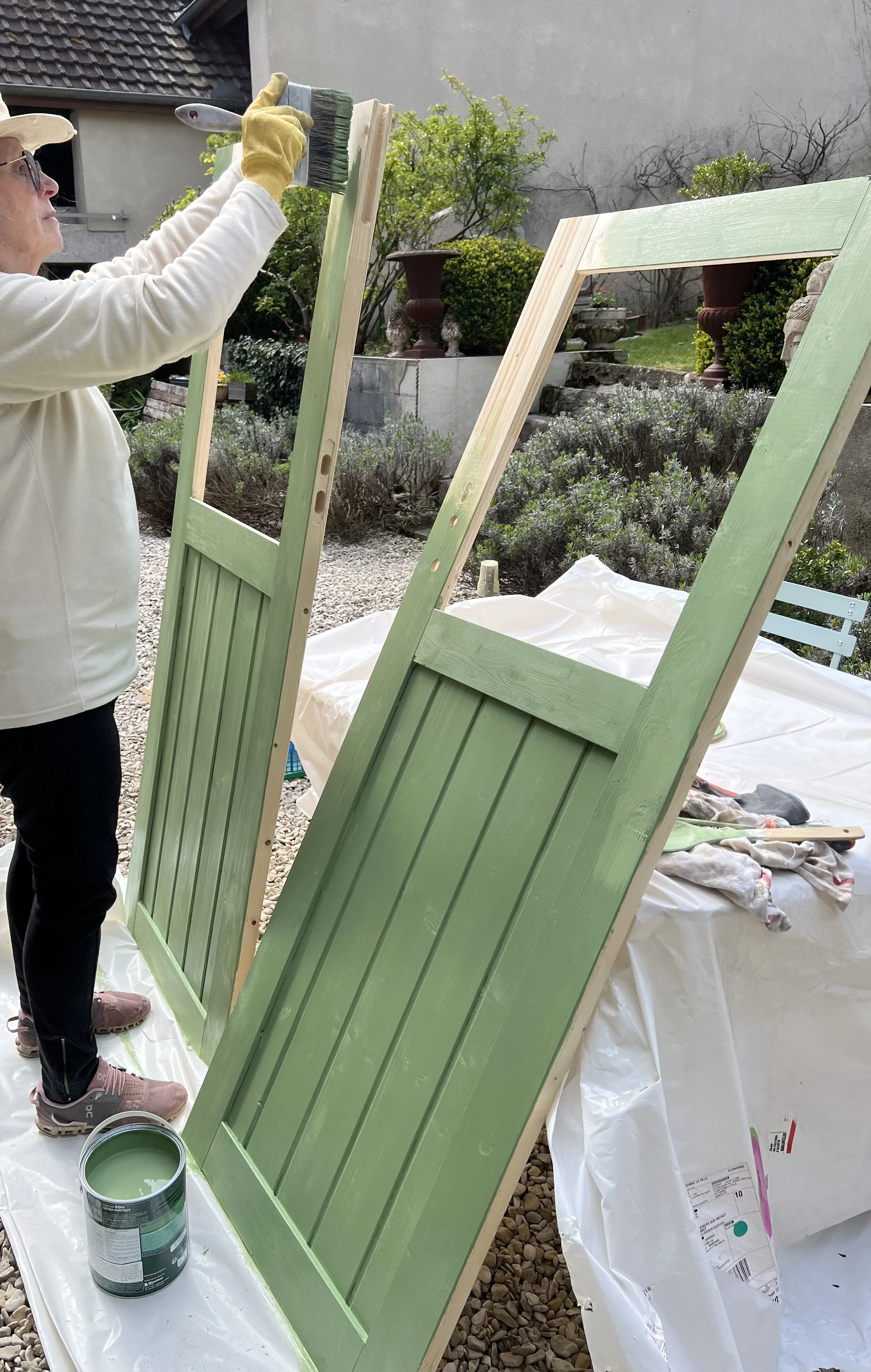
We were both really pleased with the colour we had chosen—Provence vert—and how the paint was going on. I think the green completely changes the look of the shed, it makes it feel older, more used, and gives it a heritage feel.
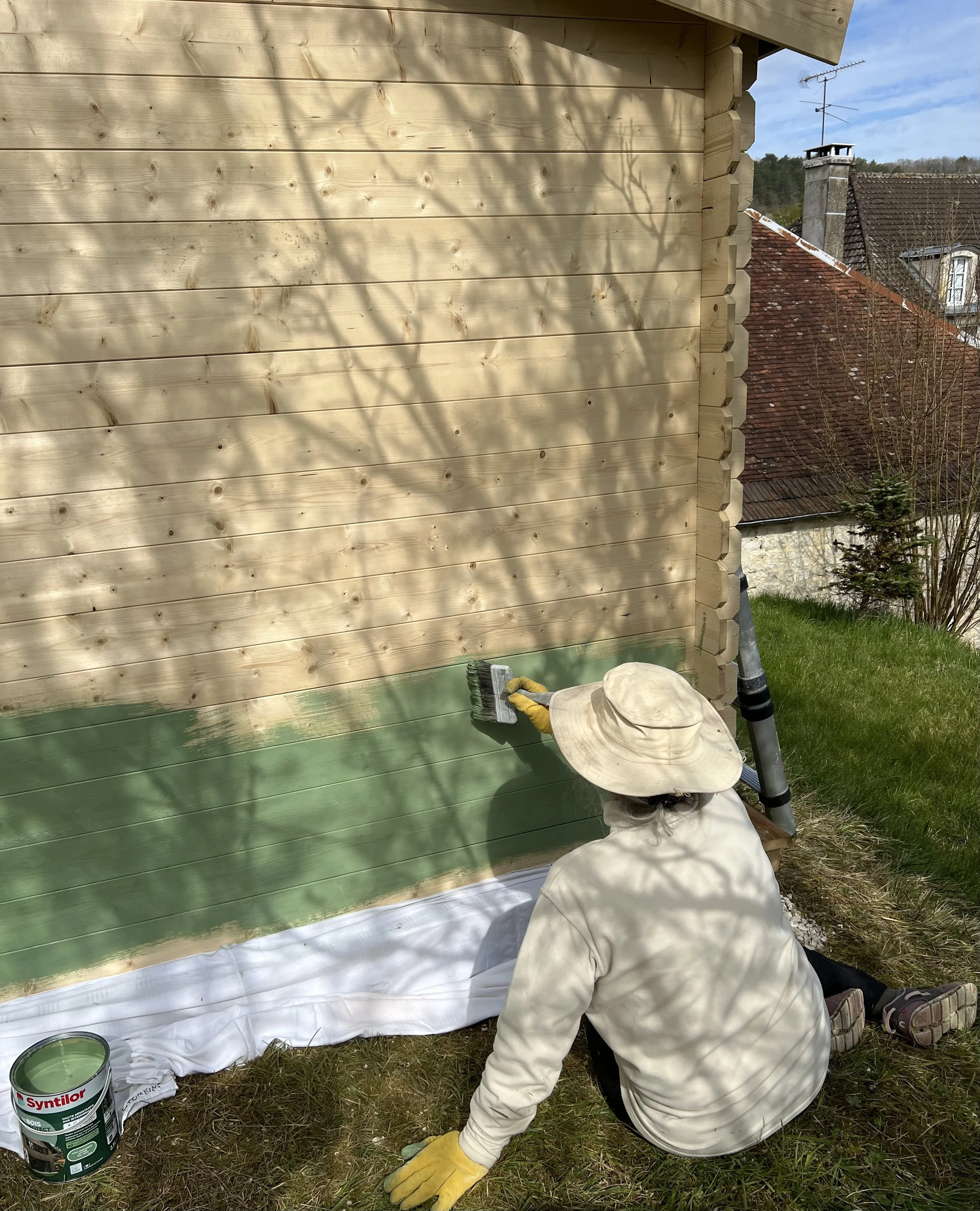
It was such a gorgeous afternoon we decided to also paint the back wall of the shed, however we do need to do two coats within 48 hours, so hopefully the weather will be dry again tomorrow, as we won’t get two coats done today.
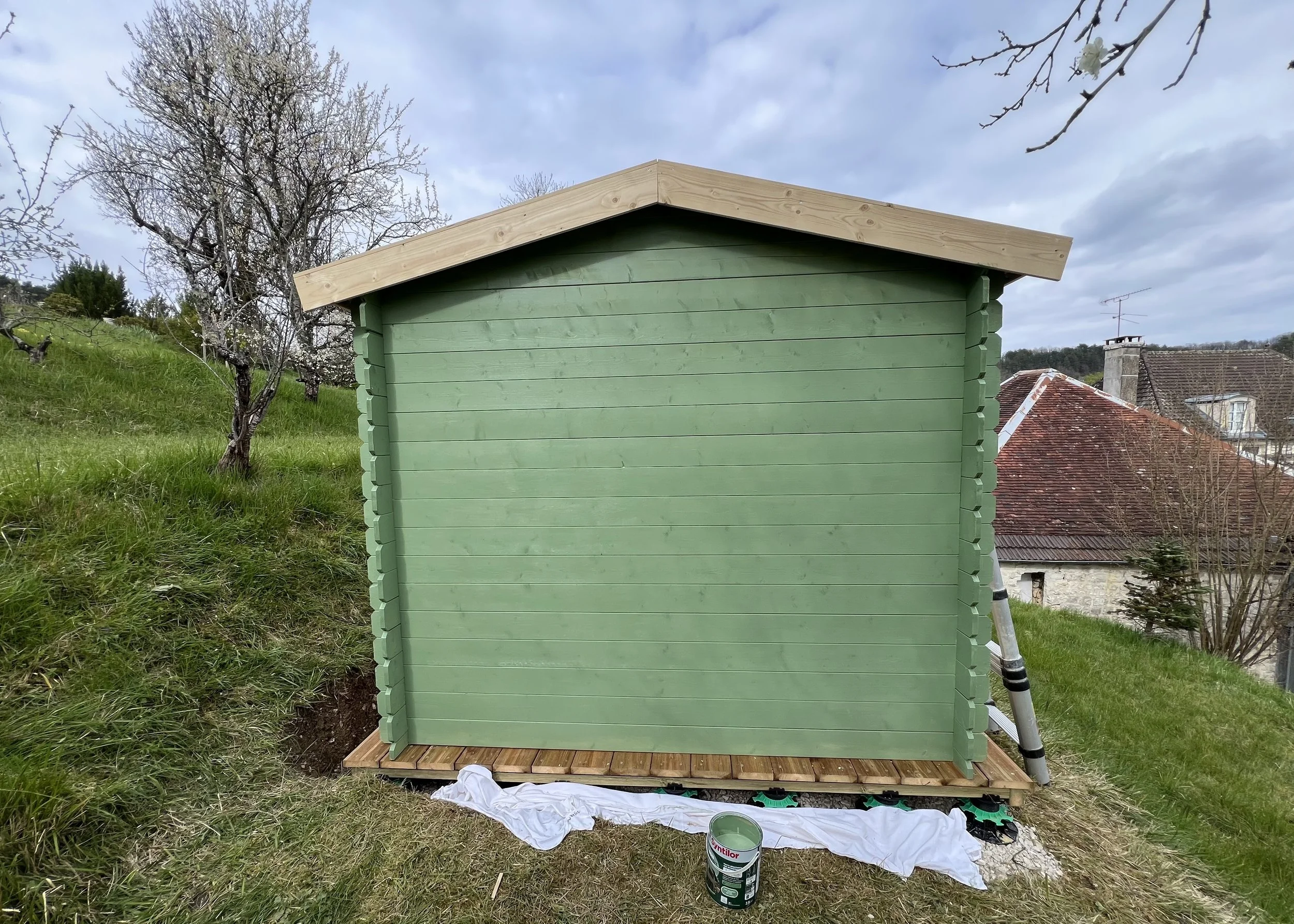
It’s looking great.