


My name is Jo, and in 2020 I moved to France with my husband, Brian. From our move to France, to running our B&B, my blog, which you can read below, is a diary of ‘Our French Adventure’. I share short stories about the Champagne region, and its people, and the life we have embraced here.
Hot or not
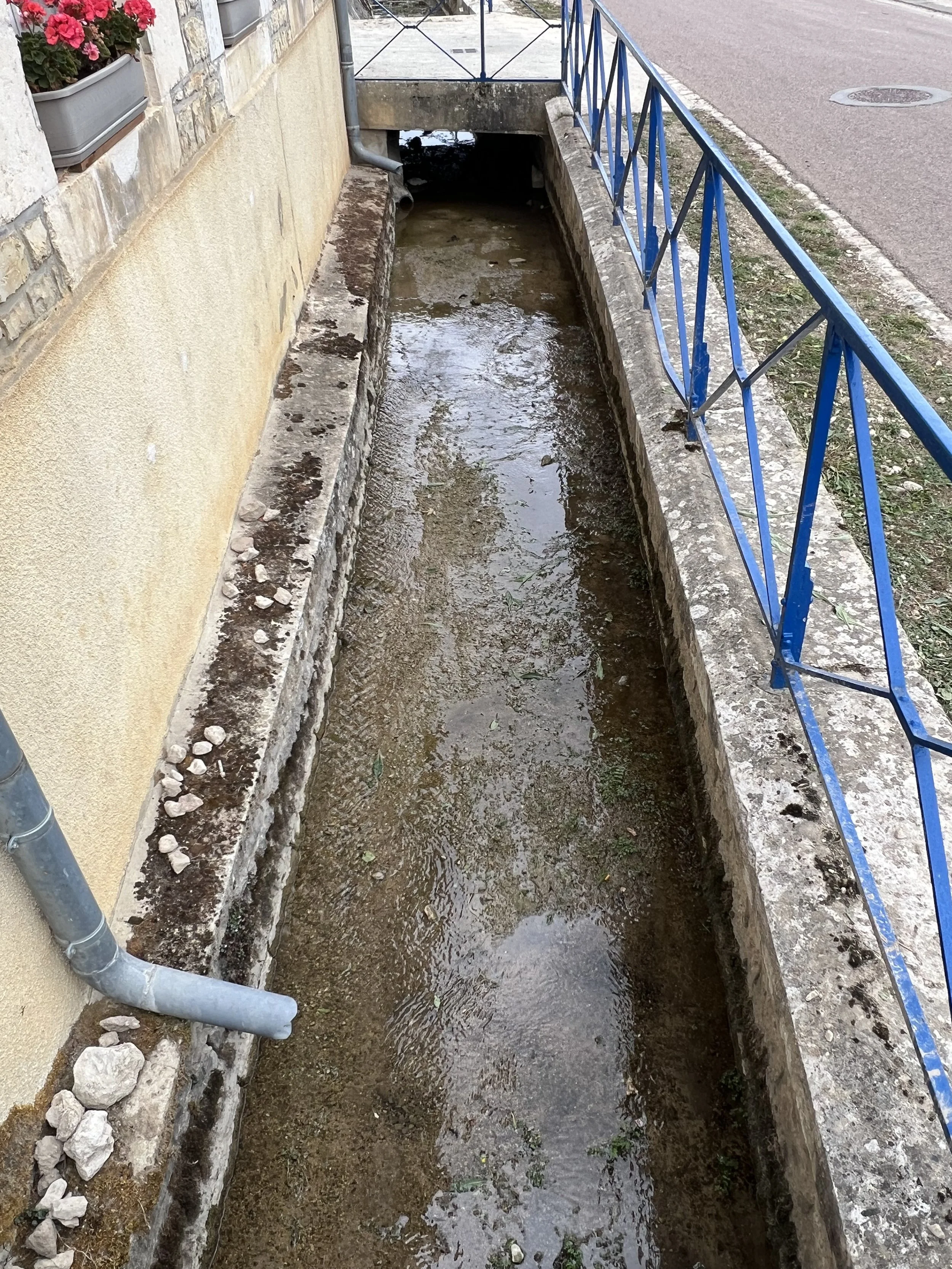
This week we took some time to review the affect of this years hot weather and drought. The river Artaut, at the front of our house, is reduced to a trickle. We’ve never seen it this dry.
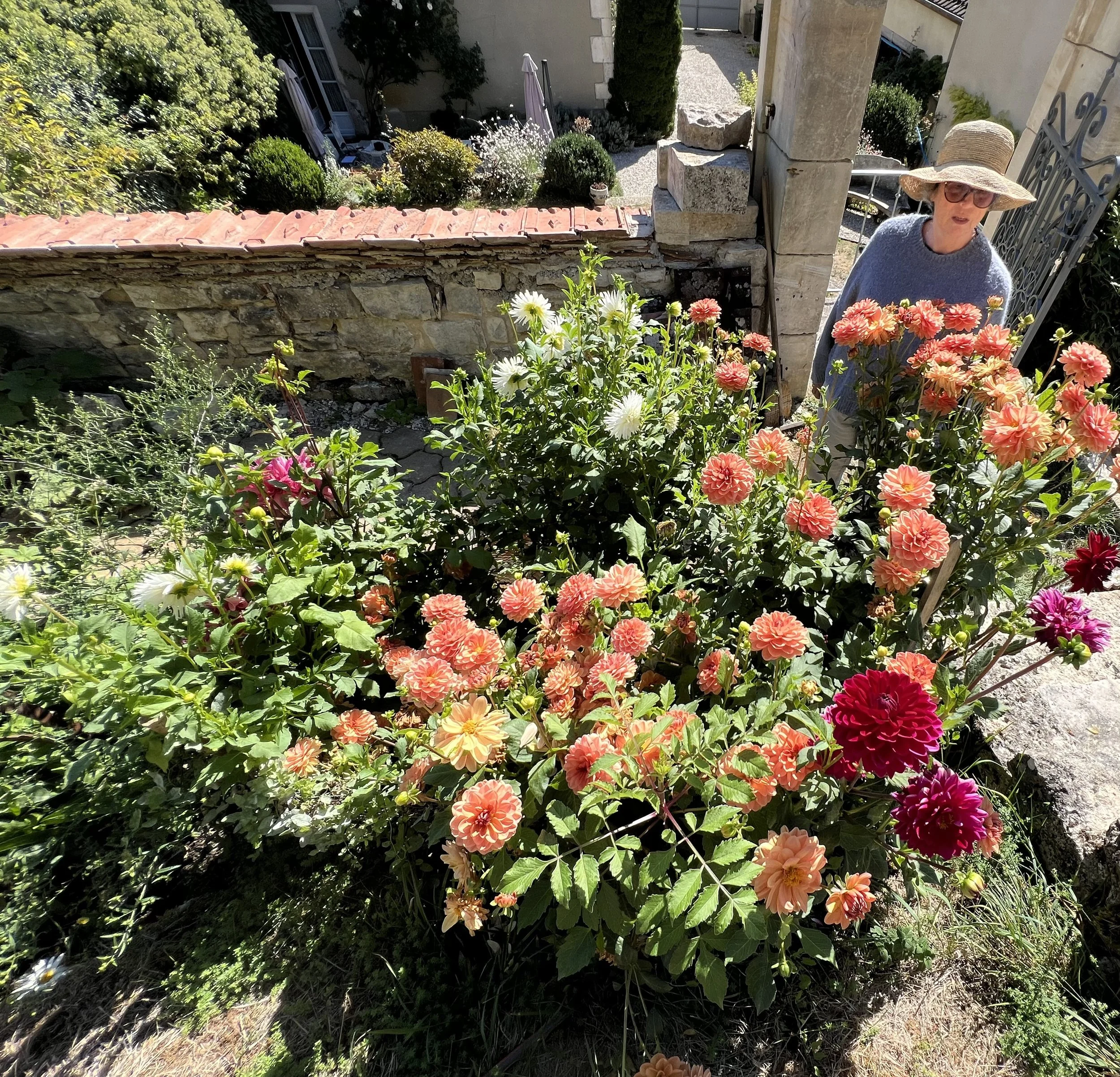
I had managed to keep my dahlias going, but a lot of the Ilex plants I had bought to replace my box trees had completely dried out.
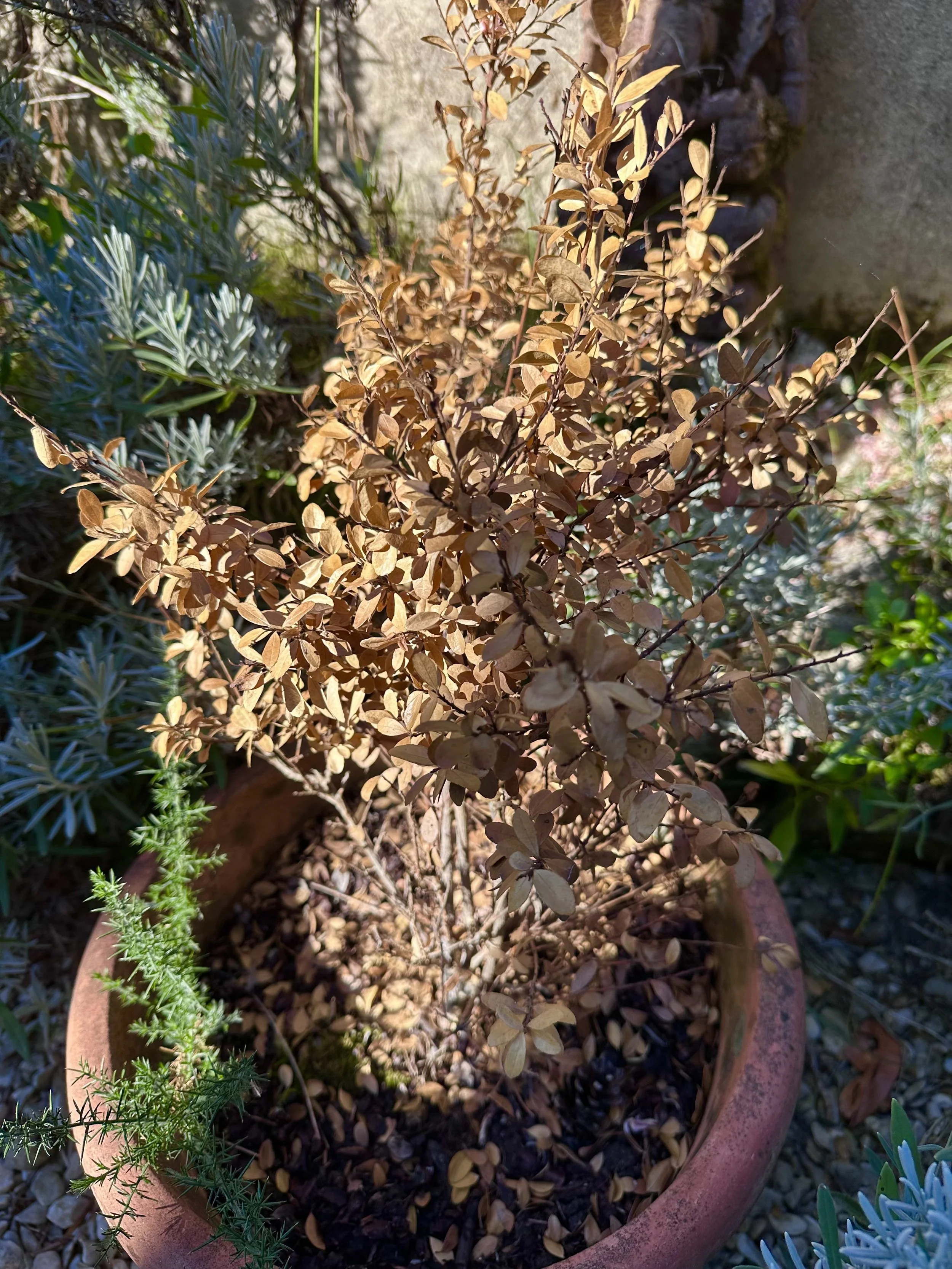
However this little, thorny piece of gorse had appeared from nowhere, and is flourishing in this pot. I’ve got no reason to get rid of it, so he’ll be staying for a while. The ilex has obviously gone now. At some point over winter we will take out a tall fir tree that has died on the slope, but I will need Brian’s help for this.
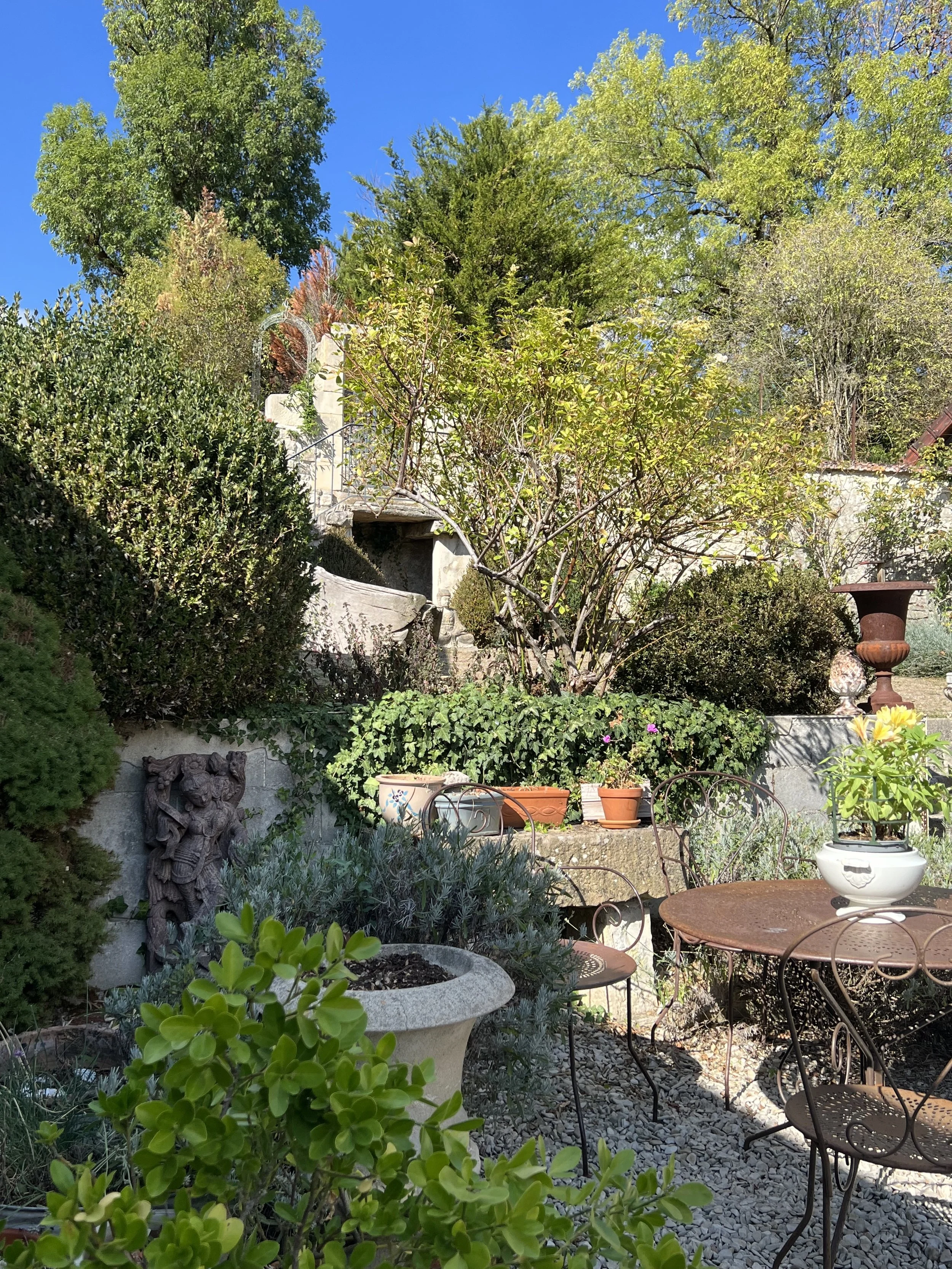
A quick tidy up of all the dried and dead leaves though and I think the garden is looking quite beautiful in the Autumn sunshine.
Brico Dépôt
I think I’ve mentioned before that buying DIY materials in France is so different from the UK.
This week we needed to drive into an outside depot to buy some roofing materials. It’s all a bit daunting, especially as it’s not always possible to find out what they’ve got beforehand, or how much it will cost. Brian really prefers to be prepared.
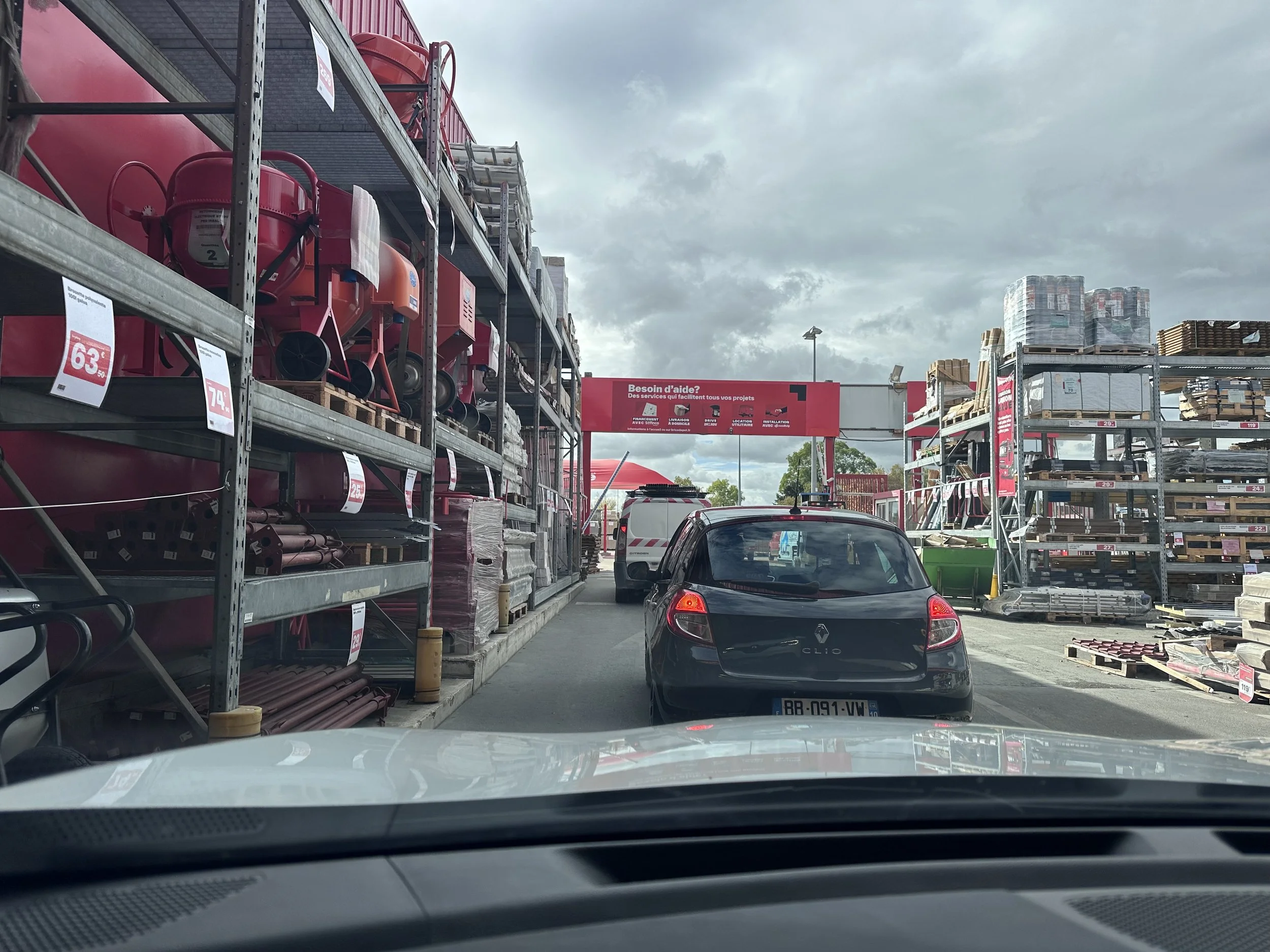
A lot of the materials are completely different to what we were used to, so when we try to imagine how we’re going to do a job, it’s probably not how it will end up. So we need to be very flexible and open in our approach.
Another thing, which has caught us out in the past, is that they price everything in square metres, which can be tricky when calculating the true cost. This time though it was easier to understand.
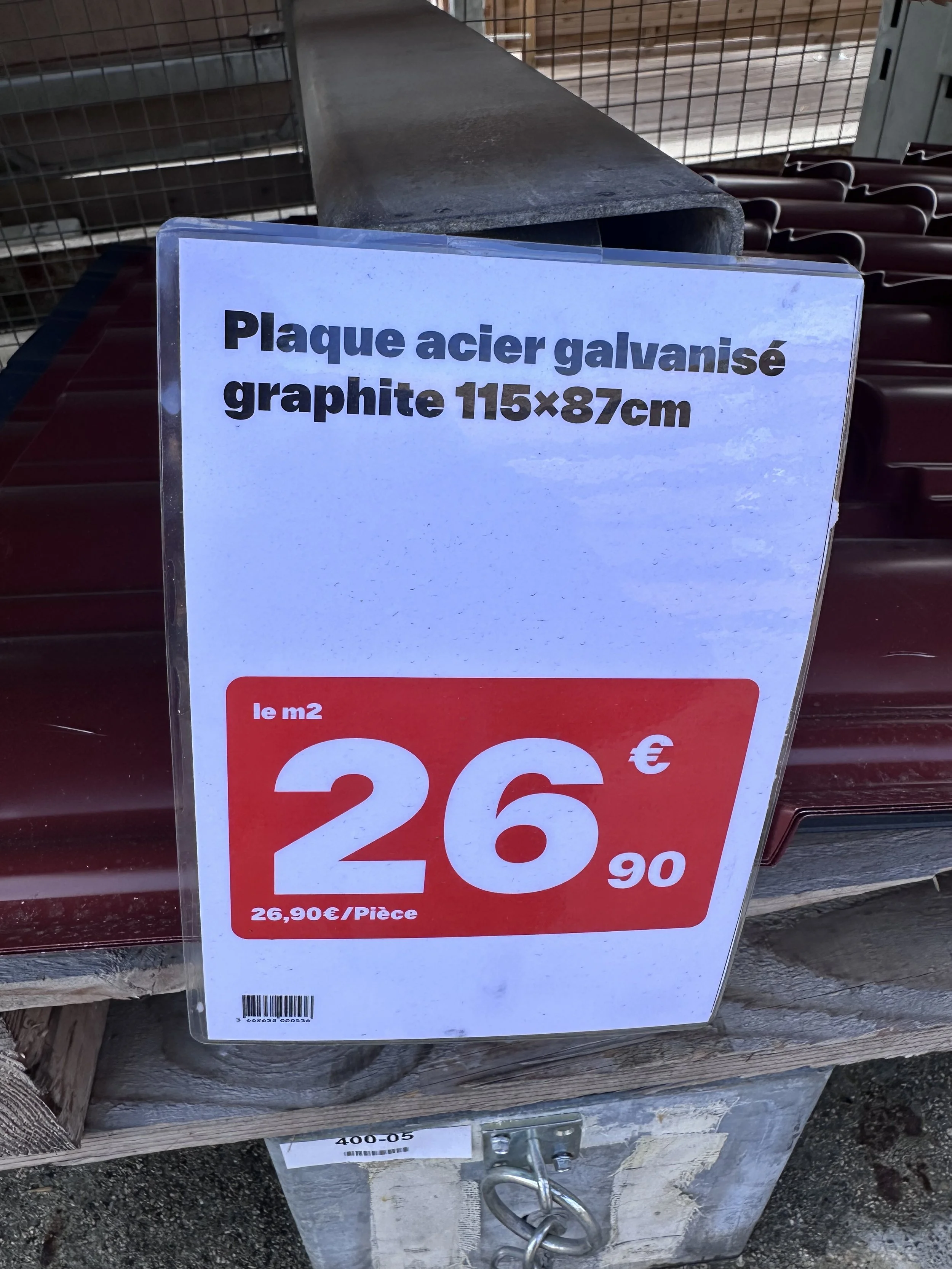
With our choice made, we took what we needed from the stack, drove round to the counter at the exit, had it checked, and then paid for it.
There was one further little challenge. The three roof-ridge pieces were heavily scratched, so I suggested to Brian he could ask for a reduction. How hard could that be?
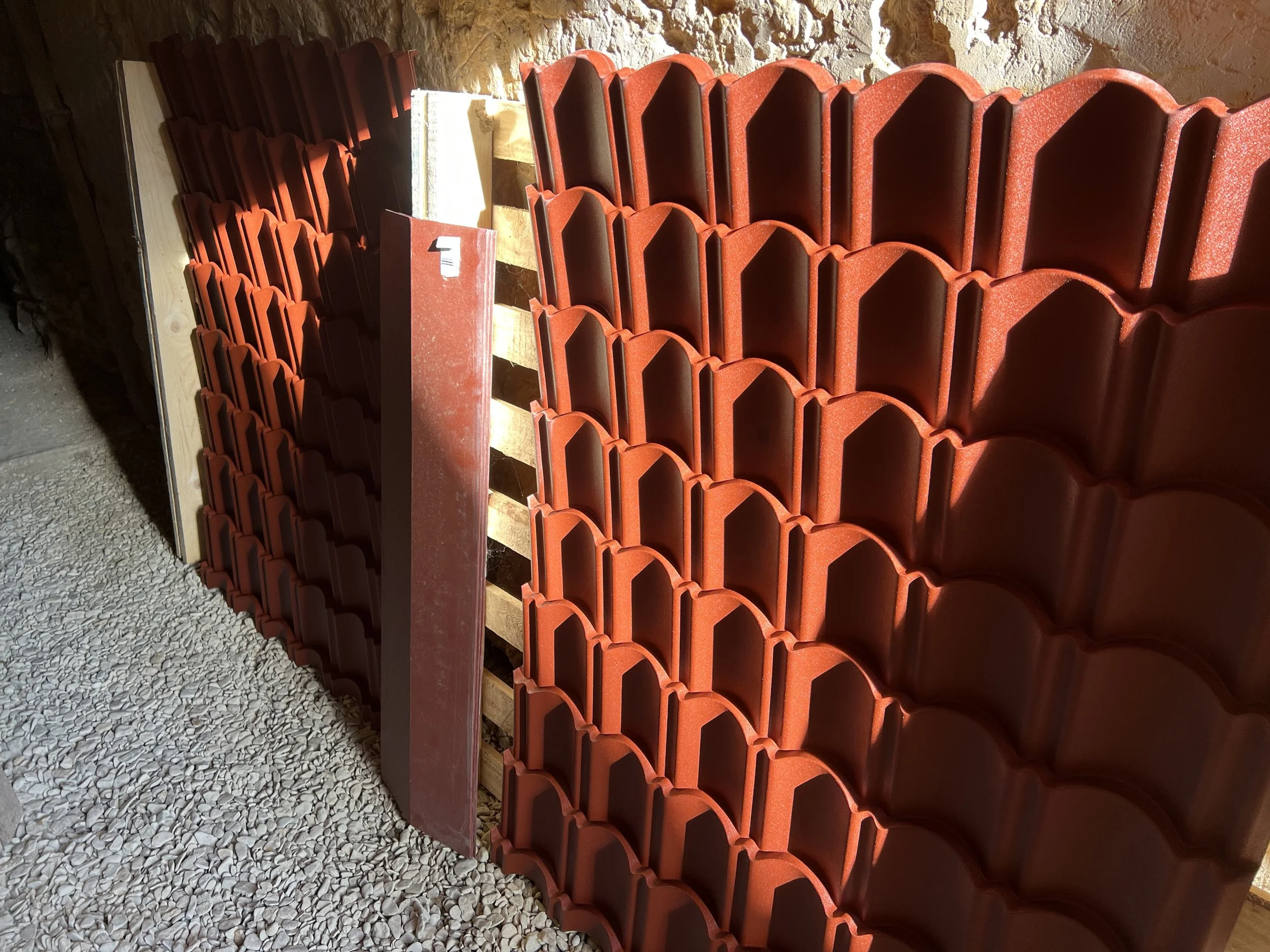
Impressively, he got a 50% reduction.
Now we just have to work out how to fit them.
Salon de Thé
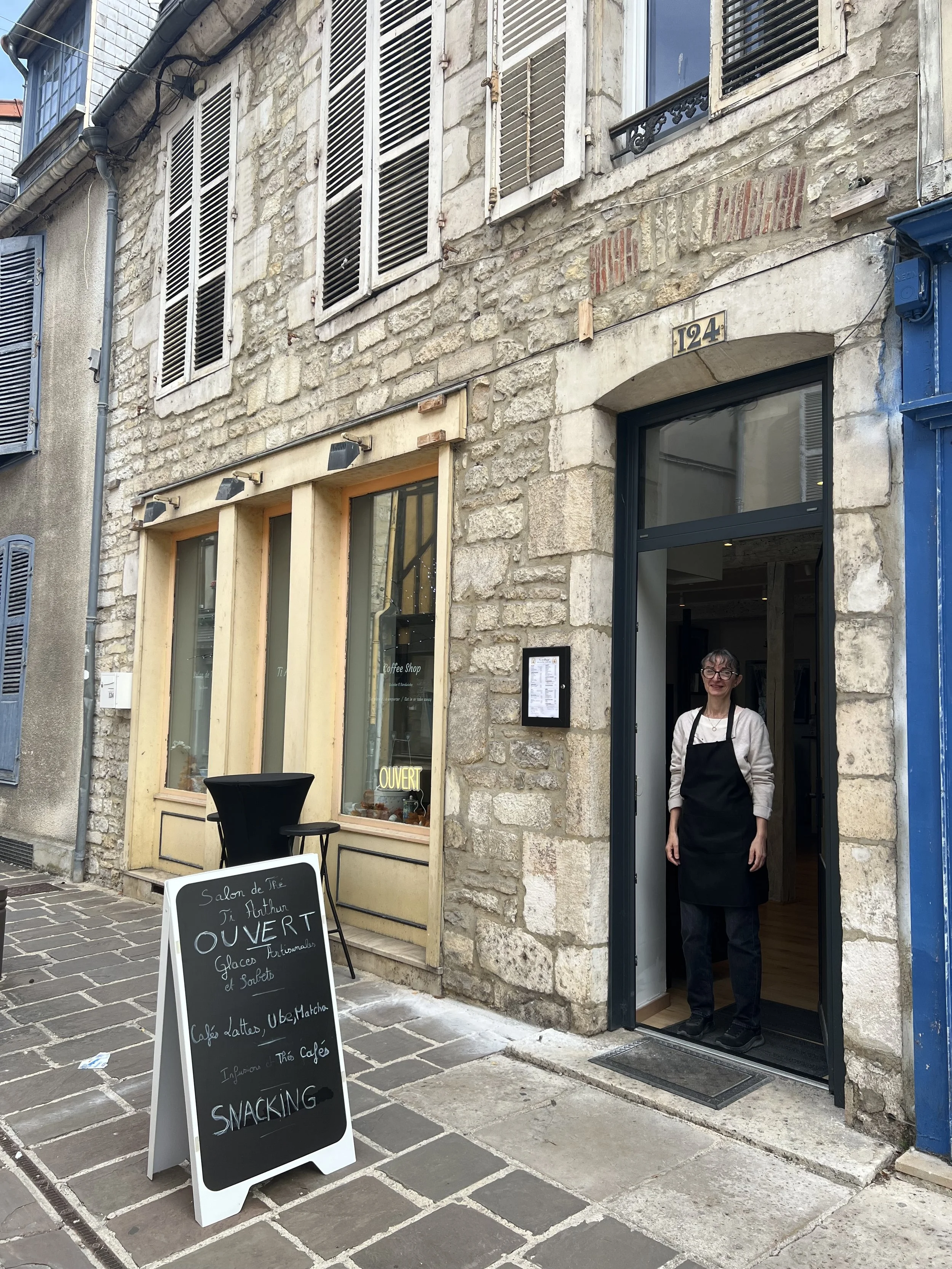
I do so love it when a new shop or café opens. I do feel a need to pop in and take part.
‘Ti Arthur’ is a new salon de thé in the grande rue de la résistance in Bar sur Seine, and I’d wanted to visit there for a while now, so this week we made time to go in.
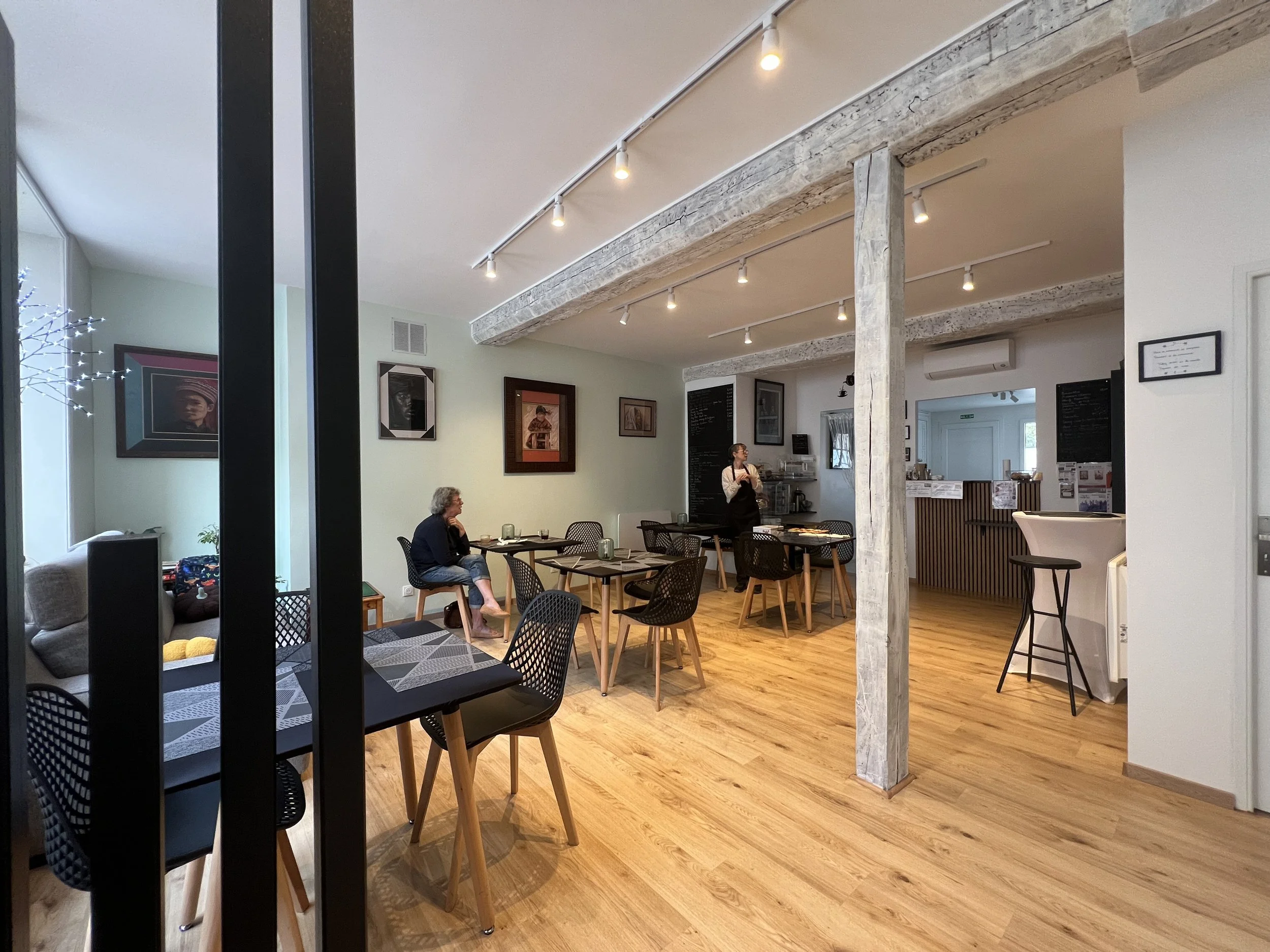
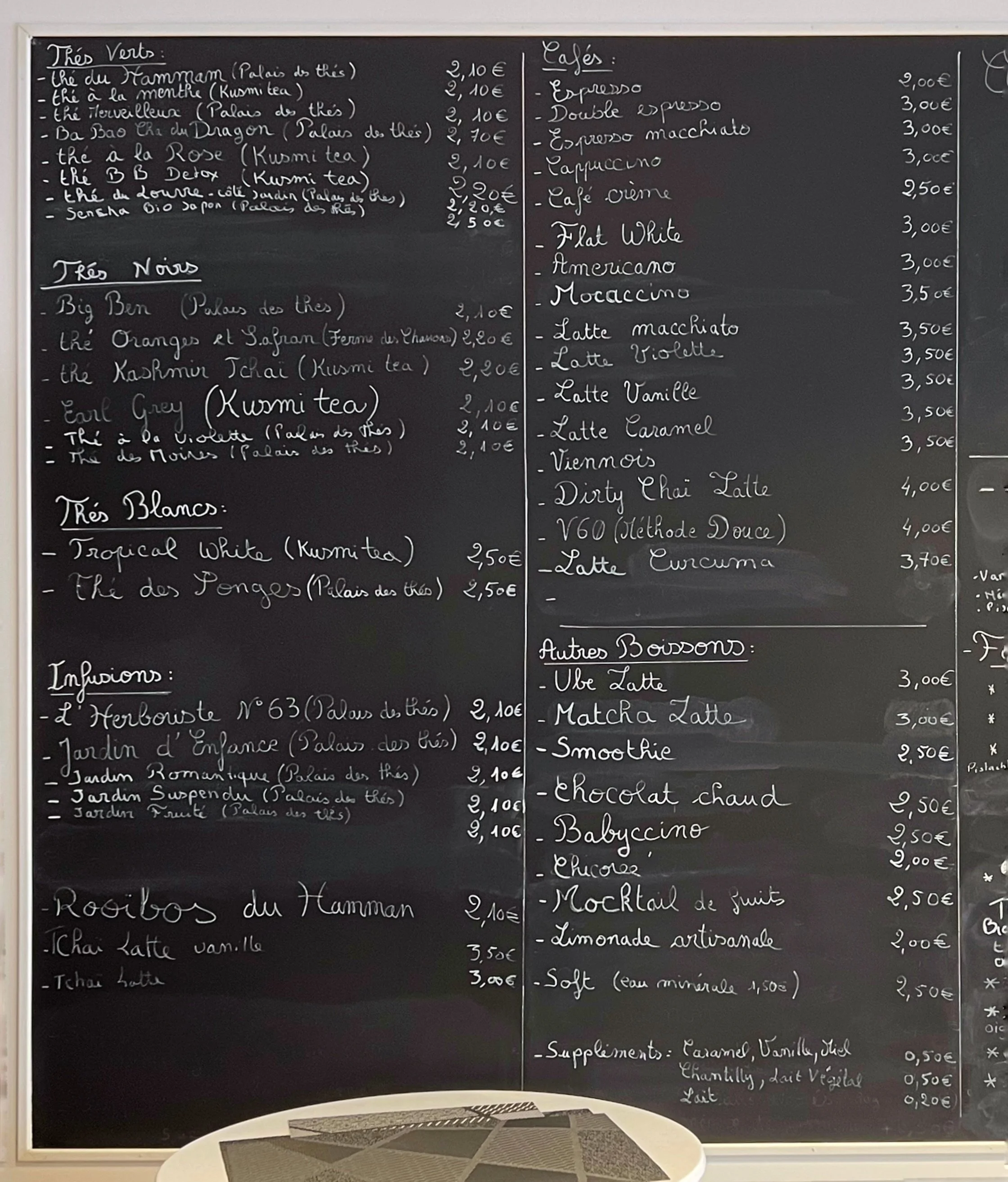
It’s a beautifully clean café, with a huge list of drinks, and a friendly lady running it.
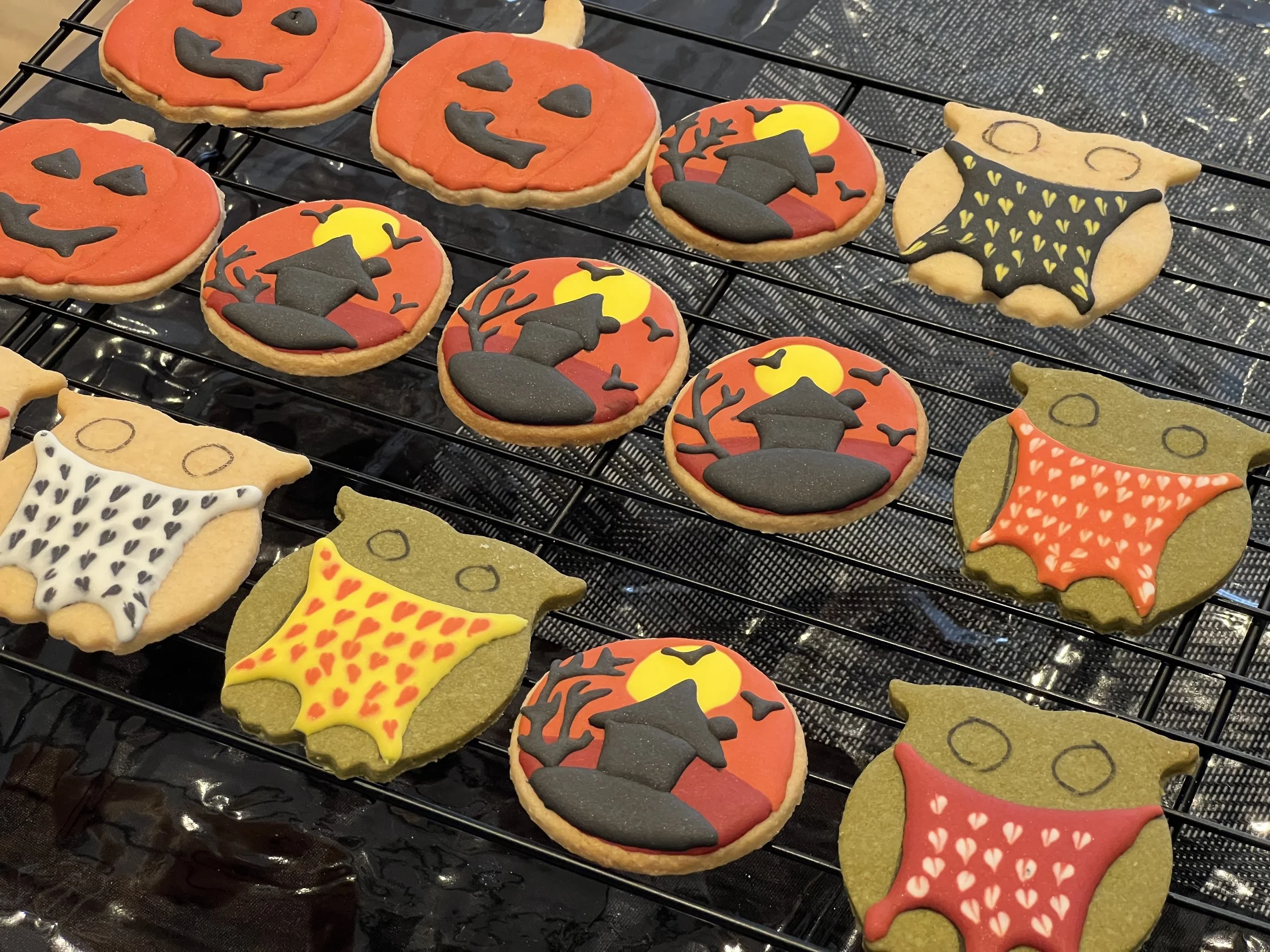
She spoke a bit of English, so we had a good chat about her new café. One of the things I loved the most, from what we discussed, was her biscuit decorating courses. She showed us some of the kinds of decorations she teaches, and they looked wonderful.
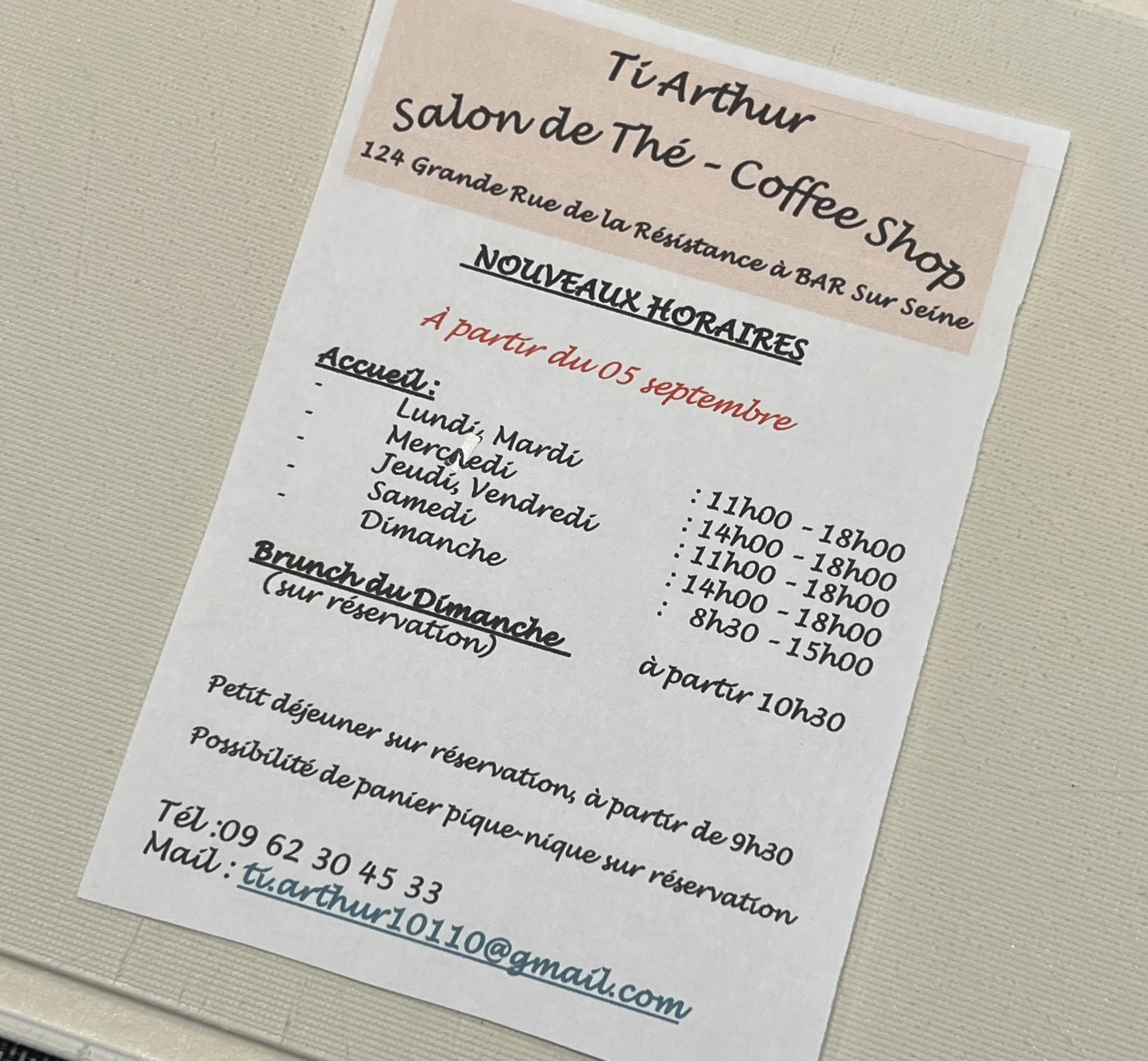
She also does a Sunday brunch by reservation (and a petit déjeuner). I can see us trying that.
To day we had a couple of coffees and a cinnamon roll, all very tasty. For those that like other types of milk she offers a selection as well.
I feel It’s so important to support your local shops and cafés. Those little places that start so quietly might one day become your favourite go to with friends. I think, by using them you help shape them, they become a reflection of the people that support them.
If you’re in Bar-sur-Seine definitely a place worth trying.
Where we left off
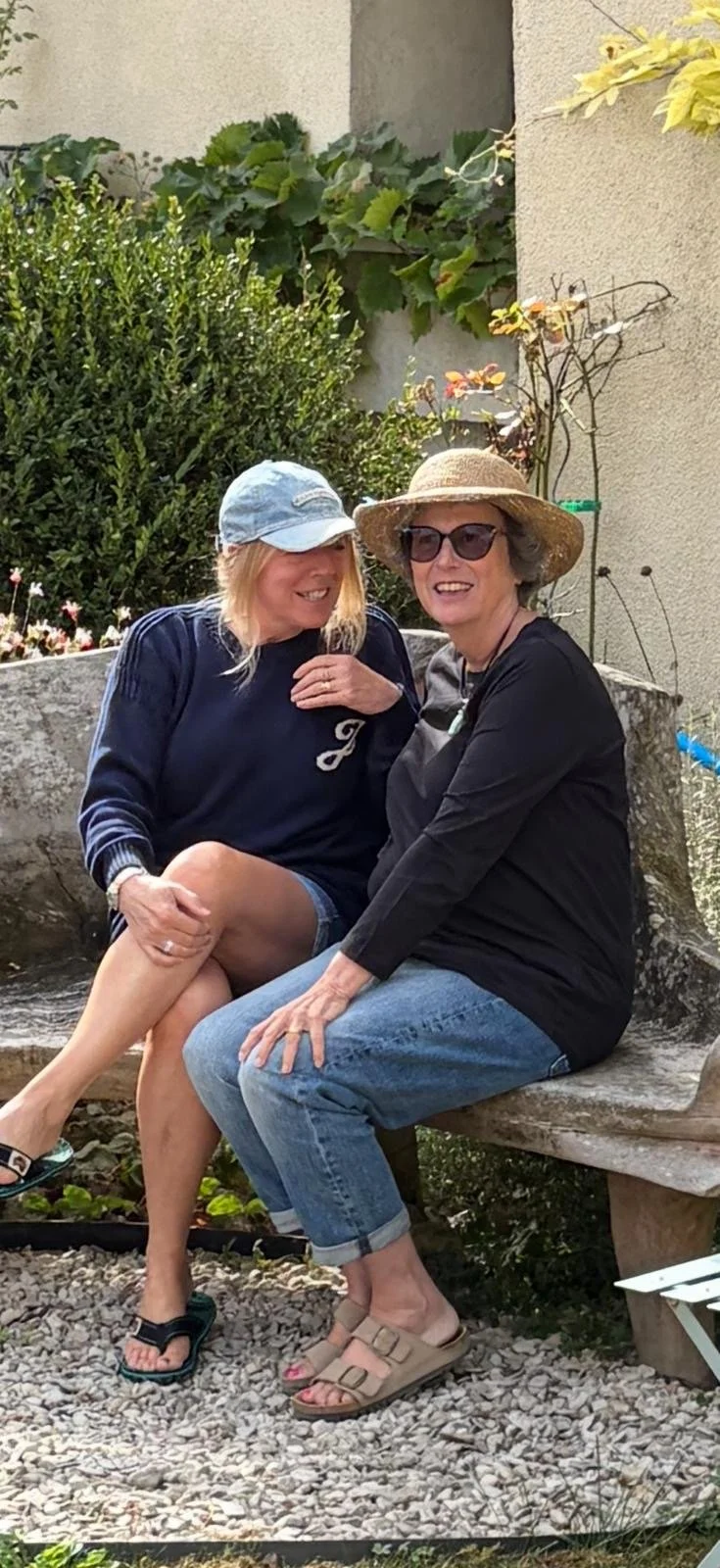
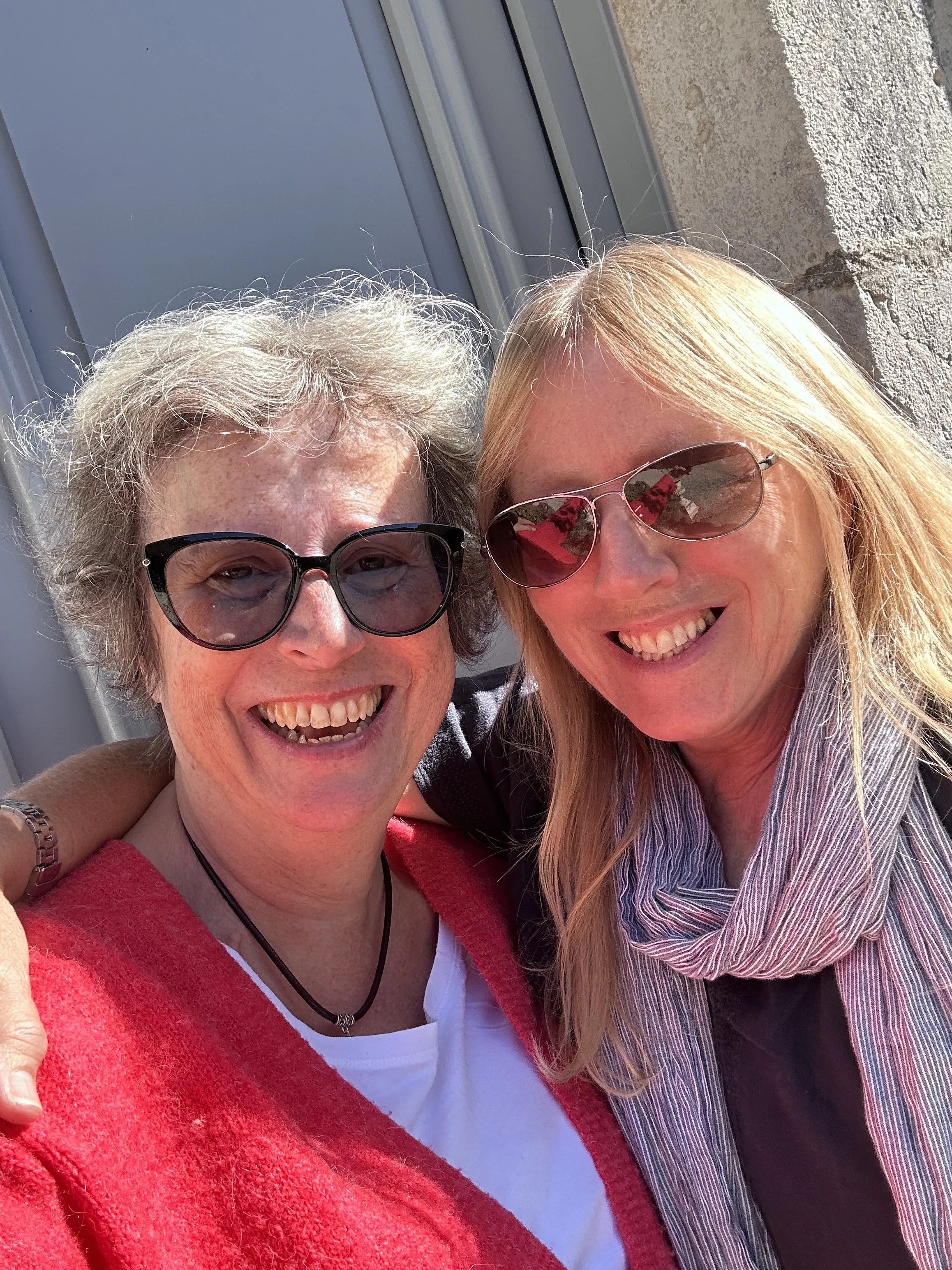
I was so excited to see my best friend from school, I couldn’t help but run to the gate when she rang the bell. We flung our arms around each other and just hugged.
Sal had brought me a beautiful old photograph of us when we were very little, we really were inseparable and have so many fond memories.
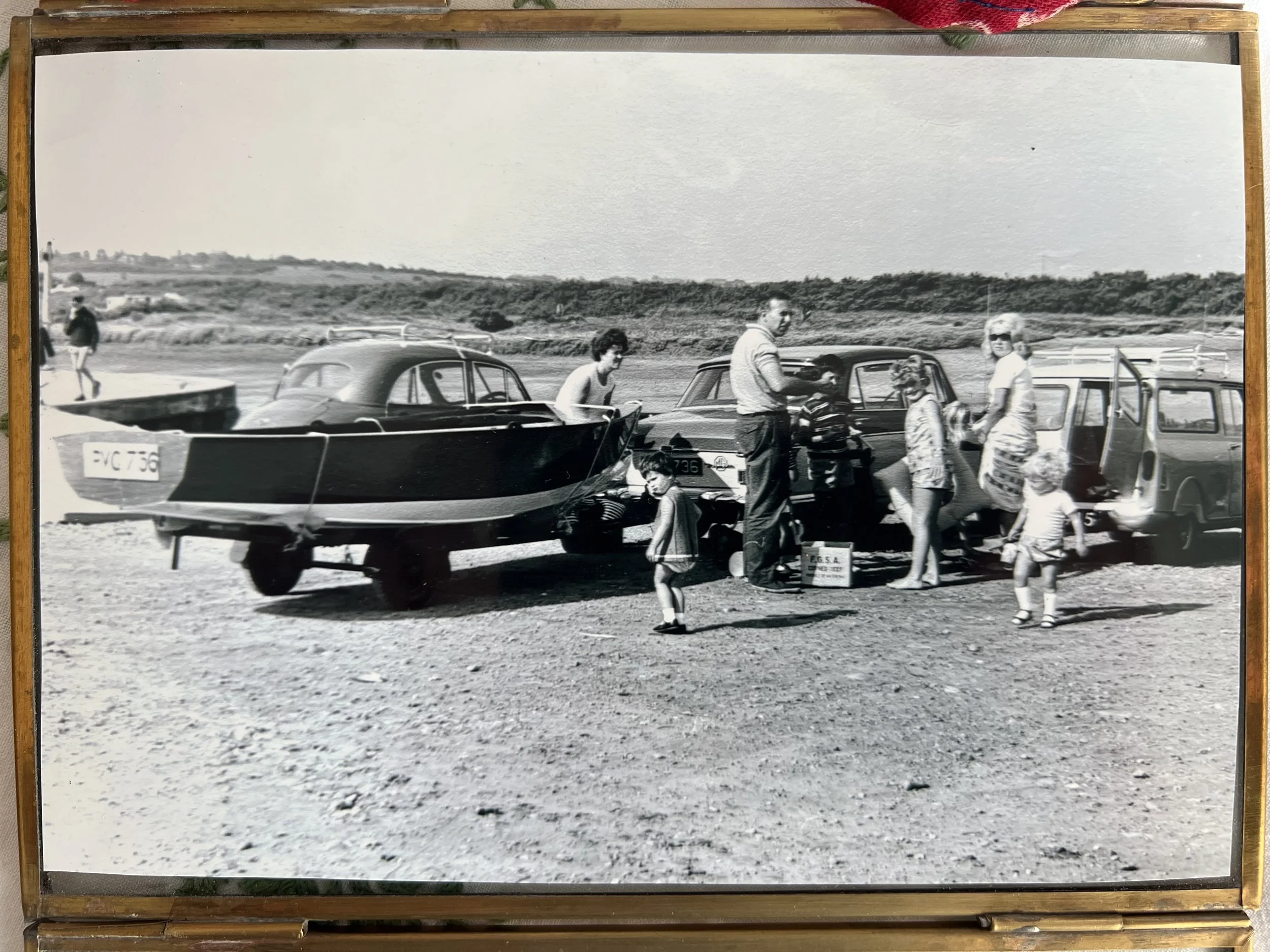
I think Brian and Andrew soon realised they would have three days of ‘can you remember when?’, followed by lots of excited chatter. We had so much to catch up on, but it felt so natural just to be together.
When we had a moment between chatting, we took a gentle walk over to a local champagne producer near us, and enjoyed a tour around their cellars followed by a tasting. It was beautiful just spending time together, and showing Sal the area where we have settled in.
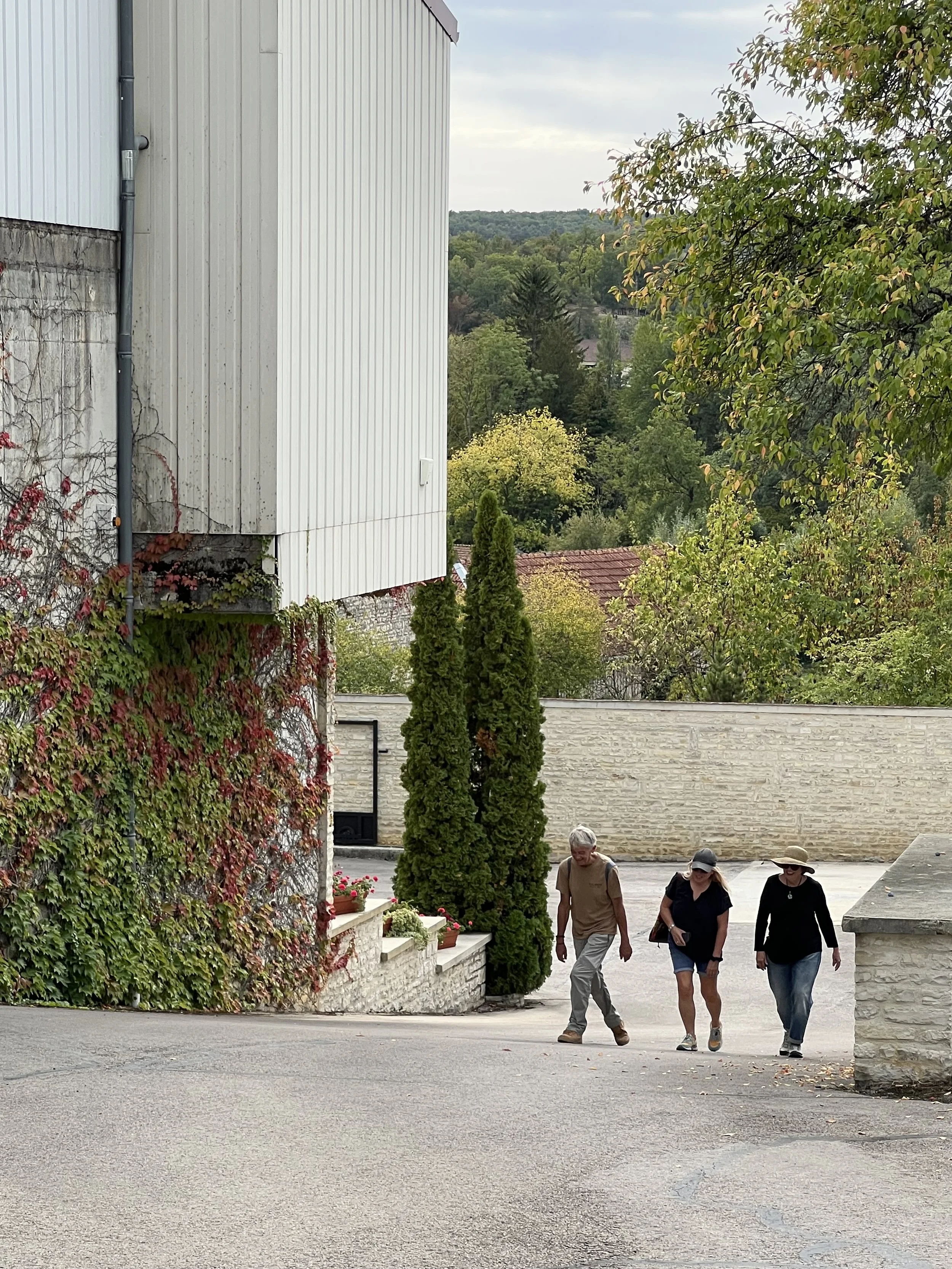
Goodbyes came way too quickly, but we know we will be sure to see each other much sooner, and carry on again where we left off.
Opéra Nancy
Our last morning in Nancy brought a little surprise!
I had wanted to try and see inside the opera hall in the main square, but when I popped in, it was all closed up to the public. So that seemed to be that, but amazingly, whilst we were having our breakfast alfresco, in Stanislav square, I noticed that an unusual number of people were going in and out of the opera building. So after brekkie, I wandered over, and found out that it had been opened specially for the end of patrimoine week-end…hoorah!
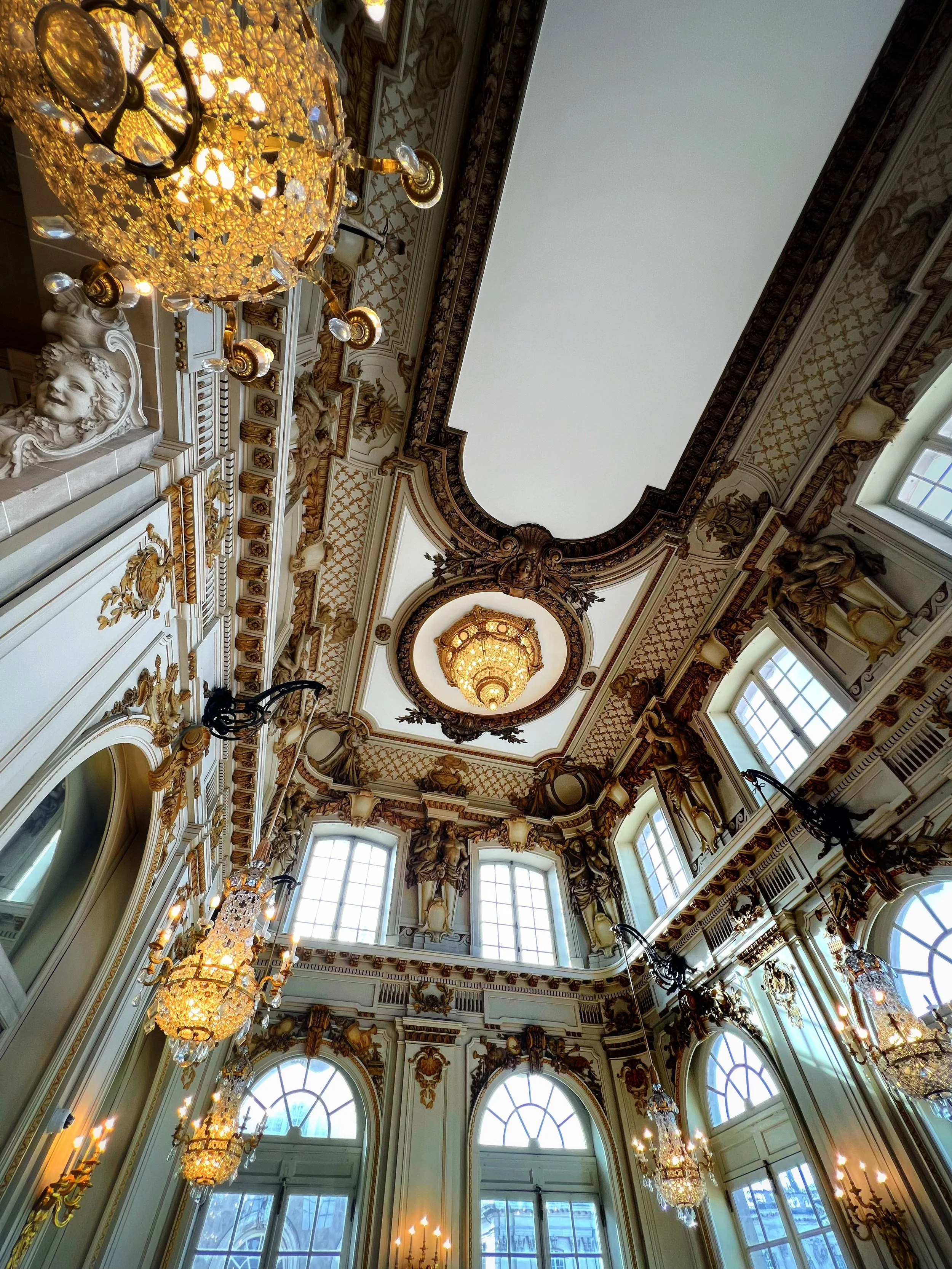
The entrance hall is pretty spectacular. It’s a double storey ceiling with the most beautiful decoration and stunning crystal chandeliers, it really sets the scene.
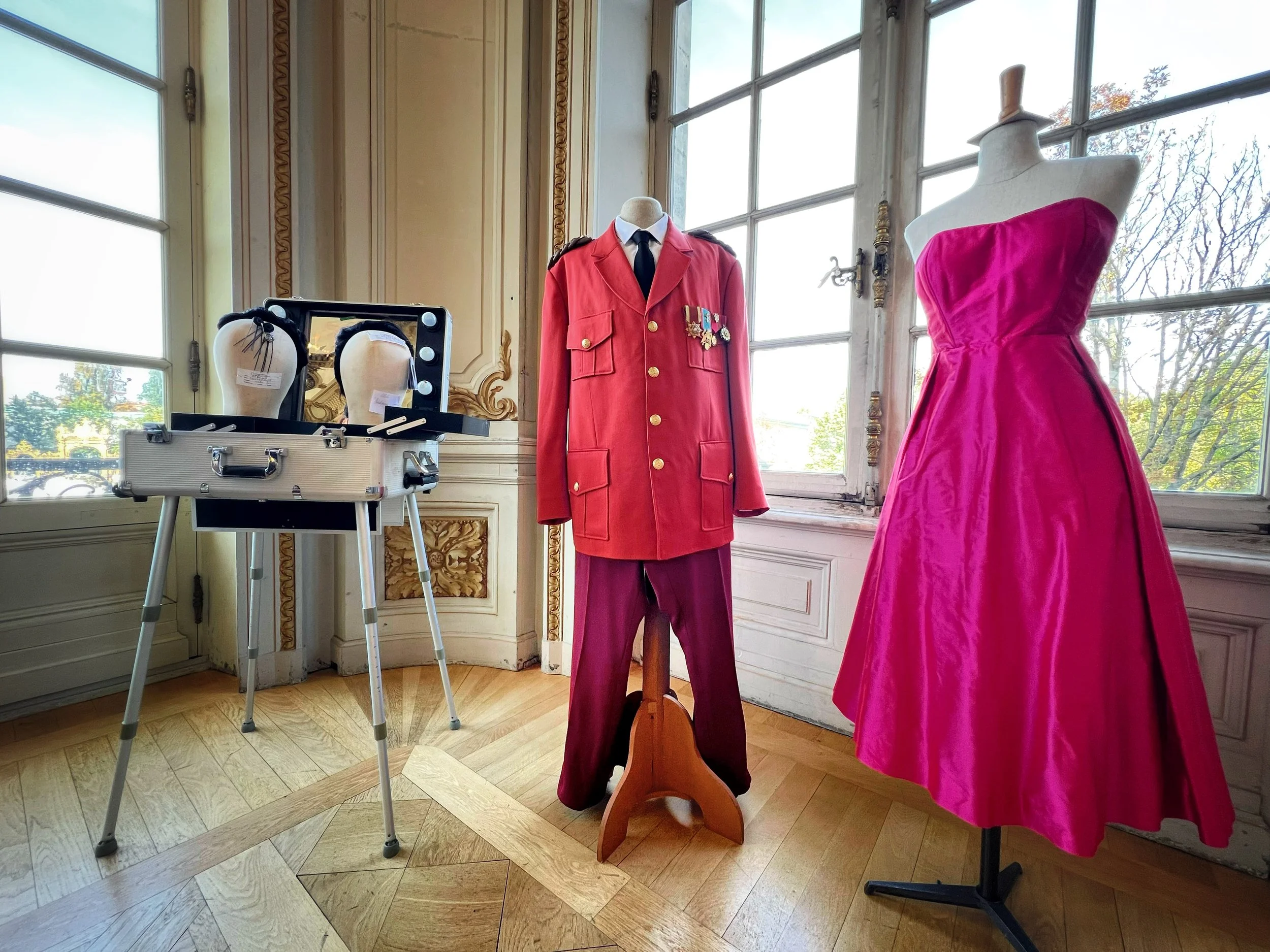
In one corner they had a little scene with a pair of costumes and a portable make-up box.
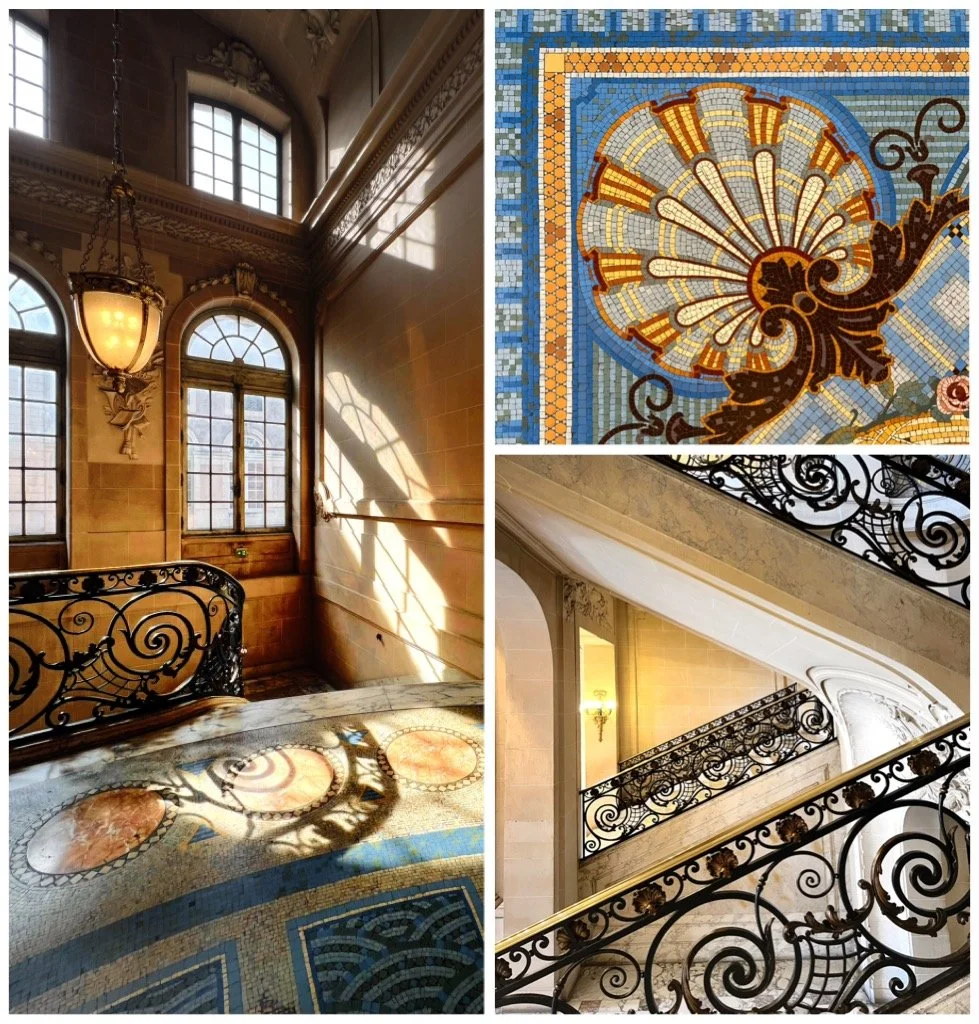
We ventured in toward the hall, with every step and turn bringing exquisite design and stunning light.
Until finally we entered the opera hall.
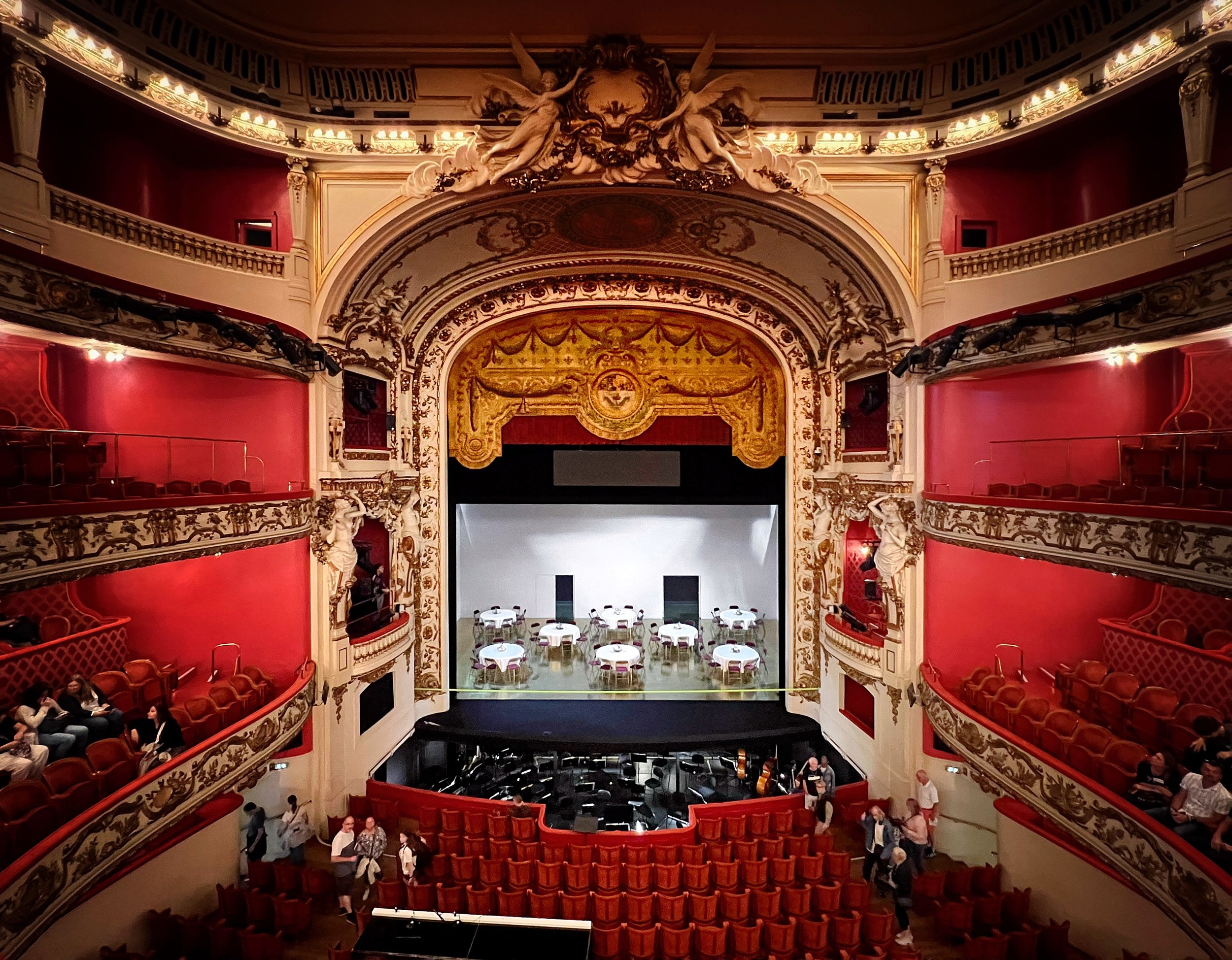
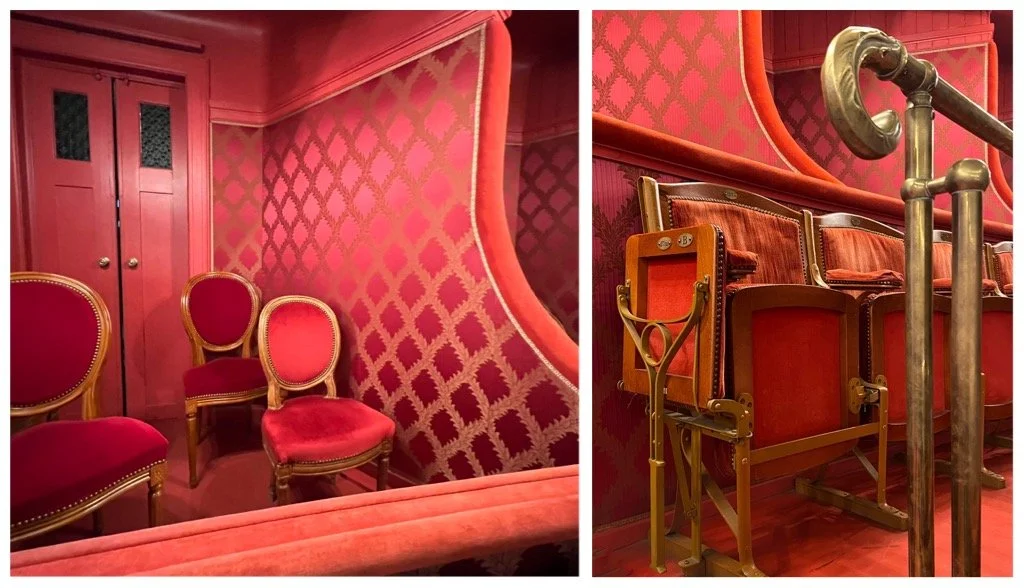
I think we may just need to come back to see an opera. Absolutely amazing venue!
The Excelsior
It was the penultimate dinner of our holiday, and we chose the Excelsior. We went to this restaurant, in Nancy, many years ago. We loved it then, and it didn’t let us down this time.
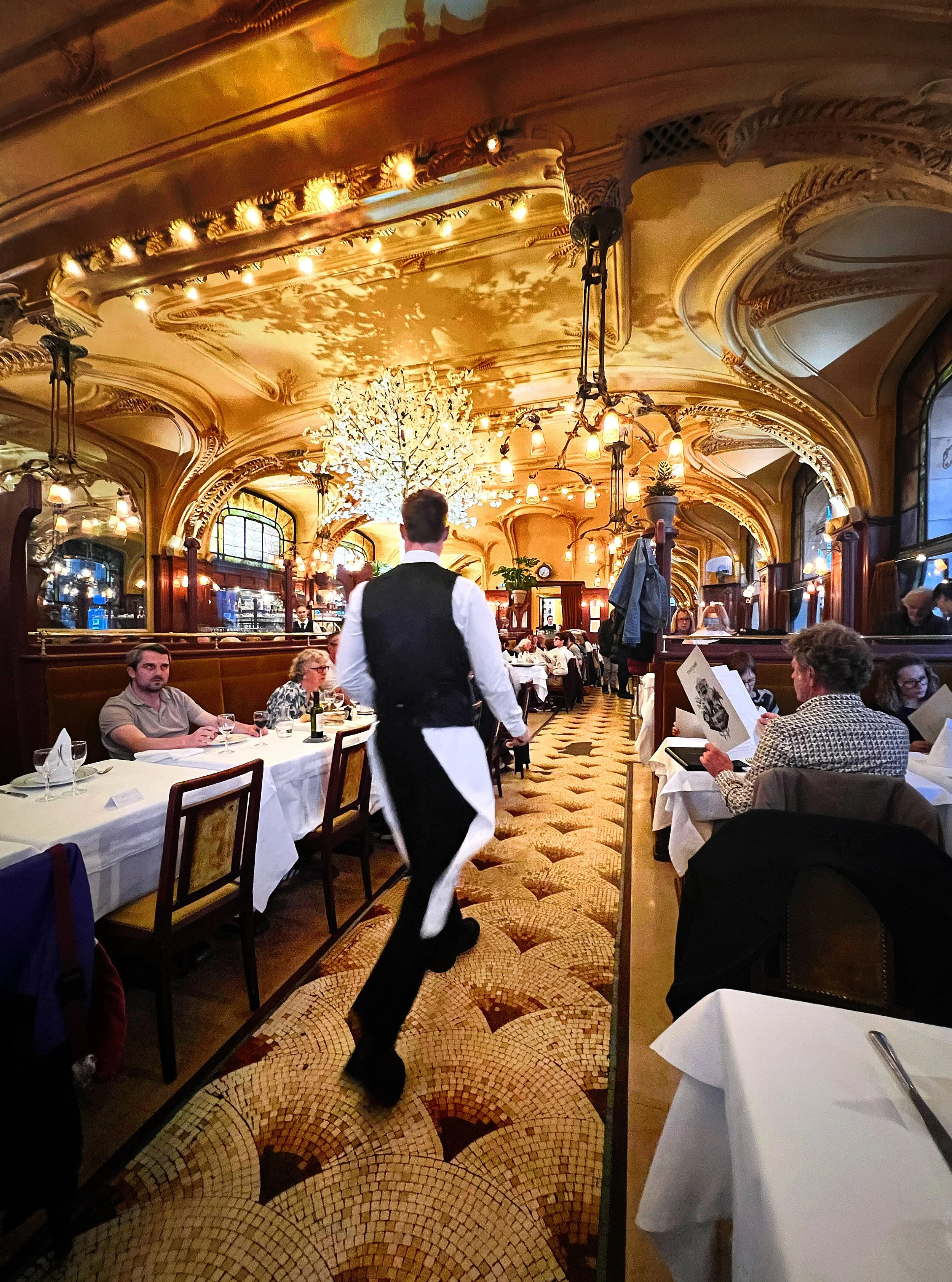
It’s very old school French, with beautiful, ornate 1920’s decor, and sumptuous modern touches to make it sparkle.
The waiters wear crisp, white shirts, smart black trousers, waistcoats, ties, and clean, nicely starched, aprons.
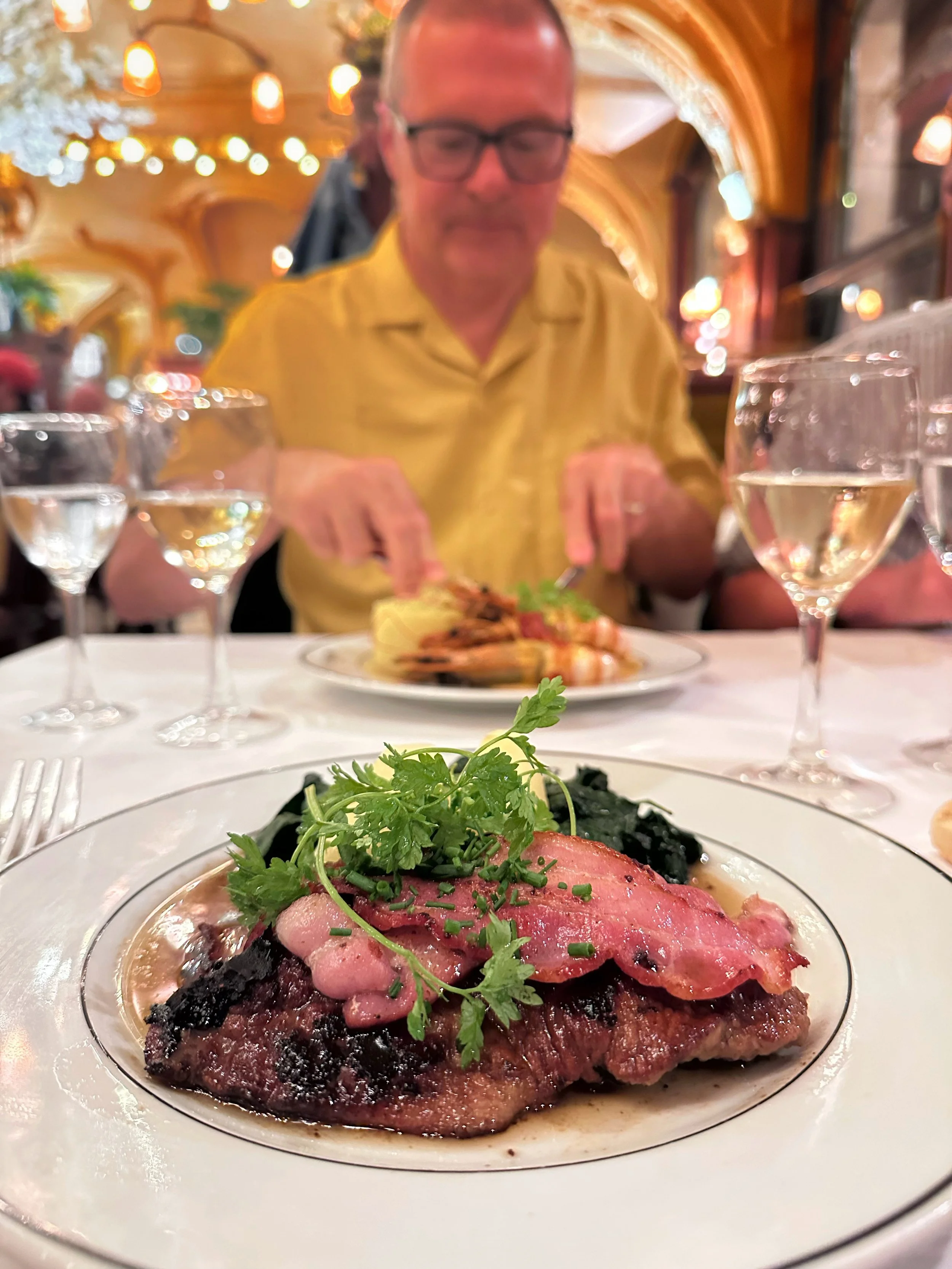
The menu is simple, with dishes such as gambas with garlic butter, and liver and bacon à l’anglais served with spinach and unctuous, buttery creamed potatoes.
We rounded our evening off with a rather spectacular, flaming crêpe Suzette. As you probably know by now, it’s such a favourite of mine — oranges, butter, and Grand Marnier, all brought together as a citrusy sweet sauce to warm the crêpes. Then served simply as is, with no cream.
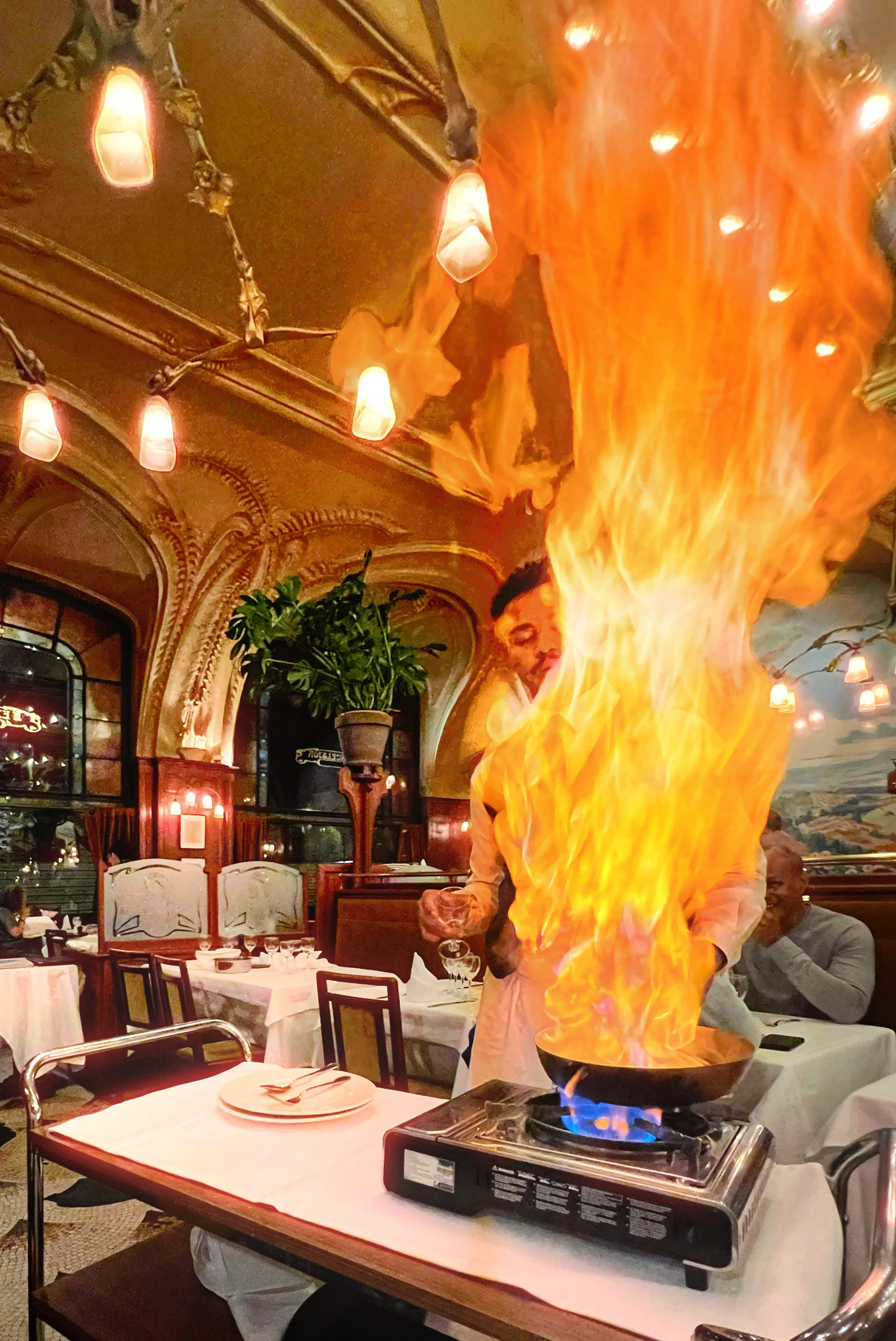
Another fabulous evening.
Catching up
Apologies, I’ve not been focused on my blogs this last few days. I’ve been a little distracted after returning from our holiday. My very dear school friend, Sally, was arriving, and we just had a few little jobs we wanted to do before she got here.
I haven’t seen Sal for over 40 years, so I was very excited to catch up.
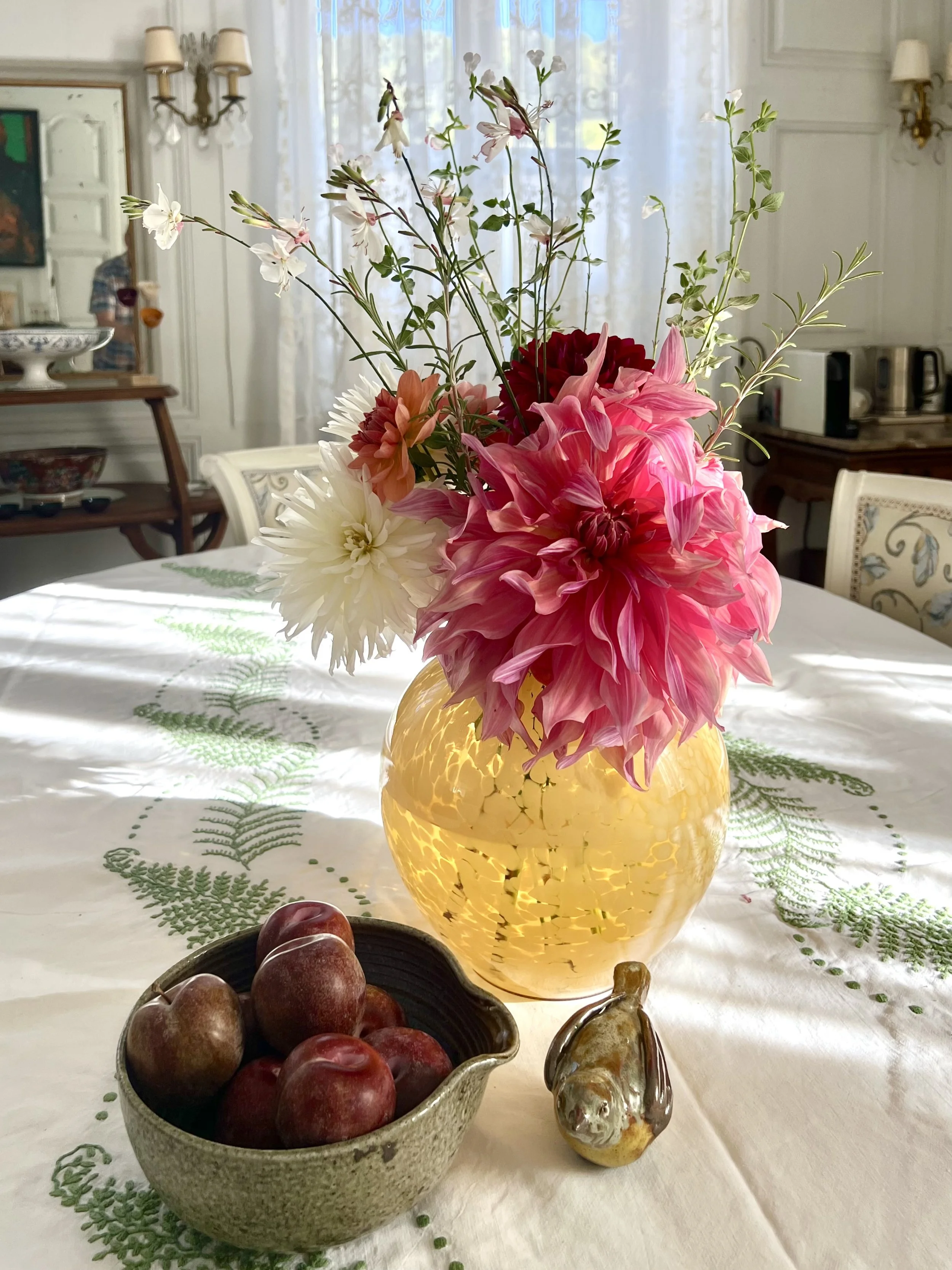
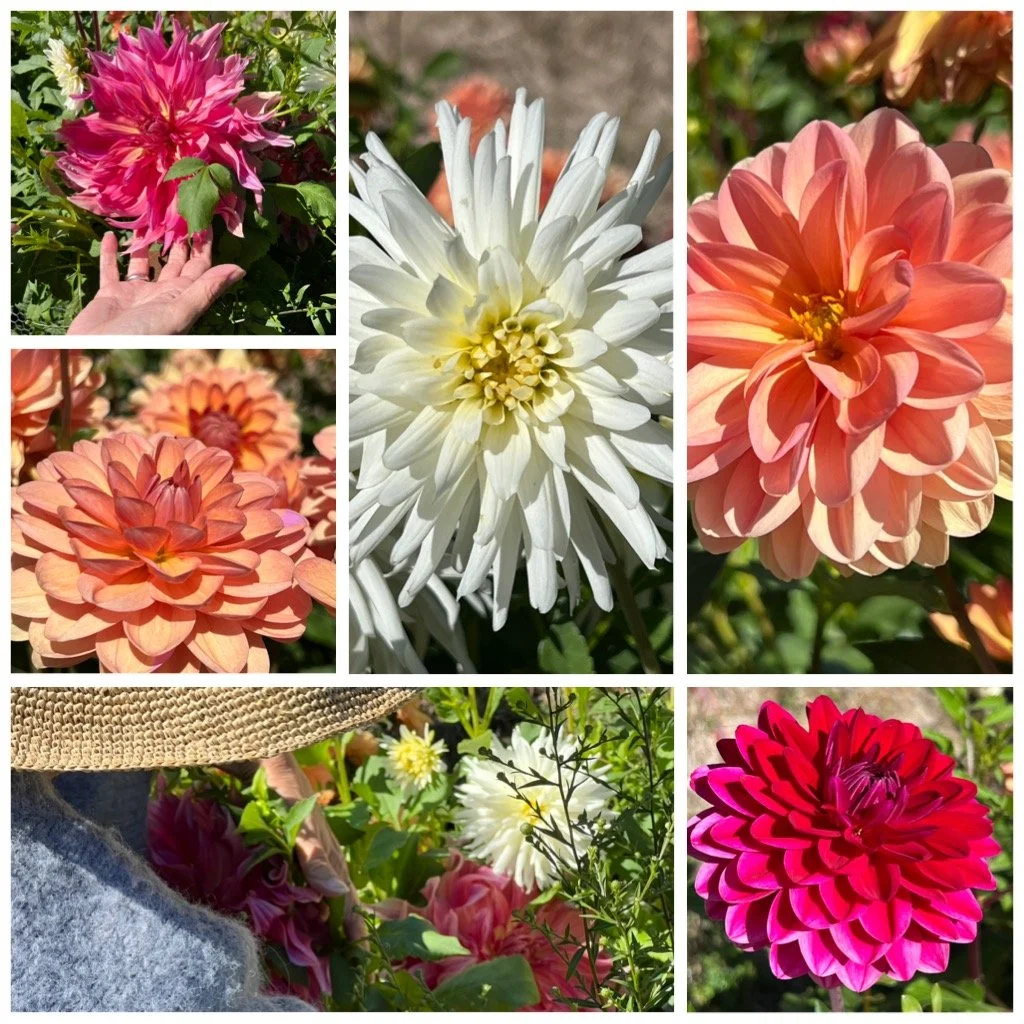
All the work is done though, and I’m happy that the house is now ready. I’ve picked some dahlias to arrange around the house, and we’ve been shopping for some delicious local delights.
I can now put up the last two holiday blogs, so you’ll be able to read them very shortly.
École de Nancy
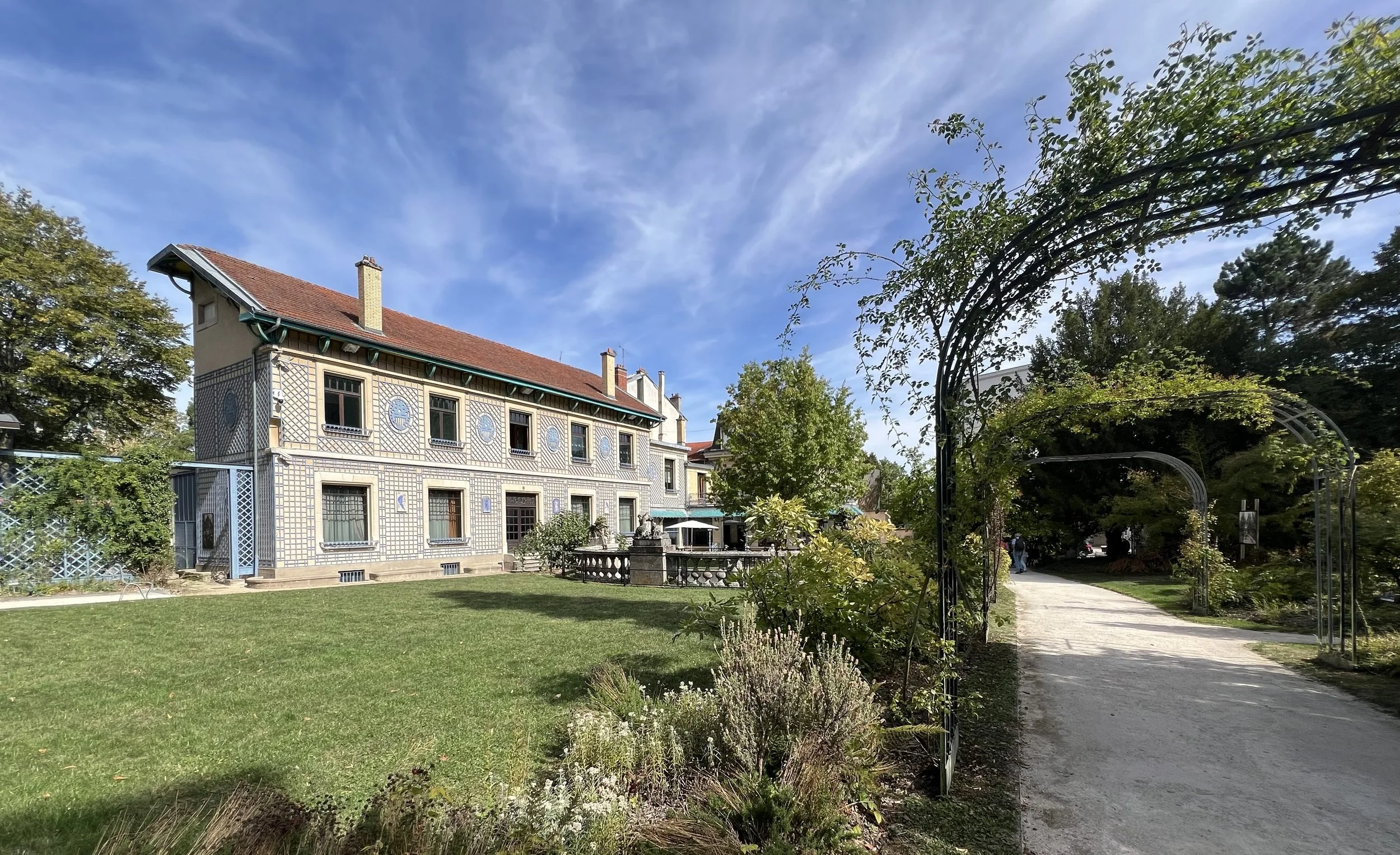
We’ve visited the école de Nancy before, but it’s such a gorgeous museum, and I would never have remembered everything we’d seen previously.
We made the short 10 minute walk from the Villa to the museum in the shade of the surrounding buildings.
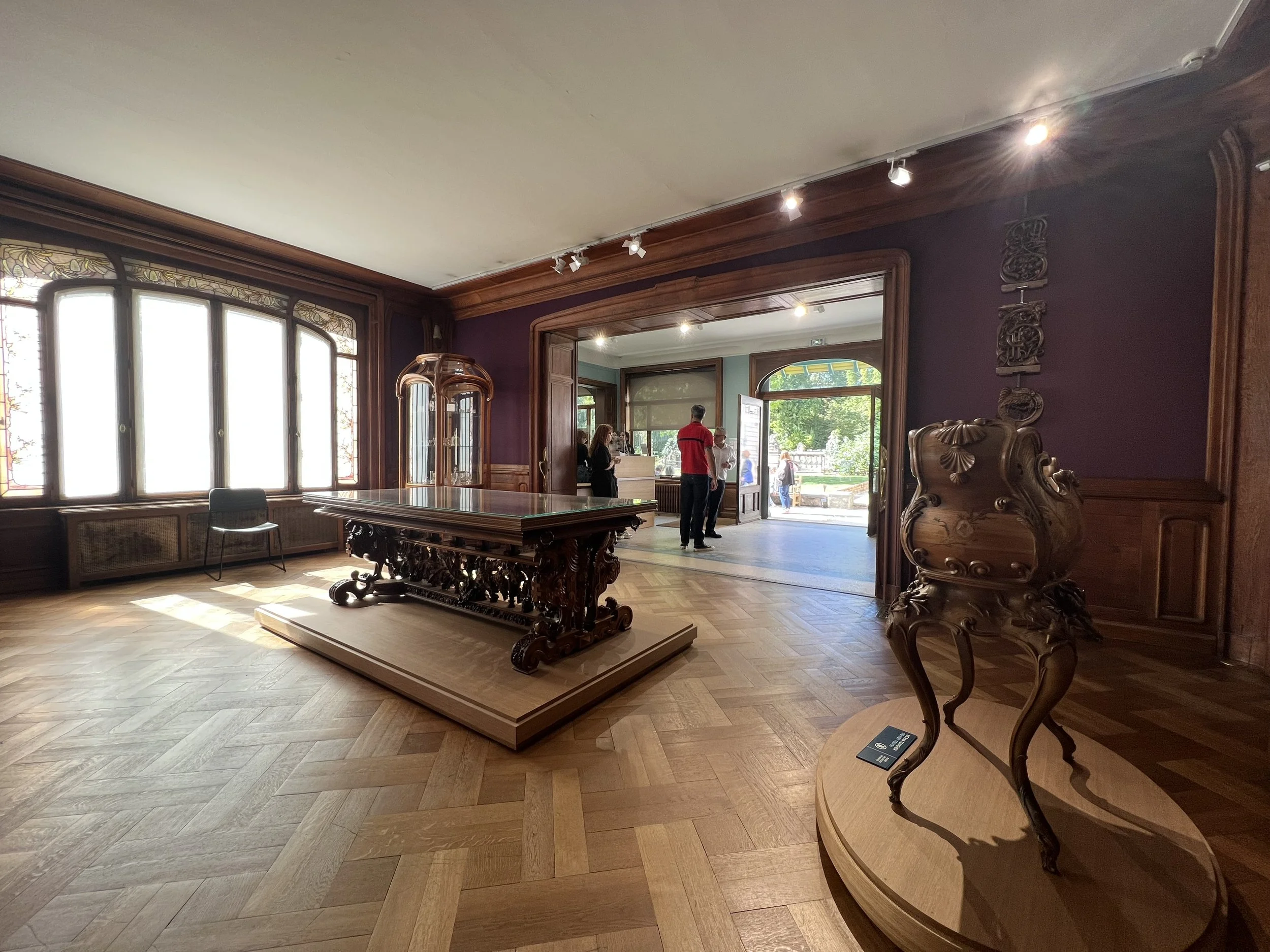
The rather simple looking building belies its contents, and right from the entrance you know you’re in for a treat.
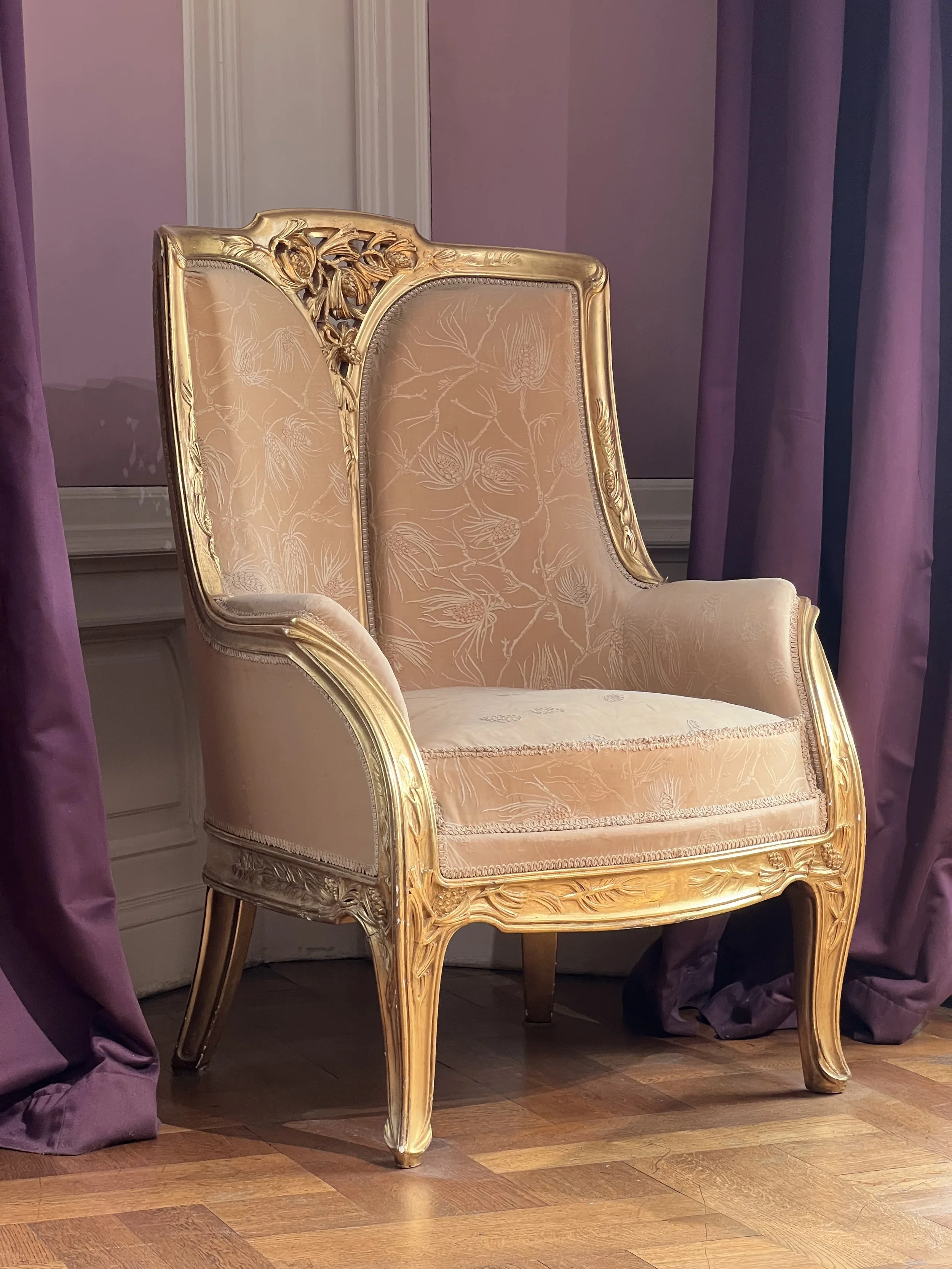
It’s filled with glorious, luxurious furniture, fittings, tableware, and ornaments, all from the early 1900’s.
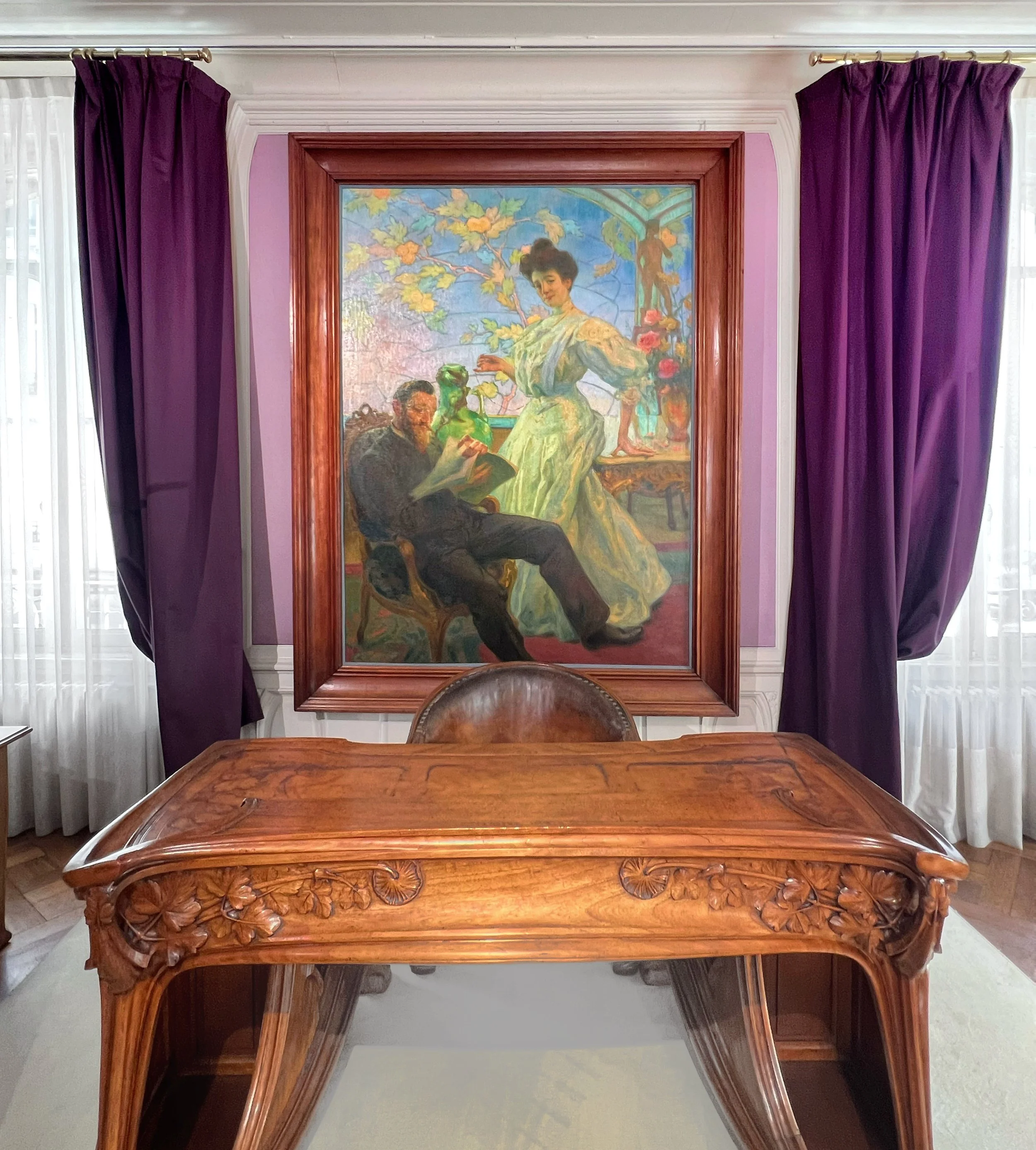
I love the looseness of the paintings and the curves of the carpentry.
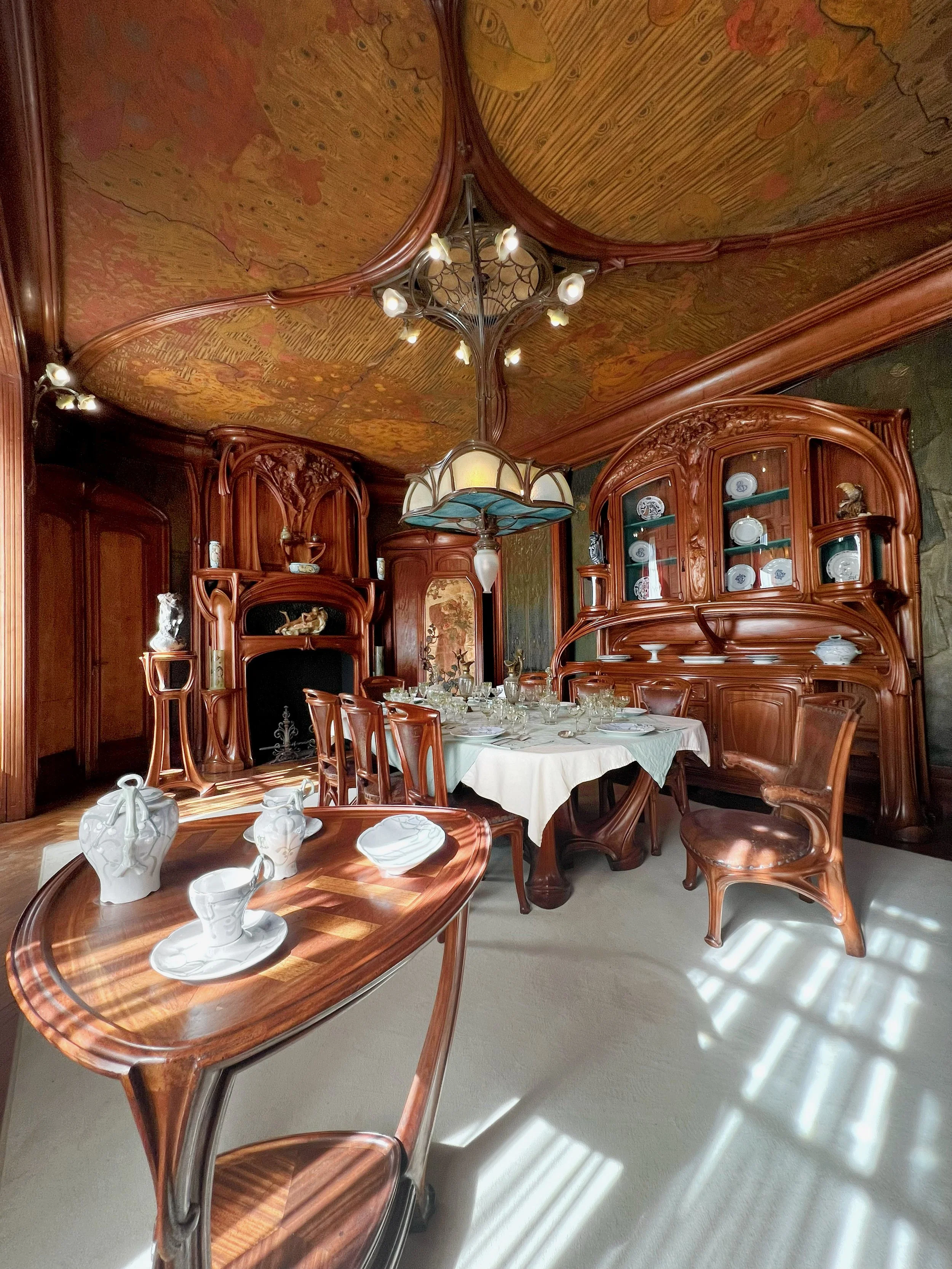
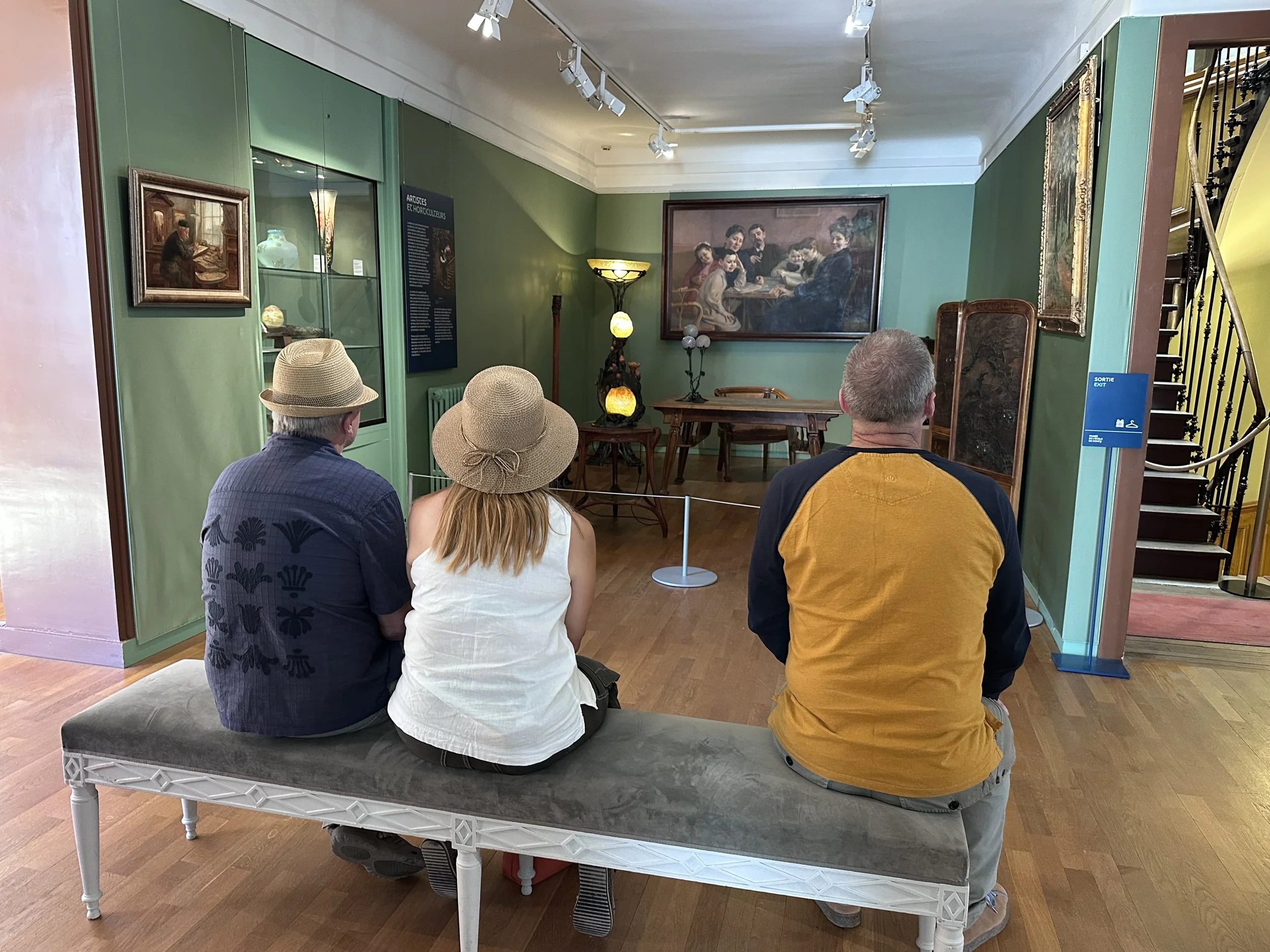
This salle à manger oozes opulence, but has a grounding from the flowing style of the room. I think the heavy use of wood, and the way each piece of furniture seems to grow from each other, helps create this steady, natural form.
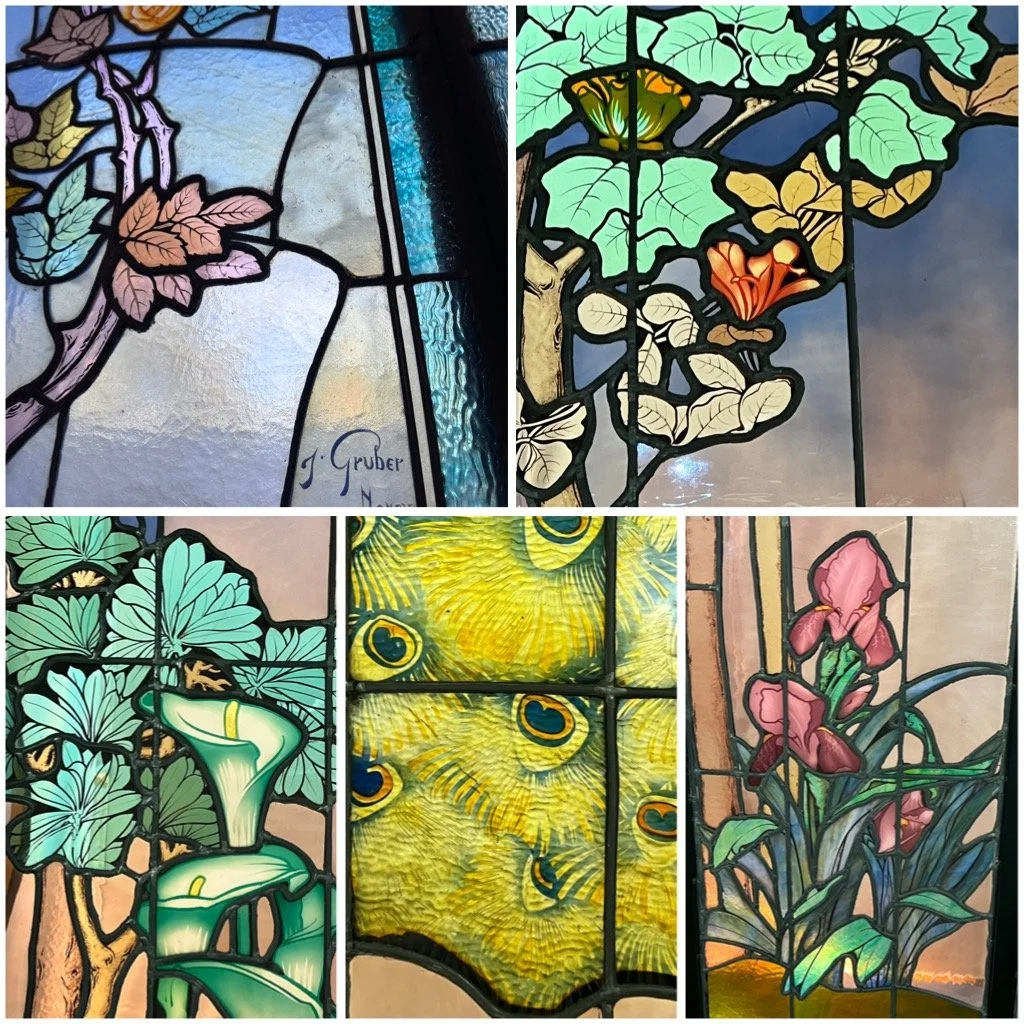
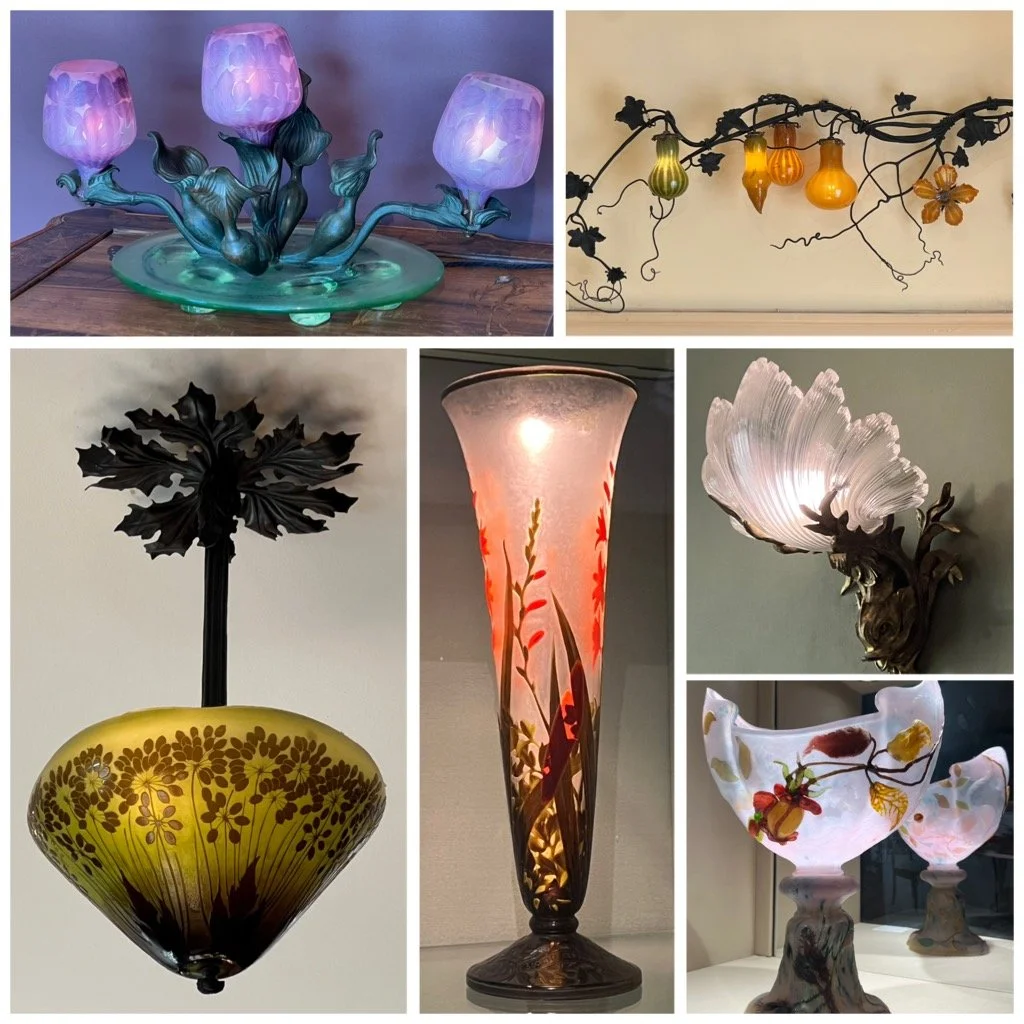
The use of nature, that can be seen throughout the museum, is most evident in the stained glass and glassware. The colours are vivid, and the designs truly bring the outside in.
So much to absorb. It was good to take a quiet moment to reflect on what we’d seen
Villa Majorelle
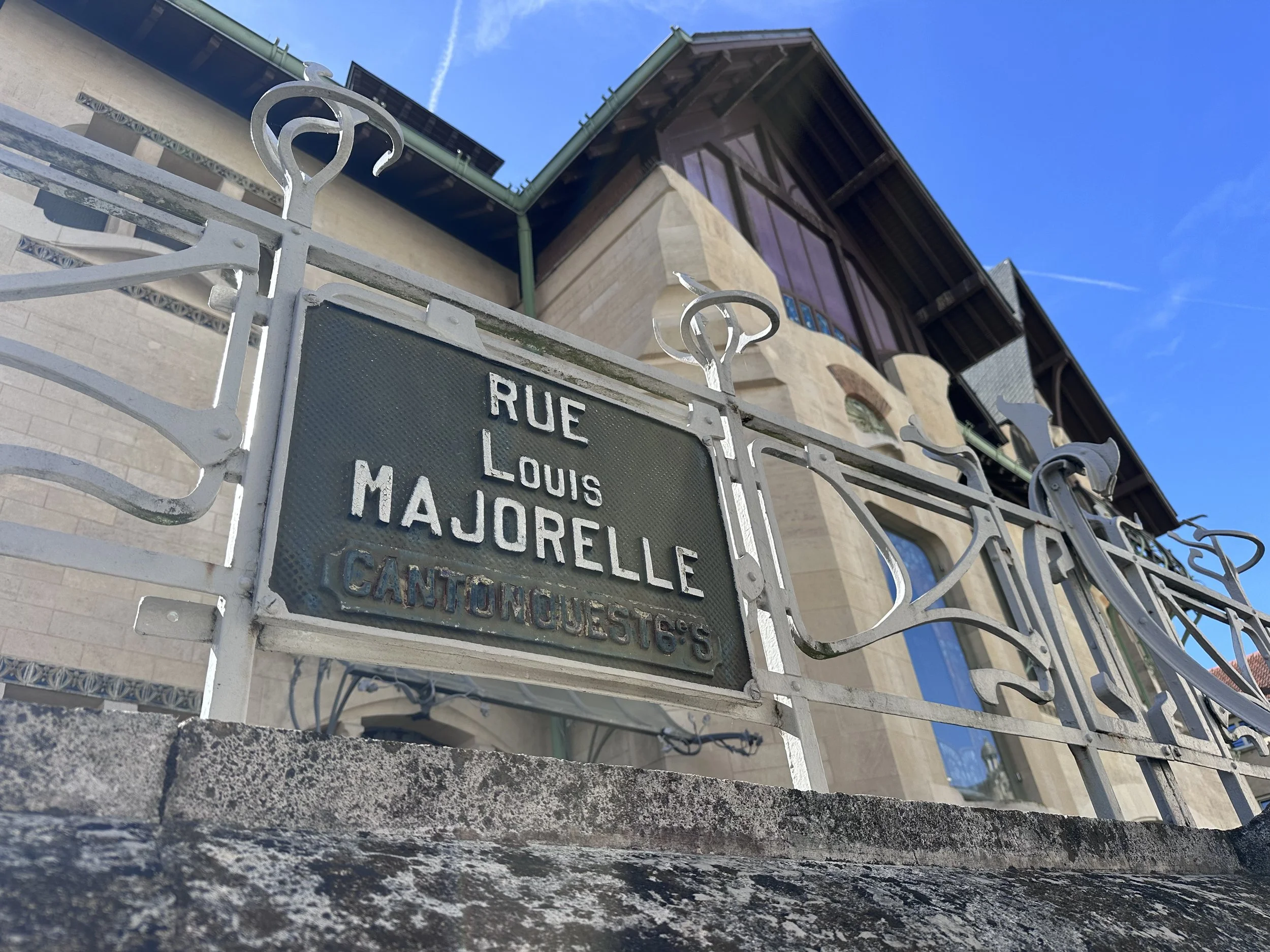
I’d wanted to visit La Villa Majorelle for some time. When we’d been to Nancy before it wasn’t open, but this time we were here during Patrimoine weekend, which meant it was open all weekend to the public, for free.
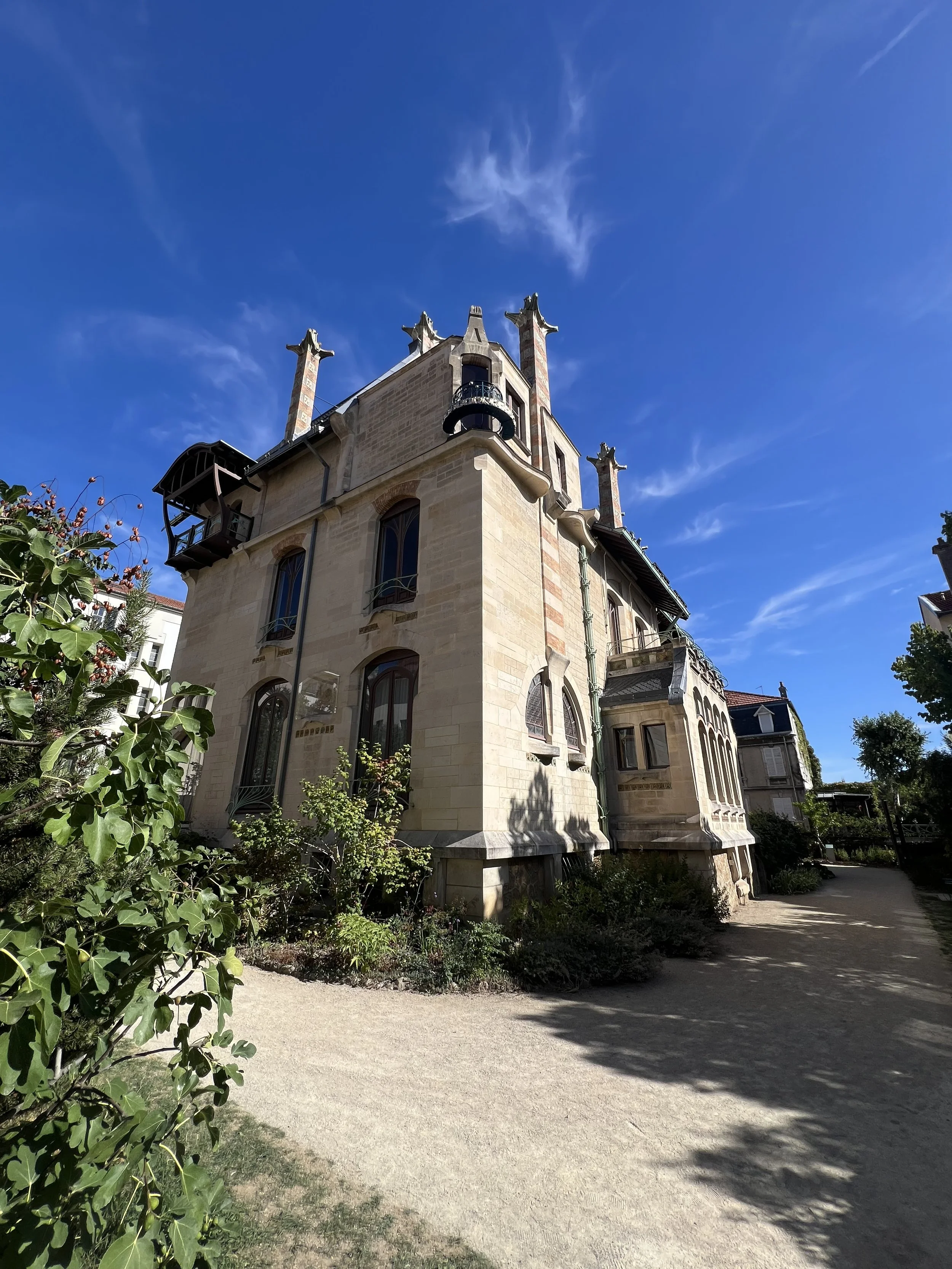
It was a private house designed by the architect Henri Sauvage, and built around 1901–1902 for Louis Majorelle. It has recently undergone a meticulous and respectful renovation, restoring the house back to how it was when Louis Majorelle and his family lived there.
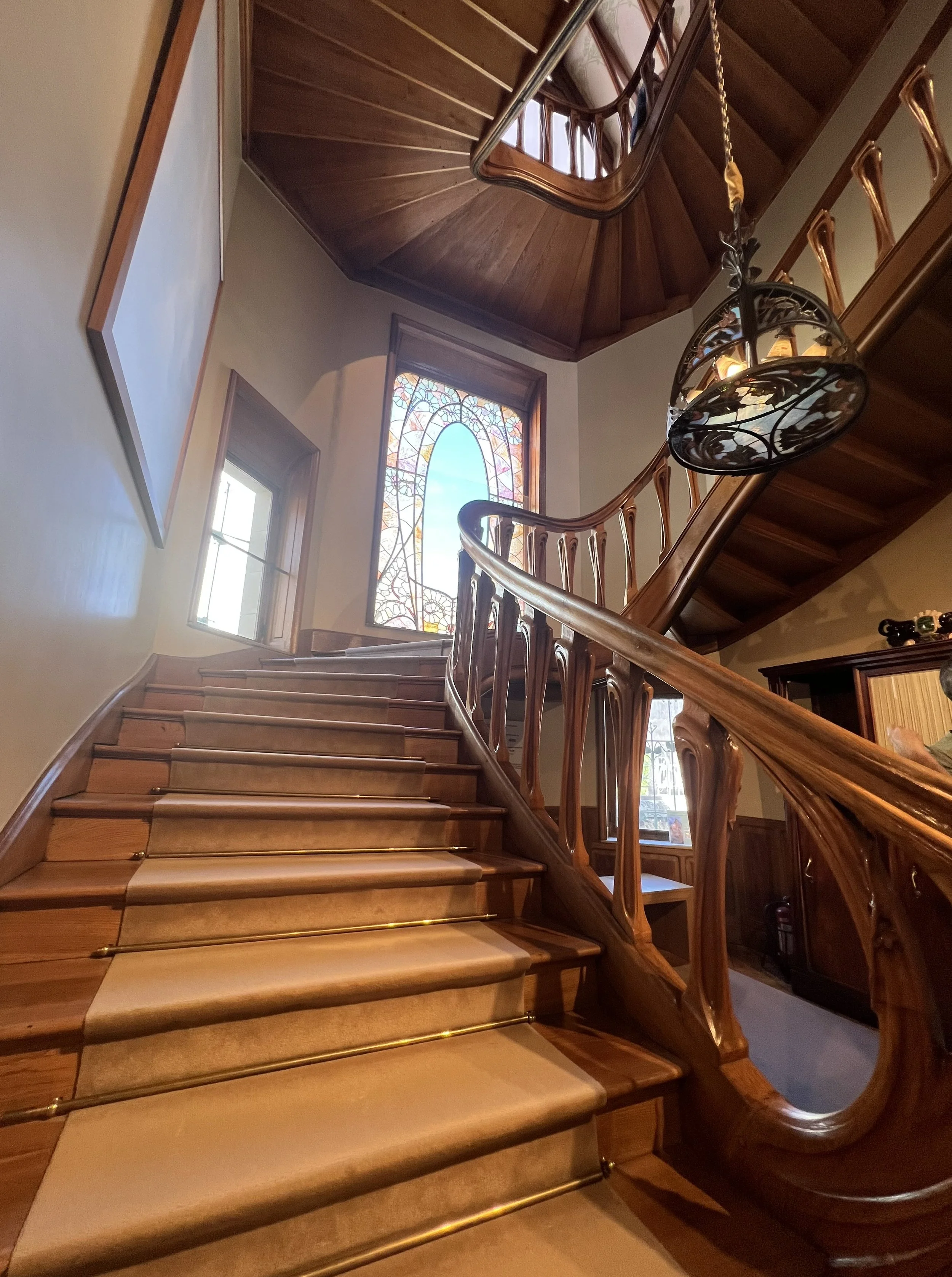
The Villa Majorelle was the first entirely Art nouveau house to be built in Nancy. It was a perfect collaboration between Parisian and Nancy-based artists, which I would imagine at the time was probably quite difficult to achieve.
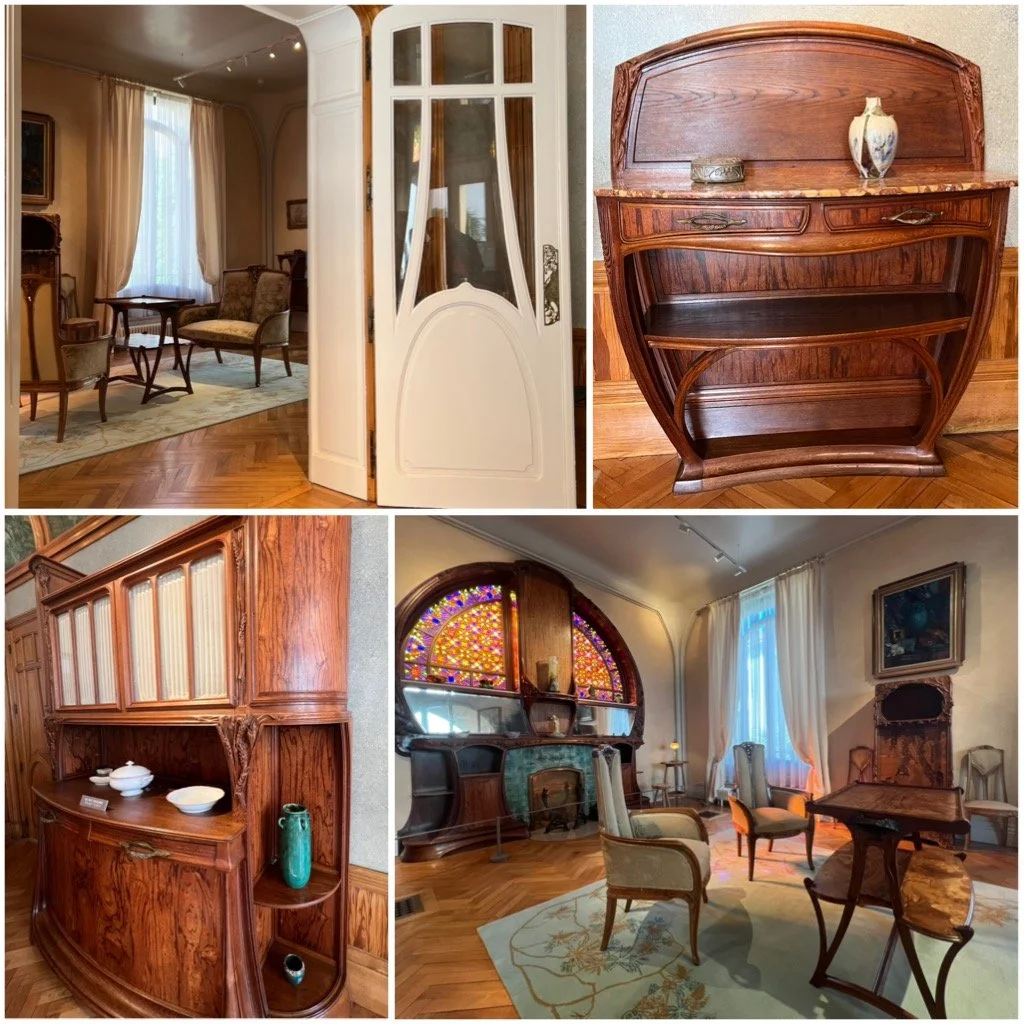
Alongside Henri Sauvage, the architect, other specialists were engaged, such as Jacques Gruber for the stained glass, Alexandre Bigot for the stonewares, and Francis Jourdain and Henri Royer for the paintings.
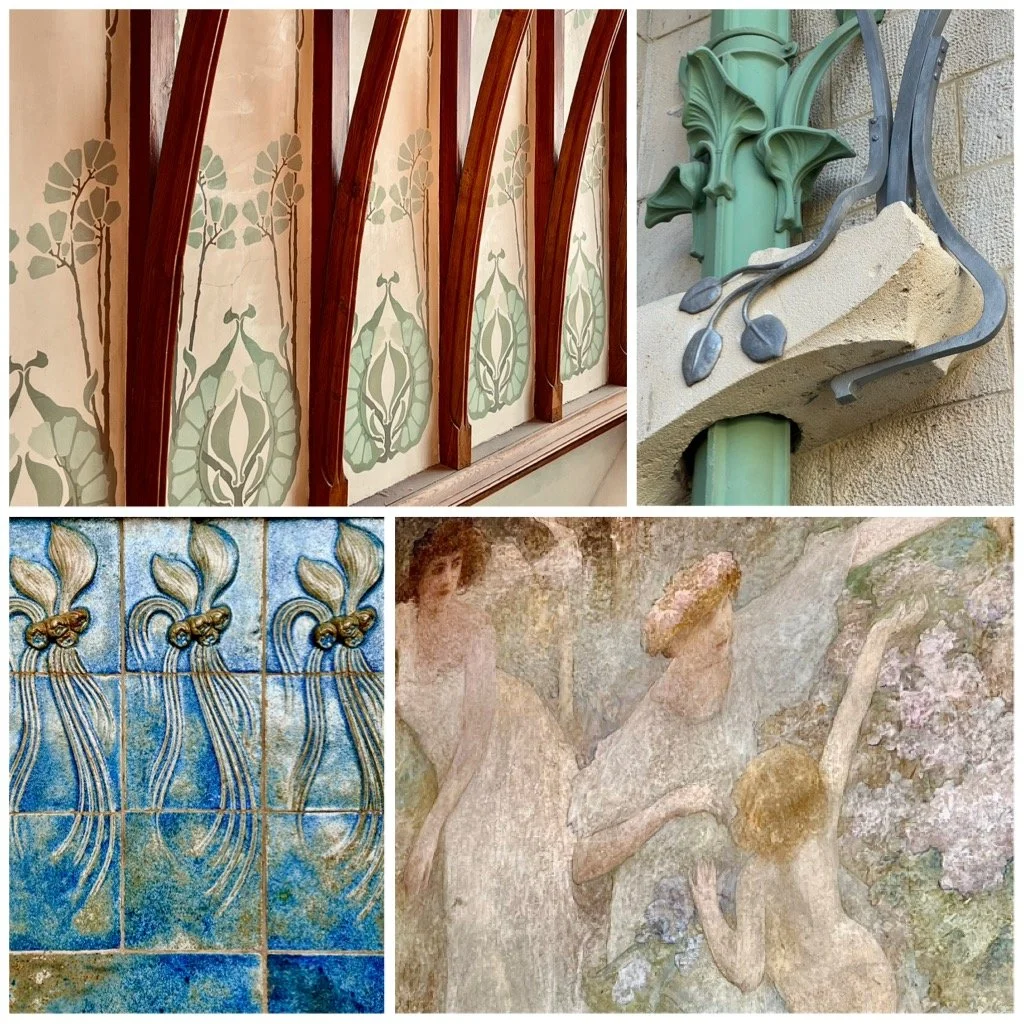
And of course, Louis Majorelle himself for the ironwork, woodwork and furniture.
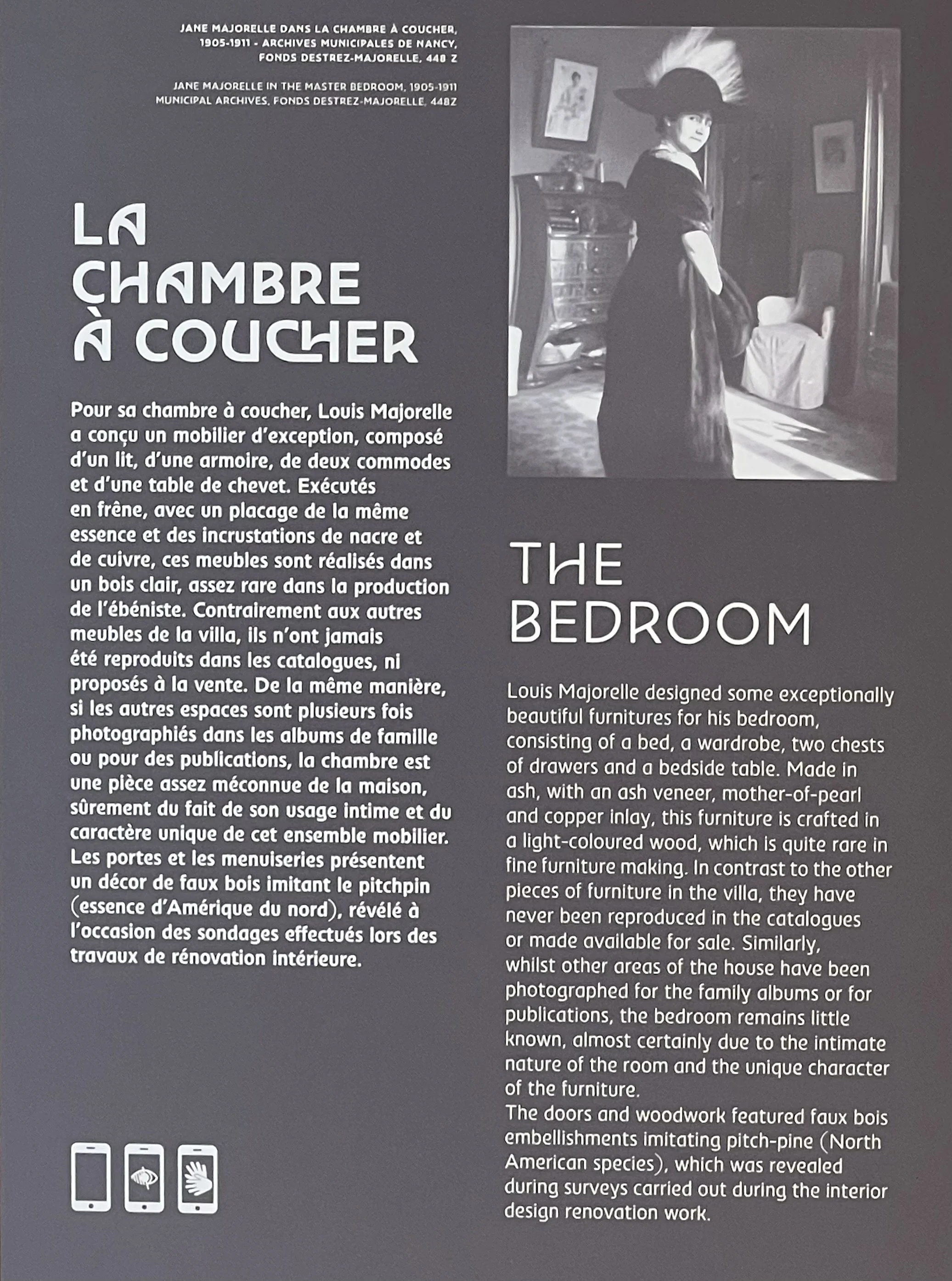
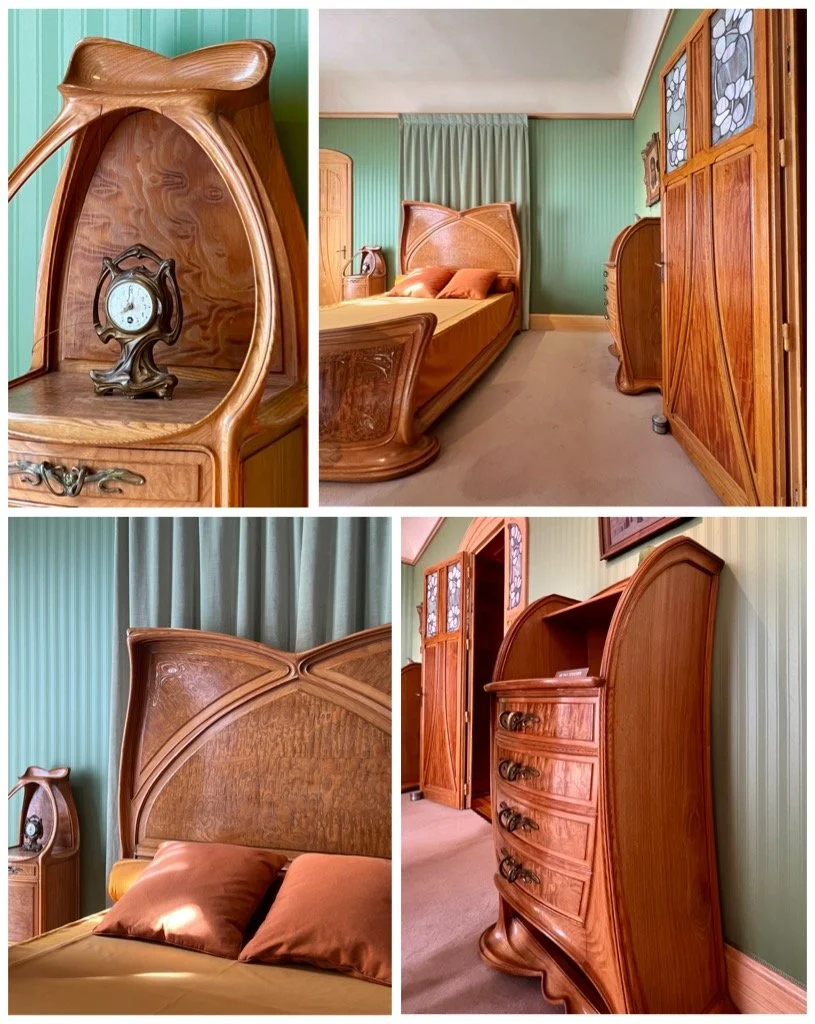
They are continuing with the renovations of the upper floors, but the house will remain open to the public during this time.
Such a worthwhile visit, I’m so glad we got to see it, as it’s such an emblematic part of Nancy's Art nouveau period, all wrapped up in one glorious building.
Plozza
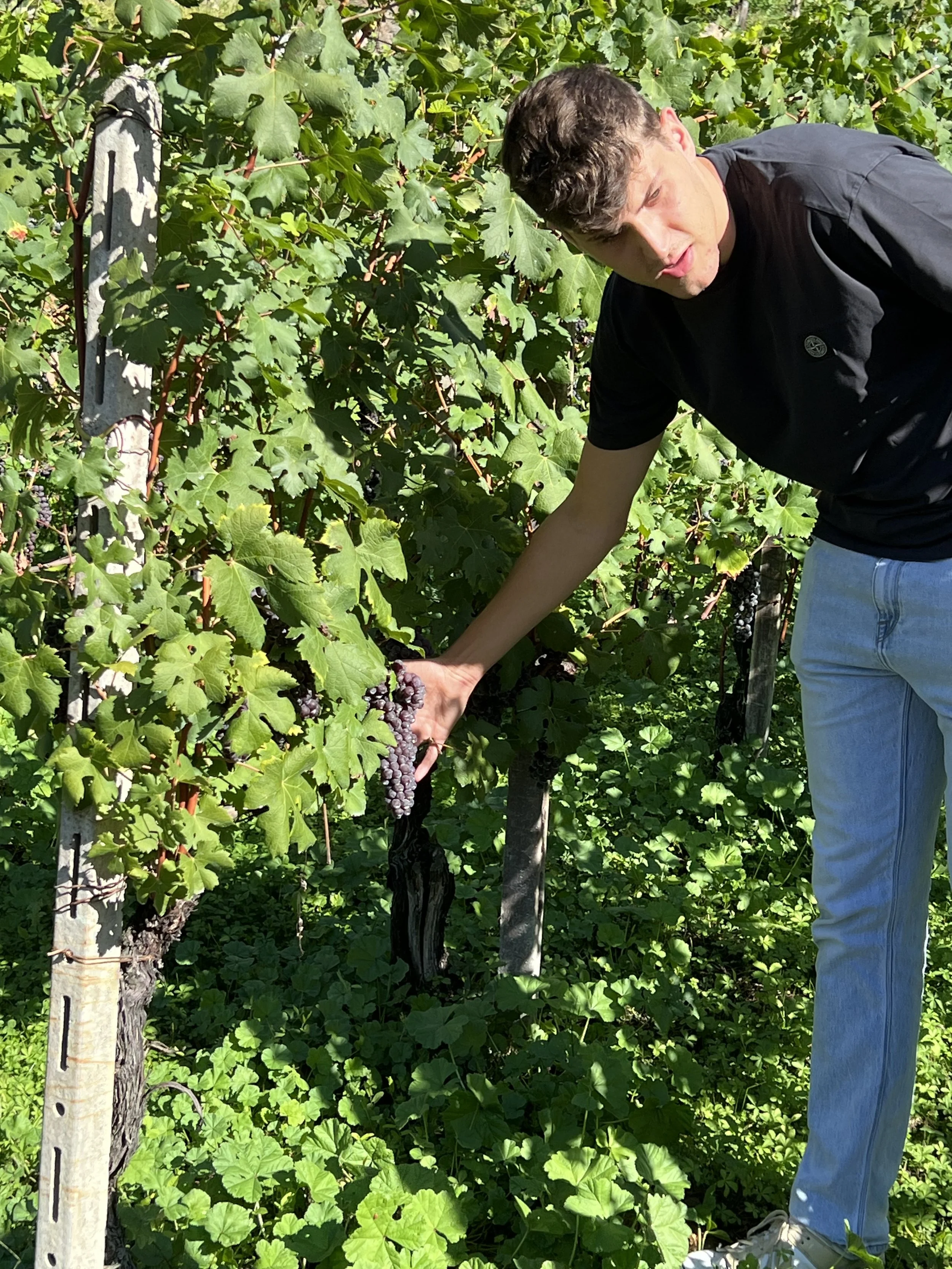
Despite its altitude (approx. 440m), and shelter from the encircling mountains, Tirano is a successful wine producing region. The area under vineyards, called Valtellina, is the highest wine producing area in this part of Italy, and is famous for its terracing, which is accredited to the Romans, and is now recognised as an UNESCO world heritage site. The grapes grown here are mainly Nebbiolo, tight bunched, intense, black grapes with a dusty white ‘bloom’ on their skins. The bloom is a waxy coating produced naturally by the grapes themselves, and it protects them from environmental conditions and fungal attacks, amongst other things.
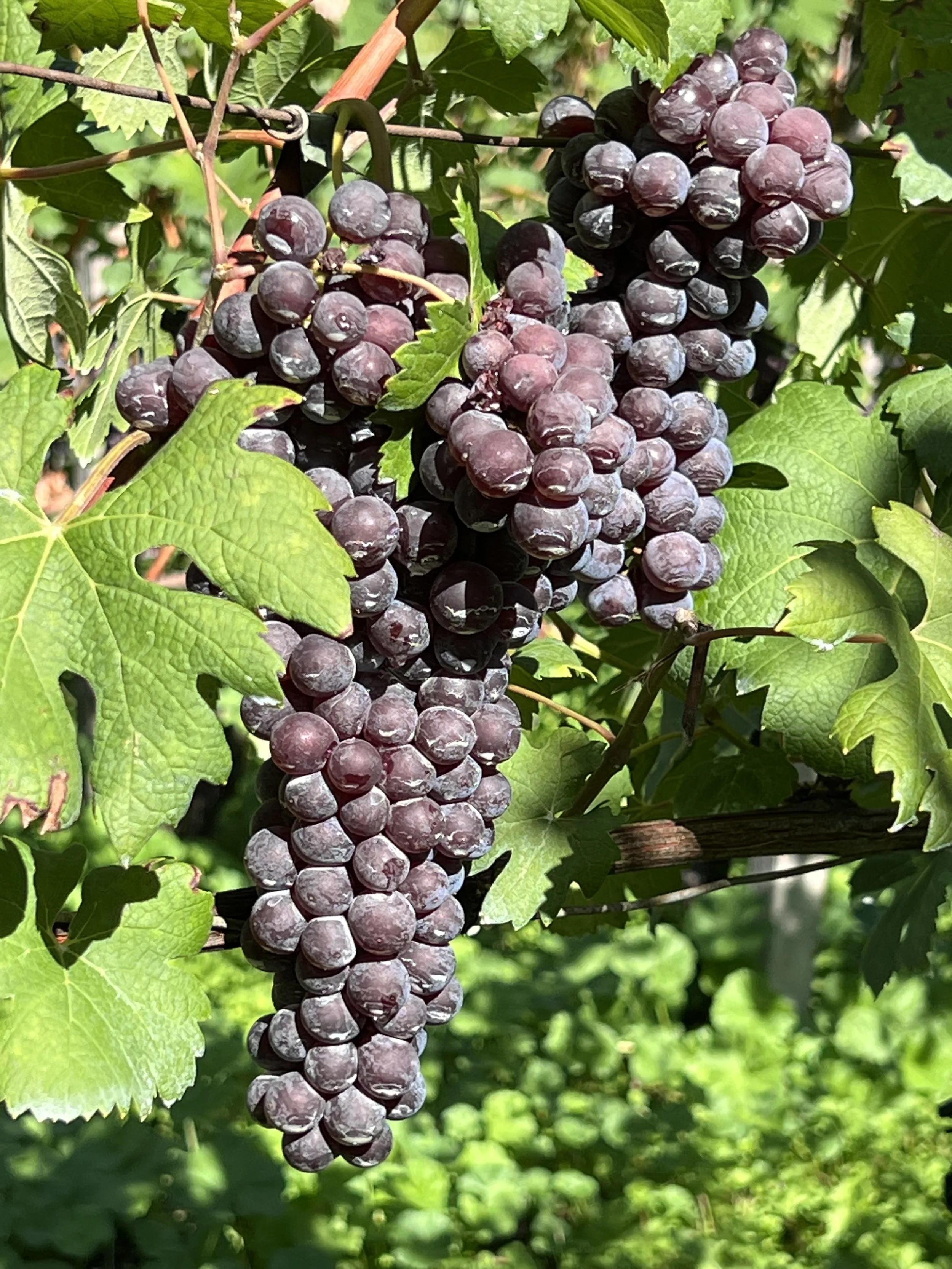
Here in Tirano the Nebbiolo grape is famed for its use in the production of a very particular wine, Sforzato. And it’s what we came to Plozza, the largest producer of it here, to taste.
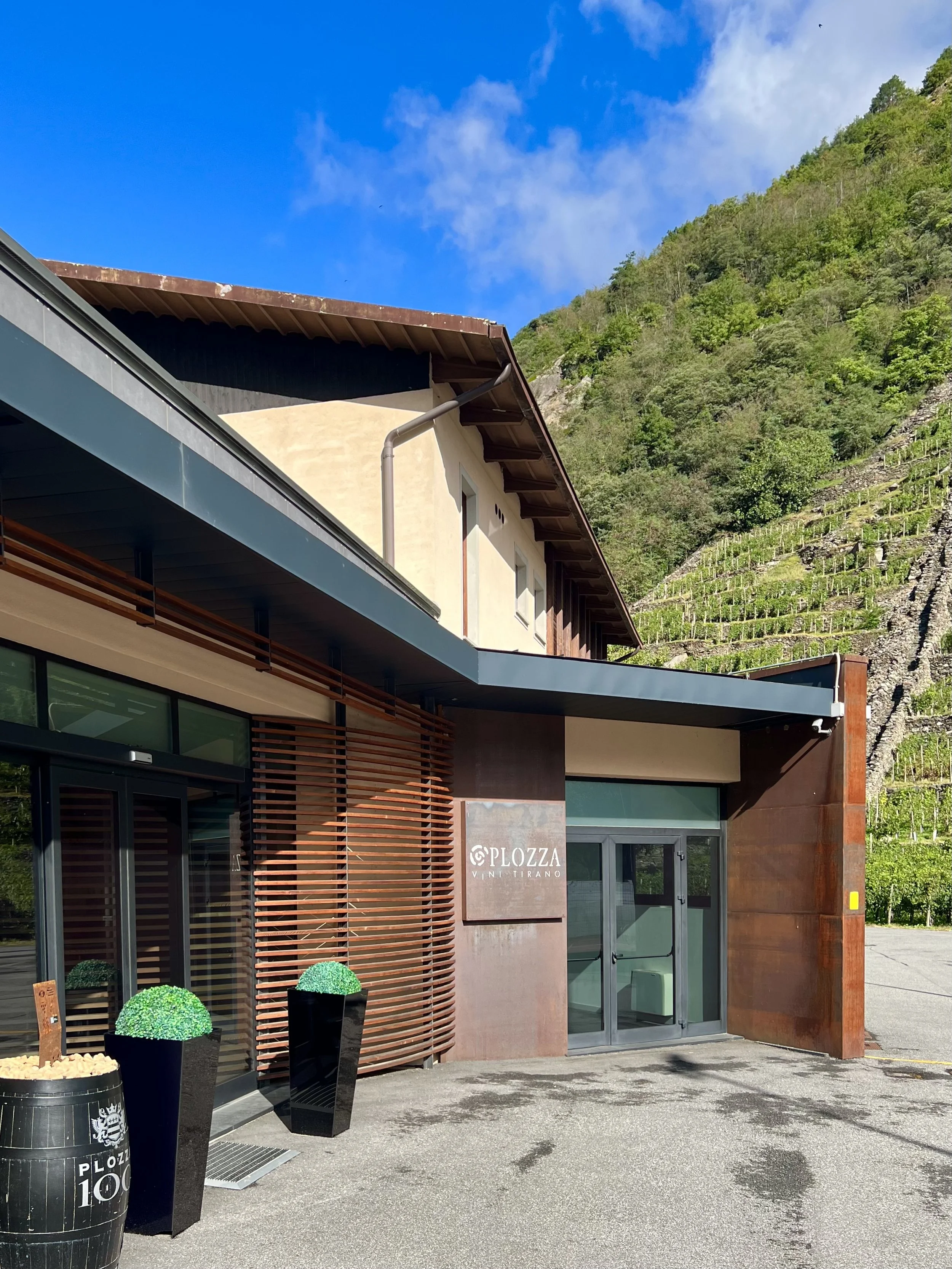
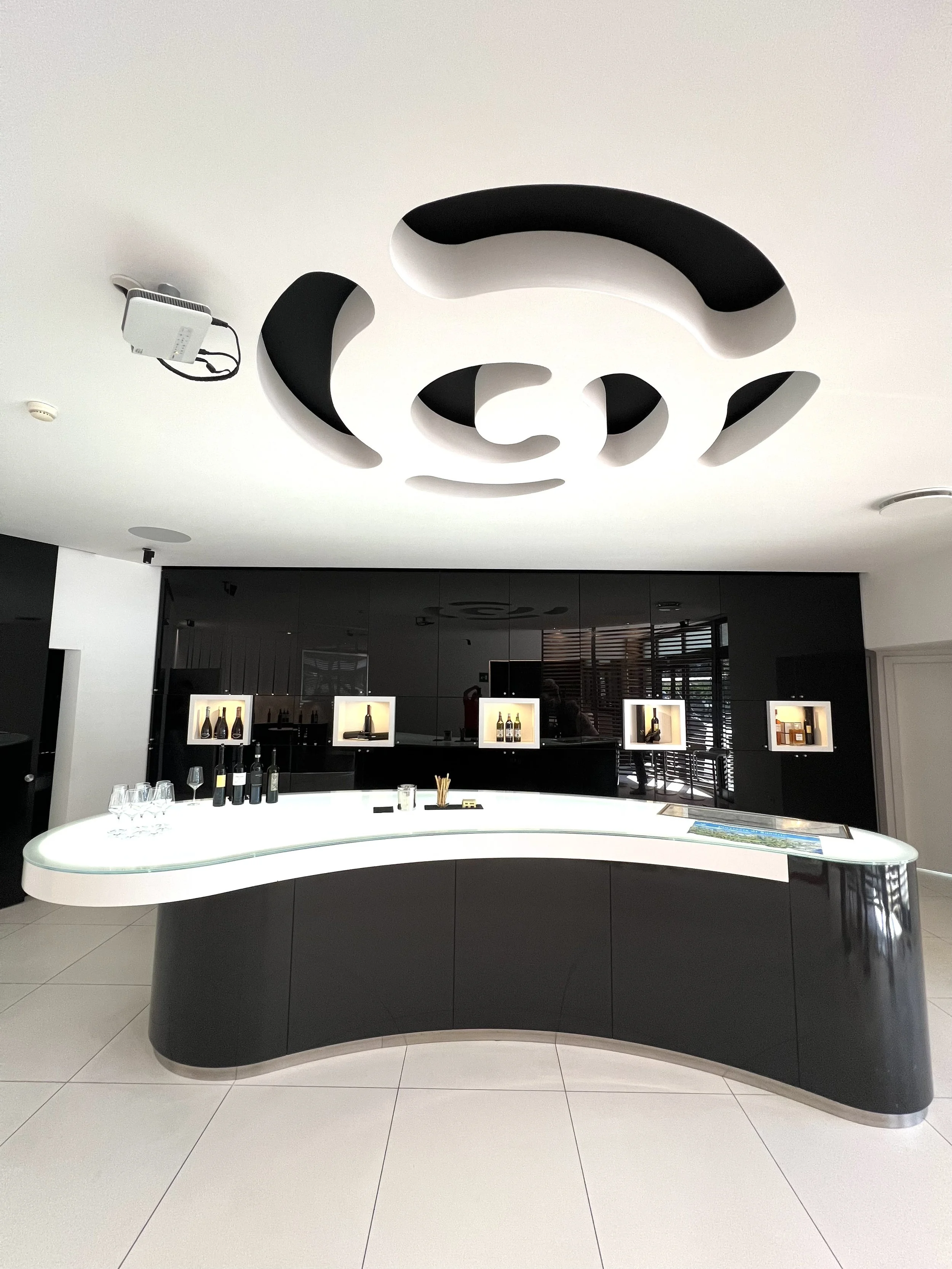
We began our visit in the vineyards, with Luigi, our guide, telling us about the grapes.
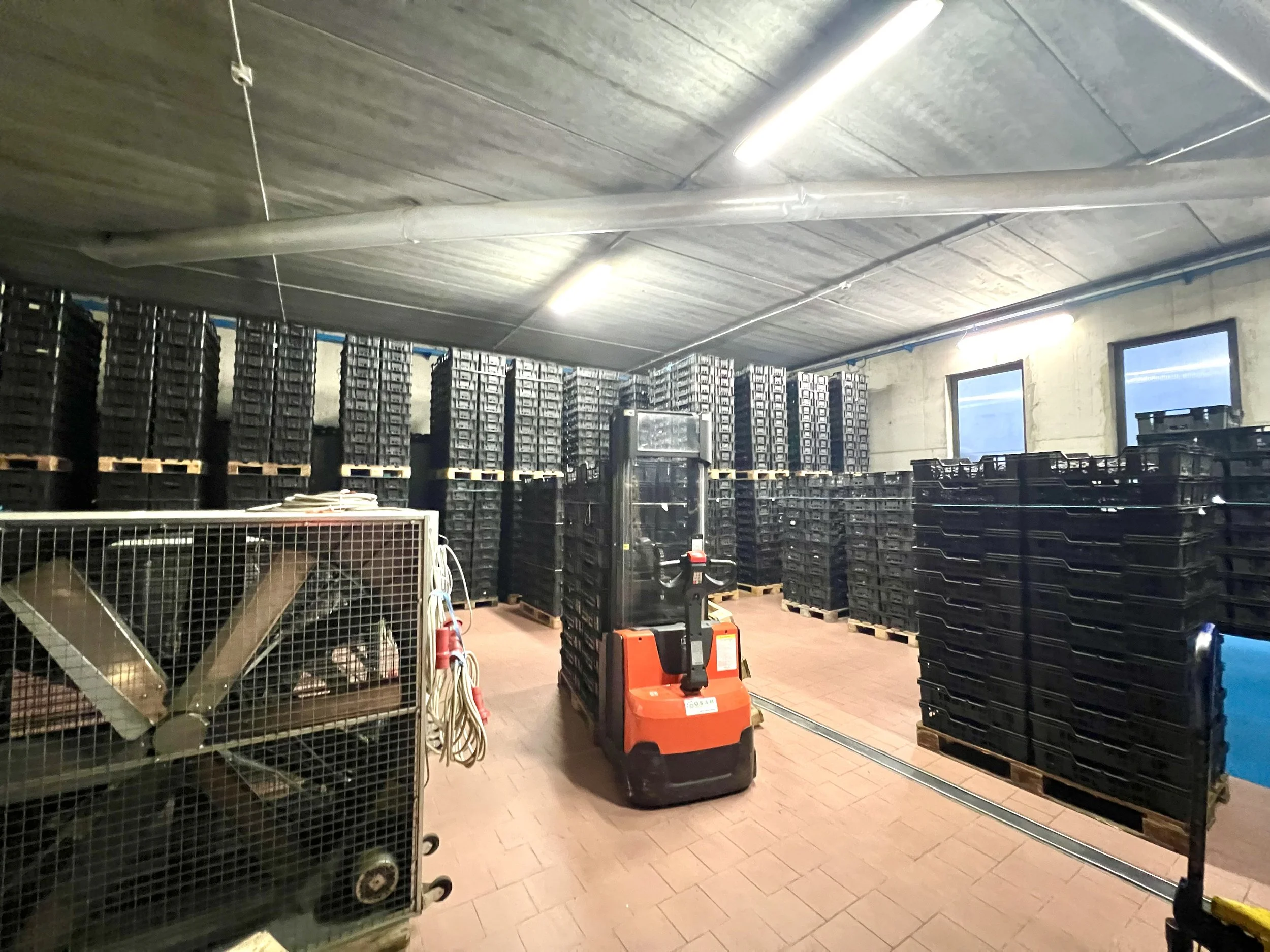
After learning about the grapes, Luigi led us into their drying rooms, where the ripe grapes are taken to be lightly dehydrated, an important step in the production of Sforzato.
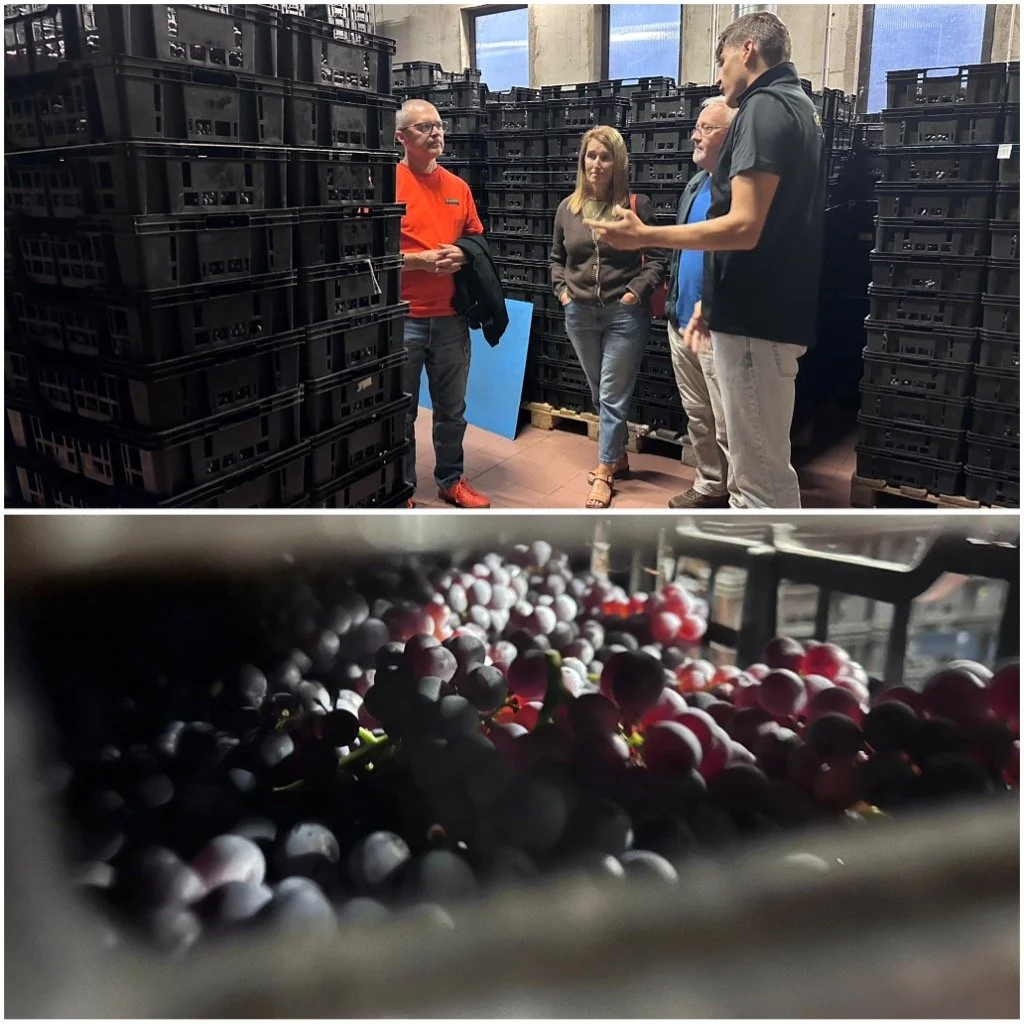
It was fascinating. The whole grapes bunches are laid into plastic drying crates, that hold no more than 5kg at a time, to allow for free air movement around them. They will remain in their crates for about two weeks, until the juice in the grapes has concentrated sufficiently.
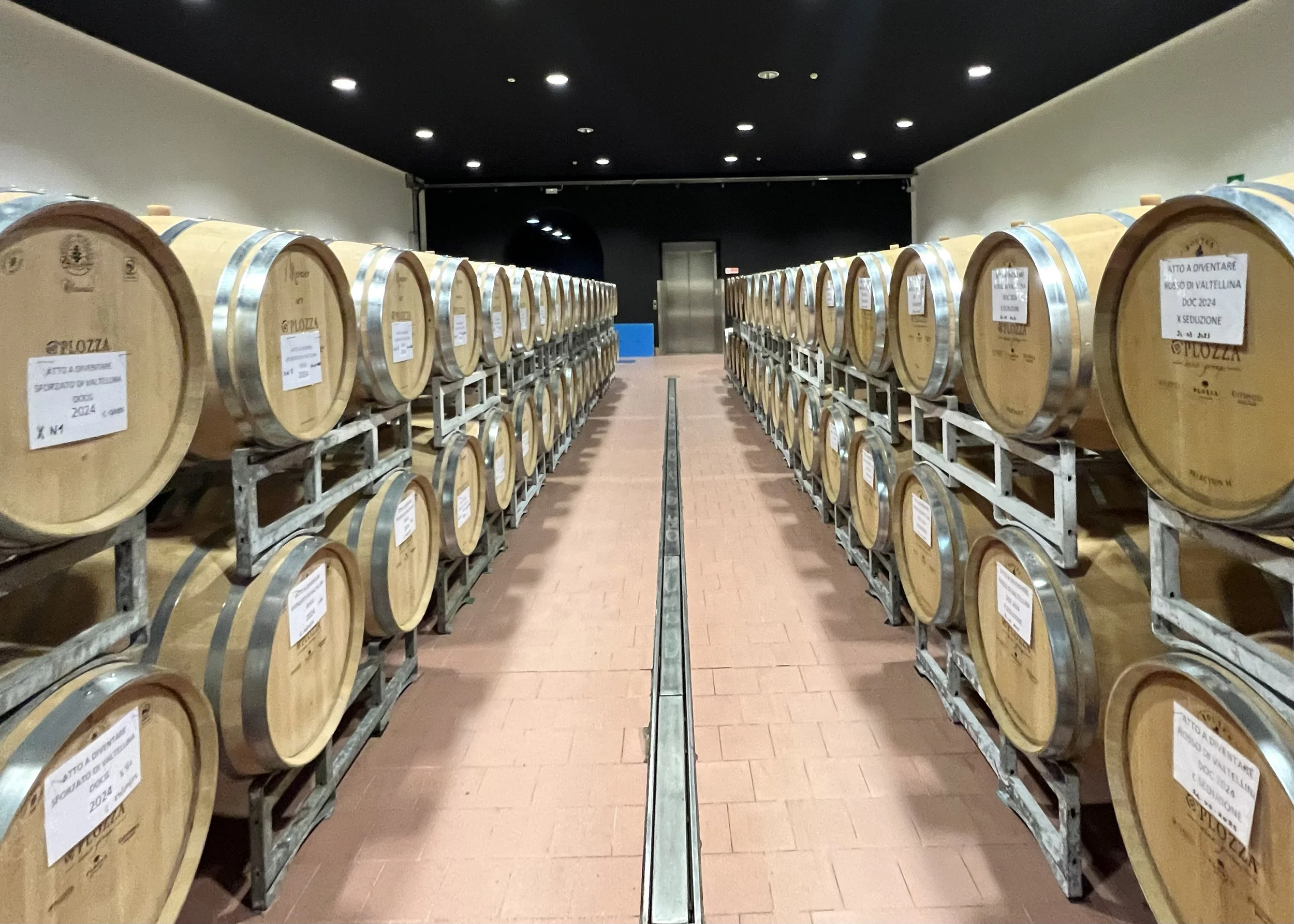
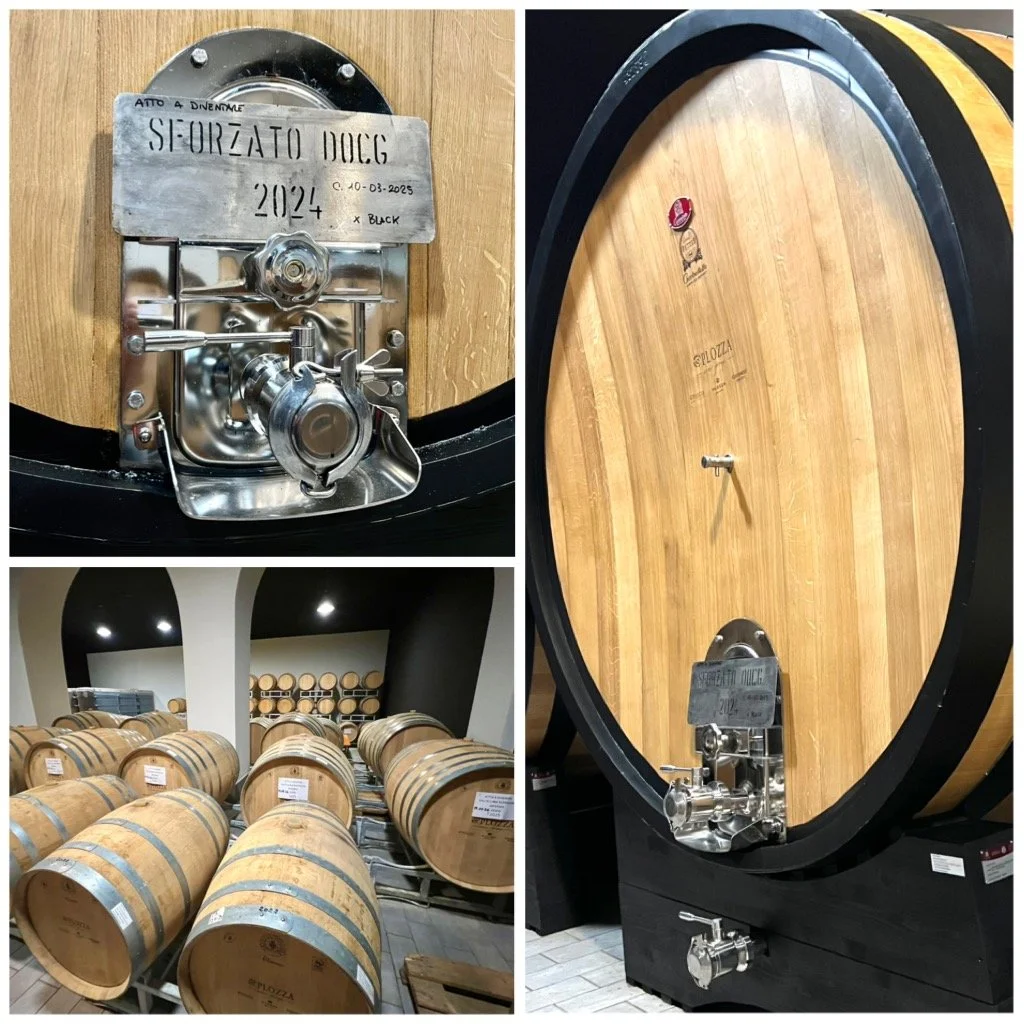
Next was the cellar, with its huge collection of new French oak casks, where the wine produced from the pressing of the dried grapes will spend its ageing period.
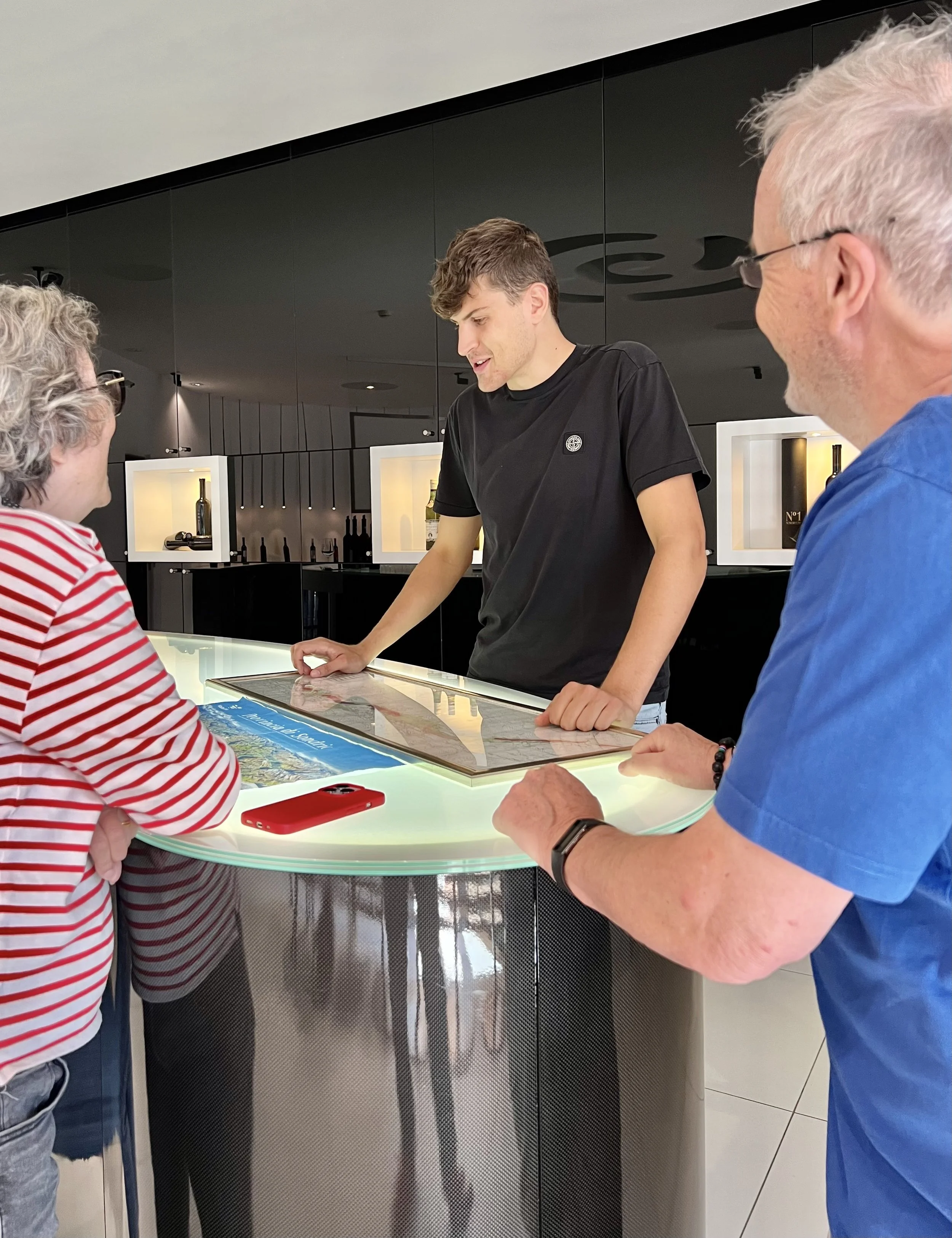
We then moved into the tasting room, to listen to Luigi describe the different areas, and qualities, of the region.
It was all wonderful preparation for the tasting of the wines, in this case a four wine tasting involving a simple Nebbiolo, followed by three Sforzato of increasing quality.
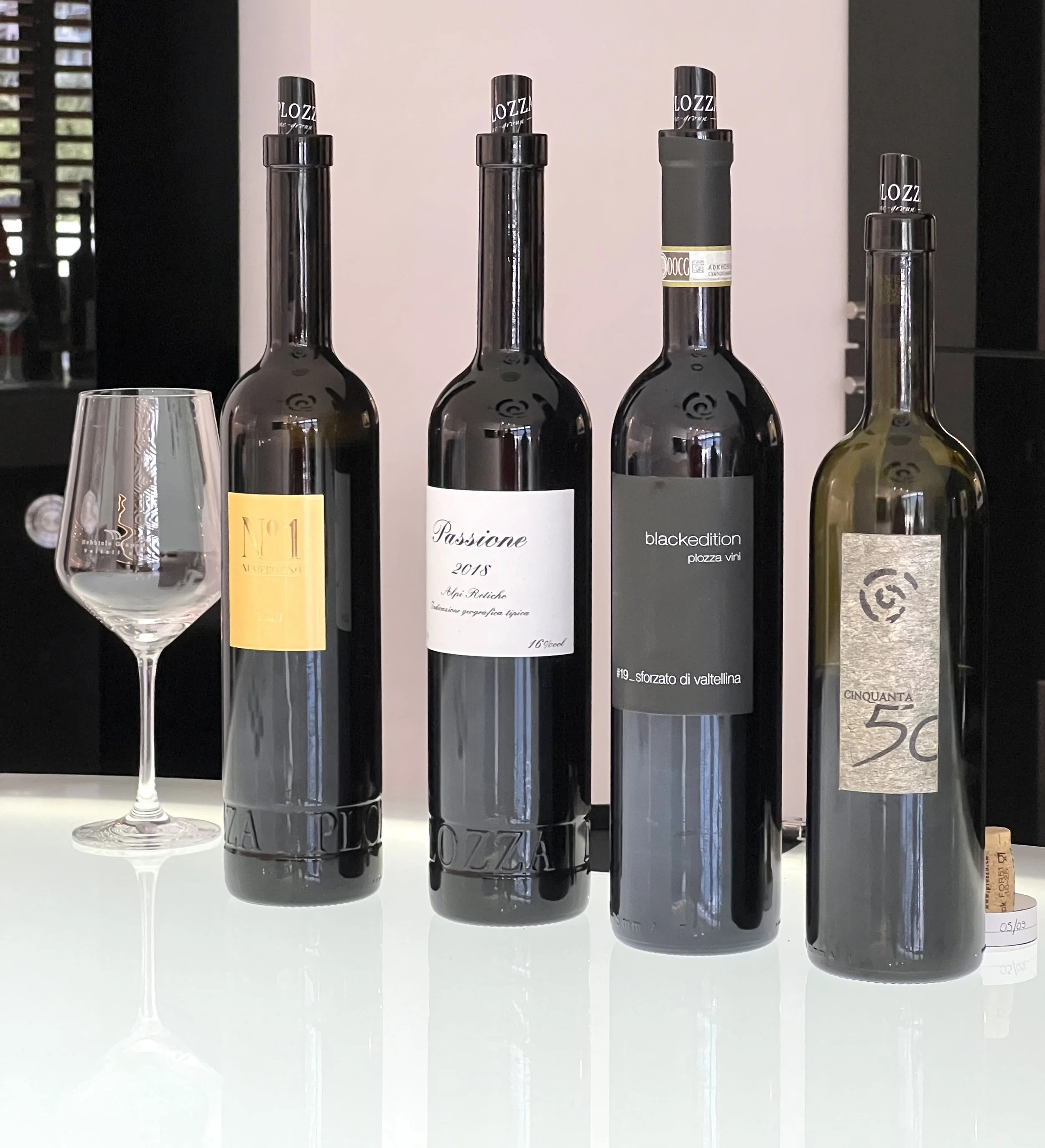
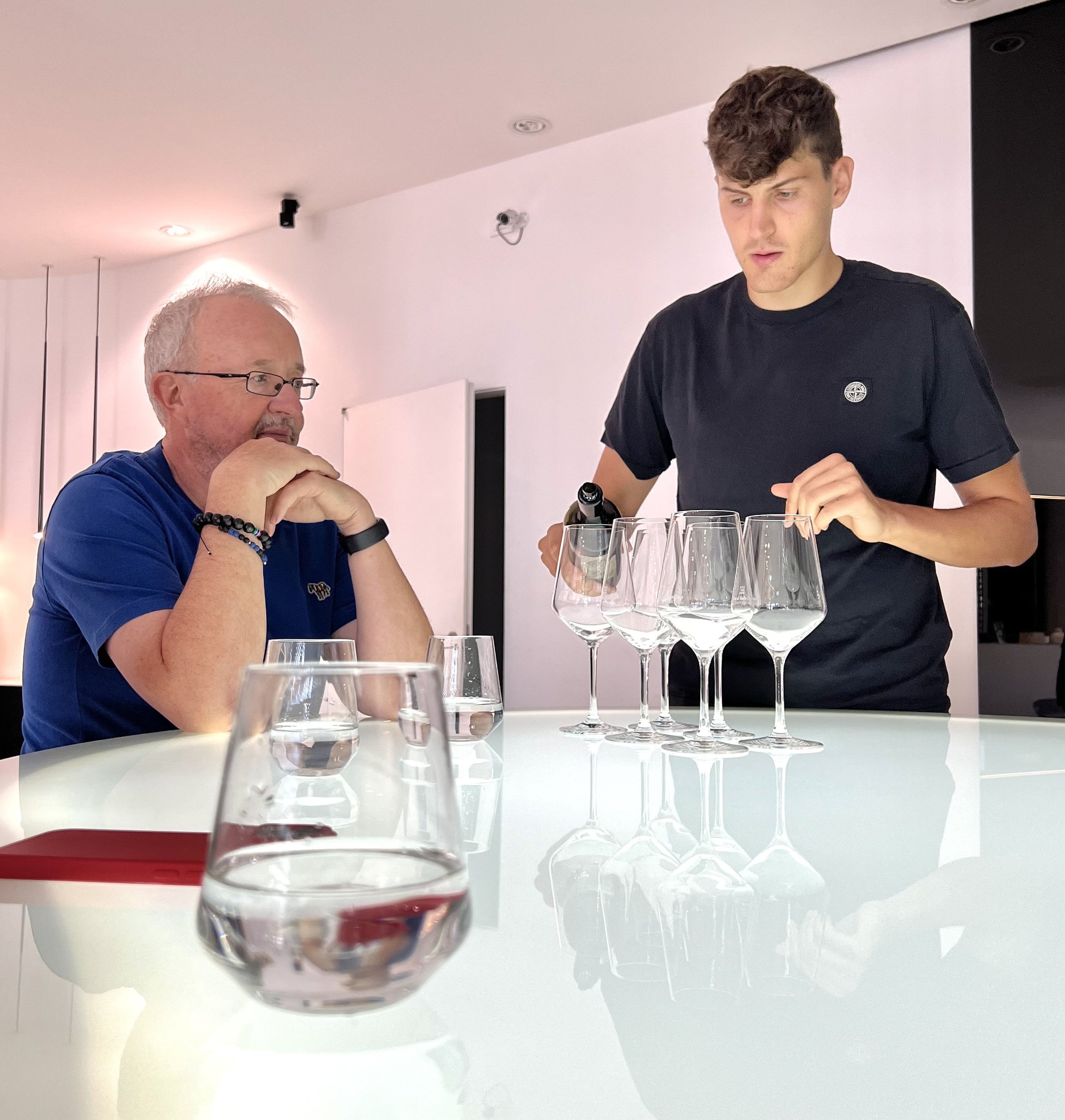
The wines were intense, ranging from deep, dark fruits with medium tannins, to rich, and jammy, with supple tannins.
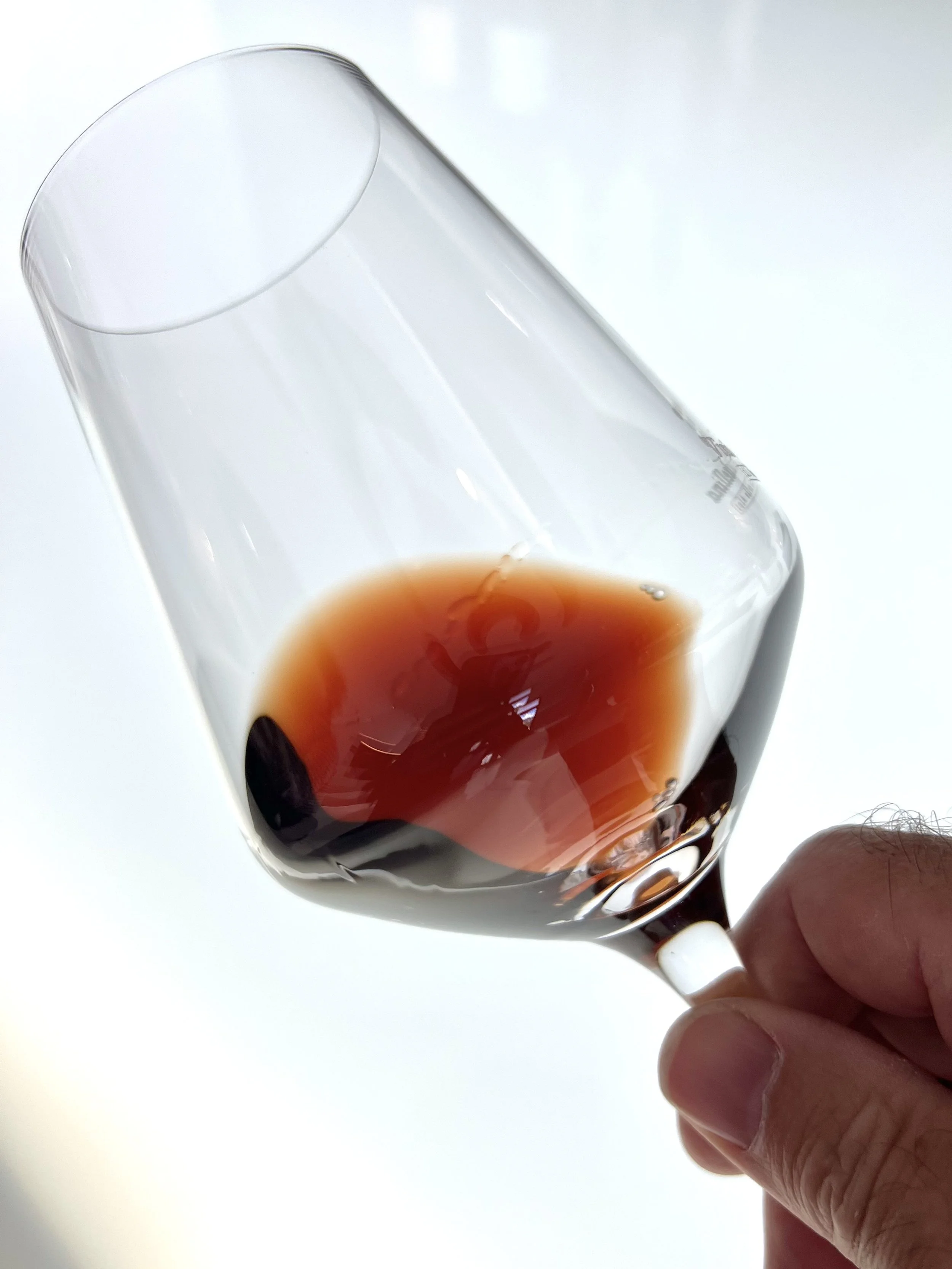
It was a fabulous tour, with incredible wines. Thank you Luigi.
Written by Brian Simpson.
A day in Tirano
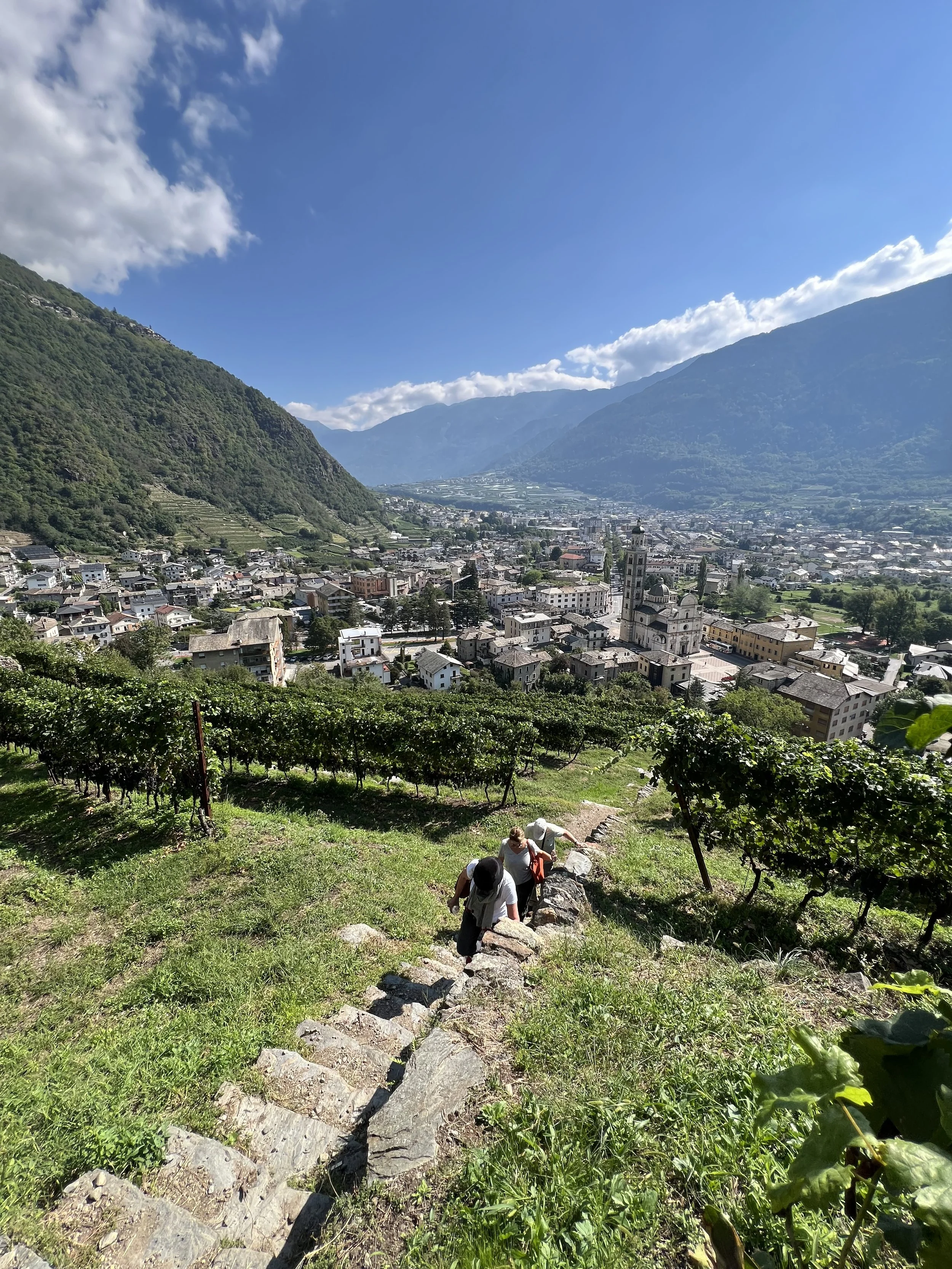
Chris, our friend, had found a little circular walk that took us up into the vineyards, to a beautiful old church at the top of a cliff. I’m not sure any of us knew just how steep the climb was though!
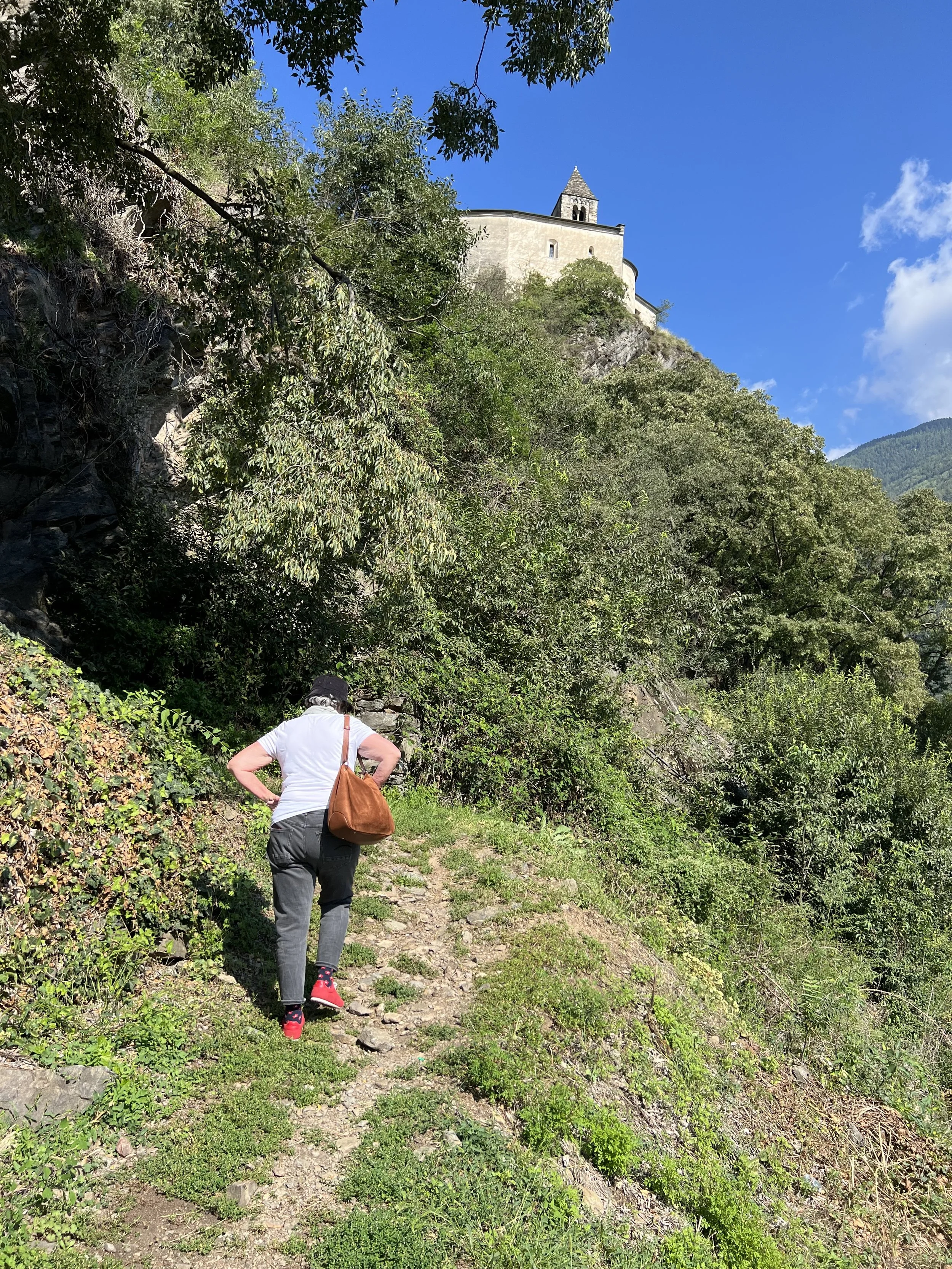
But it was a beautiful day, and we took the climb slowly, step by step.
The little church at the top was delightful, and gave us a very pleasant place to sit in the shade, a little respite from the sun.
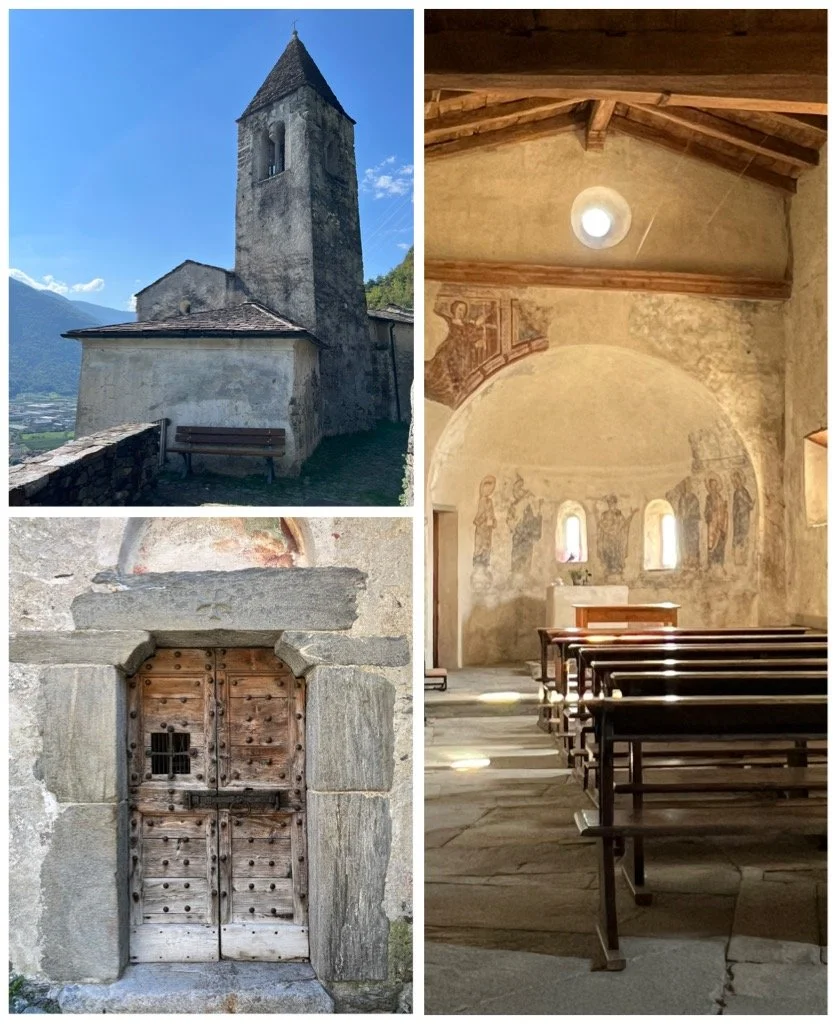
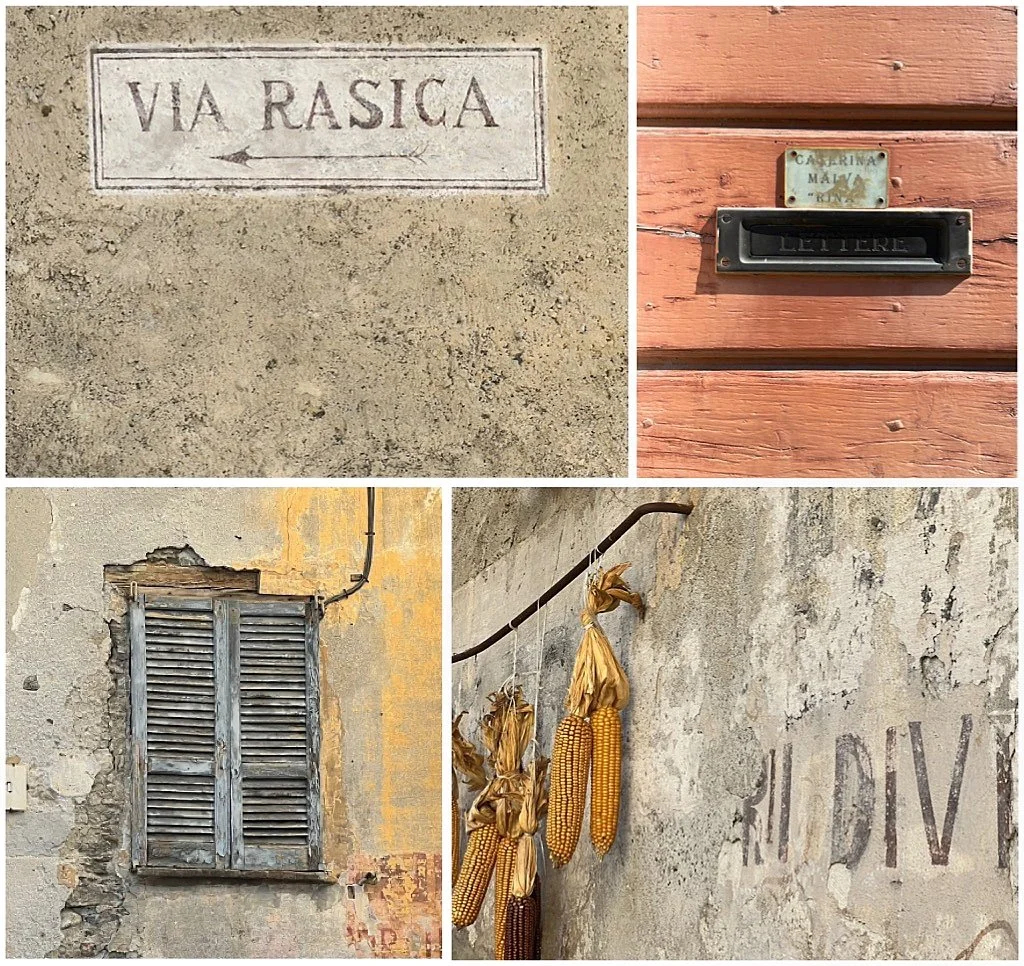
We walked slowly back down the hill, now in the shade of the trees, into the old village. We wandered around all the little, rustic buildings, wondering about the stories these places could tell.
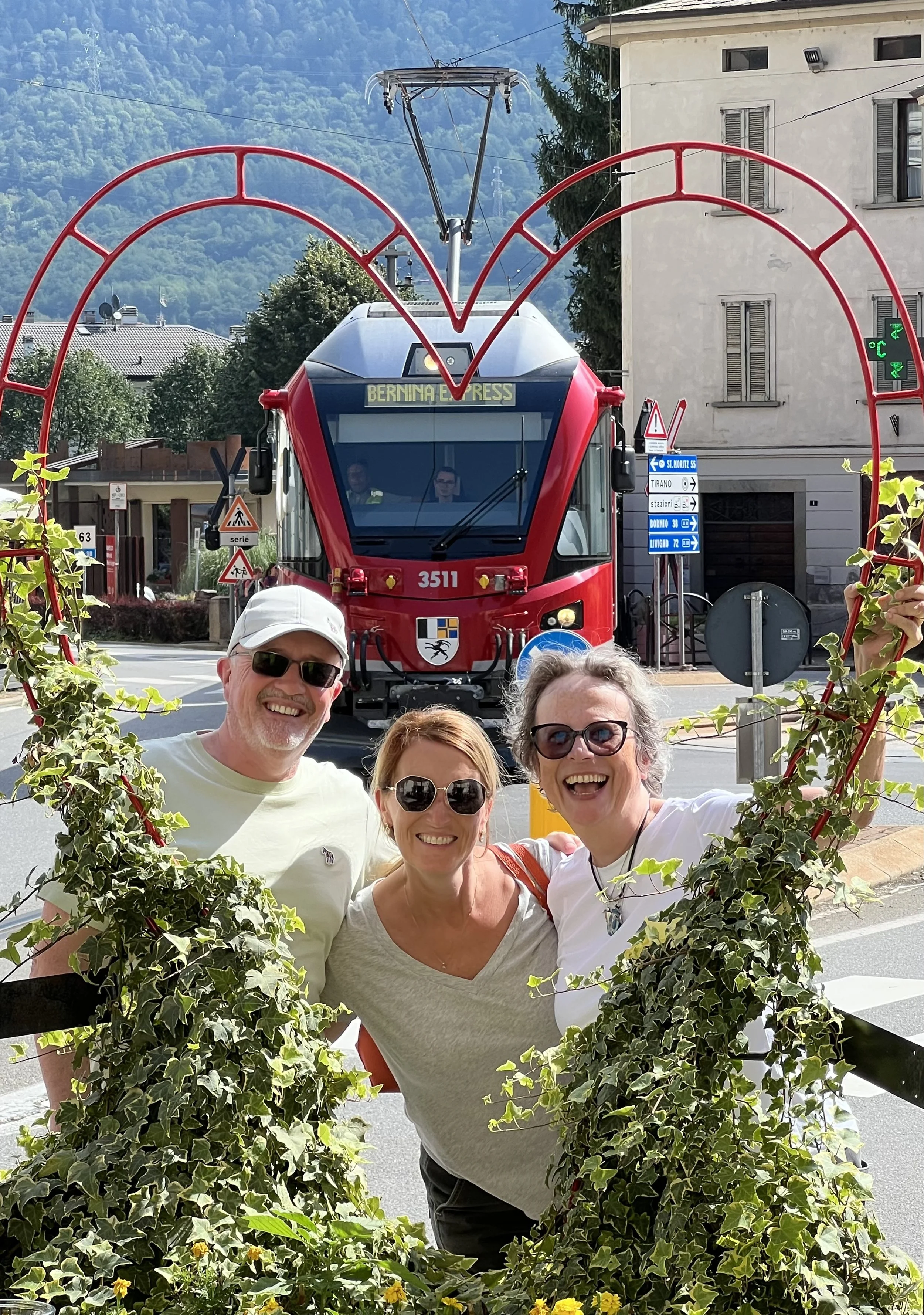
We were all hankering for a drink by the time we reached the centre of town, so headed to one of the many beautiful piazzas they have, for coffee, cakes, and maybe a beer or two. The café we chose for drinks was right next to the train line, and as the late morning train chugged up towards the café, we spotted a well positioned heart, perfect for a photo. It just had to be done.
In the afternoon we headed back towards the old town to visit the Palazzo Salis, which is over 500 years old.
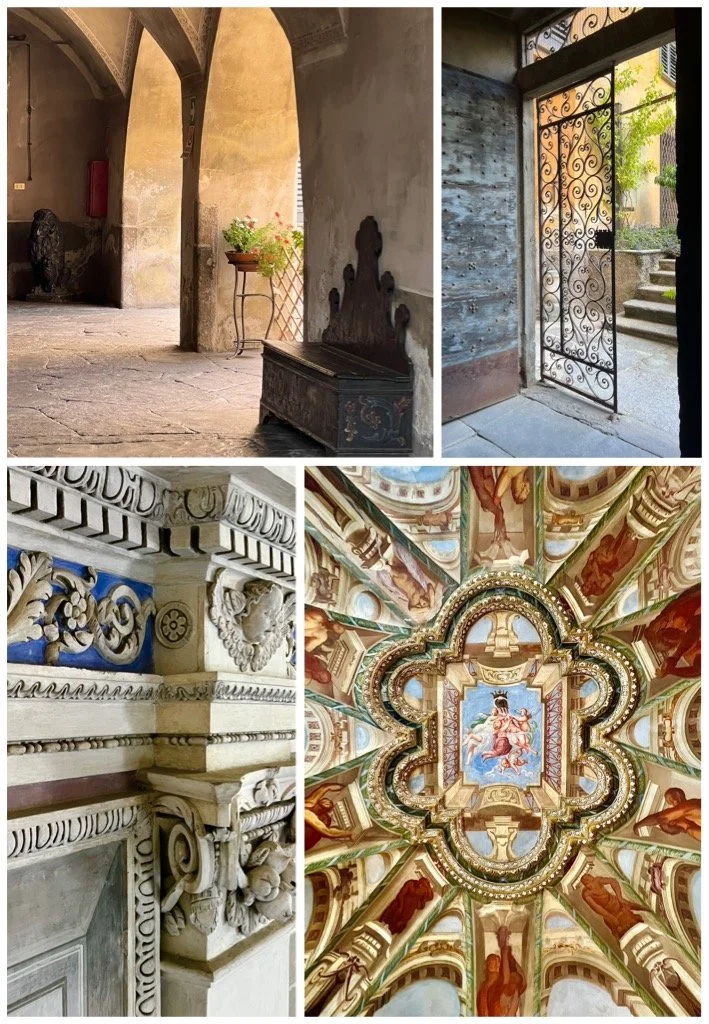
For all that time it has remained in the Conti Sertoli Salis family. It was designed by the Artchitect Vignola, and its beautiful, colourful interior is a delight to see.
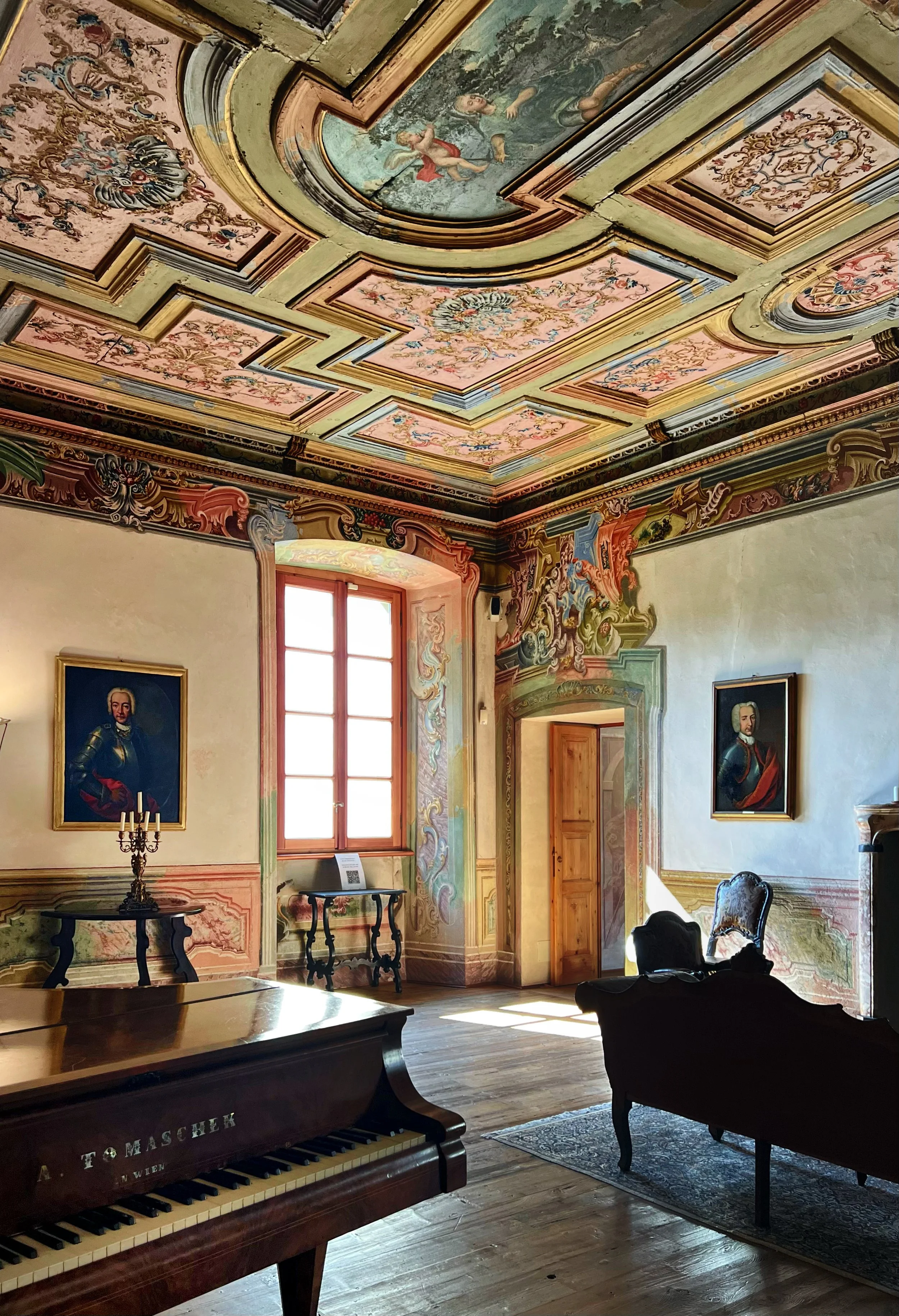
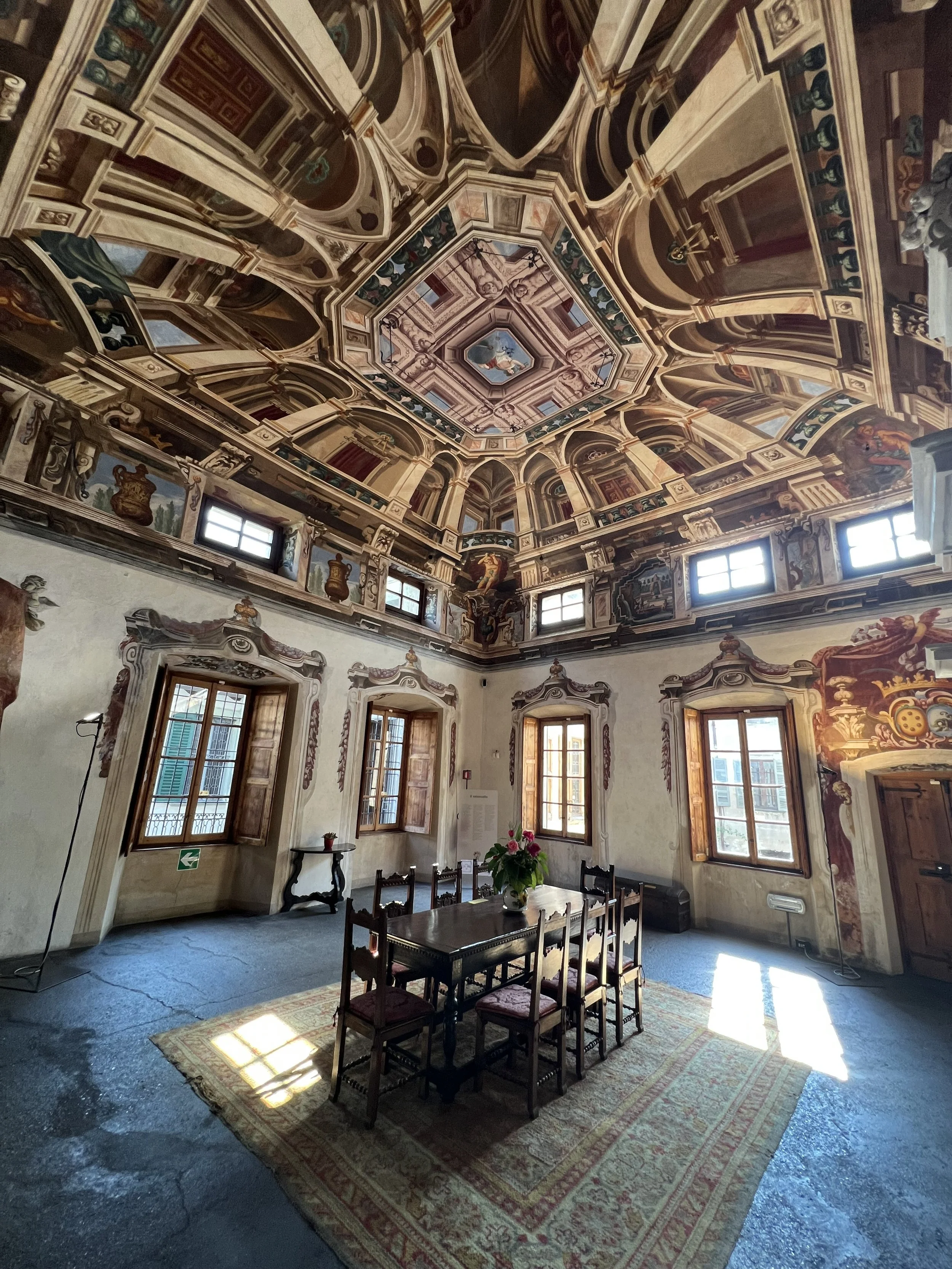
The rooms are adorned with decorations on both the walls and ceilings. One of the rooms has an amazing tromp l’œil painted on the ceiling, giving it the feeling that it is much higher than it actually is.
The little garden at the rear of the building is a delightful oasis of colour, filled with sweet smelling roses, dahlias, and daisies, to name just a few.
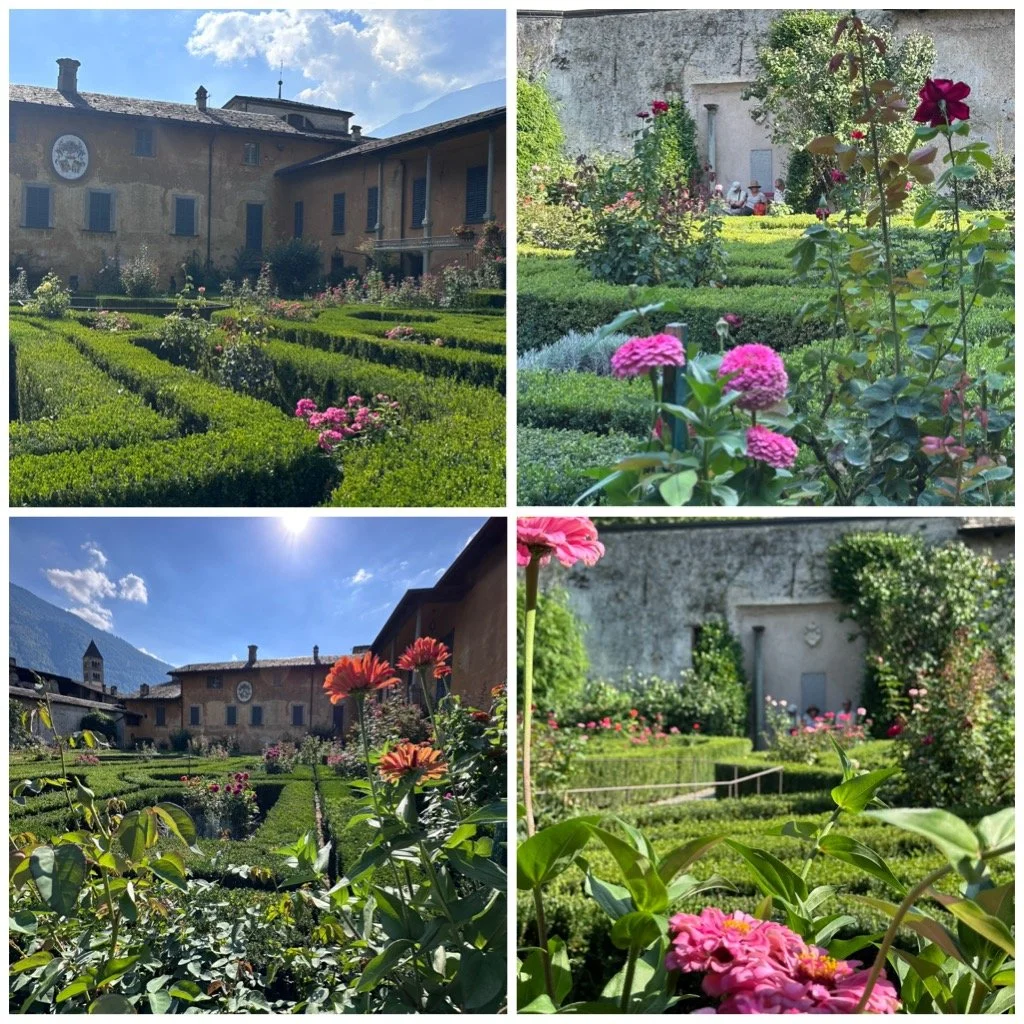
Such a beautiful palazzo, in such a wonderful Italian town.
Arriving in Tirano
We arrived in Tirano, in Italy, around 1.30pm, too early to get into our hotel room, so we headed off for a lunch of pizza and pasta. Why not? We were in Italy.
We had a couple of days here, relaxing in the Italian sunshine, taking in the views of the spectacular mountains, enjoying the delicious local wines, and certainly ensuring we tried lots of little sweet treats.
After our late lunch we headed to the old town, where little cobblestone alleyways led to hidden piazzas, with beautiful cafés and restaurants. We discovered modern boutiques, alongside bric-a-brac shops, all shaded by ancient churches. It was a slow, drifting afternoon, that set the tempo for the next couple of days.
Bernina express
The reason we went to Chur was to ride on the Bernina Express.
I had read lots about how spectacular the journey is, crossing the alps from Switzerland to Tirano in Italy.
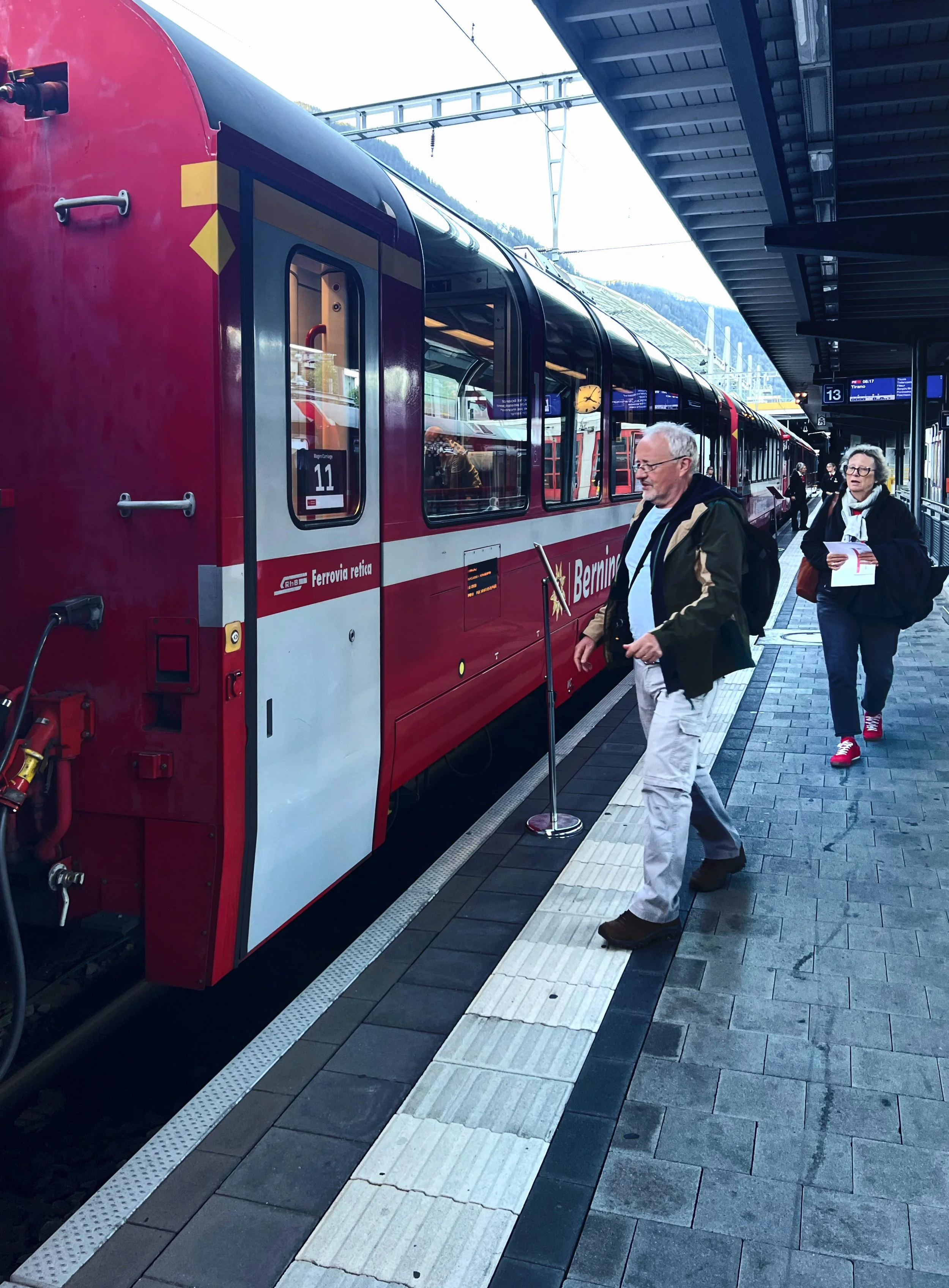
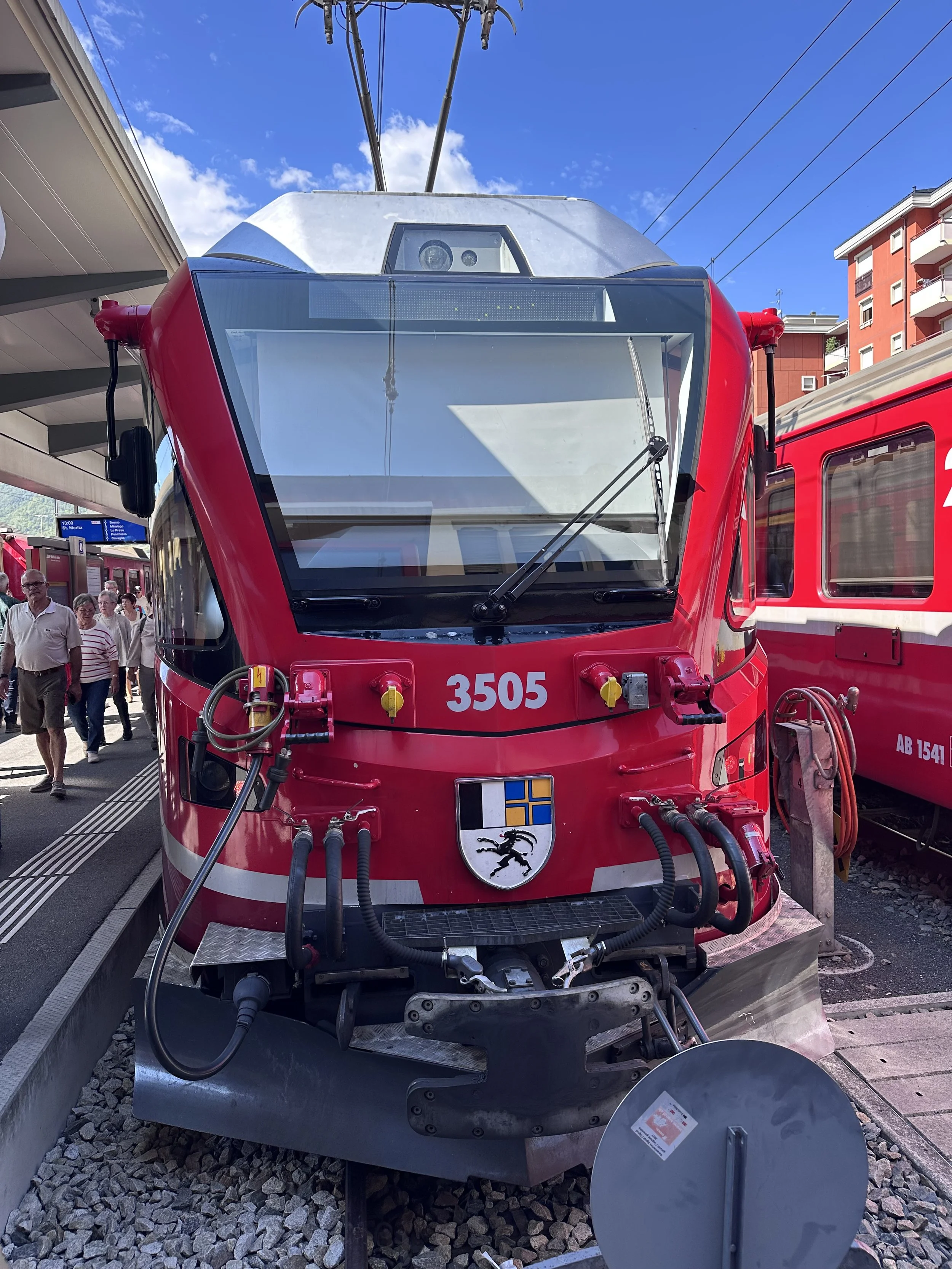
The Bernina Express, from Chur to Tirano, is one of the most spectacular railway journeys in the Alps, crossing Switzerland and arriving in northern Italy. It reaches a high point of 2,253m, and since 2008 the 1m narrow-gauge railway has been a UNESCO world heritage site.
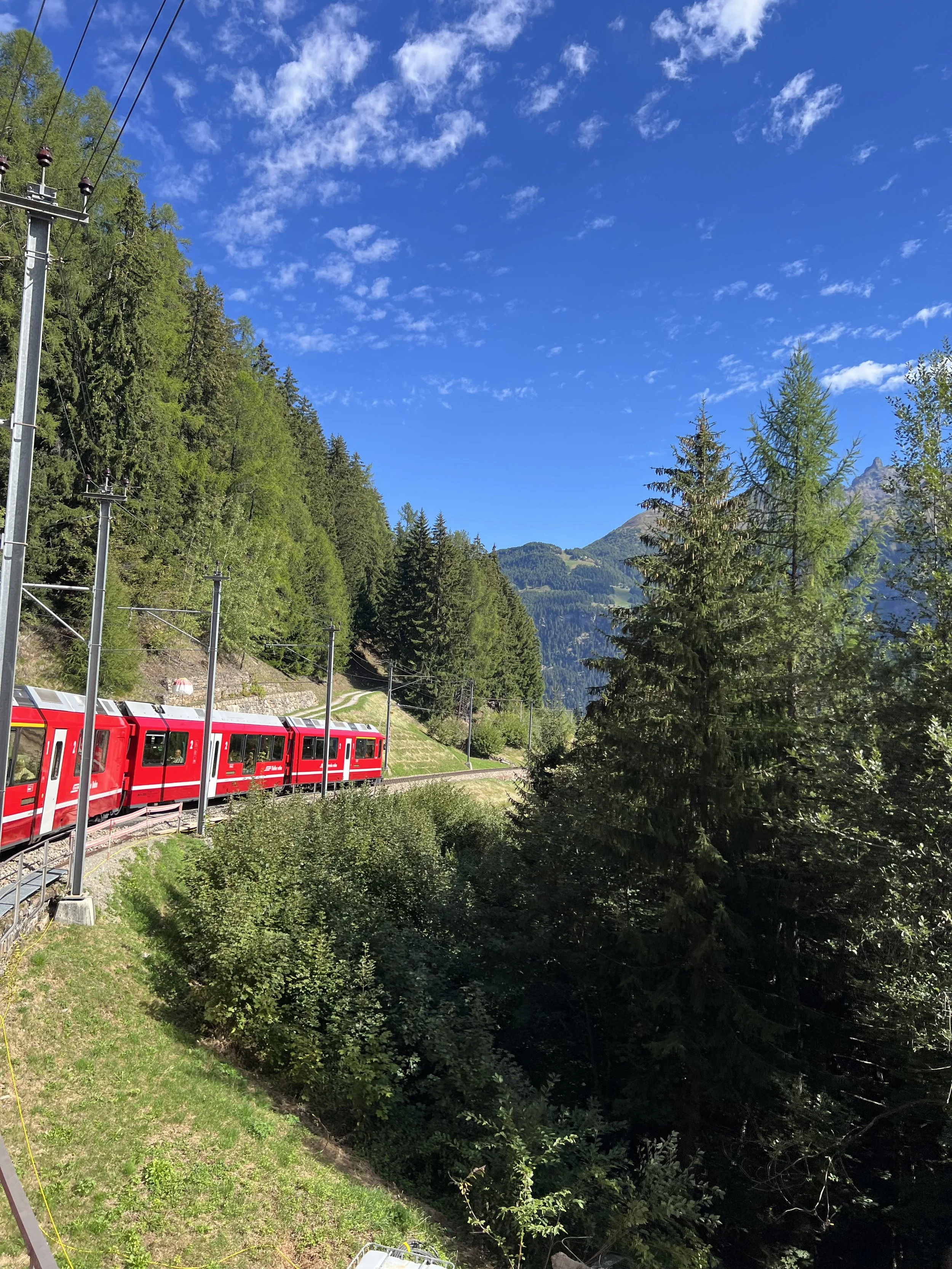
It is one of the highest conventional railways, which means it doesn’t use a cogwheel, or rack and pinion system, like other mountain railways would do when having to negotiate steep gradients.
The delightful red train meanders through some rather dramatic mountain scenery using ingenious spiral tunnels and viaducts to achieve its goal. In all there are 196 bridges and 55 tunnels.
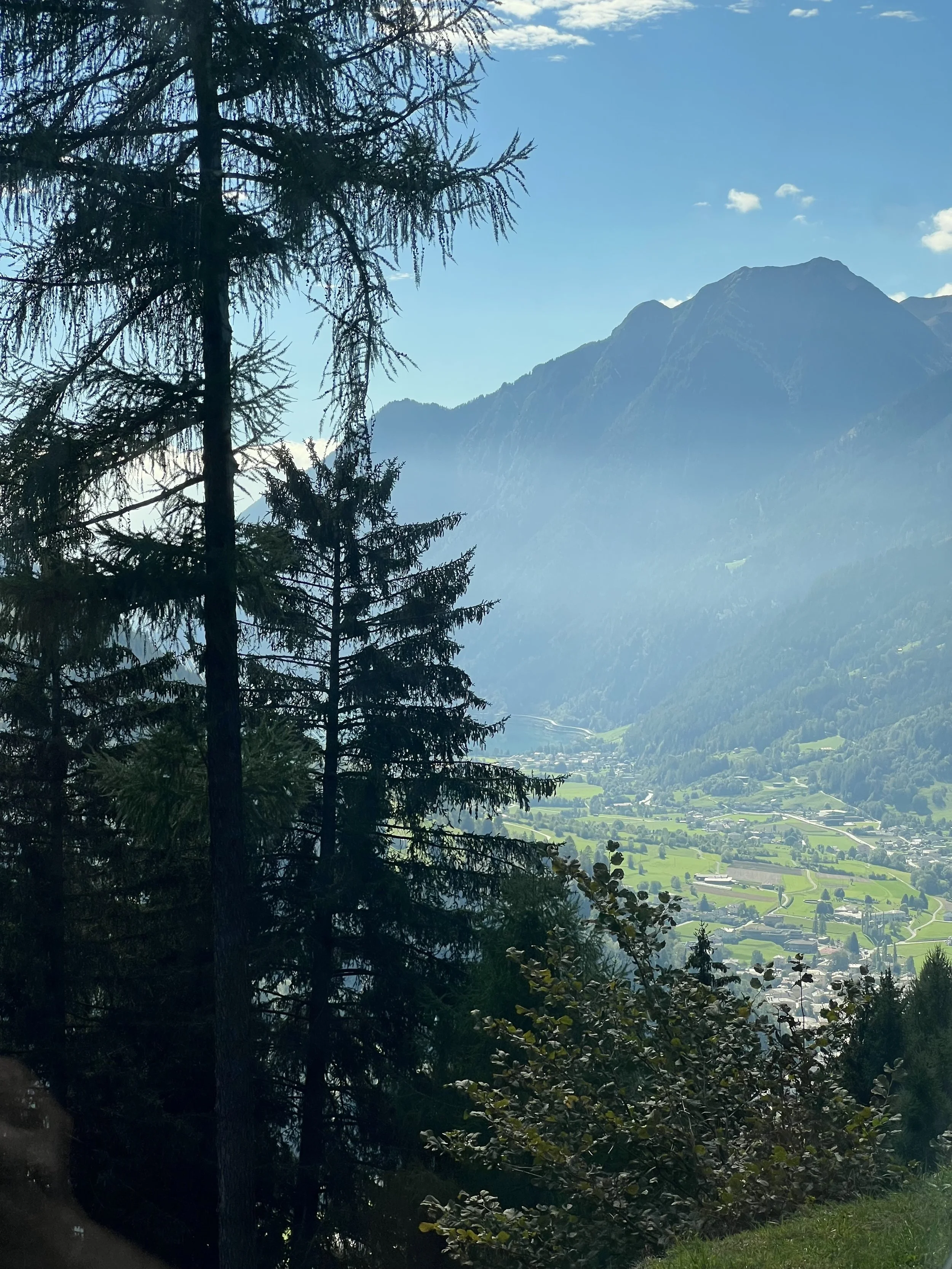
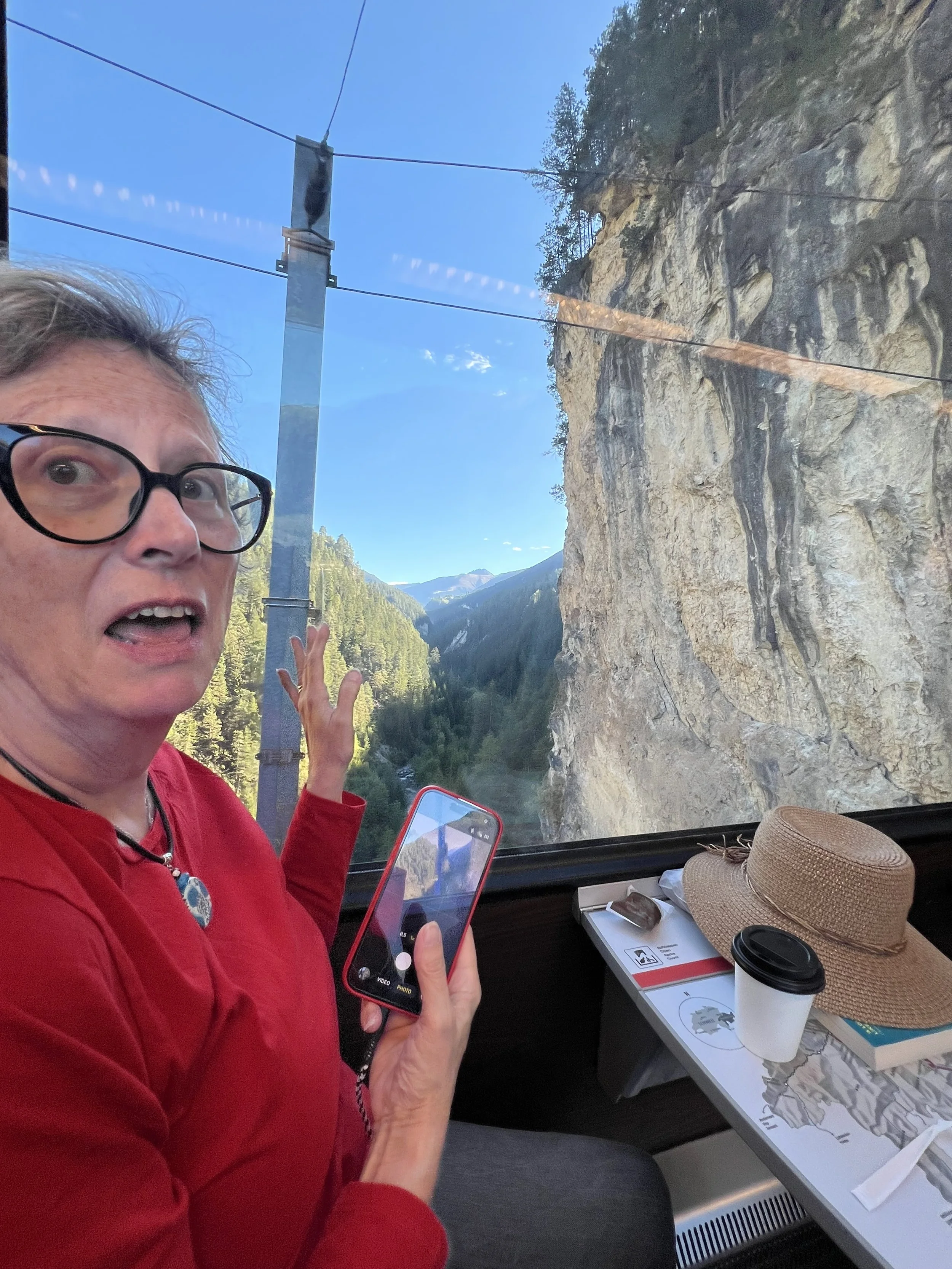
For me, one of the scariest moments was when we crossed the Landwasser Viaduct,
an iconic 65m high, 142m long, curved viaduct that leads directly into a rock tunnel. I’m not sure if Brian knew it was coming, but he managed to capture my reaction at seeing the rock face.
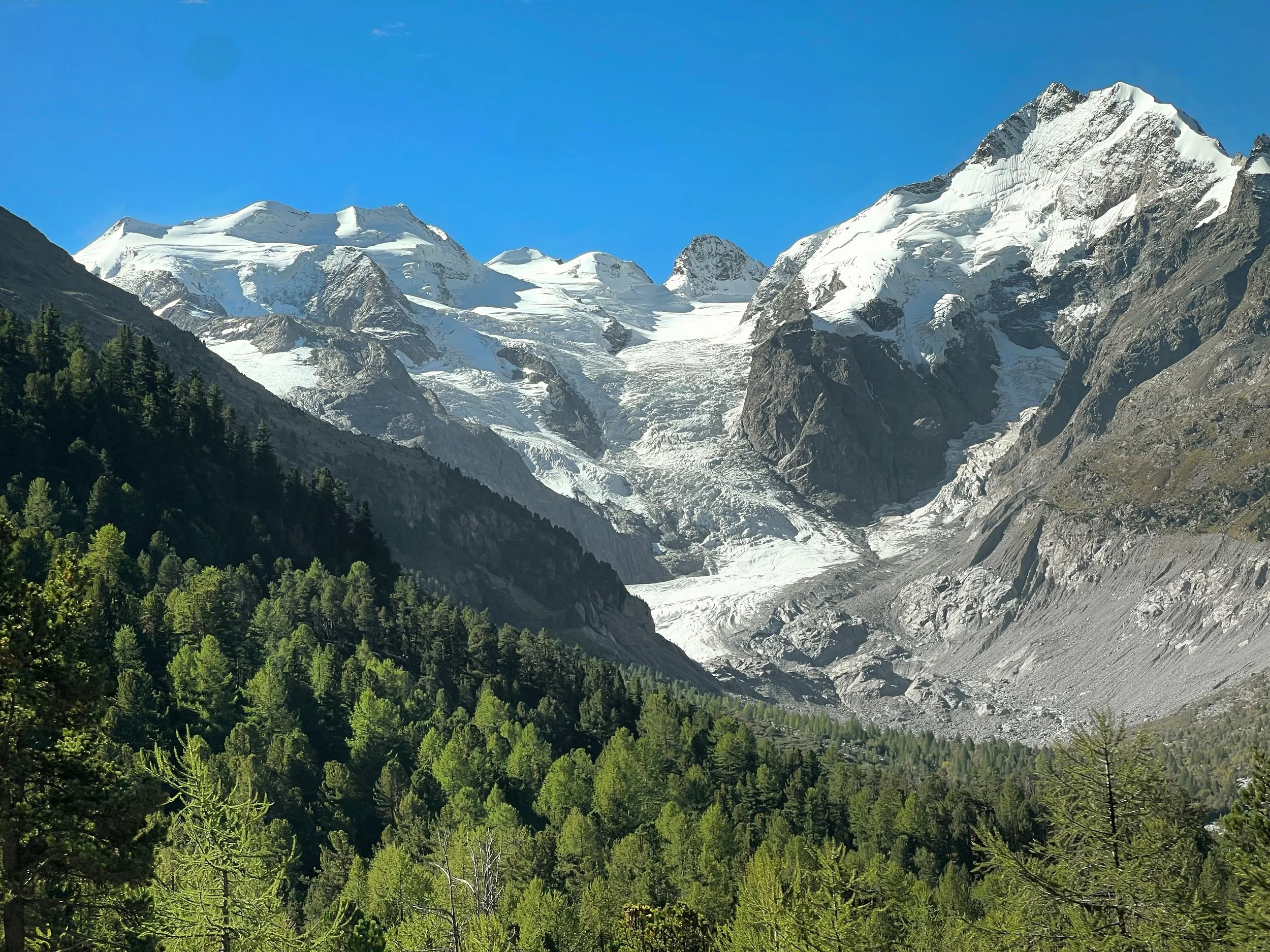
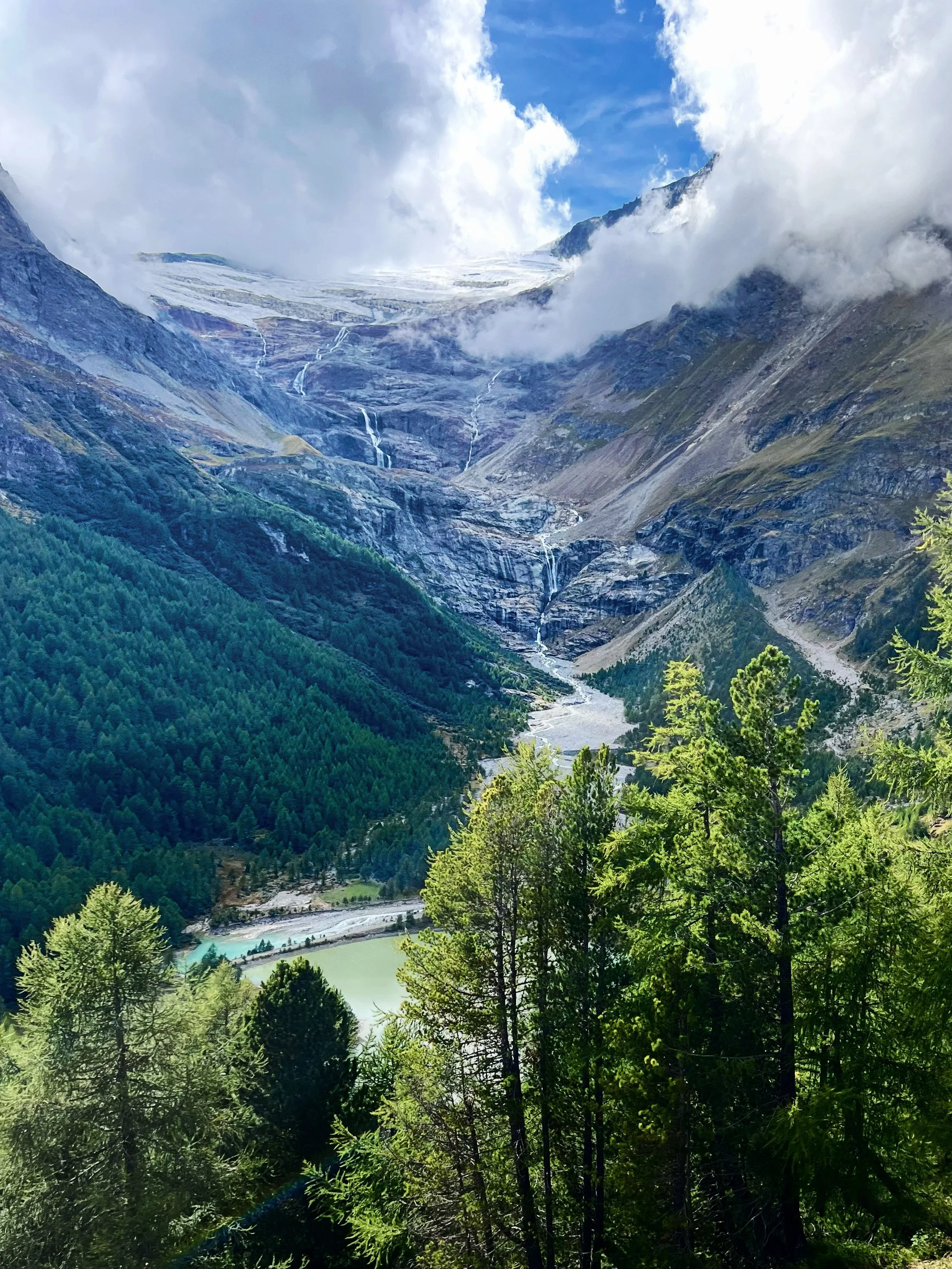
As you approach Alp Grüm, a famous view point, the landscape opens up and you travel above the treeline. Which provides you spectacular views of glaciers and peaks around the Bernina massif.
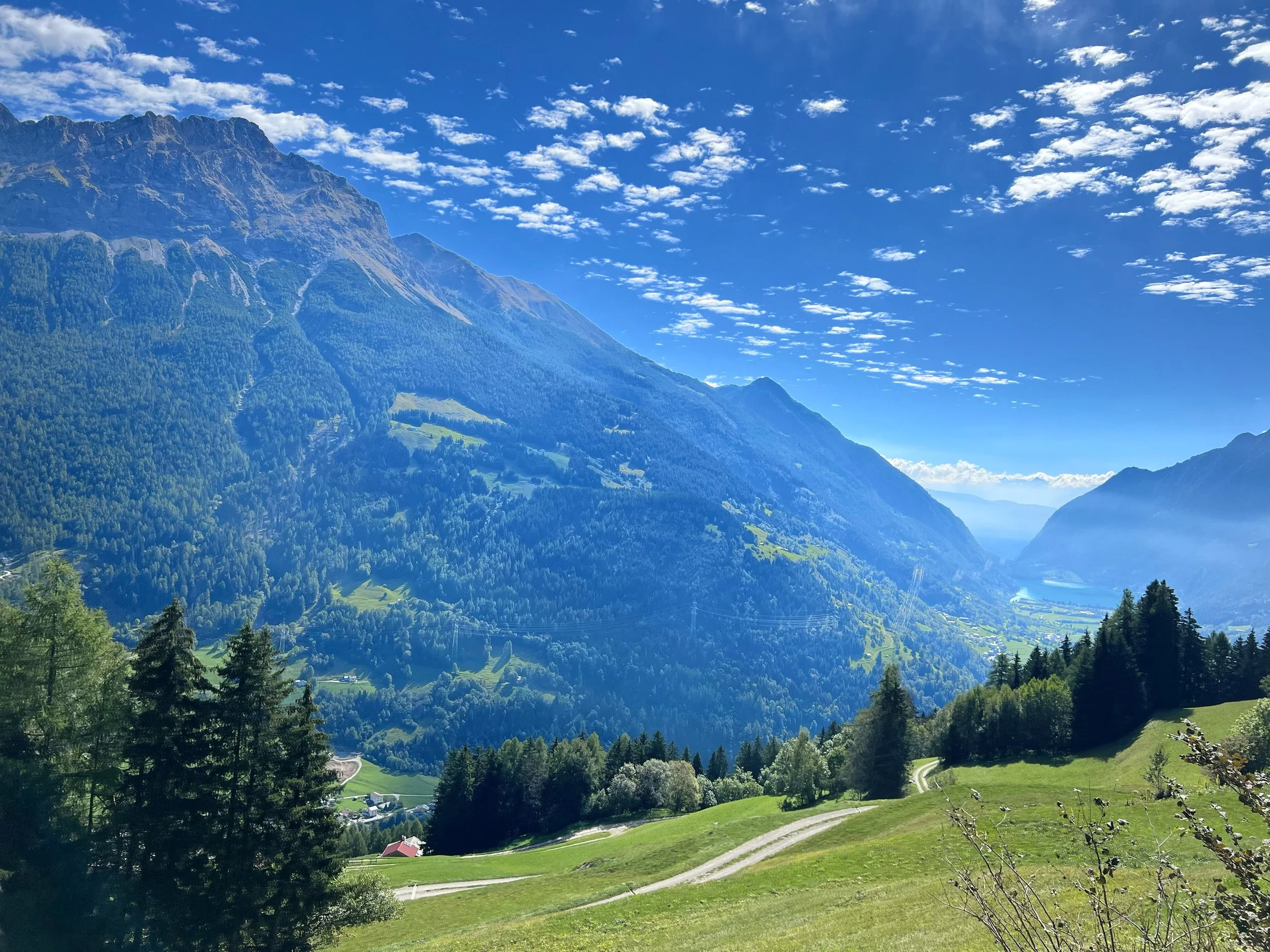
The train then starts to descend to the Italian speaking Poschiavo Valley, where the scenery changes dramatically, and you soon find yourself doing a complete circular loop on the Brusio Viaduct as you lose altitude.
Your arrival in Tirano is given priority, as the bright red train trundles along the roads and narrow streets, soon arriving at the rather chaotic station. There is no longer the Alpine scenery which we’ve enjoyed since leaving Chur, the atmosphere has changed to a warmer, relaxed Mediterranean vibe, with vineyards and even the odd palm tree.
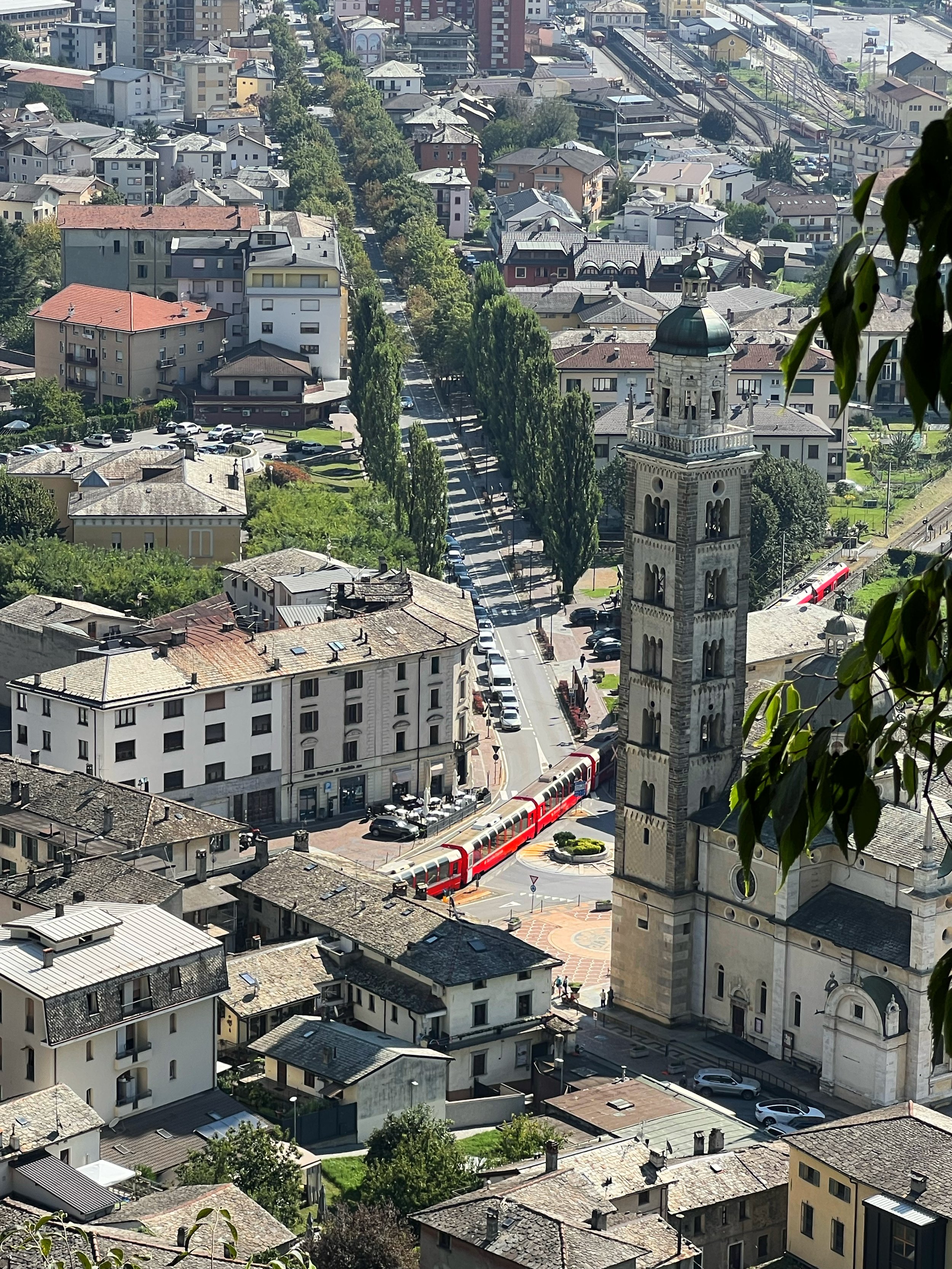
A little tip, if you—like me—love train journeys, and are thinking of travelling on this amazing train, book early. The Bernina Express has a limited amount of panoramic carriages, and a seat reservation is mandatory, in addition to your valid transport ticket. We made our seat reservations over six months before, to be sure we had them, and the tickets, which are paid for separately, we were able to buy about three months before the trip.
Chur, Switzerland
From Colmar we headed towards the Swiss border near Basel, and crossed over into Switzerland. The roads were clear, and it wasn’t long before we’d circled around Zurich and picked up the signs for Chur. Our next destination.
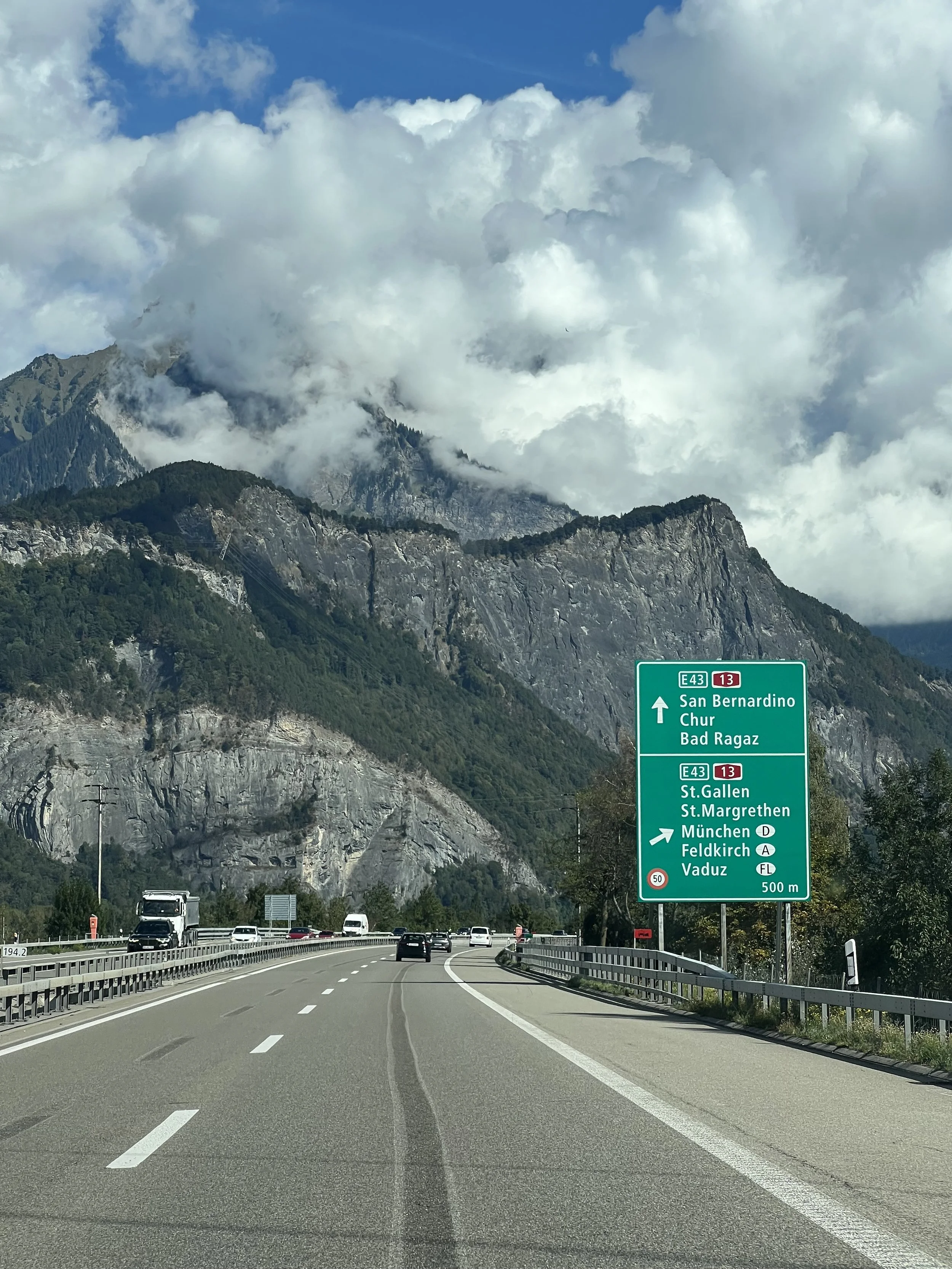
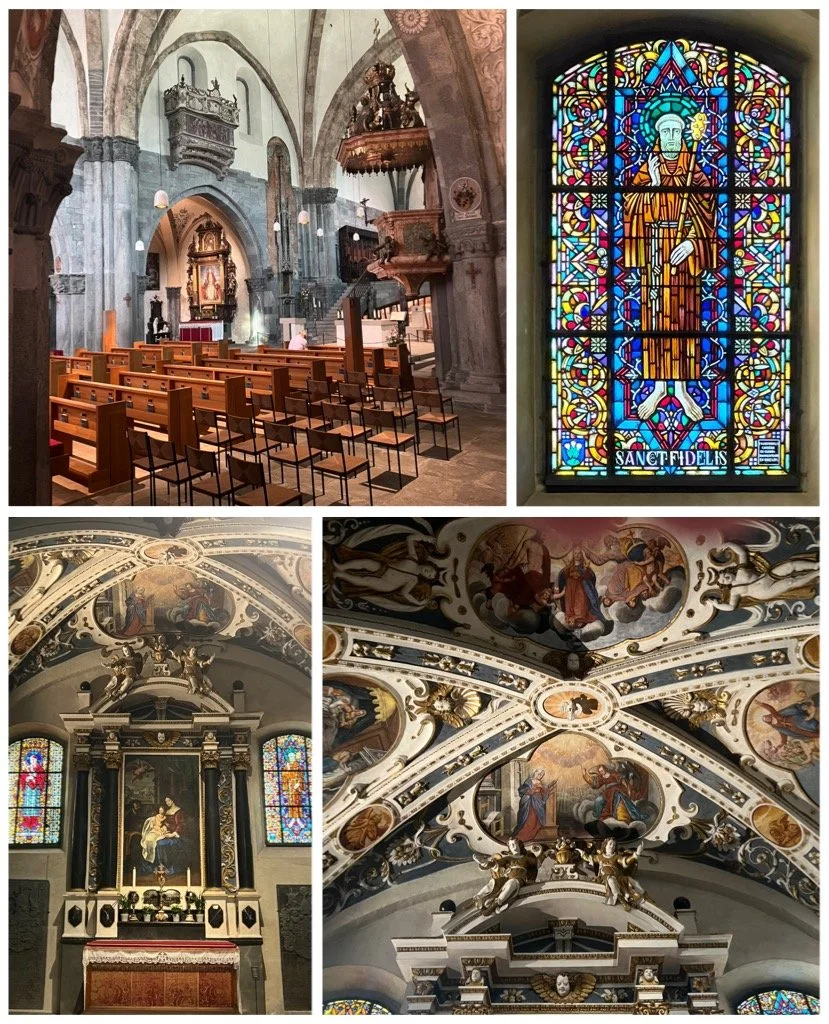
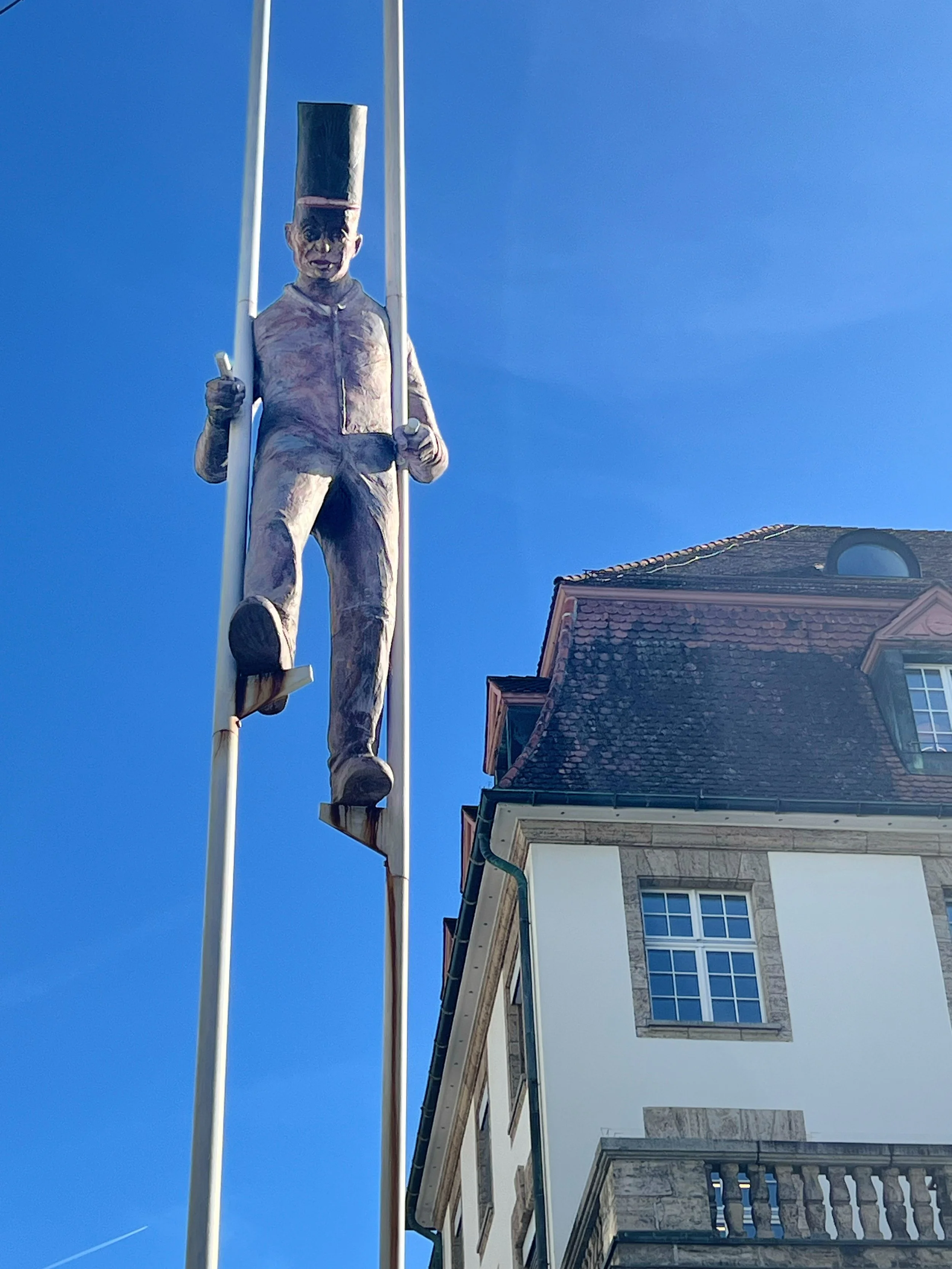
We arrived early afternoon, so spent some time exploring the old part of town. We found a small cathedral that felt very utilitarian, not ornate and overly decorated like a lot of the French churches we are used to.
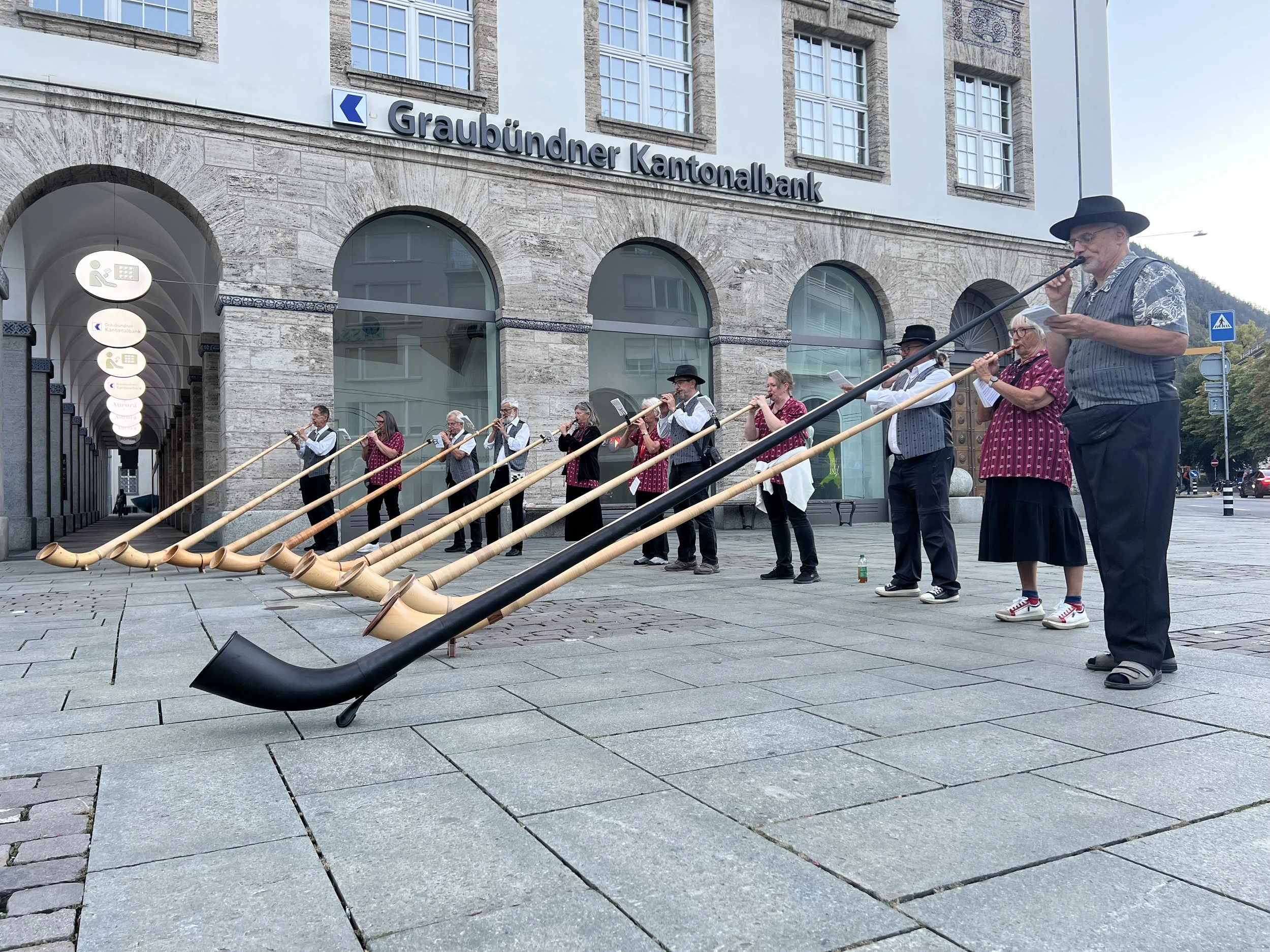
As we headed back to our hotel to change for dinner, we came across a group of alpine horn blowers. It was definitely a sound you need to get used to. That said, they were all very good.
Chur was an interesting little city full of contrasts between the new and the old.
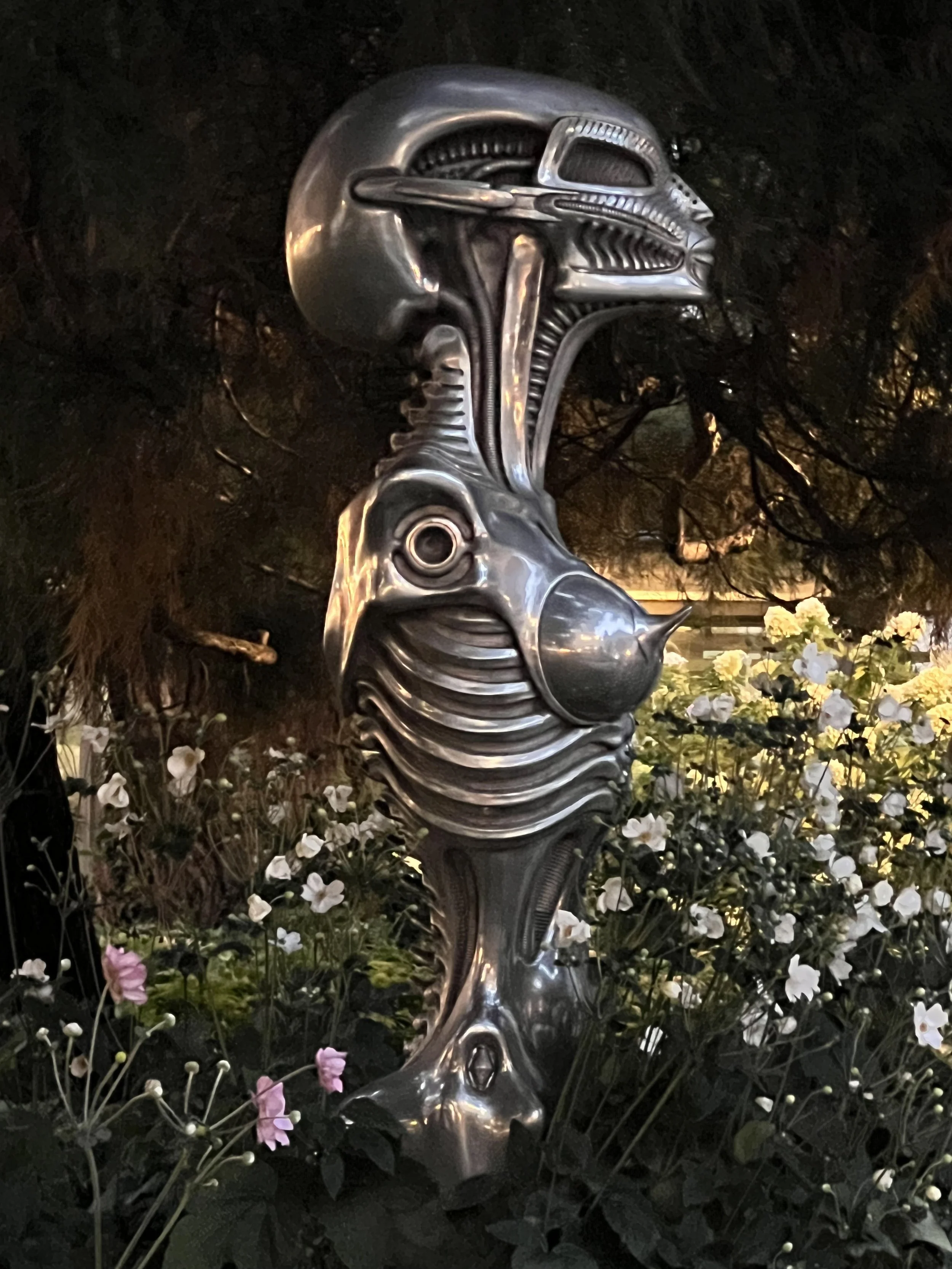
What we didn’t get a chance to do was explore the museum, which had works by H.R.Giger, An artist that Brian has been interested in, but it will give us a reason to return.
Colmar by night
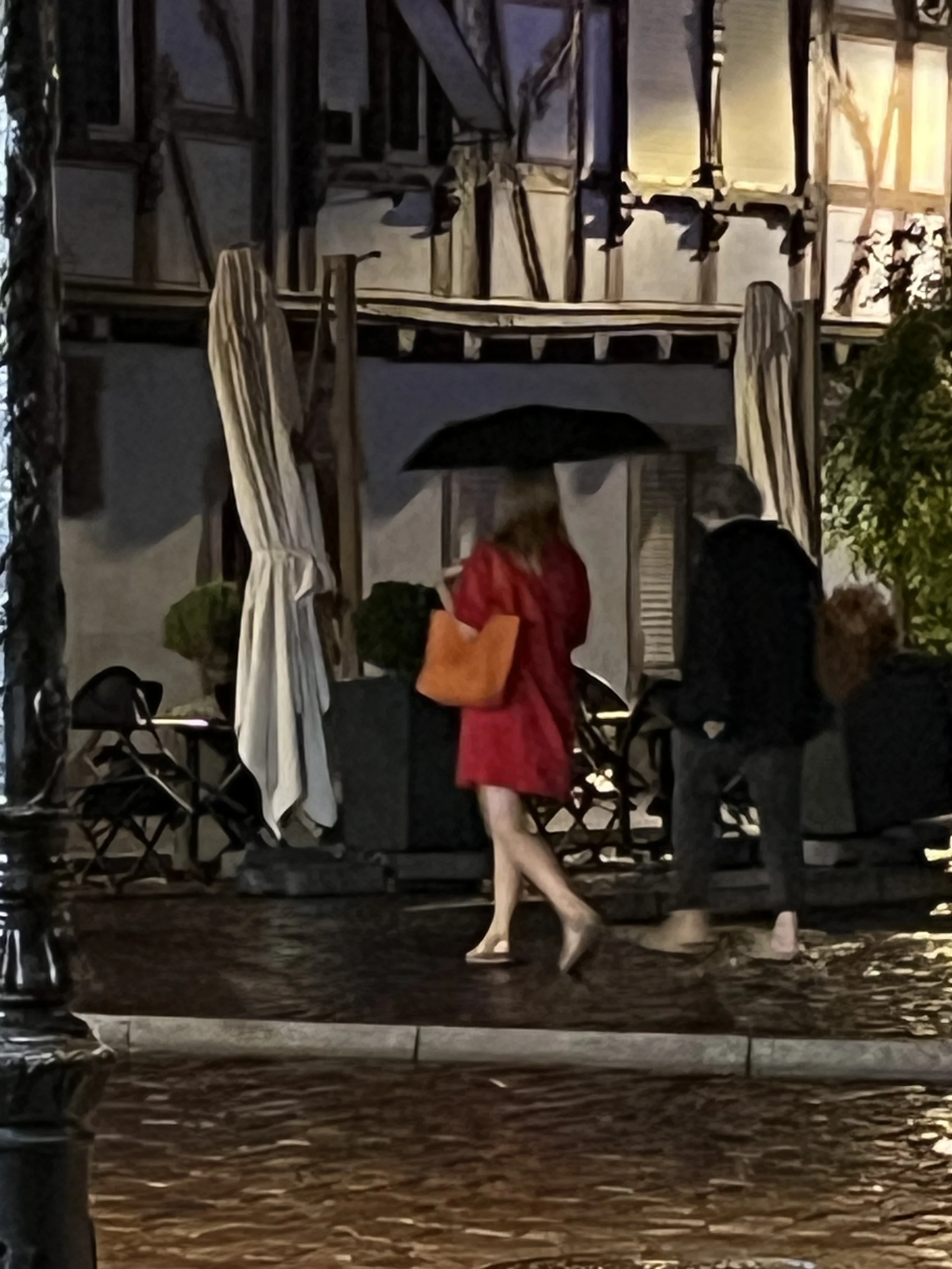
The streets of Colmar seem to glow at night.
The coloured houses look like they could be made from candy, carefully lit to enhance their chocolate box character.
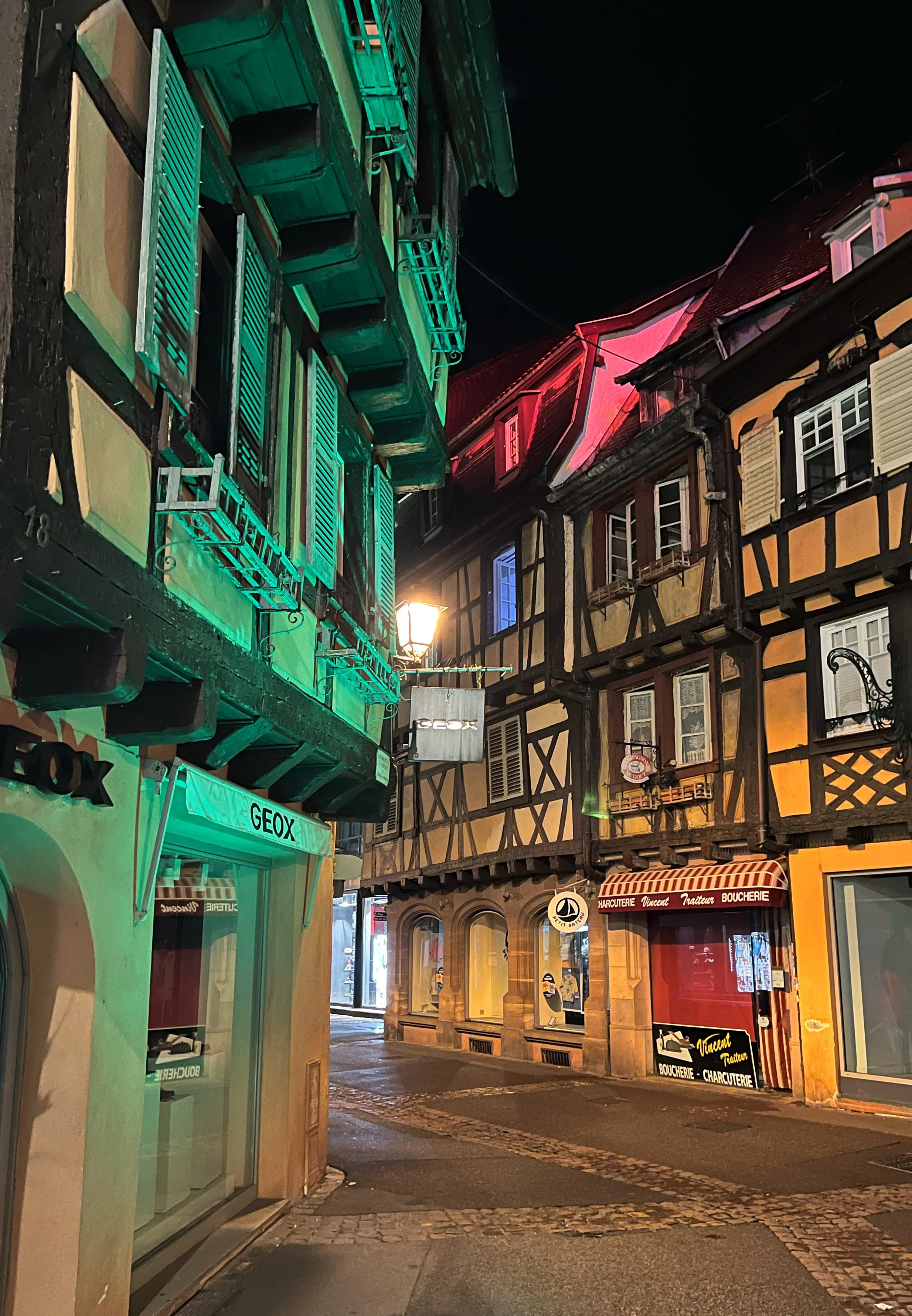
We spent a couple of nights in Colmar. The first evening we kept things simple and ate at our hotel, the second night we ventured out to a Thai restaurant that we had discovered on trip advisor. Both made for a good start to our holiday.
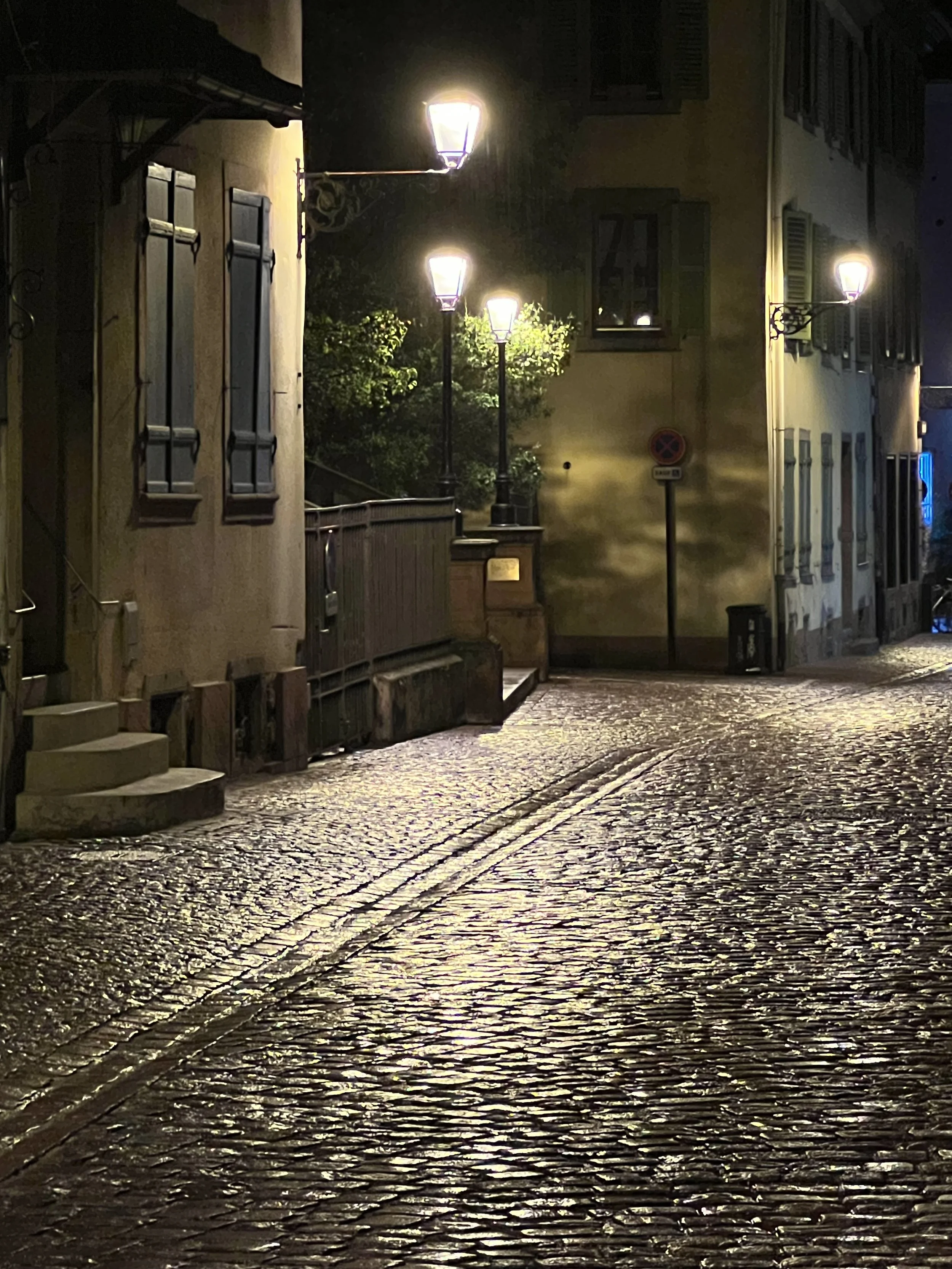
The streets are just so pretty at night, it’s a fabulous little town.
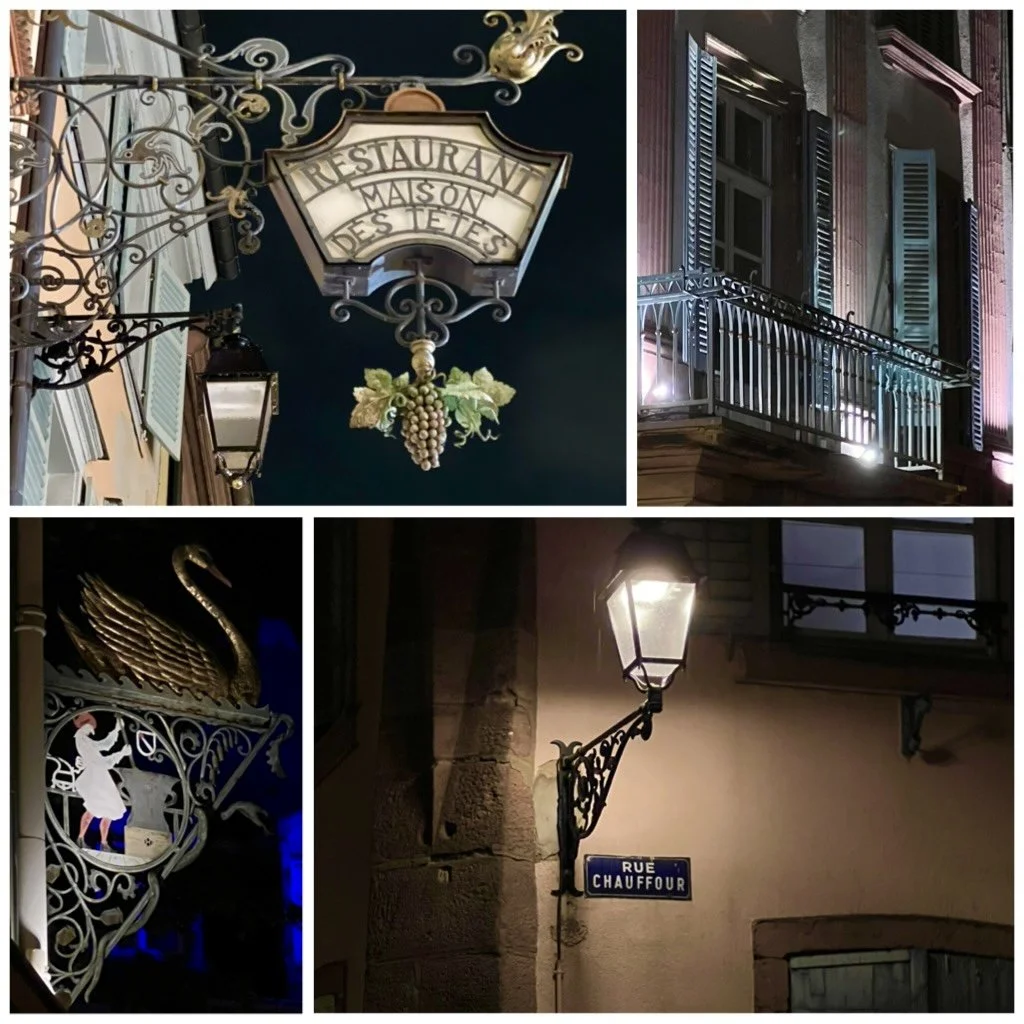
A leeky boat
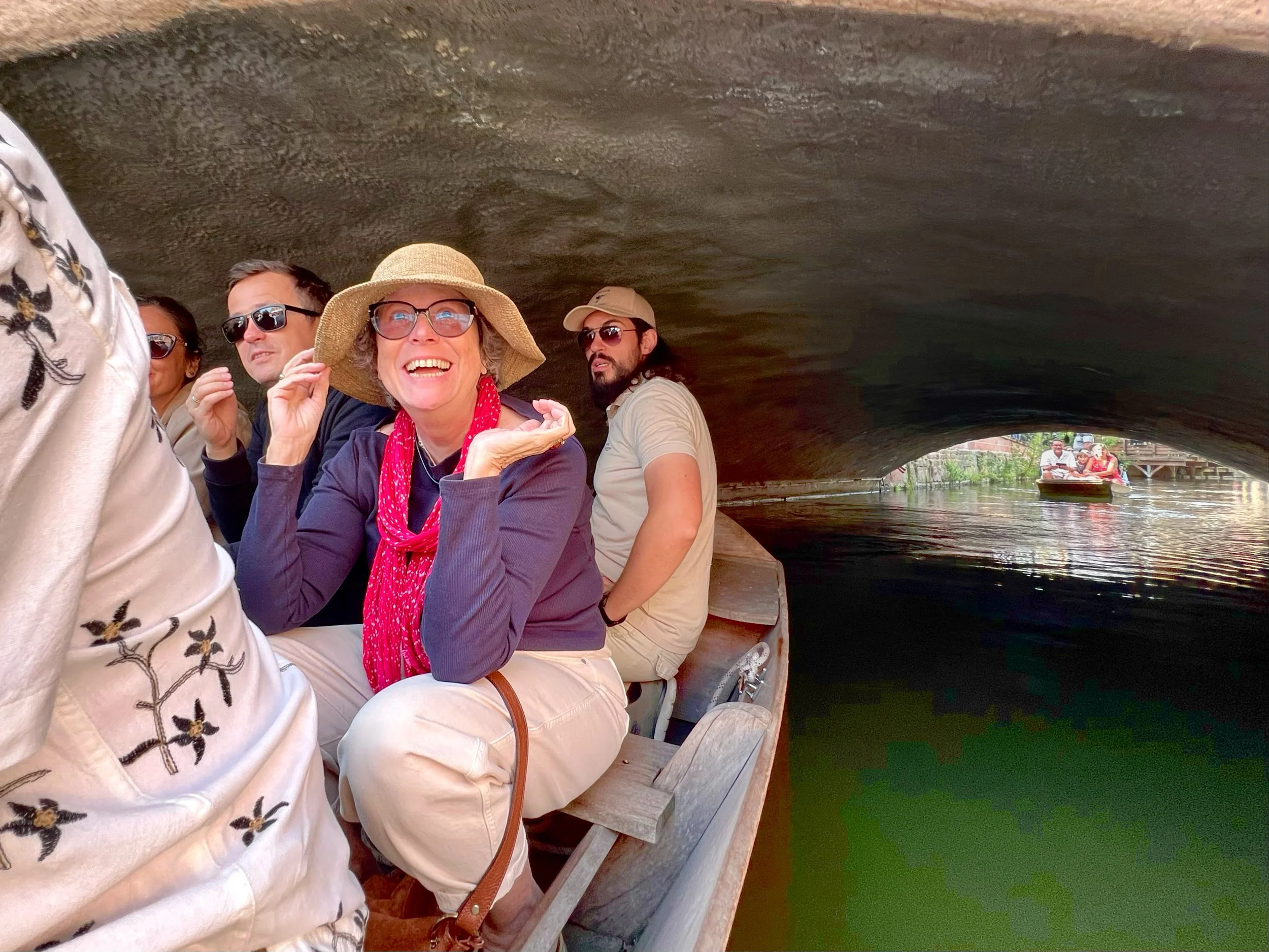
We decided a perfect way to appreciate little Venice was to see it from the river. For €8 you can book online boat trips, in precarious looking, low, wooden, flat bottomed boats.
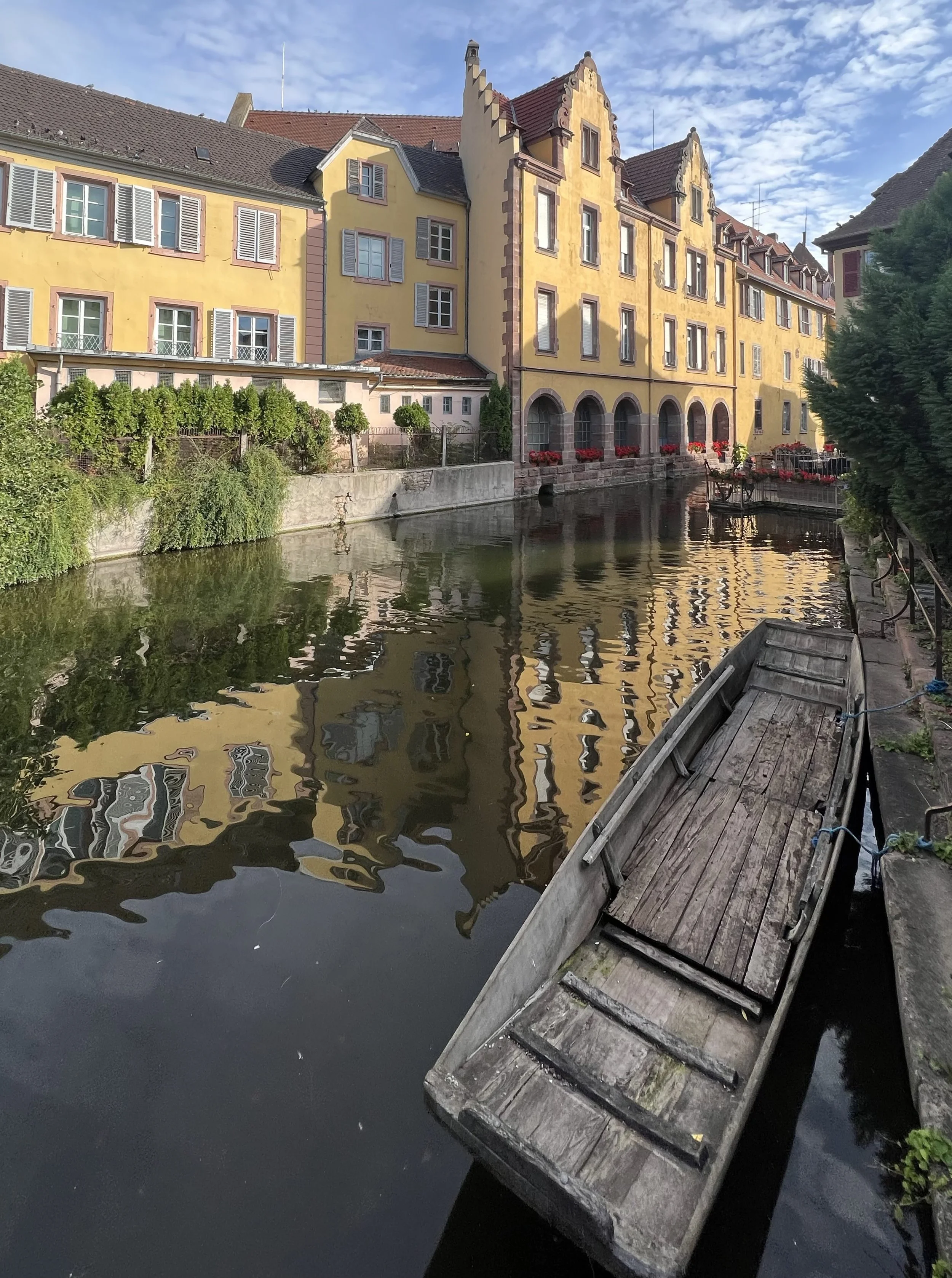
When we arrived for our scheduled trip, the queue, at the bottom of the Saint-Pierre Bridge, looked a bit haphazard, but we soon realised it’s all very carefully administered. After a very short wait, Brian’s name was called, as our boat arrived at the quay, and we were directed to our seats.
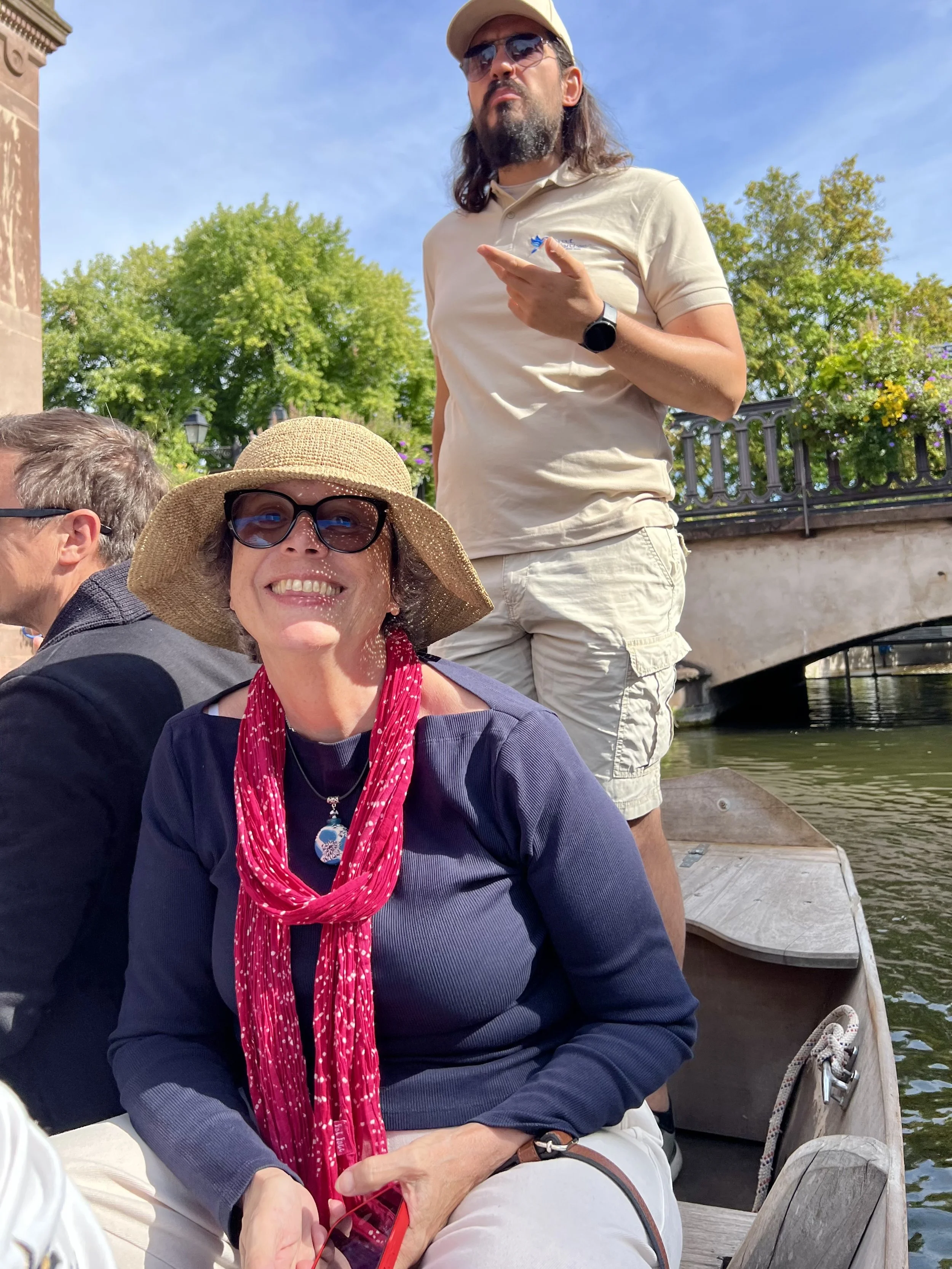
The trip first took us along the lush, tree-lined river, past some of the fantastic art nouveau houses that were built in the 1920’s by wealthy merchants and businessmen.
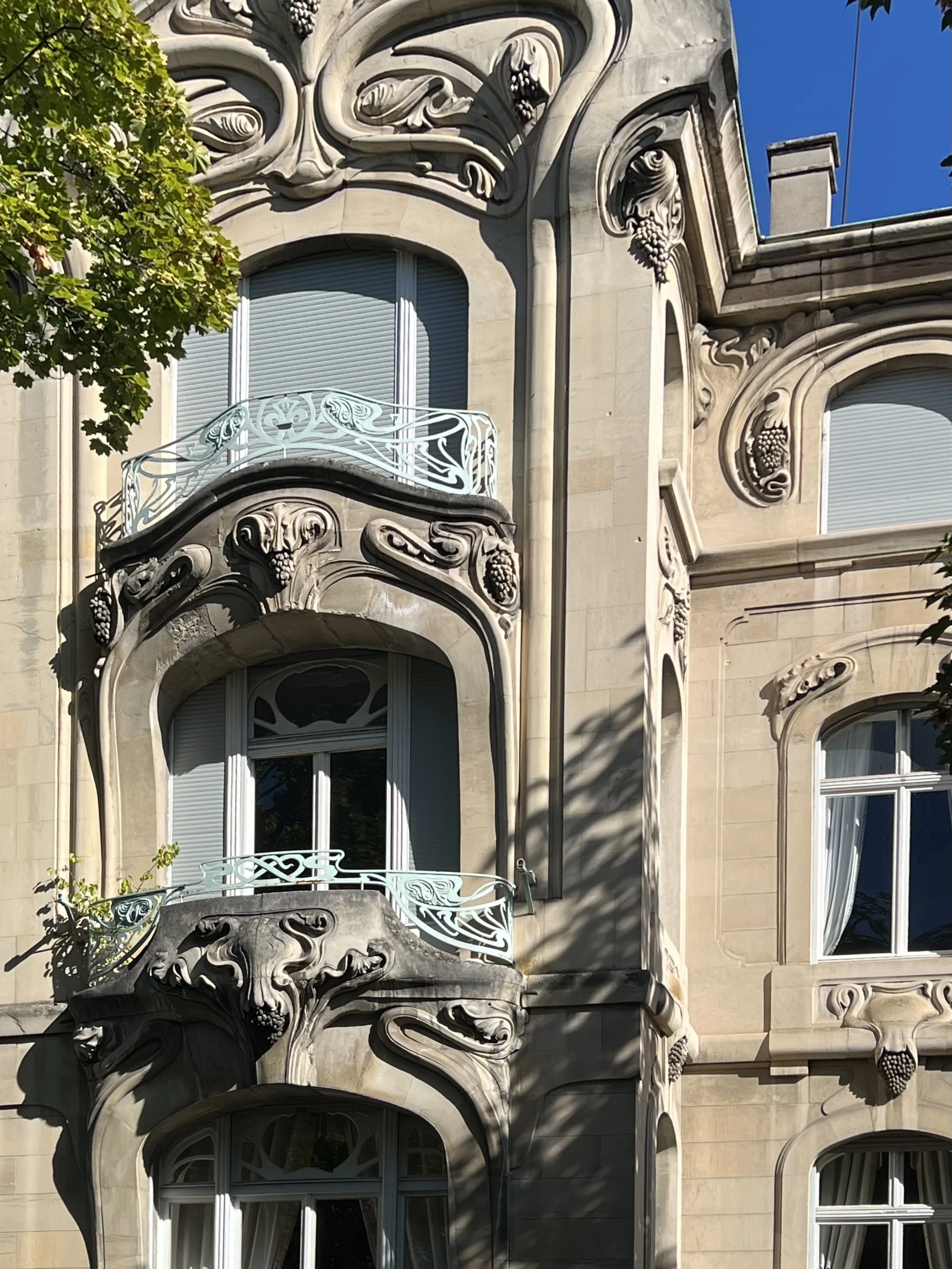
Along the way, our boatman explained the importance of the river to the market gardeners and boatmen of years gone by. The river Lauch, which translates to leek, carries a tale that it was named that way due to the frequent flooding of the area, and uprooted leeks being seen floating down the river. I’m really not sure how true that is, or whether it’s one of many tales possibly made up by the, rather amusing, boatmen to share with the tourists. What we can be sure of though is that vegetables were transported by the flat-bottomed boats, along the waterway, to the markets.
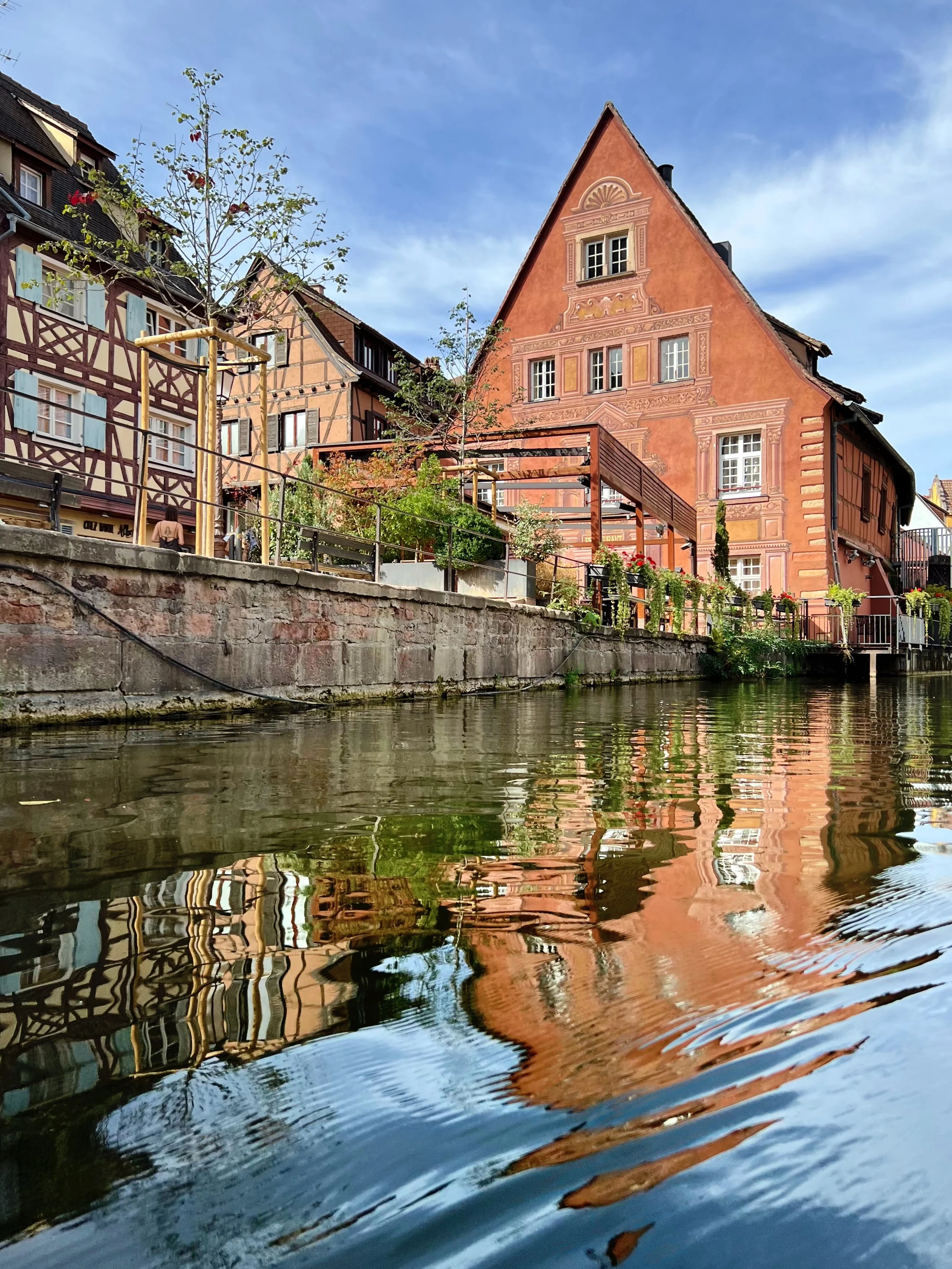
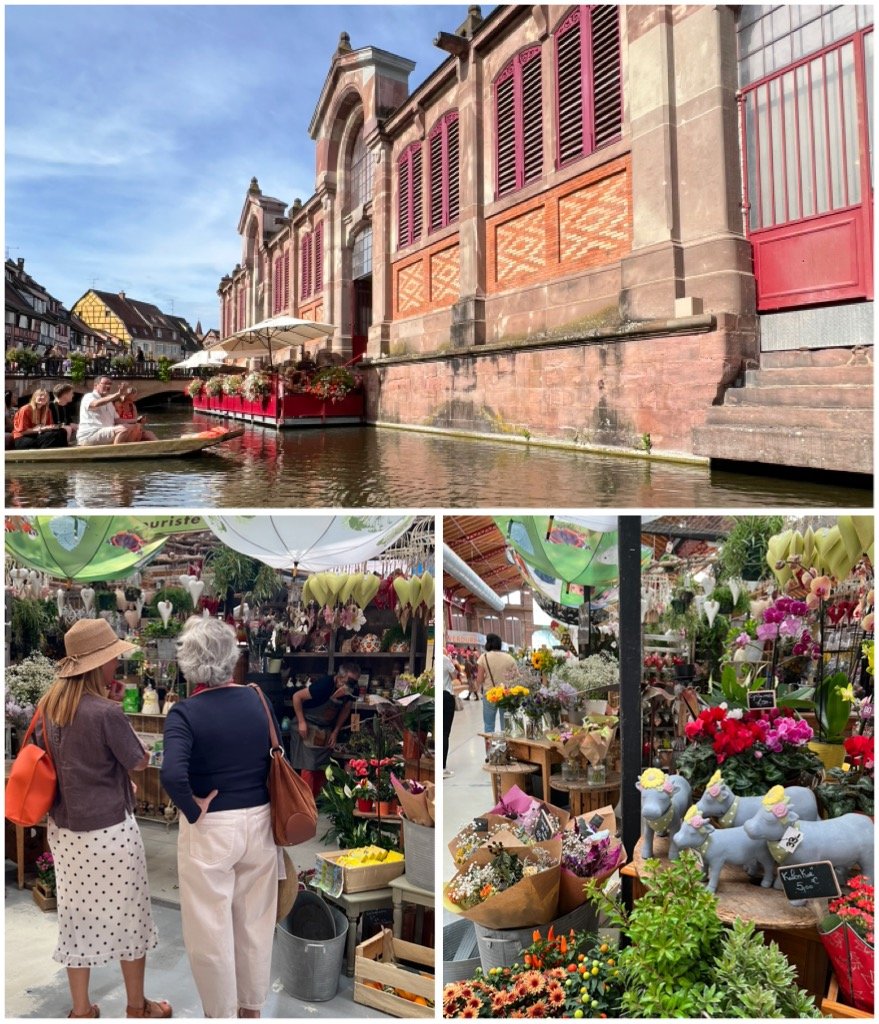
We turned around at one point, and slowly, and quietly, motored back to the little Venice district, where there is still a market today, in the area known as Quai de la Poissonnerie. It’s a beautiful area, where wealthy fish merchants built their houses to be close to the market place.
The trip takes around 30 minutes, and is well worth the €8 ticket price, but beware of the low bridges!
Colmar by day
Colmar is a delightful little town in the Alsace, close to the German border. We were visiting for a couple of days, staying near the old quarter of the town, known as ‘little Venice’.
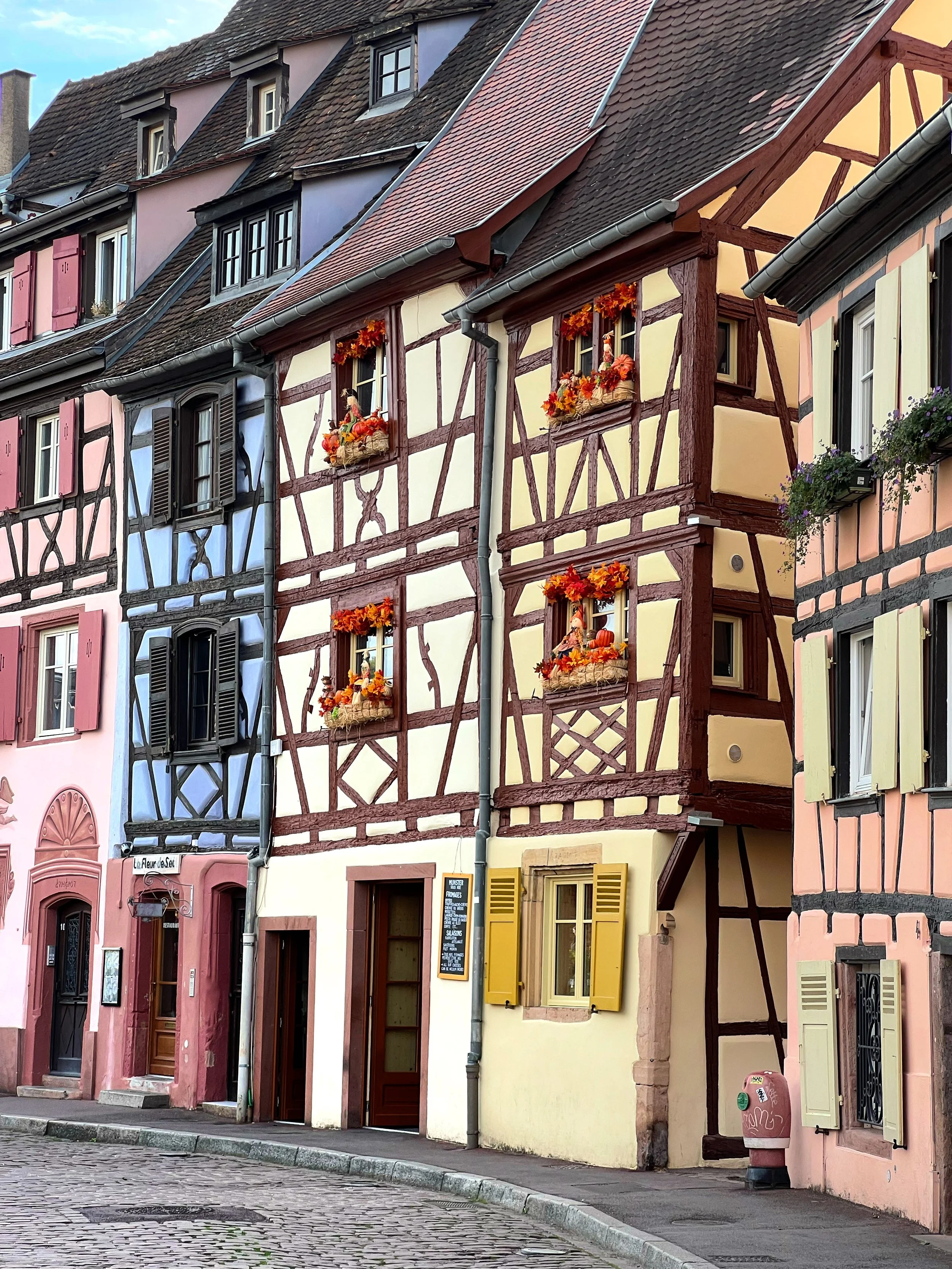
It’s full of colourful half timbered houses and beautiful cobblestone lanes. Bakeries line the streets, their gorgeous aromas filling the air, whilst pretty little sweet shops, and cheese and charcuterie shops—selling local produce—bring extra colour to the alleyways. There are also an abundance of delightful little restaurants and cafés.
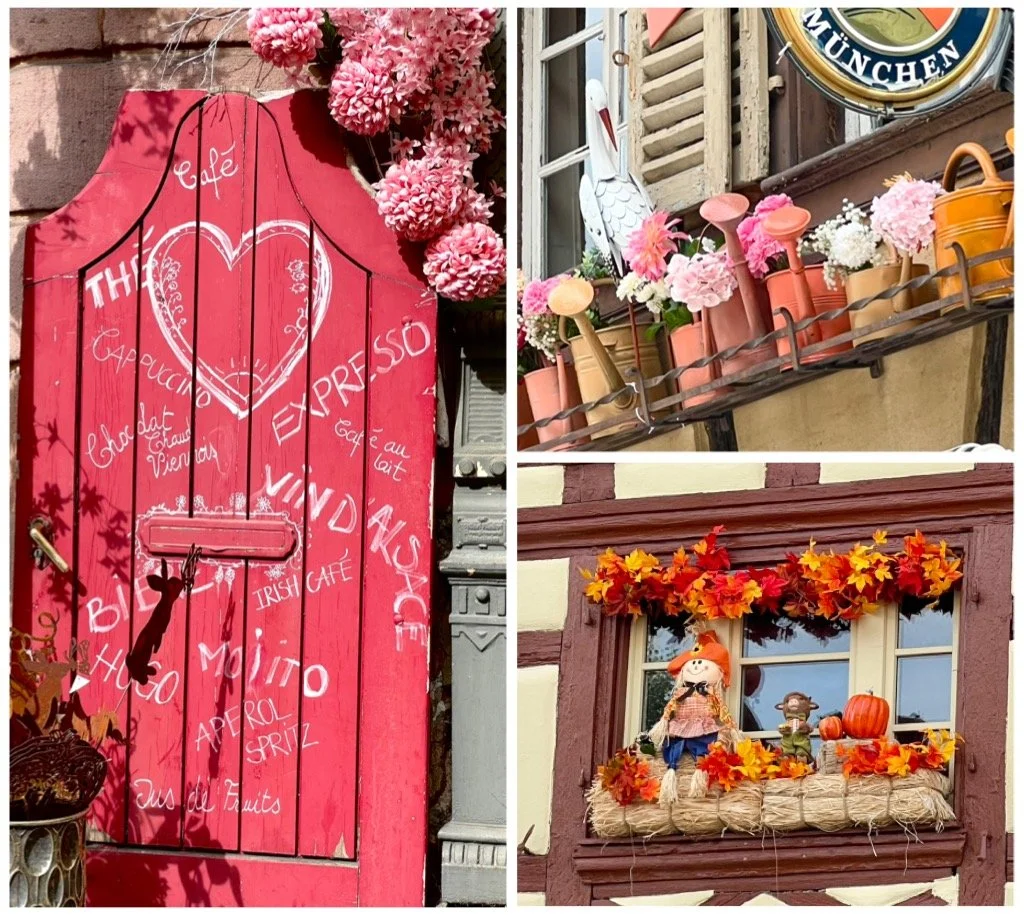
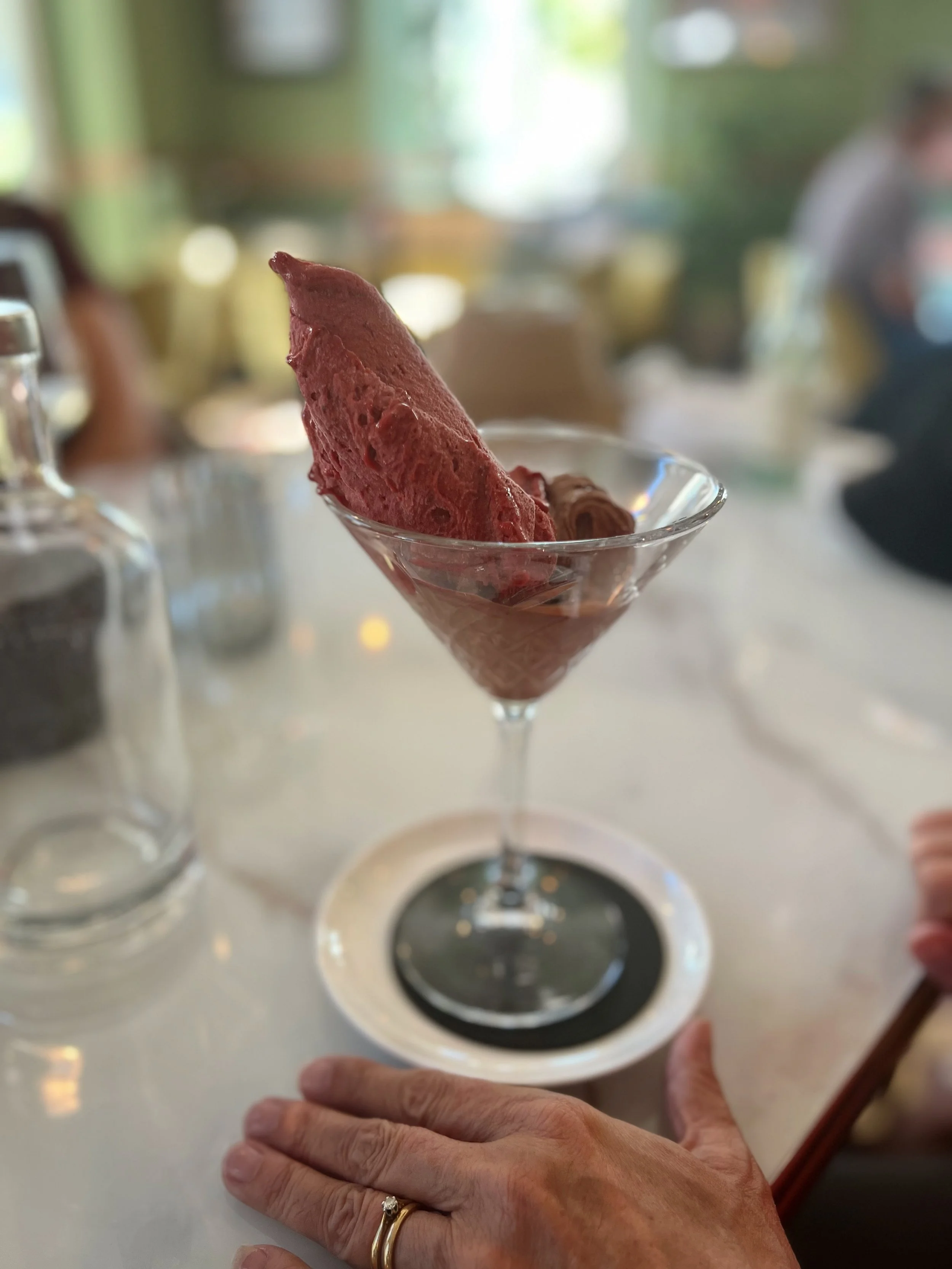
After taking in the atmosphere, we took a wander along to the market, which was alive with locals and tourists, buying pretty little souvenirs or something tasty for later. I found some cherries soaked in vanilla, which I plan to take home and serve with some homemade ice cream, or possibly a chocolate mousse.
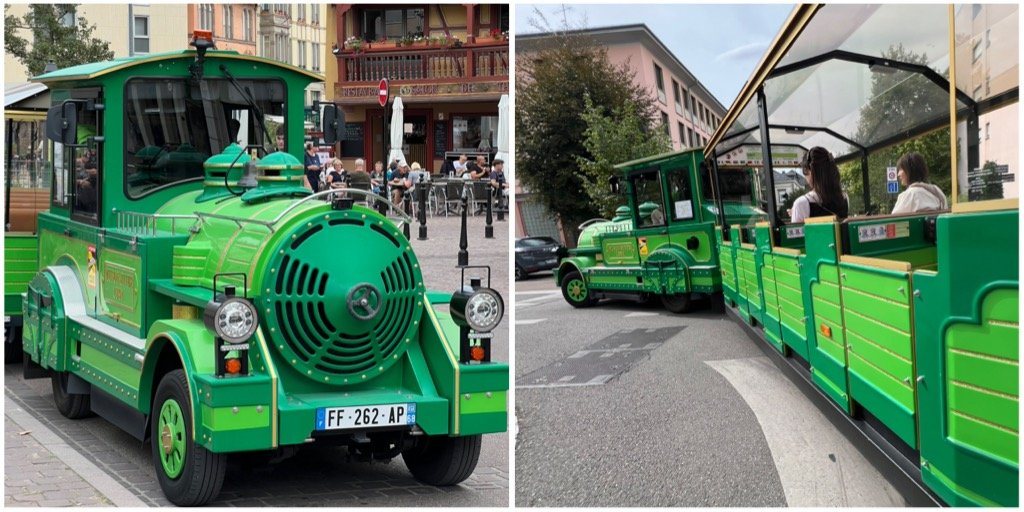
We then decided on a trip around the town, on the little green train that’s a great way for you to see all the sights. There was a recorded guide to listen to on the way round which offered some fascinating facts about the town.
For instance, the half timbered medieval and renaissance houses demonstrated the wealth of their owners by using carefully shaped oak beams, and hand-cut patterns with complicated joints. These features were only attainable by people that could afford the best craftsmen.
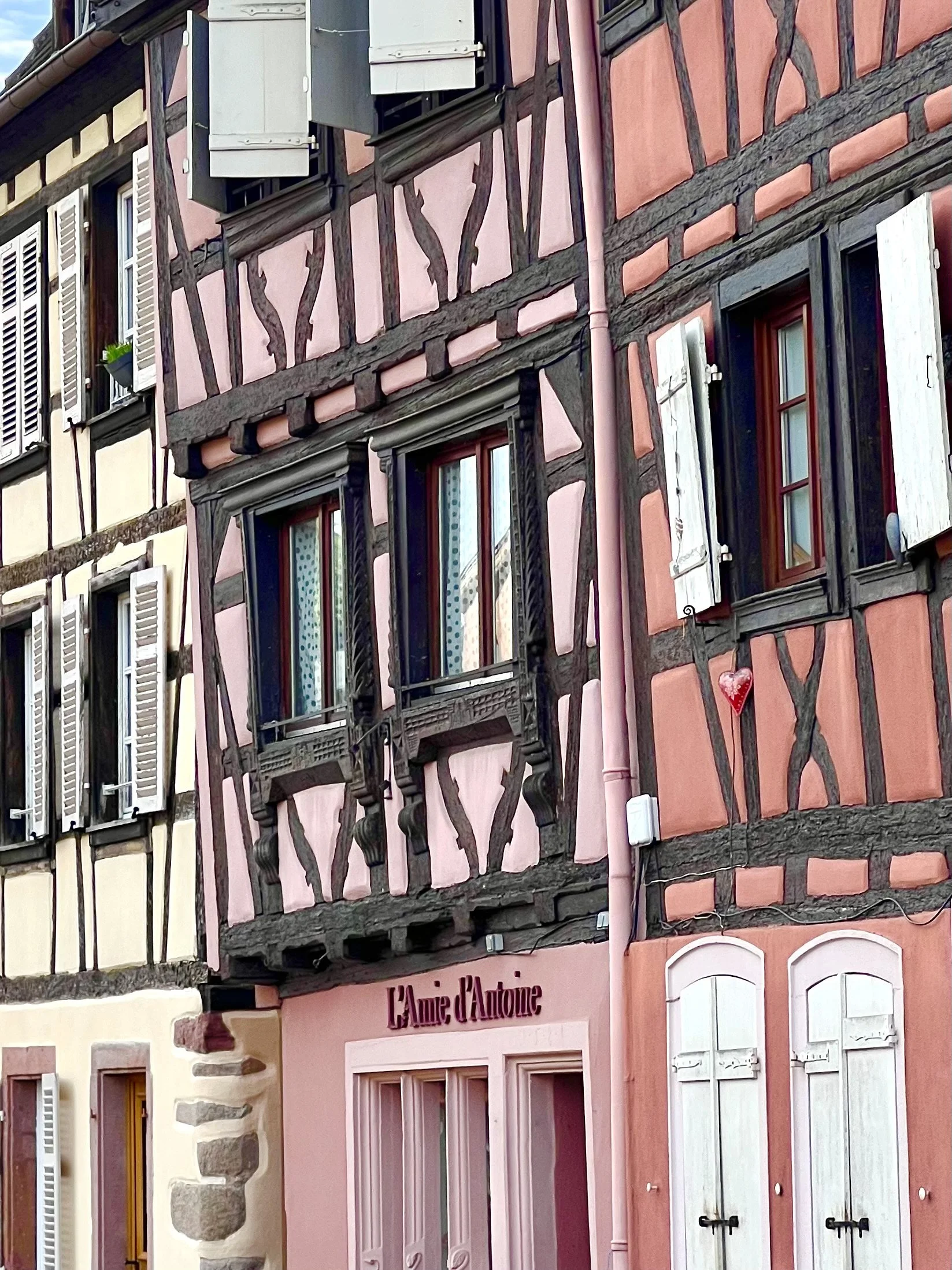
It’s such a beautiful, chocolate box, town.
Jazzabar
Every year, in September, a jazz weekend is held in Bar-sur-Aube. We’ve never been able to go to it before, but this year we were free, and I was keen to see what it was like.
They advertised two groups performing on Friday night; March Mallow and Le Quintette du Hot Club de France. We were able to listen to their music on you tube, so we were hopeful it was going to be a good evening.
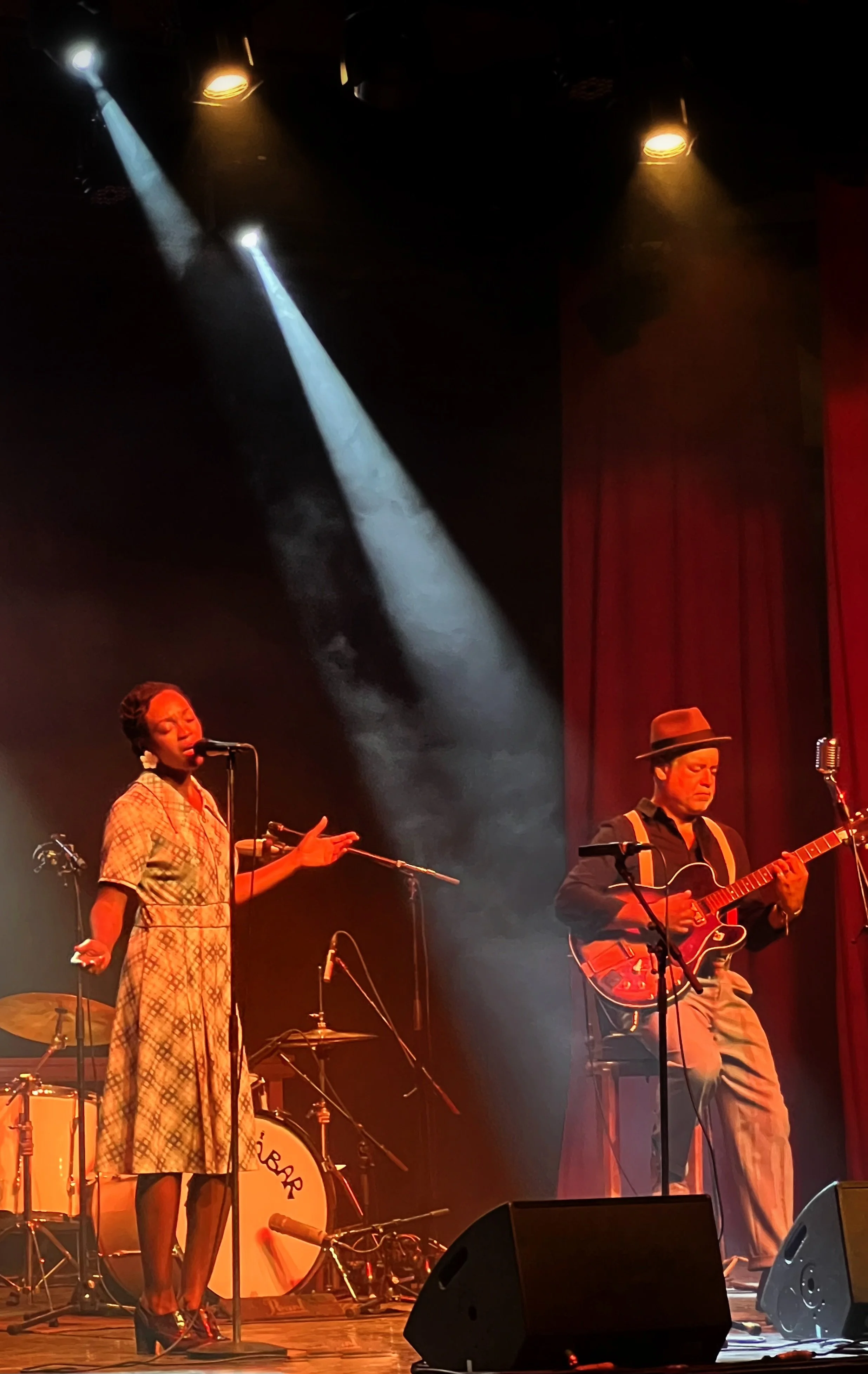
Astrid Veigne, from March Mallow, set a glorious tone for the evening, choosing some modern and old classics that created an atmosphere worthy of any jazz club. battery
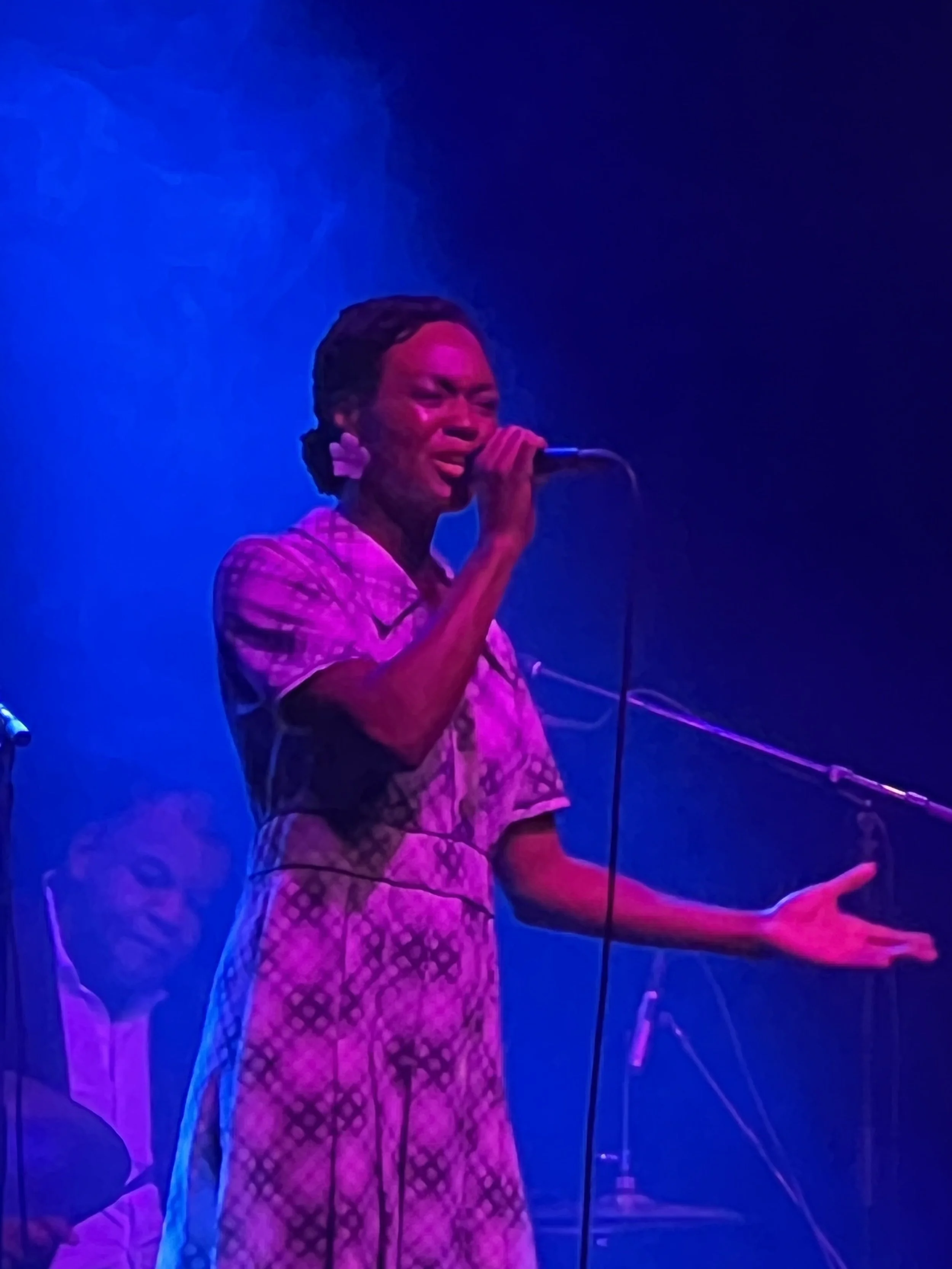
The introduction of the trumpet brought the group to a whole different level, they were definitely one to be followed.

Next came a bunch of rather suave looking chaps—in their white dinner jackets and bow ties.
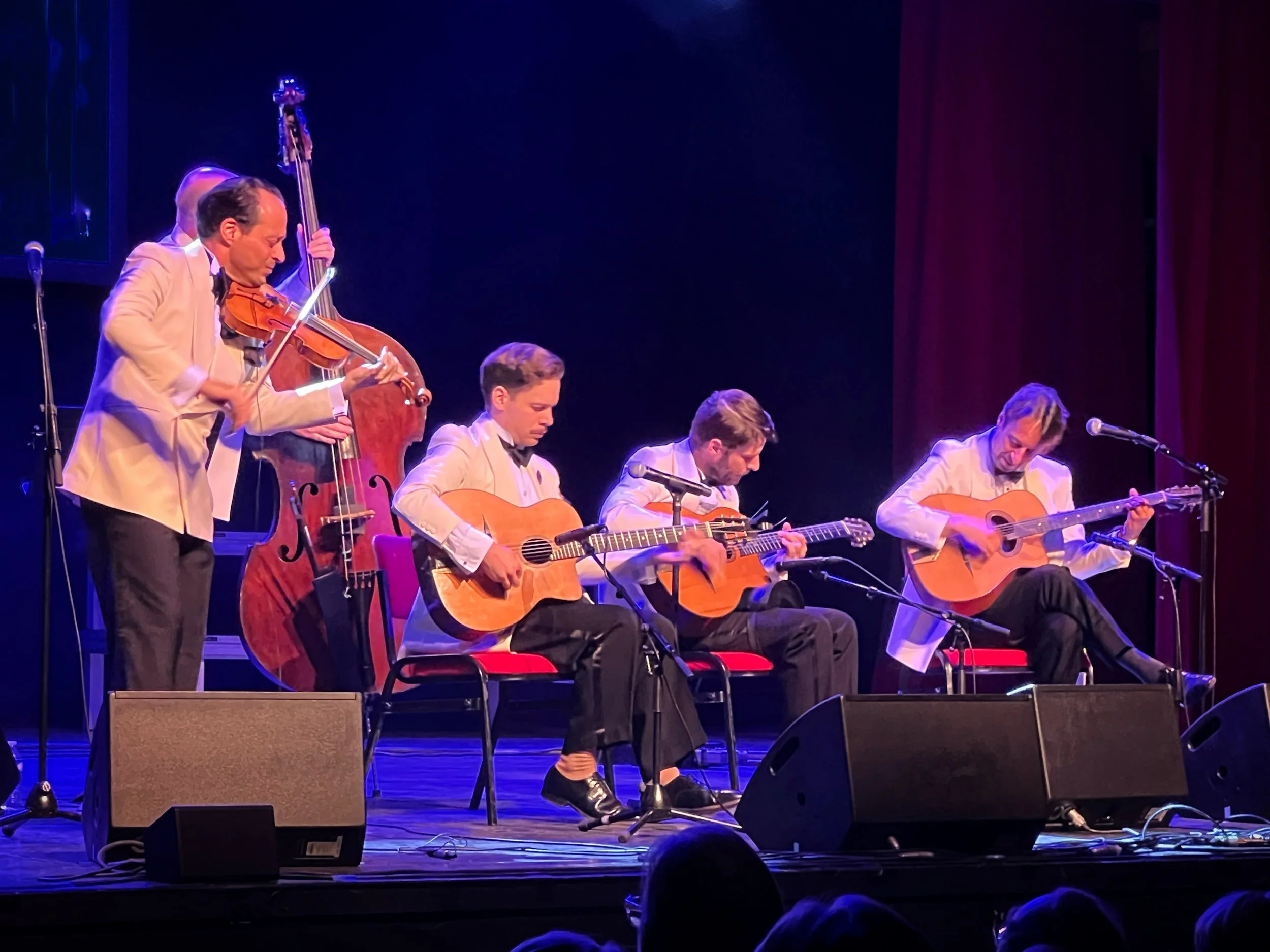
The band leader, guitarist Dunayevski, is internationally recognized for his interpretation of 1930s jazz, in the legacy of Django Reinhardt and Stéphane Grapelli. Their ensemble, officially recognized by the Hot Club de France association in December 2024, forms an elegant swing group faithful to the tradition of Manouche jazz, which I soon realised I really enjoyed.
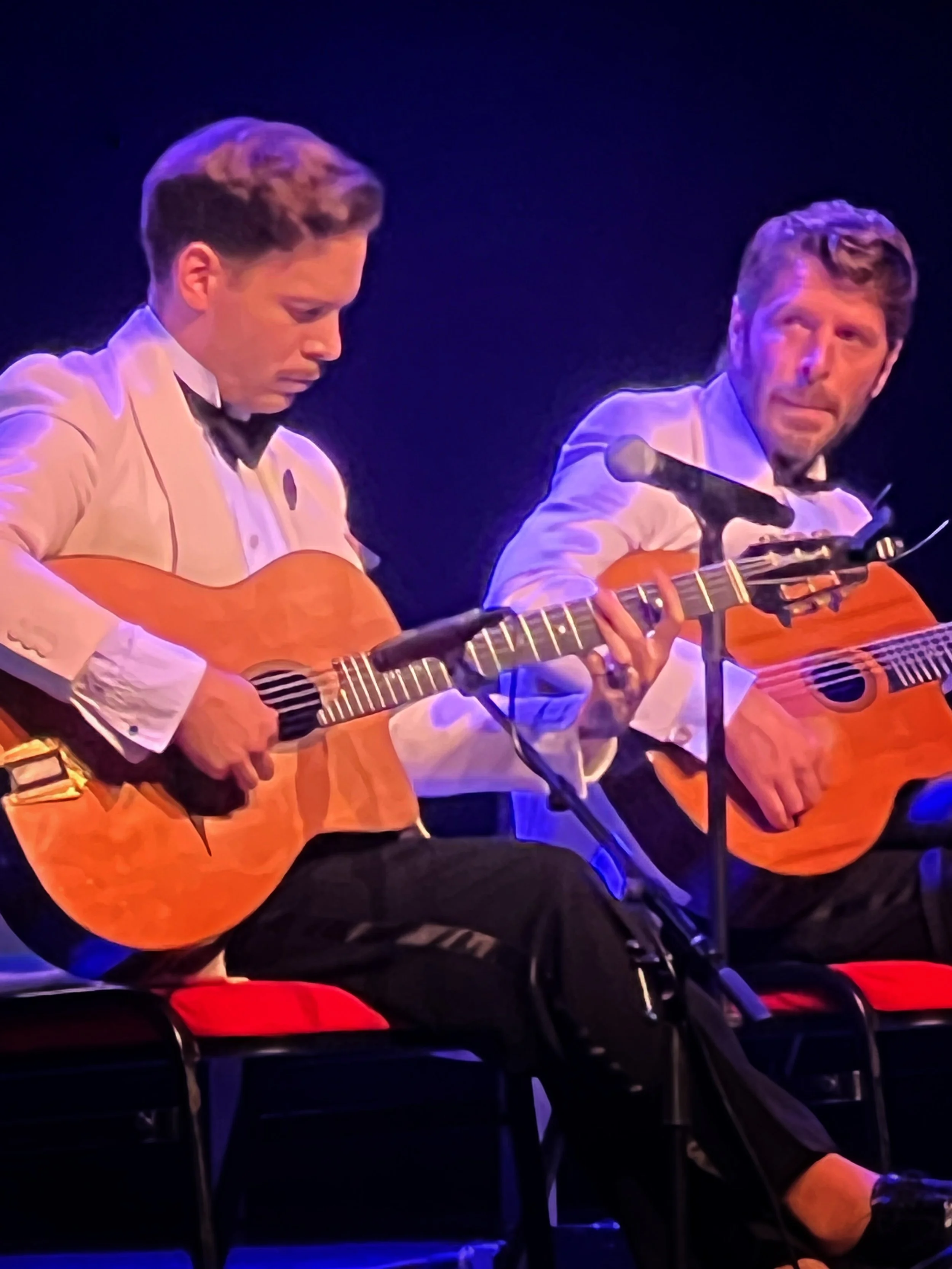
We will certainly keep an eye out for these playing again, they were simply superb.
Weed free
Brian had been getting a little concerned about the density of the weeds in the river Artaut, just in front of our house. I think with the lack of rain and strong sunshine the weeds had got very well established in the slow flowing water.
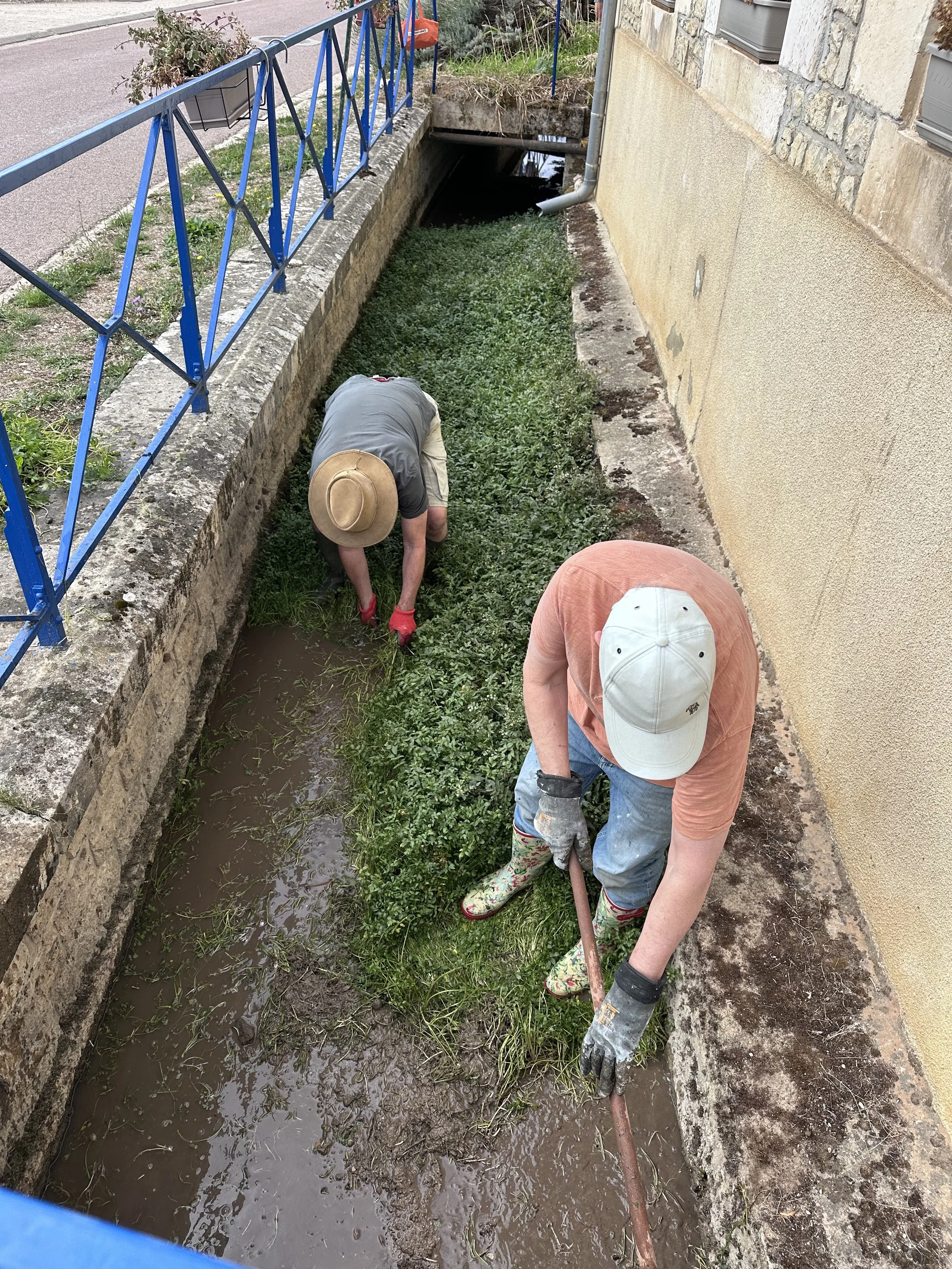
fortunately our friends Chris and Sara have arrived—we’ve planned a little road trip with them—and before we leave on our trip they have offered to do some garden jobs with us.
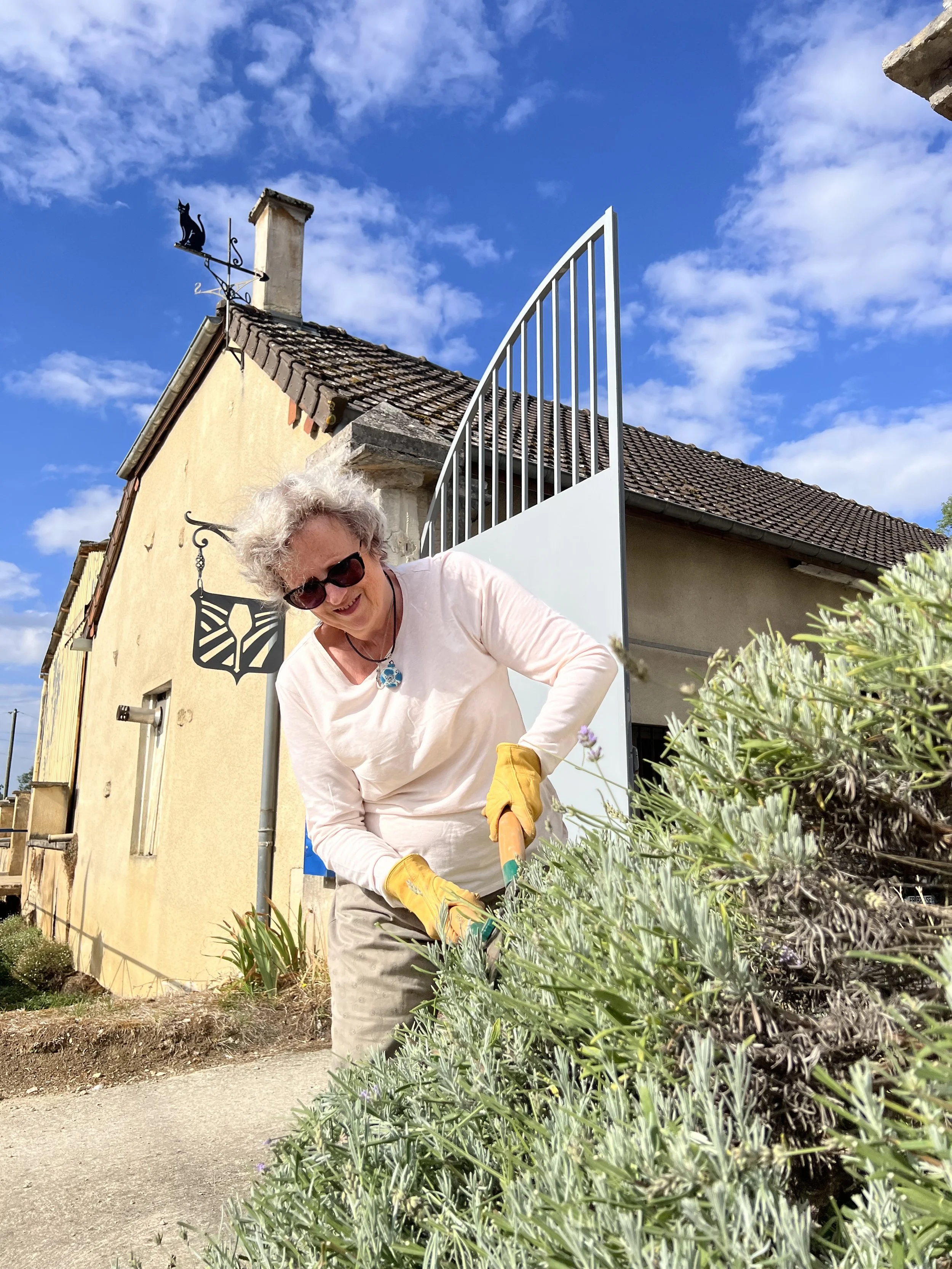
We always appreciate a helping hand, and it’s amazing how many little jobs we get done with those extra hands.
I wanted to get the lavender trimmed, and I started just outside the gates. Sara started on pruning some of the roses and tidying up the walled garden.
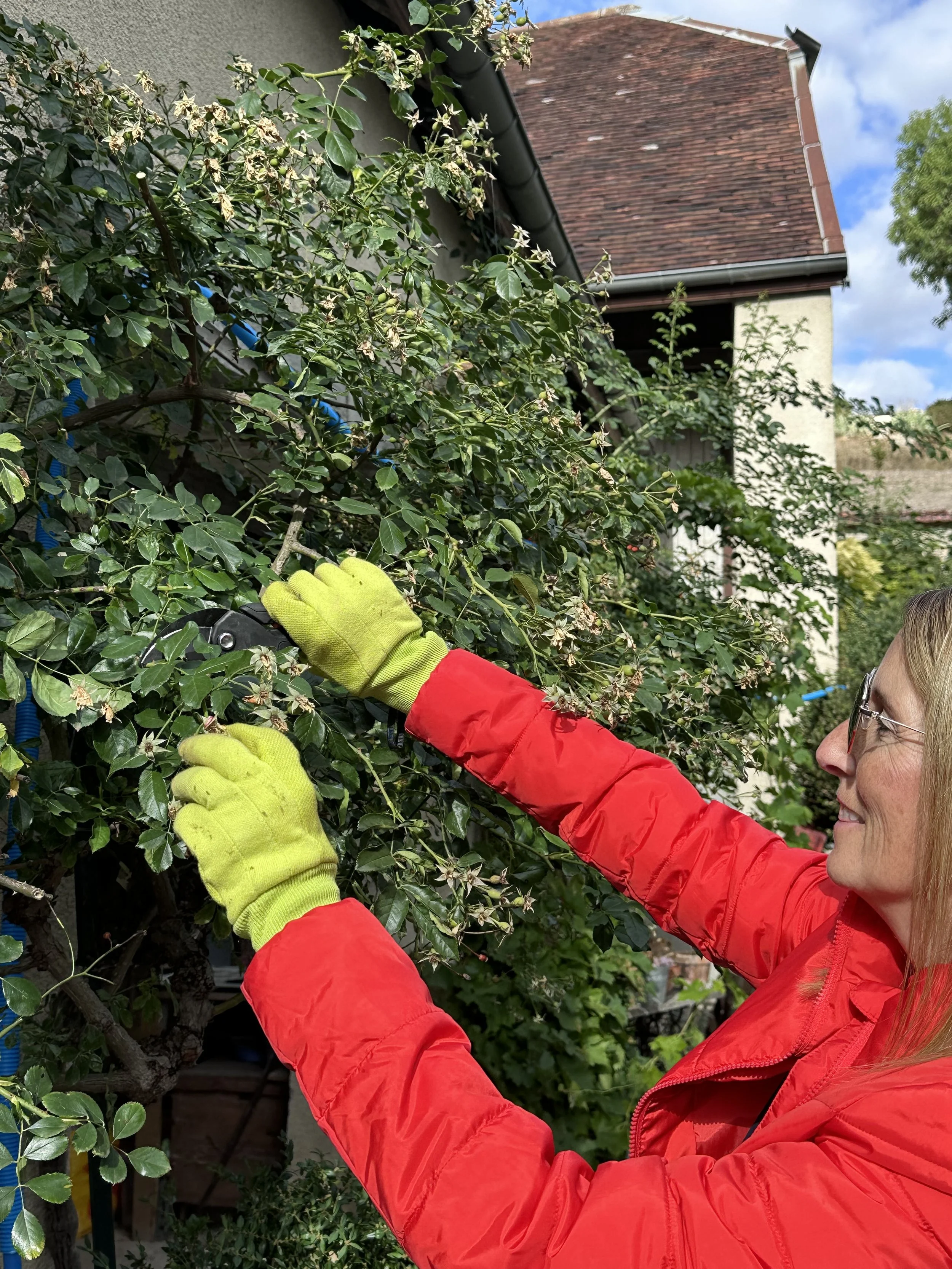
We all put in a lot of work, and were able to enjoy coffee, and an alfresco lunch together, in the sunshine. A little bit more to do after lunch, and we were all finished by about 3pm.
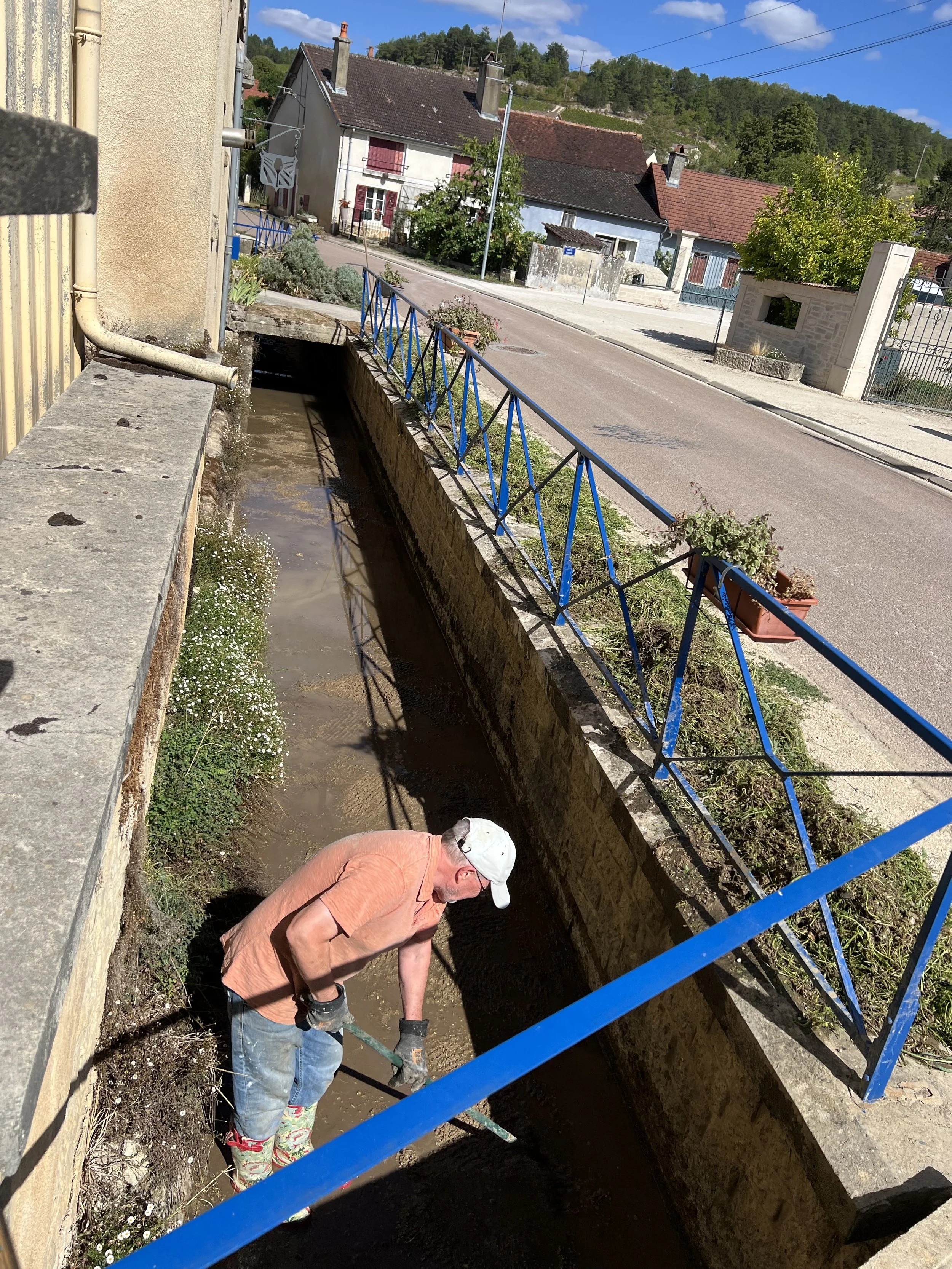
Very pleased with all our work, especially with a weed free river.