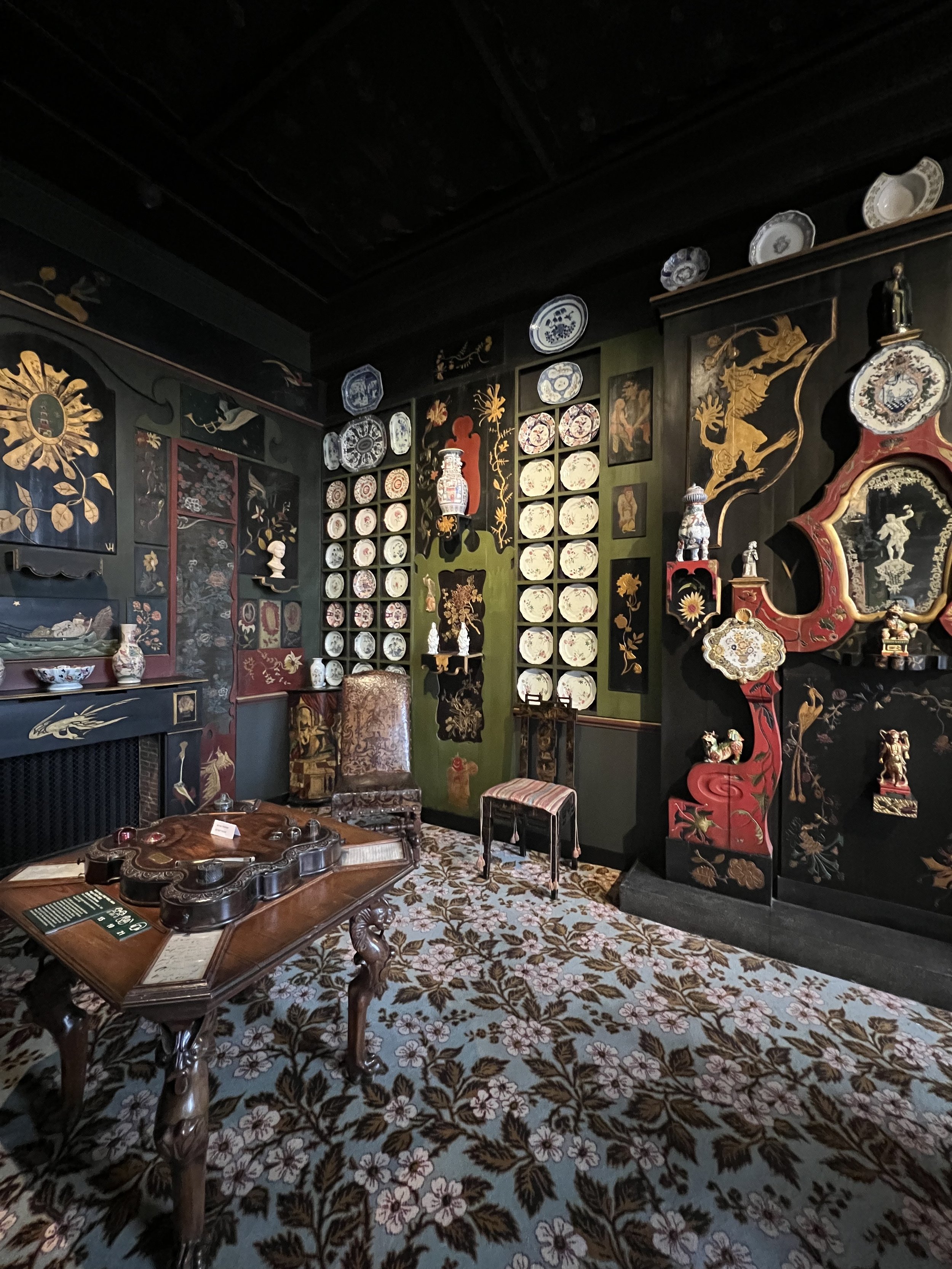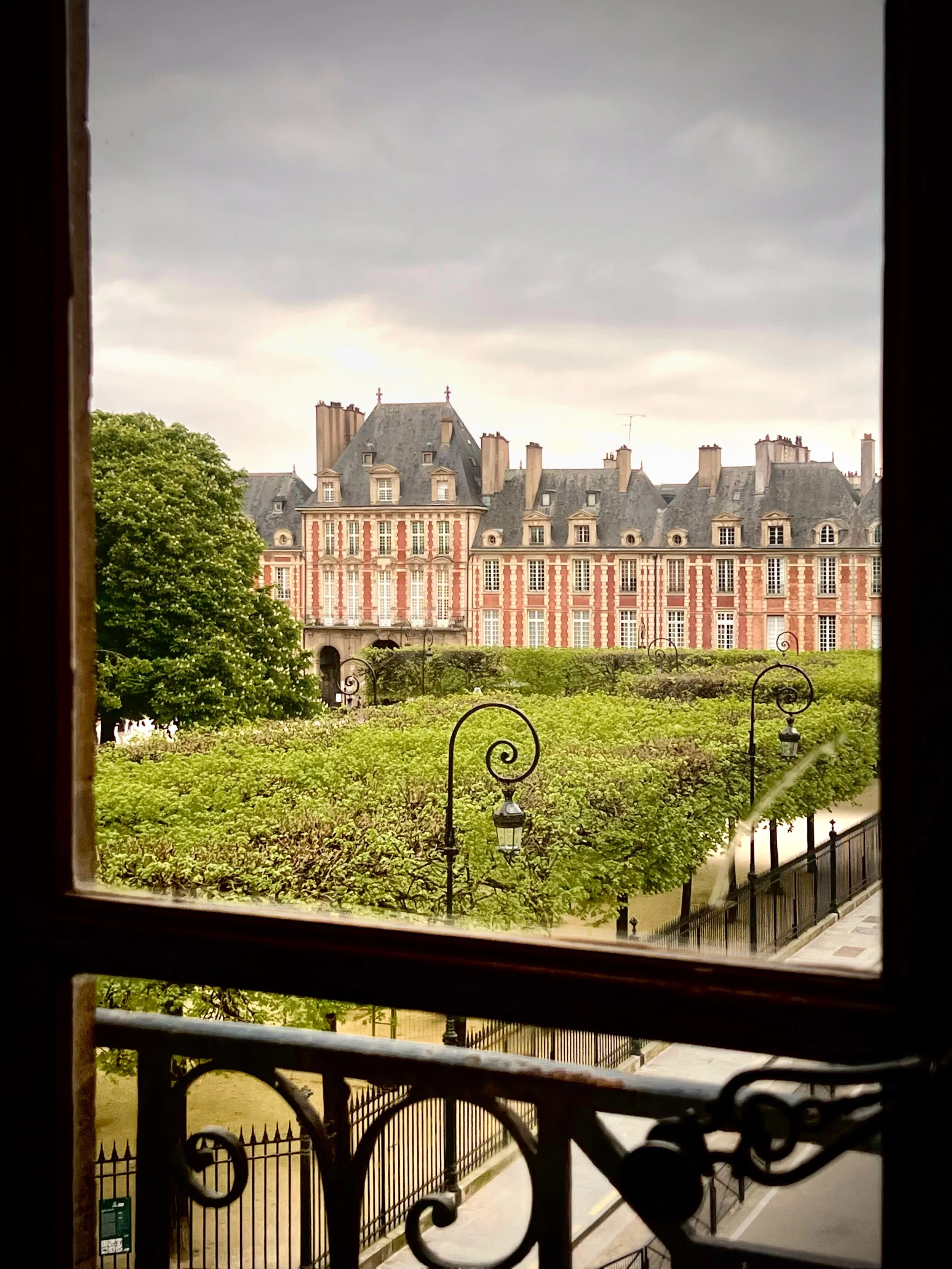
Opened in 1903, the Victor Hugo museum is situated in his former apartment on the Place des Vosges. Victor, born 26 February 1802 and died 22 May 1885, was not only a French romantic writer, poet, and playwright, he was also an artist, a designer, and a decorator. He also upheld strong political views, and was a human rights activist. His views and activities were why he was later exiled from France.
There is a vast collection of his work, which his grandson, Jean Hugo, wanted the museum to become the repository for. The collection exceeds the capacity of the museum, so regular exhibitions and displays are organised to allow the public to discover more of his works. Over time, they plan to digitise them, and make more available online.
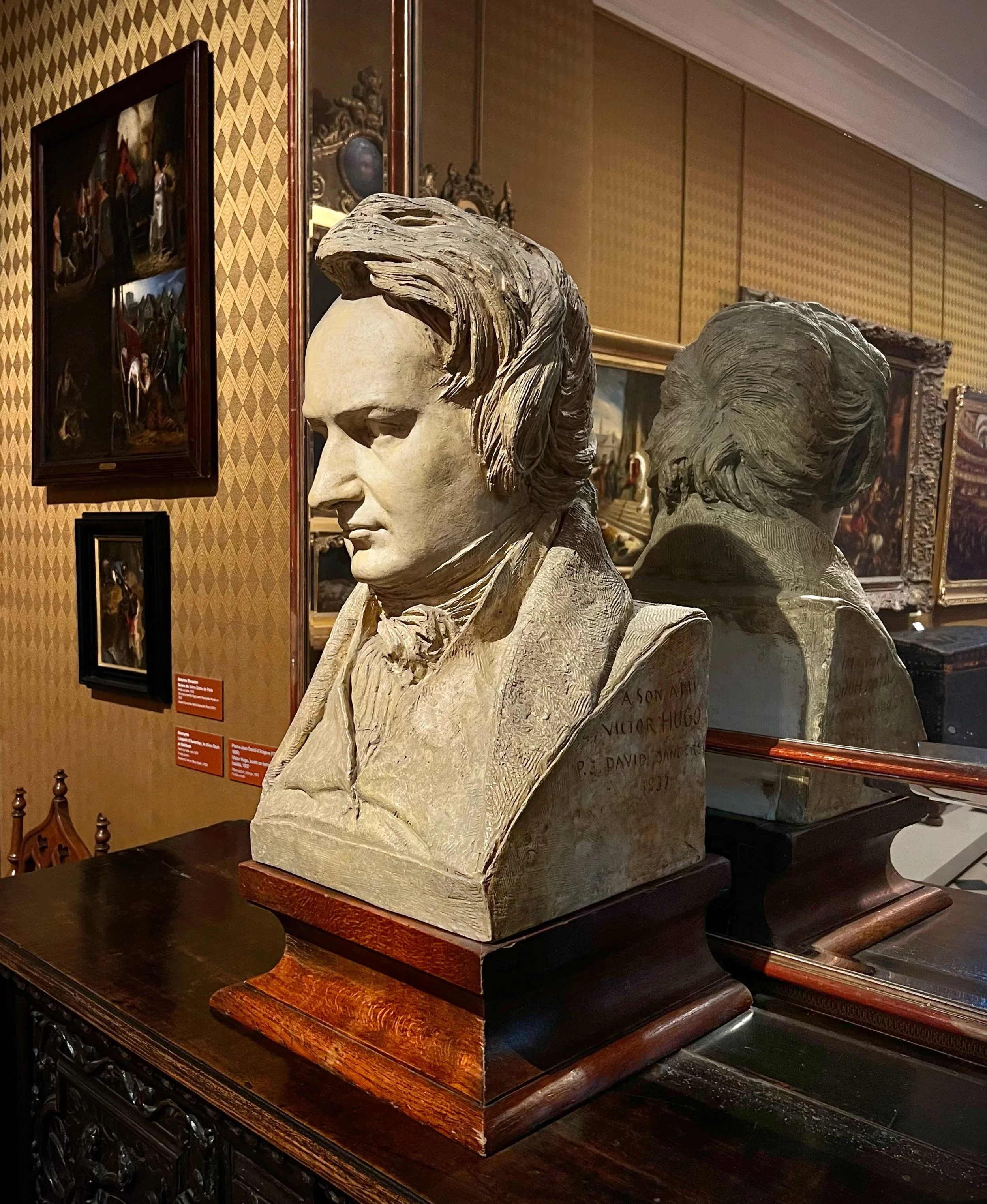
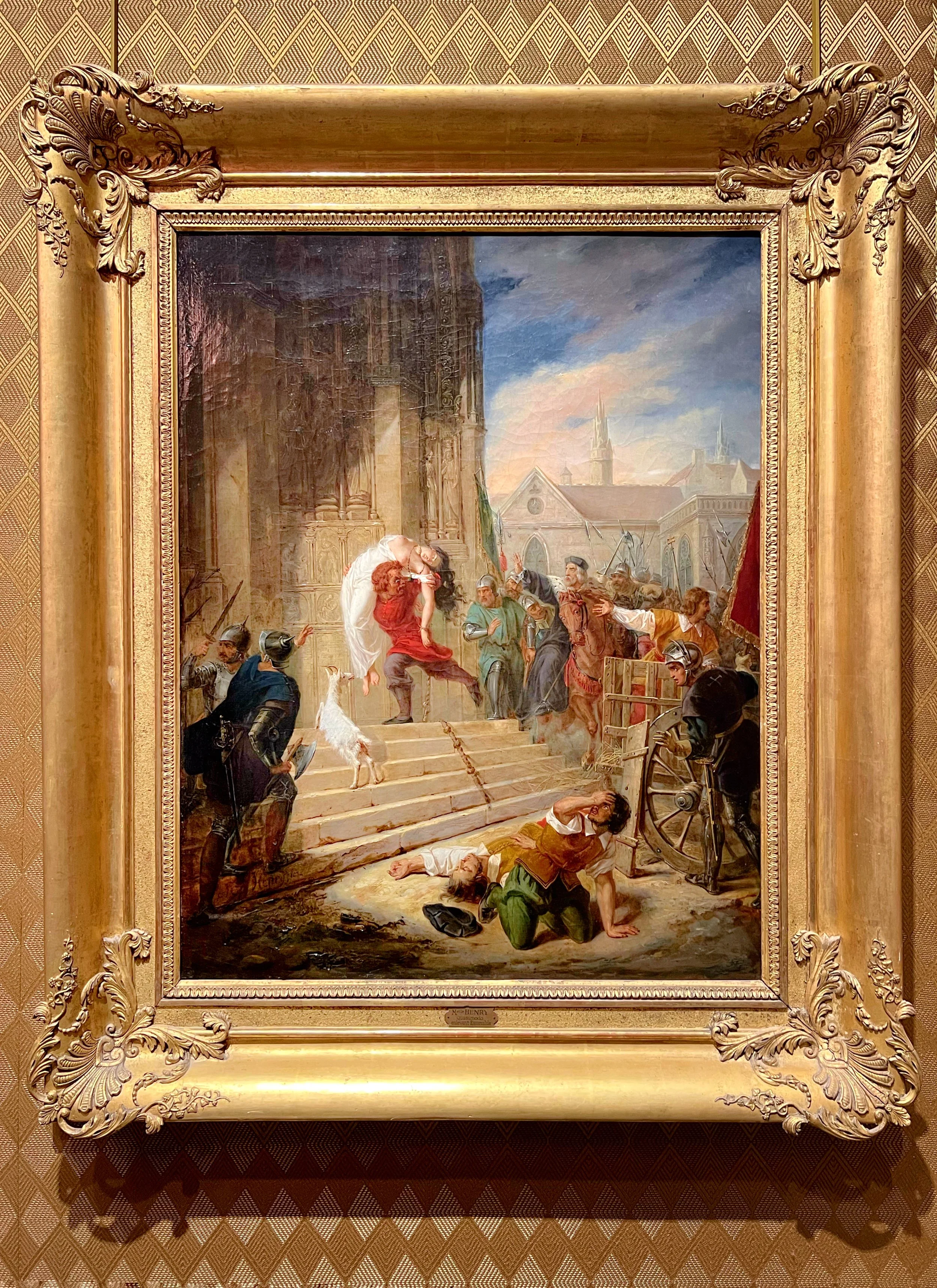
He is probably most famous for the iconic novels ‘Les Misérables’ (1862), and ‘The Hunchback of Notre-Dame’ (1831), neither of which I would say were majorly romantic, rather more tragedies. Not something I would necessarily choose to read, but their fame speaks for itself. I do remember watching the 1931 black & white movie of The Hunchback of Notre-Dame, starring Charles Laughton and Maureen O’Hara.
He welcomed many influential people of the time to his appartement in the Place des Vosges, promoting his staunch advocacy for social justice—which included opposing the death penalty—and his dedicated political service to the French.
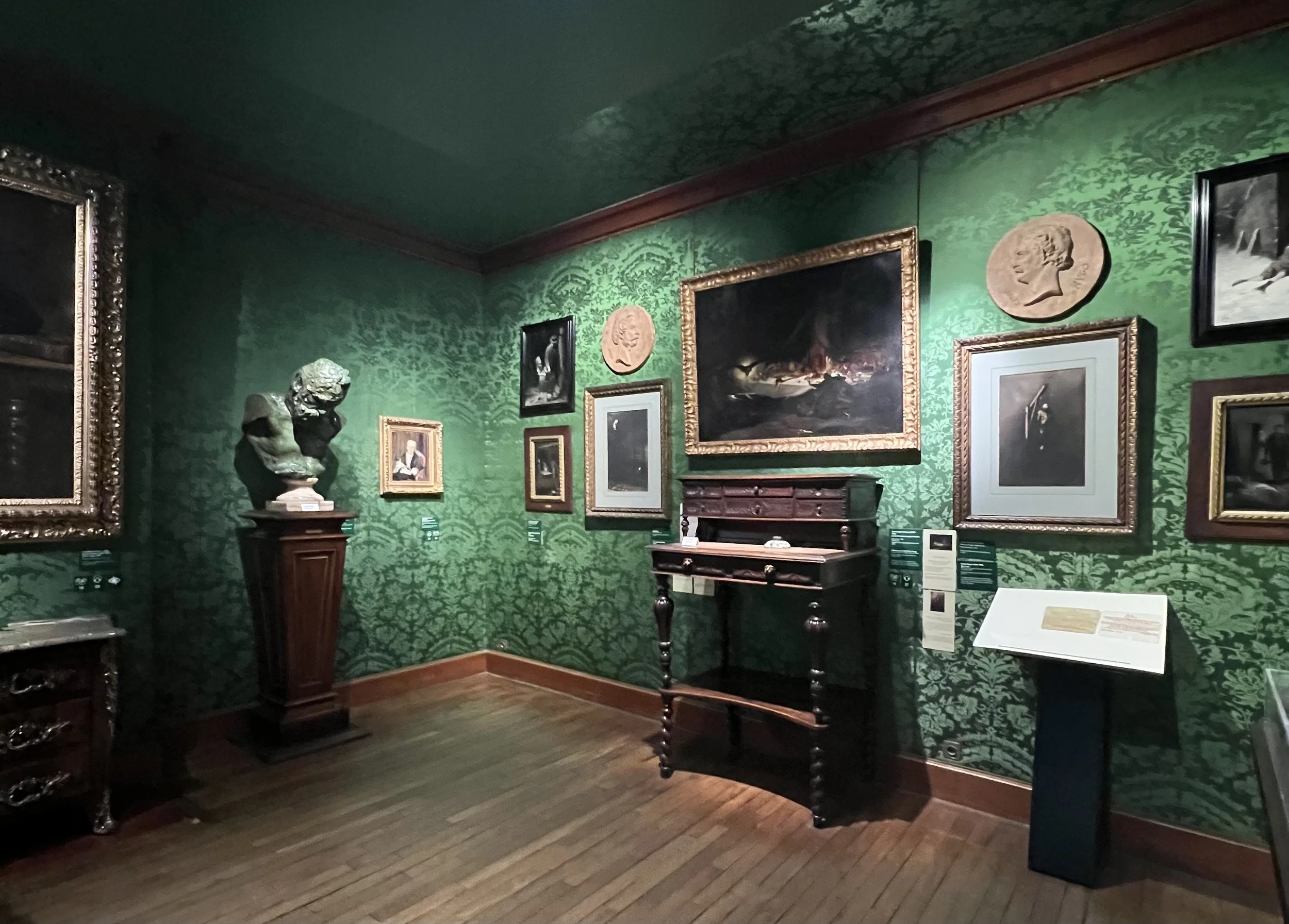
In 1851 he refused to accept the new form of government (enforced by Napoleon III’s coup d'état of that year) and was consequently exiled from France. It didn’t help that he publicly labeled the new leader a “traitor and criminal”.
He spent 19 years in exile before finally returning to France.
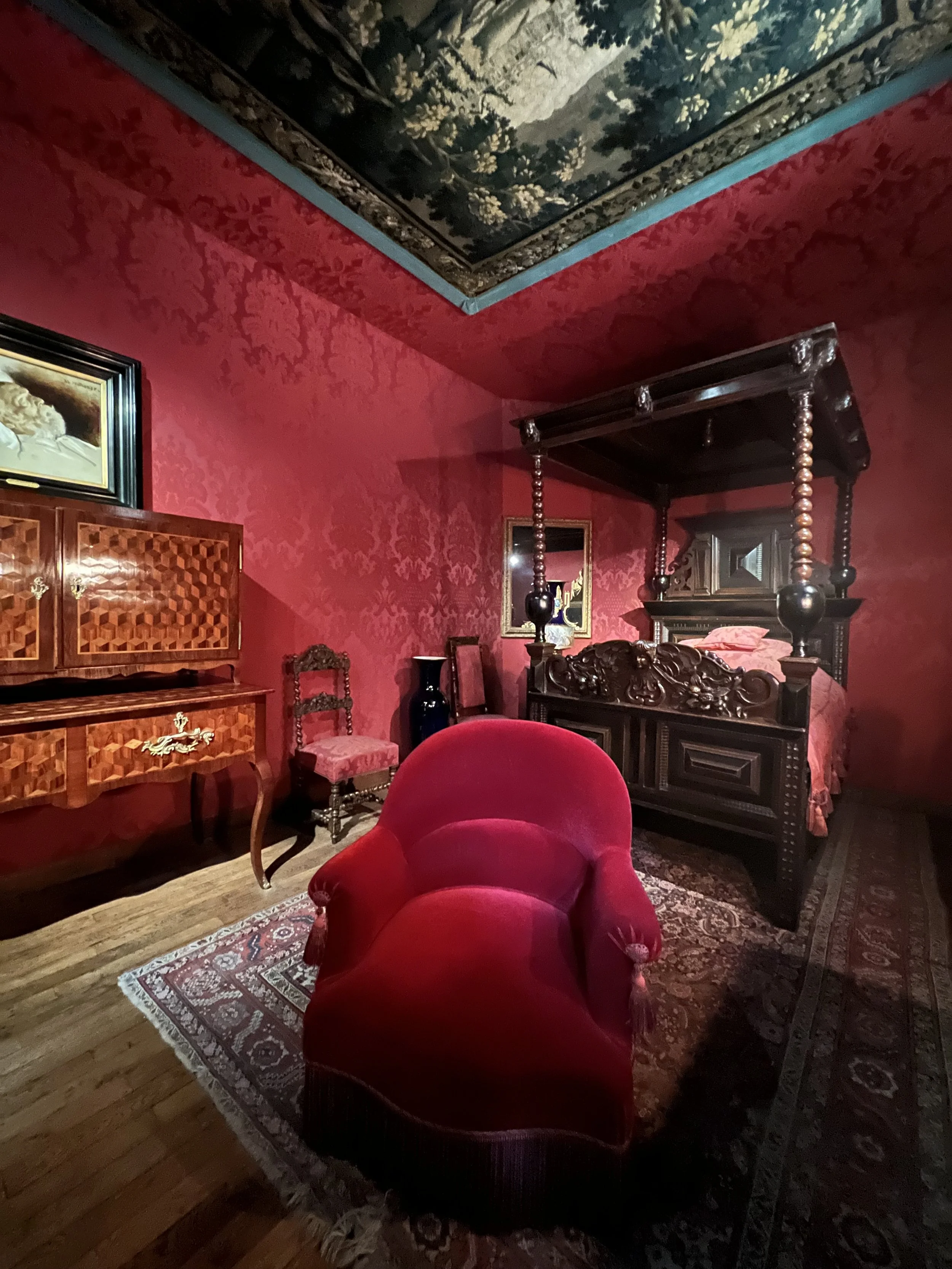
It’s an interesting visit that helps build the image of post revolution France.