My name is Jo, and in 2020 I moved to France with my husband, Brian. From our move to France, to running our B&B, my blog, which you can read below, is a diary of ‘Our French Adventure’. I share short stories about the Champagne region, and its people, and the life we have embraced here.
Eucalyptus
I spotted a eucalyptus tree at the garden centre last week, and thought it would work well on the slope.
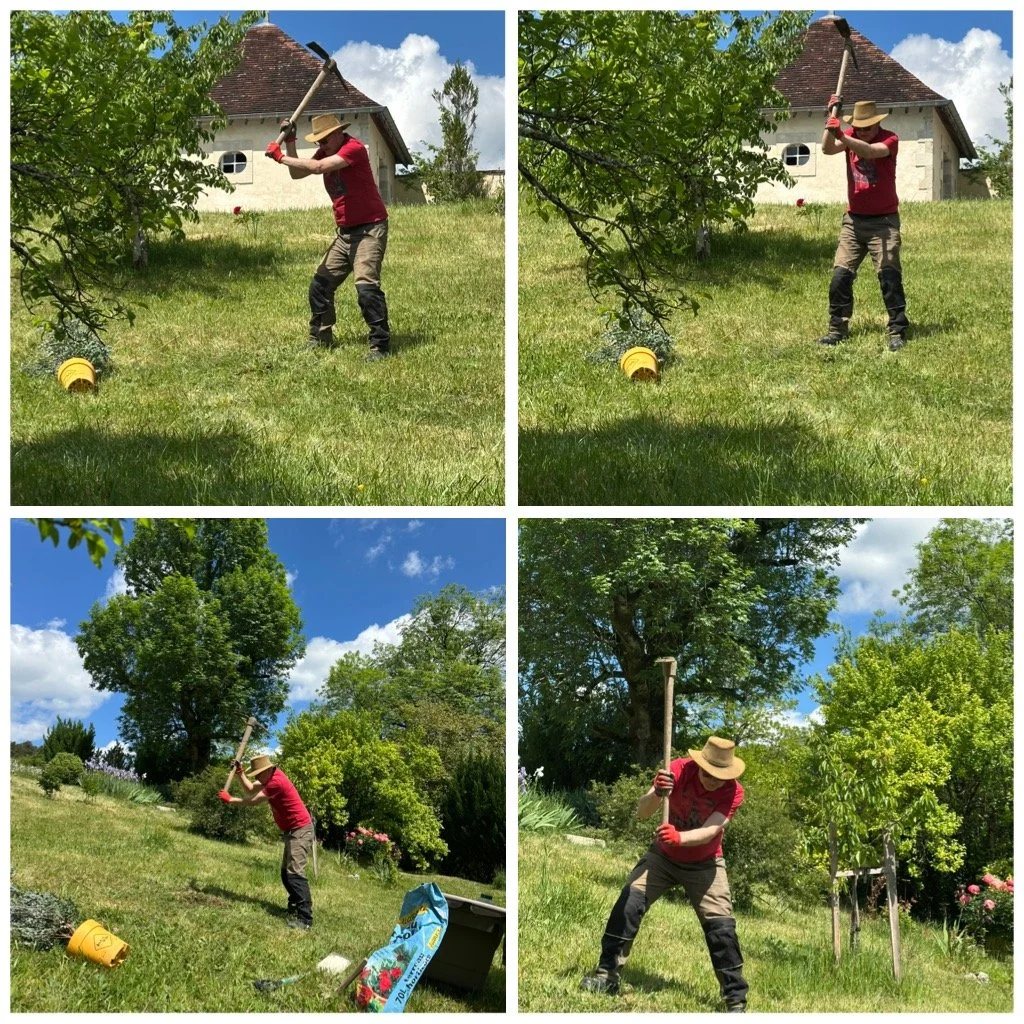
It can grow to about five metres tall and a couple of metres wide, so we needed to give it some space. I do love planting trees, although I have to admit Brian does most of the heavy work. I just come along to say where to put it and ensure it’s planted well.
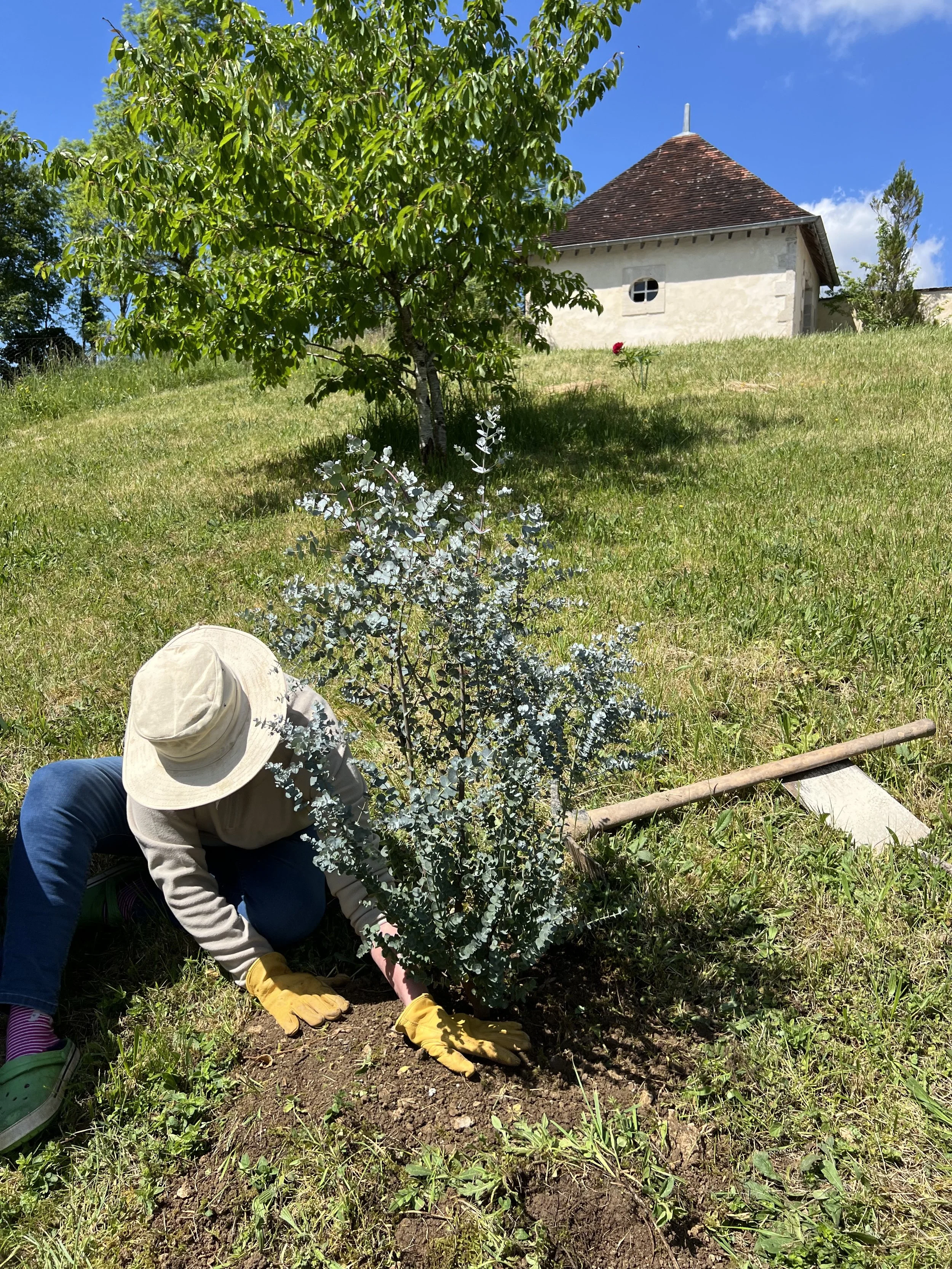
The beautiful silver green leaves will make a good contrast against the more lush green of the fruit trees nearby.
May brings ‘…’
May in France has four public holidays.
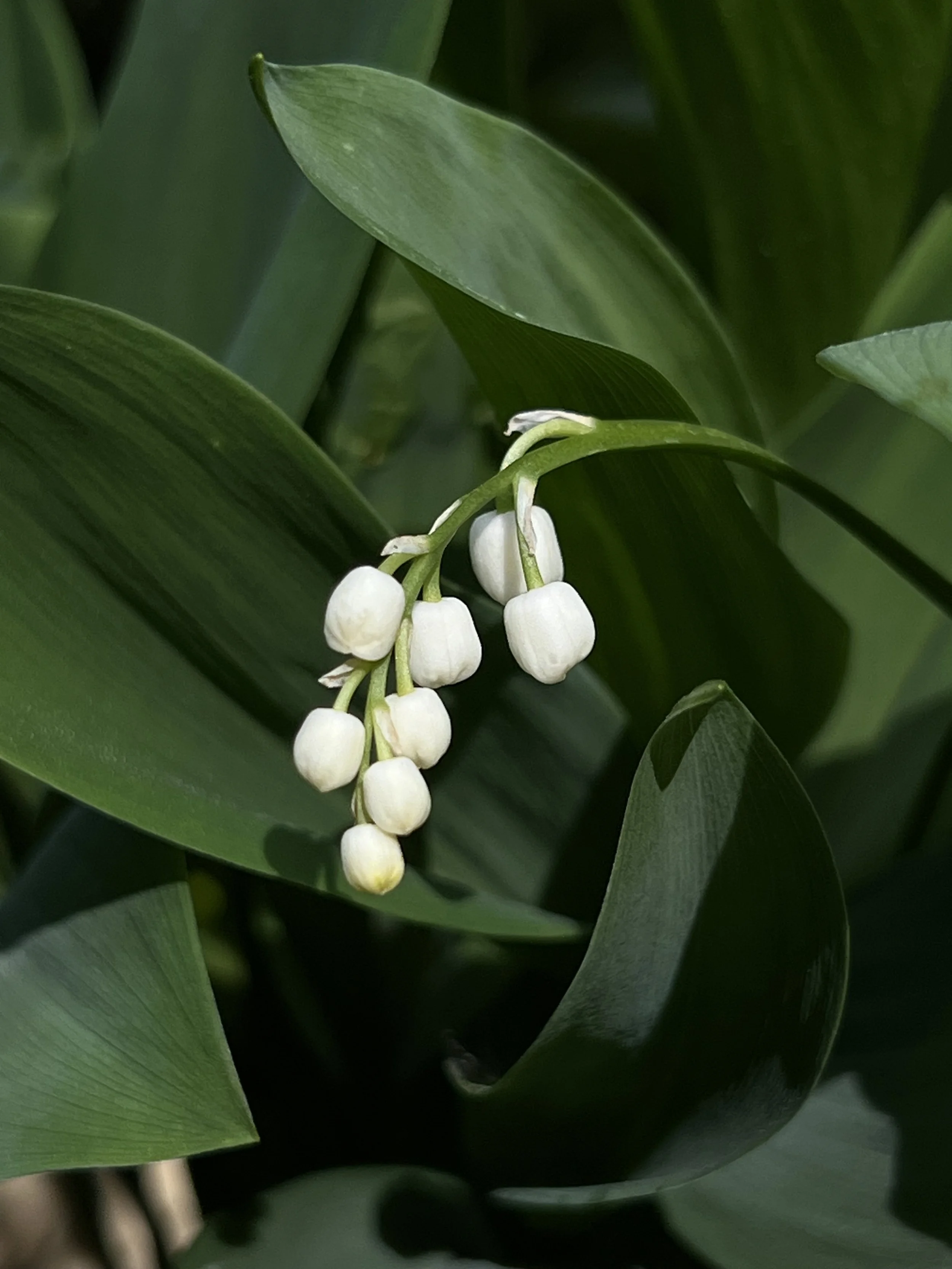
The first of May celebrates the workers, so you rarely find anywhere open on this day, as it’s the only official public holiday where businesses ‘have’ to give their staff a day off. It’s lucky on this day to give your friends, family, or neighbours a sprig of Lilly of the Valley, a real favourite little flower of mine.
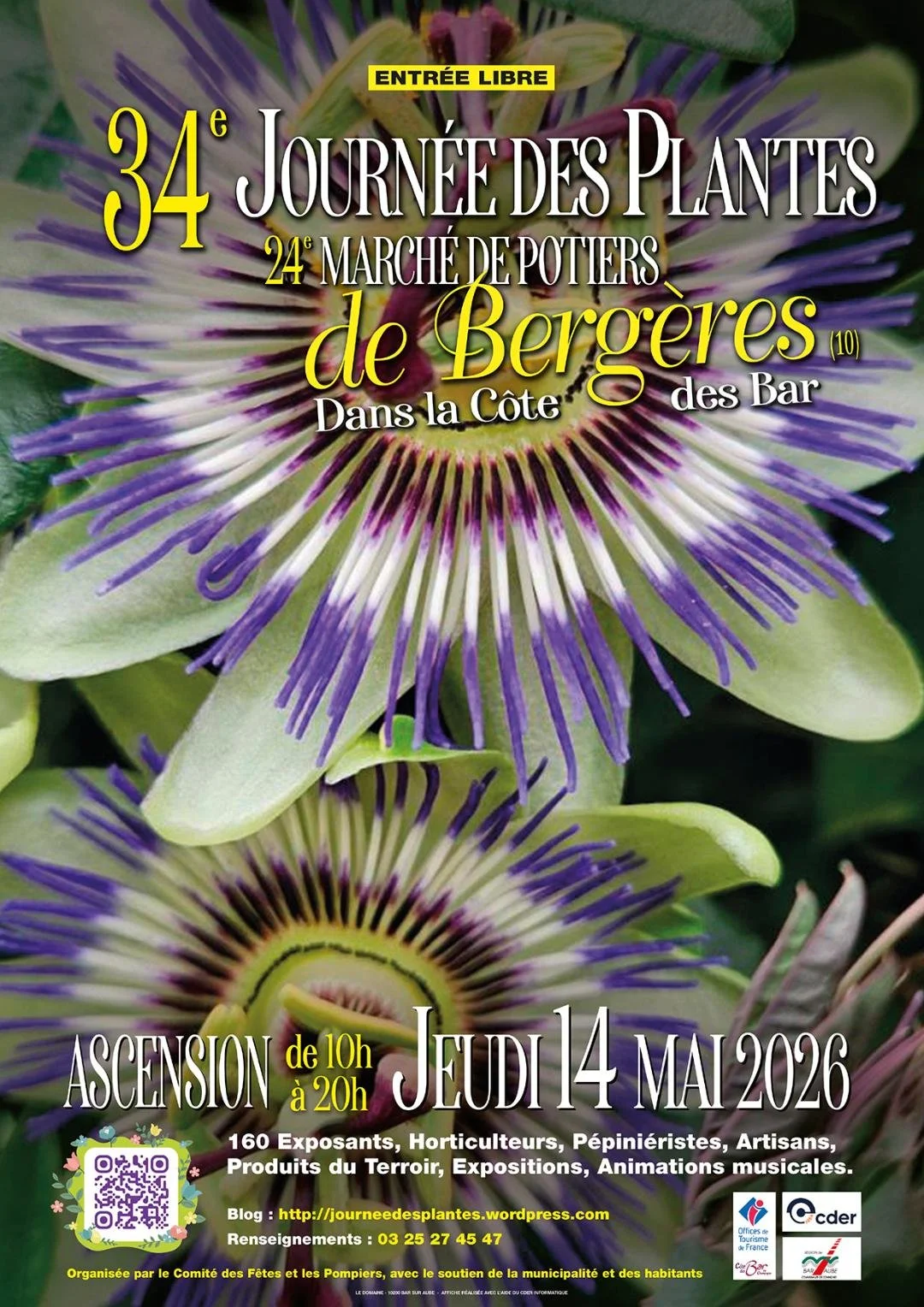
8 May is Victory day, so another good reason for a day off. Then there’s Ascension day—this year on 14 May. I really like this one as there is a brilliant plant festival on this day every year in Bergère, a little village about 20 minutes from us.
The last one is Pentecôte, this year on 25 May. We enjoy going to a ‘marché des puces’ on this day, a rather good flea market in Sens, about an hours drive from us.
There’s lots to look forward to.
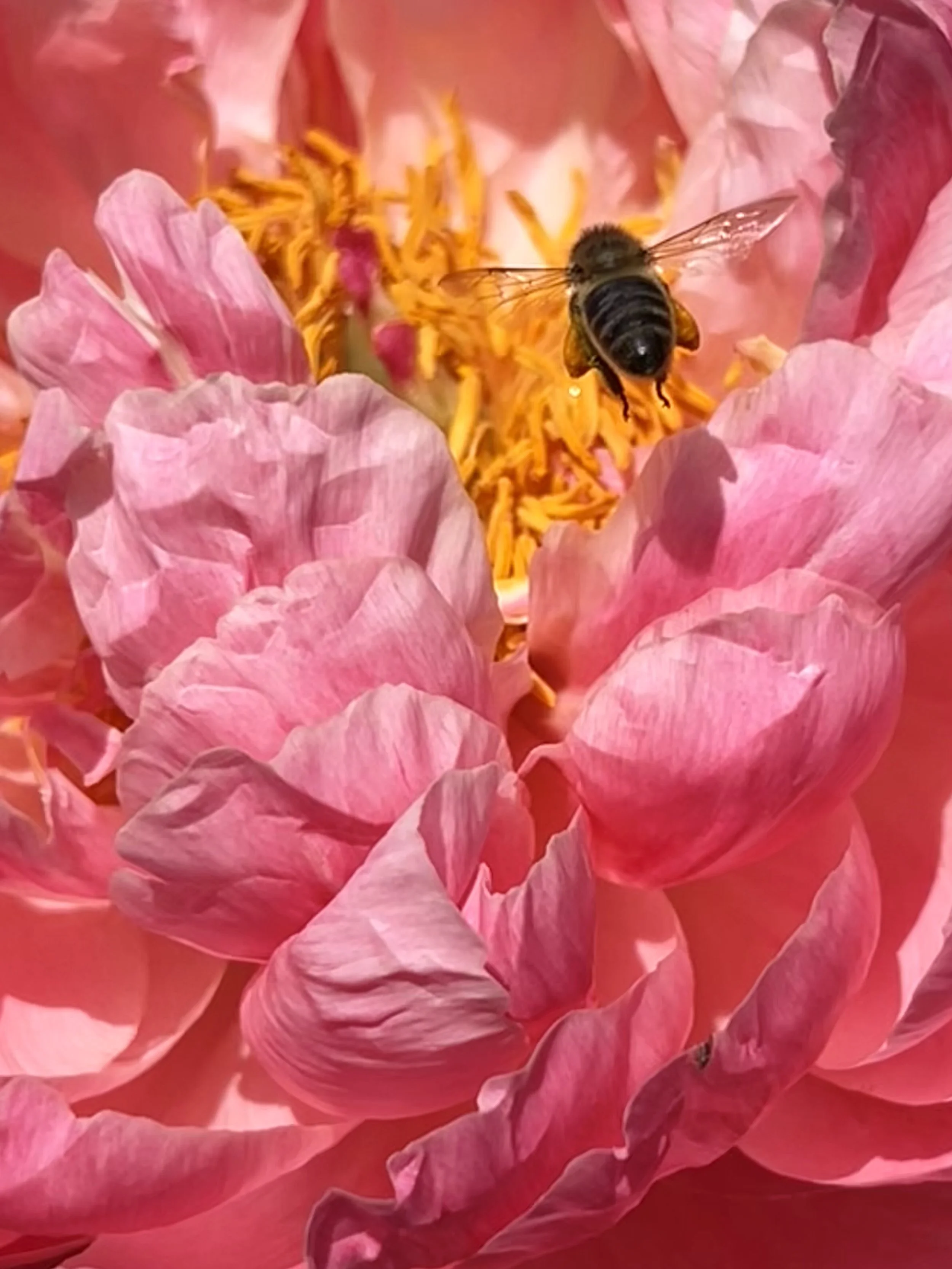
How dare they!
Whatever had been eating my dahlias had returned to have a go at the roots of my nashi pear tree. How dare they!
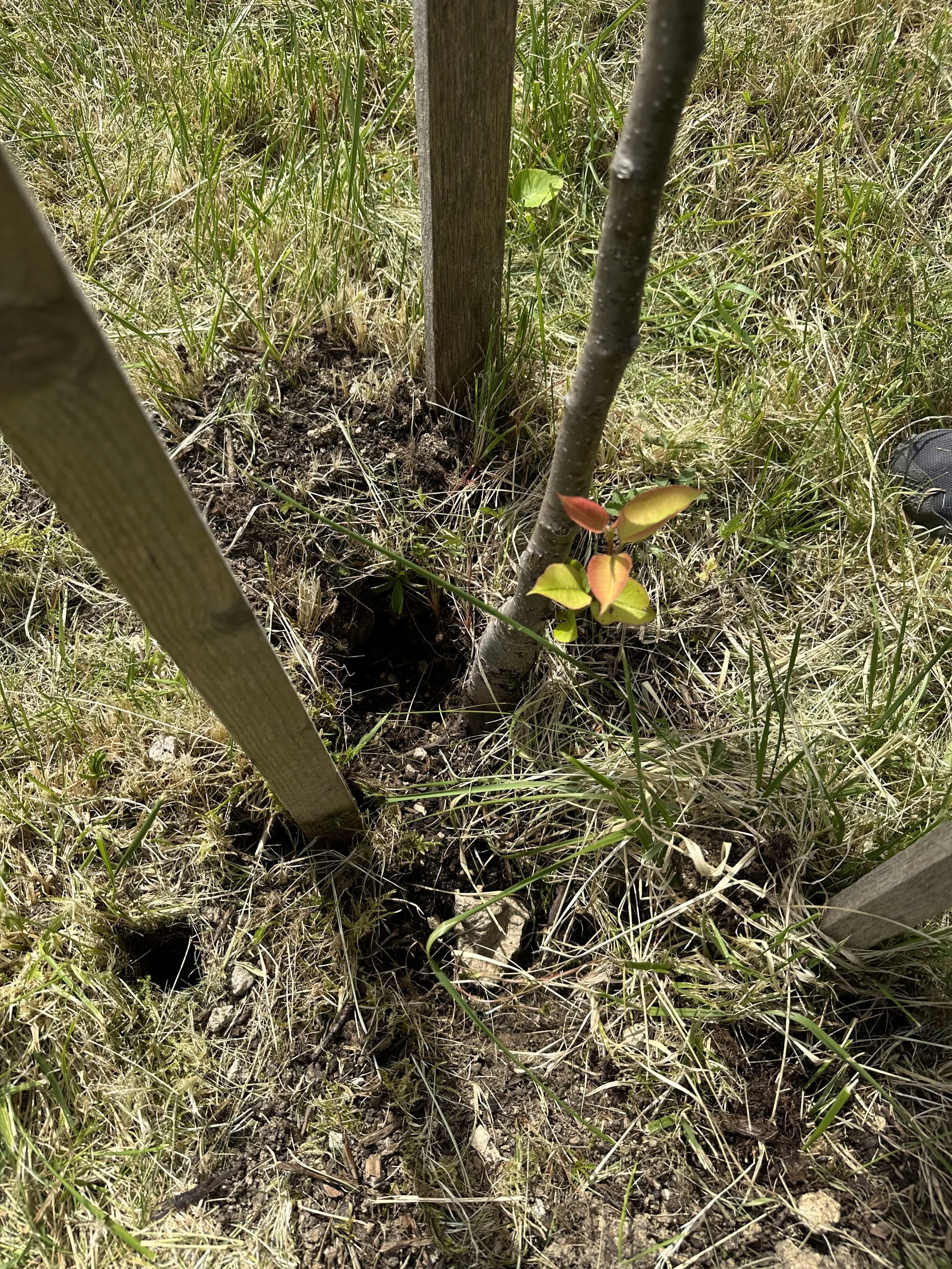
Brian had to jump into action to protect them. He had an old piece of wire fencing he was able to bend round 3 posts to protect the still very young tree.
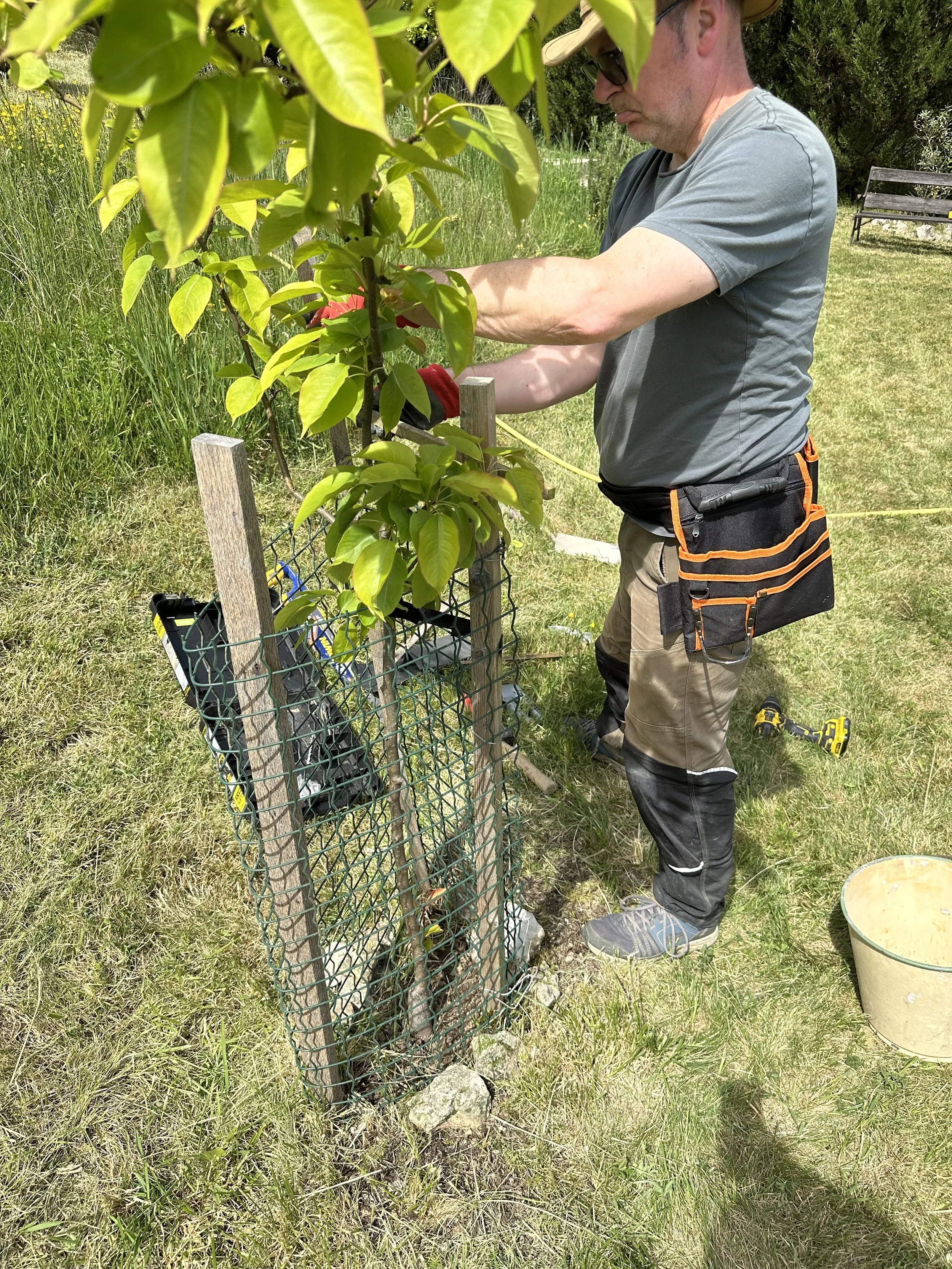
He also needed to review the temporary cover Lisa and I had put in place. As when the dahlias start to grow I didn’t want them growing through it.
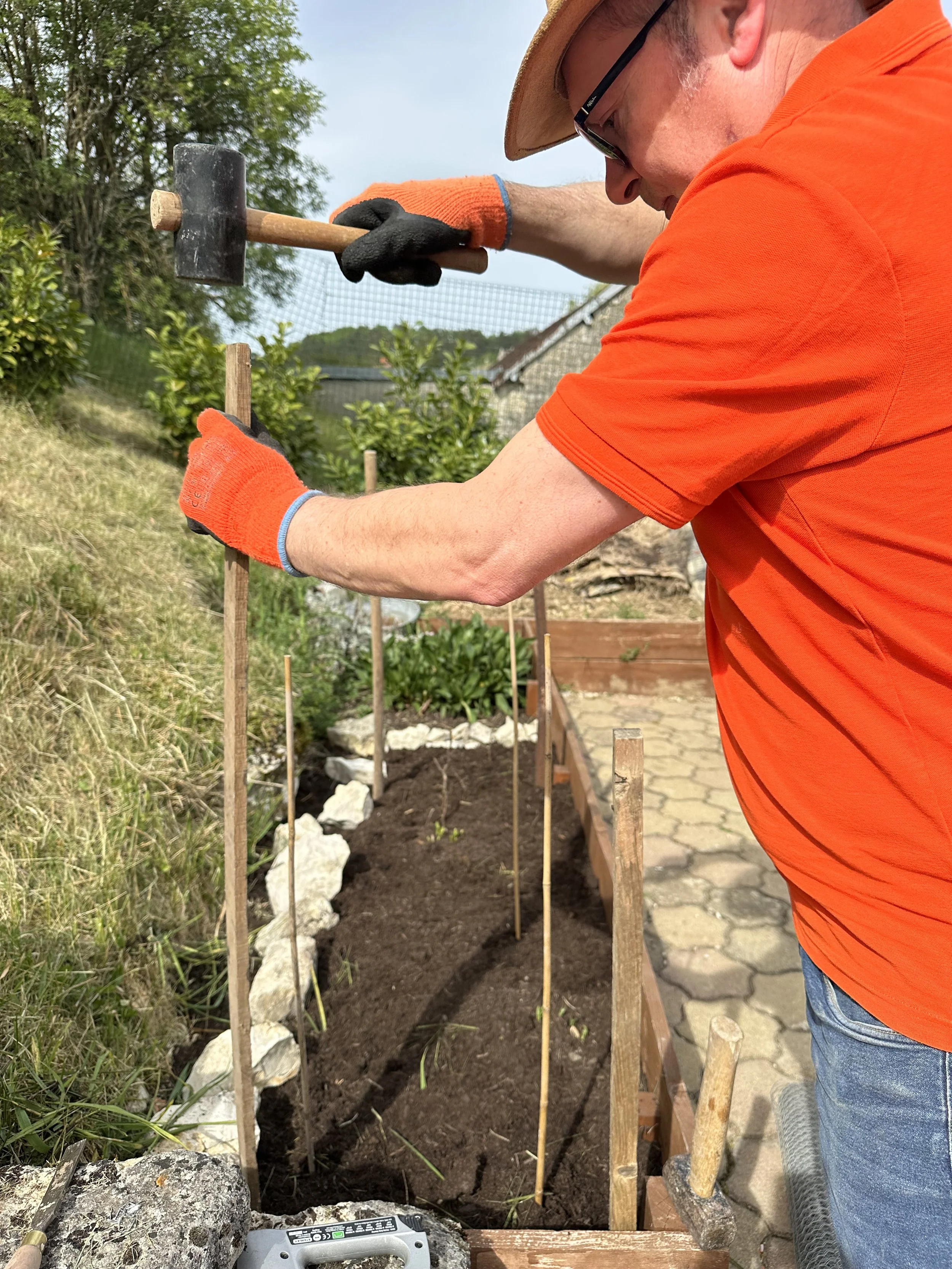
I’m glad to say that it looks like both lots of protection are working.
Just the beginning
Well, it’s that time of year again, when the temperatures have sufficiently lifted, and the pool can be reopened.
It’s only really the first step in the process though, because it needs a really good clean before it’s okay to swim in. It also has to be a lot warmer! I’m a bit of a fair weather swimmer.
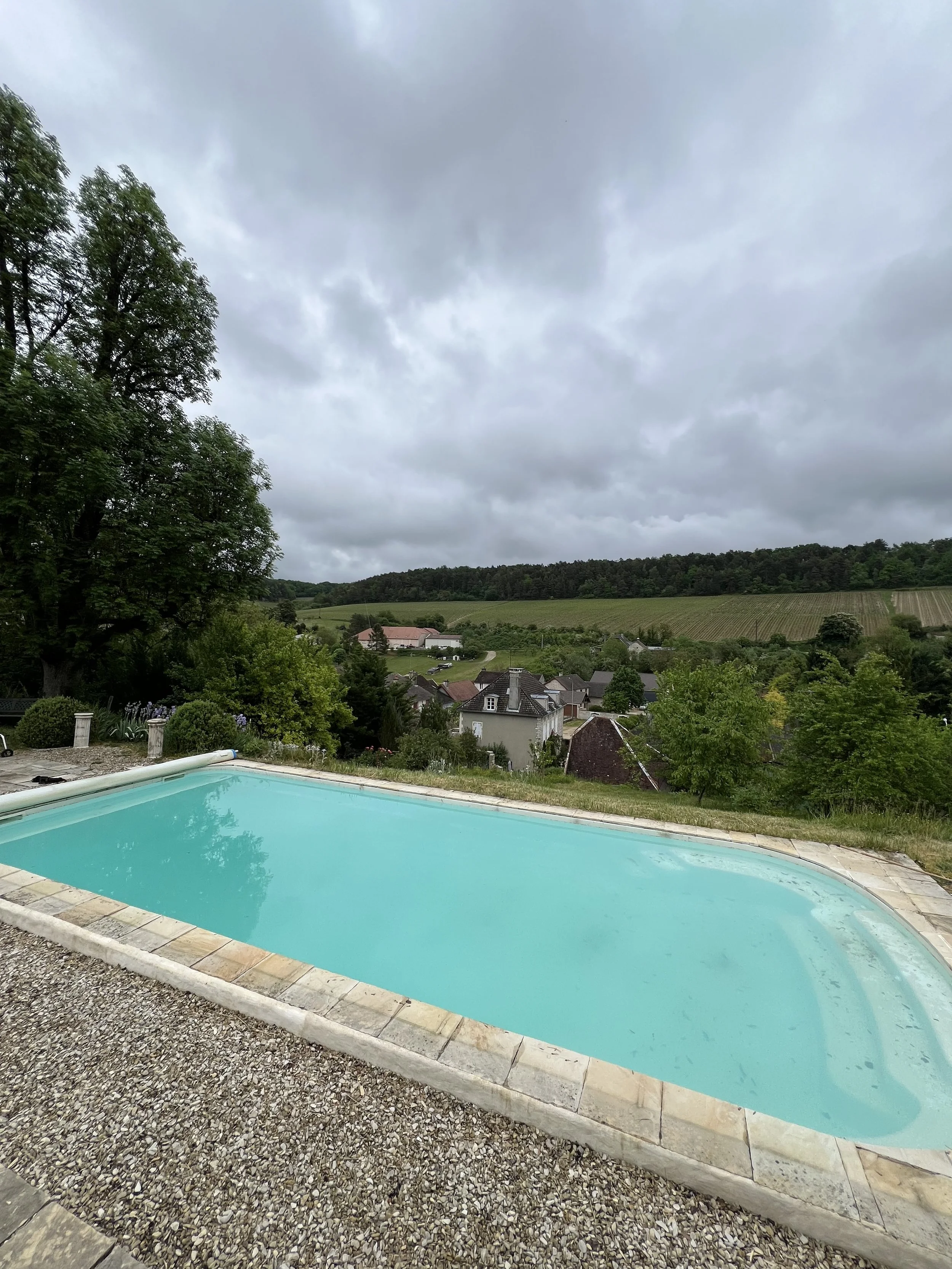
I am so looking forward to swimming in it this year.
Adding some personality
The time had come to finish the painting of the shed. It’s taken a few days of work, and drying, but we could see the finish in sight.
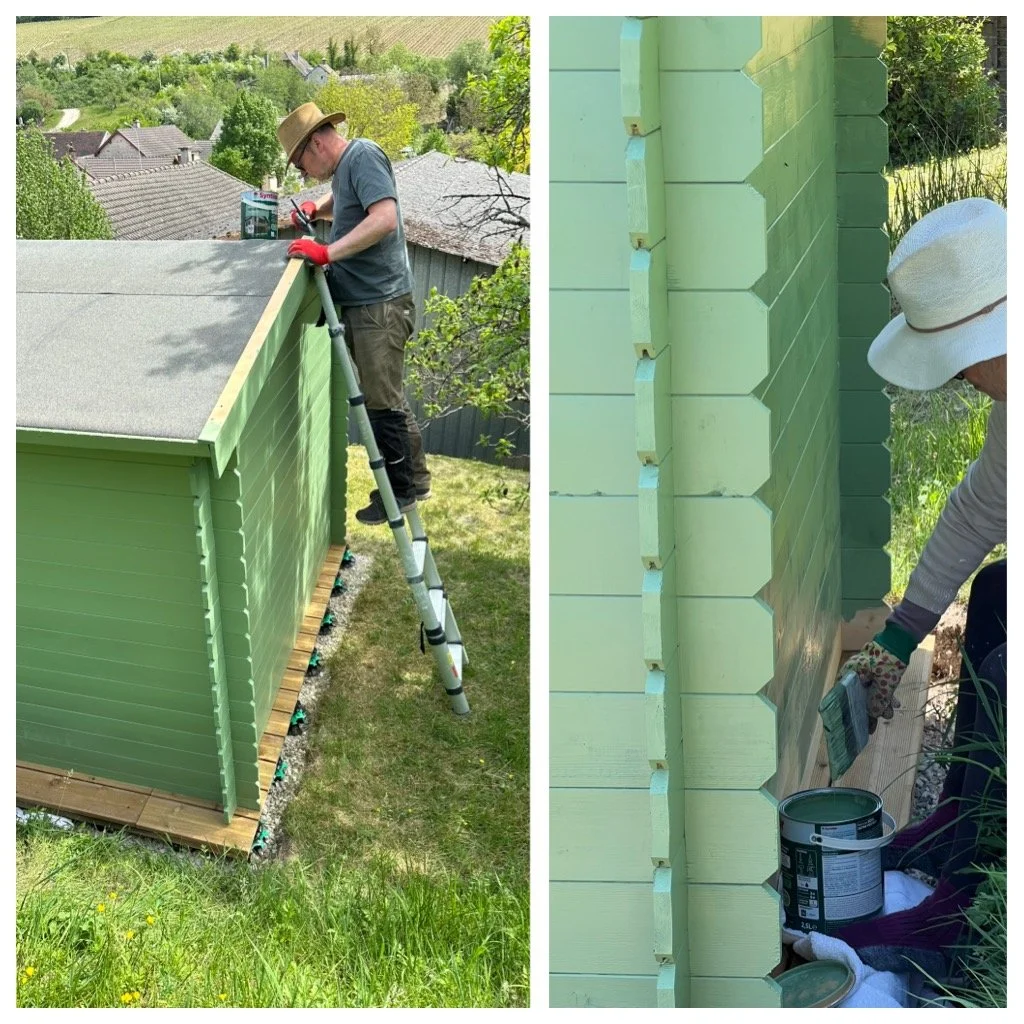
As per usual, I did the big, flat areas, and Brian handled the edges and fiddly bits, which I’m glad of, as I don’t like ladders.
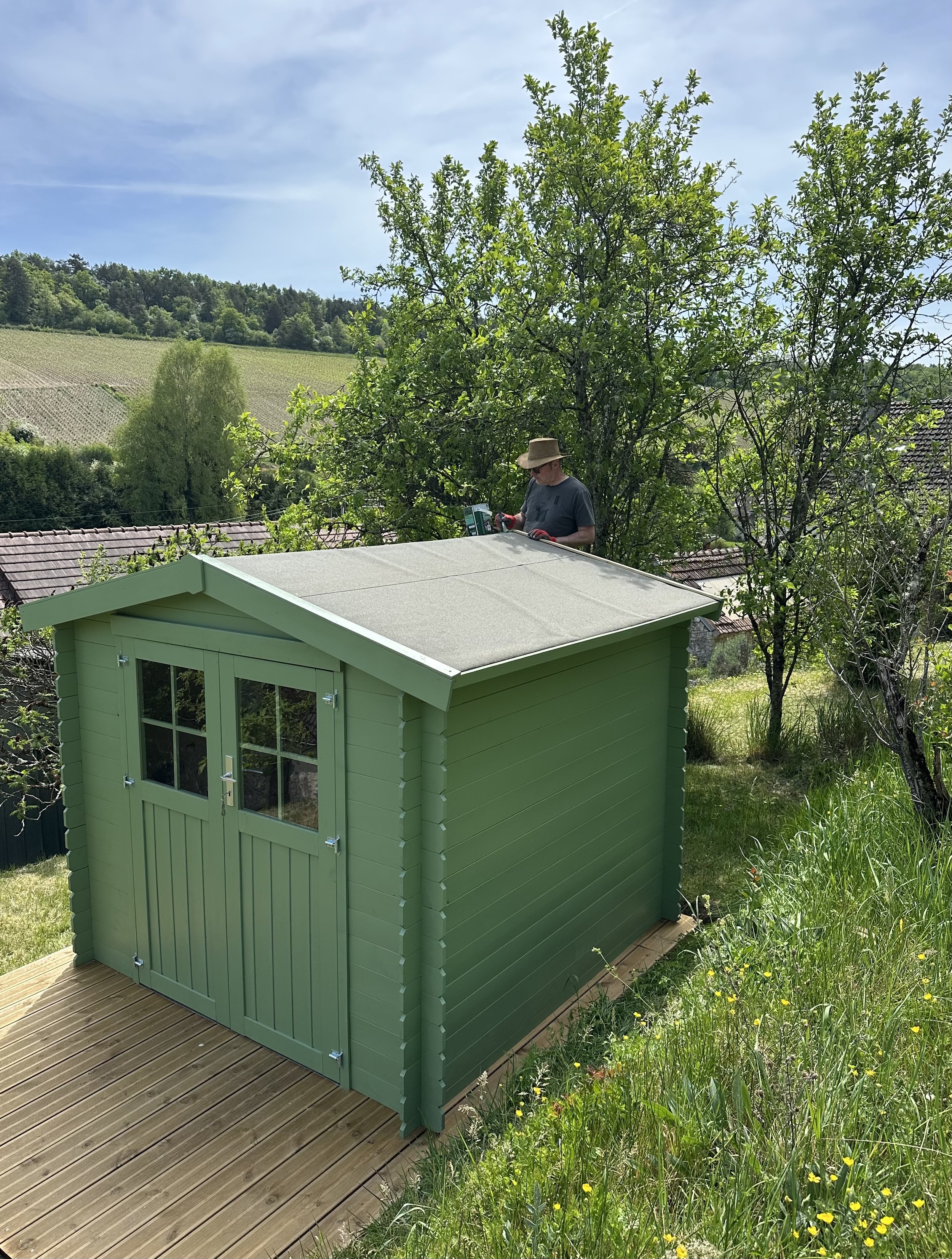
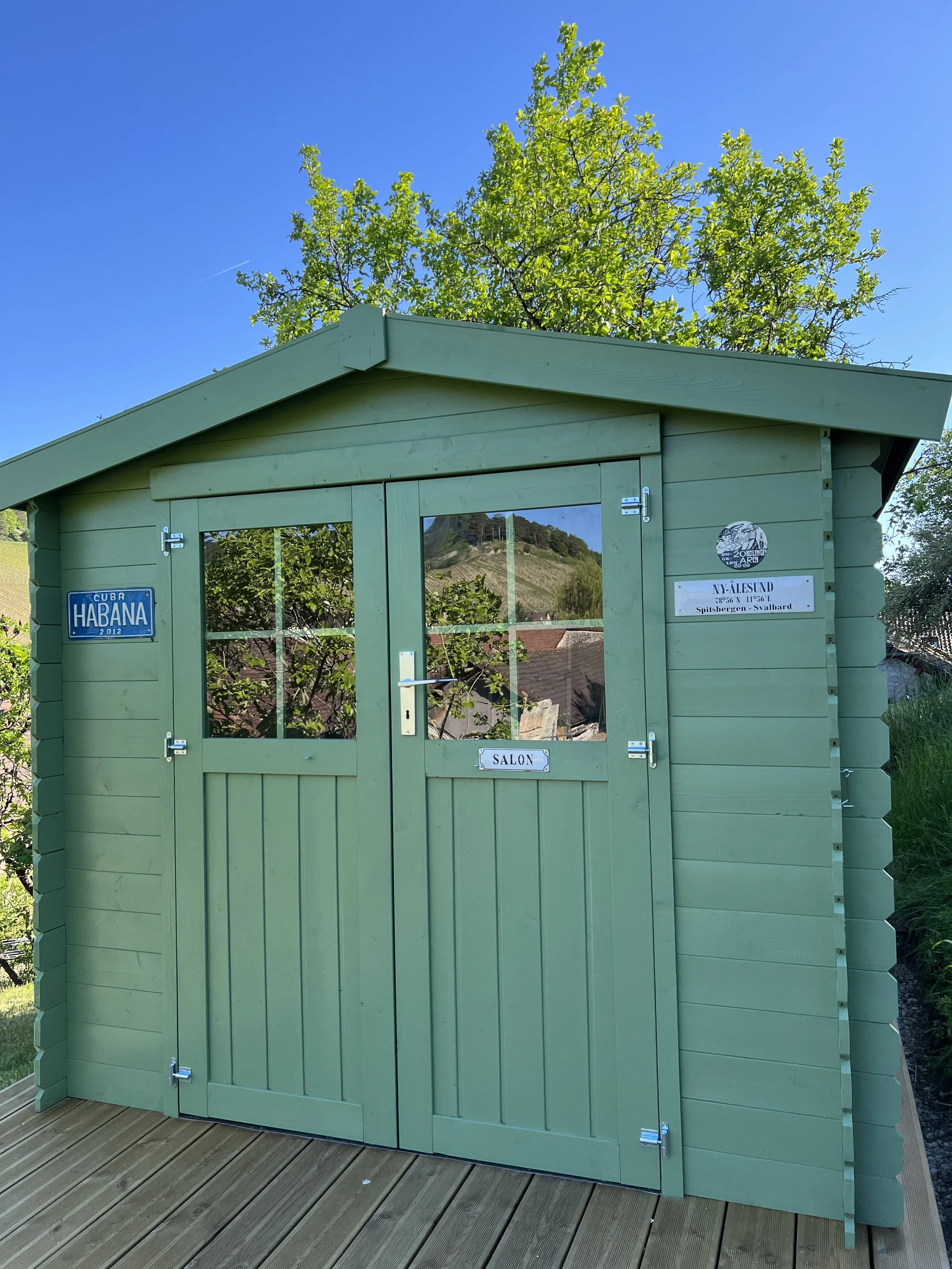
Painting done, it was time to add a bit of personality.
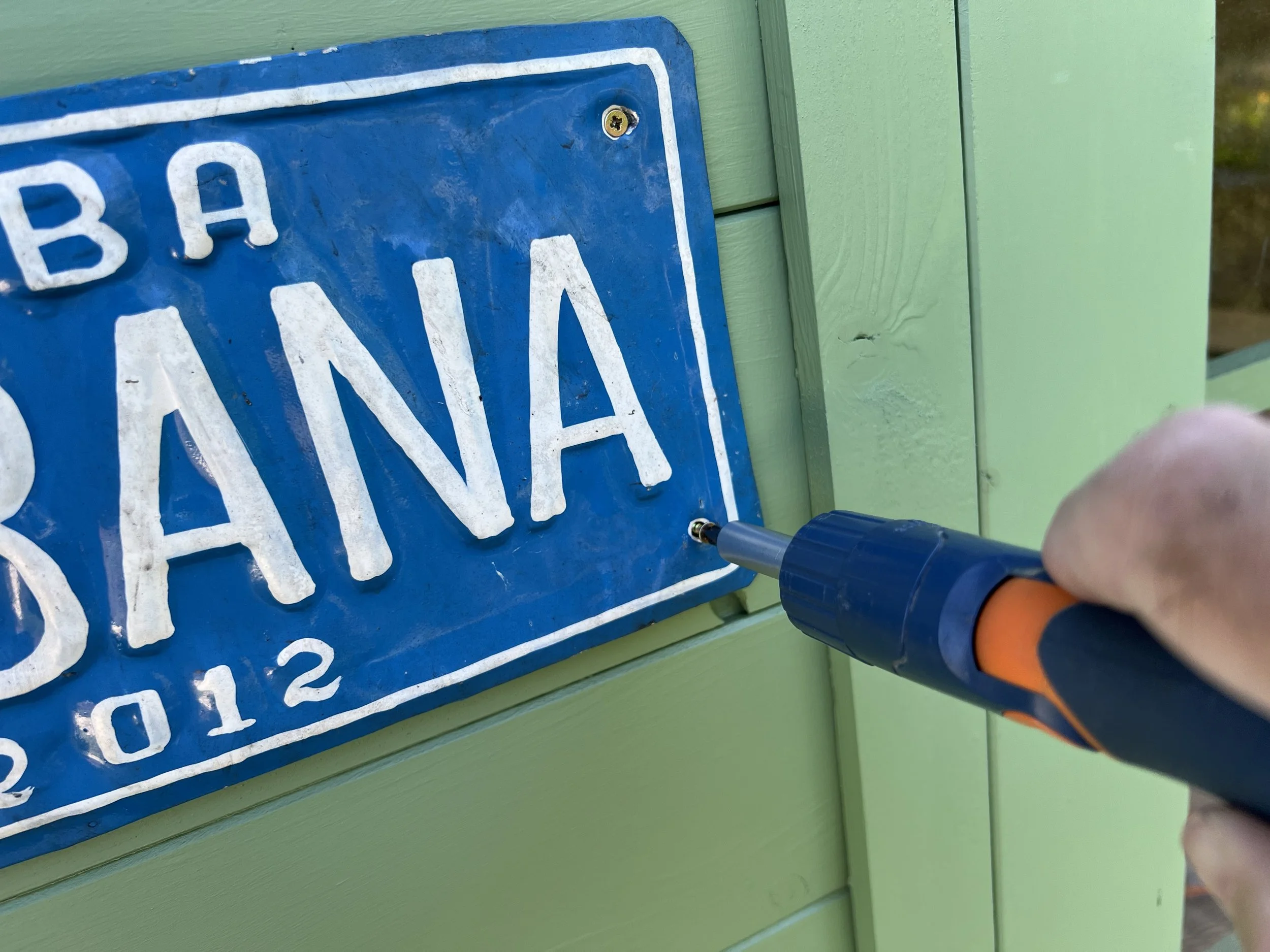
We’ve picked up a few little signs on our travels over the years, and we were in need of a good place to put them.
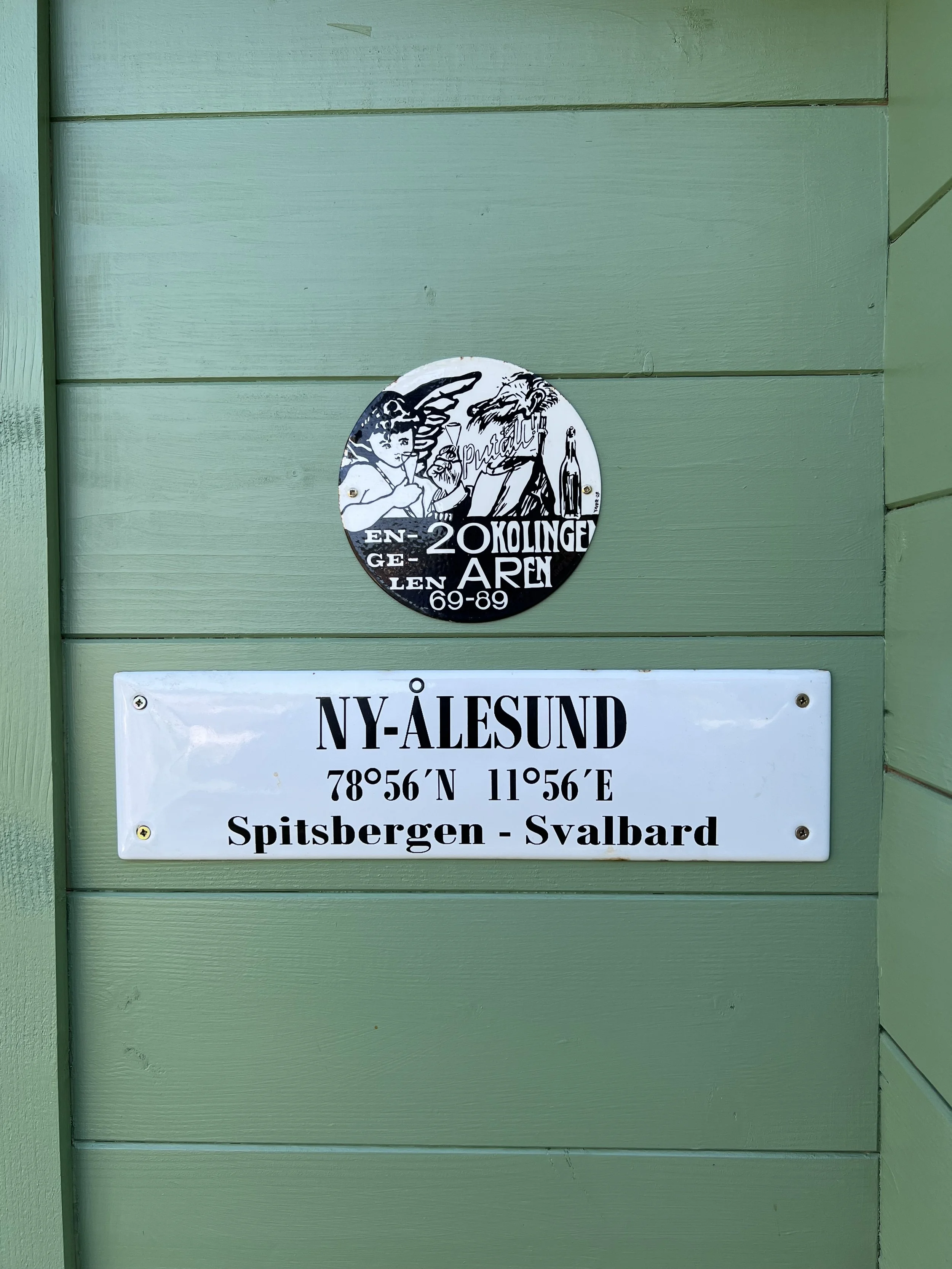
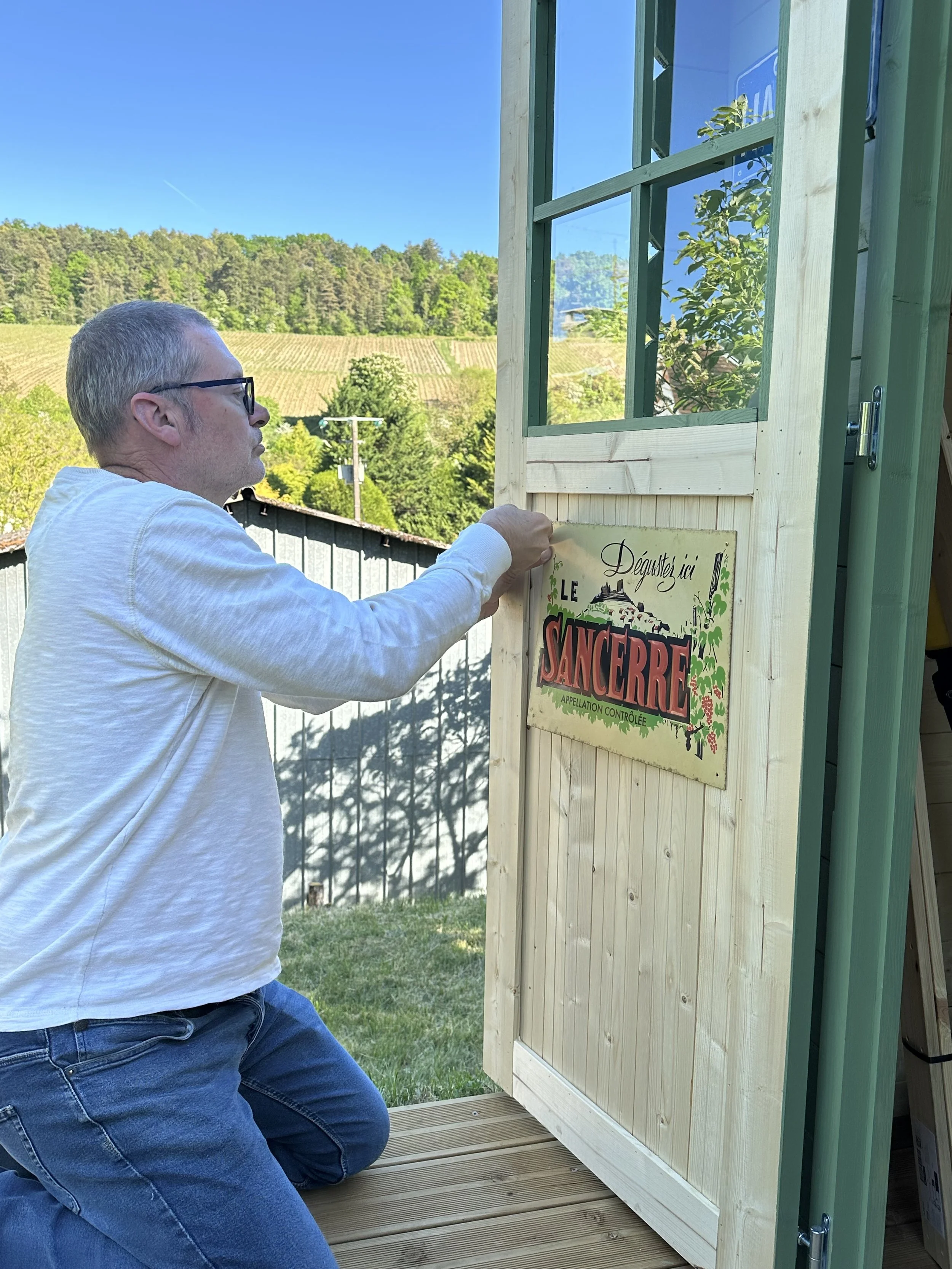
Looking much better now.
Bird spotting
I’d planned for us to do a short walk to an observatory near to the Lac ‘d’Orient. It’s a beautiful spot with a well built hide. Unfortunately though, as we turned off into the forest to park up in the car park, we were stopped by some serious looking soldiers. They had a 4wd hidden in the trees with two soldiers in it, and a motorcyclist standing next to his bike on the road leading to the car park. A fourth soldier approached us, and explained there was a wide scale military operation happening in the area, and we would not be able to access this part of the forest today.
‘Oh well’, we thought, that’s scuppered that. But not wanting to be defeated, Brian and I both looked at the maps on our phones, and could see another ‘hide’ over looking the lake. We hadn’t been there before, but today seemed like a good one to try it. I looked at our ‘outdoor active’ map and could see a circular walk near it, so we headed off in the car to the direction of where the walk started.
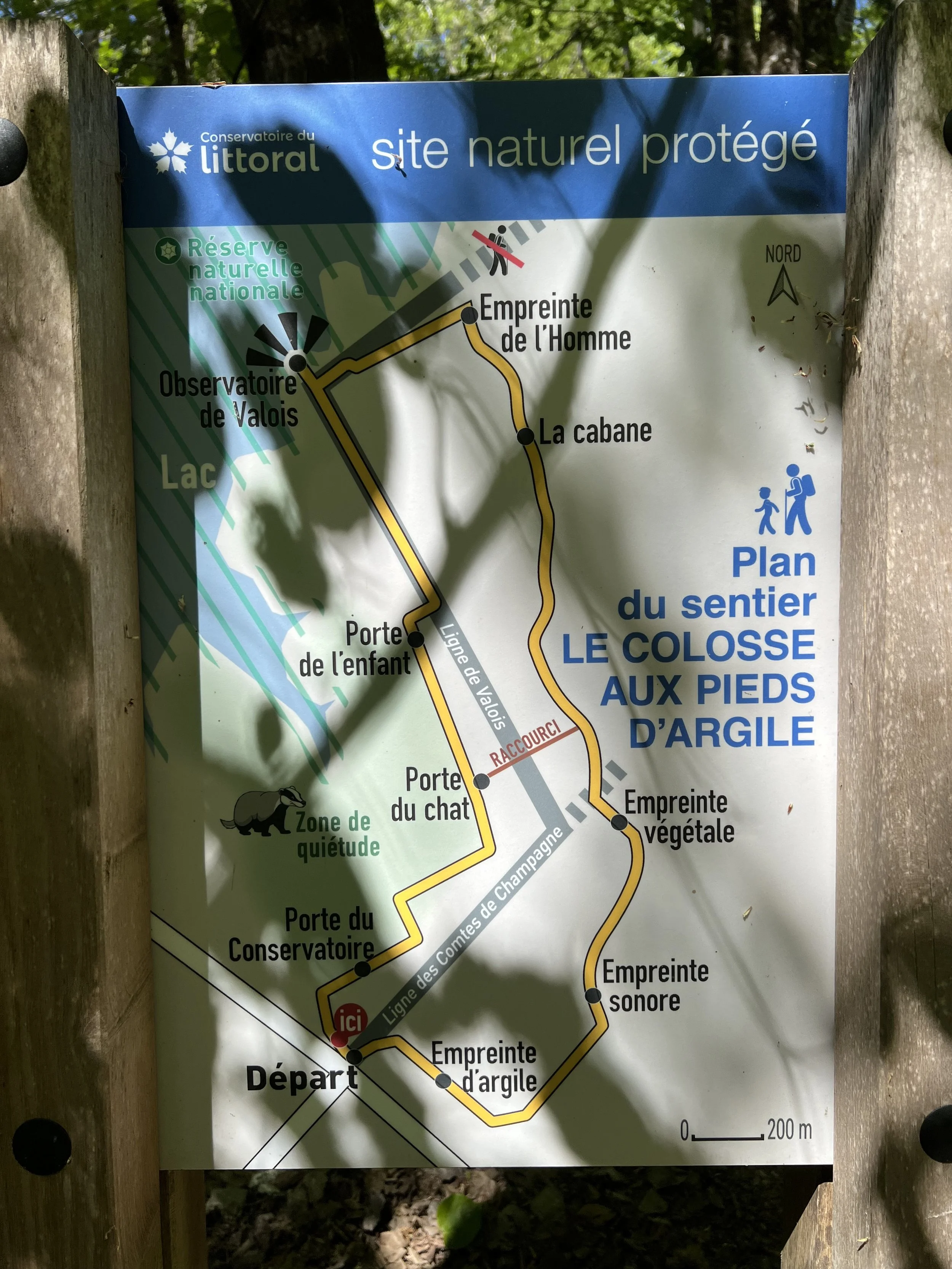
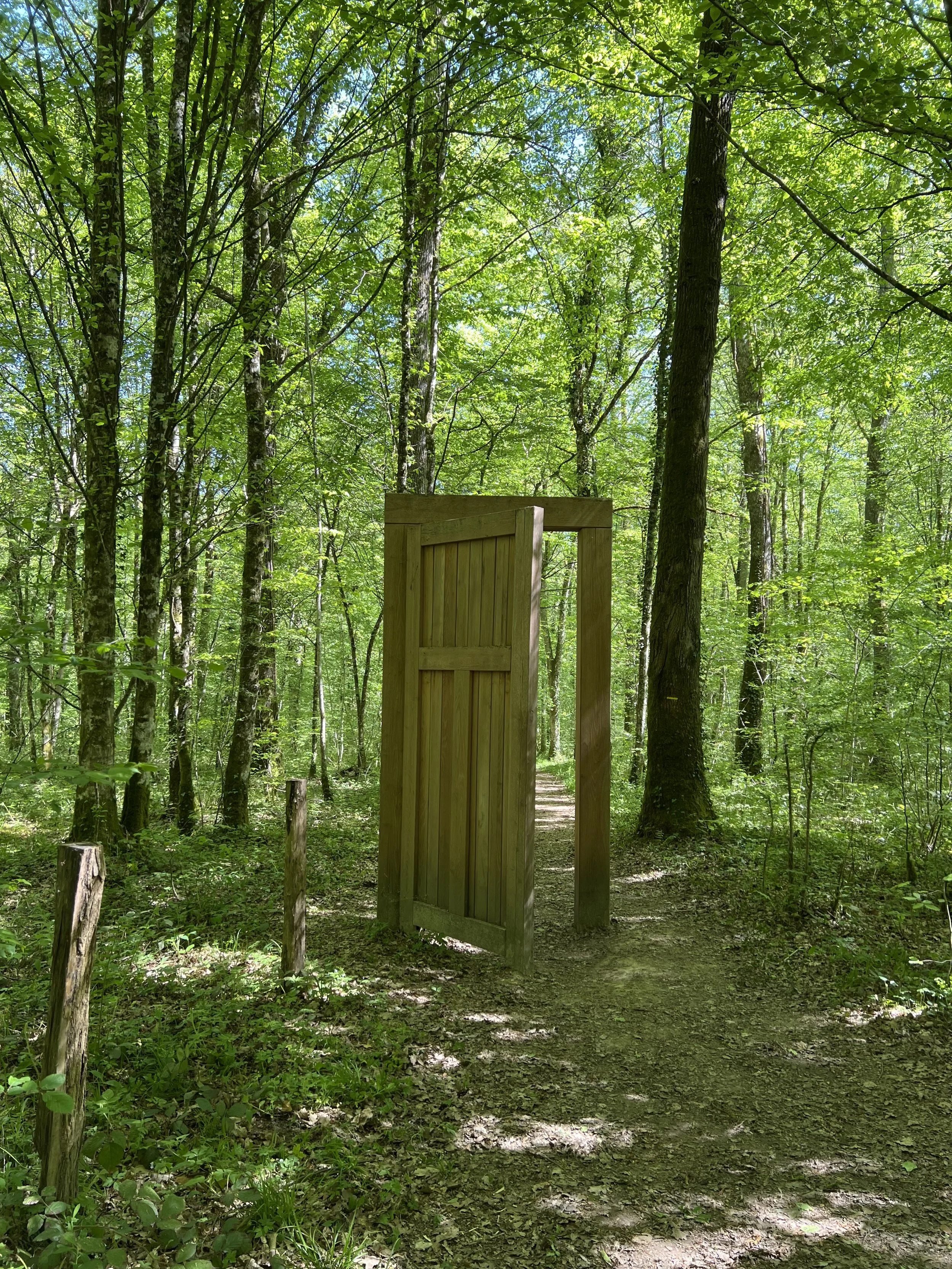
It was a delightful and well marked trail, with unusual large, oak doors along the way to make you aware you were entering an area of natural beauty, and not to leave the track.
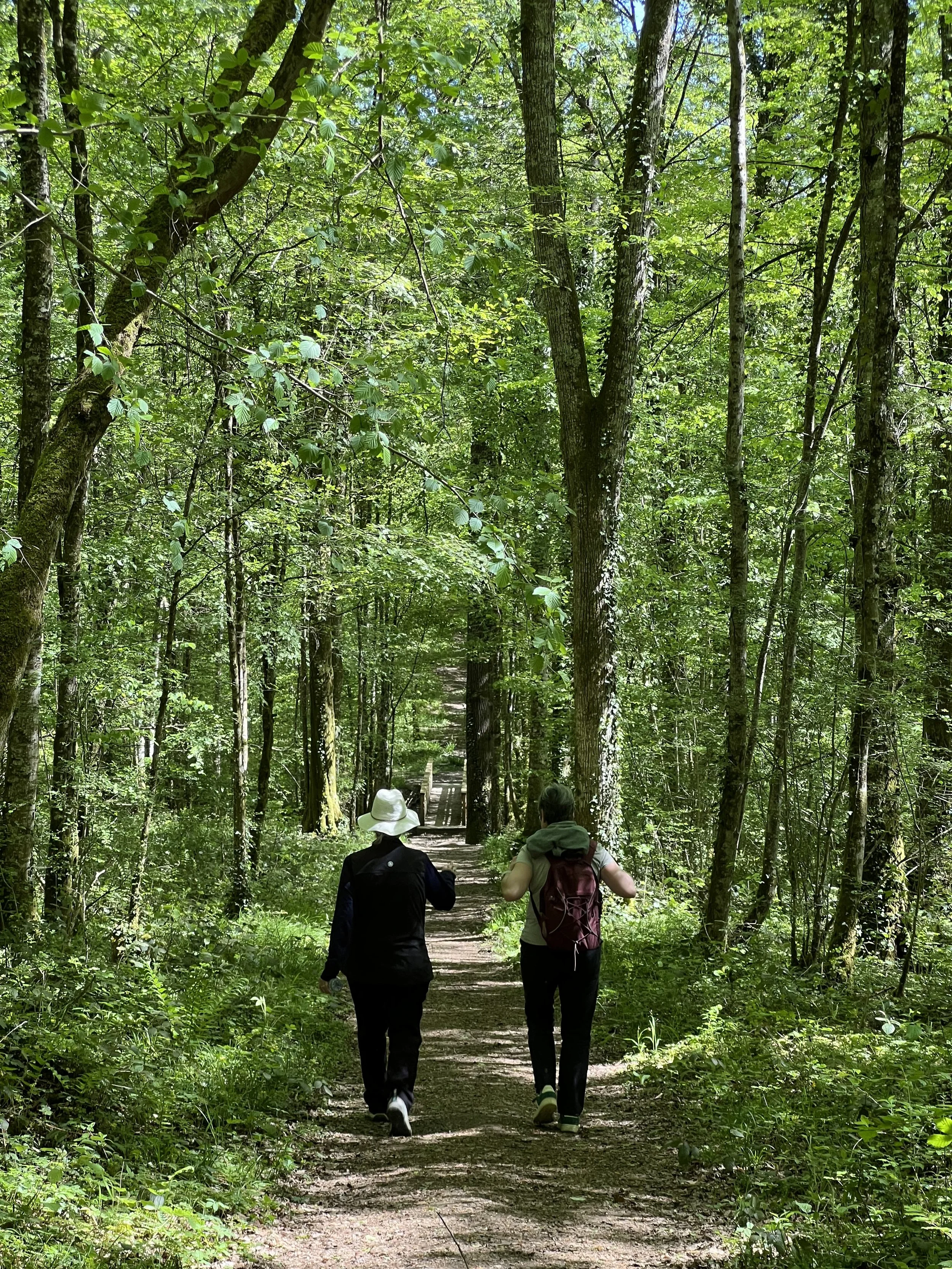
It felt good enjoying the spring air, and the stillness of the forest, and was at least as pleasant as the walk we originally wanted to do.
It wasn’t long before we arrived at the observation hide; a wooden building built on the edge of the lake.
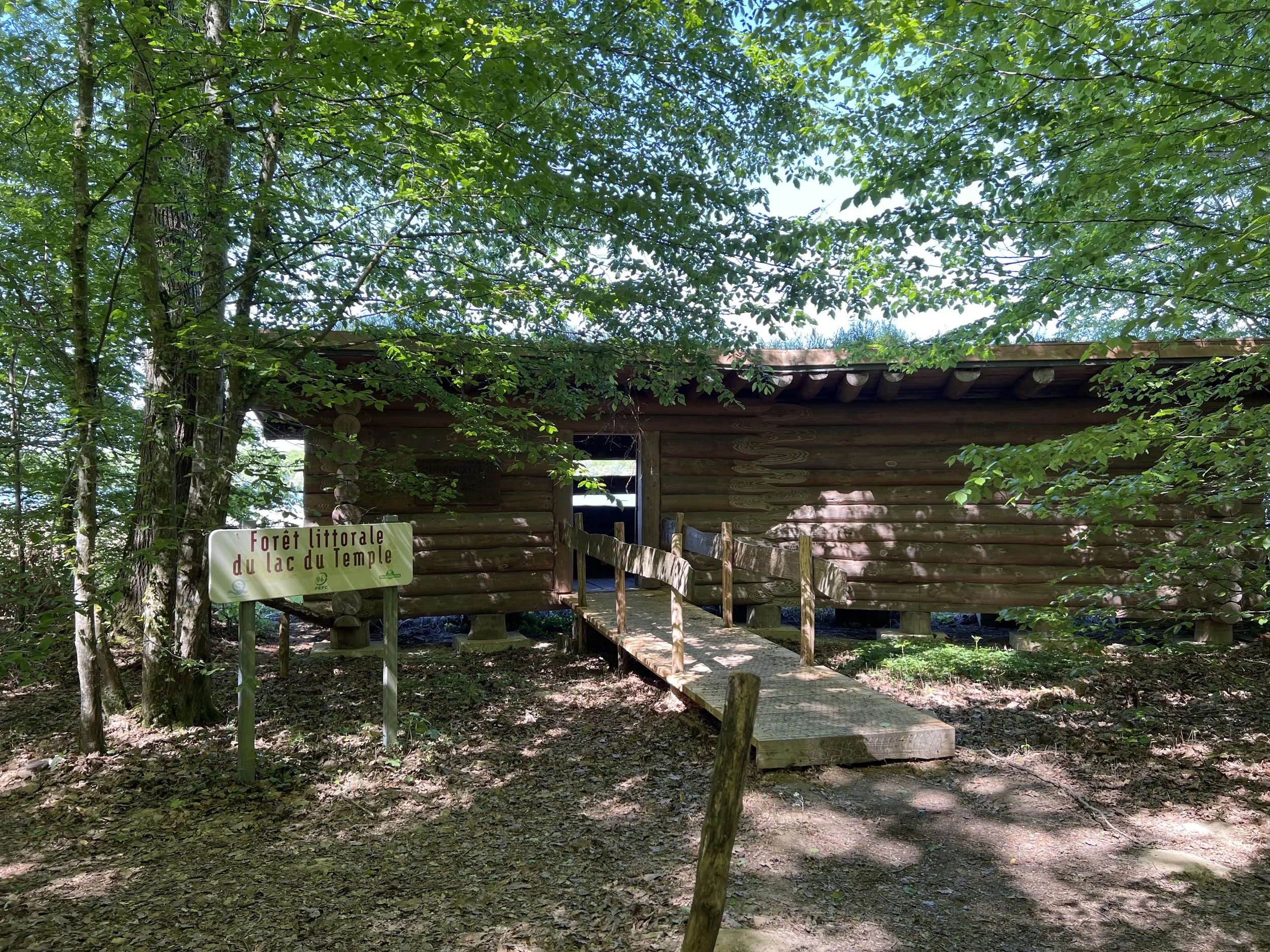
We settled in, sitting on the wooden benches. We poured ourselves some coffee, which Lis’ had carried for us, shared out the banana bread I’d made, and spent a good 30–40 minutes just seeing what birds we could spot.
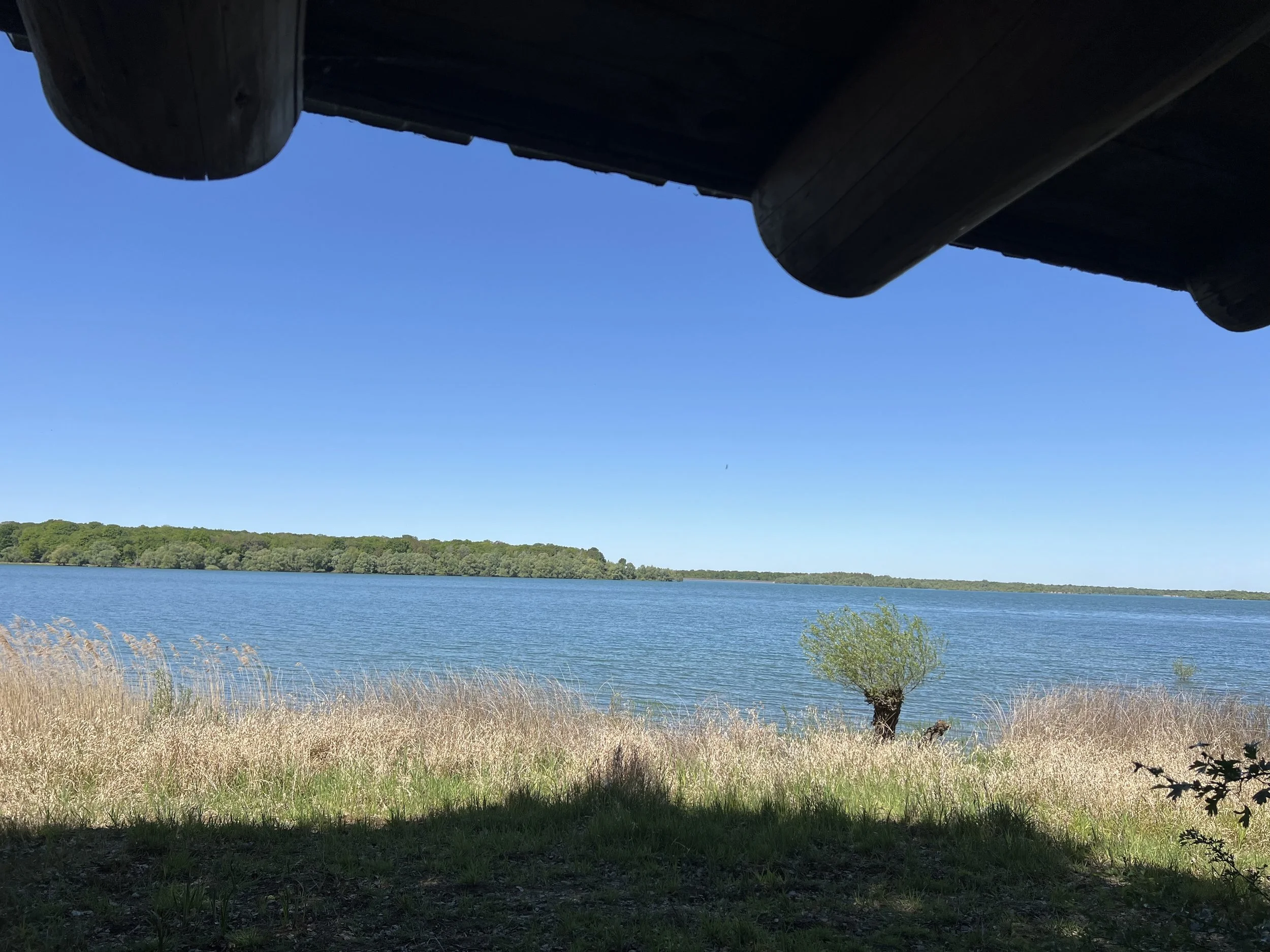
We were rewarded with sightings of Eurasian coots, cormorants, two kingfishers, and common terns. We also identified on our ‘Merlin’ bird identifying app a common fire crest, a dunnock, and an Eurasian Wren.
The walk back was just as pretty, and at a total of 7.2km was quite an achievement for me.
View on the vines
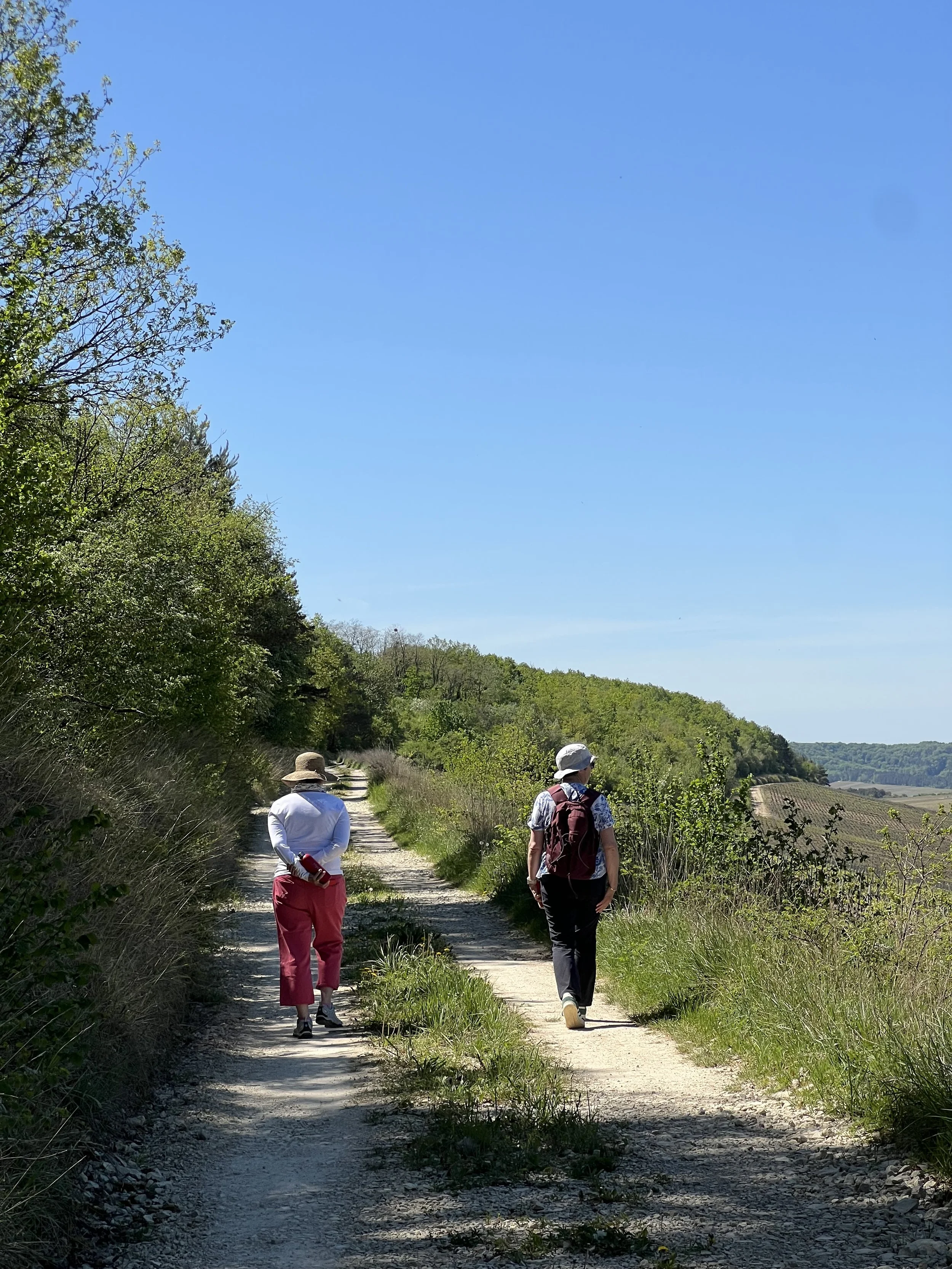
It was such a gorgeous morning that we headed up to the point de vue with a flask of coffee to enjoy the view. It makes for such a beautiful little walk.
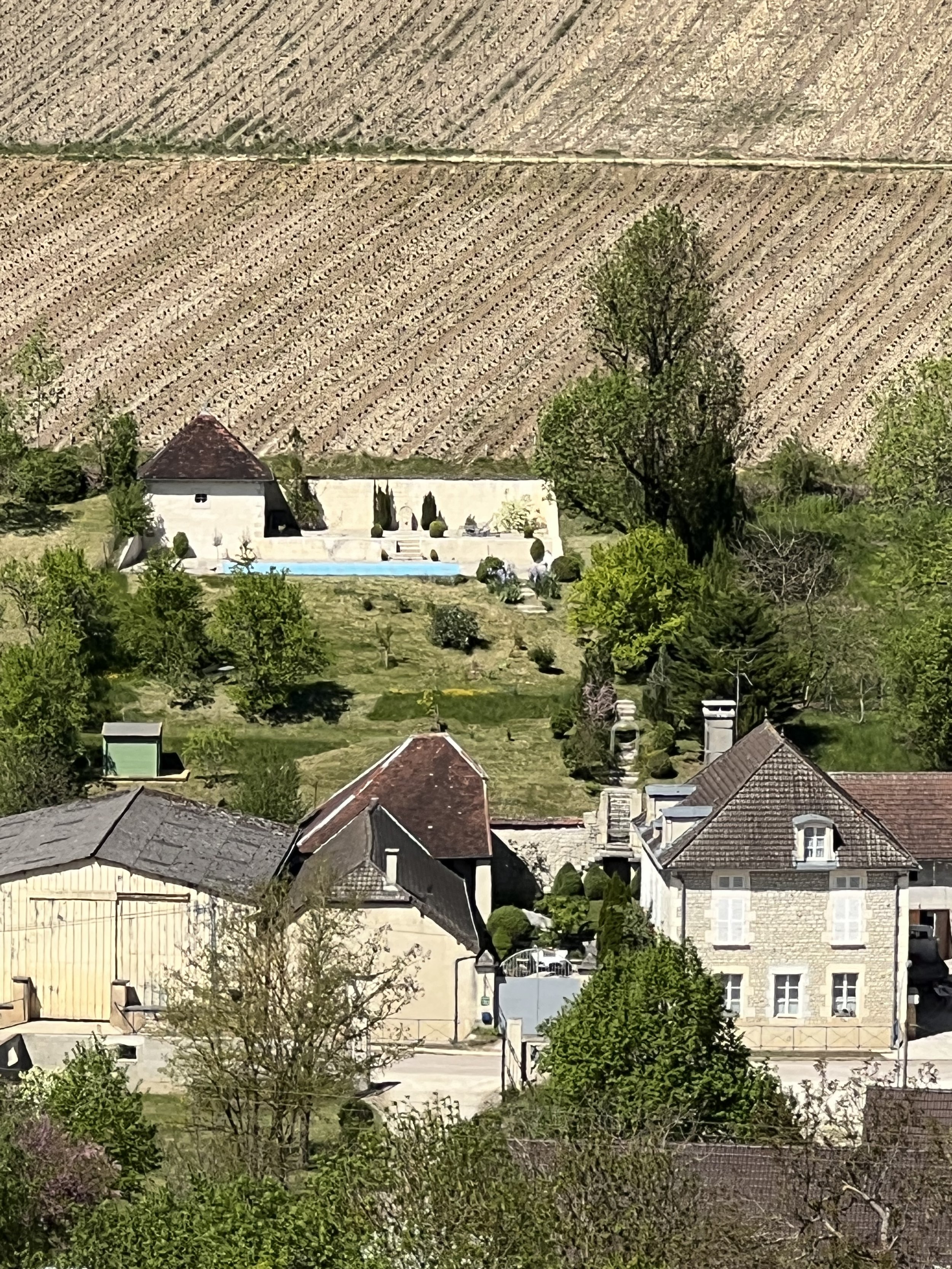
From the track on the other side of the valley you can see the house and the swimming pool at the top of the hill. The white stone is all looking stunning against the vivid greens of spring. And oh look, I spy a new shed!
The vineyards are starting to flourish again. Some vignerons have chosen to replace some vines that they had either lost over winter, or were just not performing so well. It will be at least three years before they produce useable fruit.
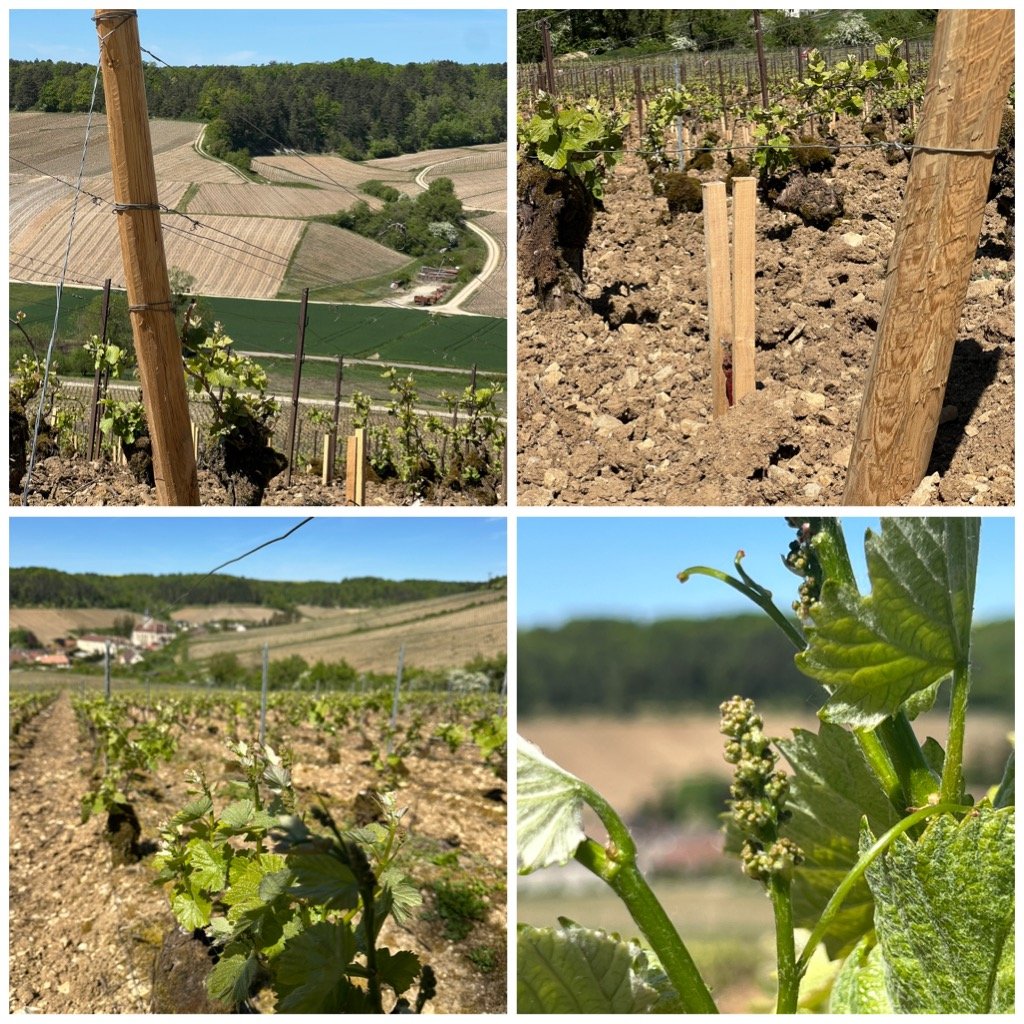
I love to see the tiny little bunches of grapes starting to form. Fingers crossed for a strong year.
Dimanche à la campagne
Sunday in the country is a fabulous event held at the end of April. This year marked their 30th anniversary, quite an achievement. They had 41 exhibitors, or creators, across 40 sites within our region.
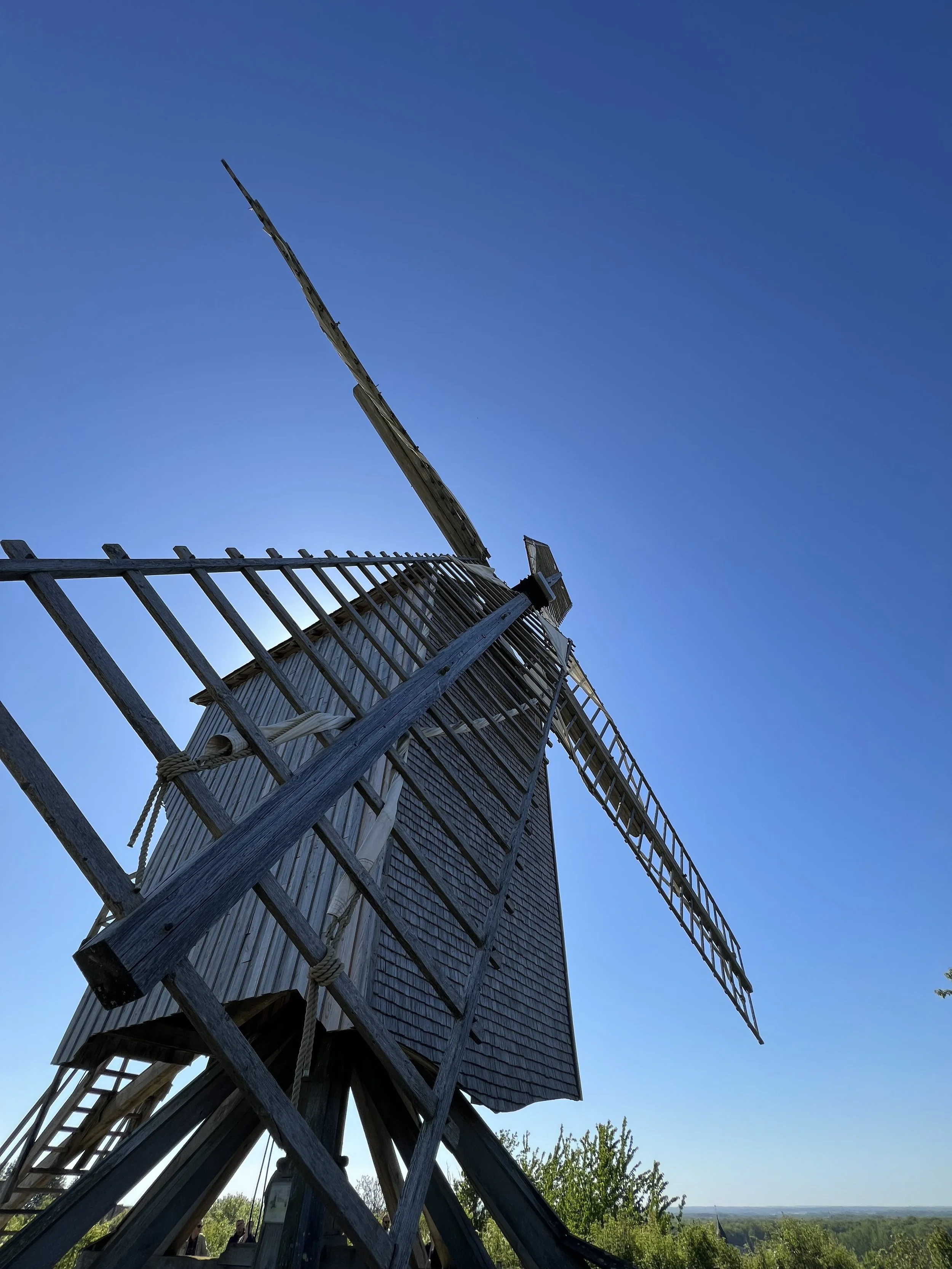
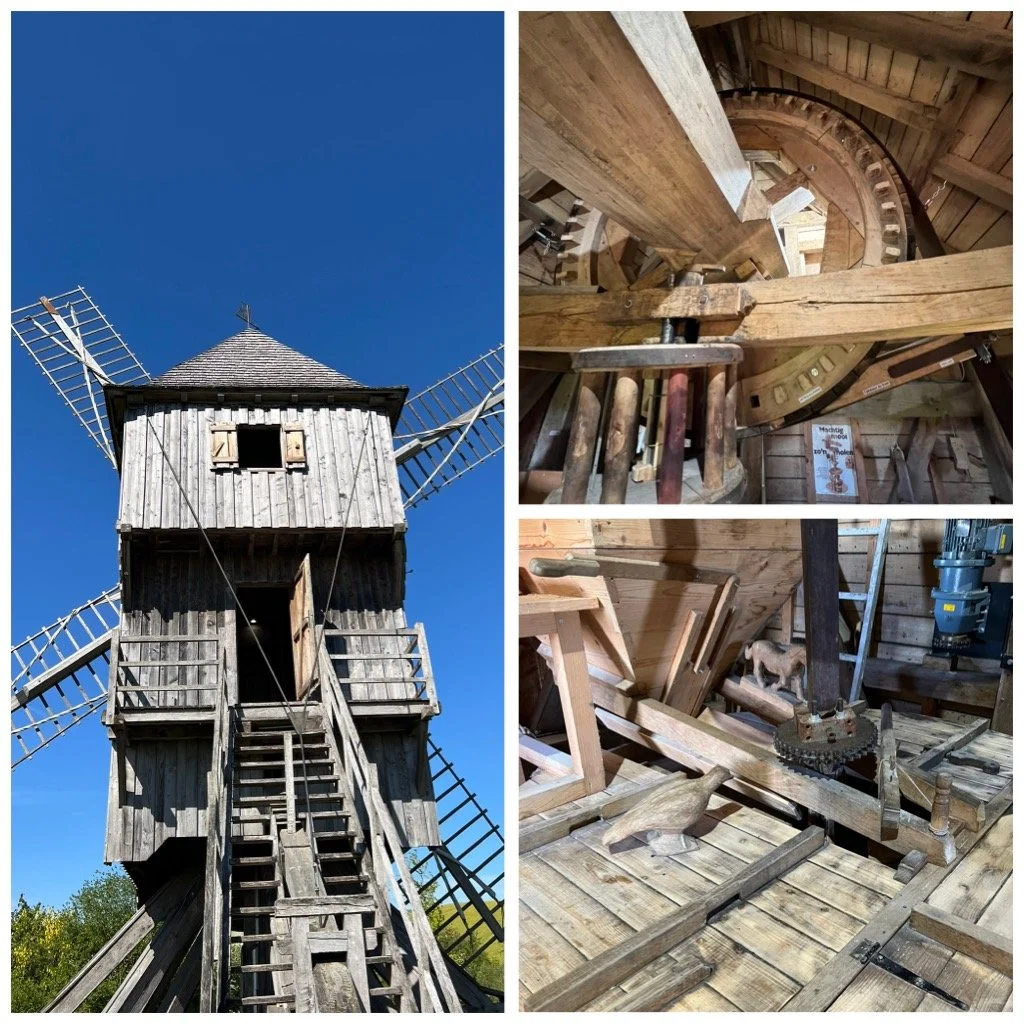
I’d chosen to visit a couple of new sites this year, and a couple we’d visited before. The first one was the renovated wooden windmill at Dosches. It was pretty spectacular. First we went into the windmill via the very rickety wooden staircase, then we visited a little exhibition in one of the barns on the story of the local windmills, and the story of this renovation.
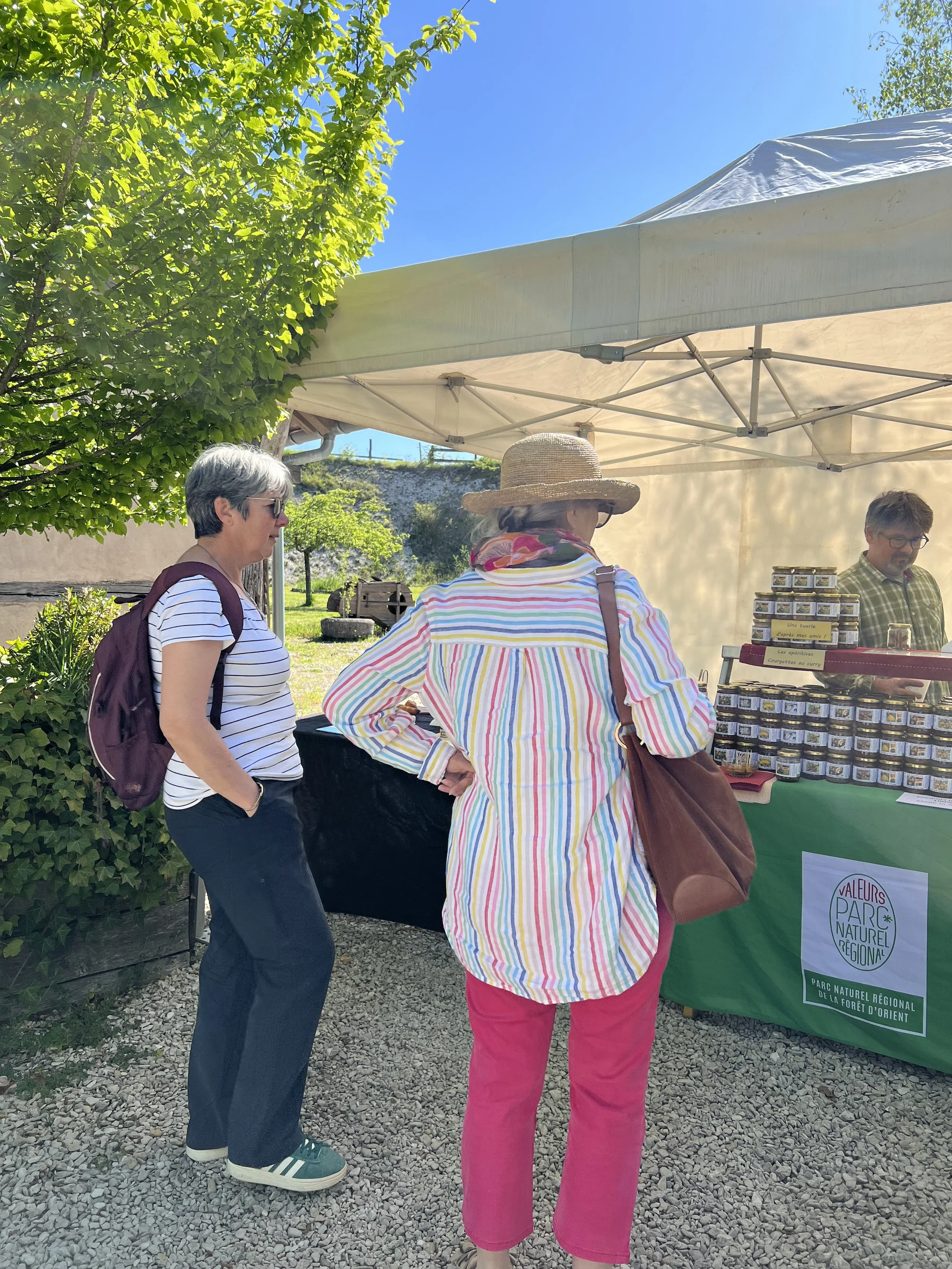
There were a number of stalls selling local produce: jams, honey, brioche and bread. All rather tasty, and I couldn’t resist going home with some elderflower jelly and recently baked brioche.
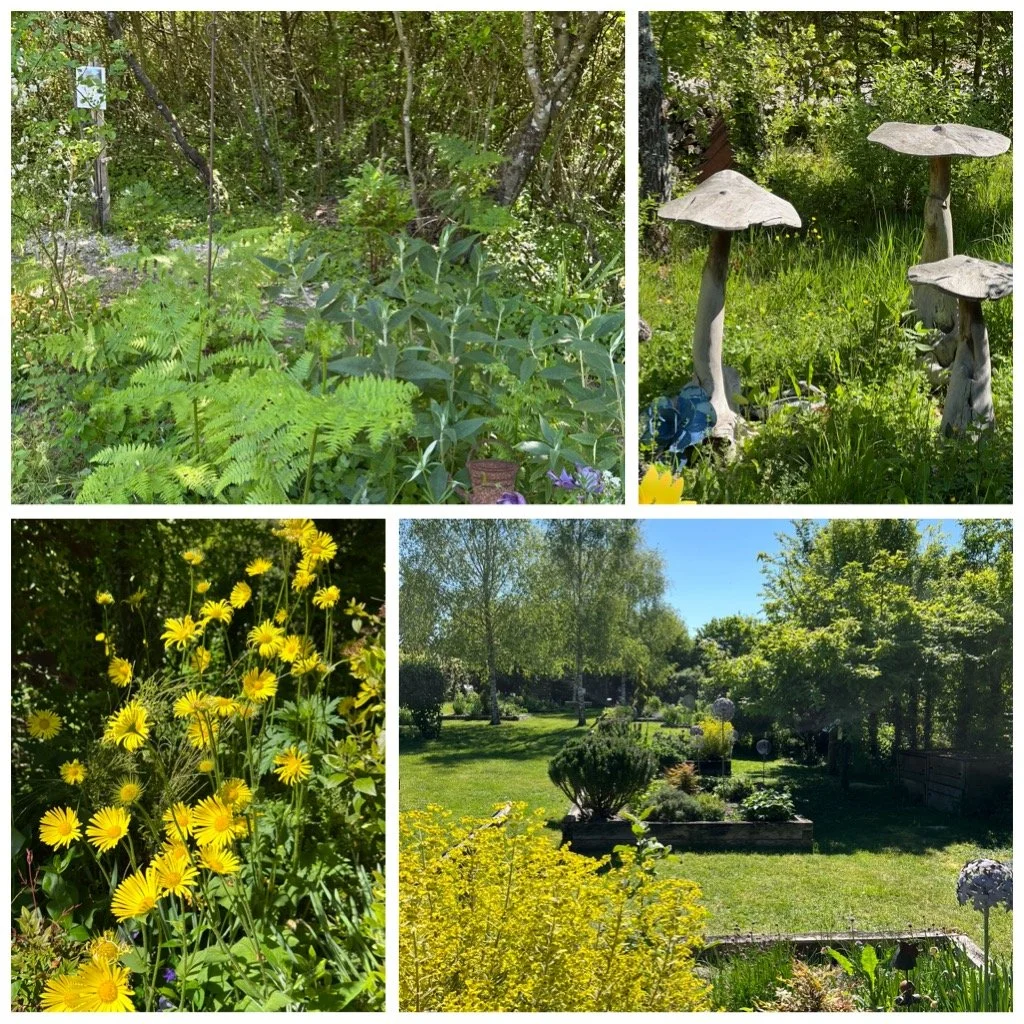
In the grounds of the windmill they had planted a rather beautiful little garden. I love looking at their planting schemes and the little creative ways in which they create interest in the garden. I always gain a little bit of inspiration.
We then headed to the pick-your-own farm ‘Esperance’. We had visited here before, but they have a much improved farm shop now, so I’d certainly look to go back. It’s not that far outside of Troyes, so quite easy to visit.
I was very happy with the tulips I’d picked.
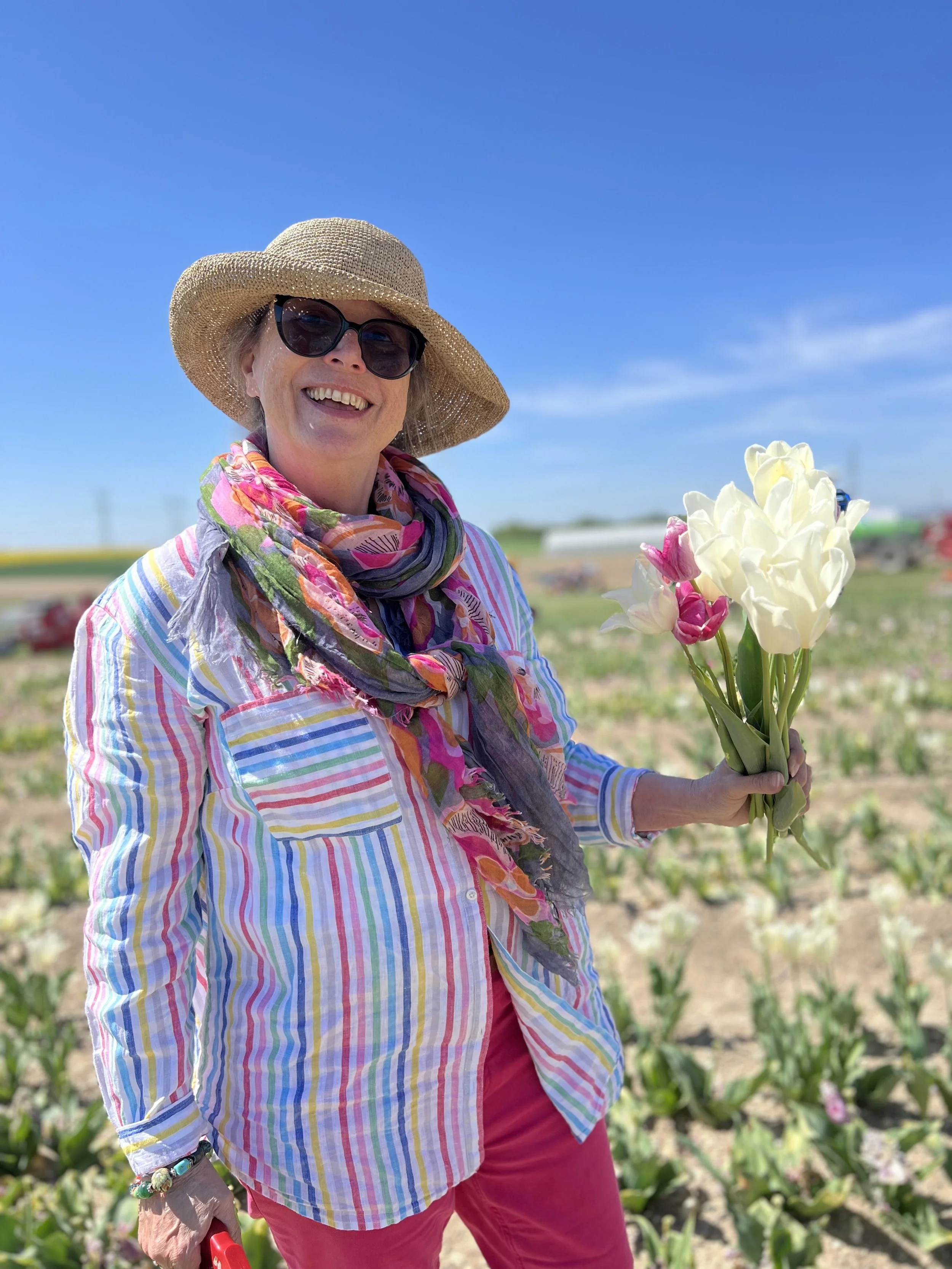
Our next visit was to the fromagerie at Champs-sur-Barse. A favourite of mine, and a timely stop off for lunch; merguez & frites.
Our last stop for the day was Jérôme Cothias, for a glass of champagne and a bit of country dancing.
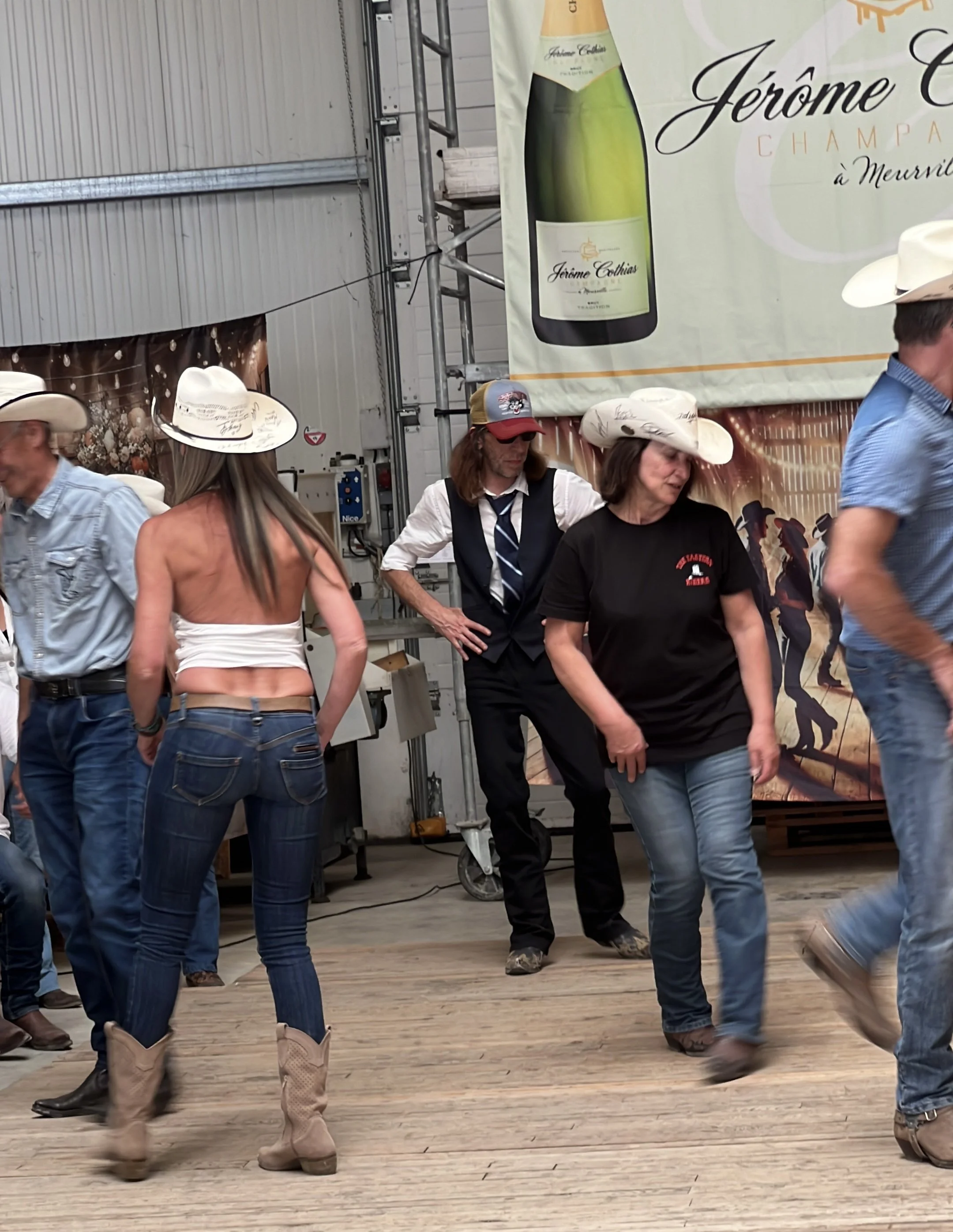
All-in-all a fabulous day.
Gardening together
My friend Lisa, arrived this week; it’s been lovely catching up, chatting about what we’ve both been up to, reminiscing, and just sharing some time being busy in the garden.
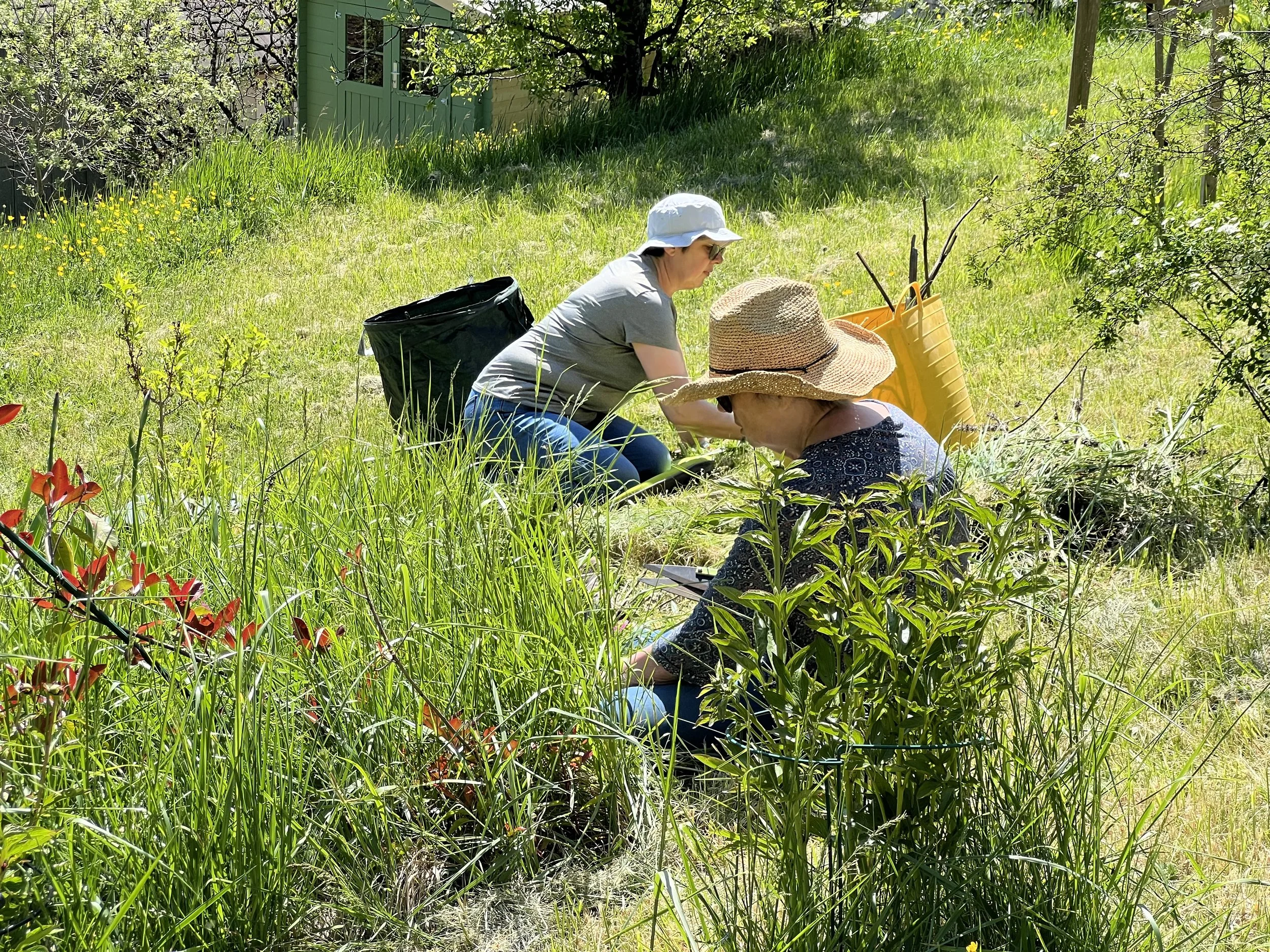
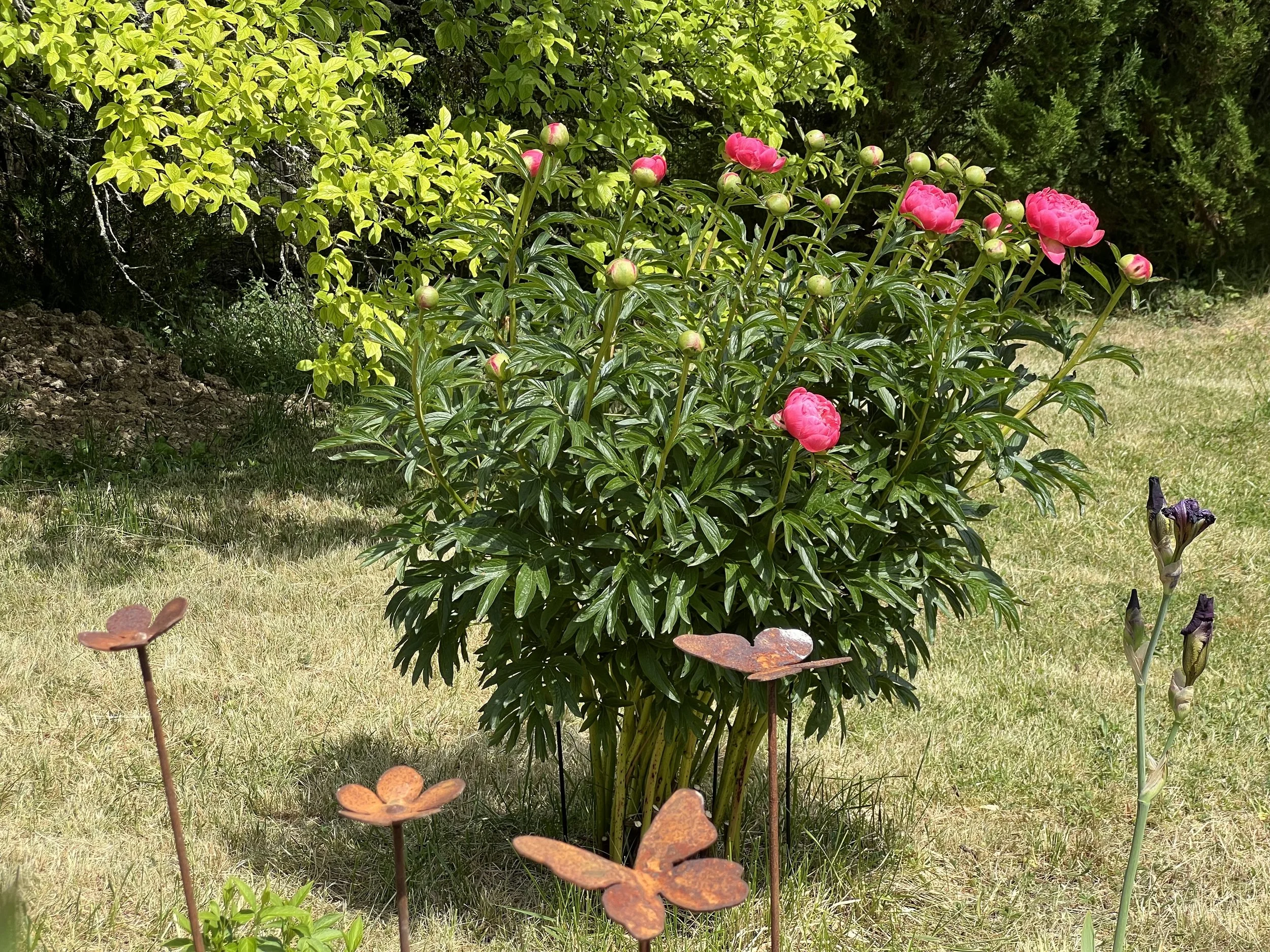
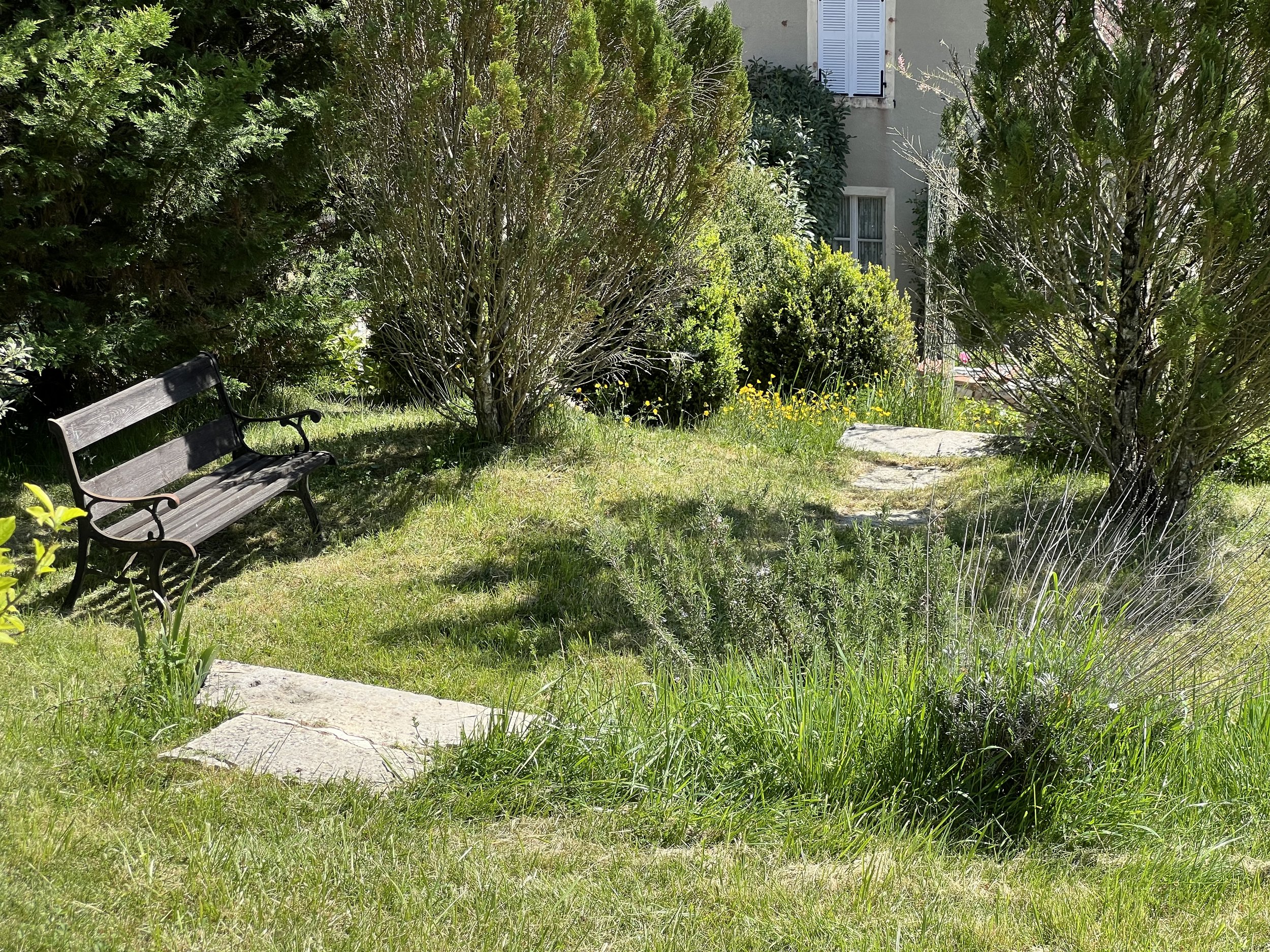
Brian was doing some strimming, but by my peonies, and my shrubbery I’m creating, we needed to be a little more careful, so we did this area by hand.
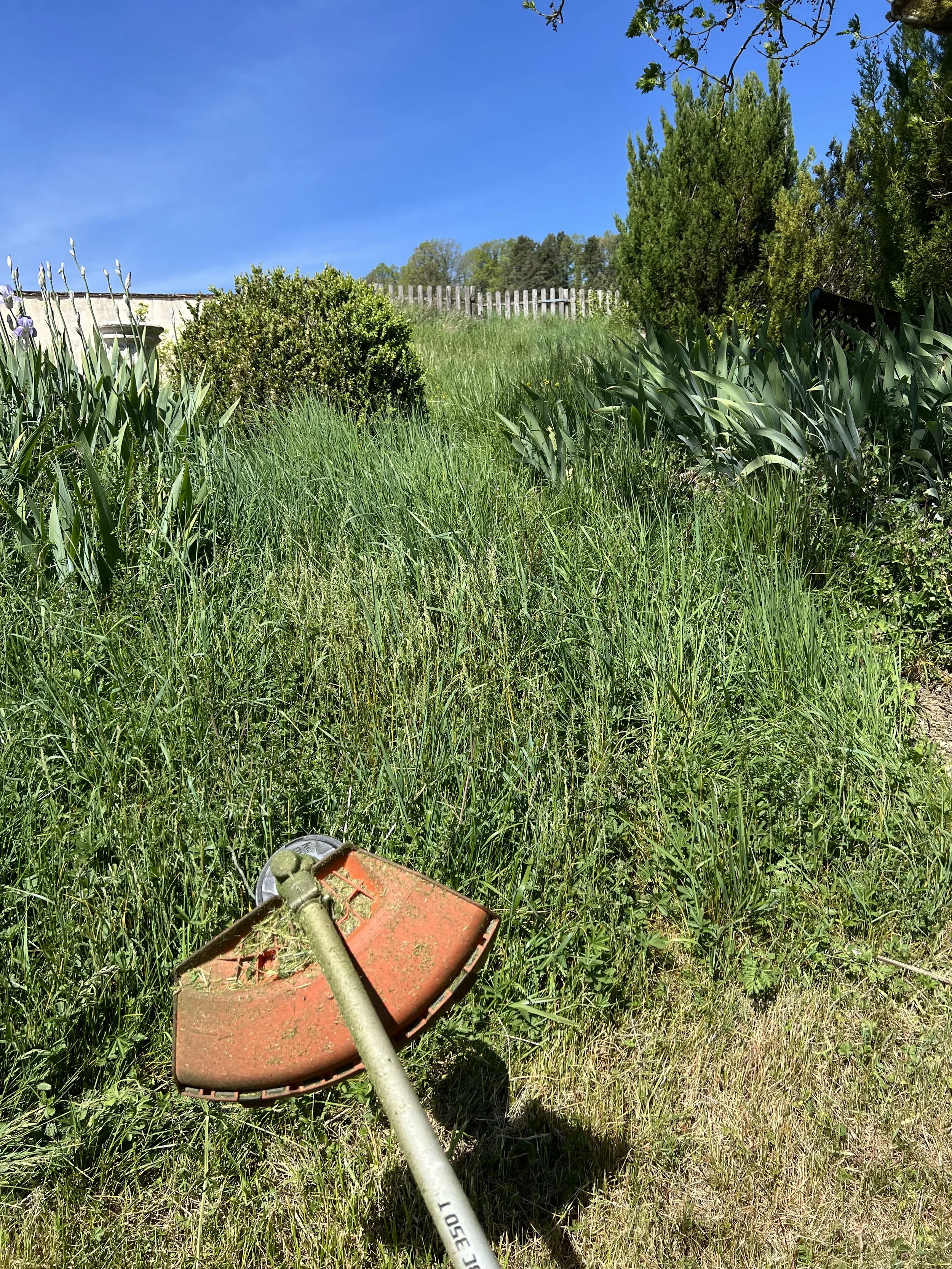
It was good though that Brian was addressing the pathways and steps with the strimmer, as the grass was extremely long there.
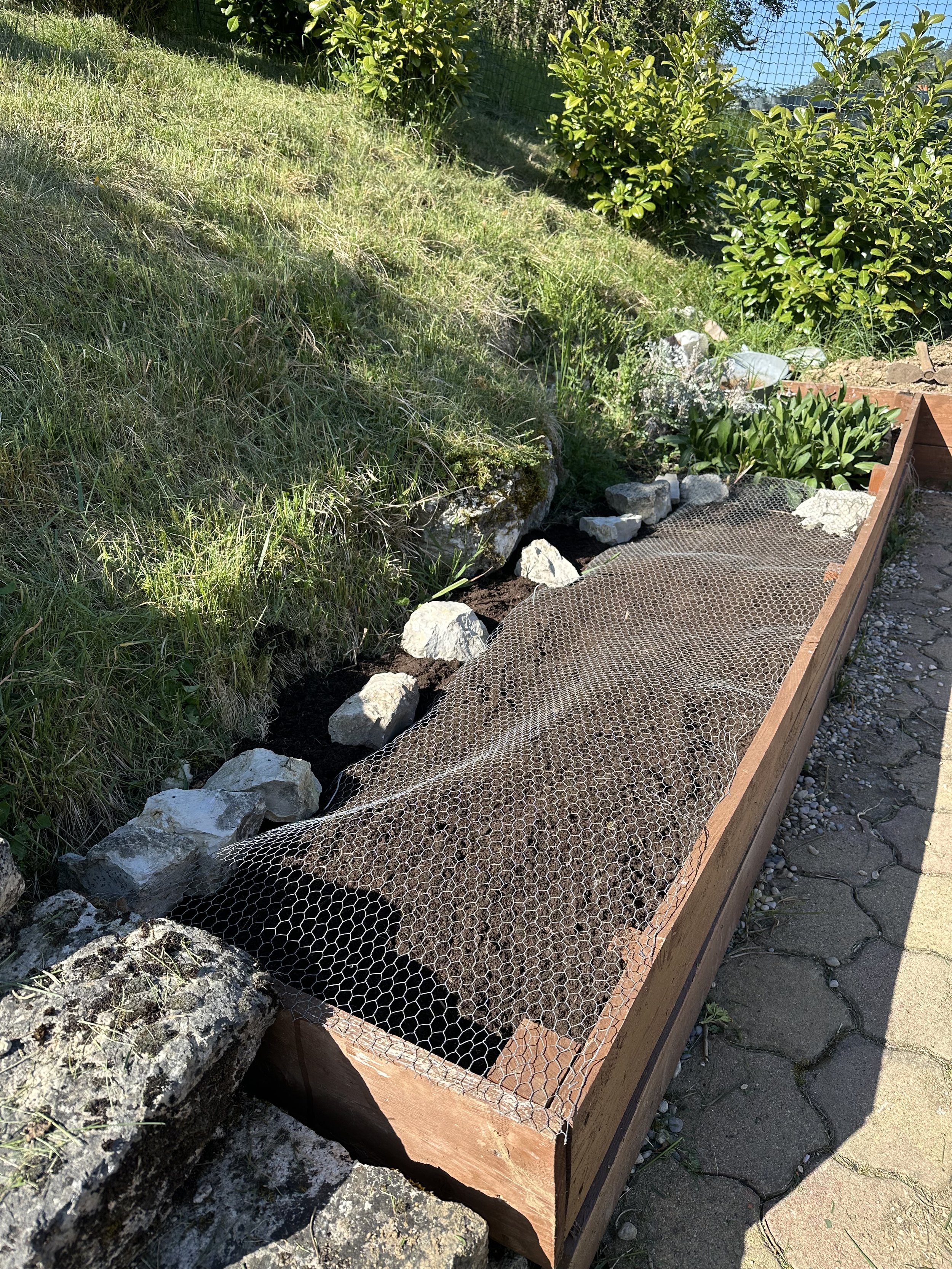
Before we headed back down to the house to prepare some dinner, we needed to look at how to protect my dahlias. Something had dug up the bulbs and chewed them. Our thoughts were that it was possibly a rabbit, so Brian sorted us out some chicken wire and a staple gun, and we put down a temporary dahlia protector!
Painting the shed
I really wanted to get the rest of the shed painted. It would help protect the wood against the sun, which we are currently enjoying a lot of.
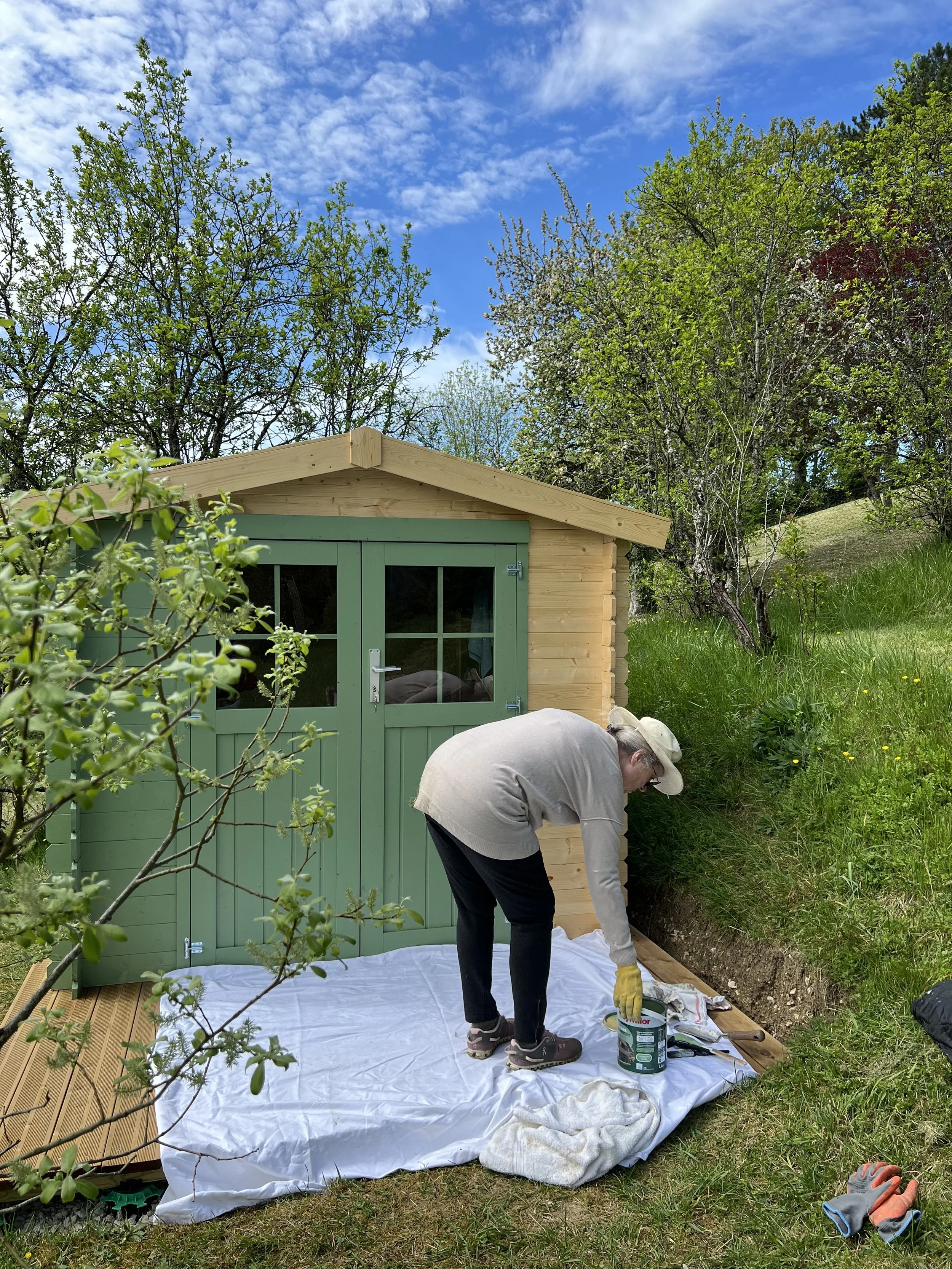
I am loving the ‘vert Provence’ colour we have chosen, but so far we’ve only painted the doors and the back wall.
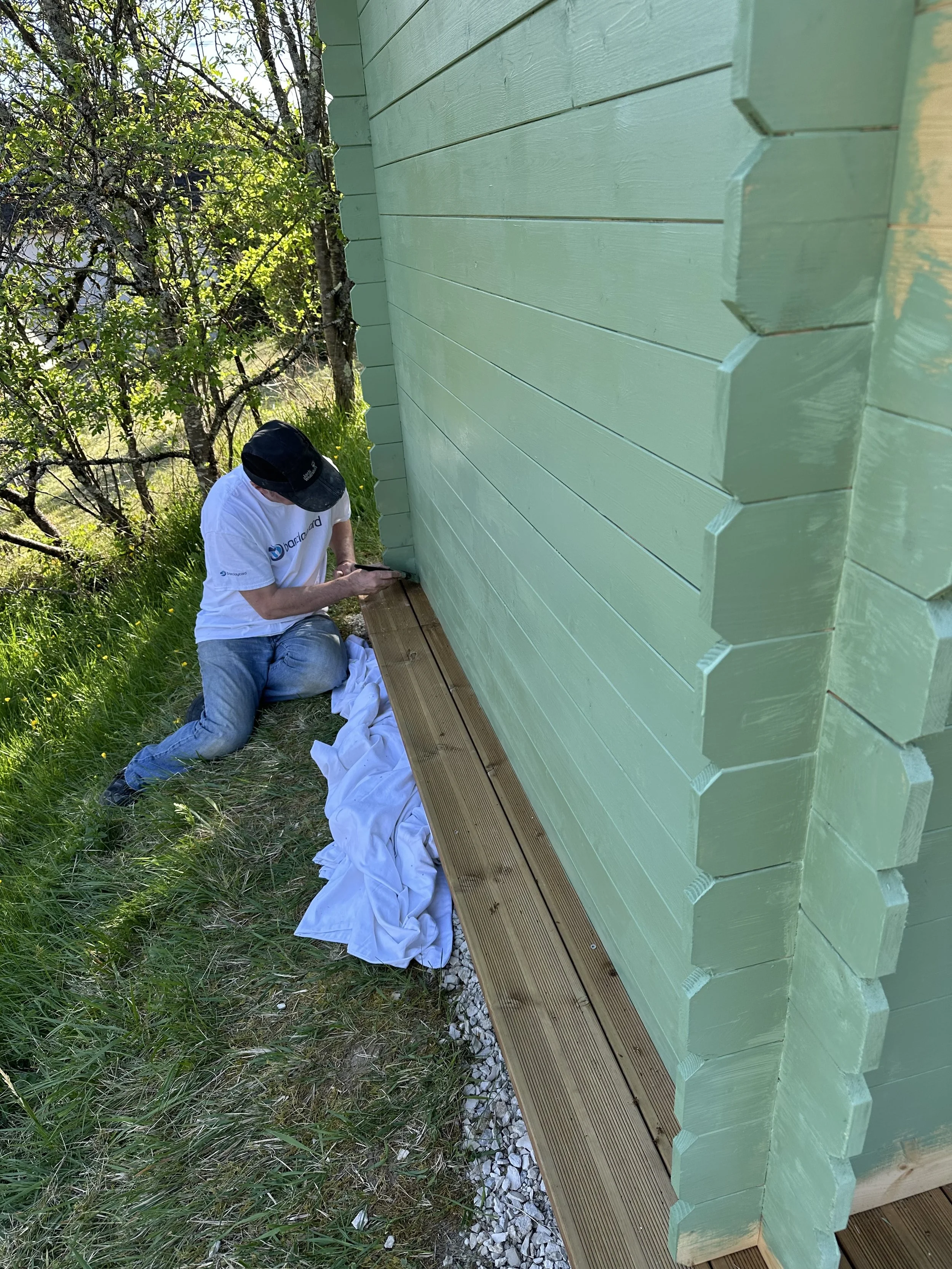
So we set about it, with new energy. Although it’s a tricky thing to paint, as it’s perched between two slopes, we soon had a good system going, with me doing the large, flat areas, and Brian doing all the fiddly bits and cutting in. Between us we finished two further walls.
Nearly there!
Garden chairs
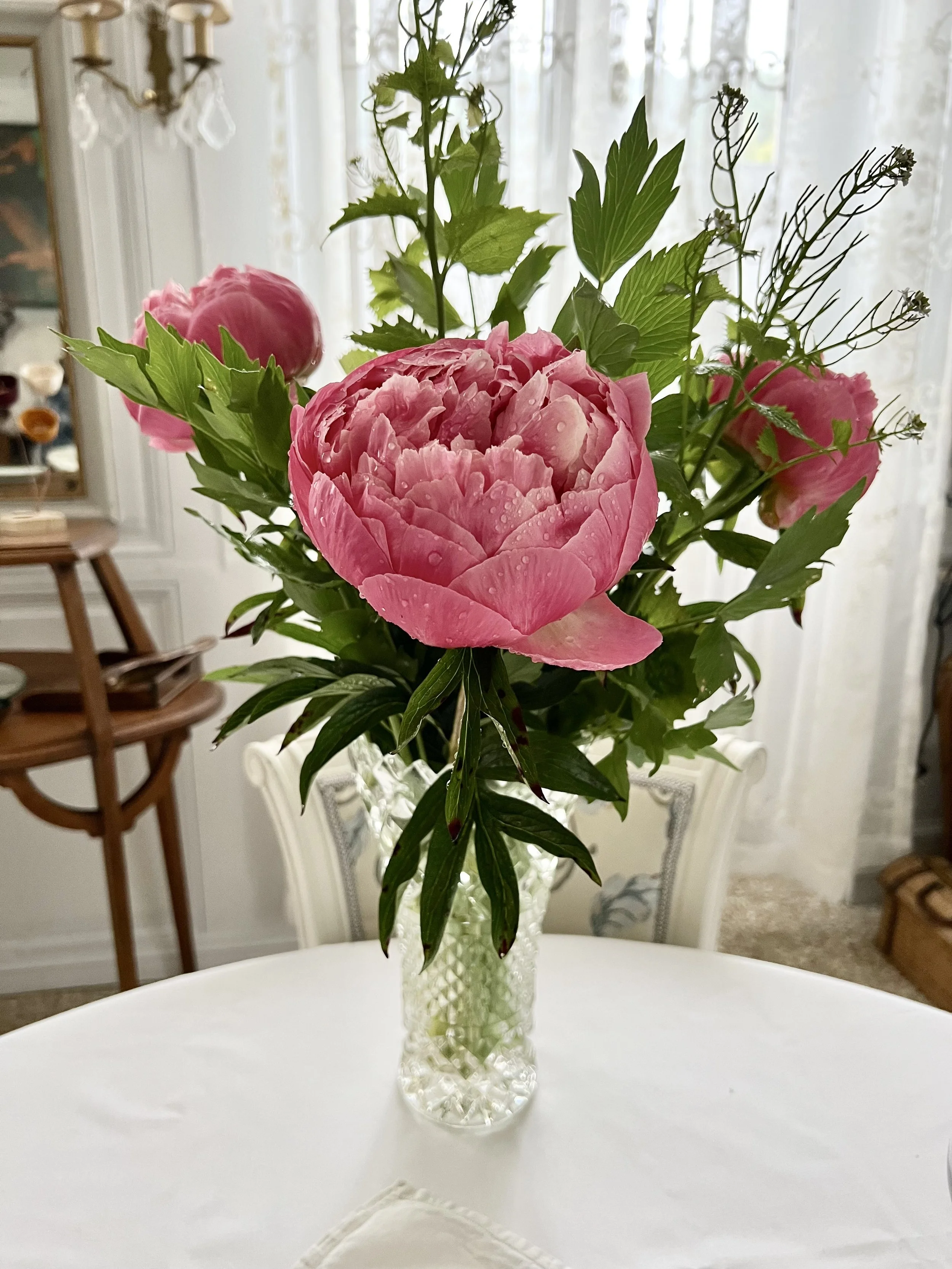
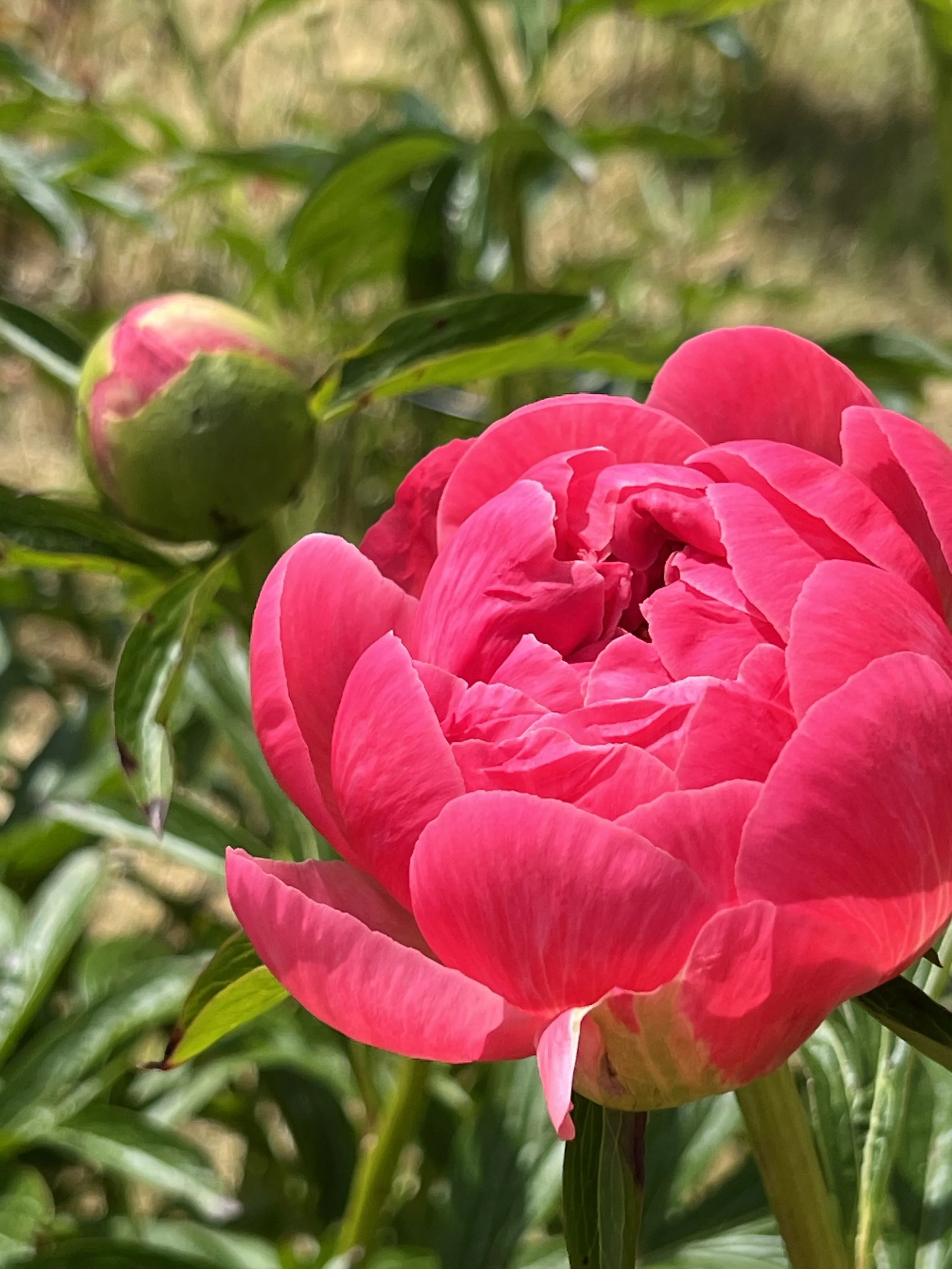
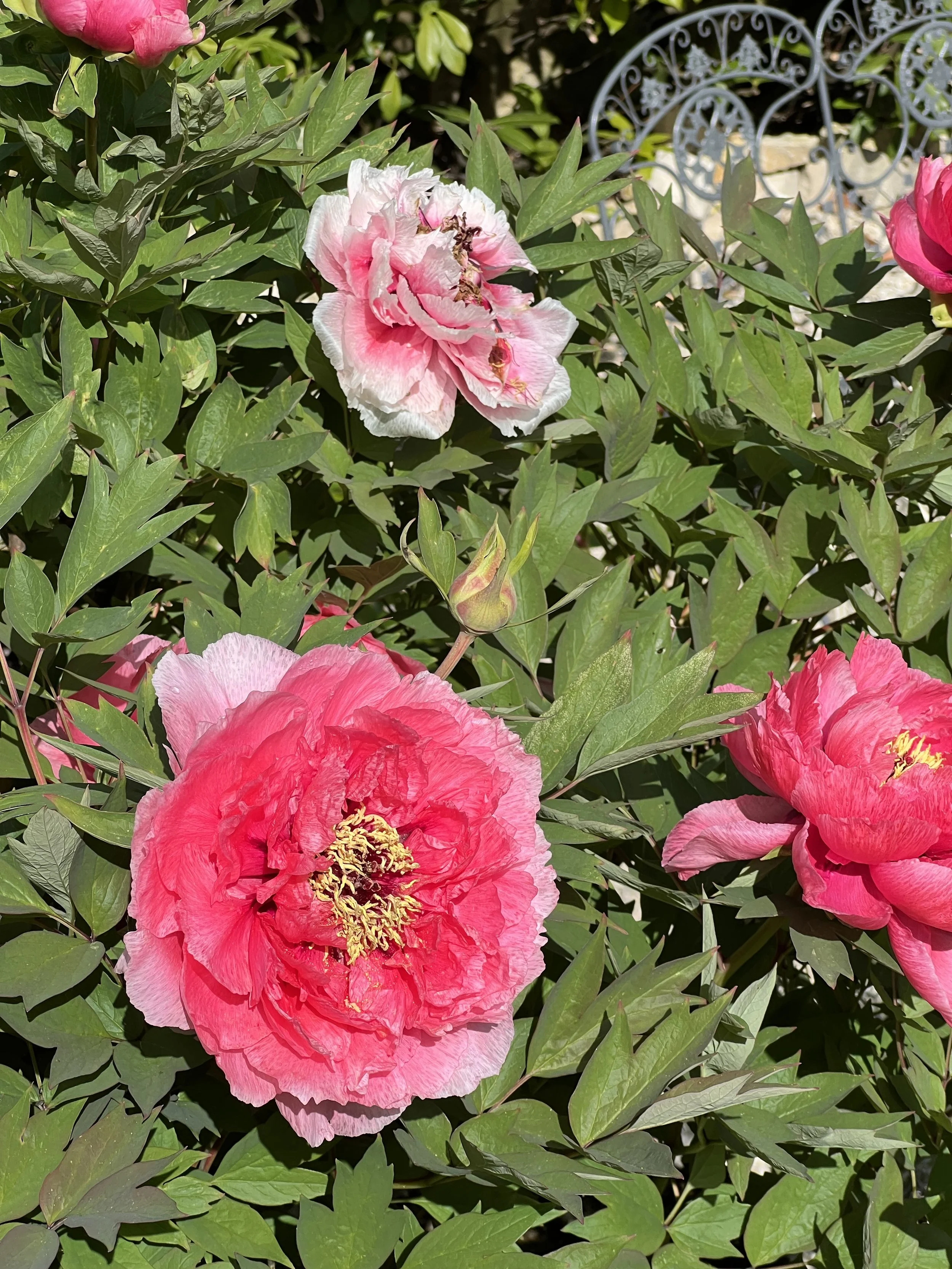
The tree peony is looking beautiful. I need to enjoy it as it doesn’t last too long, especially through hot days.
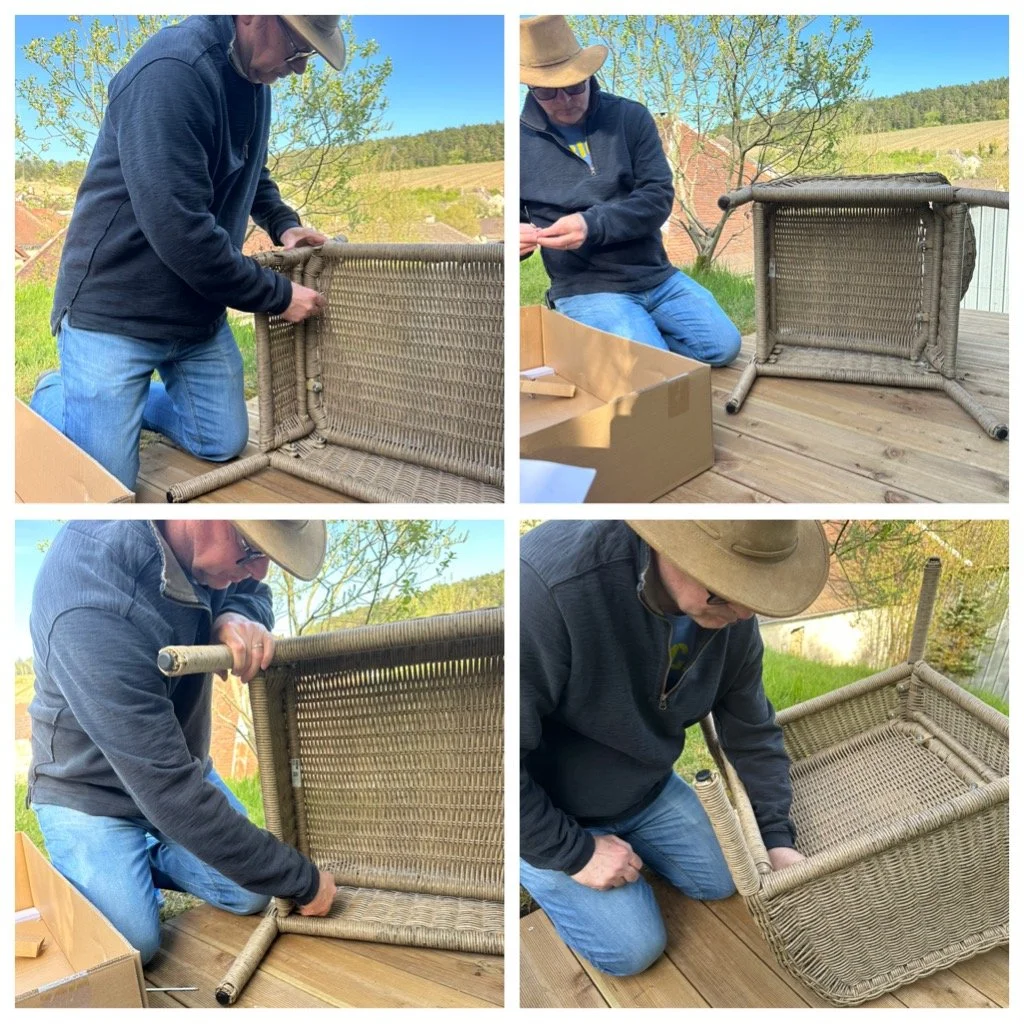
Up at the hill, Brian wanted to get my new garden chairs assembled. I plan to have them on my new deck, outside the ‘almost painted’ shed.
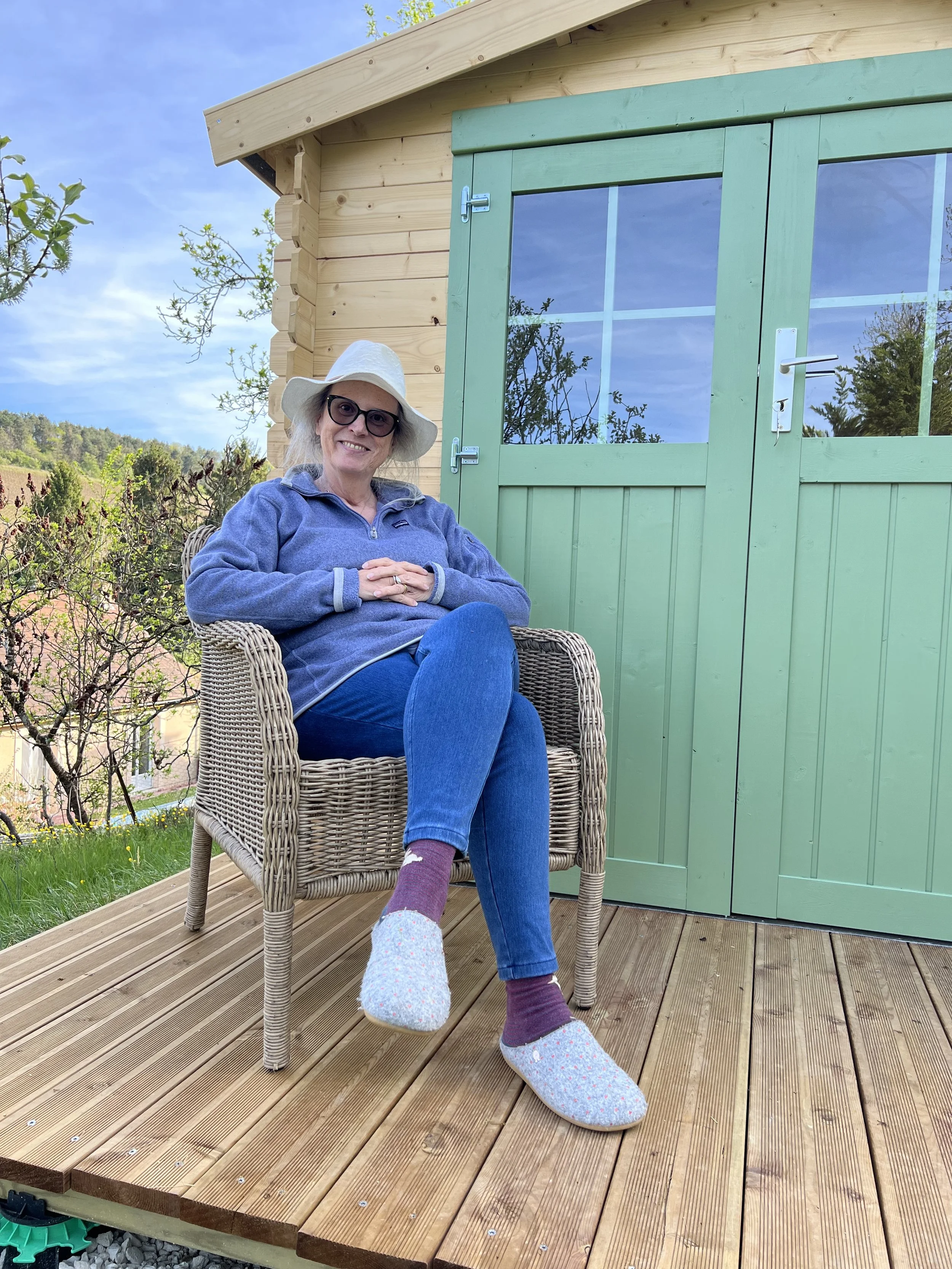
I can happily confirm they are very comfortable.
Market day
We had arrived home from Paris, and needed to stock up on a few supplies, so we headed into Bar-sur-Seine. It was a glorious day and the market was bustling.
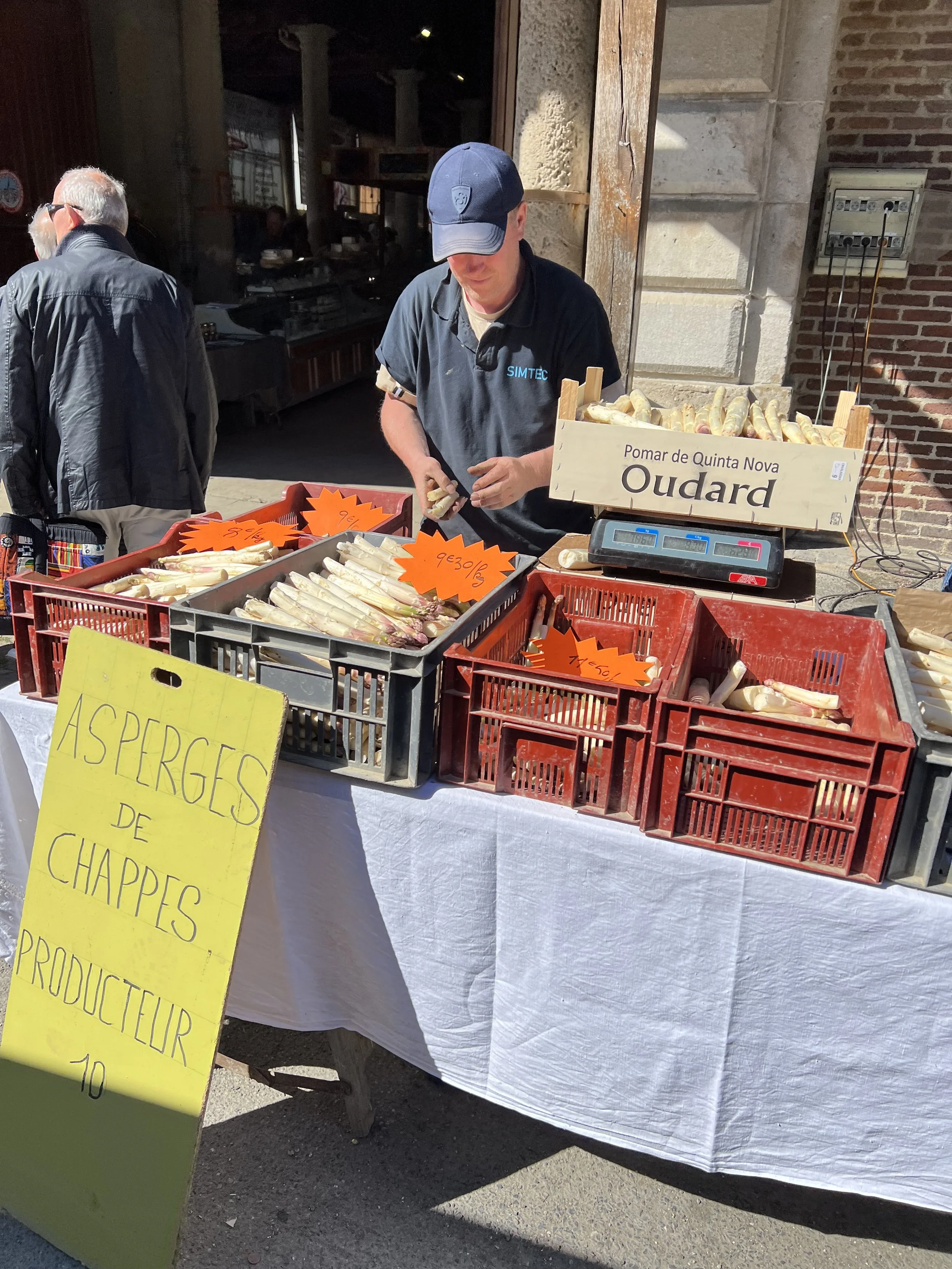
I’m loving seeing all the new seasonal veg coming in. Artichokes are abundant, but not a favourite of mine. But I do love asparagus, white and green.
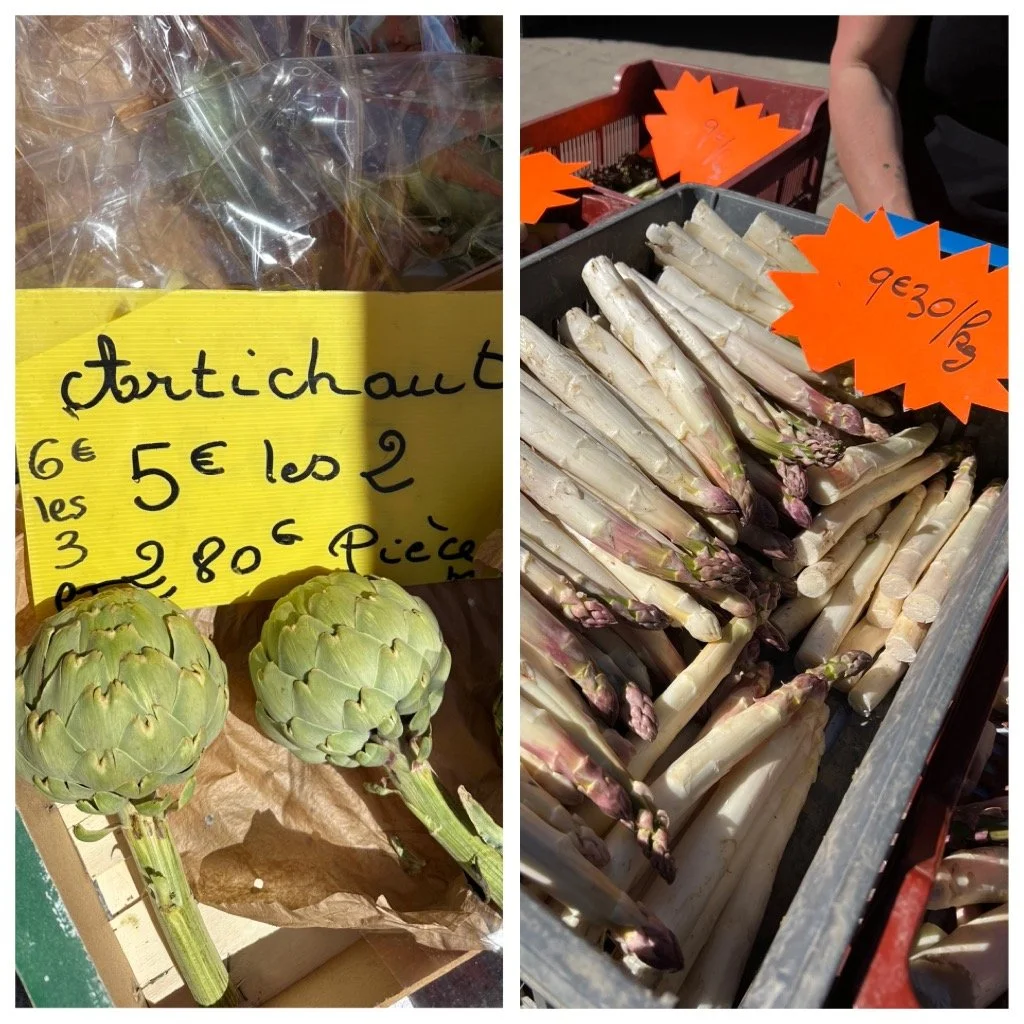
I bought some white asparagus, which we will have lightly poached, simply with some buttered bread. Very delicious.
Dior La Galerie
Christian Dior (1905-1957)
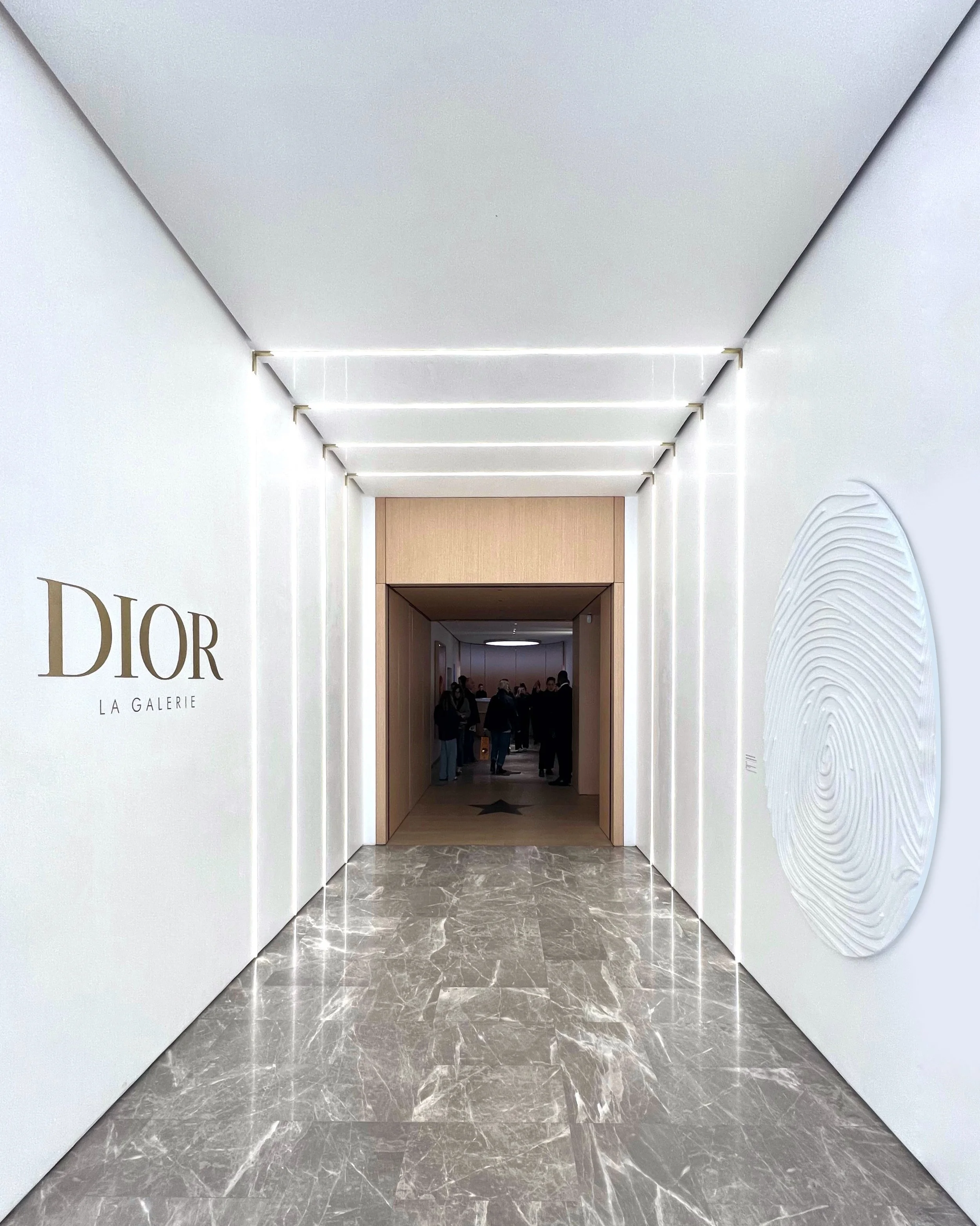
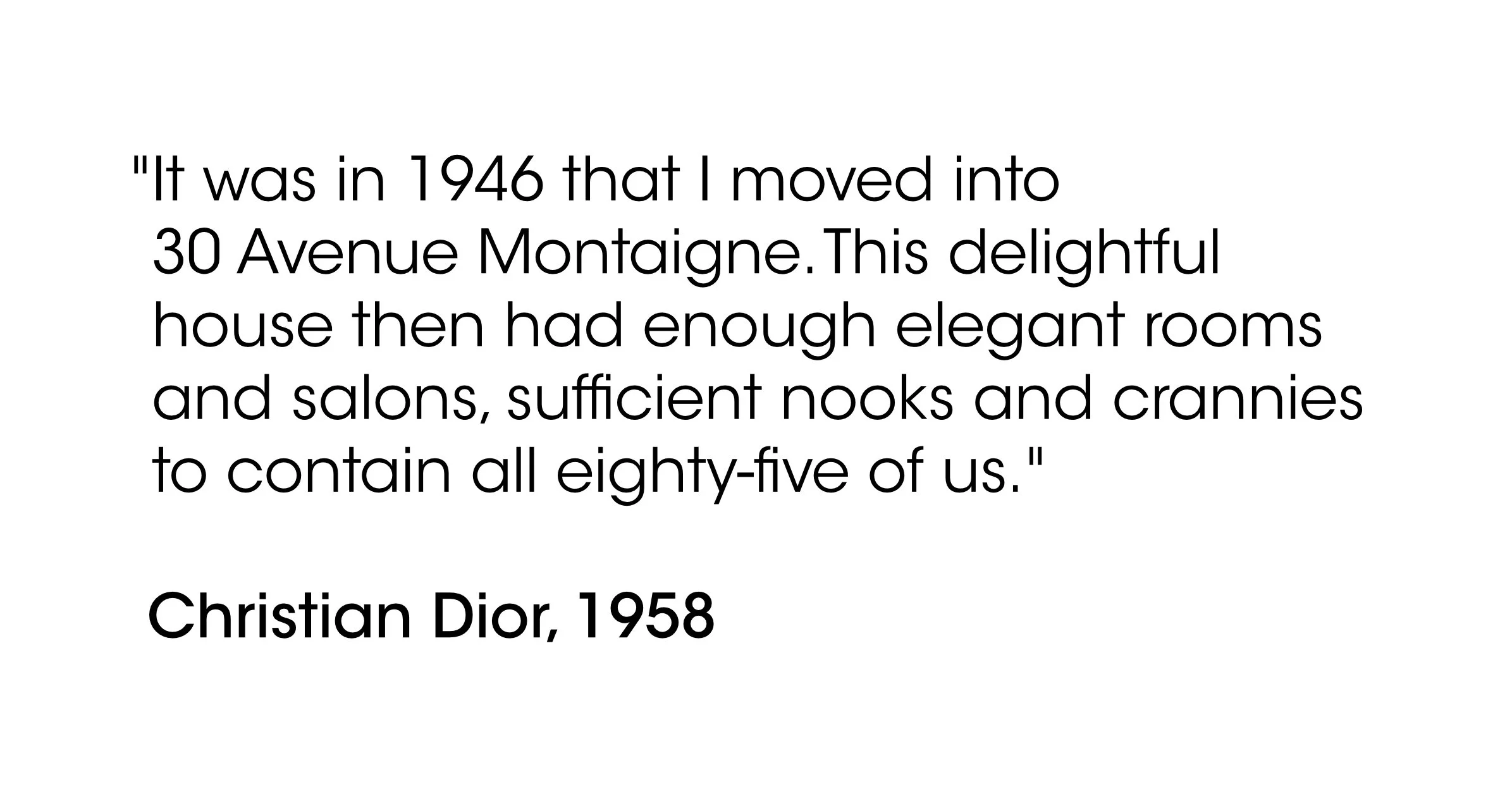
Our plan for the day was to visit the Dior Galerie, just off the Champs Élysée, and close to 30 Avenue Montaigne; the building Dior first bought to start his fashion house.
We hadn’t booked tickets, but the queue for non-ticket holders wasn’t too long, and took about 20 minutes for us. I’d probably advise booking tickets though, just in case we got lucky.
The entrance way is very dramatic, and leads to the lift. The third floor is where the exhibition starts.
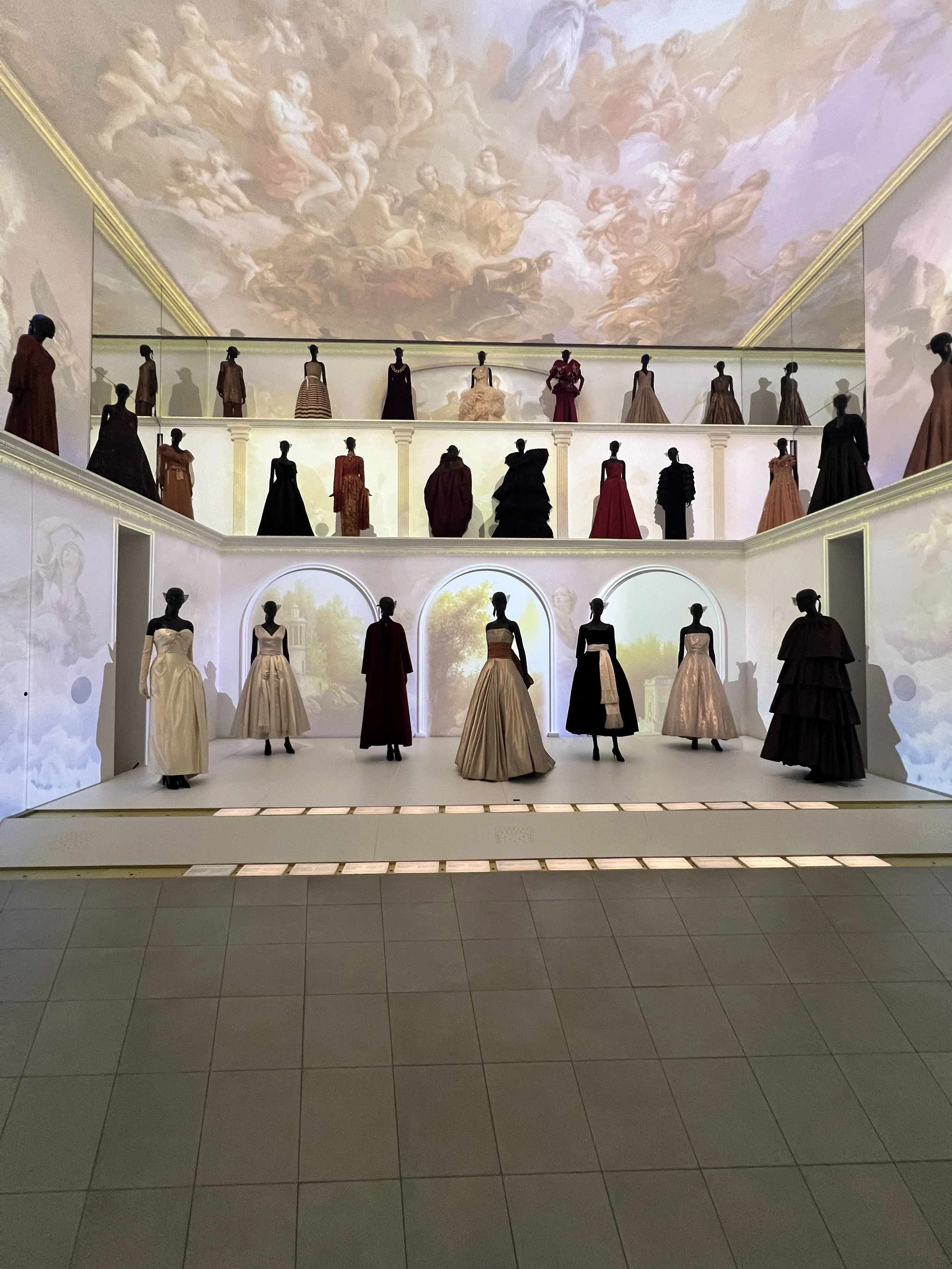
The exhibitions timeline begins just after the war. The first Christian Dior collection was launched in the Spring–Summer of 1947, from the salons of 30 Avenue Montaigne. Now two years after the end of WW2, he named the new lines ‘Corolle’, and they were pretty striking, with their feminine lines, fuller skirts and luxurious fabrics. He was leaving the restrictions of war fashion behind, and designing clothes with fuller skirts and longer lines, using more yardage of material. it instantly drew a response;

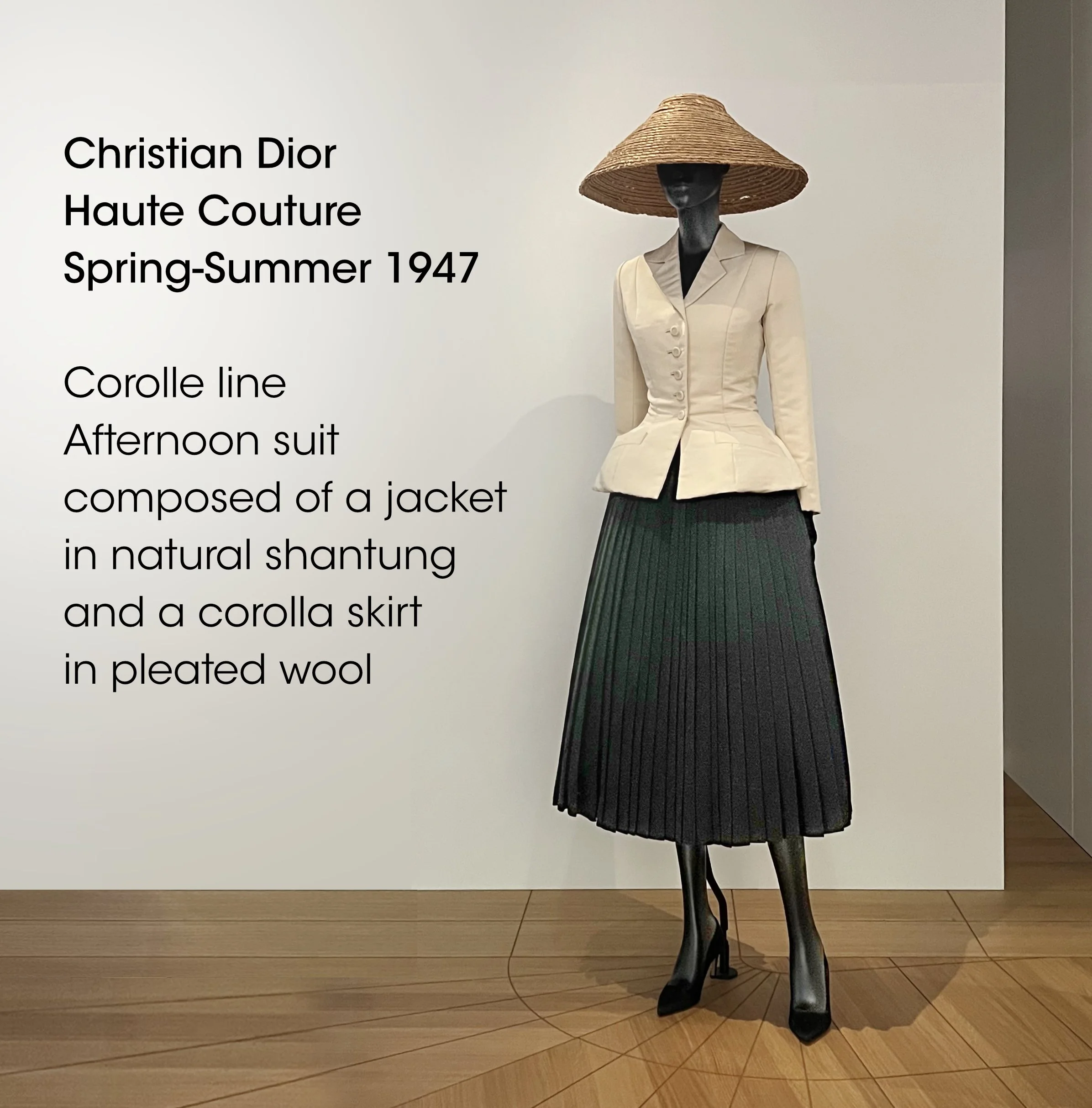
the exhibition follows a chronology of his styles, and you get to view up close numerous examples of his stylish work…
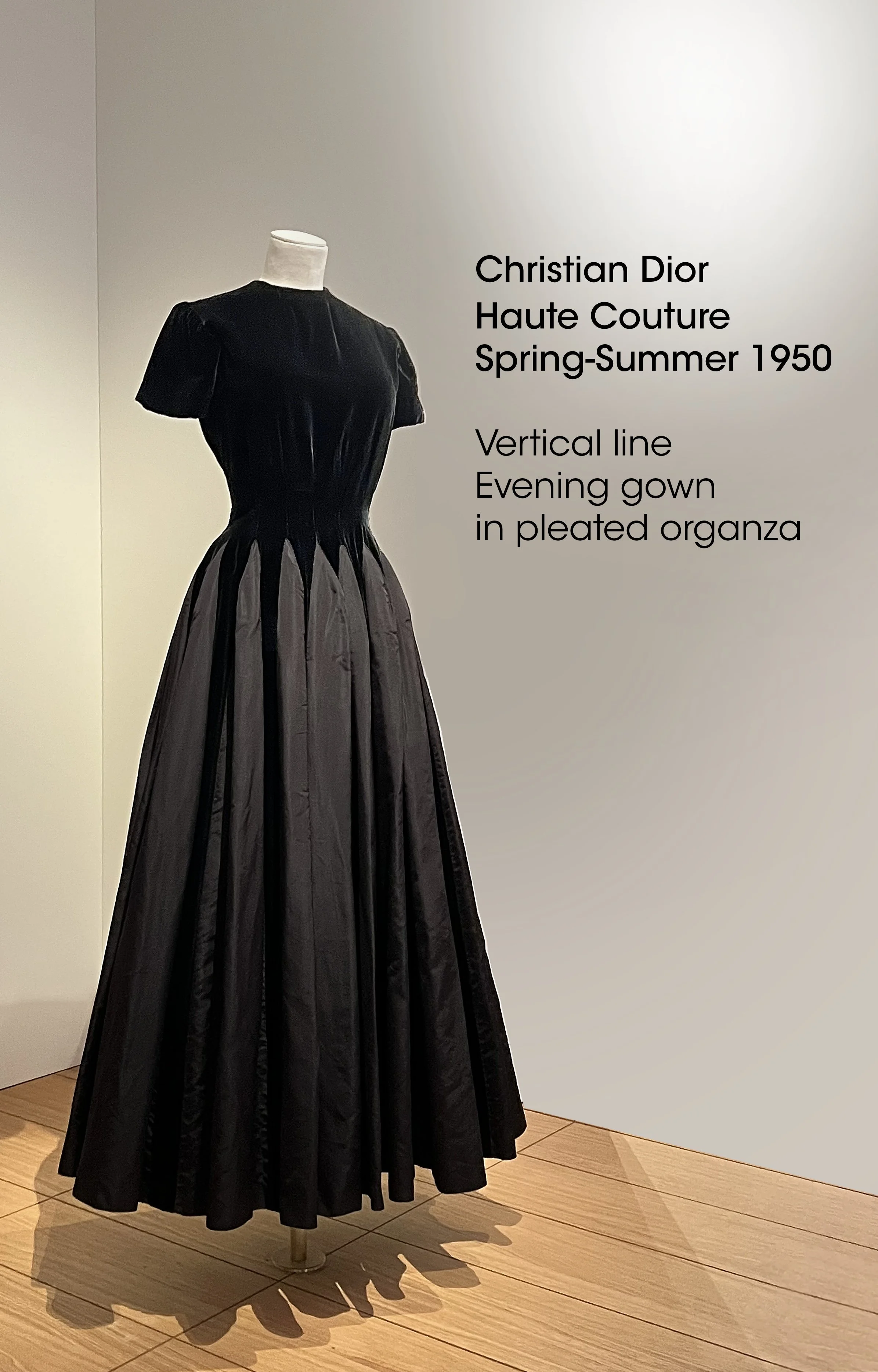
…imagining the time when these dresses, coats, and suits were worn, and seeing the styles change as the world changed.
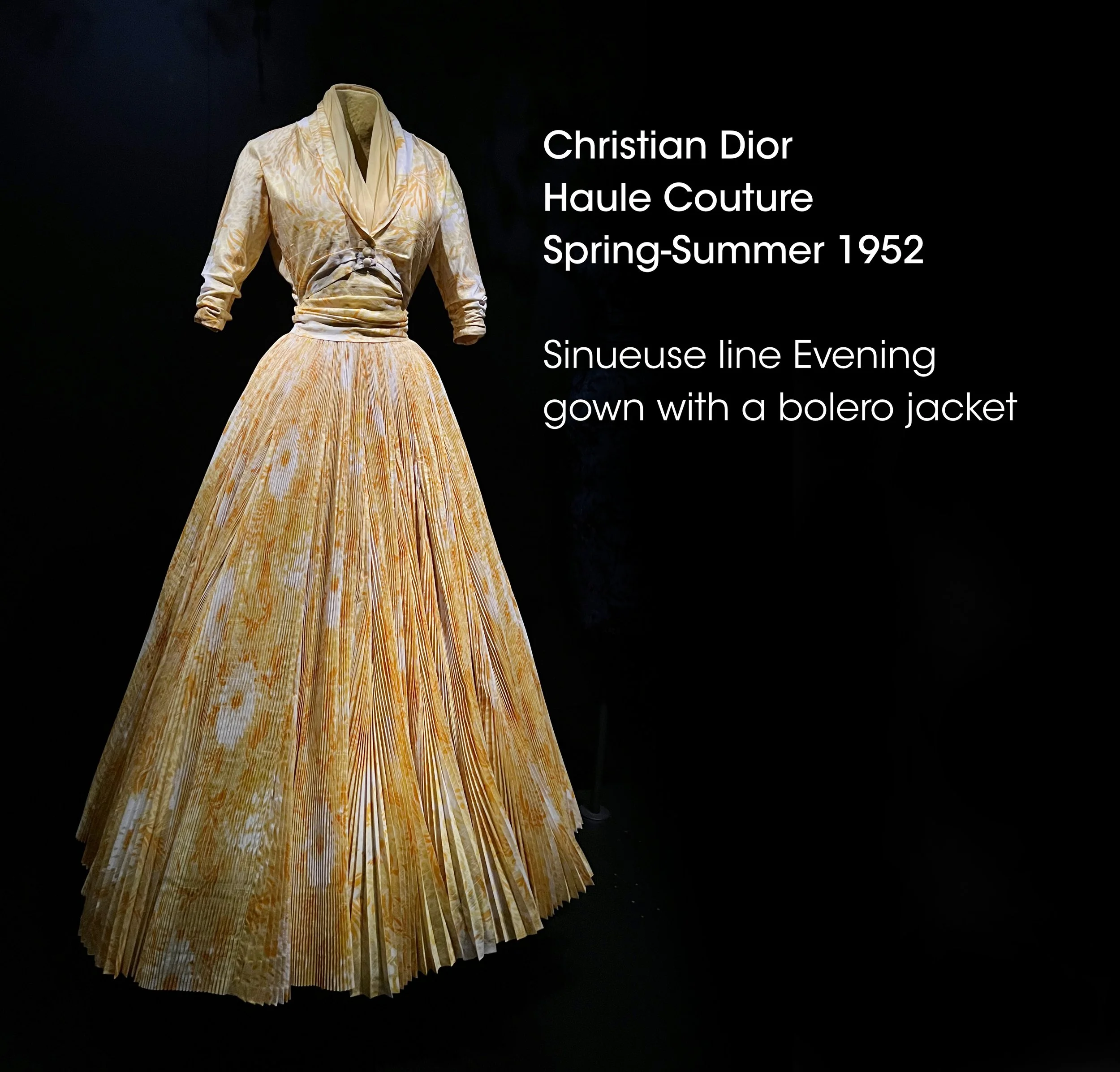
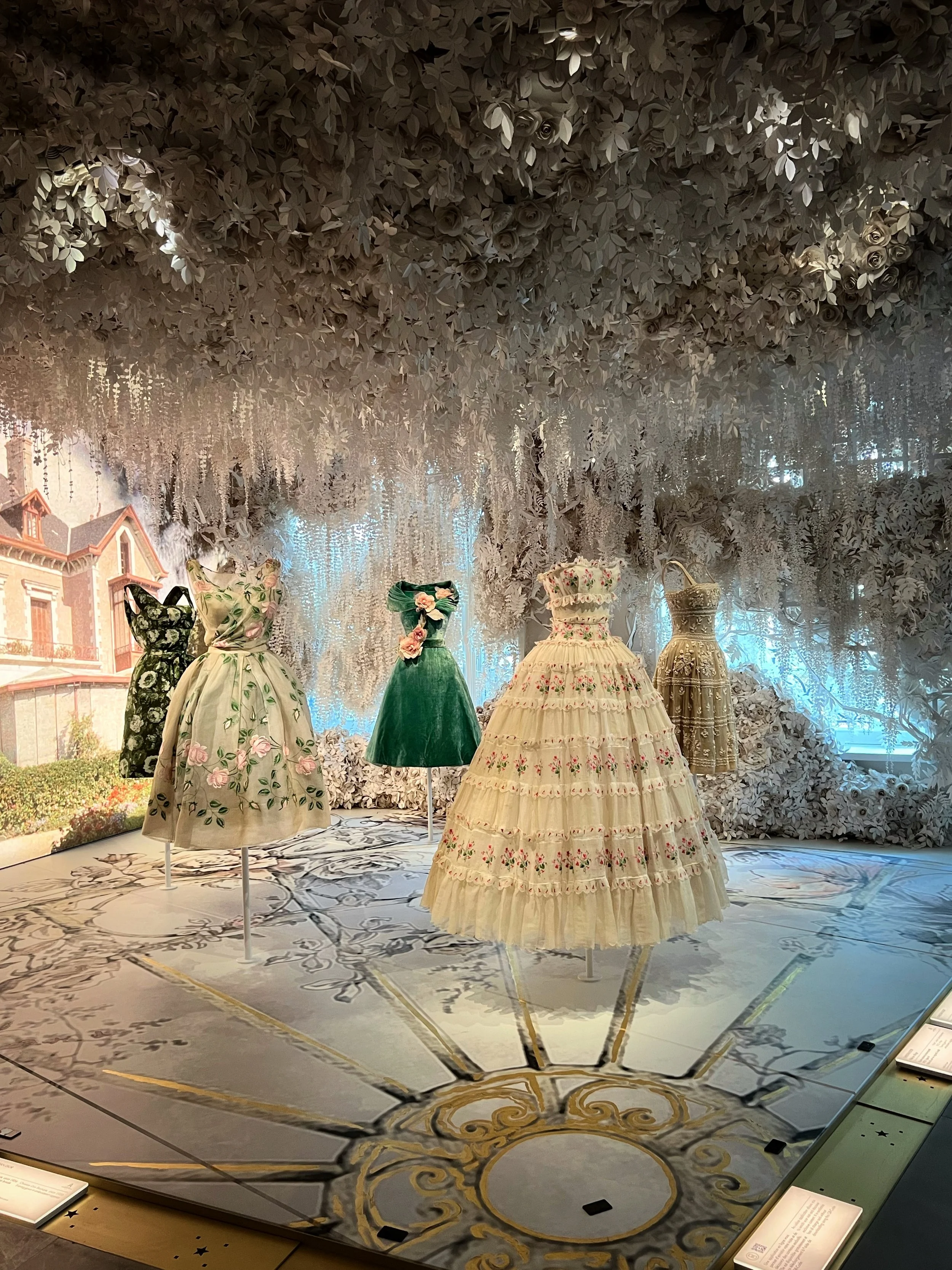
The styles became softer, and more dreamlike. I loved the very feminine approach he had with his ‘Fête au village’ collection.
Haute Couture Spring-Summer, 1955
A-line Evening gown in embroidered organza.
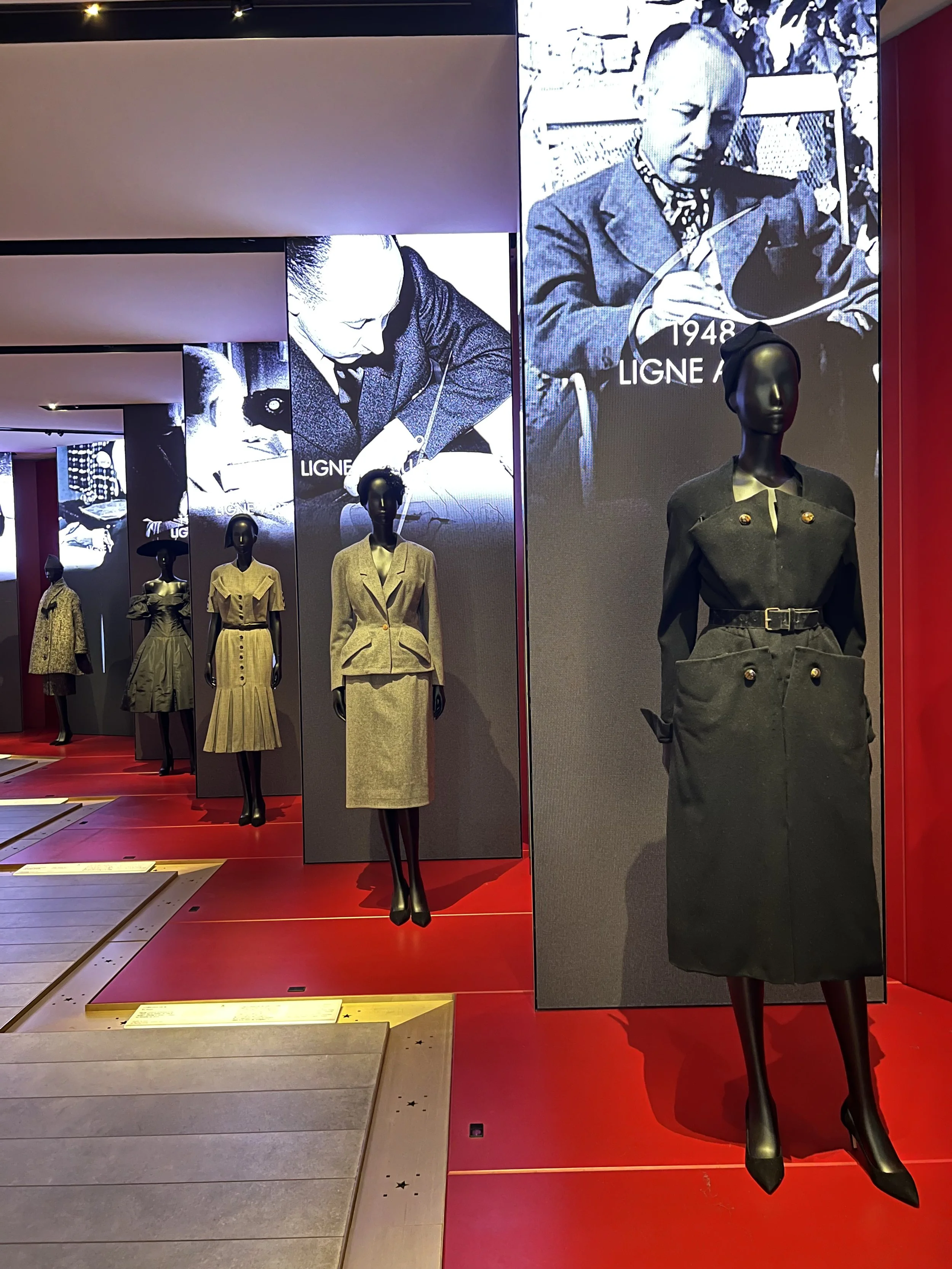
But he also knew how to bring elegance and formality to a suit. this exhibit, compressing how the designs had changed from 1948–1955, demonstrates key elements of his style: tighter waists, softer hips, shawl collars.
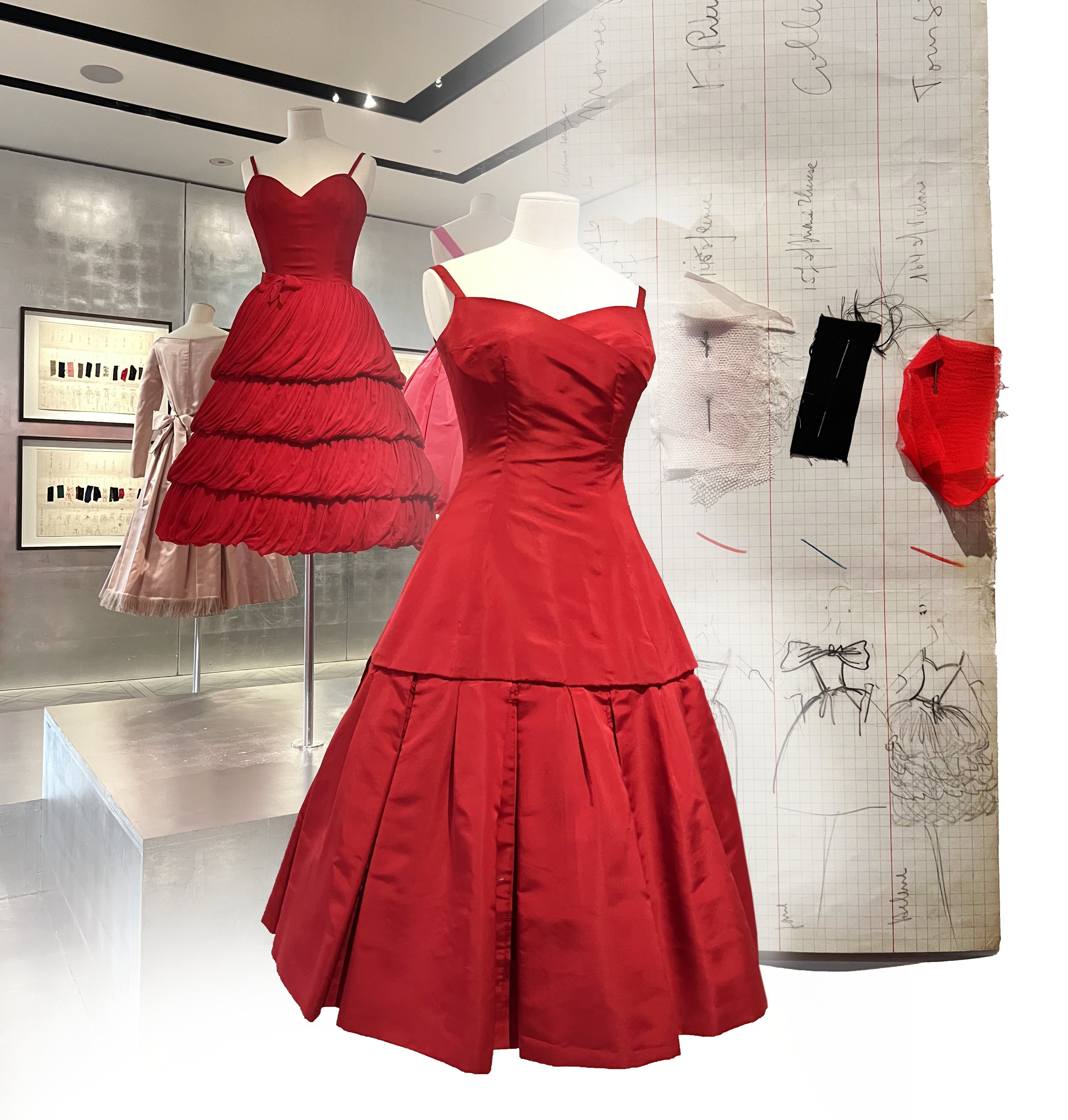
Up to now the exhibition had been quite muted, and I love a bright colour, so I found the next room really exciting. The most beautiful red dresses, and the designs behind them. It was fascinating to see his inspiration coming together on paper, with his briefing notes for his teams. He would make a sketch of the dress, attach a sample of the materials he wanted used, and give it a small description. It was enough for his team to understand what he wanted, he must have been an excellent communicator.
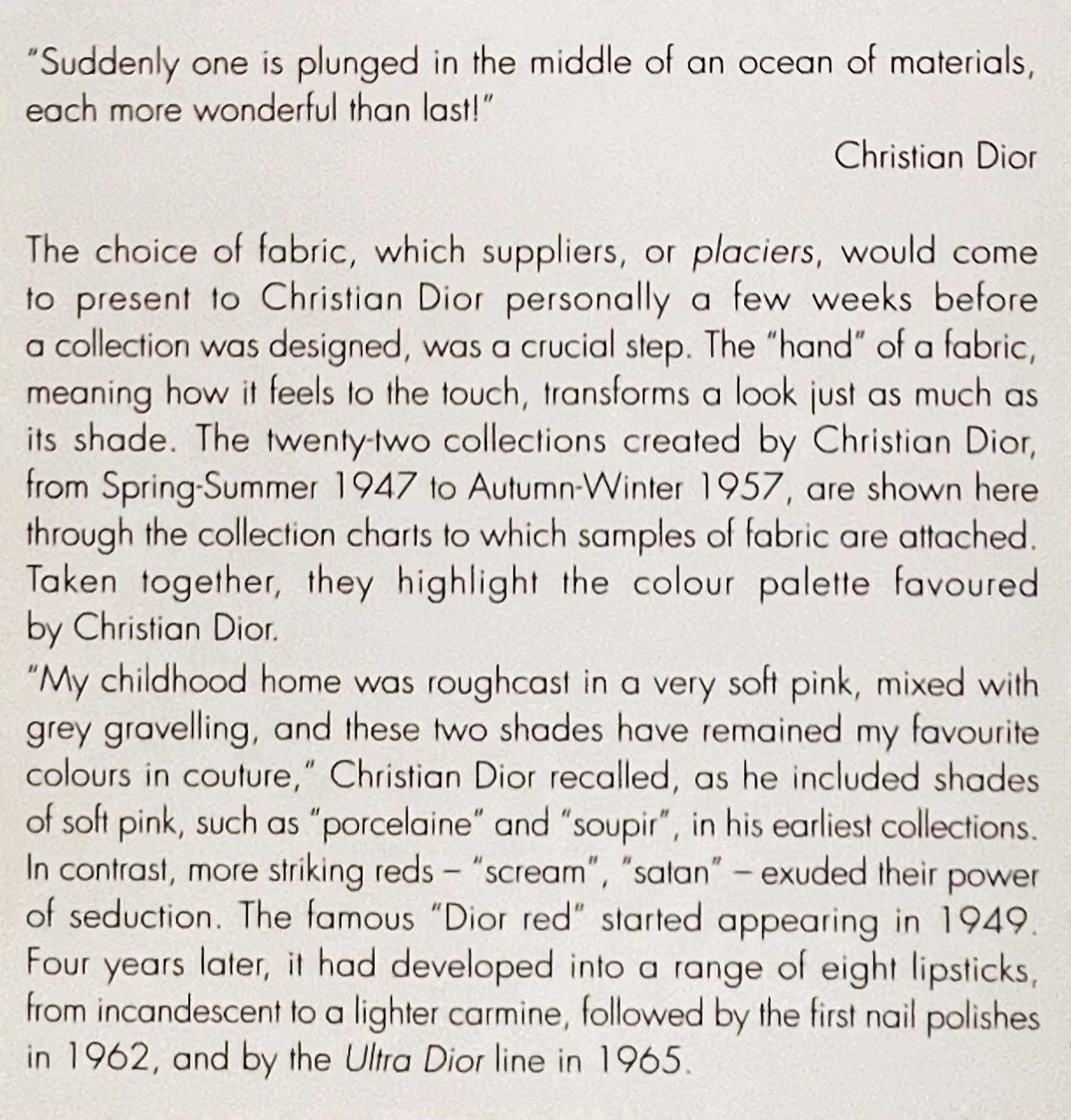
The evolution of the brand is chronicled throughout the gallery, highlighting the continuous development from that first "New Look" in 1947 to the modern designs we see now, and their impact on the fashion world.
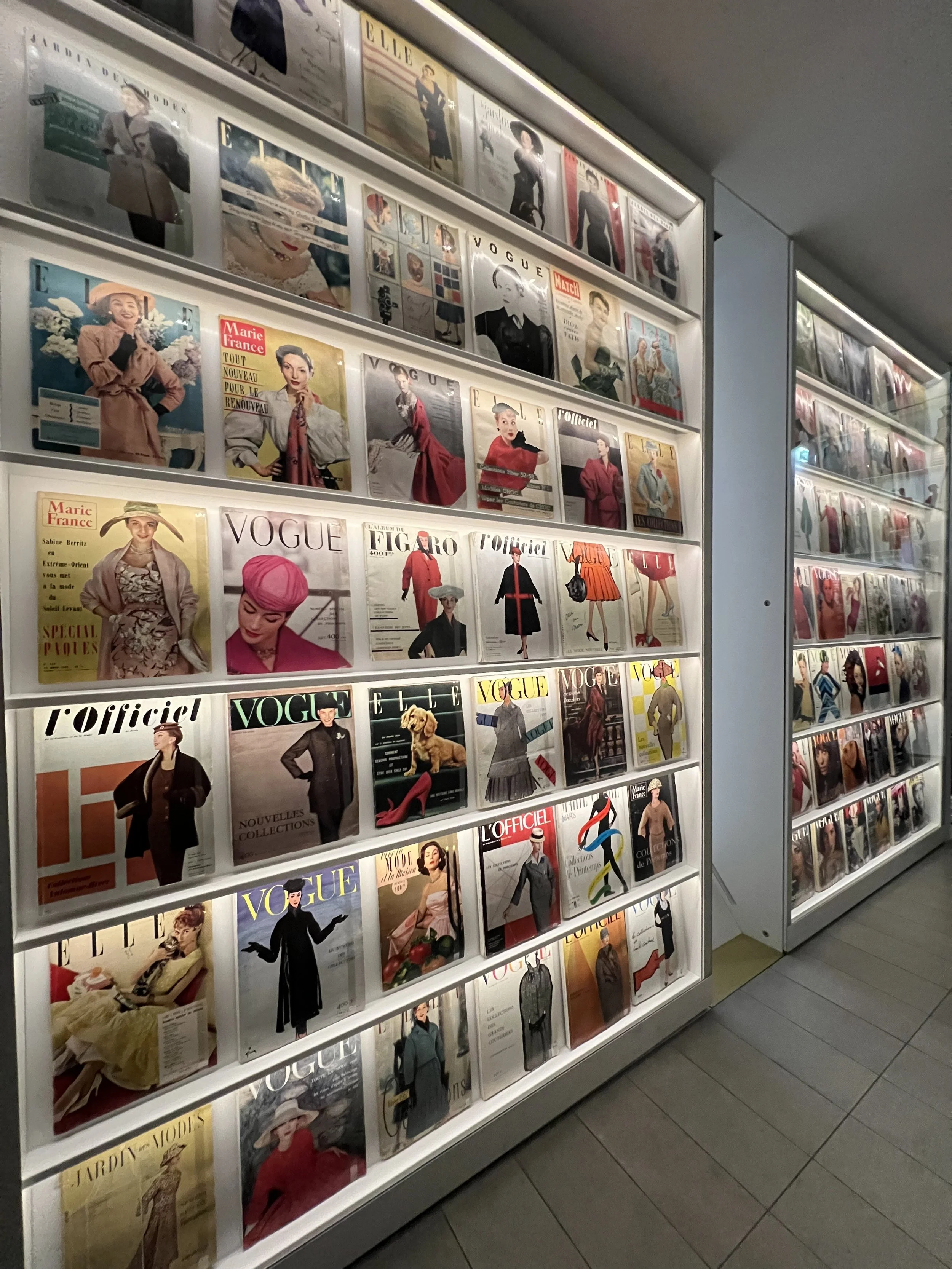
You travel through the years, and see the designers, who took on the legacy of Dior when he died so suddenly of a heart attack in 1957, including: Yves Saint Laurent, Marc Bohan, Gianfranco Ferré, John Galliano, and Raf Simons. They all helped shape the iconic feminine DIOR look over nearly 80 years. Now their designs can be seen on Hollywood actresses, still looking as graceful, feminine and stylish as ever.
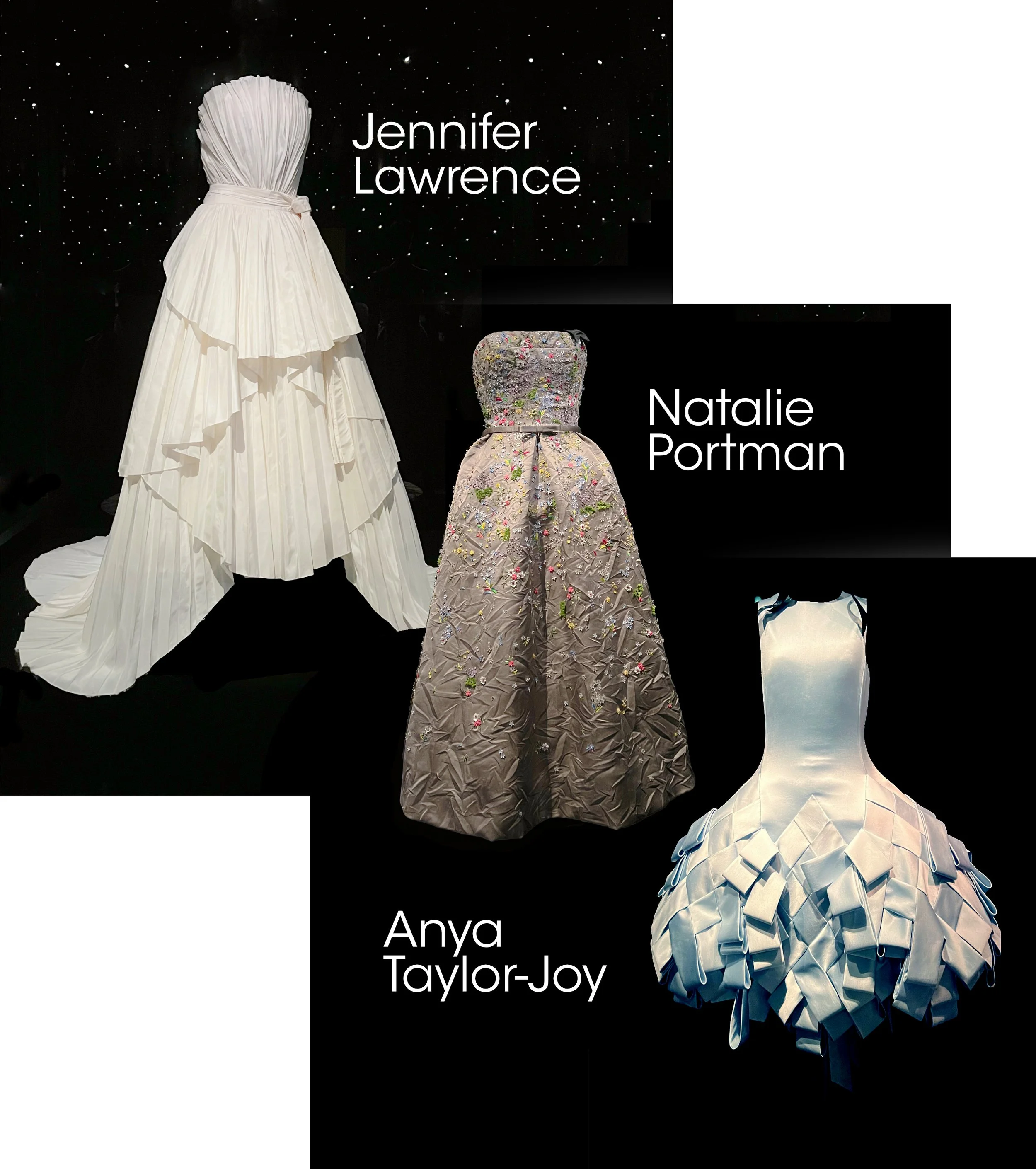
There was so much to see across the three floors, such a worthwhile visit if you have even a glimmer of interest in fashion.
Bacha coffee
As we were intending to go to the Dior exhibition today we decided we’d try the Bacha coffee house nearby for breakfast. You should book in advance to be sure of a table.
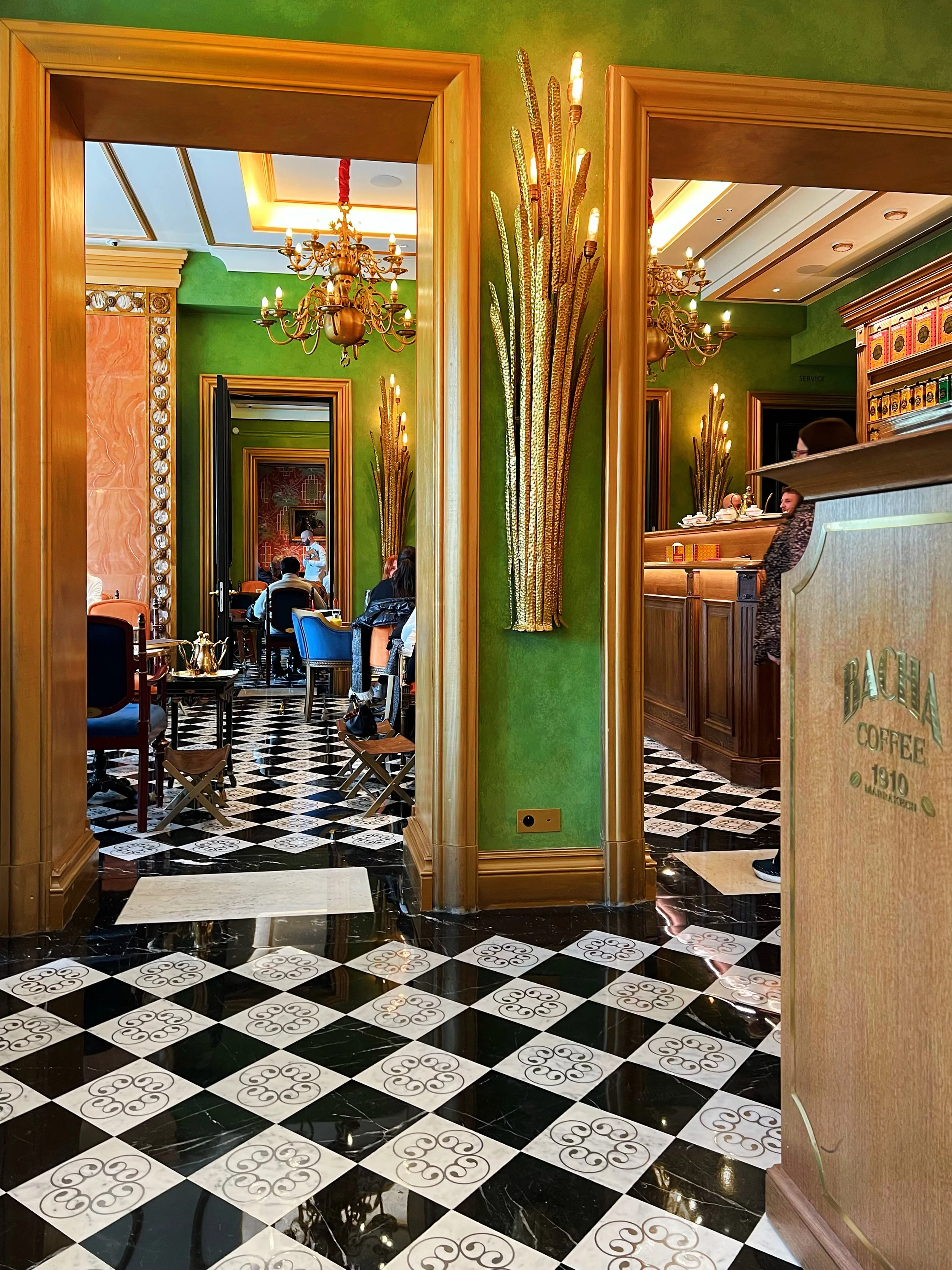
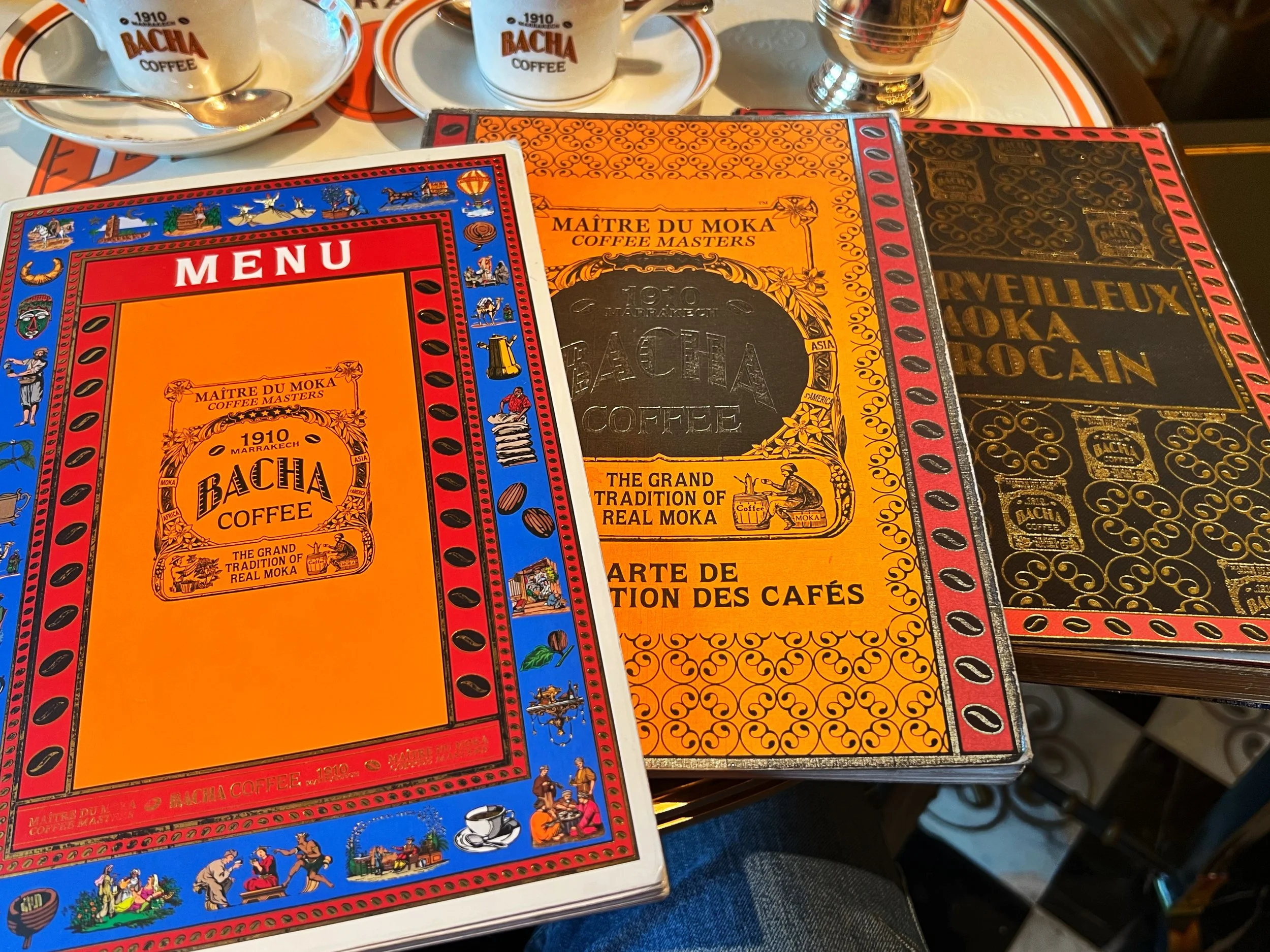
We know we both like Brazilian coffee, and we found two that interested us in the menu, which was surprising, as they have over 200 coffees! But to be sure, we asked the waitress for her suggestion based on what we liked—smooth, round, and full flavoured. Remarkably she pointed out the two we had looked at, I guess we do know our coffee after all.
Not only are the surroundings pleasant, but they take great care serving you as well.
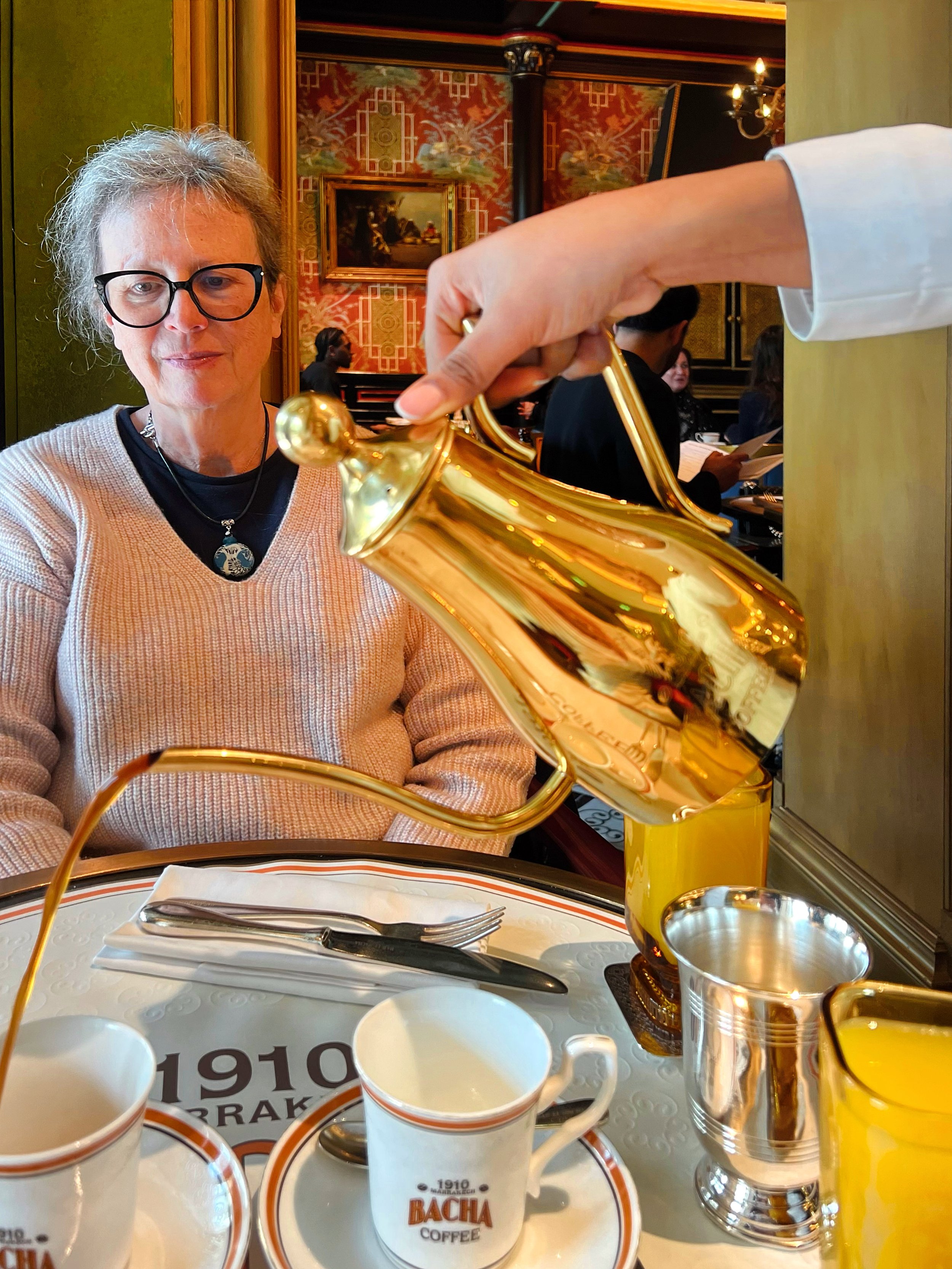
And not everywhere offers chocolate sprinkled chantilly cream with your coffee.
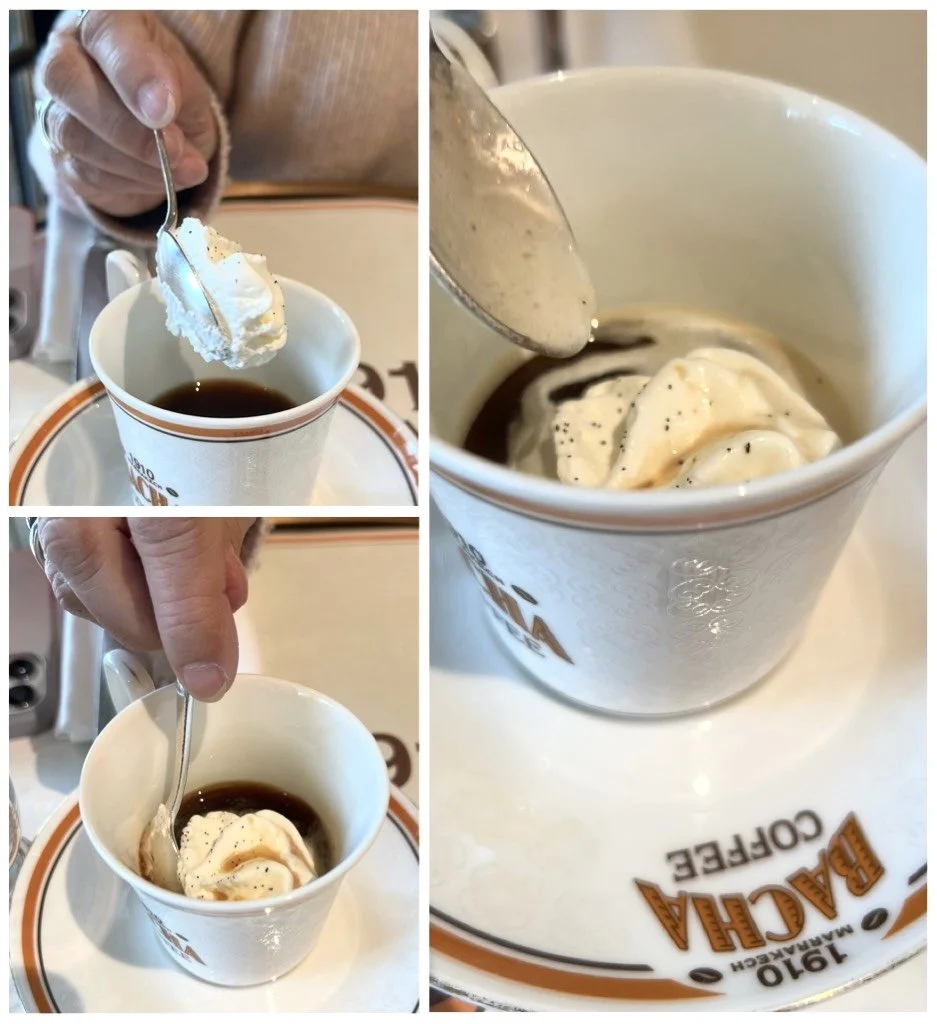
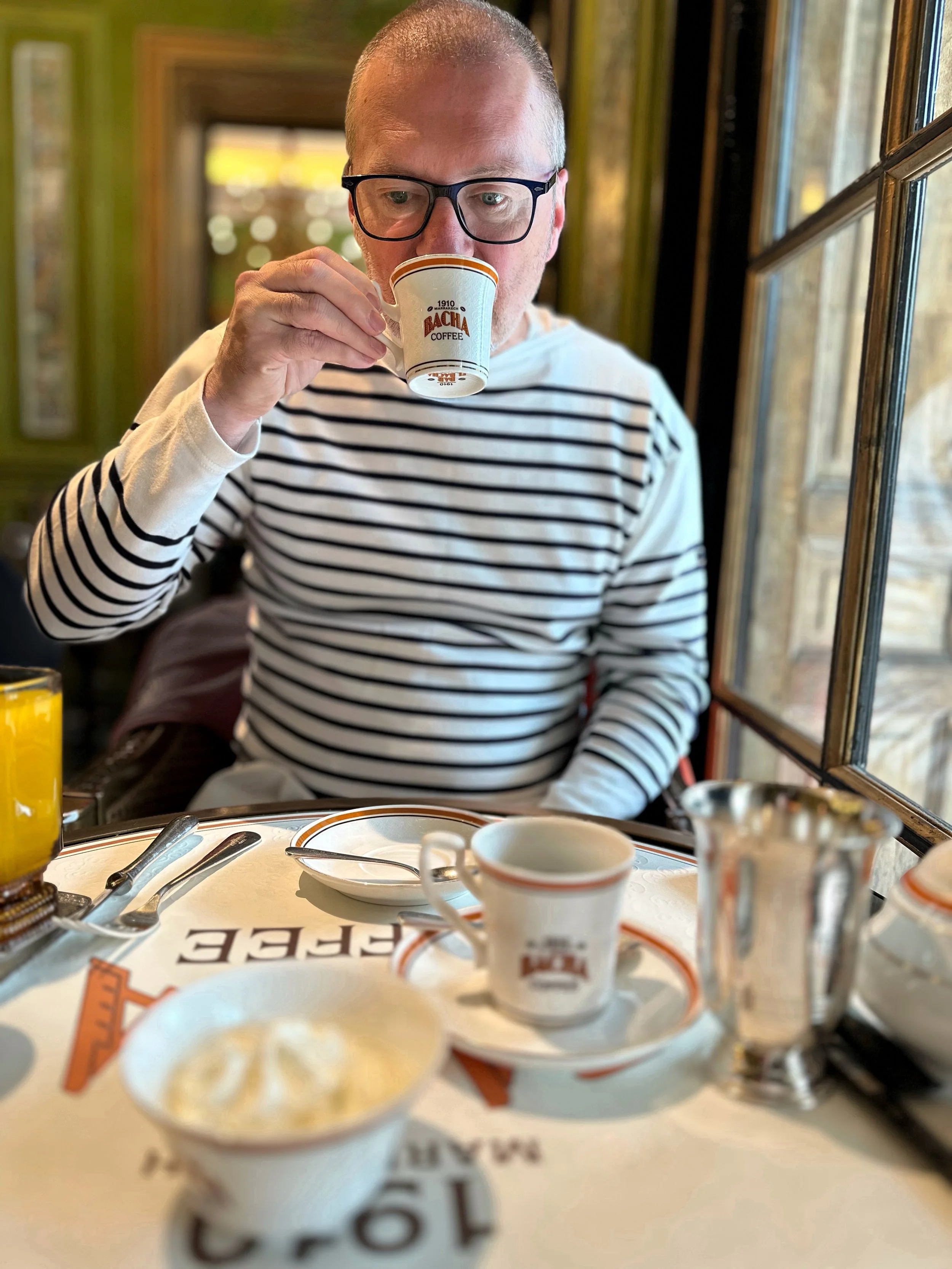
We enjoyed our cuppas while we waited for our breakfasts.
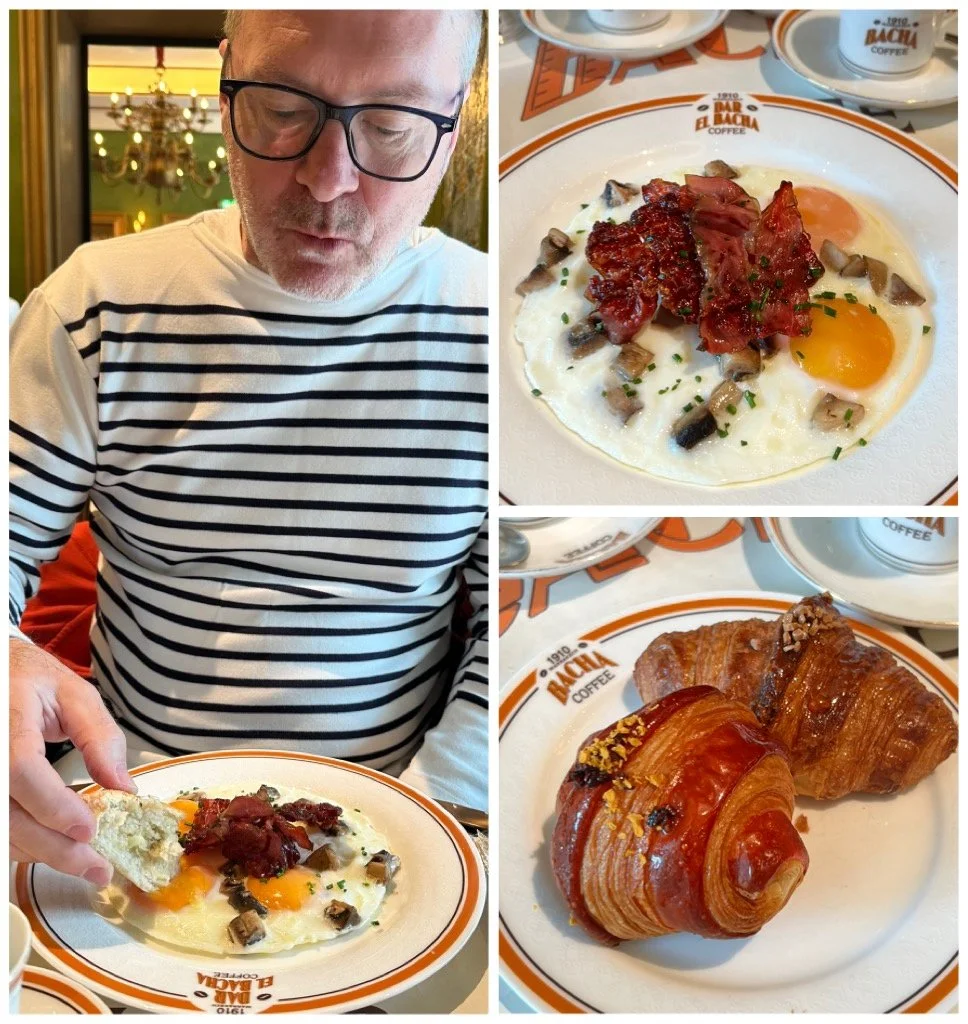
They were worth waiting for; three fried eggs with bacon and mushrooms, followed by a choice of two croissants each from their menu. Yummy.
I mentioned before that we don’t normally take breakfast in the hotel, because we prefer to find different little places to eat, and this was a wonderful spot. But we also find that the hotels are not the best value, and this breakfast proved that, as it was only €9 more each to take breakfast at Bacha than at the hotel. Well worth the effort of going out.
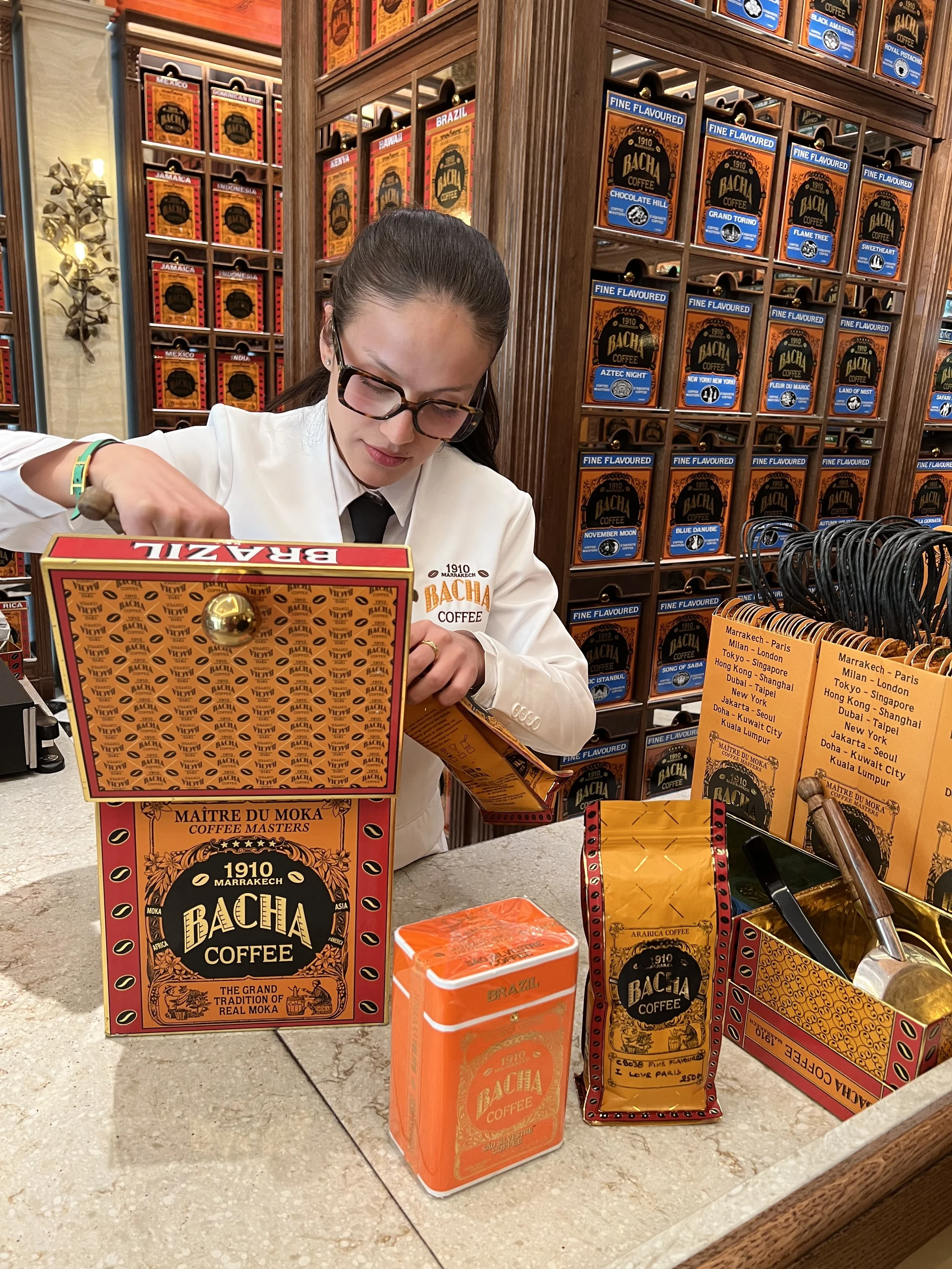
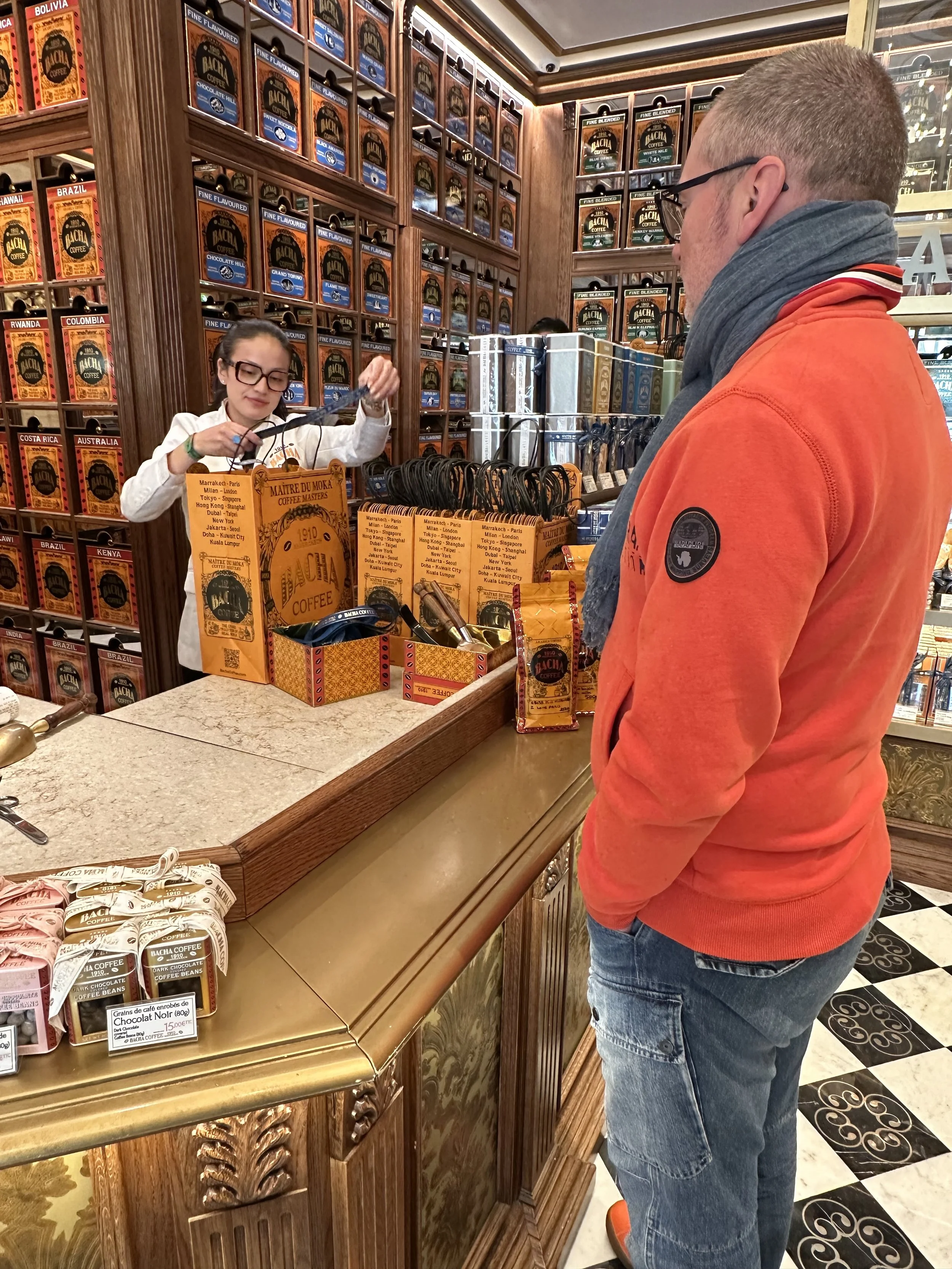
Having said that, we did visit the shop afterwards!
Le Metro Paris
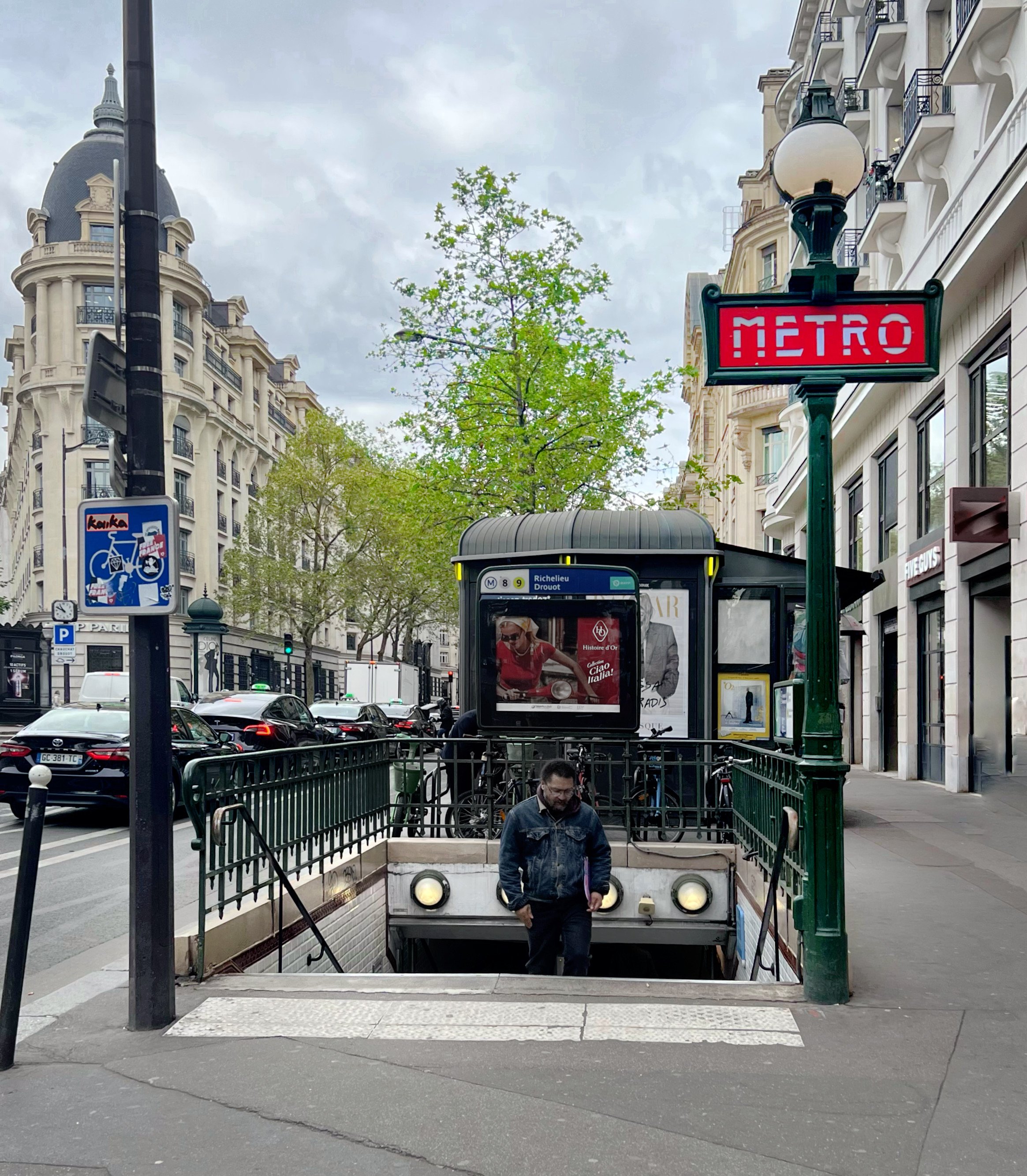
We’d decided to take the metro today, to head down to the champs Elysee. It was going to be too far for me to walk.
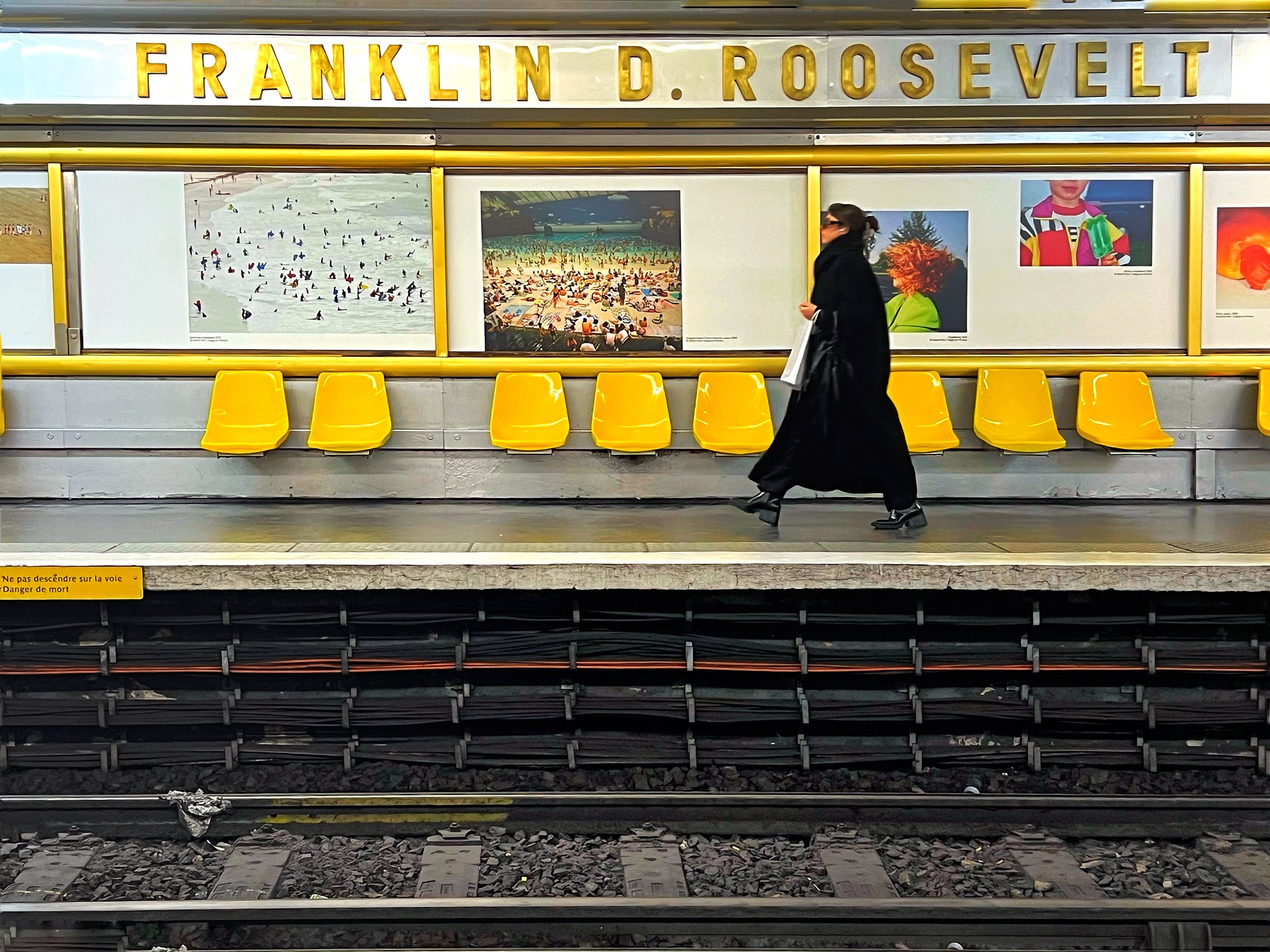
A friend had recommended we set ourselves up with an Île-de-France mobility card, this can be used on buses or trains. We uploaded it onto our phones, and set up a payment card. We bought a ticket to Franklin D.Roosevelt station. It all seemed very simple.

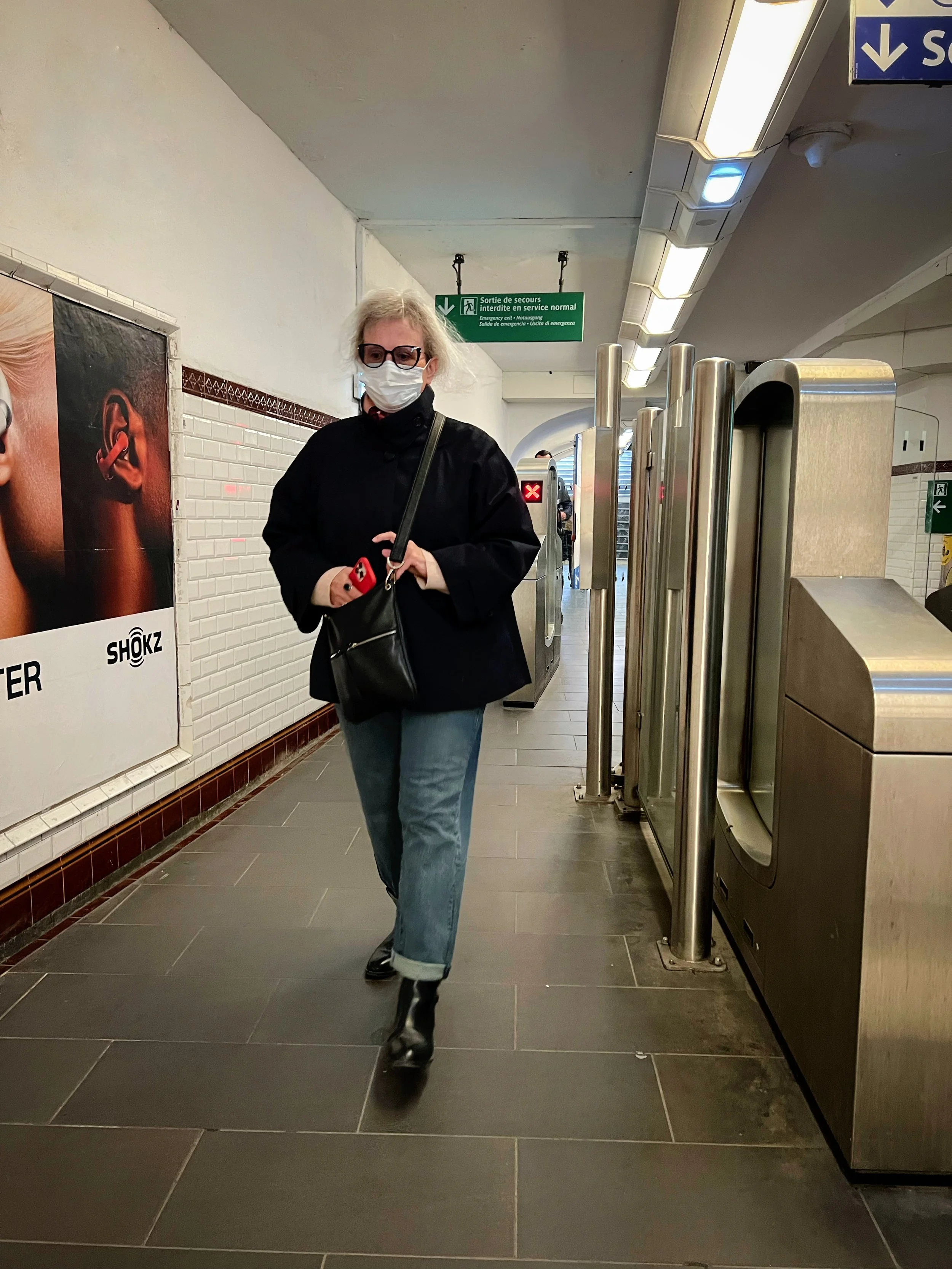
We entered the metro and passed our phone over the reader. It did the rest.
No need to open your phone, it identifies your ticket without having to do anything. I popped my phone away and we were soon on the platform.
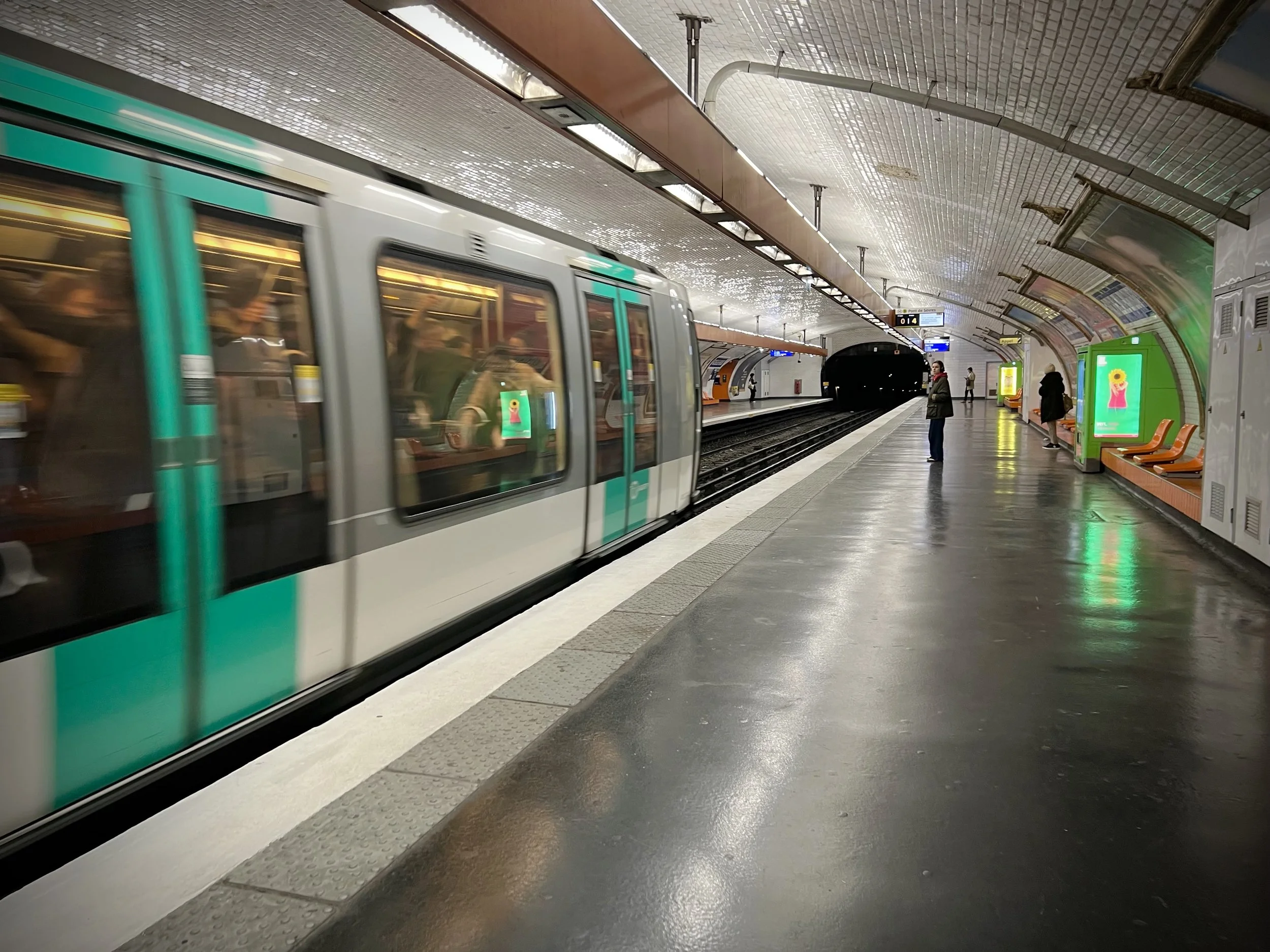
All very clean, not crowded, and simple to use.
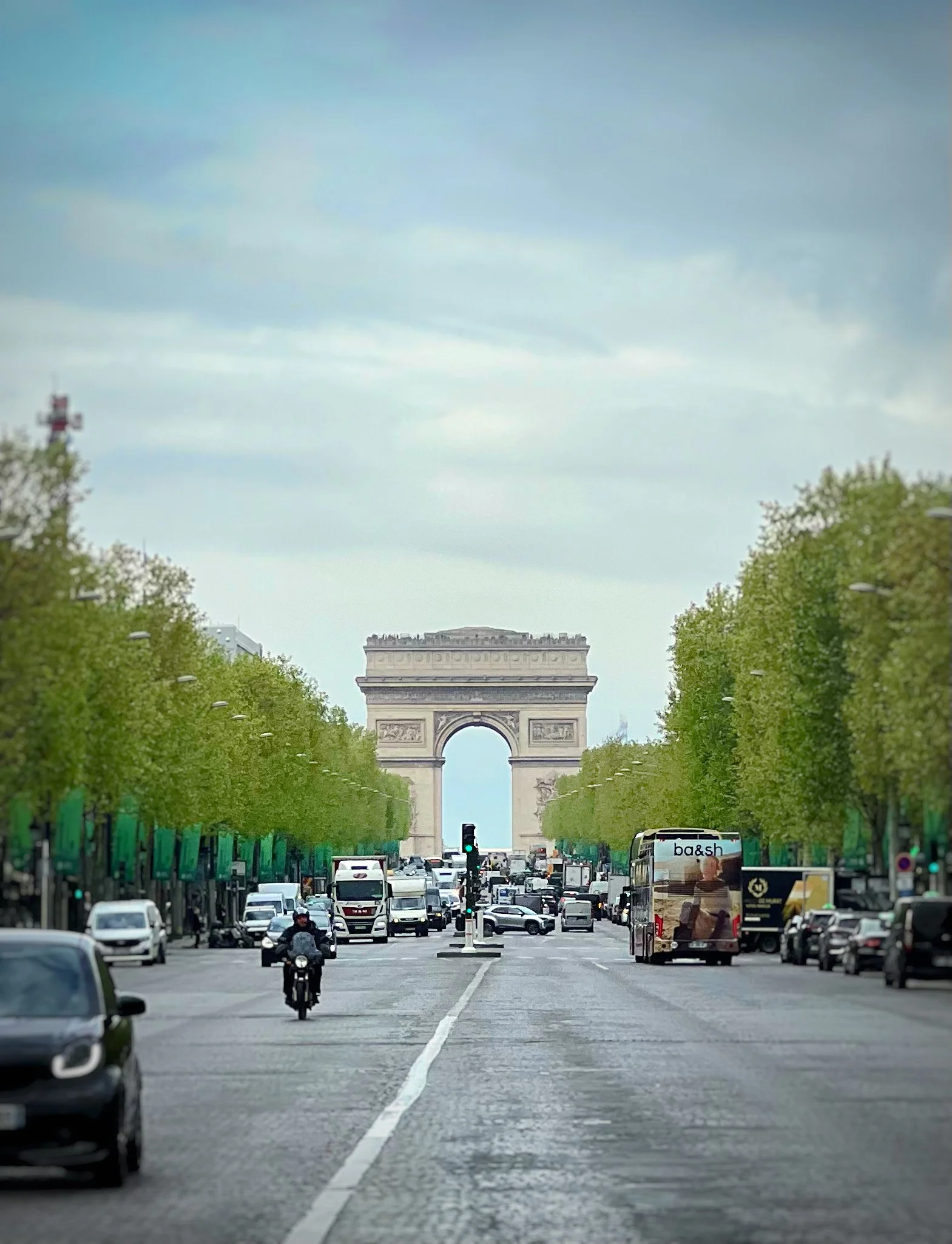
The Champs Élysée was looking beautiful with the fresh new leaves appearing on the trees, and the Arc de Triomphe looking majestic. Another beautiful part of Paris
Montmartre
We were wondering where to head for dinner, we’d decided we would head up to Montmartre and see how far we’d get up the hill.
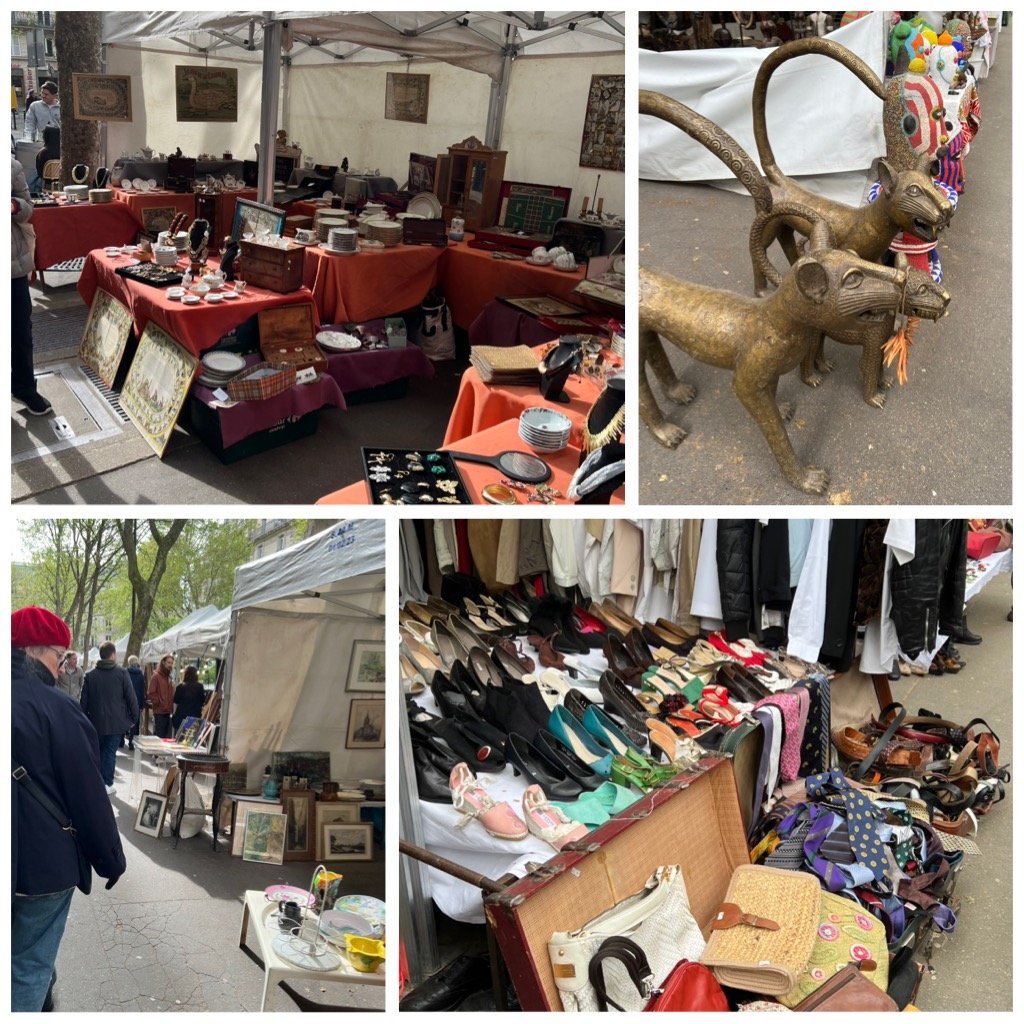
I was delighted to find a little street flea market on the way up. Conscious whatever we bought we would have to carry home, I kept my interest to a minimum.
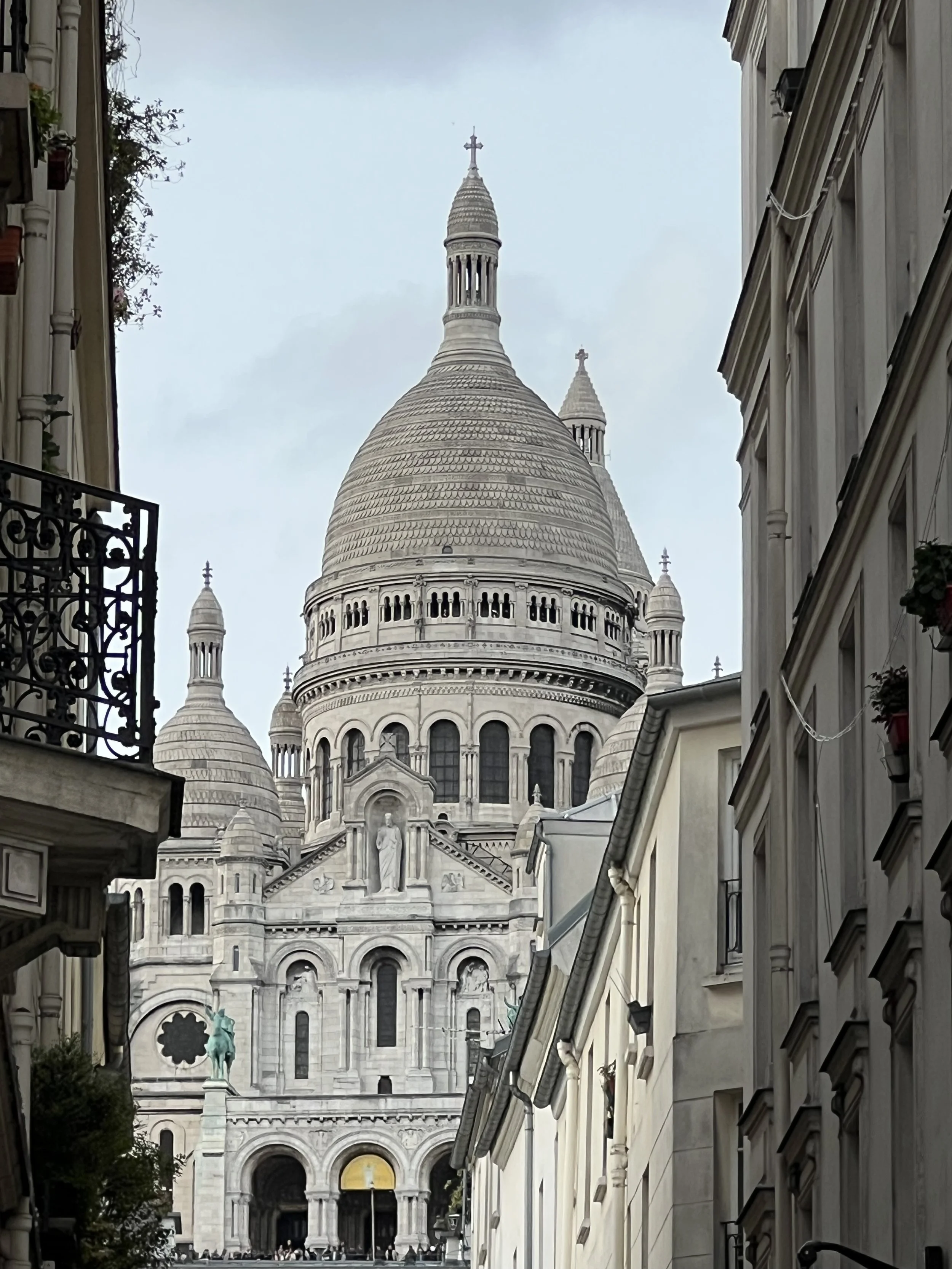
The sight of Sacre Coeur in the distance is always an encouragement to make it up the hill. Although this time we didn’t plan to go in, but we did manage to reach the top.
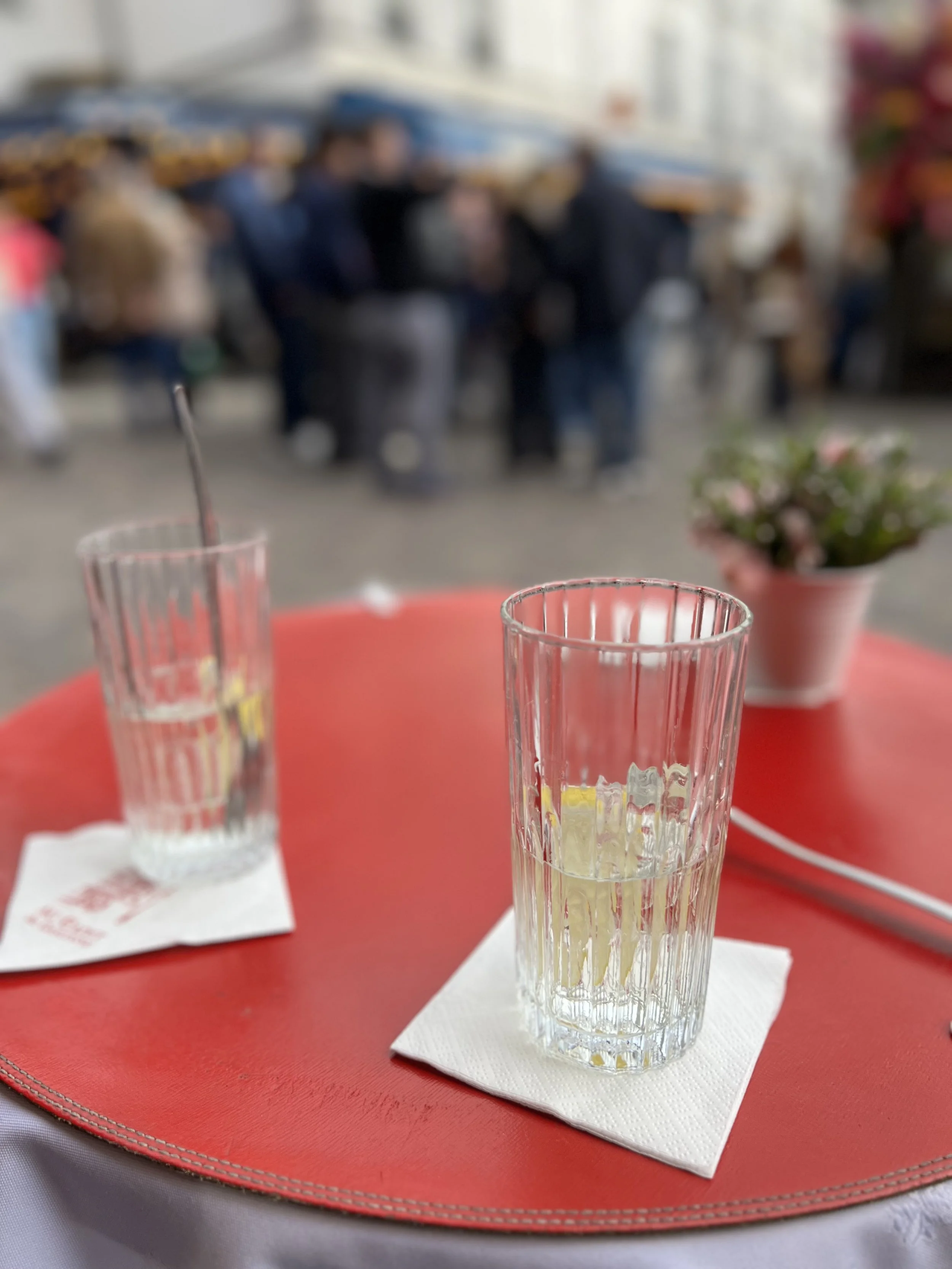
Our plan then was to walk around to the artists quarter and enjoy a little drink before ordering dinner, whilst just watching the world go by.
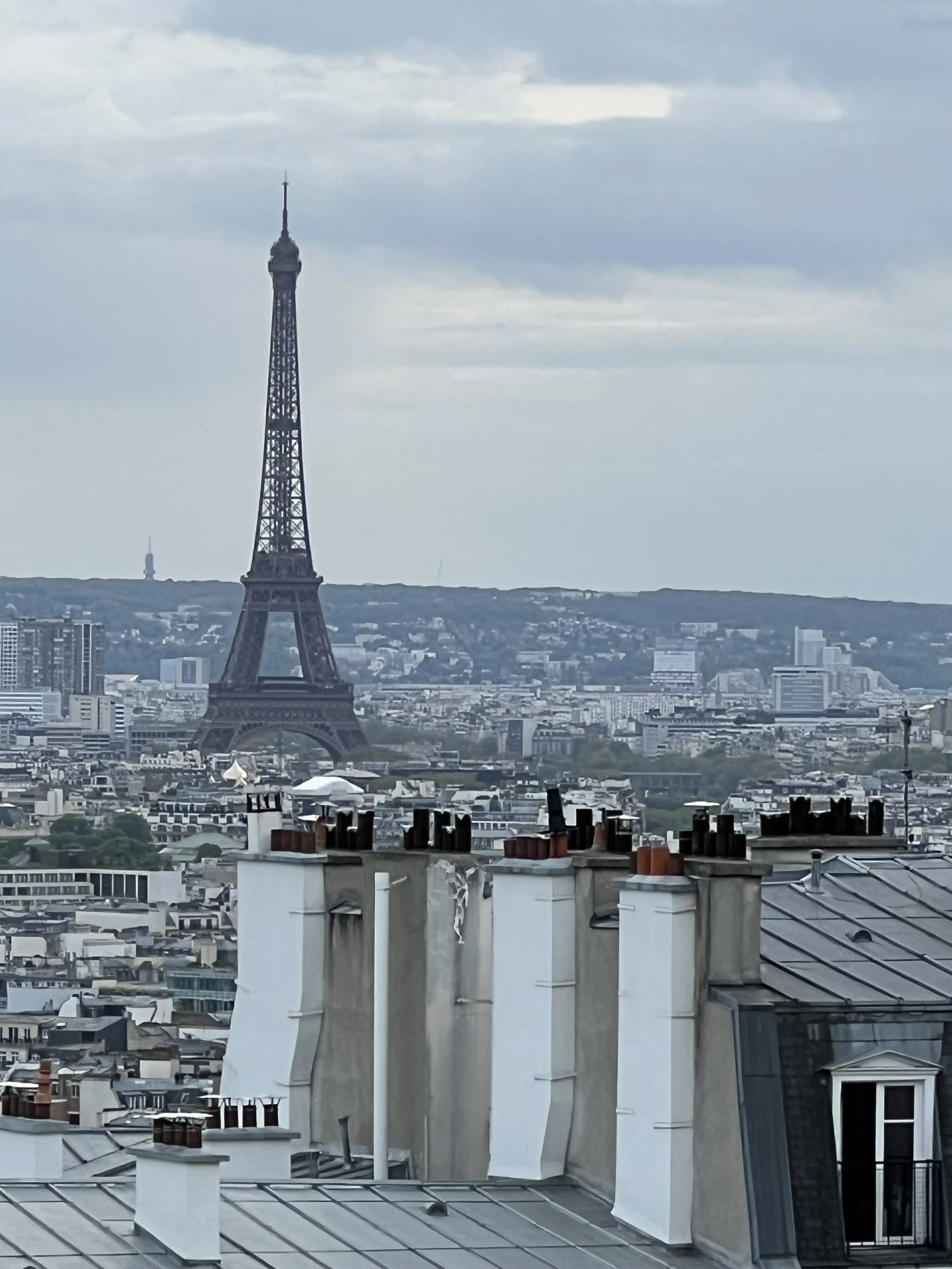
On the walk back down we were rewarded with a spectacular view of the Eiffel Tower.
Musée de la vie romantique
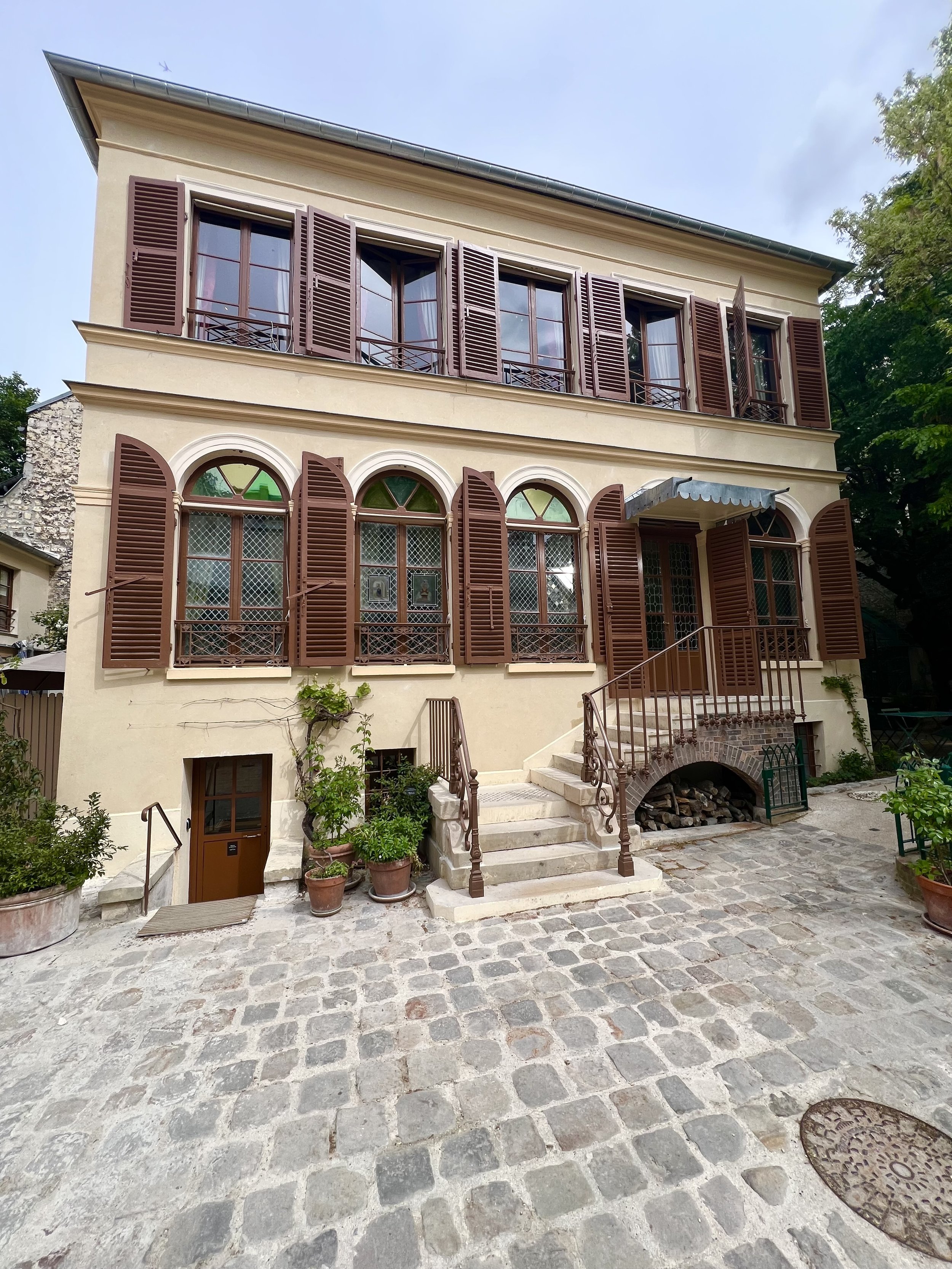
You enter the secluded little courtyard through an anonymous gate, off a quiet Paris street. Passing along a covered, cobbled pathway, you are led to the small, but nicely formed garden. Dappled in shade from the established trees, it houses a pretty little café from its greenhouse. The main house, which is the museum, is free to enter, and the collections are over two floors of rooms that are completely in-keeping with the romantic decor of the time.
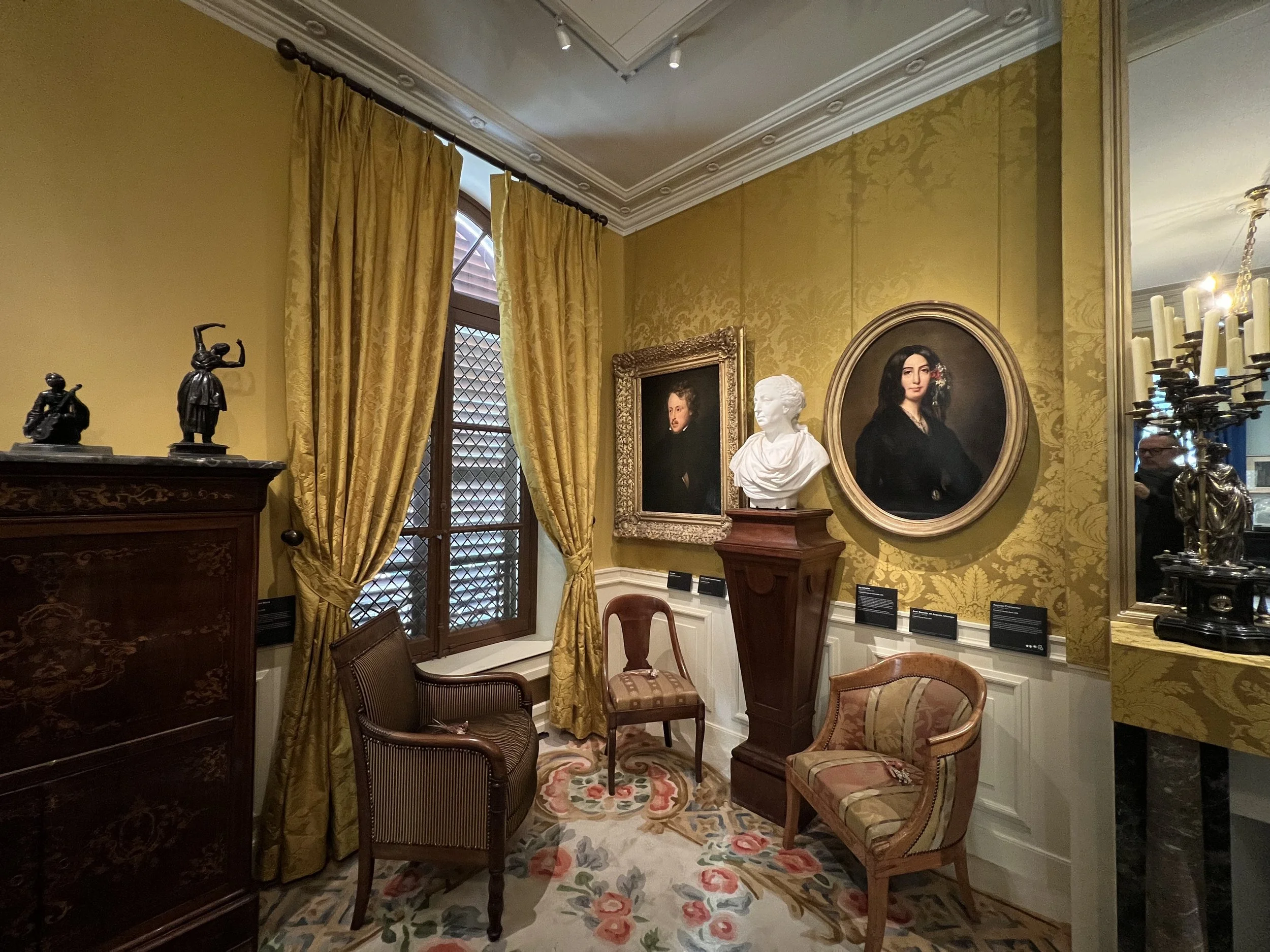
The two main collections in the house are from Ary Scheffer, who once lived at the house, and the writer George Sand, who lived in the neighbourhood.
Ary Scheffer was a Dutch artist, born in 1795, who moved to Paris in 1811 with his mother. He began his artistic career from an early age, and was successful as a painter of literary scenes and portraiture of famous and influential people. Later in life he took on the role as drawing teacher to the children of the Duke of Orleans—Louis-Philippe—and became close to the royal family.
I loved his painting of Princess Marie d'Orléans, who was one of his students. She was a French princess, artist, and sculptor, who lived from 1813 to 1839, and was the daughter of King Louis Philippe I.
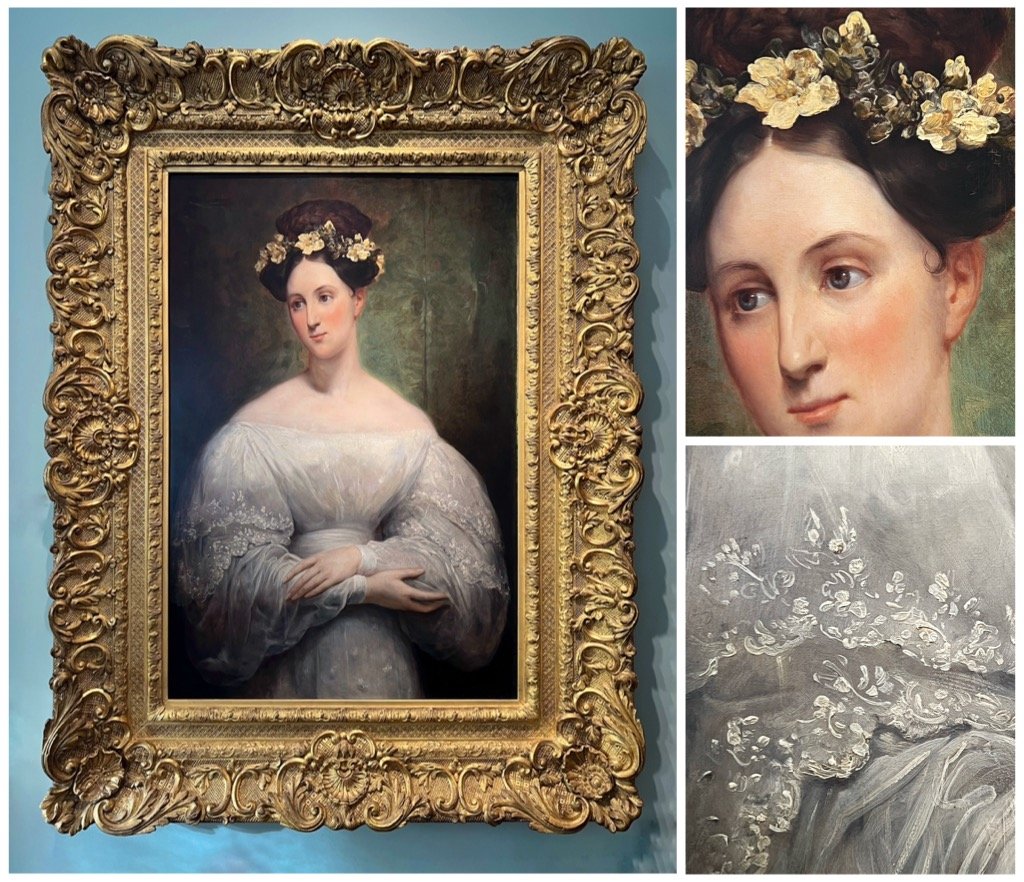
In his later life Ary would often invite other artists and creatives to his house, such as Eugène Delacroix, Paul Delaroche, Théodore Rousse, Frédéric Chopin, Franz Liszt, and George Sand.
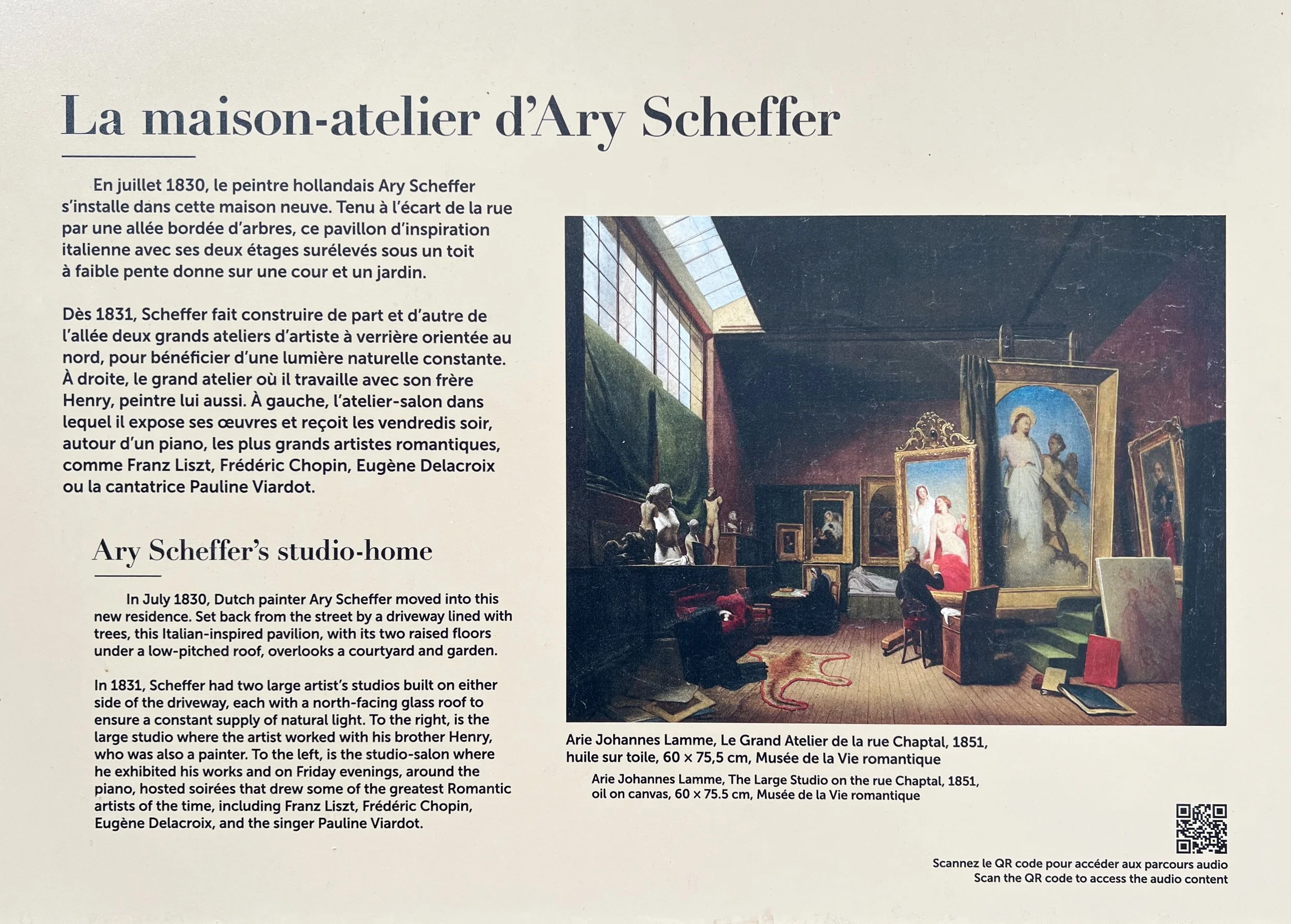
George Sand (1804-1876) who gained fame for her love affair with Frederic Chopin, published more than seventy novels, twenty plays and various texts, that made her one of the most prolific writers of the 19th century. Her paintings, jewels, and memories—collected by her granddaughter Aurore Lauth-Sand, and on display here—help evoke the story of her artistic life.
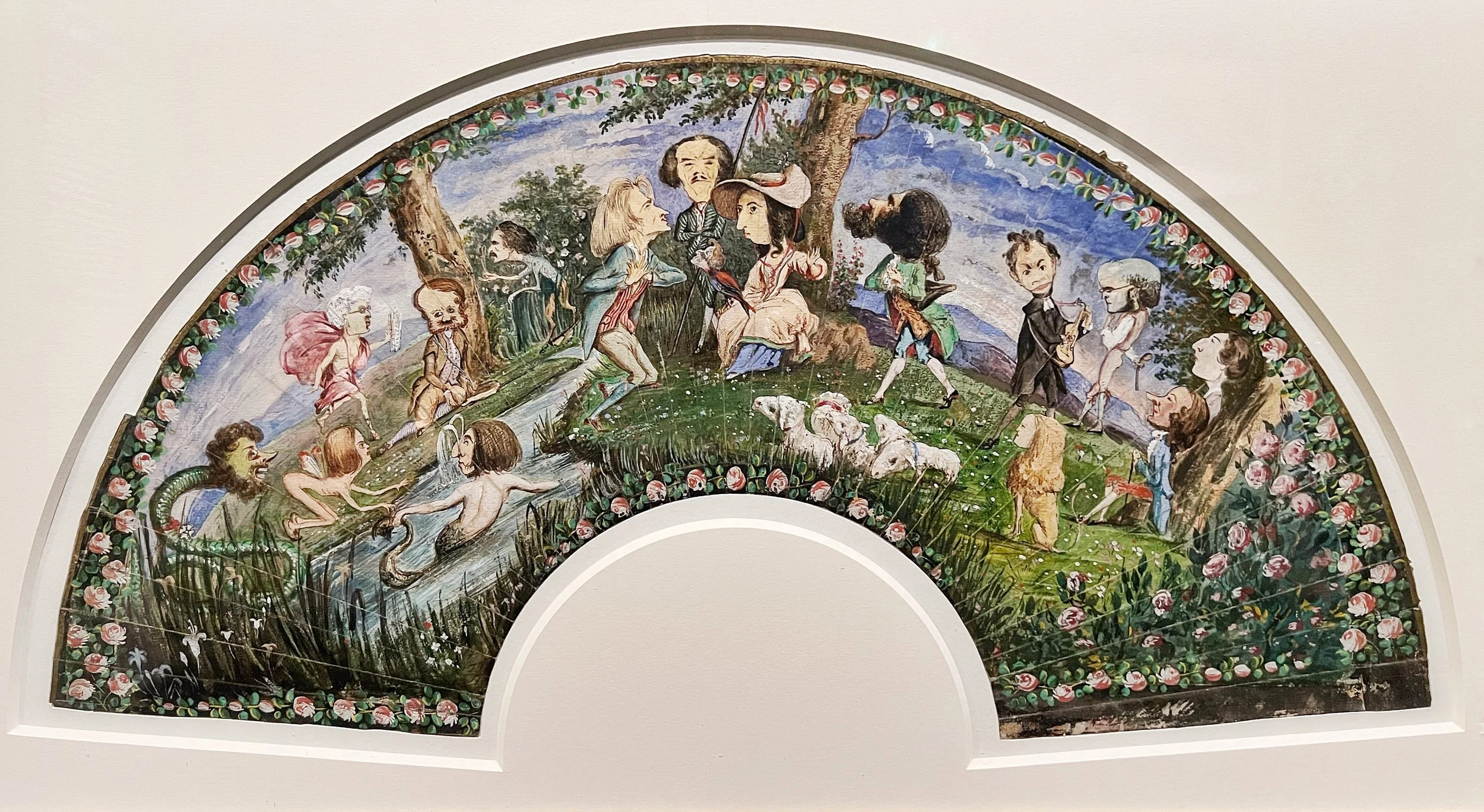
It was a delightful and evocative little museum.
Le Marais
It was our last morning in our hotel in le Marais. However we’d decided to extend our trip, as there were still things we wanted to do. Our first hotel was fully reserved, so we booked a different hotel in the southern side of the Pigalle area. We were in no hurry to move on though, so Brian made us some tea and we sank into our fluffy pillows to enjoy a slow, quiet morning. “What the heck is that?” I exclaimed. “It sounds like a brass band.” Brian got out of bed to investigate, and could see another bunch of runners down on rue de Rivoli, just below our balcony. “More runners:” He said. “But there’s rather a lot of them!” Not thinking any more of it, we drank our tea, got washed and dressed, and packed our bags. “Let’s have one last breakfast here before we get a cab to the other hotel.” I suggested.
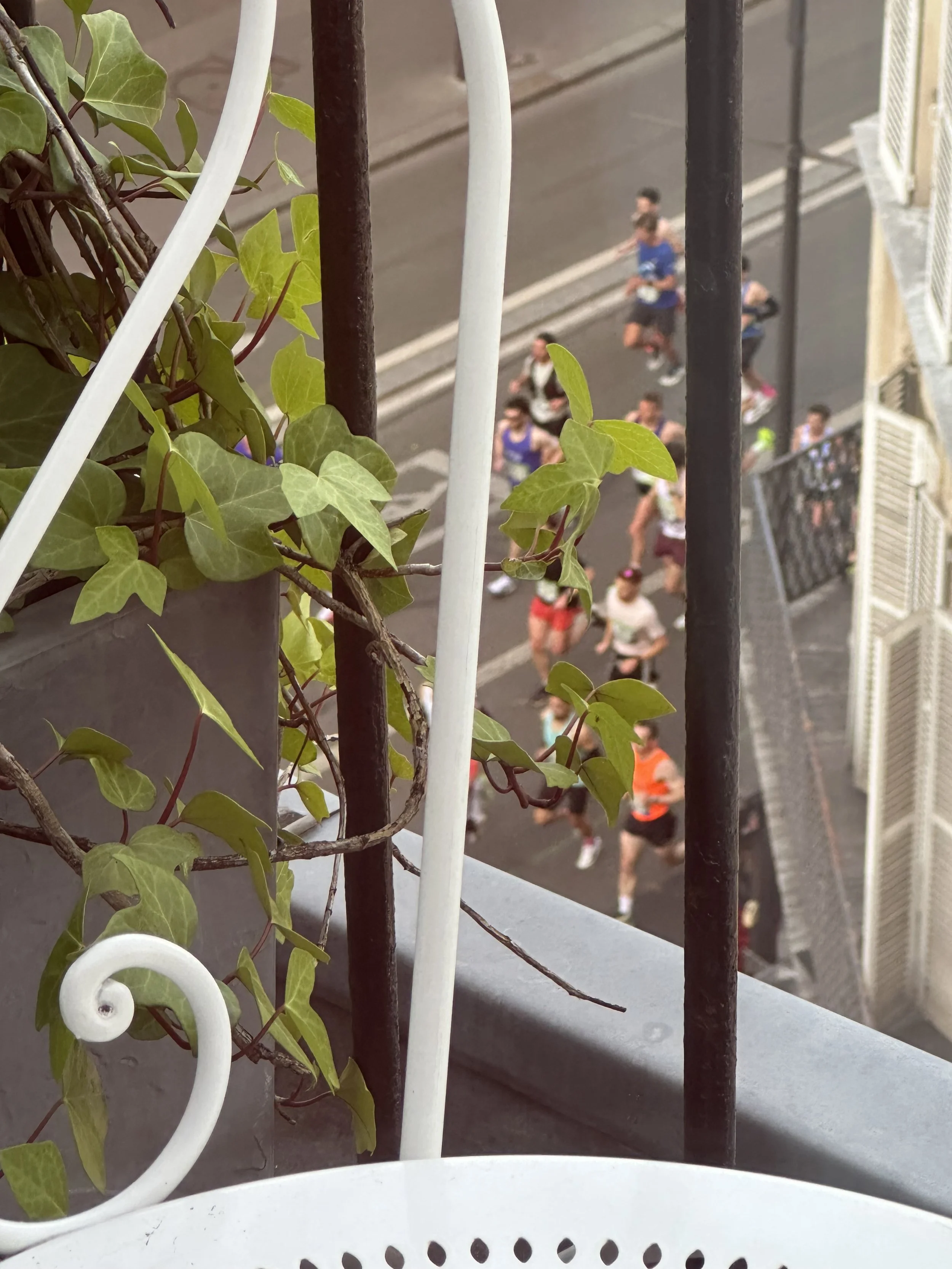
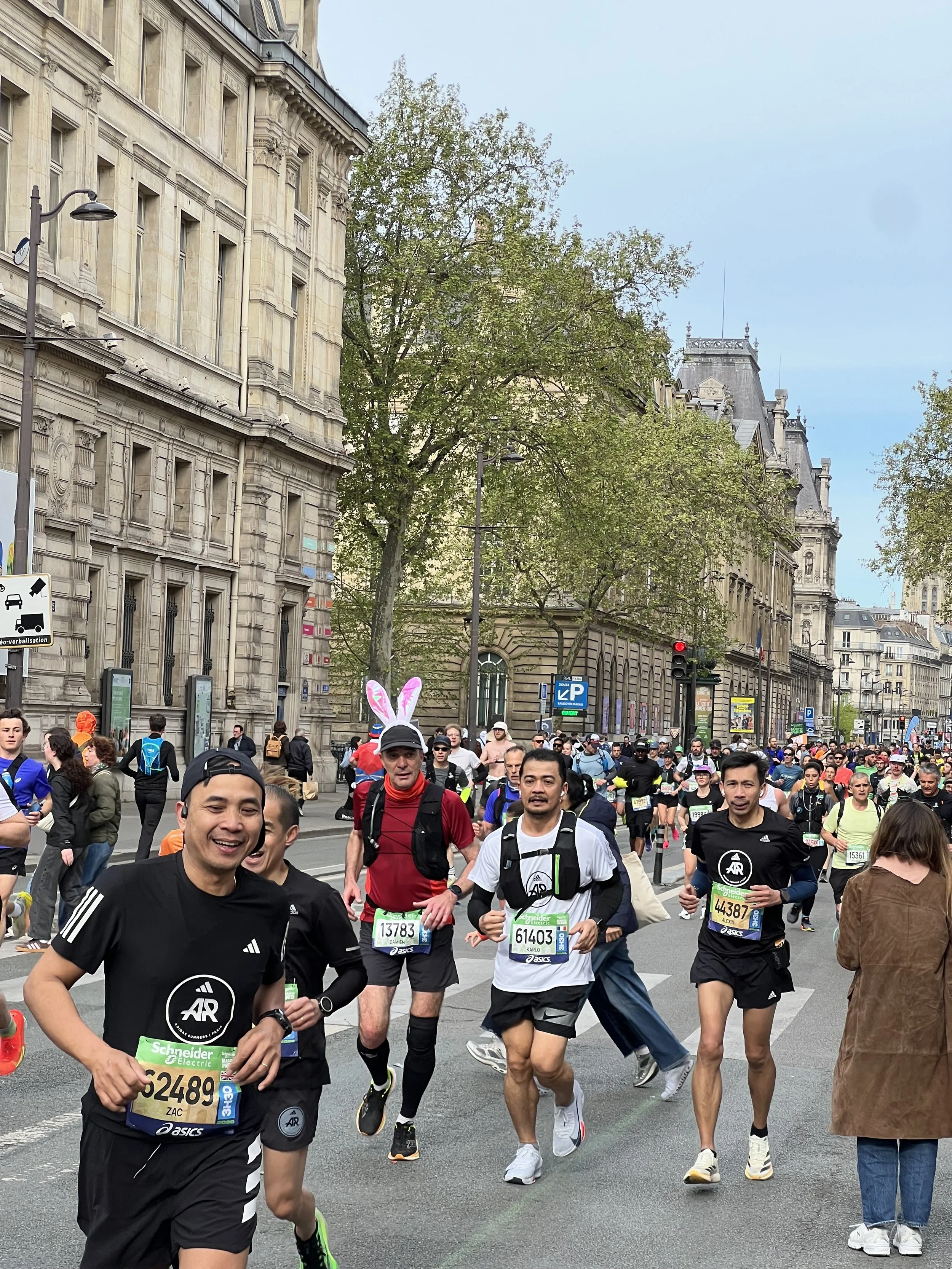
We soon realised though, as we headed to rue de Rivoli, that we were on the route of the Paris marathon 2026, with some 60,000+ runners. We didn’t even know it was happening!
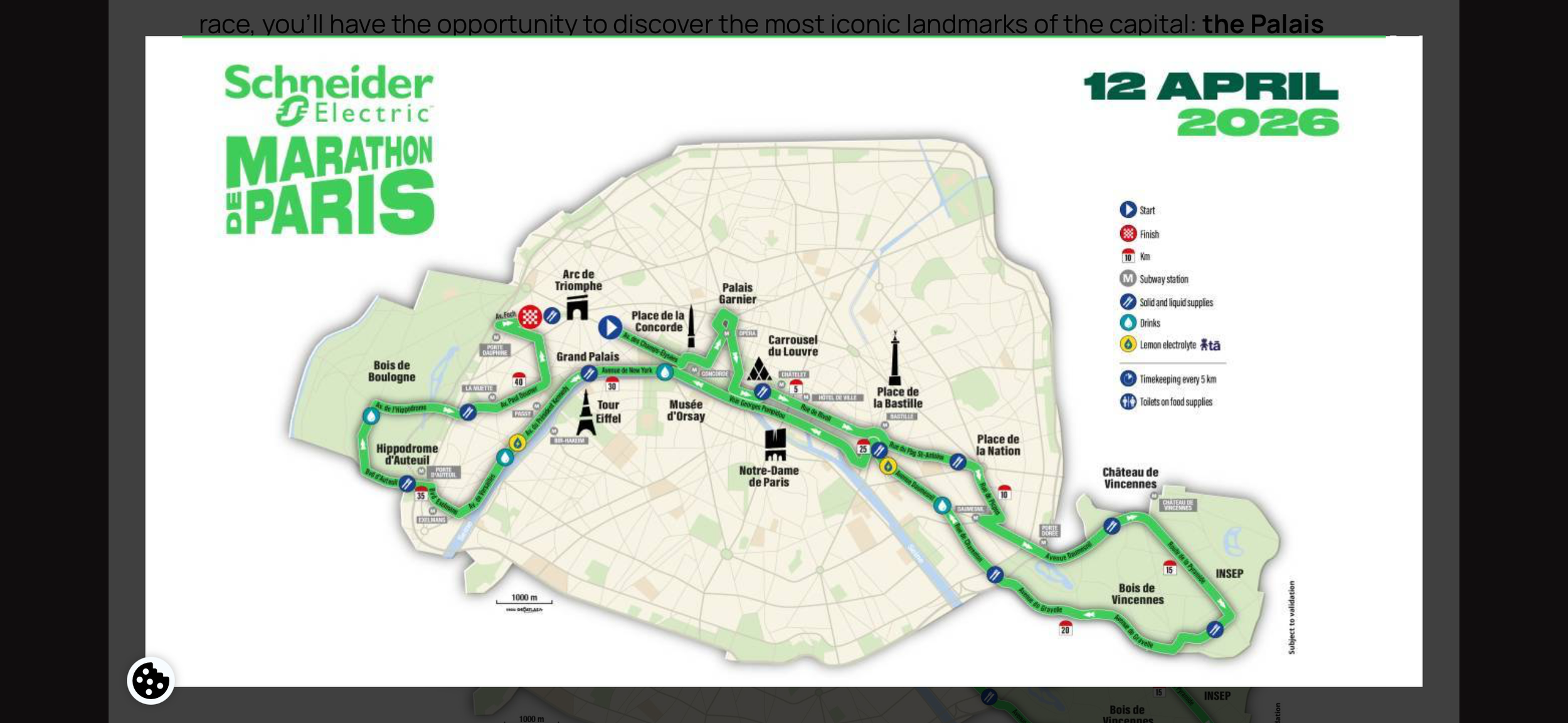
Apparently it’s the first marathon to ban single use cups or bottles. Bunny ears are fine though.
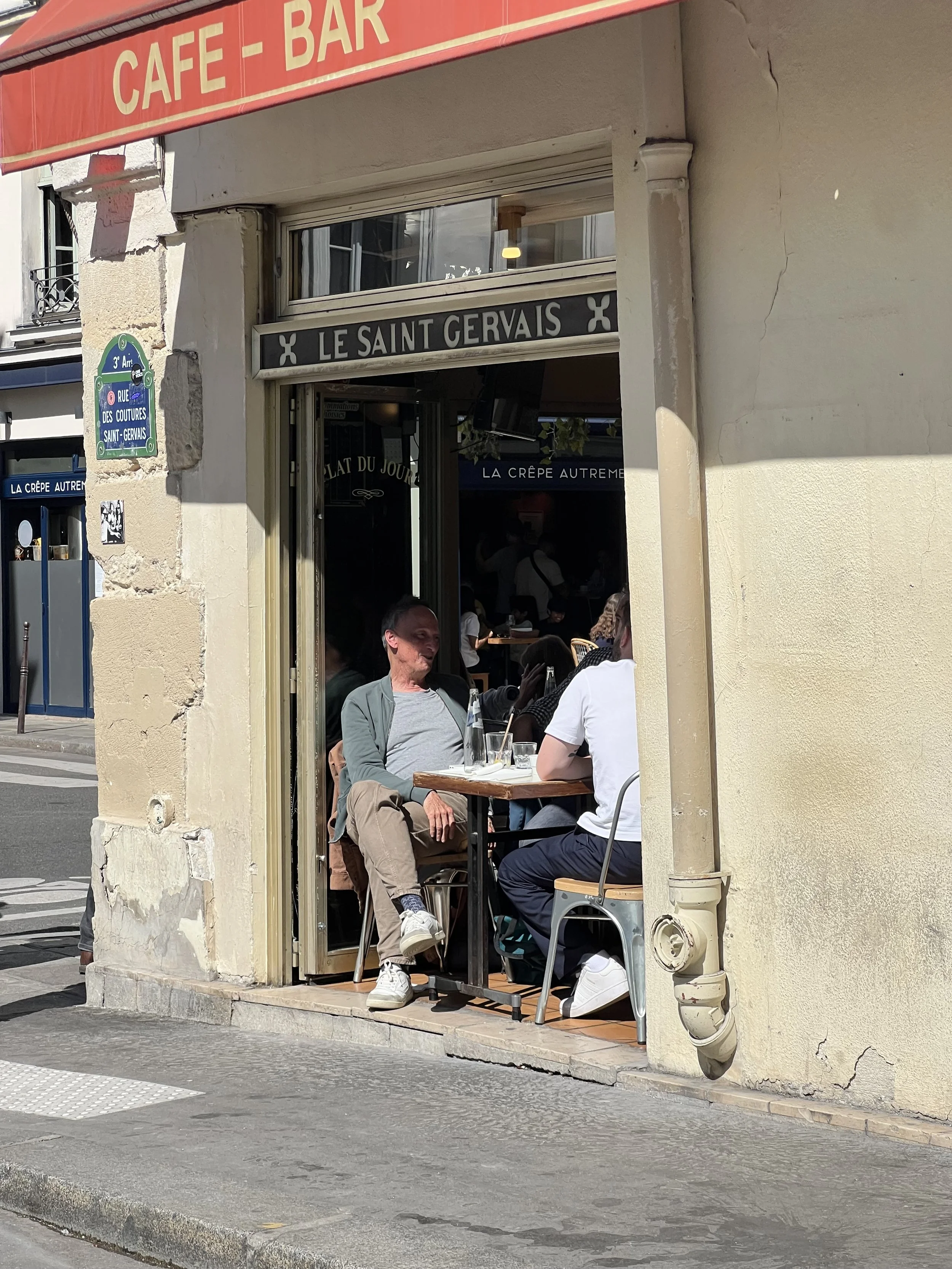
We loved our few days in the Marais district.
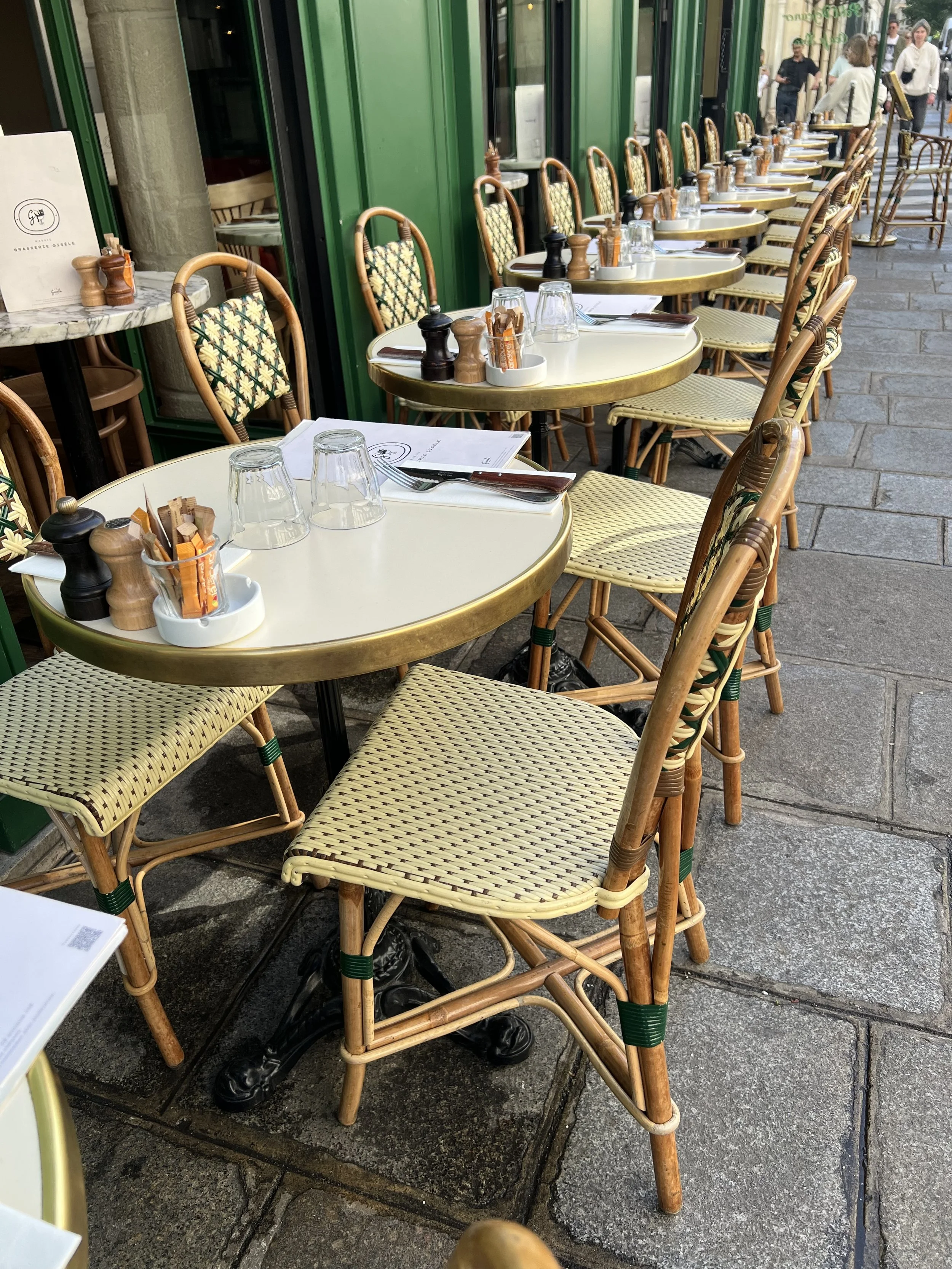
There is so much to see and do, you really don’t need to leave the area at all. It has plenty of bars and restaurants, little boutiques, museums and galleries, everything you need for a relaxing break.
And it’s steeped in history, we just scratched the surface.
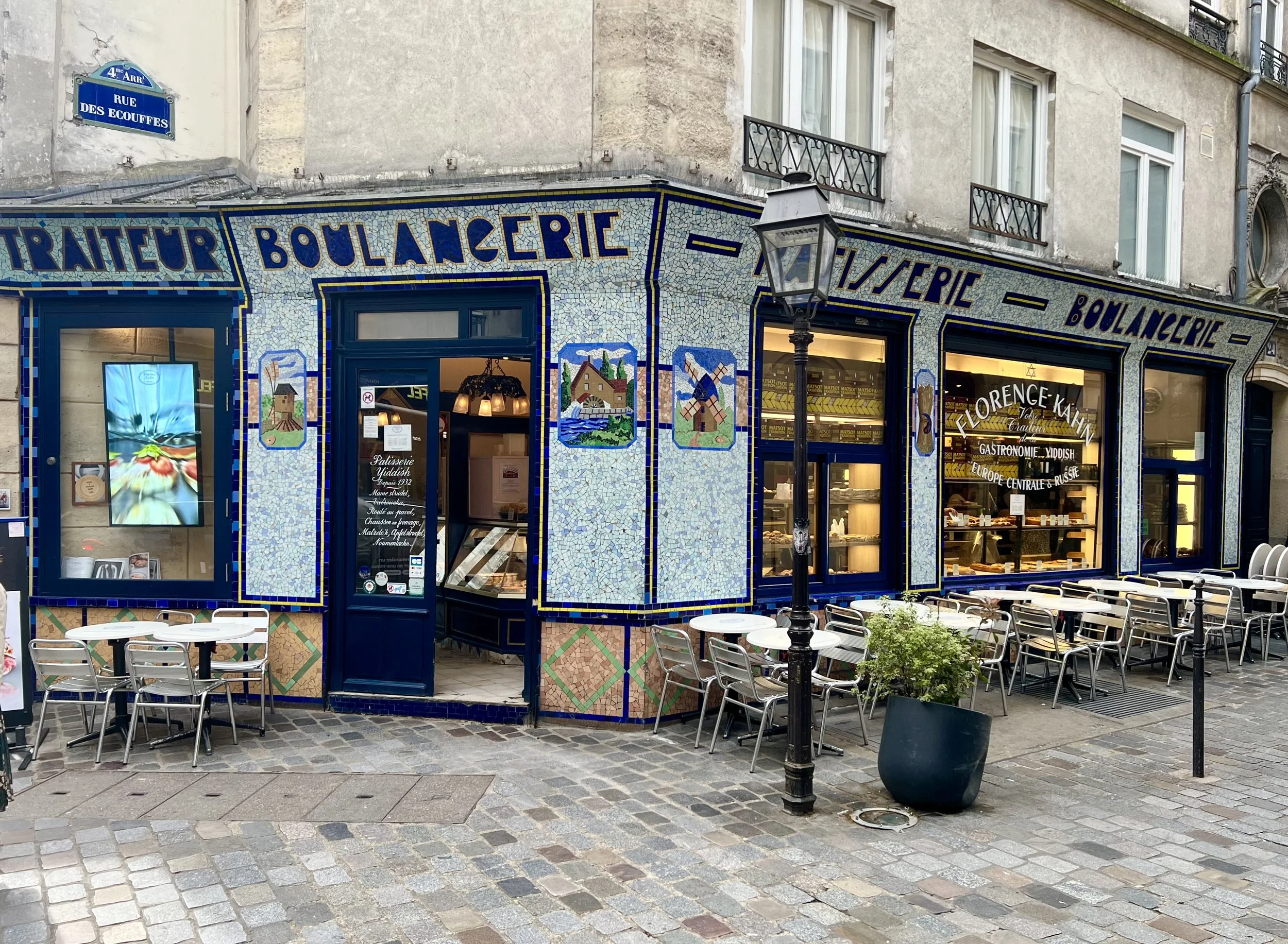
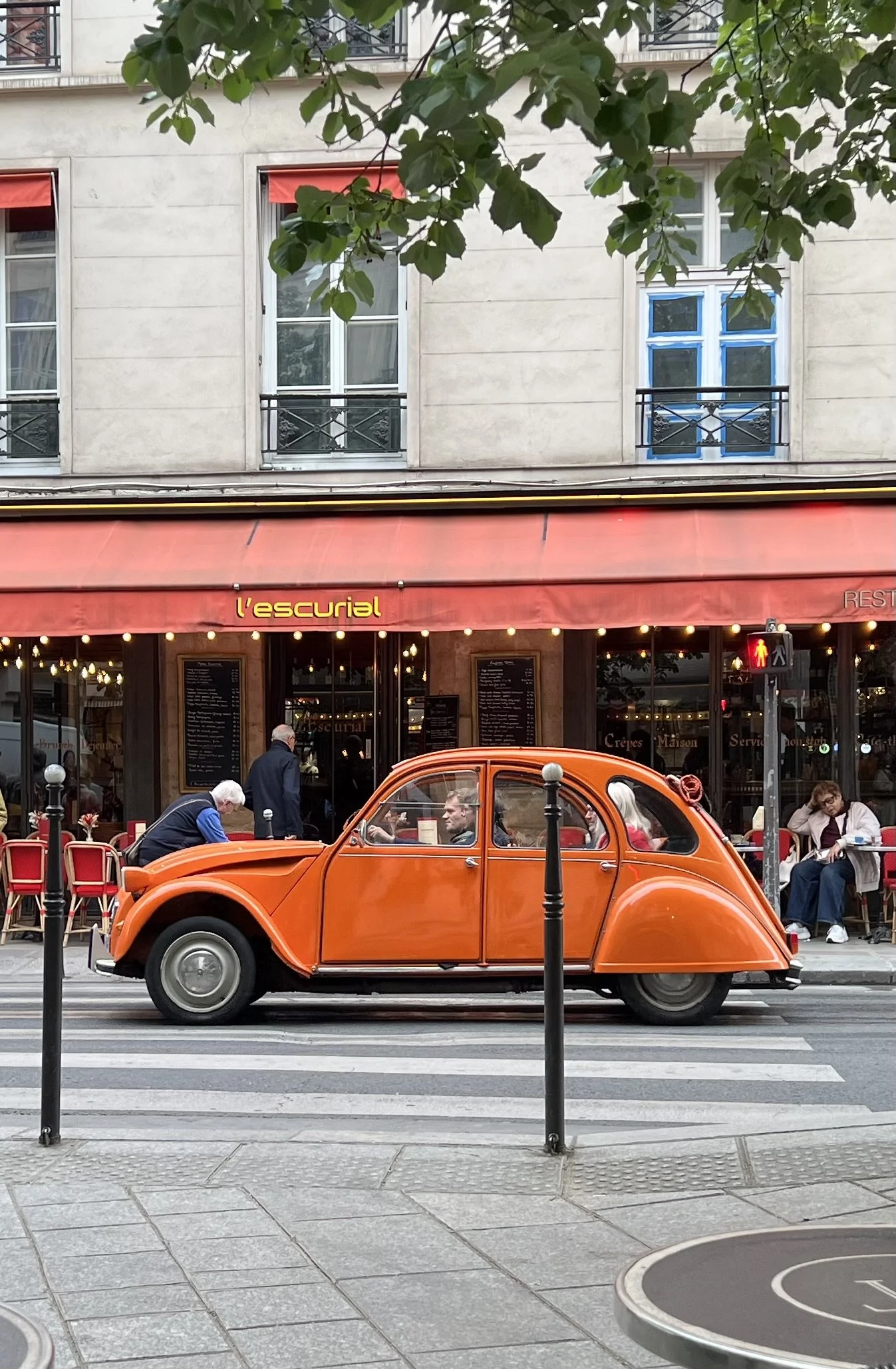
Definitely an area we will come back to, as still lots to see and do.
MAD - musée des arts décoratifs
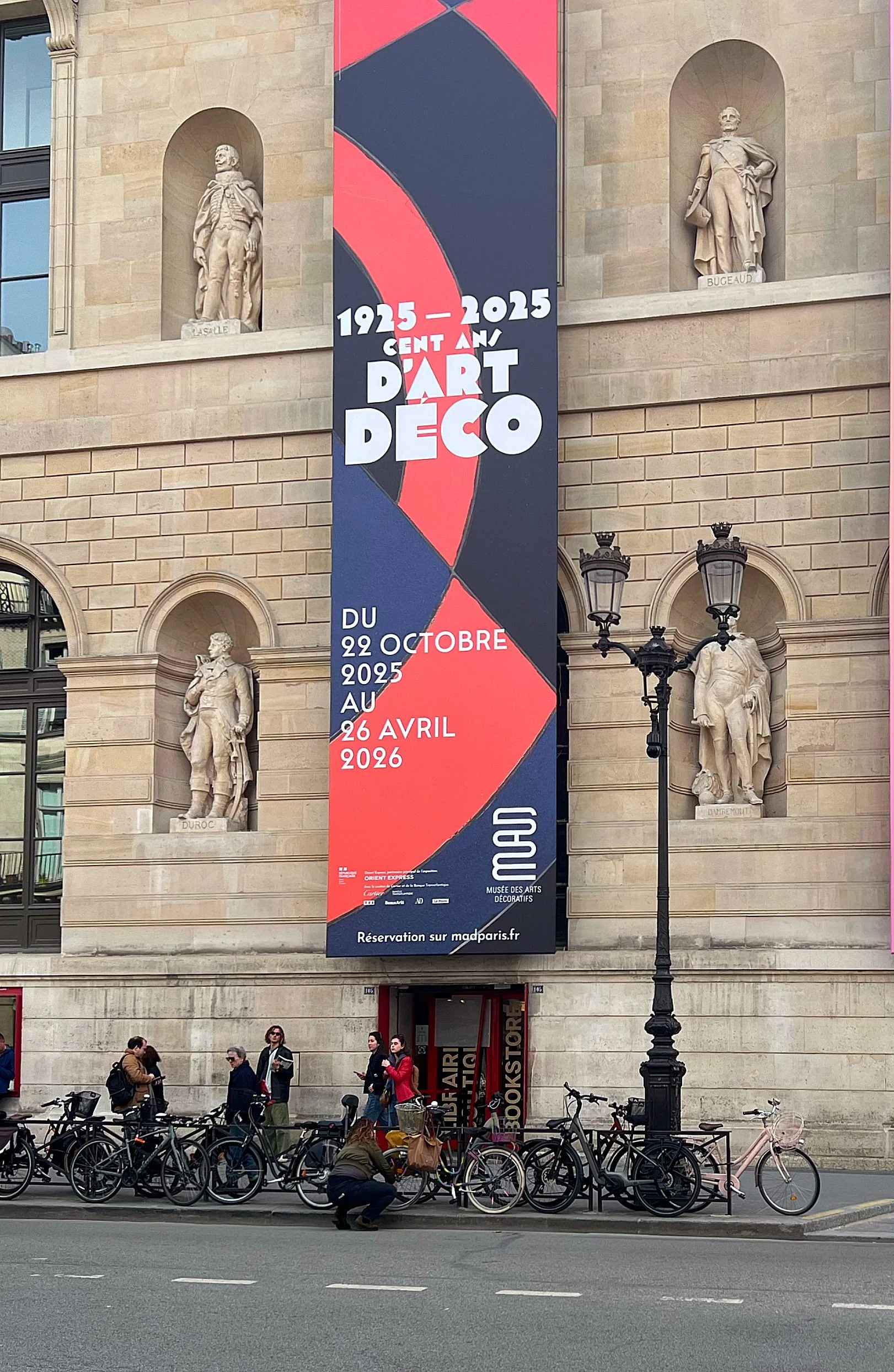
The museum of decorative arts (MAD), situated just along from le Louvre, had not been on our list of things to see, but a friend of ours had recently visited the Art Deco exhibition which is currently on there, and recommended it. It’s a period I love, and I was particularly interested, as it incorporated displays of how they have recently renovated l’Orient express.
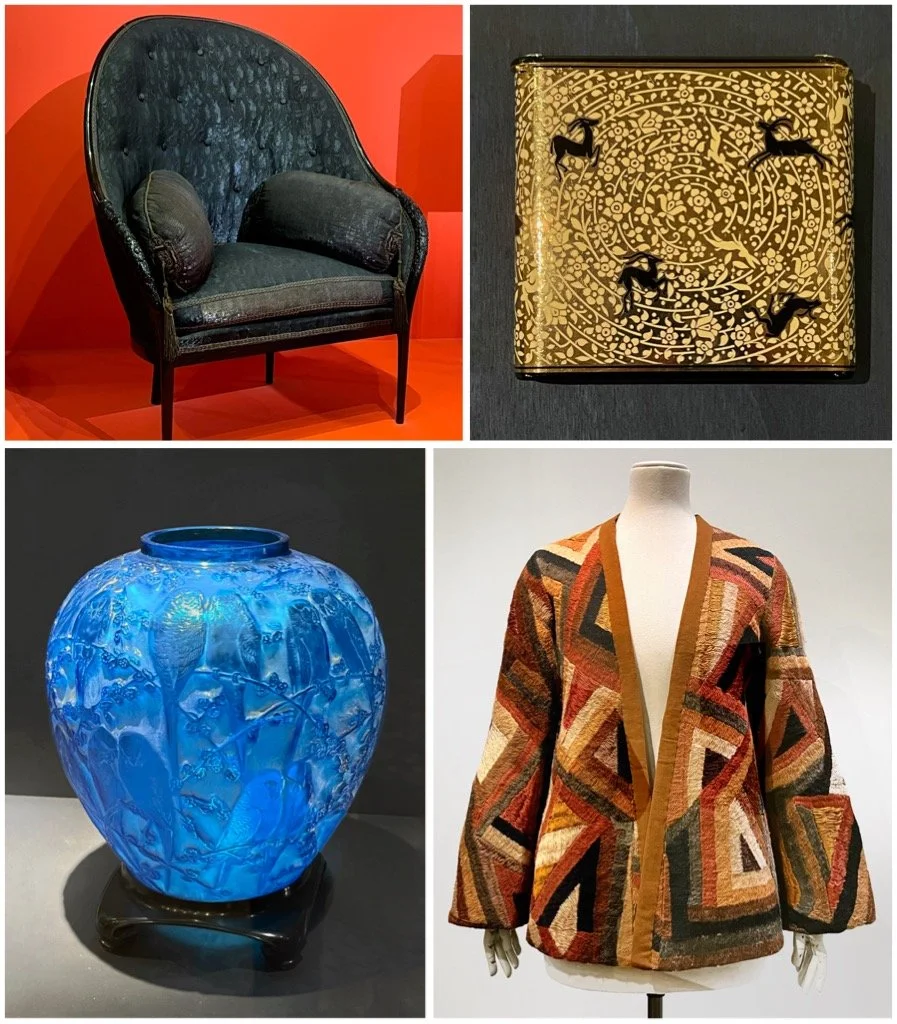
The exhibition started with a display of all manner of period objet d’art, each one demonstrating the importance of bold colour, texture, and pattern. From cigarette cases to chaises longues, the intricacy of pattern and surface texture are key to the luxurious nature of Art Deco. They often used nature to inform their patterns, and to bring its designs to life.
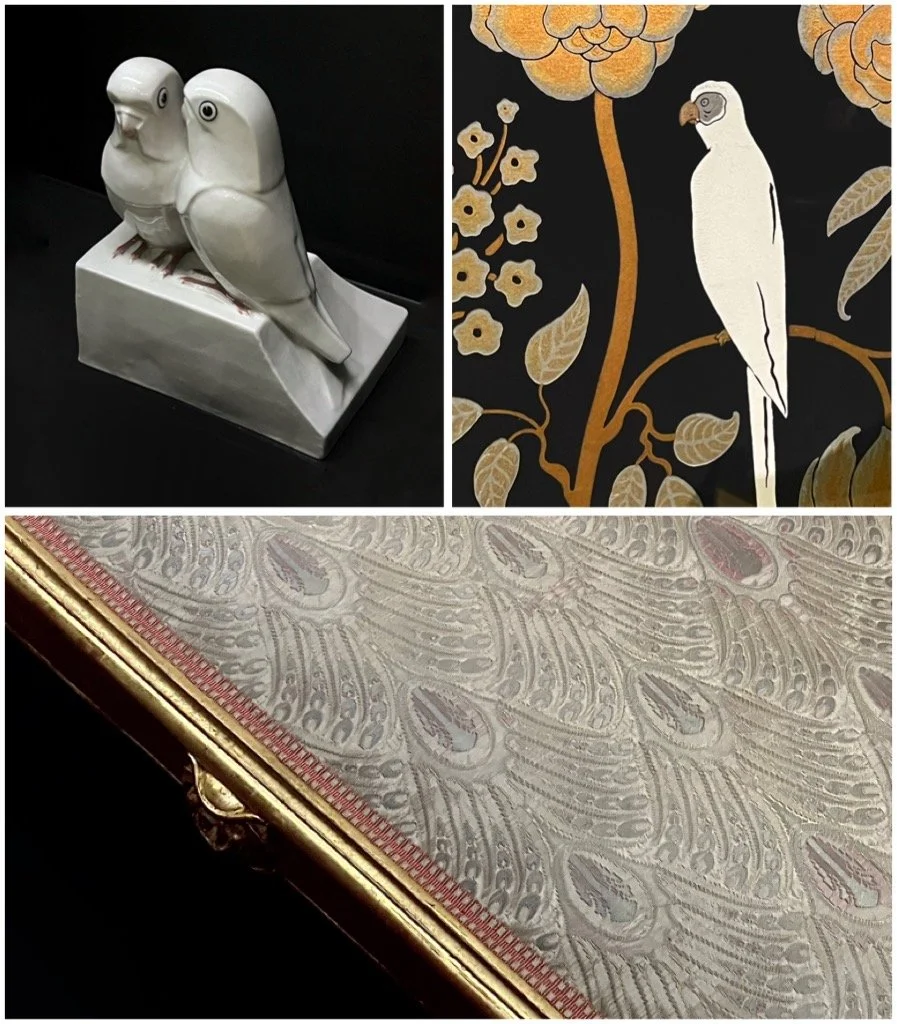
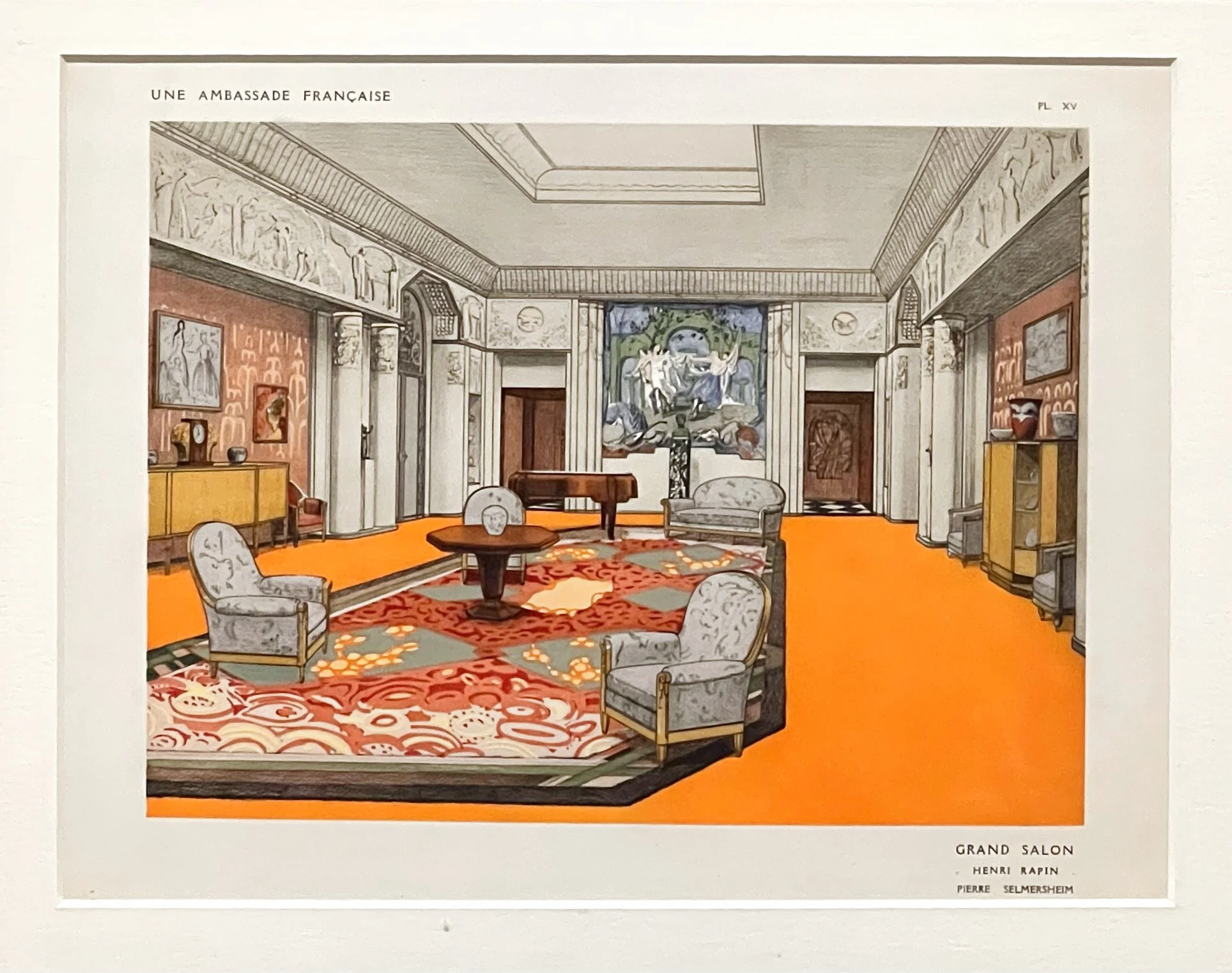
But of course, the movement spanned the whole world of design, and interiors received the same level of reverence, with form, colour, and texture bringing an abundance of richness.
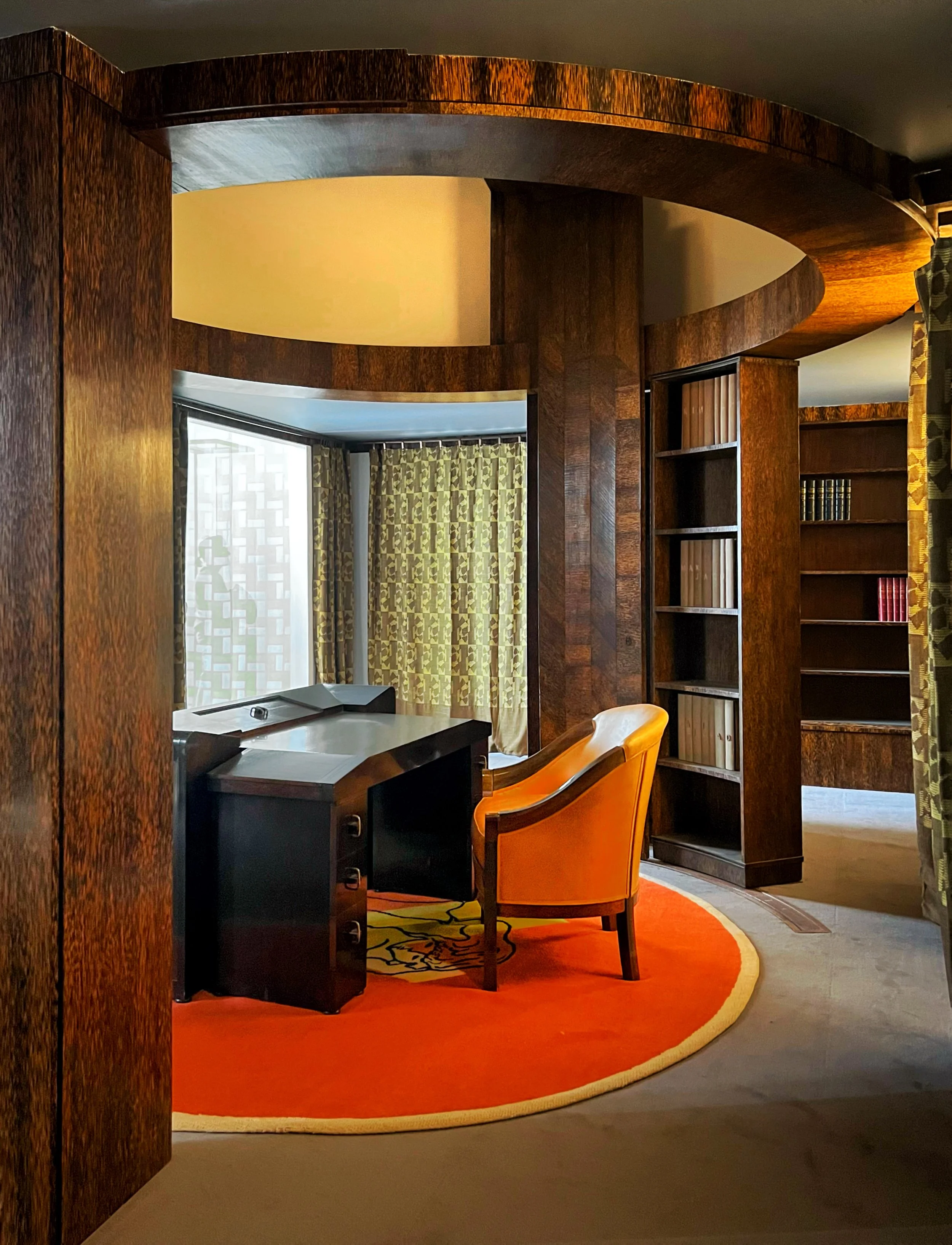
Like this amazing library, designed by Pierre Chareau for the Paris Exhibition of 1925. A dome in the ceiling supports two wooden posts that feature a fan-like structure that allows the amount of light to be adjusted in the room. The dark, masculine library was created for the French ambassador. It was like a room within a room, rather spectacular to be able to view it through windows on all sides as a true 360°.
The interiors were not limited to static structures, even trains of the time were designed to be luxurious. In 1883, the Orient Express became a famous example of this iconic era. It travelled from Paris to Constantinople in 81 hours, via Munich, Vienna, and Bucharest, and in incredible style. What fun and decadence it must have been to travel on it.
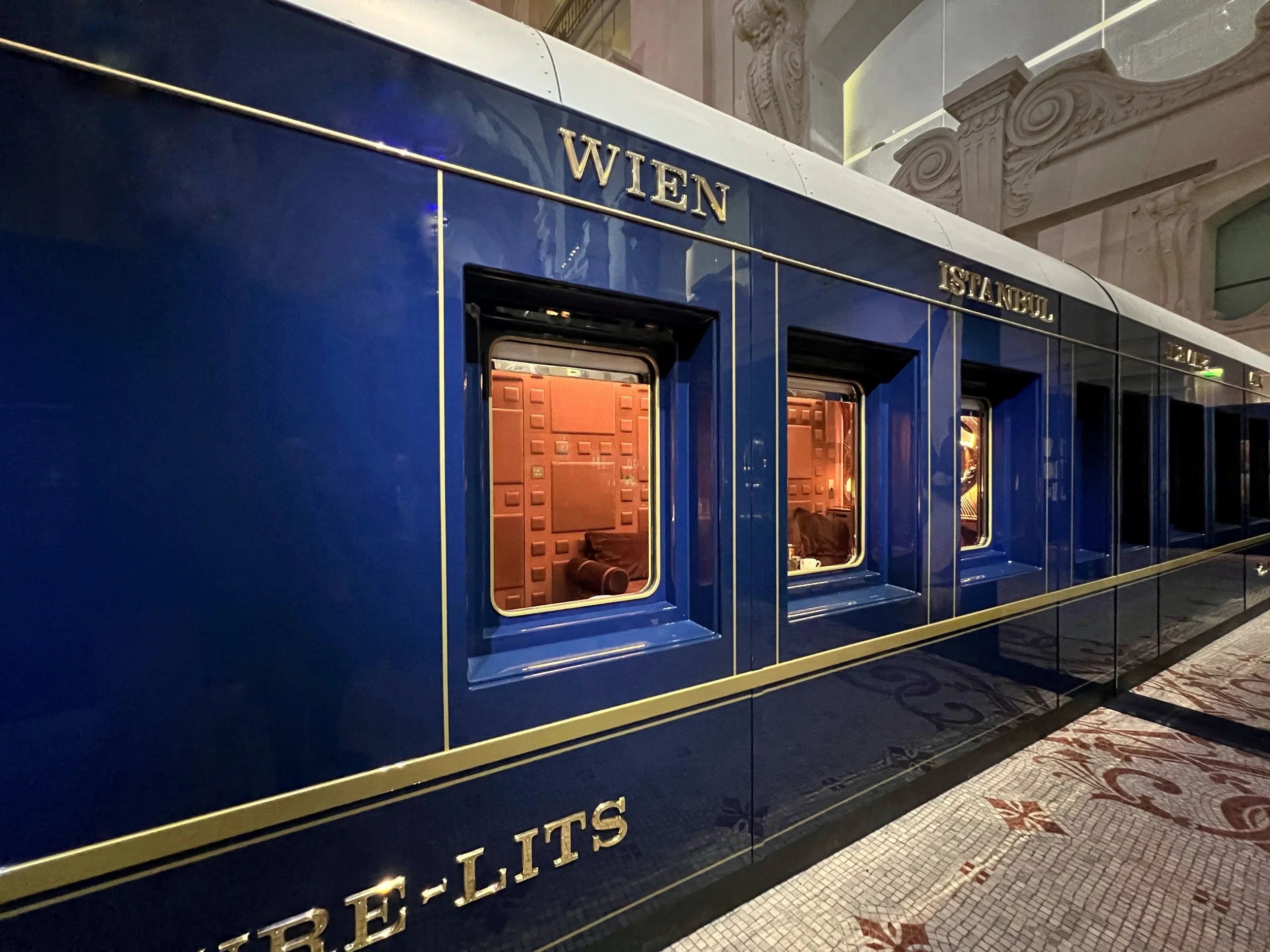
Nowadays, the designers are thinking more of the technical constraints on board a train: insulation, controlling noise and vibration, and the integration of modern comforts (Wi-Fi, air conditioning etc).
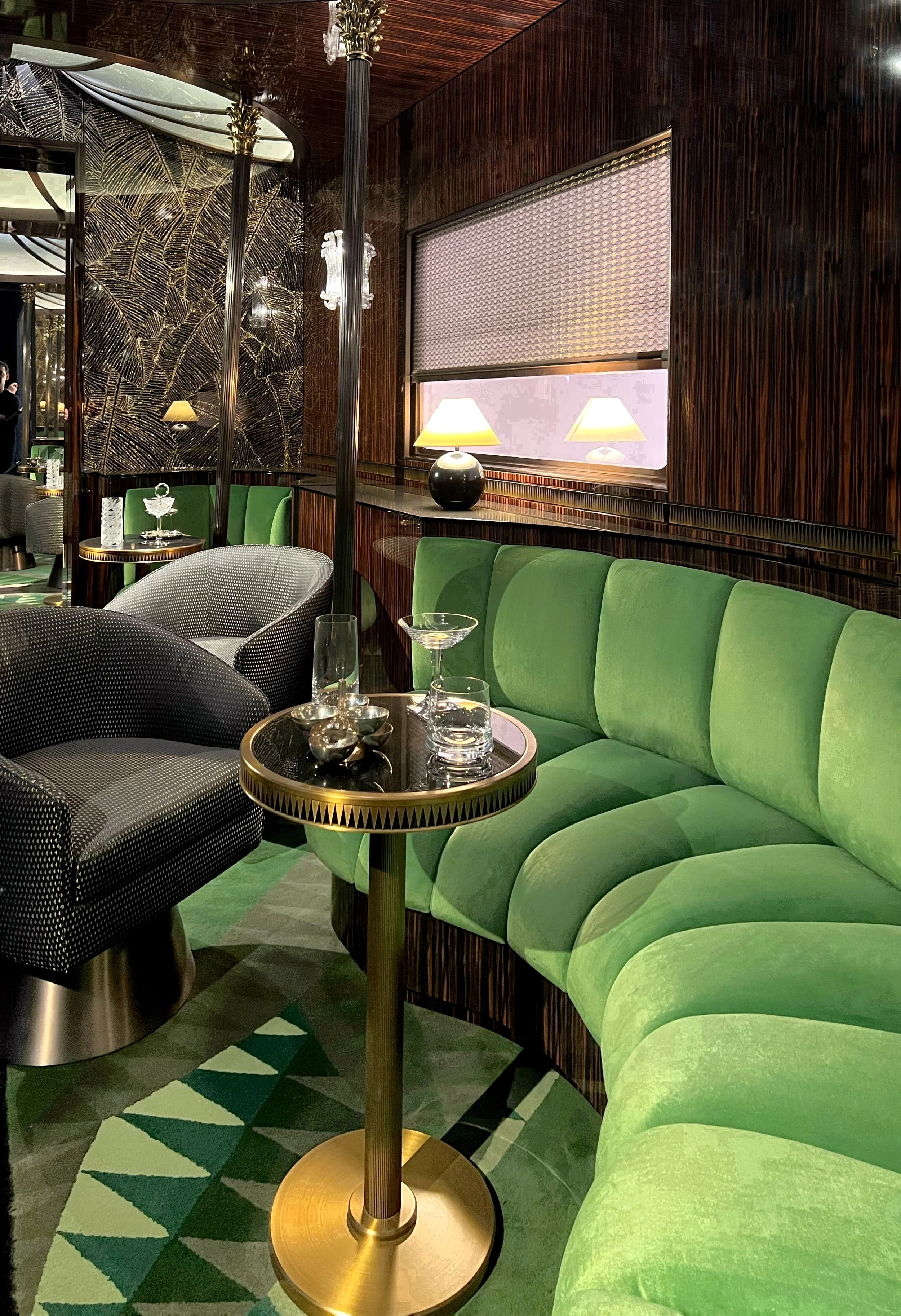
The exhibits show how the revival of the New Orient Express is a major industrial design project, that will be an ambassador for French luxury, so it’s not just about considering the technical challenges, but also the aesthetic ones. It has been a massive undertaking. Maxime d'Angeac is the interior designer, managing thousands of skilled craftspeople from some thirty different trades, all experts in their field, and all contributing to a work of art 350 meters long. It’s so exciting that this has been possible.
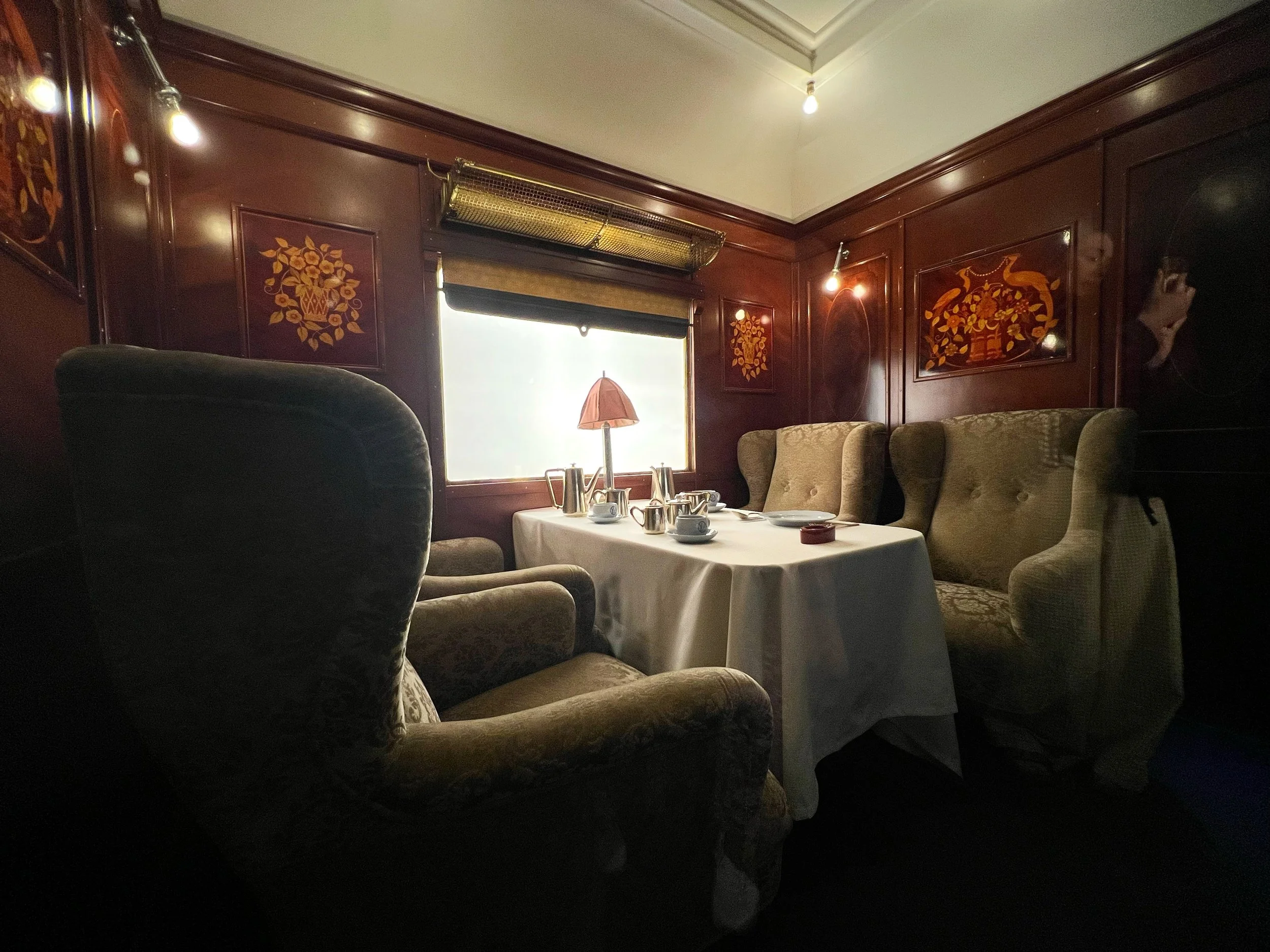
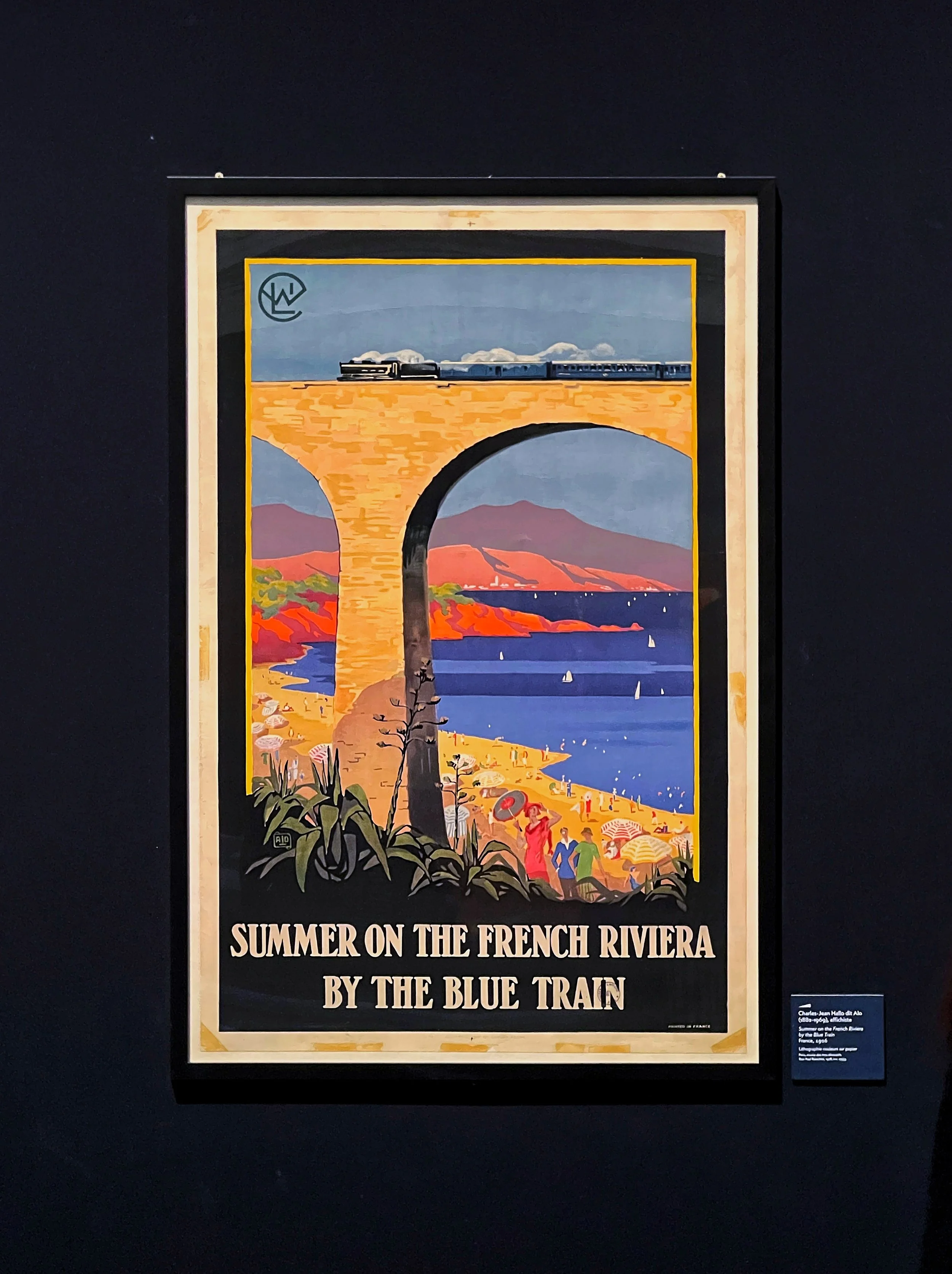
They had displayed old posters on the walls as we were leaving and we both noticed there was a poster for the Blue train, or ‘le train bleu’, which took passengers from Gare de Lyon to the French Riviera. Now there’s a thought…